Part 1 – Introducing the Problem
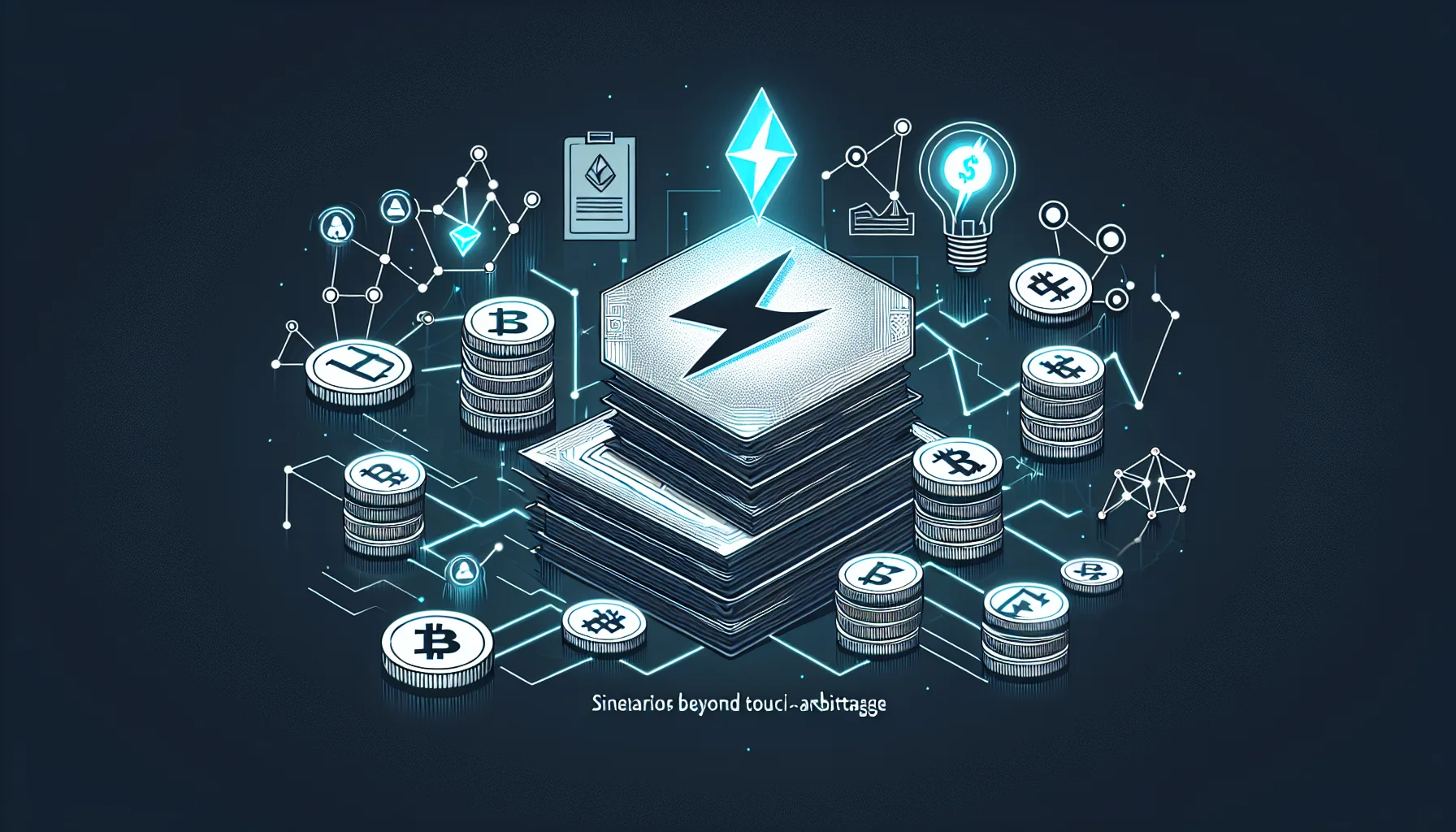
The Overlooked Scenarios for Flash Loans in DeFi: Beyond Arbitrage
Introducing the Problem
Flash loans have cemented themselves as a core primitive in decentralized finance (DeFi), yet their applications remain narrowly defined within the realm of arbitrage. The speed and flexibility they offer have fueled complex trading strategies, but the broader potential of flash loans is barely explored. This oversight presents both missed opportunities and serious systemic risks.
The problem is twofold: first, the current focus on arbitrage-based usage limits innovation; second, the underestimation of alternative use cases leaves blind spots in protocol security. Even as flash loans unlock instant capital for traders, their untapped potential in areas like governance manipulation, liquidation protection, and automated debt restructuring remain largely theoretical.
Historically, DeFi protocols have evolved through trial by fire—new mechanisms often come to light after an exploit or catastrophic failure. Flash loans are no exception. Market participants initially viewed them as a tool for risk-free arbitrage, yet they’ve also been at the center of governance attacks, oracle manipulations, and loan repayment automation. The rapid deployment of capital without collateral is a paradigm shift, but the industry has yet to fully internalize its implications.
One major challenge is that most protocols were not designed with flash loans in mind. Their instant execution model introduces new attack vectors, including protocol destabilization through vote lending or flash-minted governance tokens. The reliance on price oracles, often insufficiently secured or lagging behind real-time market conditions, further exacerbates these vulnerabilities.
Moreover, flash loans highlight a deeper issue in DeFi: the fragile balance between composability and security. Since protocols integrate with one another, a vulnerability in one smart contract can create cascading failures. The ability to borrow vast amounts of assets with no upfront capital poses existential risks for platforms that haven’t accounted for these dynamics.
Yet, within these challenges lies an opportunity. Flash loans could be leveraged for constructive uses beyond speculative trading. Liquidation backstopping, decentralized treasury management, and even privacy-enhancing techniques could redefine their role in the DeFi stack. The question is whether the ecosystem is prepared to explore these possibilities before another black swan event forces the conversation.
To fully grasp the potential and risks, understanding how decentralized governance is evolving alongside financial mechanisms is crucial. This ties into broader shifts in tokenomics and decentralized decision-making, themes covered in articles such as ZKF4: Redefining Crypto with Decentralized Governance.
Part 2 – Exploring Potential Solutions
Emerging Solutions to Flash Loan Exploits: Balancing Security and Efficiency
1. Zero-Knowledge Proofs (ZKPs): Enhancing Privacy and Verifiability
Zero-Knowledge Proofs (ZKPs) offer a promising direction for improving flash loan security without compromising efficiency. By enabling parties to prove correctness without revealing specific details of a transaction, ZKPs can help reduce flash loan misuse. For instance, ZK-rollups improve transaction batching, ensuring greater security while maintaining low gas fees.
Strengths:
- Privacy-Preserving: Borrowers can demonstrate solvency without exposing full transaction details.
- Scalability: Efficient computation via ZK-rollups reduces network congestion.
Weaknesses:
- Computational Overhead: High processing requirements limit implementation on resource-constrained networks.
- Complex Integration: Requires smart contract modifications across existing DeFi protocols.
For a deeper understanding of ZK-related innovations in tokenomics, check out Unlocking-ZKF4-The-Future-of-Tokenomics-Explained.
2. Time-Locked Flash Loans: Throttling Exploits at the Protocol Level
A major vulnerability of flash loans is instantaneous execution, allowing attackers to manipulate prices before arbitrageurs or liquidators react. Time-locked flash loans enforce a minimum delay between loan execution and repayment, discouraging price-rigging schemes.
Strengths:
- Mitigates Market Manipulation: Slower processing reduces the feasibility of flash loan attacks.
- Gives Oracles More Time: Allows price feed oracles to adjust prices to real market conditions.
Weaknesses:
- Reduced Capital Efficiency: Slower operations may deter legitimate arbitrage traders.
- Not Fully Exploit-Proof: Attackers may spread manipulation over longer timeframes.
3. Intent-Based Transaction Processing: Filtering Malicious Loans
Intent-based architectures evaluate the purpose of a transaction before executing, preventing known exploit vectors before they materialize. By analyzing user intent across smart contracts, the system can block transactions that exhibit suspicious patterns.
Strengths:
- Proactive Defense: Prevents exploits before they trigger negative market cascades.
- Adaptive to Emerging Attacks: As threat models evolve, intent filtering can refine detection algorithms.
Weaknesses:
- Potentially Overzealous Filtering: May accidentally block complex but legitimate strategies.
- Requires Cooperative Ecosystem Development: Success relies on widespread adoption across DeFi protocols.
4. Liquid Staking-Tied Flash Loans: Strengthening Collateralization
Flash loans currently require no collateral, enabling attackers to access unlimited liquidity instantly. Tethering flash loans to liquid staking derivatives (e.g., stETH, rsETH) could mandate some value allocation, discouraging purely malicious use.
Strengths:
- Forces Financial Commitment: Introduces financial repercussions for failed or malicious trades.
- Incentivizes Positive Contributions: Encourages users to participate in staking ecosystems.
Weaknesses:
- Reduces Unsecured Loan Flexibility: Some arbitrage mechanisms depend on temporary zero-collateral borrowing.
- Potential for Systemic Liquidations: If collateral assets like stETH depeg, it could worsen market volatility.
These solutions present a range of trade-offs, balancing security concerns and DeFi accessibility. The next section will analyze how top blockchain projects are implementing these ideas—and whether they’ve managed to eliminate flash loan risks effectively.
Part 3 – Real-World Implementations
Real-World Implementations of Flash Loans Beyond Arbitrage
Case Study 1: Automated Credit Scoring in DeFi
Several DeFi protocols have attempted to integrate flash loans into decentralized credit scoring systems. The idea is to allow users to temporarily access liquidity to execute on-chain behaviors that demonstrate financial responsibility. One such implementation attempted to use flash loans to simulate repayment behavior by instantly borrowing and repaying funds, feeding the data into a smart contract-based reputation system.
However, the challenge arose when sophisticated users started exploiting the system by repeatedly taking out and repaying flash loans to artificially inflate their creditworthiness. This inflated score allowed them to access other forms of unsecured lending, leading to potential protocol risks. The failure to mitigate self-reinforcing manipulations eventually led to the project's decline.
Case Study 2: DAO Treasury Management via Flash Loans
A few DAOs have experimented with using flash loans for treasury management—particularly for temporary rebalancing during governance votes and liquidity crises. By leveraging flash liquidity, DAOs aimed to influence on-chain voting weight or quickly reallocate assets without permanently distorting their treasury holdings.
The primary issue encountered was the risk of governance manipulation. Malicious actors leveraged flash loans to temporarily acquire governance tokens, vote in their favor, and exit before the system could adjust. While some projects introduced time-locked voting mechanisms to counteract this, it led to reduced flexibility for genuine participants. More insights into governance vulnerabilities can be found in GLCX8: Revolutionizing Cryptocurrency Governance and DeFi.
Case Study 3: Instant NFT Collateralization
A lesser-explored use case for flash loans has been NFT collateralization. Startups have attempted to enable users to temporarily acquire high-value NFTs using a flash loan, use them as collateral for another loan, and then repay the original flash loan—effectively leveraging more liquidity than they initially owned.
Despite the innovation, the model struggled with pricing volatility. NFT valuations can fluctuate rapidly, making it difficult to ensure that a loan remains sufficiently collateralized within the same block. Additionally, some platforms failed to account for illiquidity risks, leading to situations where flash-loan-backed NFT positions could not be unwound in time, resulting in cascading liquidation failures.
Technical Challenges and Security Risks
Across all use cases, the most significant challenge remained the permissionless nature of flash loans. Because these transactions execute within a single block, traditional anti-abuse mechanisms like delayed execution or off-chain verification do not apply. Protocols seeking to expand beyond arbitrage must incorporate dynamic risk parameters, enhanced price oracles, and more complex fraud detection mechanisms.
While advancements like multi-block execution batching and zk-rollups show promise in mitigating some risks, they introduce their own complexity and require higher user trust in off-chain computations. These limitations indicate that while the potential is vast, most implementations still suffer from systemic vulnerabilities.
Part 4 – Future Evolution & Long-Term Implications
The Future Evolution of Flash Loans in DeFi: Scalability, Interoperability, and Security Challenges
Innovations in Flash Loan Scalability
The current state of flash loans is constrained by network congestion, block time limitations, and protocol gas fees. As blockchain infrastructure evolves, Layer 2 solutions and optimistic rollups may provide new pathways for scalable instant borrowing. Projects experimenting with batched transactions and parallel processing could enable flash loans that operate across multiple transactions without bottlenecks.
However, these approaches come with risks. Optimistic rollups rely on fraud proofs, introducing a time delay that contradicts the core principle of instantaneous loan execution. Meanwhile, Zero-Knowledge (ZK) rollups could provide an alternative by reducing computational overhead while maintaining transaction integrity. Some protocols are already exploring how ZK-based verification could allow flash loans to execute with minimal constraints, further pushing the boundaries of instant liquidity.
Cross-Chain Flash Loans: Expanding the Playing Field
Currently, flash loans are largely confined to the Ethereum ecosystem and its direct Layer 2 extensions. As blockchain interoperability advances, cross-chain flash loans could emerge, leveraging bridges and atomic swaps to facilitate seamless borrowing across multiple networks.
However, inter-chain flash loans introduce new complexities. Security risks related to fragile oracles, validator bribing, and delayed finality could create opportunities for exploiters. Additionally, ensuring proper liquidity across chains without significant slippage will require highly efficient bridges and automated market makers (AMMs) that can dynamically rebalance funds in real time. As protocols like ZKF4 explore more sophisticated liquidity mechanisms, they could provide blueprints for how to structure cross-chain loan execution with minimal arbitrage imbalances.
Decentralized Risk Mitigation and Smart Contract Security
The pace of flash loan-related exploits continues to expose vulnerabilities in even well-established lending protocols. While multi-sig governance and security audits offer some protection, the need for real-time automated security is growing.
One emerging solution is the introduction of on-chain risk management modules that preemptively analyze flash loan-based activity and halt suspicious transactions. AI-driven fraud detection models could analyze patterns in real-time, blocking transactions that exhibit characteristics of market manipulation or attempted oracle exploits. These security systems, when integrated directly into lending platforms, could help mitigate risks without depending solely on human intervention.
Smart contract upgrades, particularly with dynamic permission layers, also present an opportunity. By allowing protocols to adjust flash loan mechanics based on network conditions and detected risk patterns, developers can create more adaptive lending environments. However, these enhancements must be balanced with decentralization—too much intervention risks creating centralized gatekeeping, which contradicts the foundational principles of DeFi.
Where Governance and Decentralization Fit In
As flash loan innovations progress, governance will play a critical role in balancing security, efficiency, and accessibility. With DAOs increasingly handling protocol decision-making, community-driven security measures could change how risk is managed and protocol upgrades are implemented. In the next section, we will examine how governance structures influence the trajectory of flash loans, emphasizing decentralization, decision-making authority, and protocol consensus.
Part 5 – Governance & Decentralization Challenges
Governance & Decentralization Challenges in Flash Loans
Governance Structures: Centralized vs. Decentralized
Flash loans introduce unique governance concerns that hinge on how protocols are structured. Platforms offering these services have governance mechanisms that can fall into two categories: centralized governance controlled by core developers and teams, or decentralized structures managed by token holders.
Centralized governance in flash loan protocols ensures rapid decision-making but presents a single point of failure. A project controlled by a small group can fall victim to regulatory restrictions, internal mismanagement, or external coercion. Moreover, centralization contradicts DeFi’s ethos, raising criticisms about true decentralization.
Decentralized governance, where token holders vote on key protocol changes, mitigates these risks but introduces new concerns: governance attacks and plutocratic control. If a single entity or coordinated group acquires a significant share of governance tokens, they can manipulate decisions, including updates to loan parameters, interest rates, or even exploit treasury funds.
Governance Attacks: The Hidden Risk
One of the most overlooked threats in governance models is the susceptibility to flash loan-based governance attacks. Since flash loans allow anyone to borrow large sums of tokens without upfront capital, attackers can acquire a temporary majority of governance tokens, push harmful proposals through, and exit before the community can react. This exploit has been used in malicious takeover attacks, where bad actors pass proposals that drain liquidity pools or redirect platform-controlled funds.
Some protocols have adopted countermeasures such as time-locked governance changes, requiring longer voting periods, or introducing quorum thresholds that prevent instant takeovers. However, these solutions often slow down decision-making, which can be counterproductive when urgent changes are needed.
For a deeper dive into governance issues in crypto, see https://bestdapps.com/blogs/news/glcx8-pioneering-decentralized-governance-in-crypto.
Regulatory Capture: A Silent Centralization Risk
Decentralized structures are not immune to regulatory pressures. If governance tokens become concentrated around accredited financial institutions or well-funded entities, regulatory capture becomes a real concern. Governments or financial institutions could gradually accumulate governance power to alter a protocol's operation, enforce KYC/AML policies, impose restrictions on flash loans, or even shut down critical functionalities.
Additionally, protocols introducing leadership councils or multi-sig governance mechanisms to balance efficiency with decentralization may inadvertently create centralized chokepoints. If too few individuals have control over veto powers or treasury funds, these governance models drift toward hidden centralization.
Plutocracy in DeFi Governance
Another challenge is plutocratic control, where governance is inherently skewed toward the wealthiest token holders. Since voting power is proportional to token ownership, wealthy participants have disproportionately higher influence over protocol changes. This dynamic makes DeFi governance less about community participation and more about financial influence, reinforcing existing wealth gaps and limiting smaller users' ability to shape decision-making processes.
One partial solution is quadratic voting, which reduces dominance by major token holders by weighting votes logarithmically rather than linearly. However, implementing such a mechanism while ensuring fair participation and security remains an ongoing challenge.
The governance and decentralization concerns outlined here highlight the complex trade-offs required for sustainable flash loan ecosystems. In the next section, we will explore scalability issues and engineering trade-offs needed to ensure flash loans can support mass adoption while maintaining efficiency and security.
Part 6 – Scalability & Engineering Trade-Offs
Scalability & Engineering Trade-Offs in Flash Loans
Scalability remains a core challenge for flash loans in DeFi. As execution relies on atomic transactions that must complete within a single block, the efficiency of blockchain infrastructure directly impacts scalability. While Layer 1 chains provide security and decentralization, they introduce higher latency and gas costs, limiting throughput. On the other hand, Layer 2 solutions or alternative consensus mechanisms like DAG (Directed Acyclic Graphs) improve speed but may sacrifice composability or decentralization.
Consensus Mechanism Bottlenecks
The trade-off between security, decentralization, and speed in different consensus models affects the efficiency of flash loans. Proof of Work (PoW) chains, such as Bitcoin, struggle with slow block finality, making them impractical for instant execution. Proof of Stake (PoS) improves confirmation times but introduces centralization risks when validator sets are small. Optimistic and ZK-Rollups dramatically increase transaction throughput but require additional reconciliation layers that can affect atomicity—critical for ensuring flash loan repayment.
Orchestration Challenges in High-Frequency Transactions
Smart contracts handling flash loans must process high-frequency transactions with precise sequencing. Ethereum’s congestion issues and gas price volatility create situations where transaction execution becomes unpredictable, impacting flash loan availability. Chains optimized for high TPS (transactions per second), such as Solana, improve execution speed but often sacrifice decentralization, with fewer validator nodes controlling network state.
Cross-Chain Flash Loan Complexity
As DeFi markets integrate cross-chain liquidity pools, executing flash loans across multiple chains becomes increasingly complex. Atomicity requirements demand wrapped assets and bridging protocols, introducing additional points of failure. Current interoperability solutions rely on centralized or semi-centralized bridges, which have been frequent attack vectors. Without robust cross-chain transaction finality, flash loans operating across different ecosystems risk inconsistencies and security vulnerabilities.
Security vs. Efficiency
Optimizing execution speed for flash loans often conflicts with security best practices. Lowering transaction finality times or reducing verification steps enhances speed but increases attack vectors like sandwich attacks, reentrancy exploits, and oracle manipulation. These risks pose a significant challenge for engineering scalable flash loan platforms while maintaining robust security guarantees.
Flash loan scalability is closely tied to blockchain architecture, consensus mechanisms, and execution environments. The next section will address another critical issue: the regulatory and compliance risks surrounding flash loans and their place in global financial frameworks.
Part 7 – Regulatory & Compliance Risks
Regulatory & Compliance Risks of Flash Loans in DeFi
Legal Uncertainties in a Rapidly Evolving Market
The regulatory landscape for flash loans in decentralized finance (DeFi) remains ambiguous, with no unified global approach. While some jurisdictions categorize them within traditional lending frameworks, others view them as financial instruments operating outside existing regulations. The issue is exacerbated by the fact that flash loans often rely on smart contracts, meaning they lack typical lender-borrower relationships, making compliance with know-your-customer (KYC) and anti-money laundering (AML) rules nearly impossible under current standards.
One of the key legal challenges is the classification of flash loans in financial regulation. Are they loans, derivative instruments, or merely atomic swaps? The absence of collateral traditionally required in lending further complicates legal definitions. This lack of clarity leaves DeFi developers vulnerable to sudden regulatory enforcement, which could significantly impact adoption and integration into mainstream financial ecosystems.
Jurisdictional Differences & Enforcement Risks
Unlike traditional banks with regulated lending operations, DeFi operates in a decentralized manner, often across multiple jurisdictions. Regulators globally have taken varied approaches. Some nations embrace DeFi under innovation-friendly financial policies, while others take a hard stance, banning or heavily scrutinizing services that facilitate unregulated lending.
The borderless nature of flash loans makes enforcement difficult. If an exploit occurs, determining which jurisdiction has authority to intervene is complex. For example, a flash loan attack executed via a decentralized autonomous organization (DAO) hosted on a blockchain with no clear geographical location creates significant legal uncertainty. Regulators may target developers, liquidity providers, or even users, leading to inconsistent enforcement actions across different regions.
Precedents in Crypto Regulation & Potential Government Intervention
Looking at past crypto regulations offers insights into potential interventions. The scrutiny faced by algorithmic stablecoins, initial coin offerings (ICOs), and cryptocurrency exchanges suggests that flash loans could become an area of regulatory focus. In previous cases, regulators have either retroactively applied existing financial laws or introduced new frameworks to address emerging crypto risks.
Future policies might impose mandatory registration for flash loan facilitators, introduce oversight on large liquidity pools, or even outlaw unverified smart contracts in lending. Given the risks associated with flash loan-based exploits, governments may seek to limit anonymity in DeFi through on-chain monitoring tools and mandatory compliance solutions, similar to efforts seen in governance-focused cryptocurrencies like GLCX8.
Introducing Part 8: The Economic & Financial Consequences of Flash Loans in DeFi
The legal and regulatory environment will shape how flash loans evolve within DeFi markets. However, beyond compliance risks, their economic and financial impact is equally critical to examine. The next section will explore how flash loans influence liquidity mechanisms, market stability, and potential systemic risks in decentralized finance.
Part 8 – Economic & Financial Implications
Economic & Financial Implications of Flash Loans in DeFi
Market Disruptions: Liquidity Without Collateral
Flash loans introduce a unique dynamic by providing instant liquidity without collateral, an anomaly in traditional finance. This could significantly impact borrowing and lending markets, particularly those reliant on undercollateralized lending. For instance, certain lending protocols in traditional finance may struggle to compete with DeFi models leveraging flash loans to optimize capital efficiency. However, this also creates potential instability, as borrowers can exploit pricing discrepancies across liquidity pools at an unprecedented scale, leading to cascading market effects.
New Investment Strategies & Yield Optimization
For traders, flash loans unlock sophisticated arbitrage, liquidation, and leveraged yield farming strategies. Capital-restricted traders can now execute high-value strategies without upfront investment, making high-yield DeFi strategies more accessible. Institutional investors, on the other hand, face a dilemma: engage with flash loan-driven strategies or risk inefficiencies compared to algorithmic traders refining these techniques. Given these developments, DeFi protocols integrating optimized lending models—potentially similar to innovations found in governance-oriented crypto ecosystems like GLCX8—may see rapid adoption.
Risks: Price Manipulation & Market Stability
Flash loans introduce systemic risks, particularly price oracle manipulation and temporary manipulation of Automated Market Makers (AMMs). Attackers can use large capital injections to exploit pricing oracles, leading to costly liquidations of honest borrowers. This threat forces DeFi protocols to harden their security mechanisms, reevaluate reliance on on-chain oracles, and explore Multi-Sig or decentralized governance security models.
In a broader economic context, policymakers and regulators may perceive flash loans as amplifiers of market manipulation, potentially triggering stricter oversight of DeFi ecosystems. Institutions deploying liquidity in decentralized markets could find themselves vulnerable to flash loan-induced distortions, impacting confidence in decentralized finance as a viable alternative to traditional markets.
Winners & Losers in the Adoption of Flash Loans
The adoption of flash loans benefits developers creating financial instruments optimized for capital-efficient execution. Additionally, proficient traders leveraging advanced execution strategies gain a competitive edge. However, this comes at a cost—casual investors operating without automation tools may suffer from sudden liquidity shifts and unexpected volatility bursts triggered by flash loan-driven strategies.
Furthermore, traditional financial institutions may struggle to integrate flash loans within regulatory frameworks, creating hesitancy in bridging DeFi and institutional finance. While flash loans offer opportunities for agile financial engineering, the risks associated with their unregulated nature present challenges for large-scale financial players aiming for long-term stability in decentralized finance.
Part 9 – Social & Philosophical Implications
The Economic & Financial Implications of Flash Loans in DeFi
Disrupting Traditional Markets with Instant Liquidity
Flash loans introduce a paradigm shift in financial markets by enabling immense liquidity without collateral. Traditional institutions—especially those relying on margin requirements, credit checks, and regulatory oversight—may find themselves outpaced by DeFi protocols offering capital efficiency at unparalleled speed. The removal of intermediaries allows traders and developers to exploit price inefficiencies, execute liquidation cascades, or create sophisticated leveraged positions in ways that would be impossible in conventional finance.
However, this disruption comes with risks. If governance mechanisms fail to adapt, entire DeFi ecosystems could experience destabilizing liquidity shocks. A single malicious or poorly designed smart contract could trigger a market-wide catastrophe, where millions in assets are borrowed and manipulated in seconds before participants react.
New Investment Strategies Enabled by Flash Loans
Beyond arbitrage, flash loans enable high-frequency trading strategies that can transfer yield across DeFi platforms instantly. Yield farming protocols can be optimized by leveraging a temporary influx of capital, allowing users to maximize incentives without long-term exposure. Additionally, governance token voting can be influenced by flash loans, raising concerns about governance manipulation where token holders with temporary purchasing power dictate protocol decisions.
For institutional investors, such innovations present both opportunities and challenges. Funds might tap into flash-loan-powered strategies for optimizing DeFi positions, but they also risk being blindsided by hyper-efficient strategies that execute before traditional financial models can react. Moreover, platforms that fail to factor in the speed at which flash loan-based positions shift liquidity could face unexpected capital shortfalls.
Unforeseen Economic Risks & Regulatory Scrutiny
Flash loan activity attracts attention from regulators due to potential market manipulation. Given that entire asset pools can be borrowed and repaid in a single transaction, regulatory bodies may struggle to classify such activities under existing frameworks. If unchecked, rogue actors can repeatedly manipulate thinly traded assets, distorting their perceived value.
This phenomenon closely parallels the concerns surrounding decentralized governance manipulation. When considering innovations like ZKF4’s governance evolution, flash loans present an added complexity, allowing temporary control over governance mechanisms that should, in theory, require long-term commitment.
The question remains: can DeFi ecosystems self-regulate before external actors impose strict intervention? As these dilemmas surface, it is crucial to explore not just the financial implications but also the broader ethical, social, and philosophical consequences of leveraging temporary, near-limitless capital.
Part 10 – Final Conclusions & Future Outlook
The Overlooked Scenarios for Flash Loans in DeFi: Beyond Arbitrage – Final Conclusions & Future Outlook
After exploring the underutilized applications of flash loans in DeFi, one thing is clear: their potential extends far beyond arbitrage opportunities. From decentralized governance exploits to rapid liquidity bootstrapping, the power of uncollateralized borrowing has opened doors to novel financial engineering. But with that innovation comes significant risk.
The Dichotomy: Best vs. Worst-Case Scenarios
In the best-case scenario, flash loans evolve into a fundamental tool for on-chain financial infrastructure. Protocols will design mechanisms to integrate them securely, reducing systemic risk while leveraging their speed for capital efficiency. Projects like decentralized insurance or protocol treasury management could thrive if properly safeguarded.
However, in the worst-case scenario, flash loans remain synonymous with DeFi exploits. The recurring cycle of governance manipulation, price oracle attacks, and liquidity drain events could ultimately deter mainstream adoption. Regulators may scrutinize them further, stifling innovation while allowing only select permissioned entities to access similar financial instruments.
Remaining Unanswered Questions
Key questions still loom over the long-term viability of flash loans: - How will DeFi protocols mitigate security risks? While some projects have implemented safeguards, others remain vulnerable to price manipulation and governance exploits. - Is there a sustainable business model? Most flash loan use cases revolve around exploit-like strategies or highly specialized trading tools. If adoption remains niche and predatory, protocols may abandon them altogether. - Will regulatory oversight eventually limit their accessibility? If flash loans continue to facilitate market manipulation or attacks, regulators might step in to restrict permissionless access.
The Path to Mainstream Adoption
For flash loans to have long-term viability, the DeFi ecosystem must implement better risk management strategies. Strengthening oracles, refining governance mechanisms, and introducing circuit breakers could prevent mass exploitation. Additionally, broader education and best practices would allow developers to integrate flash loans in ways that don’t invite immediate abuse.
Taking cues from innovative governance models, such as those explored in GLCX8: Pioneering Decentralized Governance in Crypto, could be instrumental in establishing more resilient safeguards against malicious use.
The final question remains: Will flash loans shape the future of decentralized finance, or will they be remembered as an overly ambitious but ultimately unworkable experiment?
Authors comments
This document was made by www.BestDapps.com