Part 1 – Introducing the Problem
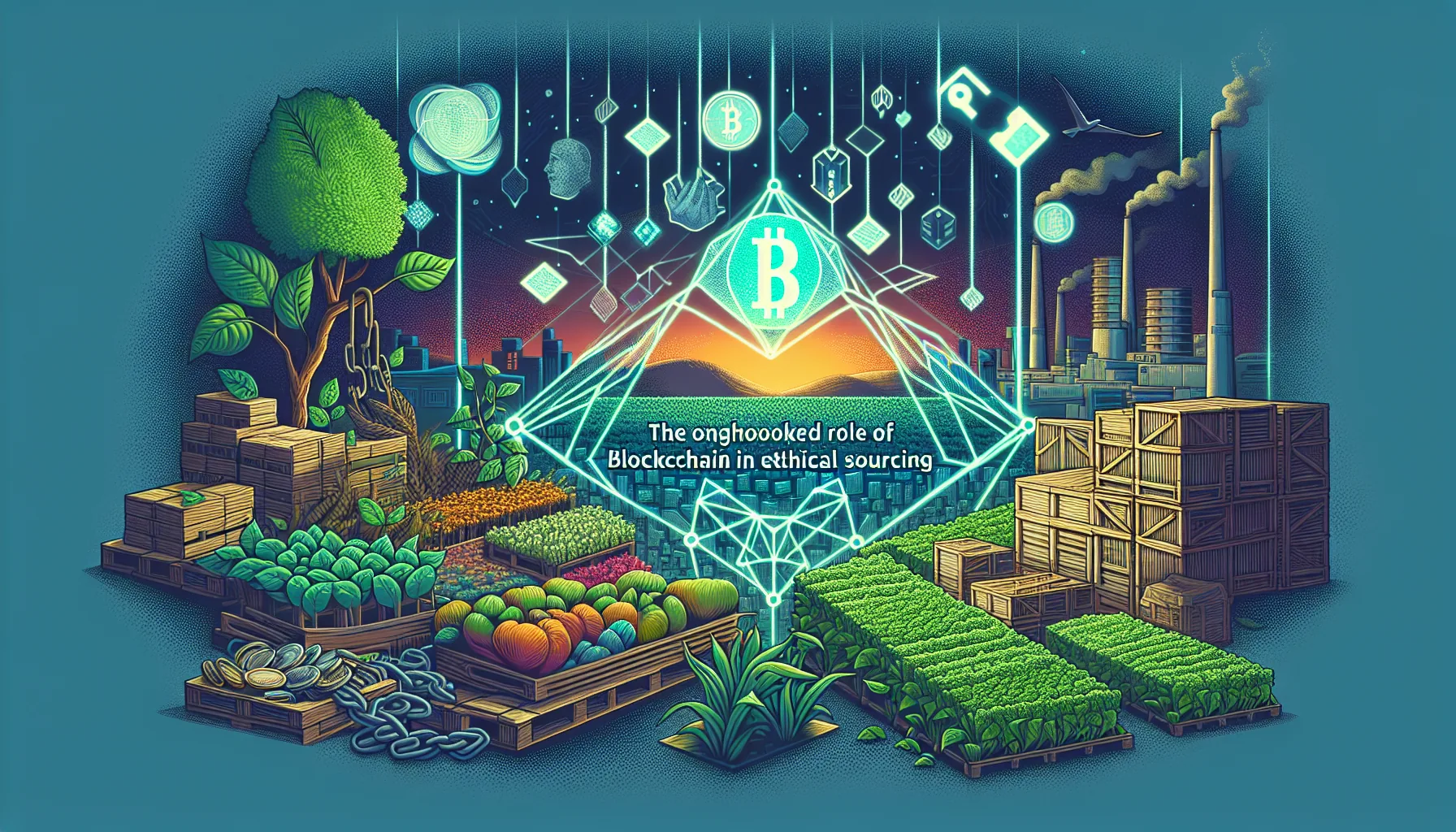
The Overlooked Role of Blockchain in Ethical Sourcing: Revolutionizing Supply Chains for a Sustainable Future
Ethical Sourcing and the Blockchain Dilemma
The supply chain landscape is an opaque, multi-layered ecosystem plagued by ethical issues—child labor, environmental destruction, and exploitation remain rampant. While blockchain technology promises transparency, its role within ethical sourcing has remained largely unexplored, overshadowed by more mainstream use cases like DeFi and NFTs. Much of the discourse on blockchain in supply chains has centered on logistics efficiency rather than addressing the human and ecological costs of global procurement.
At its core, ethical sourcing hinges on verifiability: Can companies prove their products were manufactured under fair labor conditions and environmental regulations? Traditionally, verification has relied on centralized authorities, certification bodies, or self-reported compliance data—mechanisms that are often prone to manipulation and fraud. Blockchain is poised to solve these problems through immutable records and decentralized verification, yet adoption remains fragmented, and key challenges persist.
Why Ethical Sourcing Remains an Unsolved Problem
The primary obstacle is the disconnect between blockchain developers and industries that depend on ethical verification. Many solutions rely on blockchain’s ability to provide traceability for items such as diamonds, rare earth metals, coffee, and textiles. However, these implementations are hindered by systemic inefficiencies:
- Fragmented Data Inputs: Many supply chains still depend on manually recorded documentation, which increases the risk of human error and deliberate falsification.
- Identity and Accountability Issues: The individuals entering data into the blockchain may not be accountable, reducing trust in the system’s integrity.
- Lack of Incentives: Large corporations may see ethical sourcing as a compliance issue rather than a strategic priority, slowing down blockchain adoption.
- Scalability and Interoperability: Many blockchains designed for tracking assets aren’t interoperable with local databases used by suppliers, regulators, and NGOs.
These limitations have stunted mainstream adoption beyond pilot projects, leaving the technology underutilized despite its potential to disrupt exploitative industries.
A Lingering Gap in the Broader Crypto Ecosystem
The failure to effectively integrate blockchain into ethical sourcing inhibits one of the most compelling non-financial applications of decentralized technology. While the DeFi sector remains preoccupied with liquidity pools and flash loans, highly practical implementations like ethical sourcing are left sidelined. This stagnation extends beyond supply chains—undermining blockchain’s broader promise of real-world impact beyond speculative markets.
Parallels can be drawn with how blockchain is often overlooked in areas such as environmental sustainability, as discussed in The Overlooked Role of Blockchain in Enhancing Environmental Sustainability in Supply Chains. Just as green initiatives struggle with adoption complexities, ethical sourcing faces similar resistance within entrenched supply chain systems.
Several experimental solutions have attempted to bridge this adoption gap, ranging from tokenized incentives for suppliers to zero-knowledge proofs for supply chain validation. The crucial question remains: Can blockchain overcome these technical and institutional barriers to provide meaningful accountability?
Part 2 – Exploring Potential Solutions
Smart Contracts, Zero-Knowledge Proofs, and Layered Solutions: Addressing Ethical Sourcing Challenges
The integration of blockchain in ethical sourcing confronts multiple challenges, from supply chain opacity to unverifiable claims of sustainability. Emerging cryptographic and decentralized technologies offer potential solutions, but they come with their own limitations.
Smart Contracts: Automating Trust, but at a Cost
Smart contracts on Ethereum, Solana, and other L1s have been touted as mechanisms to enhance supply chain transparency. By enforcing predefined conditions—such as fair trade certification or carbon offset verification—smart contracts can automate supplier accountability. Projects like Provenance utilize blockchain-based records to verify ethical sourcing claims.
However, trust in smart contracts is not absolute. The reliance on oracles introduces a layer of centralization, which can become a single point of failure. Additionally, exploits remain a critical concern, with millions lost due to poorly designed contract logic. Without robust audit procedures, supply chain actors can manipulate data off-chain before feeding it into an immutable ledger.
Zero-Knowledge Proofs: Privacy-Enhanced Verification, but Scalability Hurdles Persist
Zero-knowledge proofs (ZKPs) promise verifiable claims without exposing sensitive supplier data. This cryptographic innovation allows suppliers to prove ethical compliance—such as meeting fair labor standards—without disclosing proprietary business details.
Projects leveraging zk-SNARKs or zk-STARKs aim to reduce supply chain fraud while maintaining competitive secrecy, a major concern for private stakeholders. However, ZKPs suffer from computational intensity, leading to slower transaction processing and higher adoption resistance.
Layered Solutions: Addressing Scalability and Interoperability
Layer-2 solutions (L2s) and sidechains mitigate the high transaction costs associated with on-chain verification. Optimistic rollups or zero-knowledge rollups (zk-rollups) streamline supply chain interactions by aggregating transactions before settling them on L1s.
Yet, the fragmented L2 ecosystem presents a barrier to wider adoption. Many enterprises hesitate to onboard blockchain technology when faced with multiple competing rollup implementations, each with differing verification mechanisms.
These challenges echo broader issues observed in cross-chain solutions, which often struggle with security trade-offs. As explored in The Overlooked Role of Layered Solutions in Enhancing Blockchain Scalability and Security, mitigating complexity in multi-layer architectures remains an unsolved dilemma.
Without seamless interoperability between these frameworks, ethical sourcing initiatives may default to centralized verification models that contradict blockchain’s fundamental ethos.
Part 3 – Real-World Implementations
Real-World Implementations of Blockchain in Ethical Sourcing
VeChain’s Traceability Model: Strengths and Weaknesses
VeChain has established itself as a leader in supply chain transparency, leveraging blockchain to track materials across industries. Its Proof of Authority (PoA) consensus mechanism ensures efficiency but comes at the cost of centralization concerns. By partnering with luxury goods and food manufacturers, VeChain enables immutable verification of product origins. A notable implementation was Walmart China’s use of VeChain to trace fresh food items, ensuring quality control. However, adoption remains hindered by logistical inefficiencies—QR code tags and RFID chips introduce vulnerabilities where counterfeit products can still infiltrate supply chains before being linked to the blockchain.
IBM Food Trust and Hyperledger Fabric: Enterprise Focus, but at a Cost
IBM’s Food Trust utilizes Hyperledger Fabric to provide an enterprise-grade solution for ethical sourcing in the food industry. Unlike VeChain, Food Trust leverages permissioned blockchain for greater control over data privacy. Major retailers, including Carrefour and Nestlé, use it to track products from origin to shelf. However, onboarding stakeholders remains a critical challenge—participants must adhere to IBM’s framework, creating a semi-centralized ecosystem. The reliance on off-chain data entry also exposes it to human error, undermining blockchain’s immutability.
Everledger and the Ethical Diamond Supply Chain
Everledger utilizes blockchain to track the provenance of diamonds, ensuring ethical mining practices. By assigning each diamond a unique identifier anchored on a distributed ledger, Everledger has reduced the likelihood of blood diamond infiltration. However, their model relies heavily on third-party verification when initially registering assets, leaving a loophole for fraudulent entries. Additionally, despite successful partnerships with major banks and insurers, scalability issues have surfaced—many small-scale suppliers lack the resources to integrate Everledger’s system effectively.
Open Problems: Oracles and Data Manipulation
A recurring issue across blockchain-based ethical sourcing solutions is the reliance on external data sources. Oracles, whether Chainlink or proprietary enterprise solutions, introduce attack vectors where malicious actors can manipulate inputs. While some platforms implement cryptographic verification mechanisms to mitigate this, reliance on centralized or semi-centralized oracles remains a weak point. Additionally, Layer 2 solutions that address blockchain scalability introduce separate risks—data reconciliation between layers isn’t always seamless, leading to potential discrepancies in recorded supply chain data.
For a broader perspective on blockchain’s decentralized governance challenges in related industries, see The Overlooked Revolution in Decentralized Autonomous Organizations.
Part 4 – Future Evolution & Long-Term Implications
The Future Evolution of Blockchain in Ethical Sourcing: Scalability, Innovations, and Challenges
Blockchain adoption in ethical sourcing has progressed significantly, but its long-term evolution hinges on three critical factors: scalability, interoperability, and seamless integration with emerging technologies. Addressing these issues will determine the viability of blockchain-based supply chain authentication, ensuring it remains efficient and economically sustainable.
Solving Scalability Bottlenecks
Most supply chain blockchains currently suffer from congestion and high transaction costs, limiting their appeal for large-scale adoption. Layer-2 scaling solutions offer promise in reducing transaction load, but maintaining security and decentralization remains a challenge. Some projects experiment with rollups, sharding, and off-chain verification to improve transaction throughput without sacrificing data integrity. However, because many ethical sourcing initiatives involve multiple stakeholders across different jurisdictions, a truly scalable framework requires adaptive consensus mechanisms that can handle varying levels of transaction frequency and computational power.
Interoperability: Bridging Siloed Networks
Siloed blockchain networks pose a significant barrier for ethical sourcing since no single supply chain follows a uniform blockchain infrastructure. Multiple enterprises have deployed private or consortium chains to store sourcing records, yet these networks often lack interoperability with public ledgers. Cross-chain bridges and decentralized identity protocols could provide solutions, but security vulnerabilities—especially in bridge technology—raise concerns about potential exploits and data inconsistencies. Interoperability protocols such as cross-chain verification standards might be critical in ensuring that brands, suppliers, and certifying bodies can seamlessly access and validate ethical sourcing data without exposing sensitive information.
Integrating Blockchain with IoT and AI
The convergence of blockchain with IoT and AI-powered analytics represents one of the most promising breakthroughs in ethical sourcing. IoT devices embedded in supply chains can provide real-time tracking of materials, logging data directly onto immutable ledgers. Coupled with AI, these systems could analyze procurement patterns and automatically flag unethical sourcing practices. However, reliance on external data sources introduces vulnerabilities—sensor tampering, data manipulation, and centralized AI control could undermine the trustless nature of blockchain. Implementing decentralized verification mechanisms for IoT-generated data remains an open challenge.
As blockchain in ethical sourcing evolves, governance models will play a decisive role in shaping its adoption. Decision-making authority, decentralization strategies, and consensus-driven changes will become increasingly relevant in determining the success and integrity of blockchain-based supply chain solutions. In examining these governance structures, insights from decentralized autonomous organizations (DAOs) provide valuable context—similar to the paradigm shifts explored in The Overlooked Revolution in Decentralized Autonomous Organizations.
Part 5 – Governance & Decentralization Challenges
Governance & Decentralization Challenges in Blockchain-Based Ethical Sourcing
The integration of blockchain into ethical sourcing hinges not only on its transparency and immutability but also on its governance model. A poorly structured governance framework can turn an otherwise transformative technology into a mechanism for control and exploitation. The core debate revolves around centralized versus decentralized governance, with both presenting unique risks and limitations.
Centralized Governance: Control at the Cost of Censorship
In supply chain applications, centralized blockchain governance—where decision-making authority resides in a single entity or consortium—can ensure operational efficiency and regulatory compliance. However, this model contradicts the fundamental ethos of blockchain: decentralization. Centralized governance poses several risks:
- Regulatory Capture: Governments or large corporations could exert pressure to manipulate the ledger, enforcing biased trade policies that harm smaller suppliers.
- Censorship & Selective Transparency: Data integrity becomes questionable if administrators have the power to approve or alter records, undermining trust.
- Single-Point Vulnerability: A breach in the centralized authority could compromise the entire supply chain, exposing sensitive supplier data.
While centralization can smooth out governance inefficiencies, it fundamentally weakens the resistance of a blockchain-based ethical sourcing initiative to external interference.
Decentralized Governance: A Double-Edged Sword
Decentralized governance, often executed through DAOs or multi-stakeholder decision-making systems, offers a solution to centralized control but introduces its own challenges. A community-led approach, while transparent, is susceptible to:
- Governance Attacks: Malicious actors acquiring significant voting power can steer decisions toward their interests, leading to misaligned incentives in ethical sourcing standards.
- Plutocratic Control: Staking-based governance, where influence scales with token holdings, results in decision-making dominance by major investors rather than ethical stakeholders.
- Incentive Misalignment: Unlike financial or DeFi protocols, supply chain networks involve tangible assets. Token-based voting rarely accounts for the needs of suppliers, manufacturers, and regulators, skewing decision-making away from on-ground realities.
These challenges highlight the limitation of purely on-chain governance. Hybrid approaches—where decentralized frameworks include off-chain audits, supplier feedback mechanisms, and regulatory oversight—are emerging as potential solutions.
Balancing Decentralization & Compliance
While blockchain optimists argue for full decentralization, real-world adoption demands a middle ground. The ethical sourcing sector involves government-backed certifications, legal trade frameworks, and compliance with environmental policies—factors that decentralized protocols struggle to accommodate seamlessly. Projects experimenting with governance models like GLCX8, which focuses on decentralized decision-making in crypto ecosystems, might serve as references for crafting governance structures that resist both external control and internal exploitation.
The next section will address the scalability and engineering trade-offs necessary for blockchain-based ethical sourcing networks to transition from niche implementations to large-scale global adoption.
Part 6 – Scalability & Engineering Trade-Offs
Scalability & Engineering Trade-Offs in Blockchain for Ethical Sourcing
Implementing blockchain for ethical sourcing in supply chains presents significant scalability and engineering challenges. The core tension lies in balancing decentralization, security, and speed—three factors that naturally conflict due to the blockchain trilemma.
The Blockchain Trilemma: Decentralization vs. Security vs. Scalability
Traditional Layer 1 blockchains, such as Ethereum and Bitcoin, prioritize decentralization and security but sacrifice scalability. This is problematic for supply chains, where transactions occur in high volume and require near-instant finality. Layer 2 solutions—such as rollups or state channels—help mitigate congestion but introduce trust assumptions and interoperability concerns when dealing with multi-stakeholder networks.
Consensus Mechanisms & Trade-Offs
Each consensus mechanism impacts scalability differently:
- Proof of Work (PoW) ensures high security but is computationally expensive and slow for real-time supply chain tracking.
- Proof of Stake (PoS) offers faster finality but can lead to validator cartels, centralizing decision-making in high-stake entities.
- Delegated Proof of Stake (DPoS) and Byzantine Fault Tolerance (BFT)-based protocols significantly enhance throughput but at the cost of decentralization, creating gatekeepers within the network.
The trade-off becomes evident when choosing a mechanism for ethical supply chains. A highly decentralized network ensures tamper-proof auditing, yet it risks bottlenecks in transaction processing, hampering real-world adoption.
Engineering Challenges in Real-World Deployments
Integrating blockchain into complex, multi-tiered supply chains involves:
- Data Availability & Oracles: Since most supply chain information exists off-chain, reliance on oracles introduces centralization risks and potential data manipulation.
- Smart Contract Limitations: Automating compliance checks or fair-trade verification via smart contracts requires sophisticated on-chain logic—often constrained by gas fees and execution speed.
- Cross-Chain Interoperability: Ethical sourcing spans global networks, making it essential for different blockchain ecosystems to communicate. The lack of efficient cross-chain bridges limits seamless traceability.
The Role of Layered Solutions
Layered scalability approaches provide partial solutions but are not without flaws. Some projects focus on hybrid models—combining private blockchains for speed and public chains for verification. However, this bifurcates data integrity and exposes vulnerabilities when bridging between layers.
For a deeper dive into scalability limitations within blockchain architecture, see The Overlooked Role of Layered Solutions in Enhancing Blockchain Scalability and Security.
Next, we will examine the regulatory and compliance risks that arise when integrating blockchain into ethical sourcing supply chains.
Part 7 – Regulatory & Compliance Risks
Regulatory & Compliance Risks: The Legal Barriers to Blockchain-Enabled Ethical Sourcing
The application of blockchain in ethical sourcing faces a tangled web of regulatory and compliance risks that vary across jurisdictions. While blockchain's decentralization enhances transparency, it also challenges existing legal frameworks designed for centralized models. Governments and regulatory bodies remain cautious, aiming to balance innovation with oversight, leading to unclear and often conflicting policies.
Jurisdictional Divergences & Legal Uncertainty
Regulatory inconsistencies create one of the most pressing challenges for blockchain-based supply chain solutions. The legal standing of smart contracts varies widely, with some jurisdictions recognizing them as legally binding, while others treat them as unenforceable agreements without explicit government approval. This legal patchwork complicates the adoption of blockchain for supply chains spanning multiple countries.
Furthermore, privacy laws such as GDPR in Europe introduce potential compliance risks. Blockchain’s immutability conflicts with the "right to be forgotten," posing legal risks for businesses deploying decentralized supplier verification mechanisms. Companies using blockchain-powered ethical sourcing must navigate complex regulatory landscapes to avoid potential non-compliance penalties.
Government Oversight & Potential Interventions
Governments worldwide are scrutinizing blockchain applications, particularly in supply chain and trade compliance. Regulatory agencies may impose strict mandates on blockchain registries, requiring real-world identities for all transactions, which contradicts blockchain's pseudonymous nature. These interventions could force companies to implement permissioned blockchains rather than truly decentralized solutions, undermining the benefits of censorship resistance and trustless verification.
Additionally, trade compliance regulations, such as sanctions enforcement and anti-money laundering (AML) laws, introduce significant oversight. If blockchain networks are found to facilitate the transfer of goods sourced from sanctioned entities or conflict zones, governments might impose strict restrictions or outright bans on specific blockchain use cases.
Precedents from Crypto Regulations
Historically, cryptocurrency regulations have established precedents that could impact blockchain-based supply chains. Blanket bans, such as those imposed on crypto exchanges in certain countries, demonstrate how authorities might restrict blockchain-based trade tracking if perceived as facilitating illicit activities. Another example is the introduction of travel rules in crypto transactions, requiring detailed sender and receiver information—something that could be extended to blockchain-led tracking systems.
The fallout from past regulatory interventions, such as crackdowns on privacy-enhancing crypto projects, highlights how authorities may similarly target anonymized supplier tracking solutions. If a blockchain-based ethical sourcing model enables untraceable supplier payments, it could face similar scrutiny or forced compliance with extensive KYC measures.
The Need for Compliance Layers & Standardization
To counter regulatory risks, blockchain-based supply chains must integrate compliance frameworks that satisfy legal requirements without compromising decentralization. This includes developing semi-private blockchain layers with selective transparency, allowing regulators to verify supply chains without exposing sensitive business data to competitors. Additionally, decentralized identity frameworks could enable regulatory compliance without relying on centralized KYC structures.
In Part 8, the focus will shift to the economic and financial ramifications of blockchain’s integration into ethical sourcing, particularly its impact on cost structures, market efficiency, and competitive advantages.
Part 8 – Economic & Financial Implications
Economic & Financial Implications of Blockchain in Ethical Sourcing
The integration of blockchain in ethical sourcing is set to disrupt financial systems, investment structures, and market dynamics in unexpected ways. As transparent supply chains built on blockchain gain mainstream adoption, stakeholders must navigate a rapidly changing financial landscape with both opportunities and risks.
Disrupting Traditional Markets
For industries reliant on opaque supply chains, blockchain introduces an existential threat. Companies that profit from undisclosed labor practices, environmental violations, or cost manipulations face stark choices: adapt or become obsolete. As blockchain-backed supply chains create verifiable records of product origins, commodities such as coffee, cocoa, and textiles may see price shifts reflecting fairer labor and sustainability practices. Businesses that fail to integrate blockchain risk falling out of favor with ethically conscious investors and consumers.
Additionally, financial institutions tied to global trade finance may face upheaval. If supply chain financing becomes automated through smart contracts, intermediaries like banks may find themselves sidelined. The decentralization of trade finance could shift liquidity management from these entities to decentralized finance (DeFi) platforms.
New Investment Opportunities
Investors are already recognizing the potential for blockchain-based supply chain solutions. Tokenized assets could emerge, allowing stakeholders to directly invest in fair trade commodities verified on-chain. Platforms leveraging blockchain for ethical sourcing could see increased institutional backing, benefiting from a growing demand for ESG (Environmental, Social, and Governance) investments.
Decentralized autonomous organizations (DAOs) may also take on the role of ethical watchdogs, issuing governance tokens that allow stakeholders to vote on supply chain policies. These tokens could become valuable financial instruments, allowing traders to speculate on ethical compliance trends.
Economic Risks and Financial Pitfalls
Despite the promise, adoption introduces serious financial risks. Supply chain transparency does not inherently equate to profitability. Companies integrating blockchain solutions may face high upfront costs, and unless consumers are willing to pay a premium for ethical products, profit margins could remain constrained.
Furthermore, blockchain’s role in ethical sourcing carries regulatory uncertainty. Governments may impose conflicting frameworks, creating jurisdictional friction that impacts cross-border trade efficiency. The lack of standardized blockchain-based compliance mechanisms could create an uneven playing field, where early adopters struggle with regulatory ambiguity while conventional players exploit gaps in enforcement.
Winners and Losers in the Shift
- Institutional Investors: Funds with ESG mandates stand to gain, but those backing exploitative industries might see devaluation.
- Developers & Entrepreneurs: Blockchain startups addressing ethical sourcing may secure venture capital and strategic partnerships, though execution risks remain high.
- Traders & Speculators: Those trading tokenized supply chain assets could profit from market volatility, but they also face risks tied to technological adoption rates and regulatory crackdowns.
As blockchain reshapes financial frameworks around ethical sourcing, its broader societal and philosophical implications warrant closer examination. The next section will explore how decentralized transparency impacts consumer behavior, corporate responsibility, and ethical decision-making at scale.
Part 9 – Social & Philosophical Implications
Economic & Financial Implications of Blockchain in Ethical Sourcing: Disruptions, Opportunities, and Risks
Blockchain’s impact on ethical sourcing extends beyond transparency and accountability—it also reshapes market dynamics, alters investment strategies, and introduces new economic risks.
Disrupting Traditional Markets
The integration of blockchain into supply chains challenges legacy players by exposing unethical sourcing practices and reducing reliance on intermediaries. Traditional auditors, certification bodies, and compliance firms—long regarded as gatekeepers—find their roles diminished as blockchain offers real-time, immutable verification. This shift forces corporations to adopt blockchain-backed supply chains or risk adverse public perception and regulatory scrutiny.
For industries built around opacity—such as diamond trading, rare earth minerals, and fashion—this disruption could lead to lower margins, supply chain overhauls, and increased regulatory compliance costs. On the flip side, startups leveraging blockchain for ethical sourcing gain a competitive edge, potentially securing exclusive partnerships with sustainability-conscious brands and consumers.
Investment Opportunities and Speculative Risks
Blockchain-driven ethical sourcing presents new avenues for investors, particularly in sectors prioritizing ESG (Environmental, Social, and Governance) compliance. Security tokens representing ethically sourced commodities, traceability solutions, and decentralized auditing protocols emerge as prime investment targets. Venture capital and institutional capital are already funneling into projects promising greater supply chain transparency.
However, speculation remains a double-edged sword. Just as with DeFi and NFTs, hype-driven investments can overshadow tangible utility. Tokens associated with ethical sourcing projects may experience artificial inflation, only to collapse if adoption stalls or technical limitations emerge. Additionally, early-stage projects reliant on self-reported compliance data could resemble greenwashing tactics rather than genuine ethical transformation.
Traders, Developers, and Institutional Players: Who Gains and Who Loses?
Winners:
- Developers: Smart contract engineers and blockchain architects crafting supply chain solutions gain demand, particularly for integrations with legacy ERP systems. Projects focusing on interoperability between private and public chains stand to benefit the most.
- Traders: Arbitrage opportunities exist in tokenized commodities, especially if ethical sourcing premiums become a notable factor. The ability to verify provenance could lead to price differentiations that savvy traders exploit.
- Institutional Investors: Traditional funds incorporating blockchain-backed ESG investments may see higher appeal from sustainability-focused portfolios.
Losers:
- Opaque Supply Chains: Entities reliant on exploitative labor or environmentally harmful sourcing practices are at heightened risk. Forced disclosure through blockchain eliminates the ability to obscure unethical practices.
- Intermediaries: Middlemen facilitating compliance processes experience margin compression as blockchain automates verification.
- Speculative Investors: Those entering the space without understanding real-world adoption risk exposure to short-lived hype cycles.
As blockchain reshapes ethical sourcing's economic terrain, its financial implications extend beyond supply chains into governance models, value distribution, and stakeholder dynamics. This naturally raises deeper questions regarding its broader societal and philosophical impact—elements explored in the following section.
For further insights into underexplored blockchain use cases, see The Hidden Role of Blockchain in Facilitating Hyperlocal Economies.
Part 10 – Final Conclusions & Future Outlook
The Overlooked Role of Blockchain in Ethical Sourcing: Revolutionizing Supply Chains for a Sustainable Future
Final Conclusions & Future Outlook
Blockchain’s role in ethical sourcing is both a promising innovation and an ongoing challenge. While its ability to bring transparency and traceability to supply chains is undeniable, the obstacles to mass adoption remain stark. This series has unpacked the key elements—from smart contract efficiency to decentralized verification mechanisms—yet the technology is still straddling the line between theoretical potential and practical deployment.
The Best-Case vs. Worst-Case Scenarios
In an ideal world, blockchain would become the gold standard for ethical sourcing. Every product journey—whether cobalt for EV batteries or organic coffee beans—could be verified instantly. Regulatory bodies would adopt decentralized ledgers to enforce compliance, while consumers could scan a QR code on a product to trace its origin back to the source. The financial and operational incentives would outweigh the costs, establishing blockchain as the dominant force in sustainable supply chains.
However, the worst-case scenario is just as plausible. Many blockchain projects catering to ethical sourcing could remain underdeveloped, sidelined by more commercially lucrative uses like DeFi and token speculation. High costs, technical barriers, and lack of governmental trust in decentralized infrastructures may prevent institutions from adopting the technology at a meaningful scale. If major enterprises revert to centralized tracking solutions, blockchain’s role in supply chain ethics risks becoming another overhyped, unrealized vision.
Unresolved Issues and Adoption Barriers
Despite advancements, several unanswered questions persist:
- Scalability – Can blockchain handle the sheer volume of transactions required to track global supply chains without exorbitant fees or downtime?
- Interoperability – Can different blockchains seamlessly communicate, or will enterprises choose siloed, private solutions that contradict the ethos of decentralization?
- Enforcement – Transparency doesn’t always translate to ethical action. What mechanisms will ensure that disclosed supply chain violations lead to accountability?
For blockchain to truly revolutionize supply chain ethics, industry-wide adoption must overcome corporate resistance, regulatory inertia, and the inherent difficulty of transitioning legacy systems. Layer-2 scaling solutions, such as those explored in The Overlooked Role of Layered Solutions in Enhancing Blockchain Scalability and Security, may be key to resolving these obstacles.
The Final Question
Will blockchain-powered ethical sourcing define the next evolution of decentralized technology, or will it fade into yet another unfulfilled blockchain experiment?
Authors comments
This document was made by www.BestDapps.com