Part 1 – Introducing the Problem
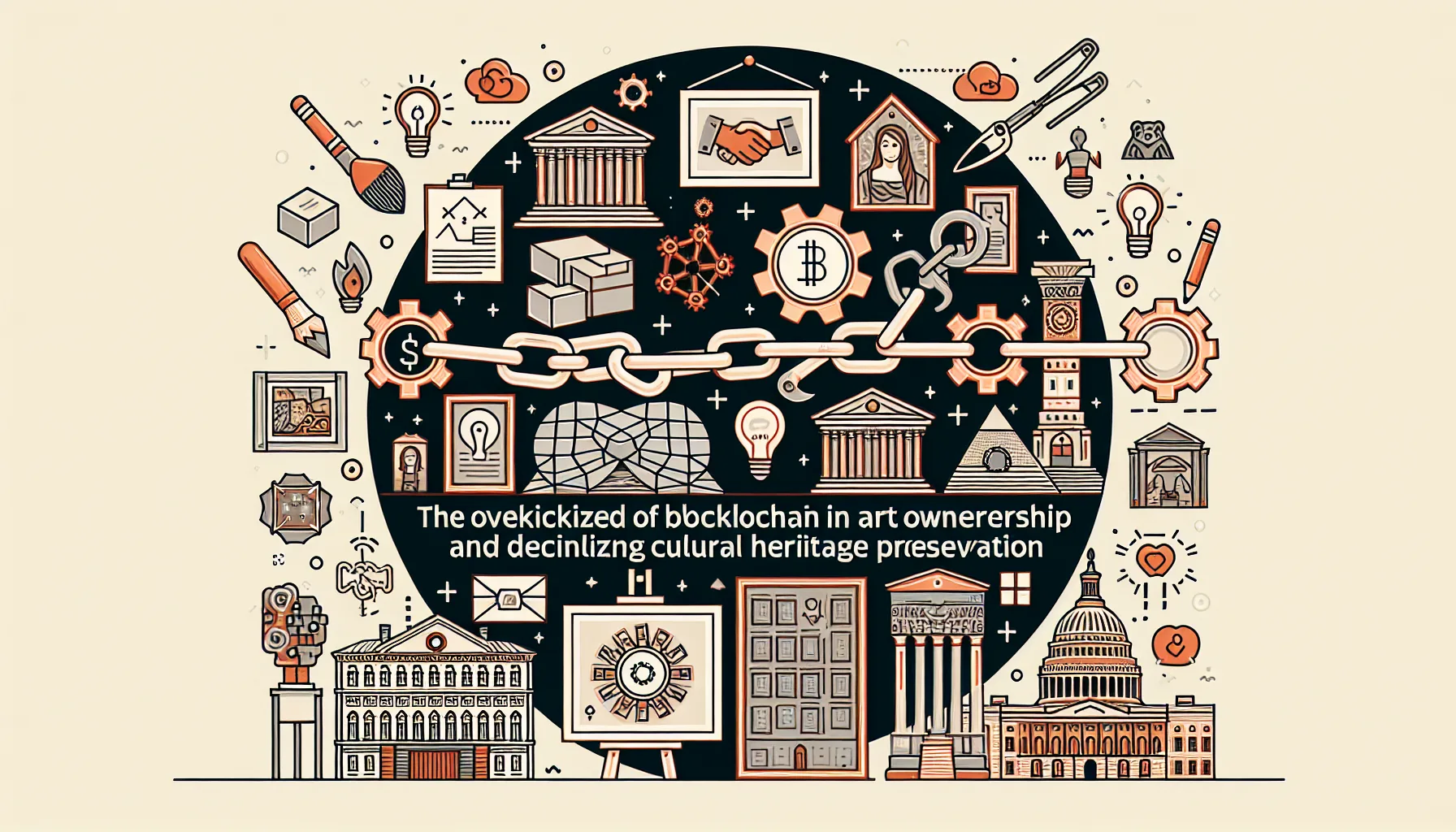
The Overlooked Promise of Blockchain in Decentralizing Art Ownership and Cultural Heritage Preservation
The Problem: Art Ownership Remains Centralized and Vulnerable
Despite blockchain’s potential to disrupt industries, the art and cultural heritage sectors remain largely centralized, riddled with opaque ownership records, elitist gatekeeping, and institutional control. Traditional art markets heavily rely on auction houses, galleries, and museums that dictate provenance and valuation. Cultural heritage, on the other hand, is often subject to repatriation disputes, theft, and corruption within centralized institutions. Blockchain promises decentralized solutions, yet adoption remains minimal due to technological, legal, and economic barriers.
A System Defined by Institutional Power
Historically, art ownership has been a privilege reserved for the wealthy and institutions with the capital to manipulate markets. While blockchain could introduce verifiable provenance and fractional ownership, major players resist disruption. Institutions are reluctant to relinquish control, fearing a loss of influence over authentication processes and asset valuation. Additionally, the legal framework surrounding tokenized art remains uncertain.
Decentralizing cultural heritage presents even greater challenges. Many artifacts in museums were acquired through colonial looting or questionable legal channels. Countries seeking repatriation struggle against bureaucratic inertia, and blockchain-based provenance tracking, though promising, raises concerns over jurisdictional enforcement. If a stolen artifact is registered on-chain, will global institutions recognize and uphold that data? Without legal recognition, blockchain records remain an inert tool rather than an actionable system.
Challenges Stalling Blockchain Adoption
Several hurdles prevent blockchain from reshaping art ownership and heritage protection:
-
Legal Uncertainty: Tokenizing artwork and cultural assets raises questions of enforceability. If a smart contract tracks fractional ownership, does it override traditional property law? Courts have yet to set precedents on whether on-chain ownership is legally binding.
-
Institutional Resistance: Museums and major art players control authentication and transfer records. They have little incentive to embrace decentralization unless forced by regulatory mandates or public pressure.
-
Scalability and Security Risks: While NFTs and tokenized fractional ownership models exist, they struggle with high transaction fees, smart contract vulnerabilities, and interoperability issues across blockchains.
-
Lack of Standardized Frameworks: No universal standard ensures that blockchain-verified provenance will be recognized across jurisdictions. A decentralized registry is meaningless if legal systems, insurers, and collectors do not accept it as proof of ownership.
The Unexplored Potential
Despite these barriers, blockchain has already demonstrated its ability to challenge centralized structures in other industries. Lessons from decentralized finance (DeFi) and governance models could inform a more robust framework for fractionalized ownership of art and heritage assets. Understanding how cryptographic protocols enable trustless transactions could pave the way for more seamless art authentication and decentralized decision-making. More insights from similar blockchain applications are explored in The Overlooked Impact of Cryptographic Protocols on Interoperability Among Blockchain Networks.
While blockchain’s role in revolutionizing digital art markets through NFTs has been widely discussed, its potential to overhaul tangible asset provenance and historical restitution remains an underexplored frontier. Addressing the existing roadblocks will require technological advancements, legal adaptations, and a shift in institutional attitudes.
Part 2 – Exploring Potential Solutions
Emerging Blockchain Solutions for Decentralized Art Ownership and Cultural Heritage Preservation
Tokenization and Fractional Ownership
NFTs have expanded beyond speculative digital art into vehicles for fractional ownership of physical and digital cultural assets. On-chain metadata secures provenance, while smart contracts enable automated royalty distribution. However, issues like metadata persistence (if not stored properly) and reliance on centralized minting platforms raise concerns about the longevity of tokenized assets.
Zero-Knowledge Proofs (ZKPs) for Private Transactions
For collectors and institutions reluctant to disclose purchases or holdings, Zero-Knowledge Proofs enable verifiable ownership transfers without exposing transaction details. While promising for private art deals, integration remains challenging due to computational overhead and current network inefficiencies in supporting large-scale ZKP verification. Those interested in cryptographic breakthroughs may find this deep dive into the impact of cryptographic protocols on blockchain interoperability relevant.
On-Chain Treasuries for Cultural Institutions
DAOs (Decentralized Autonomous Organizations) allow museums and preservation societies to manage art acquisition funds transparently. Community-driven governance models let stakeholders vote on acquisitions, sales, or exhibition priorities. Yet, power imbalances among significant token holders can centralize decision-making, undermining democratic ideals.
Digital Rights Management (DRM) on the Blockchain
Smart contracts can enforce licensing agreements for artworks and historical artifacts, preventing unauthorized reproductions. However, the effectiveness depends on widespread industry adoption—without legal recognition outside the Web3 space, enforcement mechanisms remain dependent on traditional legal systems.
Cross-Chain Interoperability for Permanent Storage
Storing cultural assets on a single blockchain risks obsolescence should the chain experience degradation or displacement by newer protocols. Cross-chain solutions like atomic swaps and wrapped tokens facilitate asset migration across networks, though these mechanisms introduce security risks and reliance on bridge protocols, which have been historically vulnerable to exploits.
Decentralized Identity for Art Provenance
DID (Decentralized Identifiers) frameworks allow artists and collectors to verify identity-linked ownership records without intermediaries. While DIDs strengthen authenticity, they rely on robust credential issuance systems, which are still underdeveloped for fine art and artifact provenance.
This landscape of potential solutions highlights both breakthroughs and persistent technological hurdles. Next, we’ll examine real-world implementations and assess whether these theoretical frameworks hold up when applied to decentralized art ownership and cultural heritage preservation.
Part 3 – Real-World Implementations
Real-World Implementations: Blockchain’s Role in Art and Cultural Heritage
Case Study: Art Tokenization on Ethereum and Komodo
One of the earliest and most notable implementations of blockchain in art ownership came through Ethereum’s ERC-721 standard. Platforms such as Async Art and SuperRare pioneered digital art tokenization, allowing artists to sell verifiable and unique NFT-based pieces. However, these approaches have encountered scalability challenges, particularly with soaring gas fees during network congestion.
Komodo (KMD), with its unique multi-chain architecture, was explored as an alternative. Unlike Ethereum, Komodo enables artists to launch independent smart chains with customized consensus mechanisms. While this provided more cost-efficient transactions, the lack of widespread adoption hindered its ability to attract established artists. A deep dive into Komodo’s overall contributions to blockchain governance is explored here.
Cultural Heritage Preservation on Tezos
Tezos has emerged as a preferred blockchain for museums and cultural institutions due to its energy-efficient proof-of-stake model and self-amending governance. UNESCO-backed initiatives have explored minting historical artifacts as NFTs, preventing counterfeiting while ensuring decentralized provenance tracking. However, difficulties remain regarding on-chain data permanence—metadata is often stored off-chain, creating security gaps if centralized storage solutions fail.
Challenges of Copyright Enforcement
While blockchain enables digital scarcity, the legal system has struggled to enforce NFT-associated intellectual property rights. A major issue arises when someone mints unauthorized reproductions of famous works. Unlike traditional registrars, a blockchain does not inherently verify authenticity beyond cryptographic hashes. This loophole has led to multiple high-profile disputes where original artists lacked recourse to reclaim ownership over stolen digital pieces.
Failures in Museum Integration
While several museums have attempted tokenized ownership models, few have gained substantial traction. Many potential adopters cite UX concerns—requiring crypto wallets, handling private keys, and navigating different blockchain frameworks have deterred traditional art collectors. Additionally, some projects failed due to liquidity constraints, as fractionalized art pieces proved difficult to trade effectively on secondary markets.
The next section will explore the long-term implications of blockchain’s role in decentralizing art and heritage ownership, analyzing potential innovations that could overcome these challenges.
Part 4 – Future Evolution & Long-Term Implications
The Future of Blockchain in Decentralizing Art & Cultural Heritage Ownership
While blockchain has already introduced digital scarcity and provenance tracking to art and cultural heritage, its continued evolution will dictate the extent of its real-world adoption. Several key developments are shaping its future, addressing scalability, interoperability, and integration with other emerging technologies.
Scalability Considerations in Art & Heritage Tokenization
One of the most pressing challenges remains scalability. High transaction fees and network congestion have already impacted certain NFT platforms, creating barriers to broader adoption. Layer-2 solutions and rollups might alleviate these issues, but their implementations have trade-offs, including centralization risks and fragmented liquidity.
Further developments in data availability protocols could make it feasible to store digital representations of physical art directly on-chain, rather than relying on off-chain storage linked via IPFS or Arweave. This could eliminate point-of-failure risks but would require architectures capable of handling vast amounts of cultural and historical data efficiently.
Cross-Chain Interoperability & Standardization
Artists, collectors, and institutions who tokenize artwork or historical assets will not want to be locked into a single blockchain. Interoperability frameworks, such as cross-chain bridges and protocols enabling permissionless migration of tokenized assets, are essential in ensuring long-term accessibility.
However, these solutions introduce security concerns. Many bridge hacks in recent years have revealed vulnerabilities in cross-chain asset transfers, requiring more robust cryptographic techniques, such as zero-knowledge proofs or decentralized validation mechanisms. Projects focused on enhancing blockchain interoperability will be critical in refining the infrastructure needed for seamless transfer of digital cultural assets.
AI & Blockchain Convergence in Authentication
Another imminent evolution lies at the intersection of artificial intelligence and blockchain. AI-driven authentication—using on-chain datasets—could become a game-changer in verifying digital and physical artworks without reliance on centralized authorities. For example, machine learning algorithms could analyze the brushstrokes, pigments, and historical provenance of an artwork while immutably recording validation details on-chain.
Yet, this raises concerns about AI's role in centralizing authentication. Could a future exist where AI-driven validators dictate authenticity without human oversight? Ensuring decentralized governance mechanisms over AI-assisted verification will be pivotal in maintaining trust.
The Role of Programmable Royalty Mechanisms
Current royalty structures in NFT-based art lack standardization. Some marketplaces enforce royalties, while others allow buyers to bypass them entirely, undermining artists’ long-term revenue streams. The next wave of innovation may involve smart contracts that dynamically adjust royalties based on provenance, ownership duration, or even real-world events tied to the asset.
The challenge? Decentralized enforcement. If royalty mechanisms become programmable yet still circumventable, debates over enforcement versus immutability will continue to shape the space.
The Next Phase: Governance & Decision-Making in Decentralization
As this technology evolves, the question of governance will become more pressing. Who decides the standards for tokenized cultural artifacts? How can decentralized organizations oversee their long-term storage, verification, and accessibility? The answers will define whether blockchain truly democratizes art ownership or merely replicates historical centralization in a new form.
Part 5 – Governance & Decentralization Challenges
Governance & Decentralization Challenges in Blockchain-Based Art Ownership
Centralized vs. Decentralized Governance: The Structural Trade-offs
Governance is the Achilles' heel of decentralized systems. While blockchain promises distributed control over art ownership and cultural heritage, the governance models currently in use present fundamental challenges that may constrain adoption. The two dominant approaches—centralized and decentralized governance—each introduce risks that could undermine the very purpose of using blockchain for cultural preservation.
A centralized governance model, where control rests with a single entity or small consortium, offers efficiency and clear decision-making pathways. However, it introduces risks of censorship, unilateral policy shifts, and regulatory capture. A museum or a government agency governing a blockchain-based art registry could easily impose restrictions or override ownership records—defying the immutability principle blockchain was designed to uphold.
Conversely, decentralized governance models, such as DAOs (Decentralized Autonomous Organizations), minimize centralized control but often fall victim to plutocratic control and governance attacks. When governance is token-based, wealthy entities can accumulate governance power, turning decision-making into an oligarchy rather than a community-driven process. This dynamic mirrors the power struggles seen in other decentralized networks and challenges the legitimacy of so-called "community ownership."
Governance Attacks and Capture Risks
Decentralized governance mechanisms also face attack vectors that could disrupt blockchain-based art registries. Governance attacks occur when malicious actors manipulate voting mechanisms to seize control. Examples include flash loan-powered governance takeovers, where attackers borrow large amounts of governance tokens only to influence a decision before repaying the loan.
Beyond technical attacks, there’s also regulatory capture, wherein major institutions infiltrate decentralized frameworks to align governance policies with their interests. An influential stakeholder—such as a high-profile museum or a large auction house—could amass governance tokens and enforce decisions that prioritize its business model over broader decentralization efforts.
In some cases, these risks align with the systemic issues present in DAOs, as seen in projects like XAI3, where governance centralization concerns have been widely debated. If blockchain-based art ownership follows a similar path, governance manipulation could render such systems useless in ensuring fair and decentralized provenance tracking.
The Road to Mass Adoption
Current blockchain-based governance structures are inadequate in balancing efficiency and decentralization. Emerging hybrid models, where governance power is distributed among multiple stakeholder layers—such as artists, collectors, historians, and preservation experts—may offer better resilience against capture and plutocratic rule.
With governance complexities in focus, the next key challenge to address is scalability. The ability to maintain decentralized integrity while supporting widespread adoption depends on the engineering trade-offs that enable both security and functionality at scale.
Part 6 – Scalability & Engineering Trade-Offs
Scalability & Engineering Trade-Offs in Decentralized Art Ownership and Cultural Heritage Preservation
Scaling blockchain solutions for decentralized art ownership and cultural heritage preservation presents a complex set of engineering trade-offs. Decentralization, security, and speed are often in tension, making architectural choices critical for effective implementation.
Scalability Constraints: Layer 1 vs. Layer 2
Layer 1 blockchains, such as Ethereum, offer strong decentralization and security but face transaction bottlenecks due to consensus overhead and block size limitations. While sharding and improved consensus algorithms seek to enhance performance, they introduce complexities in cross-shard communication that can hinder the seamless transfer of on-chain asset ownership.
Layer 2 solutions—rollups, sidechains, and state channels—address these bottlenecks by handling transactions off-chain while preserving Layer 1's security guarantees. Optimistic rollups provide scalability but introduce finality delays due to fraud-proof mechanisms. Meanwhile, zero-knowledge rollups (ZK-rollups) offer faster finality and enhanced privacy but require heavy computational resources for proof generation, raising concerns around validator centralization.
In the context of art and cultural asset tokenization, Layer 2 solutions can reduce transaction costs and improve marketplace efficiency. However, reliance on external validators or sequencers raises concerns about censorship and operator collusion, particularly when provenance verification is a critical requirement.
Consensus Mechanisms: Security vs. Performance
Consensus design affects how efficiently ownership records can be updated and secured. Proof-of-Work (PoW) is secure but computationally expensive, making it unsuitable for frequent transactions. Proof-of-Stake (PoS) and its variations, such as Delegated Proof-of-Stake (DPoS) and Liquid Staking, trade security decentralization for improved throughput but introduce governance centralization risk.
Alternative approaches like Directed Acyclic Graphs (DAGs) and Byzantine Fault Tolerant (BFT) consensus allow for increased transaction throughput but often sacrifice security in adversarial environments. For high-value art NFTs or cultural heritage assets where fraud is a significant concern, ensuring robust immutability is non-negotiable.
Interoperability vs. Fragmentation
Different chains handling art tokenization and heritage registries create interoperability challenges, particularly when assets need to be authenticated across multiple jurisdictions or platforms. Cross-chain bridges attempt to facilitate asset movement but have historically been security vulnerabilities, suffering from high-profile exploits.
Projects improving blockchain interoperability, such as those covered in The Overlooked Impact of Cryptographic Protocols on Interoperability Among Blockchain Networks, seek to bridge these gaps. However, a unified model for handling tokenized cultural artifacts remains an open challenge.
Introducing Regulatory & Compliance Risks
Beyond engineering limitations, large-scale adoption faces legal ambiguities regarding digital asset ownership, provenance, and jurisdictional compliance. The next section examines these regulatory risks, assessing how laws shape the future of decentralized cultural heritage preservation.
Part 7 – Regulatory & Compliance Risks
Regulatory & Compliance Risks in Blockchain-Based Art and Cultural Heritage
The intersection of blockchain technology and art ownership presents profound legal and regulatory challenges that cannot be ignored. While decentralized ledgers promise greater transparency and accessibility, they also open Pandora’s box in terms of intellectual property law, jurisdictional enforcement, and compliance with anti-money laundering (AML) regulations.
Jurisdictional Complexities and Fragmented Regulations
One of the most significant hurdles in implementing blockchain for cultural heritage preservation and decentralized art ownership is the fragmented global regulatory landscape. Most governments classify digital assets differently, creating an inconsistent patchwork of laws that projects must navigate. For example, a tokenized artwork on a distributed ledger may qualify as a security in one country, be deemed a commodity in another, and remain unregulated elsewhere.
Additionally, cross-border enforcement raises concerns. If an artwork is tokenized on an NFT marketplace in one jurisdiction but the original piece is housed in a different country with strict heritage protection laws, legal conflicts become inevitable. This issue is particularly pronounced when dealing with artifacts of historical or religious significance, as repatriation demands can clash with decentralized ownership models.
Government Intervention and Potential Restrictions
Decentralization does not mean total immunity from government regulations. Many jurisdictions have demonstrated their willingness to intervene in crypto markets, from outright bans on certain blockchain applications to restrictive licensing requirements for token issuance and trading platforms. In the context of cultural heritage, government entities could seek greater control over the tokenization of artworks considered national treasures, potentially requiring approvals or even prohibiting their removal from centralized archives.
Furthermore, regulators may impose stricter Know-Your-Customer (KYC) and AML requirements for platforms enabling the fractionalized sale of high-value cultural items. If an entity operates an art-token marketplace without appropriate compliance measures, it risks legal action or forced shutdowns. Projects integrating privacy-preserving technologies such as zero-knowledge proofs might also attract scrutiny for potentially facilitating illicit financial flows. More discussions on privacy-focused cryptographic implementations can be found in this deep dive.
Historical Crypto Regulations as a Precedent
The treatment of NFTs in legal frameworks remains in flux, but existing crypto regulations offer a roadmap. The precedent set by past enforcement actions against ICOs, DeFi platforms, and crypto exchanges indicates that regulatory bodies will not hesitate to classify digital assets as either securities or financial instruments subject to strict oversight. This raises concerns for art-backed tokenization models that rely on fractional ownership, as they could be deemed investment contracts under securities laws.
If regulatory trends continue on their current trajectory, future compliance obligations for blockchain-based art ownership may become increasingly stringent. The necessity for centralized intermediaries to conduct due diligence might erode the very ethos of decentralization that the industry seeks to uphold.
Next: The Economic and Financial Consequences
With regulatory uncertainty looming, the financial implications of blockchain in art and cultural heritage must also be examined. The next section will explore the economic consequences of tokenized art entering mainstream markets, including shifts in valuation patterns, liquidity concerns, and the potential risks of speculative bubbles.
Part 8 – Economic & Financial Implications
Economic & Financial Implications of Blockchain in Decentralizing Art Ownership
The intersection of blockchain and art ownership is already reshaping economic dynamics, but the long-term financial consequences remain unpredictable. While tokenization of art assets provides newfound liquidity and market access, it simultaneously introduces financialization risks that may outpace traditional regulatory frameworks.
Disrupting Traditional Art Markets
Historically, art investment has been an illiquid, high-barrier market, accessible only to a select class of collectors and institutions. By tokenizing artworks into fractional ownership represented on decentralized ledgers, blockchain undermines auction houses, galleries, and specialized art funds. Marketplaces built on trust and exclusivity might struggle to compete against smart contracts and automated transactions. This raises questions: Will Sotheby’s and Christie’s pivot towards blockchain integration, or will decentralized platforms entirely absorb their market share?
The removal of intermediaries also affects pricing mechanisms. Price discovery becomes transparent when transactions are recorded on-chain, potentially eliminating dark pools of influence that currently shape high-value transactions.
New Investment Vehicles & Economic Complexity
Decentralized art ownership produces novel financial products—NFT collectibles, synthetic asset derivatives, and collateralized asset-backed lending mechanisms. Protocols that use tokenized art as loan collateral introduce an entirely new layer of financialization, further embedding digital assets into DeFi.
However, fragmentation of ownership could invite instability. If high-value works are broken into thousands of tradable tokens, do they suffer from the same speculative cycles as traditional cryptocurrencies? And what happens when platforms holding these assets face liquidation events?
The rise of DAOs managing art holdings adds another layer of distributed governance. These decentralized entities may choose to buy, sell, or lease artworks based on tokenholder votes, introducing unpredictable market behaviors unfamiliar to legacy investors.
Winners and Losers in the Adoption Curve
Certain stakeholders stand to benefit significantly. Developers building smart contract-based ownership platforms and liquidity pools for art tokens will be early winners. Institutional investors wary of blockchain will either be forced to engage or risk losing influence over the art market. Meanwhile, traditional art dealers, appraisers, and gallery owners reliant on subjective valuations might find their roles diminished.
However, not all decentralized alternatives succeed. Projects promising tokenized ownership but lacking legal enforceability could lead to conflicts over IP rights. This echoes broader criticisms of decentralized finance, where issues of governance and regulatory gaps often yield unanticipated risks—concerns parallel to those found in emerging DeFi models such as ANKR2’s evolving structure.
This shift in economic structuring within digital art markets is only the beginning. As blockchain-based ownership models redefine economic value, the social and philosophical dimensions of decentralizing cultural heritage ownership come into focus.
Part 9 – Social & Philosophical Implications
Economic & Financial Implications of Blockchain in Decentralized Art Ownership
Disrupting the Traditional Art Market
The tokenization of art via blockchain challenges the long-standing exclusivity of the traditional art market. Auction houses and galleries, which have historically controlled access and pricing, now face potential disintermediation as blockchain enables direct ownership transfers and fractionalized investment. This shift reduces fees, increases liquidity, and introduces a broader investor base, but also threatens the status quo of elite-controlled valuation mechanisms.
Moreover, with decentralized autonomous organizations (DAOs) investing in and curating art, collective ownership could redefine provenance, but it also introduces governance risks. Without structured oversight, disputes over digital asset control or resale value could cause fragmentation within communities.
New Investment Mechanisms & Speculative Risks
Tokenized art assets open opportunities for institutional investors, including crypto hedge funds and DeFi platforms, to collateralize digital art holdings. Lending protocols could integrate tokenized artworks as backed collateral, allowing NFT holders to leverage these digital assets for liquidity. However, this inevitably raises questions of valuation stability—can a tokenized Banksy or Monét maintain collateral security in volatile markets?
Yield farming mechanisms, staking, and liquidity provision models built around art-token ecosystems may also bring high APYs but introduce secondary market risks. NFT-based derivatives could arise, with traders speculating on art-based synthetic assets. If not properly structured, these instruments could replicate traditional financial market failures, leading to liquidity crunches and collapses similar to highly leveraged traditional financial derivatives.
Winners & Losers in the Transition
Blockchain developers building the infrastructure for art tokenization benefit significantly, as their platforms will serve as the backbone of this emerging financial model. Similarly, traders who capitalize on arbitrage opportunities between fragmented NFT platforms stand to gain. Those owning early-stage platform governance tokens may see value appreciation as the sector expands.
On the losing end, traditional auction houses and galleries that fail to integrate decentralized solutions could see reduced market dominance. Artists dependent on intermediary validation may also struggle to gain recognition in a rapidly tokenized economy. Meanwhile, smaller investors could face outsized risk if art-backed assets become subject to rug-pulls or manipulation, similar to fraudulent token launches in the broader crypto space.
One avenue mitigating trust issues lies in cryptographic authentication models. As explored in The Hidden Impact of Blockchain in Protecting Intellectual Property Rights, verification layers could prevent counterfeit artworks and fraudulent duplicate NFT claims, reinforcing market confidence.
Setting the Stage for Social & Philosophical Impacts
Beyond financial disruption, the tokenization of culture questions deep-rooted assumptions about value, ownership, and authenticity. The next section of this series explores how decentralized art ownership challenges conventional notions of artistic control, cultural heritage, and community-driven curation.
Part 10 – Final Conclusions & Future Outlook
Final Conclusions & Future Outlook: The Overlooked Promise of Blockchain in Decentralizing Art Ownership and Cultural Heritage Preservation
After exploring the intricate role of blockchain in transforming digital art ownership and cultural heritage preservation, several key insights have emerged. Tokenization has opened unprecedented possibilities for creators and collectors alike, eliminating unnecessary intermediaries while increasing accessibility. However, challenges such as legal recognition, copyright enforcement, and scalability remain pressing concerns.
Best-Case vs. Worst-Case Scenarios
The best-case scenario envisions widespread adoption where museums, galleries, and private collectors embrace blockchain-backed provenance tracking. Smart contracts could automate royalties, ensuring artists receive compensation for secondary sales. In this future, decentralized repositories preserve cultural artifacts in an immutable ledger, protecting them from political or economic instability.
On the other hand, the worst-case scenario sees fragmentation continue, with competing blockchain networks failing to interoperate. Existing institutions might resist integration due to regulatory uncertainty, while speculative markets overrun genuine cultural preservation efforts. In such a landscape, blockchain might be relegated to a niche tool rather than a foundational innovation for the art world.
Remaining Unanswered Questions
Several questions still loom over blockchain’s role in this sector. Can decentralized autonomous organizations (DAOs) serve as effective governance models for digital art collections? Will governments establish blockchain-based registries for cultural assets, or will these initiatives remain limited to independent efforts? Most importantly, will blockchain solutions be capable of evolving beyond novelty use cases into infrastructure-level adoption?
One potential clue lies in the resilience of decentralized governance. Examining how projects like GLCX8 navigate governance challenges may provide insight into whether blockchain-based cultural asset management can truly succeed. If viable DAOs emerge for managing shared cultural legacies, it would reinforce the argument for blockchain’s permanence in this space.
What Needs to Happen for Mass Adoption?
For blockchain-backed digital art and heritage preservation to reach full potential, several developments must occur:
- Regulatory Clarity: Governments and legal bodies must establish frameworks recognizing tokenized ownership of both digital and physical artifacts.
- User Experience: Projects need intuitive platforms that simplify blockchain interactions for artists, collectors, and institutions.
- Interoperability: Cross-chain functionality must improve, preventing fragmentation and ensuring digital art marketplaces remain fluid and accessible.
The foundation has been laid, but the path forward is uncertain. Is blockchain’s role in art and cultural preservation the beginning of a revolutionary shift, or will it become one of many abandoned experiments in crypto’s history?
Authors comments
This document was made by www.BestDapps.com