Part 1 – Introducing the Problem
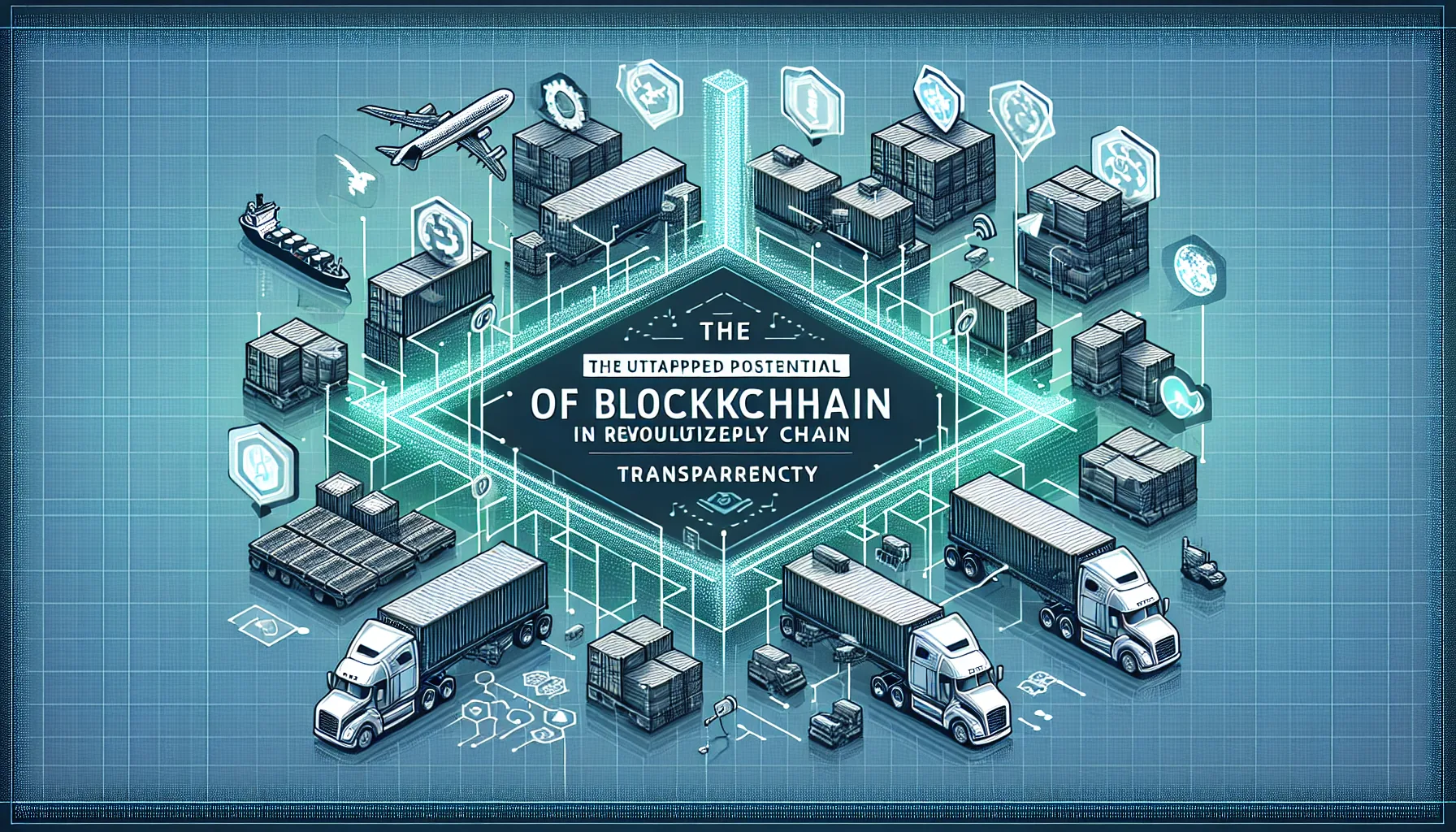
The Untapped Potential of Blockchain in Revolutionizing Supply Chain Transparency
The Hidden Complexity of Supply Chains
Supply chains are a labyrinth of interconnected entities—producers, distributors, logistics providers, and retailers—all relying on fragmented and opaque systems to track goods and verify authenticity. Despite blockchain’s promise of decentralization and transparency, large-scale adoption in supply chain management remains limited. The bottlenecks include legacy integration challenges, resistance from entrenched intermediaries, and the practical issues of on-chain data reliability.
At its core, the problem isn't just inefficiency—it's a fundamental lack of verifiable truth. Supply chain networks span multiple jurisdictions, each with its own regulatory framework, record-keeping requirements, and trust mechanisms. Transactions take place behind closed doors, leaving no immutable record of quality, provenance, or ethical compliance. While decentralized finance (DeFi) has transformed financial interactions, supply chain transparency remains a vastly underutilized application of blockchain technology.
Why Blockchain Adoption Has Stalled in Supply Chains
Blockchain integration in supply chains has largely been an afterthought compared to other crypto verticals like DeFi or NFT ecosystems. The primary roadblock is the data validation issue: blockchain can securely store transaction records, but it cannot independently verify the physical movements or conditions of goods. Without reliable oracles or cryptographic proof mechanisms, supply chains risk becoming filled with unverifiable on-chain claims.
Additionally, competitors fear the risks of information leakage. While a shared, immutable ledger could prevent fraud and counterfeit products, companies are often hesitant to reveal proprietary sourcing, transit routes, or supplier relationships. Even permissioned blockchain consortia struggle to find the right balance between transparency and data sovereignty.
There are also infrastructural barriers. Most blockchains aren’t optimized for supply chain needs because they emphasize financial transactions rather than real-world logistics coordination. Scalability concerns further complicate adoption—handling millions of supply chain events in a trustless, cost-efficient way remains technically and economically challenging. Projects like layer-2 scaling solutions have attempted to address transaction bottlenecks in DeFi [see more]—but bridging this to supply chain logistics introduces additional complexities.
The Ripple Effect on the Broader Crypto Ecosystem
The failure to fully integrate supply chain transparency into blockchain technology has broader implications. If blockchain cannot prove its value beyond financial applications, mainstream adoption will continue to lag. Moreover, the fragmentation of solutions—some relying on private ledgers, others attempting to merge DeFi concepts with logistics—creates inefficiencies that slow down collective progress.
Despite these hurdles, there are emerging cryptographic solutions, new incentive models, and governance frameworks attempting to tackle these shortcomings. As blockchain technology matures, can it bridge the gap between on-chain guarantees and real-world legitimacy?
Part 2 – Exploring Potential Solutions
Emerging Blockchain Solutions for Supply Chain Transparency
The application of blockchain in supply chain transparency extends beyond simple record-keeping. Several emerging technologies within decentralized networks propose solutions to supply chain inefficiencies, each with distinct advantages and trade-offs.
Zero-Knowledge Proofs (ZKPs) for Confidentiality and Verification
Zero-knowledge proofs present a compelling solution for balancing transparency with confidentiality. By allowing entities to prove the validity of a transaction without revealing sensitive details, ZKPs provide verifiable supply chain data while preserving trade secrets. However, computational costs and implementation complexity hinder widespread adoption. Networks leveraging ZK rollups have demonstrated improved efficiency, yet concerns remain over trusted setup requirements and the feasibility of scaling such architectures.
Optimistic Rollups: Efficiency vs. Security Trade-offs
Optimistic rollups offer a pathway to reducing transaction costs and improving throughput by assuming transactions are valid unless challenged. Projects experimenting with optimistic rollups in supply chain tracking report significant gas fee reductions. Yet, fraud-proof mechanisms introduce latency, and the reliance on centralized sequencers for dispute resolution limits their viability in fully autonomous supply chain systems. Additionally, layer 2 innovation projects like METIS aim to refine the rollup approach, though decentralized governance hurdles persist.
Decentralized Identity for Supplier Verification
A critical issue in supply chain transparency is supplier authentication. Decentralized identity (DID) solutions allow suppliers to authenticate themselves without relying on centralized entities. This reduces fraud risks and ensures compliance with regulatory standards. Nonetheless, adoption struggles with interoperability concerns, as various DID standards compete, and solutions often depend on off-chain components, undermining full decentralization.
Cross-Chain Interoperability for Multi-Network Coordination
Supply chains span multiple jurisdictions and involve numerous blockchain networks. Cross-chain interoperability protocols aim to bridge these networks, enabling seamless data exchange between fragmented ecosystems. Trust-minimized bridges mitigate vulnerabilities associated with traditional cross-chain transfers, but trade-offs in latency and security weaknesses in smart contract-based bridges remain a significant concern.
Tokenized Asset Tracking and Programmable Smart Contracts
By tokenizing physical goods into digital assets, blockchain can enhance traceability through automated updates recorded on-chain. Smart contracts trigger predefined events in the supply chain, such as automatic payment settlements upon verified delivery. Challenges involve oracle reliability—off-chain data needs trust-minimized verification mechanisms to prevent data manipulation.
The effectiveness of these technologies hinges on overcoming scalability, decentralization, and governance bottlenecks. The next section dives into real-world implementations, evaluating whether theoretical solutions translate into functional, scalable supply chain improvements.
Part 3 – Real-World Implementations
Real-World Implementations: Blockchain's Role in Supply Chain Transparency
TRACX: Applying Blockchain to Supply Chain Management
TRACX has positioned itself as a blockchain-driven solution for global supply chain tracking. Utilizing immutable ledgers and smart contracts, TRACX enables companies to verify authenticity, eliminate inefficiencies, and prevent counterfeiting. The network's integration with IoT data sources ensures real-time verification processes, reducing human-dependent tracking errors.
Despite the advancements, TRACX has faced major implementation challenges. Data interoperability across legacy supply chain systems has been a significant hurdle, requiring extensive customization. Additionally, while decentralization improves trust, onboarding traditional suppliers has proven difficult, as many remain resistant to adopting a transparent digital ledger. This friction has slowed adoption in sectors reliant on opaque supply chain models for competitive advantage.
For those interested in a deeper look at TRACX's impact in the blockchain space, this article provides further analysis.
Metis Layer 2 and Supply Chain Efficiency
Metis, an Ethereum Layer 2 scaling solution, has attempted to implement scalable smart contracts for supply chain automation within decentralized autonomous companies (DACs). By reducing gas fees and transaction times, Metis makes real-time supply chain settlements possible, something impractical on Ethereum's congested network.
However, despite the theoretical benefits, Metis faces critical hurdles regarding security risks and centralized roll-up concerns. The challenge of ensuring full transparency while maintaining efficiency has led to questions about its long-term viability. Moreover, its optimistic roll-up approach relies on fraud proofs, which, if not properly managed, could introduce vulnerabilities in data verification.
A broader discussion on Metis' benefits and limitations can be found here.
The BLKZ Governance Model for Transparent Supply Chains
BLKZ has integrated governance mechanisms to enforce supply chain accountability through decentralized voting systems. This model enables producers, suppliers, and retailers to verify product authenticity while allowing consumers to participate in quality control through blockchain-embedded feedback loops.
Despite its innovative approach, governance bottlenecks have emerged. Slow decision-making among decentralized participants has made real-time supply chain adjustments nearly impossible. Additionally, concerns regarding token-weighted voting mechanisms disproportionately favor large stakeholders, creating concerns about centralization risks within supposedly trustless ecosystems.
Overcoming Blockchain’s Adoption Barriers in Supply Chains
While blockchain-driven transparency offers undeniable benefits, real-world implementations consistently face challenges related to industry resistance, technical bottlenecks, and governance inefficiencies. Scaling solutions, layer 2 integrations, and decentralized governance continue to evolve, but widespread adoption remains an uphill battle.
Part 4 – Future Evolution & Long-Term Implications
Future Evolution & Long-Term Implications of Blockchain in Supply Chain Transparency
Scaling Blockchain for Global Supply Chains
Scalability remains the Achilles' heel of blockchain-based supply chain solutions. While current implementations on permissioned and hybrid blockchain networks provide some level of efficiency, they struggle to match the transactional throughput required for large-scale adoption. Innovations such as modular blockchain architectures and rollups are emerging as potential solutions.
Optimistic and zero-knowledge rollups could allow supply chain platforms to process and verify data off-chain before publishing compressed proofs on-chain, reducing congestion and gas costs. Similarly, Layer 2 scaling solutions—already proving their value in DeFi—might become essential for supply chain networks that demand high-frequency, low-cost transactions. However, fragmentation among Layer 2 solutions raises concerns about interoperability, which could hinder widespread adoption. Projects tackling cross-chain integration, such as those discussed in The Overlooked Role of Cross-Chain Interoperability in Boosting DeFi Innovation, could offer insights into bridging scalability gaps in supply chain applications.
Integration with IoT and AI for Real-Time Monitoring
Blockchain’s synergy with IoT devices and AI could enhance real-time transparency in supply chains. IoT sensors embedded in shipments can generate immutable on-chain records, tracking location, temperature, humidity, and potential tampering. Combined with AI-based anomaly detection, this data could identify disruptions or inefficiencies before they escalate.
Despite its potential, fully integrating IoT with blockchain presents security and data integrity challenges. IoT devices are prone to hacking, and without robust mechanisms to validate data before it’s written on-chain, blockchain risks becoming a repository for compromised or inaccurate information. Zero-knowledge proofs (ZKPs) may help verify IoT-generated data without revealing specifics, but practical implementation at an enterprise scale remains a significant hurdle.
Smart Contracts and Autonomous Supply Chains
Smart contracts could further automate supply chain processes, optimizing agreements, payments, and dispute resolutions. However, complexities in legal enforceability and oracles' reliance on off-chain data introduce vulnerabilities. As decentralized oracle protocols evolve, addressing issues of data accuracy and cost-efficiency, smart contracts might transition from being supplementary tools into primary drivers of supply chain automation.
Yet, the notion of autonomous supply chains—where AI-driven smart contracts self-execute based on on-chain and IoT data—remains aspirational rather than immediately practical. Governance concerns, protocol standardization, and trust in automated decisions will influence adoption in the coming years.
The next section will explore governance, decision-making, and decentralization within blockchain-powered supply chain ecosystems, examining the role of trustless mechanisms and the challenges of aligning incentives among network participants.
Part 5 – Governance & Decentralization Challenges
Governance & Decentralization Challenges in Blockchain Supply Chains
Centralized vs Decentralized Governance in Supply Chains
Blockchain adoption in supply chain transparency hinges heavily on governance decisions. While decentralization is often praised for its resilience, different governance models present trade-offs that could impact adoption.
Centralized blockchain governance models streamline decision-making, ensuring faster updates and regulatory compliance. However, they introduce risks like regulatory capture—where entities with vested interests manipulate governance structures to their advantage. A single government entity or corporate consortium could push protocol changes that serve their needs over the broader ecosystem’s.
On the other hand, decentralized governance distributes decision-making but remains susceptible to plutocratic control—where governance power skews towards those with the most tokens. This results in supply chain decisions being dictated by financial interests rather than industry-wide fairness.
The Vulnerability of Decentralized Decision-Making
Many decentralized protocols rely on token-based governance, often advertised as democratic. However, entities with deep pockets can accumulate governance tokens and enforce protocol changes that benefit them disproportionately. For a supply chain implementation, this could lead to opaque pricing mechanisms, selective visibility of data, or even censorship of specific participants.
Additionally, governance attacks pose risks. Malicious actors or hostile takeovers can manipulate decisions by buying governance tokens in bulk or orchestrating coordinated attacks on voting mechanisms. For example, supply chain nodes could collude to alter logistics data for specific suppliers, introducing fraudulent tracking without immediate detection.
Balancing Decentralization and Efficiency
Striking a balance between decentralized governance and operational efficiency remains a challenge. Some Layer 2 solutions offer governance optimizations that reduce voting bottlenecks while maintaining decentralized principles. Metis, for instance, introduces modifications to minimize transaction costs and governance inefficiencies (read more about Metis challenges).
Decentralized Autonomous Organizations (DAOs) could help by introducing multi-tiered voting where supply chain stakeholders—manufacturers, logistics providers, retailers—have distinct voting weights instead of a one-token-one-vote system. This could prevent financial entities from dominating governance while ensuring industry players have input.
Without robust governance models, blockchain-based supply chains may struggle with decision paralysis, manipulation by dominant players, or fragmentation due to conflicting interests. Optimizing these systems will require thoughtful engineering choices, which we will explore in the next section on scalability and engineering trade-offs.
Part 6 – Scalability & Engineering Trade-Offs
Scalability & Engineering Trade-Offs in Blockchain-Based Supply Chain Transparency
Scalability in blockchain-based supply chain solutions remains one of the most challenging bottlenecks. As networks grow to accommodate complex transaction data across global supply chains, the trilemma between decentralization, security, and speed becomes a fundamental engineering roadblock.
Throughput Constraints & Layer Strategies
Public blockchains often struggle with throughput limitations. Ethereum, for example, has a base layer with restrictive transaction speeds due to its proof-of-stake design, leading many projects to explore Layer 2 solutions. Solutions like rollups or sidechains improve throughput, but they introduce trade-offs—rollups require data availability reliance on Layer 1, while sidechains increase risks tied to bridge security. The reliance on Layer 2 also raises questions about the decentralization integrity of supply chain tracking solutions.
For enterprises, permissioned blockchains such as Hyperledger Fabric provide faster finality, higher scalability, and more control over governance. However, these networks sacrifice decentralization, making them potentially less resilient to systemic failures and third-party interference. While these trade-offs might be acceptable in private supply chains, they undermine the trustless nature that public blockchain applications strive for.
Consensus Mechanisms & Their Implications
Choosing the right consensus mechanism influences the speed and integrity of blockchain networks. Proof-of-Work (PoW) networks, while secure, face scaling constraints due to high energy consumption and slow confirmation times. Proof-of-Stake (PoS) alternatives, while improving on efficiency, introduce concerns over validator centralization—where a few entities control transaction ordering.
For enterprises implementing blockchain in supply chains, hybrid models that combine PoS with Byzantine Fault Tolerance (BFT) mechanisms present an attractive alternative. These models allow for faster finality while maintaining security assurances. However, BFT variations such as Practical Byzantine Fault Tolerance (PBFT) scale poorly in highly decentralized environments, as communication overhead explodes with more validators.
Some Layer 2 projects aim to solve these constraints through optimistic rollups or zero-knowledge proofs, but both methodologies introduce trade-offs between scalability and complexity. Optimistic rollups reduce validation overhead yet increase withdrawal waiting periods, while zero-knowledge rollups demand extensive cryptographic computations, potentially causing inefficiencies in dynamic supply chain tracking.
For a deeper discussion on Layer 2 trade-offs, read The Hidden Challenges of Layer 2 Solutions: Are They Really the Answer to Blockchain Scalability?.
Conclusion
Scalability remains a core limitation for blockchain’s role in supply chain transparency, requiring a balance between decentralization, security, and performance. The exploration of Layer 2 scaling solutions, hybrid consensus mechanisms, and engineering optimizations continues to shape viable implementations.
The next section will examine the regulatory and compliance risks associated with blockchain-based supply chain solutions.
Part 7 – Regulatory & Compliance Risks
Regulatory & Compliance Risks in Blockchain-Based Supply Chains
Blockchain’s ability to create transparent, immutable ledgers makes it a powerful tool for supply chain management. However, regulatory and compliance challenges could obstruct adoption, particularly when supply chain operations span multiple jurisdictions with differing legal frameworks. Governments and regulatory bodies worldwide remain cautious about blockchain’s potential impact on consumer protection, fraud prevention, and tax compliance.
Jurisdictional Challenges
A supply chain supported by blockchain technology is inherently cross-border, but regulatory policies are not. Countries enforcing strict Know Your Customer (KYC), Anti-Money Laundering (AML), and data localization laws create friction in adopting blockchain solutions. Compliance requirements, such as GDPR in the EU and differing financial regulations across Asia and North America, make it difficult to establish a uniform, legally sound blockchain network.
For instance, decentralized platforms enabling supply chain financing or payments may struggle to comply with financial regulations in regions where crypto transactions are restricted or heavily taxed. Some jurisdictions even require entities operating blockchain-based services to obtain financial licenses, which can be a major barrier to startups and logistics providers.
Potential Government Interventions
Regulatory scrutiny surrounding blockchain-based supply chains often stems from concerns over trade secrecy, accountability, and systemic risks. Governments may demand "backdoor access" to blockchain records, citing national security or fraud prevention. This contradicts blockchain’s core principle of decentralization and immutability, raising concerns over how regulatory oversight might alter its effectiveness.
Additionally, major economies with protectionist policies could impose compliance mandates that favor legacy corporate supply chain solutions over open blockchain networks. Governments may also require that nodes processing supply chain transactions operate within their jurisdiction, reinforcing centralization and reducing blockchain’s global efficiency.
Precedents from Crypto Regulations
Historical crypto regulations suggest that regulatory measures could become more restrictive over time. Initial approaches to cryptocurrency ranged from outright bans to regulatory sandboxes allowing limited experimentation. Some governments have strengthened compliance frameworks by mandating stablecoin collateralization, limiting DeFi protocols, and demanding on-chain monitoring tools. These trends suggest that blockchain-based supply chains might face similar regulatory impediments, including enforced transaction visibility or prohibitions against pseudonymous participants.
Another precedent is Layer 2 scalability solutions, where regulatory concerns over security and compliance impact adoption. The skepticism towards Layer 2 protocols, highlighted in articles like The Hidden Challenges of Layer 2 Solutions: Are They Really the Answer to Blockchain Scalability?, could extend to supply chain solutions relying on off-chain scalability mechanisms.
With regulatory frameworks in flux and government scrutiny intensifying, the introduction of blockchain-powered supply chains could have significant economic and financial implications—an area that warrants deeper analysis in the next section.
Part 8 – Economic & Financial Implications
Economic & Financial Implications of Blockchain in Supply Chain Transparency
Market Disruptions and Value Shifts
Blockchain-driven supply chain transparency has the potential to radically disrupt existing markets. As trustless verification becomes more commonplace, intermediaries in logistics, auditing, and certification may face significant downsizing. This shift could see legacy verification firms losing revenue as on-chain proof of provenance eliminates the need for third-party attestations. Additionally, industries plagued by counterfeit goods—such as pharmaceuticals, electronics, and luxury fashion—may experience value redistributions as transparency exposes fraudulent actors and strengthens brands committed to ethical sourcing.
At the same time, blockchain’s adoption in supply chains could significantly impact global trade economics. Reduced fraud, optimized logistics, and automated smart contract execution will likely result in cost efficiencies, potentially lowering consumer prices. However, these efficiencies might also lead to industry consolidation, where companies leveraging blockchain most effectively outcompete smaller businesses unable to transition.
The Rise of New Investment Vehicles
For investors, the integration of blockchain in supply chains introduces novel financial instruments. Tokenized representations of supply chain assets could enable fractional ownership of commodity shipments, opening new opportunities akin to DeFi-based synthetic assets but applied directly to physical trade. Additionally, data-driven investment strategies may emerge, where real-time supply chain metrics become tradable insights in financial markets.
This transition also poses risks. If supply chain tokenization gains speculation-driven momentum, it could introduce volatility akin to that seen in crypto markets. Furthermore, regulatory scrutiny may surface around compliance in tokenized logistics, particularly concerning anti-money laundering (AML) frameworks and jurisdiction-specific trade laws.
Winners and Losers in the Transition
Institutional Investors
Hedge funds and asset managers could benefit from exposure to blockchain supply chain assets, particularly if tokenized representations of trade logistics create new pricing mechanisms. Institutional players with early access to on-chain provenance data may gain an edge in pricing risks tied to global trade disruptions, effectively monetizing superior supply chain intelligence.
Developers and Infrastructure Builders
Blockchain developers and enterprises building or refining Layer 2 solutions will see heightened demand, particularly in reducing on-chain transaction costs for logistics-heavy industries. Scalable Layer 2 networks such as METIS are already addressing fundamental bottlenecks in blockchain usability, laying the groundwork for efficient supply chain applications.
Traders and Arbitrageurs
On-chain visibility into supply chain delays may provide traders with actionable insights, allowing them to react faster to geopolitical or raw material shortages. However, arbitrageurs benefitting from opaque supply chains may see their advantages diminished as blockchain reduces information asymmetry.
The next section will explore the broader social and philosophical implications of blockchain’s increasing role in supply chain transparency, diving into questions about privacy, ethical sourcing, and the evolving nature of trust in decentralized ecosystems.
Part 9 – Social & Philosophical Implications
Economic & Financial Implications of Blockchain in Supply Chain Transparency
Market Disruption: Decentralization vs. Incumbent Control
The integration of blockchain in supply chains challenges centralized entities that have long controlled logistics data and financial flows. Enterprises reliant on opaque supply networks—such as large-scale wholesalers or third-party certifiers—face a paradigm shift where blockchain-enforced transparency removes their role as intermediaries. This decentralization could erode market share for legacy firms operating in supply chain finance, pushing them to either consolidate or pivot towards blockchain-native solutions.
For institutional investors, the disruption presents a dual-edged opportunity. Those backing traditional supply chain service providers may see asset depreciation, while those positioned in blockchain-oriented logistics firms could capitalize on the technology’s increasing adoption. Tokenized supply chain financing—through smart contracts and automated payments—may also reduce reliance on credit-based trade finance, forcing banks to either integrate on-chain asset tracking or risk losing market relevance.
New Investment Models: Tokenization of Supply Chain Assets
Tokenization introduces innovative financial models where supply chain components—from raw materials to logistics services—can be represented as tradable digital assets. This shift enables real-time fractional ownership of commodities and freight capacity, creating new liquidity pools for traders. However, it also heightens risks of speculative manipulation, especially when logistics tokens interact with decentralized exchanges that lack robust regulatory oversight.
The emergence of Layer-2 scaling solutions, such as METIS, optimizes the efficiency of blockchain-based supply chain settlements. But while these networks promise high-speed transactions, they introduce security concerns. The reliance on rollups or bridge mechanics exposes assets to unforeseen attack vectors, creating additional risk for investors participating in tokenized supply chain ecosystems.
Volatility Risks and Economic Uncertainty
Blockchain implementations inherently introduce volatility due to dependence on fluctuating gas fees, protocol governance, and token model adjustments. Supply chain managers may hesitate to adopt decentralized ledgers if unpredictable costs pose operational inefficiencies, creating an onboarding barrier for enterprises.
Moreover, the integration of decentralized identity verification with supply chain tracking—which is crucial for authenticity validation and fraud prevention—could lead to privacy concerns. Companies shifting towards full transparency may encounter compliance challenges, especially in jurisdictions with strict data protection laws.
As blockchain reshapes the financial mechanics of logistics, its broader economic implications extend beyond profit-driven models. The next section will explore how its adoption influences labor structures, ethical sourcing, and the philosophical intersection of decentralization and corporate accountability.
Part 10 – Final Conclusions & Future Outlook
Final Conclusions & Future Outlook: The Untapped Potential of Blockchain in Supply Chain Transparency
After deep-diving into the intricacies of blockchain's role in revolutionizing supply chain transparency, clear patterns emerge—both in its game-changing potential and its unresolved concerns. Throughout this series, we’ve dissected blockchain’s ability to enhance traceability, minimize fraud, and increase efficiency. We've also explored the technological barriers, regulatory challenges, and adoption complexities. Now, what does the future hold?
Best-Case vs. Worst-Case Scenarios
In an ideal world, blockchain-based supply chain solutions become the industry standard. Governments, enterprises, and logistics firms collaborate to implement public or hybrid blockchain networks to ensure real-time, tamper-proof traceability. More importantly, solutions that balance scalability without sacrificing decentralization—such as rollups and Layer-2 technologies—cement blockchain’s role as a long-term pillar in global commerce. If interoperability improves, platforms could communicate seamlessly, allowing entire industries to converge under shared standards of transparency and accountability.
Conversely, the worst-case scenario unfolds if blockchain’s inherent drawbacks—scalability limitations, regulatory uncertainty, and reluctance from industry incumbents—remain unresolved. If enterprises view these solutions as cost-intensive or technically burdensome, the technology could remain relegated to niche implementations rather than widescale integration. In that case, blockchain might join the list of overhyped innovations that never fully materialized in supply chain management.
Outstanding Challenges and Unresolved Questions
Several critical areas still lack definitive solutions:
- Scalability & Cost – Can blockchain networks scale for industries handling millions of transactions daily without exorbitant costs?
- Regulatory & Compliance Frameworks – How will policymakers regulate on-chain supply chain data? Will compliance requirements reduce blockchain’s decentralization?
- Interoperability & Standardization – Can different blockchain networks integrate across global supply chains without creating further data silos?
Adoption Roadmap: What Needs to Happen?
Mass adoption demands more than just better blockchain protocols; it requires solving real-world friction points. Solutions like Metis’ Layer-2 framework offer promising ways to reduce transaction costs, but broader adoption also hinges on corporate commitment and developer integrations. Additionally, regulatory clarity could play a make-or-break role, as enterprises will not fully embrace blockchain without legal assurances.
Whether blockchain-driven supply chain transparency becomes a defining technological breakthrough or just another hyped experiment will depend on addressing these key hurdles. Will the industry’s central players push past the barriers, or will blockchain’s promise of trustless, verifiable logistics simply fade into history?
Authors comments
This document was made by www.BestDapps.com