Part 1 – Introducing the Problem
The Overlooked Role of Blockchain in Disaster Relief and Humanitarian Aid
A Broken System: The Failure of Traditional Aid Distribution
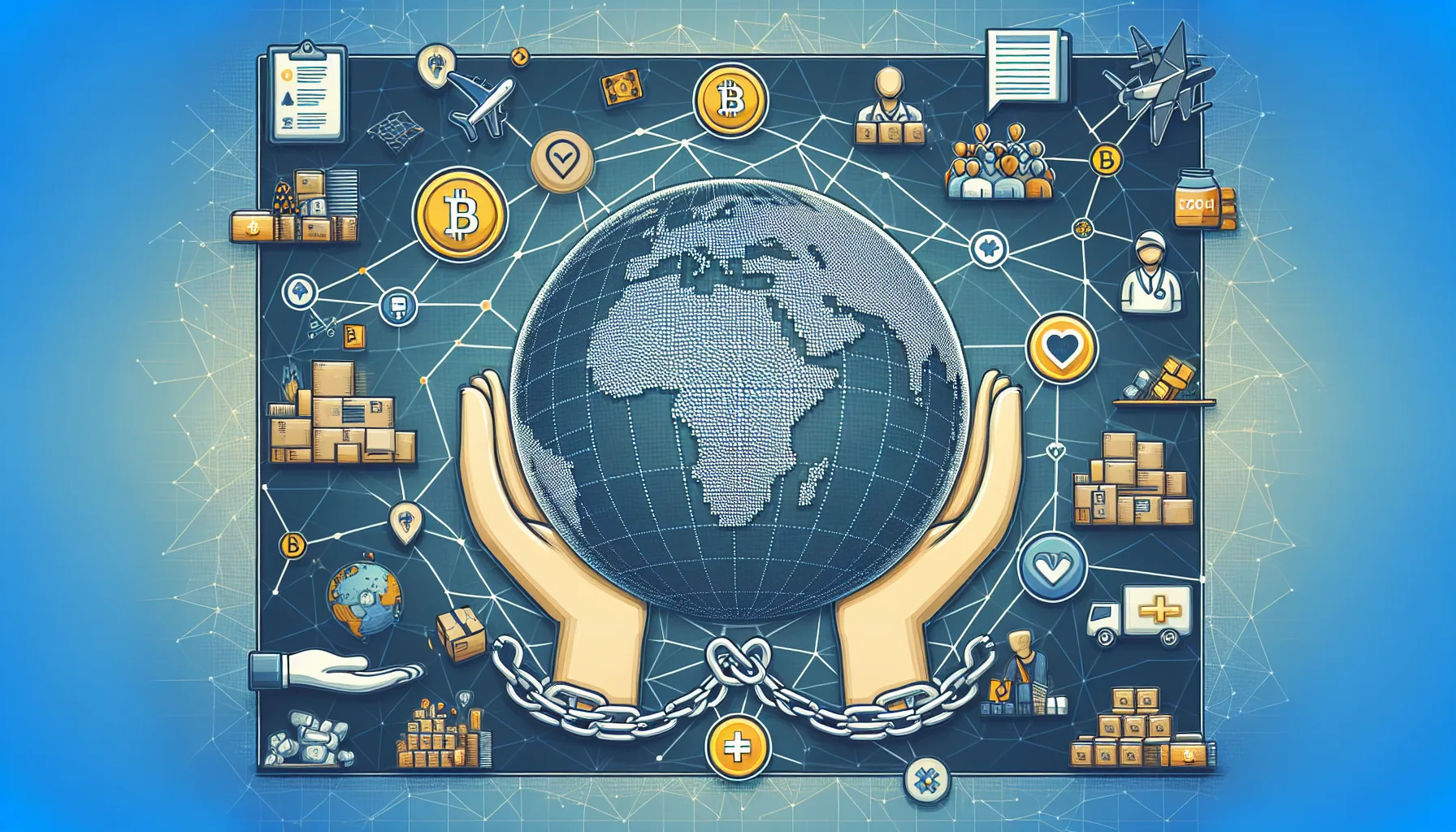
Humanitarian aid is a trillion-dollar industry, yet it remains woefully inefficient. Fraud, corruption, slow fund allocation, and bureaucratic red tape plague efforts to provide timely relief in disaster-struck regions. When an earthquake, flood, or conflict devastates a community, emergency resources must be deployed instantly. However, the reality is far from ideal—aid often takes days, weeks, or even months to reach those in need.
The issue isn’t a lack of funding but a fundamental breakdown of transparency and accountability in aid distribution. Relief organizations heavily rely on centralized financial systems, third-party intermediaries, and outdated coordination mechanisms. As a result, funds are misallocated, siphoned off through exploitative practices, or lost in cumbersome verification processes. Victims are left waiting while bureaucracy stalls life-saving assistance.
The Role of Blockchain: Why It’s Mostly Ignored
Despite its potential, blockchain technology remains largely unexplored in the humanitarian sector. The reason? Resistance from entrenched institutions, regulatory concerns, and a lack of user-friendly integration solutions. Traditional relief organizations are reluctant to embrace decentralized financial models because of compliance challenges, legacy partnerships, and an inherent resistance to change. Even when blockchain-based solutions do emerge, they struggle with adoption due to poor UX design—echoing broader challenges in DeFi adoption, as explored in this article.
Furthermore, early blockchain-driven relief projects have struggled to prove scalability. While some pilot programs have demonstrated efficiency, they often lack infrastructure to support large-scale deployment. The volatility of crypto assets also poses a challenge—aid organizations can’t afford financial instability when providing critical resources. This exacerbates skepticism and fuels reliance on slow-moving, centralized funding platforms.
The High-Stakes Impact on the Crypto Ecosystem
If blockchain successfully infiltrates the humanitarian aid sector, it could fundamentally shift global perceptions of crypto. Currently, crypto’s mainstream image is dominated by financial speculation, volatility, and regulatory pushback. However, a well-executed humanitarian application would showcase blockchain’s real-world value beyond trading and DeFi.
The potential for trustless, instant relief fund distribution could reshape regulatory discussions—forcing governments to acknowledge the technology as a legitimate tool for social good. It would also drive innovation in blockchain scalability and cross-chain interoperability, addressing existing pain points in decentralized financial ecosystems.
But before that happens, significant obstacles must be overcome. Solutions must address scalability, regulatory compliance, and institutional integration. The next section explores how decentralized mechanisms—particularly smart contracts and stablecoins—can provide a more efficient, fraud-resistant framework for humanitarian assistance.
Part 2 – Exploring Potential Solutions
Exploring Potential Solutions: Blockchain Innovations in Disaster Relief and Humanitarian Aid
Smart Contracts for Transparent Fund Allocation
One of the most promising applications of blockchain in humanitarian aid is the use of smart contracts to automate fund distribution. These self-executing contracts ensure that donations reach intended recipients without intermediaries. By setting predefined conditions, funds are only released upon verifiable actions, such as confirming the delivery of supplies via IoT sensors.
However, relying solely on smart contracts presents challenges. Firstly, on-chain data can be expensive and limited in capacity, hindering real-time tracking of disaster response efforts. Secondly, any bugs or vulnerabilities in the contract’s code could result in irreversible financial losses. Despite audits, exploit risks remain, especially in high-stakes environments.
Decentralized Identity for Refugee Assistance
Decentralized identity (DID) systems offer a solution for displaced individuals lacking traditional identification. By using zero-knowledge proofs (ZKPs), blockchain enables identity verification without revealing sensitive personal data. This allows refugees to access essential services, such as financial aid or medical care, without relying on government-issued IDs.
The main drawback is accessibility. Many affected individuals have limited internet access, making blockchain-based identity solutions impractical in real-time crisis situations. Additionally, DID requires broad interoperability between humanitarian organizations, which remains a significant adoption hurdle. More insights on decentralized identity’s impact on security can be found here.
Tokenized Supply Chains for Aid Distribution
Tokenized supply chains could enhance transparency in distributing critical supplies. By representing aid packages as NFTs or fungible tokens, stakeholders can ensure real-time tracking of shipments. This reduces fraud, prevents hoarding, and provides verifiable accountability of resource allocation.
While theoretically effective, tokenized supply chains face logistical obstacles. RFID or oracles are needed to confirm the physical movement of goods, creating reliance on centralized data input—defeating the core principle of decentralization. Moreover, supply chain data prone to manipulation outside the blockchain (e.g., corrupt customs officials altering shipment details beforehand) remains an unsolved challenge.
Crypto-Based UBI Systems for Direct Financial Relief
Deploying decentralized universal basic income (UBI) mechanisms via crypto wallets could help disaster-affected populations instantly access funds. Stablecoins or algorithmic distribution models can ensure fast, direct aid without banking intermediaries.
However, volatility and adoption concerns hinder this model’s effectiveness. If not backed by a robust regulatory framework, reliance on algorithmic tokens or volatile assets can cause more harm than benefit. Additionally, accessibility remains an issue if affected populations have limited digital literacy or lack infrastructural support.
These solutions demonstrate blockchain's potential to revolutionize humanitarian response, but real-world implementation remains complex. Moving forward, understanding how these technologies perform in active crisis scenarios will be crucial.
Part 3 – Real-World Implementations
Real-World Implementations of Blockchain in Disaster Relief
Blockchain-Powered Humanitarian Aid Distribution
One of the key implementations of blockchain in disaster relief has focused on digital identity and aid disbursement. Projects have emerged utilizing Ethereum and Layer 2 networks, aiming to create tamper-proof aid distribution mechanisms. Stablecoins have been frequently used for direct cash transfers, reducing reliance on intermediaries.
For example, decentralized identities (DIDs) have been implemented to ensure aid reaches verified recipients. However, adoption has faced hurdles, particularly in integrating blockchain identity solutions with existing government and NGO frameworks. Many victims in disaster zones lack the necessary technology to access these digital identities, limiting real-world usability.
Supply Chain Tracking for Emergency Goods
Transparent supply chain tracking has been another area where blockchain has been deployed. Logistics tracking using smart contracts has improved oversight of shipments, preventing fraud and diversion of aid. However, while solutions based on Ethereum and other EVM-compatible chains have proven effective in proof-of-concept trials, scalability concerns persist due to transaction costs and network congestion.
Some initiatives have turned to Layer 2 solutions, such as Metis, for cost-efficient tracking mechanisms. However, the tradeoff between decentralization and efficiency remains a challenge. The Untapped Potential of Blockchain in Revolutionizing Supply Chain Transparency explores how similar solutions are being deployed beyond humanitarian aid.
Smart Contract Escrows for Disaster Relief Funds
Crowdfunded disaster relief initiatives have explored the use of smart contract escrows to ensure funds are released based on predefined conditions. This approach prevents mismanagement but has faced difficulties in regulatory compliance. Many jurisdictions lack clear legal frameworks for smart contract-based fund disbursement, creating friction for adoption. Furthermore, smart contract exploits have posed an additional risk, with vulnerabilities in code potentially leading to loss of funds.
Major Challenges and Failures
Despite promising use cases, various blockchain-powered disaster relief initiatives have failed to gain widespread adoption. Issues such as latency in transaction processing, skepticism from traditional institutions, and poor UX design have hindered deployment in real-world crisis scenarios.
Latency remains a key issue, particularly for chains with slow finality. In high-pressure situations where aid needs to be distributed instantly, blockchain transaction settlement times can be a limiting factor. Additionally, decentralized identity solutions often require a learning curve that disaster victims and aid workers are unprepared for, further complicating adoption.
Part 4 – Future Evolution & Long-Term Implications
Future Evolution & Long-Term Implications of Blockchain in Disaster Relief
Scalability and Efficiency: Are We Close to Solving the Bottlenecks?
The evolution of blockchain for humanitarian aid is contingent on scalability breakthroughs. While layer-2 solutions like rollups and sidechains improve transaction throughput, the lingering issues of finality, latency, and trust-minimized coordination between layers remain. Modular blockchains could alleviate some of these constraints by decoupling execution, settlement, and data availability, providing more efficient mechanisms for disaster relief applications. However, reliance on off-chain components—such as oracles and state channels—introduces centralization risks that must be addressed before blockchain-based humanitarian systems can achieve full trustlessness.
Additionally, the development of zero-knowledge rollups (zk-rollups) is gaining traction as a more scalable alternative to optimistic rollups. By reducing the necessity for fraud proofs and lowering data publishing requirements, zk-rollups could allow faster fund distribution and verification in emergency response scenarios. Yet, the computational overhead required for generating zk-proofs remains a bottleneck, particularly in mobile or low-power environments common in disaster-stricken areas.
Cross-Chain Interoperability: A Missing Link for Global Aid Networks
Interoperability continues to be a significant challenge for blockchain-based disaster relief efforts. Different organizations and governments favor distinct blockchain ecosystems, making cross-chain coordination a logistical nightmare. Current interoperability solutions—bridge protocols and wrapped assets—introduce attack vectors that have resulted in multimillion-dollar exploits. The push towards native cross-chain messaging protocols is promising, allowing for direct verification without the need for intermediaries. However, ensuring security across heterogeneous chains remains a difficult task, particularly when integrating newer blockchain solutions with legacy humanitarian systems.
The shift towards interoperable, asset-agnostic settlement layers could be integral in developing disaster relief tools that work across multiple jurisdictions and regulatory environments. Some emerging protocols seek to unify liquidity across blockchains, reducing fragmentation for humanitarian funding. While promising, their long-term viability depends on the incentives for validators and the economic sustainability of such networks.
AI-Powered Smart Contracts: Enhancing Decision Making and Fraud Detection
AI integration with blockchain has the potential to revolutionize aid distribution by automating fraud detection, optimizing fund allocation, and streamlining bureaucracy. Neural networks trained on historical aid distribution can identify inefficiencies and recommend optimizations dynamically. However, the deterministic nature of smart contracts presents hurdles for executing probabilistic AI models on-chain. Solutions such as verifiable off-chain AI processing, combined with on-chain attestation, could bridge this gap—though they reintroduce centralization risks if not implemented carefully.
Furthermore, large-scale AI-driven humanitarian aid platforms will require significant data sharing between stakeholders. Decentralized identity solutions, capable of preserving user privacy while allowing verifiable claim attestations, may play an essential role in mitigating data misuse and ensuring regulatory compliance. The Underappreciated Role of Decentralized Identity in Blockchain explores these aspects further, particularly in the realm of financial sovereignty within decentralized ecosystems.
The Road to Autonomous Humanitarian DAOs
A fully decentralized humanitarian aid system would likely involve permissionless governance through DAOs. However, existing DAO models are often plagued by token-weighted plutocratic governance, vulnerable to centralization by whales or malicious actors. Quadratic voting, reputation-based governance, and stake-weighted democratic models may offer resilience but require further testing in volatile disaster response scenarios.
Another challenge is bridging decentralized decision-making with real-world execution. Many aid programs rely on physical infrastructure, supply chains, and governmental coordination, making full decentralization infeasible. Hybrid models, where blockchain facilitates transparency while maintaining centralized execution mechanisms, are likely to emerge as a more practical path forward.
Part 5 – Governance & Decentralization Challenges
Governance & Decentralization Challenges in Blockchain-Based Disaster Relief
Governance models play a critical role in determining the viability of blockchain solutions in disaster relief and humanitarian aid. The tension between decentralization and governance efficiency presents both opportunities and challenges, particularly when considering issues such as governance attacks, regulatory capture, and plutocratic control.
Centralized vs. Decentralized Governance Models
Centralized governance models offer efficiency and rapid decision-making, which can be crucial in a crisis. However, they introduce concerns over censorship, mismanagement, and single points of failure. Many blockchain projects initially begin as centralized entities with a roadmap toward decentralization, but this transition often stalls due to practical difficulties.
On the other hand, decentralized governance relies on distributed decision-making, often through DAOs, token-based voting, or multi-sig committees. While this enhances censorship resistance and aligns with the ethos of blockchain, it also significantly slows response times—an unacceptable trade-off in disaster scenarios.
Projects like Metis have explored hybrid governance models that balance decentralization with efficiency, though concerns remain regarding scalability and potential vulnerabilities. Read more about METIS’s governance innovations.
Key Risks Associated with Governance
Governance Attacks
Decentralized governance is vulnerable to hostile takeovers or manipulation through governance attacks. Bad actors acquiring a majority of governance tokens can push malicious proposals, including fund redirection or security downgrades. Such risks make DAOs particularly susceptible, especially in financially constrained scenarios where disaster relief efforts need faster fund distribution.
Regulatory Capture
Even in decentralized systems, entities with significant off-chain influence—such as governments, NGOs, or large donors—can shape the outcome of governance votes in their favor. Regulatory capture in blockchain humanitarian projects could lead to selective aid distribution, contradicting the objective of permissionless and unbiased relief distribution.
Plutocratic Control
In token-weighted voting systems, governance is often dominated by large token holders, making decision-making inherently plutocratic. This dynamic can lead to decisions favoring financial stakeholders rather than optimizing for humanitarian efficiency. Alternative models like quadratic voting or reputation-based governance could counterbalance this, but they come with increased complexity and lower adoption rates.
The Challenge of Governance Evolution
Establishing a governance model that allows for flexibility while maintaining decentralization remains largely unsolved. Many blockchain networks promise progressive decentralization but struggle with execution, as shifts in governance structures often lead to unforeseen power centralization.
Next: Scalability and Engineering Trade-Offs
Governance concerns feed directly into another significant challenge: scaling blockchain solutions for real-world crisis response. In the next section, we will explore the engineering trade-offs required to make blockchain-based disaster relief solutions viable at scale.
Part 6 – Scalability & Engineering Trade-Offs
Scalability & Engineering Trade-Offs in Blockchain-Based Humanitarian Aid
Implementing blockchain at scale in disaster relief scenarios presents a fundamental challenge: balancing decentralization, security, and speed. Each blockchain architecture and consensus mechanism comes with trade-offs that impact real-world usability, particularly in high-stakes environments where efficiency is crucial.
Scalability Bottlenecks and Infrastructure Constraints
Public blockchains like Ethereum and Bitcoin offer strong security and decentralization but struggle with throughput limitations. Transaction finality on these networks can take minutes, or even hours, which is impractical when aid distribution needs instant verification. Layer 2 solutions such as rollups and sidechains aim to alleviate congestion but introduce their own trade-offs, particularly in security assumptions and decentralization risks.
Private and consortium blockchains, often proposed for humanitarian use cases, offer enhanced scalability but compromise decentralization. This raises concerns about censorship resistance and trust dependencies on central authorities—a critical issue in politically volatile crisis zones.
Consensus Mechanisms: Speed vs. Security vs. Decentralization
Different consensus algorithms impact the efficiency of blockchain solutions in disaster response:
- Proof of Work (PoW): High security but energy-intensive and slow. Not viable for rapid aid distribution.
- Proof of Stake (PoS): Faster and more energy-efficient but introduces concerns related to validator centralization, which could impact equitable access to humanitarian funds.
- Delegated Proof of Stake (DPoS): Increases transaction speeds but sacrifices decentralization by concentrating power among a small group of validators.
- Optimistic and ZK-Rollups: Promising for scalability but depend on Ethereum’s Layer 1 for finality, which can introduce delays if congestion occurs.
These trade-offs become critical when designing a system that must work reliably in areas with limited connectivity and resource constraints.
Interoperability Challenges and Layer 2 Complexity
Cross-chain interoperability is essential to ensure aid is accessible regardless of the blockchain it originates from. However, bridging mechanisms often introduce attack vectors and liquidity fragmentation, making funds vulnerable to exploits. Given these risks, humanitarian blockchain applications must carefully evaluate whether the benefits of multi-chain compatibility outweigh the security overhead.
Additionally, rollups and Layer 2s like Metis improve scalability but require off-chain computations, adding complexity to trust assumptions. For a deeper look at Layer 2 risks, see The Hidden Challenges of Layer 2 Solutions: Are They Really the Answer to Blockchain Scalability?.
The next section will analyze regulatory and compliance risks, addressing how blockchain’s permissionless nature complicates oversight in disaster relief operations.
Part 7 – Regulatory & Compliance Risks
Regulatory & Compliance Risks in Blockchain-Based Disaster Relief
Jurisdictional Complexity and Legal Fragmentation
One of the biggest obstacles facing blockchain adoption in disaster relief and humanitarian aid is the fragmented global regulatory landscape. Blockchain operates across borders, but regulations do not. Countries vary significantly in their approach to digital assets—some embrace them, others heavily restrict their use. This discrepancy complicates deployment, especially for multinational aid organizations that must comply with various and sometimes conflicting national laws.
Additionally, in jurisdictions where cryptocurrency use is tightly controlled, aid organizations leveraging blockchain solutions may face legal risks, from potential asset seizures to outright prohibition. The status of blockchain-powered stablecoins for fund disbursement is another grey area, as fiat-backed tokens often face stricter scrutiny than native crypto assets.
Government Intervention and Compliance Challenges
Governments often view blockchain-based disaster relief with suspicion, particularly when transactions circumvent traditional financial systems. Many regulatory bodies prioritize Anti-Money Laundering (AML) and Know Your Customer (KYC) compliance, which directly conflicts with the privacy advantages that decentralized platforms offer.
For instance, decentralized identity solutions could streamline aid distribution, but their adoption would require regulatory approval in many regions, particularly concerning data protection laws. Furthermore, failure to comply with financial reporting standards could expose humanitarian organizations to fines, legal action, or even forced cessation of blockchain-based operations in certain countries.
These concerns are far from theoretical. Similar obstacles have been encountered in decentralized finance (DeFi), where platforms have faced court cases and regulatory actions for failing to meet AML expectations. Projects like Metis, which focus on decentralization and scalability, already face regulatory scrutiny over governance structures and compliance issues. A deeper dive into Metis's ecosystem can be explored here.
Precedents from Crypto Regulations
Several historical cases offer key insights into potential regulatory trajectories. The ongoing classification of cryptocurrencies—whether as securities, commodities, or digital assets—remains a point of contention. Past enforcement actions, particularly against decentralized exchanges and anonymity-focused projects, illustrate how regulators may approach blockchain-backed aid distribution.
If history is any indication, blockchain-based disaster relief solutions may face regulatory resistance, not necessarily due to malicious intent but because they challenge state-controlled financial mechanisms. This precedent suggests that even well-intended blockchain initiatives must navigate significant compliance roadblocks before achieving mainstream adoption.
In the next section, we will examine how the integration of blockchain in disaster relief could reshape economic and financial models, particularly in how aid is funded, allocated, and distributed on a global scale.
Part 8 – Economic & Financial Implications
The Economic & Financial Implications of Blockchain in Disaster Relief
Disrupting Existing Markets and Financial Models
Blockchain-based disaster relief mechanisms present a direct challenge to traditional financial intermediaries, including banks, remittance services, and even major NGOs. By facilitating direct peer-to-peer aid distribution, projects leveraging decentralized finance (DeFi) can bypass costly intermediaries, reducing transaction fees and increasing transparency. However, this also threatens incumbents that rely on service fees and administrative overhead, potentially leading to industry-wide restructuring.
For insurance markets, smart contracts introduce automated claims processing, minimizing fraud and improving response times. Yet, the shift to blockchain-native parametric insurance models could marginalize traditional insurers unprepared for decentralized alternatives. Moreover, these systems require robust oracle solutions, which introduce additional security concerns—already an issue with certain Layer 2 ecosystems, as explored in The Hidden Challenges of Layer 2 Solutions: Are They Really the Answer to Blockchain Scalability?.
Investment Opportunities in Disaster-Response Crypto Assets
The rise of specialized disaster-response tokens presents new investment frontiers. Tokens structured to fund rapid relief efforts while integrating governance mechanisms for early fund disbursement could gain significant traction. These assets may even evolve into sector-specific stablecoins backed by national or regional emergency funds.
However, speculative trading on these assets could create unforeseen volatility. A major disaster event triggering relief token purchases might lead to price surges, followed by rapid decay as urgent needs subside—reinforcing concerns of "disaster profiteering." This dynamic does not exist in traditional donor ecosystems, making risk assessment critical for investors.
Moreover, decentralized autonomous organizations (DAOs) focused on humanitarian funding could become major DeFi power players, allowing large-scale pooled assets to be allocated via tokenized voting. This shifts decision-making away from centralized relief agencies while incentivizing liquidity providers through governance incentives.
Unforeseen Economic Risks and Challenges
The adoption of blockchain-based financial relief models raises concerns about capital control circumvention. Governments in heavily regulated jurisdictions may view these systems as a threat to financial sovereignty, especially if they undermine capital outflow controls or national aid programs.
Additionally, the programmability of funds could also backfire. If funds are locked into aid-specific smart contracts, unintended consequences—such as oracle failures or misinterpretations of predefined conditions—could delay or block much-needed relief. Furthermore, smart contract hacks could misappropriate or drain resources, leading to an ongoing cat-and-mouse game between developers and malicious actors, similar to existing DeFi vulnerabilities.
Still, some institutional investors may see this space as a hedge against systemic financial instability. By holding assets tied to decentralized relief mechanisms, they could gain exposure to an emerging market untethered from legacy banking systems.
Setting the Stage for Social and Philosophical Analysis
Beyond financial implications, blockchain-driven disaster relief solutions challenge existing societal structures—raising ethical concerns about who controls aid distribution, data ownership, and long-term sustainability. As these technologies reshape humanitarian efforts, deeper social and philosophical questions emerge about their broader consequences.
Part 9 – Social & Philosophical Implications
Economic & Financial Implications of Blockchain in Disaster Relief and Humanitarian Aid
The integration of blockchain in disaster relief is poised to disrupt existing financial infrastructures, forcing traditional aid organizations, institutional investors, and crypto-native participants to reconsider their strategies. While decentralization promises financial inclusivity and efficiency, unintended economic risks and regulatory uncertainties may arise.
Disrupting Traditional Markets
Legacy financial institutions and global aid organizations operate within slow-moving bureaucracies, relying on intermediaries for funds distribution. Blockchain-based disaster relief initiatives, such as smart contract-driven fund allocation or decentralized stablecoins, threaten established financial intermediaries. The rise of self-executing blockchain-based disaster insurance, for instance, could undermine traditional microfinance lenders who thrive on inefficiencies.
Additionally, tokenized aid distribution enables programmable funding, directly impacting supply chain financial mechanisms. Smart contracts can issue funds contingent on supply chain milestones, disrupting the cash flow of suppliers, logistics providers, and financial escrows that profit from payment delays and credit issuance. Projects leveraging blockchain for supply chain transparency could further drive efficiencies at the cost of traditional financial middlemen. Read more on blockchain’s role in supply chain transparency.
New Investment Opportunities
The economic incentives underlying blockchain-based humanitarian aid can create novel investment opportunities. DeFi lending protocols may tokenize humanitarian funding, allowing investors to finance relief efforts with yield-generating assets. Liquid staking mechanisms on yield-bearing donations could grow capital reserves for aid organizations while funders earn returns.
Institutional investors may also explore impact-based investing in tokenized philanthropy, where aid effectiveness is transparently measured on-chain. Governments and private sector enterprises could back relief-oriented algorithmic stablecoins, indirectly exposing institutional investors to a new class of utility-driven tokens.
Further, Layer 2 solutions capable of scaling microtransactions for aid purposes could see increased adoption, benefiting projects focused on scalability and efficiency in financial aid transfers. Explore innovations in Layer 2 solutions and their challenges.
Unforeseen Economic Risks
Despite potential efficiencies, blockchain in humanitarian aid introduces economic risks, including capital misallocation, speculative volatility, and illicit financial flows. If donations are pooled into blockchain-based yield farming strategies, temporary liquidity misalignments could delay crucial humanitarian efforts.
Crypto-philanthropy mechanisms relying on algorithmic stablecoins are also vulnerable to potential de-pegging events, creating financial instability for recipients who depend on stable value preservation. Furthermore, decentralization opens avenues for unregulated or pseudonymous actors to manipulate on-chain aid fund distribution, creating systemic risks that could be exploited by malicious entities.
Blockchain’s role in aid distribution goes beyond economic mechanisms—it underpins deeper social and philosophical shifts in financial sovereignty, trust, and altruism, which we will explore next.
Part 10 – Final Conclusions & Future Outlook
Final Conclusions & Future Outlook: The Overlooked Role of Blockchain in Disaster Relief and Humanitarian Aid
After analyzing blockchain’s application in disaster relief and humanitarian aid, a few conclusions are clear. Blockchain technology has immense potential to bring transparency, efficiency, and decentralization to humanitarian efforts. However, obstacles remain—technical, financial, and regulatory—that hinder widespread adoption.
Key Takeaways from This Series
- Immutable Transparency: Blockchain can ensure aid reaches the intended recipients by offering an auditable trail of funds and resources. However, implementation is slowed by governments and NGOs unwilling to cede control.
- Efficiency Gains: Automated smart contracts can speed up relief efforts, minimizing administrative overhead. Yet, the rigidity of on-chain contracts presents challenges when adapting to dynamic crisis situations.
- Cross-Border Aid Distribution: Cryptocurrencies can bypass banking restrictions and deliver aid directly to recipients. But volatility and adoption barriers raise concerns about practical usage in real-world emergencies.
- Decentralized Identity Solutions: Blockchain can provide secure IDs for displaced persons, yet interoperability remains a major obstacle. Without widely accepted decentralized identity standards, adoption remains fragmented.
The Best-Case vs. Worst-Case Scenarios
In the best case, blockchain becomes a global standard for disaster response. Smart contracts streamline funding and logistics, reducing corruption. Cross-chain interoperability enables seamless data and fund transfer, while decentralized identity solutions grant refugees access to critical services.
Worst case? Regulatory crackdowns, lack of coordination, and donor skepticism stifle adoption. Without user-friendly interfaces and broader institutional trust, blockchain in humanitarian aid might never move past the pilot stage—another powerful, unused innovation.
Remaining Unanswered Questions
Several issues still loom large:
- Scalability: Can blockchain networks handle real-time humanitarian response without bottlenecks or absurd transaction fees?
- Integration with Legacy Systems: How can blockchain coexist with traditional finance and logistics infrastructures without unnecessary friction?
- Decentralization vs. Control: Will NGOs and governments truly embrace decentralization, or will they modify blockchain in ways that undermine its purpose?
What Needs to Happen for Mainstream Adoption?
Solutions like Layer 2 scaling could address cost and speed concerns, yet not all implementations are equal. Some Layer 2 solutions introduce new security risks (explored in depth here). Broader adoption requires:
- Education & Training: Relief organizations need technical literacy in blockchain to deploy meaningful solutions.
- Regulatory Clarity: Governments must define regulations without stifling innovation.
- User-Centric Design: Blockchain tools must be intuitive for aid workers and recipients alike.
Ultimately, blockchain in humanitarian aid stands at a crossroads. Will it redefine global emergency response, or will it join the list of promising but unrealized innovations?
Authors comments
This document was made by www.BestDapps.com