Overview: Transforming Idle Global GPUs into an Autonomous Compute Fabric
The global demand for high-performance graphics processing units (GPUs) has expanded at an unprecedented rate, driven by the convergence of photorealistic visual effects, 3D spatial computing, virtual production, and generative artificial intelligence. Centralized cloud providers (including AWS, Google Cloud, and Microsoft Azure) have faced acute hardware allocation constraints, charging exorbitant pricing for enterprise-tier accelerators (such as NVIDIA H100, A100, and RTX 4090 arrays). Simultaneously, millions of consumer and professional GPUs sit underutilized in private workstations, creative studios, and cryptocurrency mining rigs across the globe.
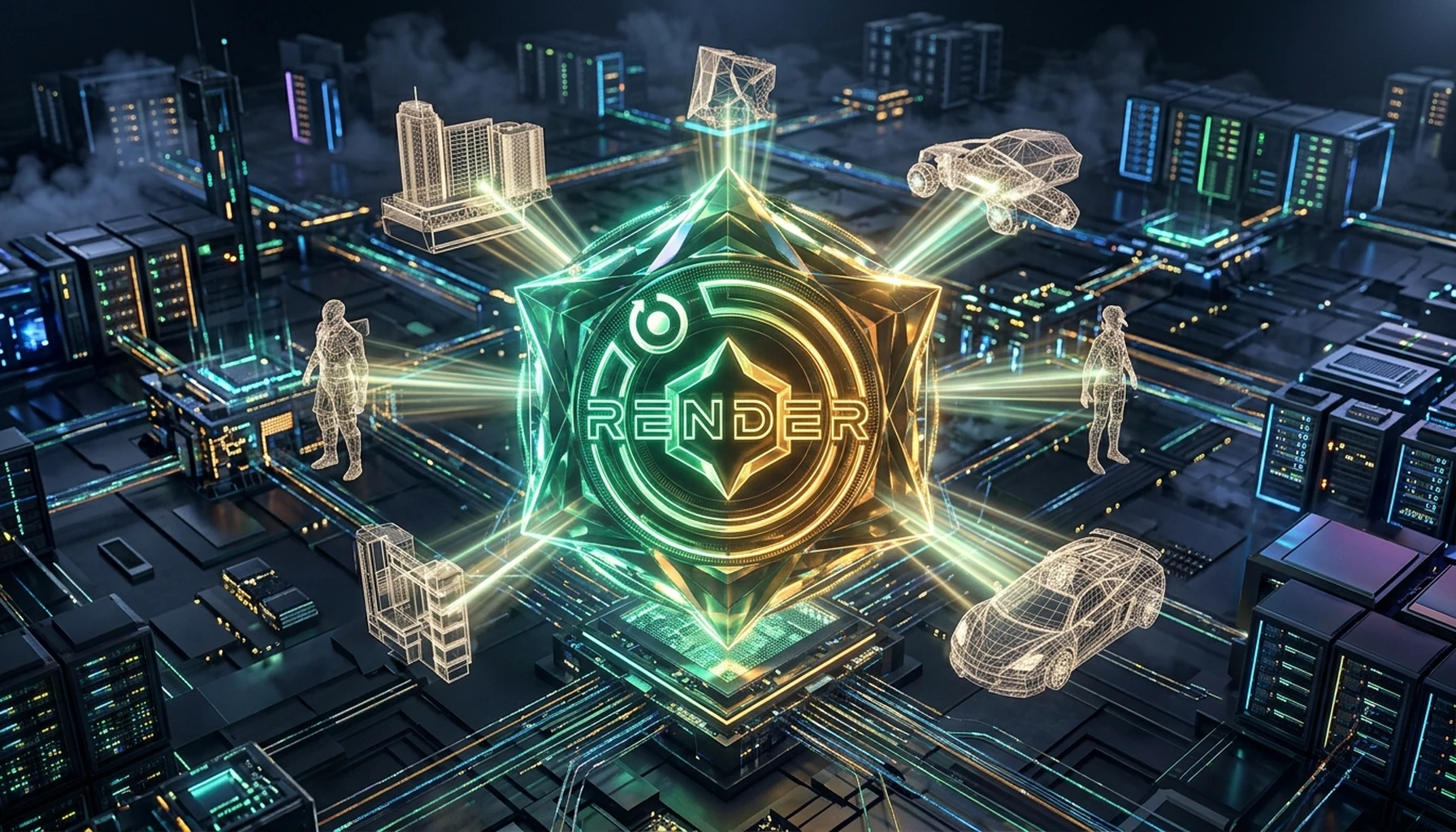
Render Network was founded in 2017 by Jules Urbach, CEO of OTOY (the creators of OctaneRender, the world's leading unbiased, spectrally correct GPU rendering software). The protocol was conceived to democratize GPU computing by establishing a decentralized, peer-to-peer compute marketplace. Rather than relying on monolithic data centers, Render connects creators who require vast rendering power with distributed node operators who monetize their idle GPU capacity.
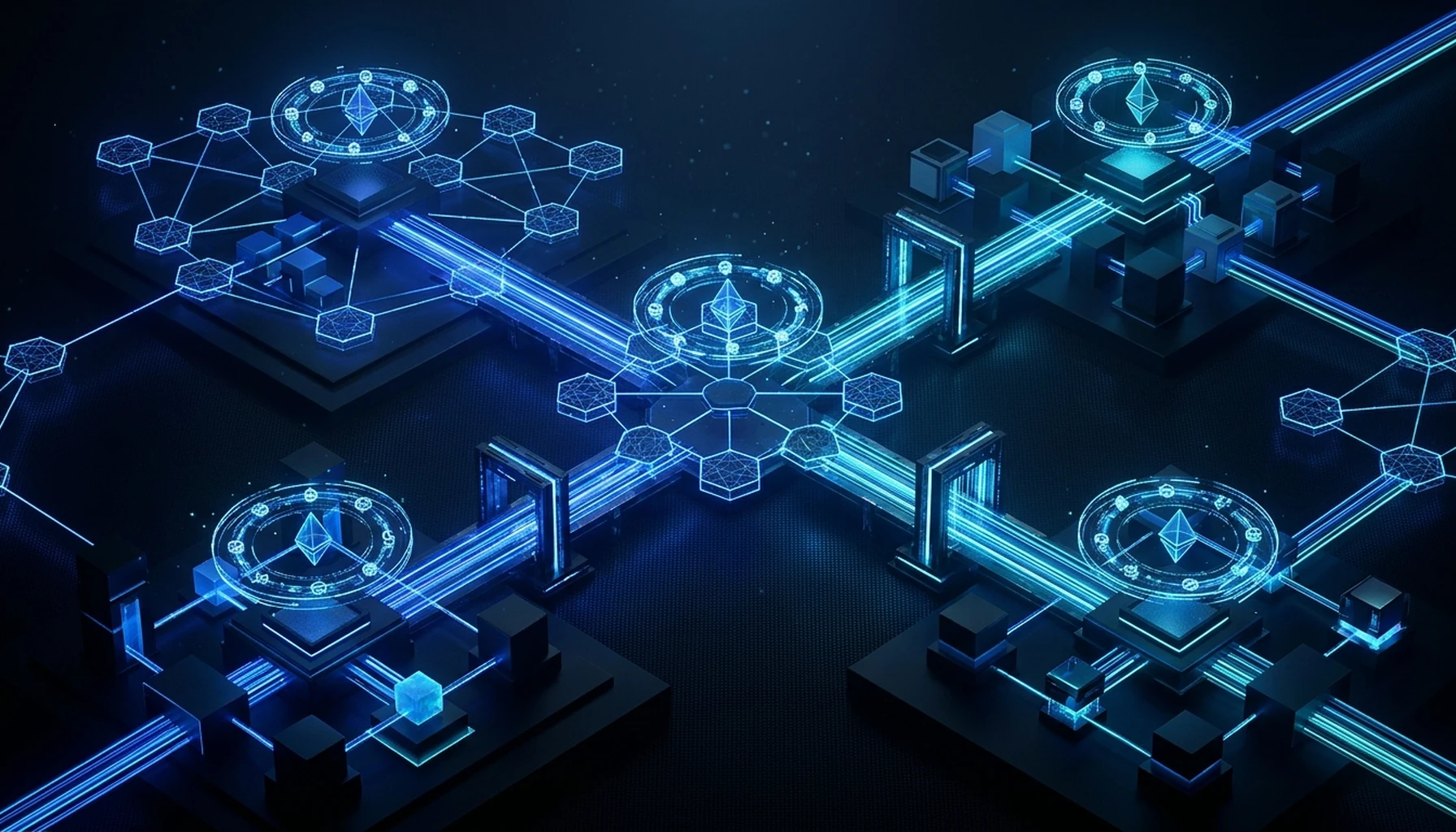
Originally deployed as an ERC-20 token (RNDR) on Ethereum, the network recognized that Ethereum's base layer transaction fees and 12-second block intervals imposed severe scaling ceilings on granular compute dispatch. Following unanimous community governance votes, Render Network executed a comprehensive migration to the Solana blockchain, adopting the native SPL token ticker RENDER and deploying the mathematically proven Burn-and-Mint Equilibrium (BME) economic model.
From Ethereum ERC-20 to Solana SPL: The Architectural Migration
The decision to transition Render Network's settlement layer from Ethereum Layer 1 to Solana (ratified under community proposal RNP-002) was driven by the strict micro-transaction throughput requirements of distributed computation.
Micro-Task Granularity and Network Latency Constraints
A single 3D scene or generative video clip is not processed as a monolithic task. Instead, the rendering engine decomposes the workload into thousands of granular work units: individual frames, geometry passes, light ray samples, or neural network tensor chunks. On Ethereum mainnet, coordinating proof submissions, payment releases, and node status updates for these discrete micro-tasks was financially untenable. Base layer gas spikes frequently caused transaction fees to exceed the cost of the underlying rendering job.
Leveraging Solana's High-Throughput Sealevel Runtime
By migrating to Solana, Render Network achieved the requisite infrastructure parameters:
- Sub-Second Finality: Solana's 400-millisecond slot times and Proof-of-History (PoH) clock synchronizations enable real-time job bidding, task assignment, and progress telemetry.
- Parallelized Transaction Execution (Sealevel): Solana's multi-threaded runtime allows concurrent escrow smart contracts and compute verification payments to settle simultaneously without state contention.
- Negligible Gas Costs: Predictable transaction fees (under a fraction of a cent per operation) permit granular on-chain state updates, micropayments to node operators, and dynamic escrow releases.
The RNDR to RENDER Migration Portal
To preserve tokenholder equity and operational continuity, the network deployed a bidirectional smart contract bridge. Tokenholders convert legacy ERC-20 RNDR tokens to Solana SPL RENDER tokens at an exact 1:1 ratio. The protocol implemented point-in-time incentives and gas subsidies to assist retail and institutional holders during the transition period.
The Burn-and-Mint Equilibrium (BME) Tokenomic Engine
Ratified via governance proposal RNP-001, Render Network implemented the Burn-and-Mint Equilibrium (BME) model. This tokenomic structure, pioneered by protocols such as Helium, decouples the volatile market price of the tradable utility token from the stable, fiat-denominated cost of computational services.
The Two-Asset Mechanical Decoupling
The BME framework balances two separate accounting units:
- RENDER Token: A freely tradable, volatile cryptographic asset that trades on decentralized and centralized exchanges, used for protocol governance, node staking, and value storage.
- Render Network Credits (RNDC): A non-tradable, fiat-pegged internal accounting unit (pegged 1:1 to the US dollar) used by creators to purchase compute capacity. Artists and studios can purchase credits directly with credit cards or fiat currency, abstracting away cryptocurrency volatility for mainstream visual production enterprises.
The Burn Mechanism: Supply Destruction via Compute Consumption
When a creator initiates a rendering or compute job, the required payment must ultimately be settled in RENDER tokens. Even if the creator pays via fiat credit card, the payment gateway automatically purchases RENDER on the open market and deposits it into the protocol burn contract:
- The entire quantity of RENDER paid for the completed job is permanently burned and removed from circulation.
- This burn creates continuous, non-speculative deflationary pressure directly proportional to real-world commercial compute consumption.
The Mint Mechanism: Epoch Emissions and Network Subsidies
Independent of the volume of tokens burned, the protocol mints a predetermined, programmatic quota of new RENDER tokens during each 24-hour epoch. These epoch emissions are distributed across network participants according to strict mathematical proportions:
- Node Operator Job Rewards: Distributed to GPU providers based on the exact amount of computational work delivered during the epoch.
- Node Operator Availability Subsidies: Distributed to idle nodes that maintain high uptime and stand ready to accept incoming workloads, guaranteeing consistent global capacity during demand fluctuations.
- Liquidity Provider Rewards: Allocated to decentralized liquidity pools to maintain deep market liquidity for the RENDER token across decentralized exchanges.
Equilibrium Dynamics: Deflation vs Inflation
The BME engine establishes three distinct macroeconomic states:
- Deflationary State (Job Burn > Epoch Mint): When commercial demand for GPU compute exceeds the fixed daily emission rate, the net circulating supply of RENDER contracts, accruing value to long-term tokenholders.
- Equilibrium State (Job Burn = Epoch Mint): When the dollar value of compute burned exactly matches the dollar value of newly minted tokens, network supply reaches mathematical stabilization.
- Expansionary State (Job Burn < Epoch Mint): During periods of lower compute demand, fixed emissions provide baseline yields to node operators, preventing infrastructure providers from decommissioning hardware while network adoption matures.
Two-Sided Network Economics: Compute Clients and Node Operators
Render Network functions as a self-balancing two-sided marketplace where supply and demand are dynamically cleared through algorithmic pricing and hardware tiers.
The Supply Side: Node Operator Tiers and Staking Requirements
Node operators connect individual GPUs or server clusters to the Render client daemon. The network categorizes nodes into three distinct performance tiers based on OctaneBench benchmarking scores, VRAM capacity, memory bandwidth, and network latency:
- Tier 1 (Enterprise / Studio Tier): Commercial data centers equipped with enterprise hardware (such as NVIDIA H100, A100, and RTX 6000 Ada systems) featuring high-bandwidth fiber connectivity, SOC2 compliance, and 99.9% uptime service level agreements.
- Tier 2 (Prosumer Tier): High-end workstations and dedicated mining rigs running multiple consumer flagship GPUs (such as RTX 4090 and 3090 setups).
- Tier 3 (Standard Consumer Tier): Individual enthusiast GPUs utilized during nighttime or idle office hours.
To prevent malicious execution and guarantee job delivery, node operators must stake RENDER tokens as collateral. Nodes that fail to deliver assigned tasks or attempt to manipulate rendering outputs suffer slashing penalties.
The Demand Side: Dynamic Job Allocation
Creators submit OctaneRender scene files, visual effects assets, or AI models through the Render web portal or native plugin integrations. The creator selects their desired performance tier, budget ceiling, and turnaround urgency. The protocol's matching engine algorithmically distributes scene packages to available qualified nodes, locking the creator's payment in an on-chain escrow contract on Solana.
Workload Dispatch, Proof of Render, and OctaneRender Integration
Verifying computational integrity in a trustless, decentralized network presents unique technical obstacles. Unlike cryptographic hash verification in Proof-of-Work, determining whether a photorealistic 3D image or deep neural network inference was correctly computed requires sophisticated verification protocols.
Native Integration with the OTOY Ecosystem
Render Network derives substantial competitive advantage from its deep technical coupling with OTOY's OctaneRender. Octane is integrated into premier 3D digital content creation suites, including Cinema 4D, Blender, Maya, Unreal Engine, and 3ds Max. Creators can dispatch render jobs directly from their native digital content creation viewports without manual file conversion or complex CLI orchestration.
Proof of Render and Cryptographic Watermarking
To eliminate dishonest behavior without wasting compute capacity on redundant double-rendering, Render implements Proof of Render:
- Tiled Dispatch: Large scene frames are sliced into discrete rectangular tiles and distributed across diverse nodes.
- Cryptographic Watermarking: Completed frames are rendered with a deterministic digital watermark embedded into the pixel matrix. The creator previews low-resolution watermarked composites to verify scene accuracy.
- Escrow Release: Once the creator approves the rendered output, the Solana escrow contract executes, burning the creator's RENDER credits and transferring the payment to the node operator. The watermark encryption key is revealed, unlocking pristine high-dynamic-range (EXR) source frames for the artist.
The AI Compute Pivot: Expanding Beyond 3D Graphics to Machine Learning
While Render Network originated as a graphics rendering platform, recent governance proposals (including RNP-004 and RNP-008) have expanded the protocol's mandate to serve the explosive artificial intelligence and machine learning compute market.
Decentralized AI Inference and Fine-Tuning
Large language models (LLMs), diffusion models (Stable Diffusion, Midjourney architectures), and vision-language foundation models require massive GPU parallelization. While training foundational 100-billion-parameter models from scratch necessitates tightly coupled InfiniBand interconnects, AI inference and low-rank adaptation (LoRA) fine-tuning are highly parallelizable across distributed consumer GPUs.
Render Network has partnered with decentralized AI compute networks (such as io.net and FedML) to route AI workloads to idle Tier 1 and Tier 2 Render nodes. Node operators gain the ability to toggle automatically between rendering visual effects frames and executing AI batch inference, maximizing hardware revenue based on real-time market spot rates.
Decentralized Governance via Render Network Proposals (RNPs)
Render Network is governed by its community through the formal Render Network Proposal (RNP) framework, ensuring transparent, decentralized decision-making.
The Proposal Lifecycle
Every structural protocol modification progresses through four strict stages:
- Phase 1: Initial Idea Generation and Forum Discourse: Community members submit proposals to the community forum, where developers, node operators, and creators debate technical viability and economic implications.
- Phase 2: Request for Comments (RFC): The core technical team and community working groups refine the proposal into a standardized RNP document, detailing smart contract changes, resource requirements, and security impacts.
- Phase 3: Technical Feasibility Review: The Render Network Foundation conducts architectural reviews, formal verification checks, and legal reviews.
- Phase 4: On-Chain Snapshot Vote: RENDER tokenholders vote on the proposal using stake-weighted voting power. A minimum quorum and supermajority threshold are required for proposal adoption.
This governance process successfully orchestrated the Burn-and-Mint Equilibrium implementation (RNP-001), the Solana blockchain migration (RNP-002), and the expansion into decentralized AI infrastructure (RNP-004).
Critical Risks, Hardware Attrition, and Centralization Vectors
A rigorous coin analysis requires examining the systemic vulnerabilities, operational frictions, and competitive threats facing Render Network.
Decentralized Latency vs Centralized Data Center Interconnects
The primary technical constraint of decentralized GPU networks is network latency and bandwidth. Enterprise AI training clusters rely on specialized NVIDIA NVLink and Quantum-2 InfiniBand architectures delivering 900 GB/s to 3.2 Tb/s inter-GPU interconnect speeds. Consumer GPUs distributed across residential broadband connections operate over standard PCIe interfaces and typical 100 Mbps to 1 Gbps internet uplinks. As a result, Render cannot compete with centralized cloud providers for distributed training of massive transformer models, restricting its AI market share to inference and localized fine-tuning.
Software Lock-In and OTOY Dependency
While Render Network continues to decentralize its governance and smart contracts, the core rendering pipeline remains heavily reliant on OTOY's proprietary OctaneRender software engine. Open-source rendering engines (such as Blender Cycles) and competing third-party software have historically faced licensing barriers. If the protocol fails to achieve full software engine neutrality, it remains vulnerable to ecosystem lock-in and single-vendor dependency.
Node Operator Hardware Churn and Economic Attrition
Decentralized node operators act as pure profit-maximizing economic agents. If rival decentralized physical infrastructure networks (DePIN) or emergent Proof-of-Useful-Work blockchains offer higher spot yields, node operators can quickly disconnect their hardware from Render. To retain high-performance enterprise GPUs, the protocol must ensure that commercial compute demand generates consistent, competitive yields outpacing alternative computational markets.
Conclusion
Render Network represents one of the most mature, operationally validated DePIN protocols in the Web3 ecosystem. By migrating to Solana, Render eliminated transaction cost bottlenecks, enabling sub-second micro-task dispatch across globally distributed GPUs. Through the Burn-and-Mint Equilibrium model, the network mechanically links token value accrual to real-world commercial compute consumption, creating a sustainable economic engine that bridges traditional Hollywood production studios with decentralized cryptographic infrastructure. As generative AI and spatial computing continue to outpace centralized data center capacity, RENDER is uniquely positioned to coordinate decentralized GPU compute at global scale.