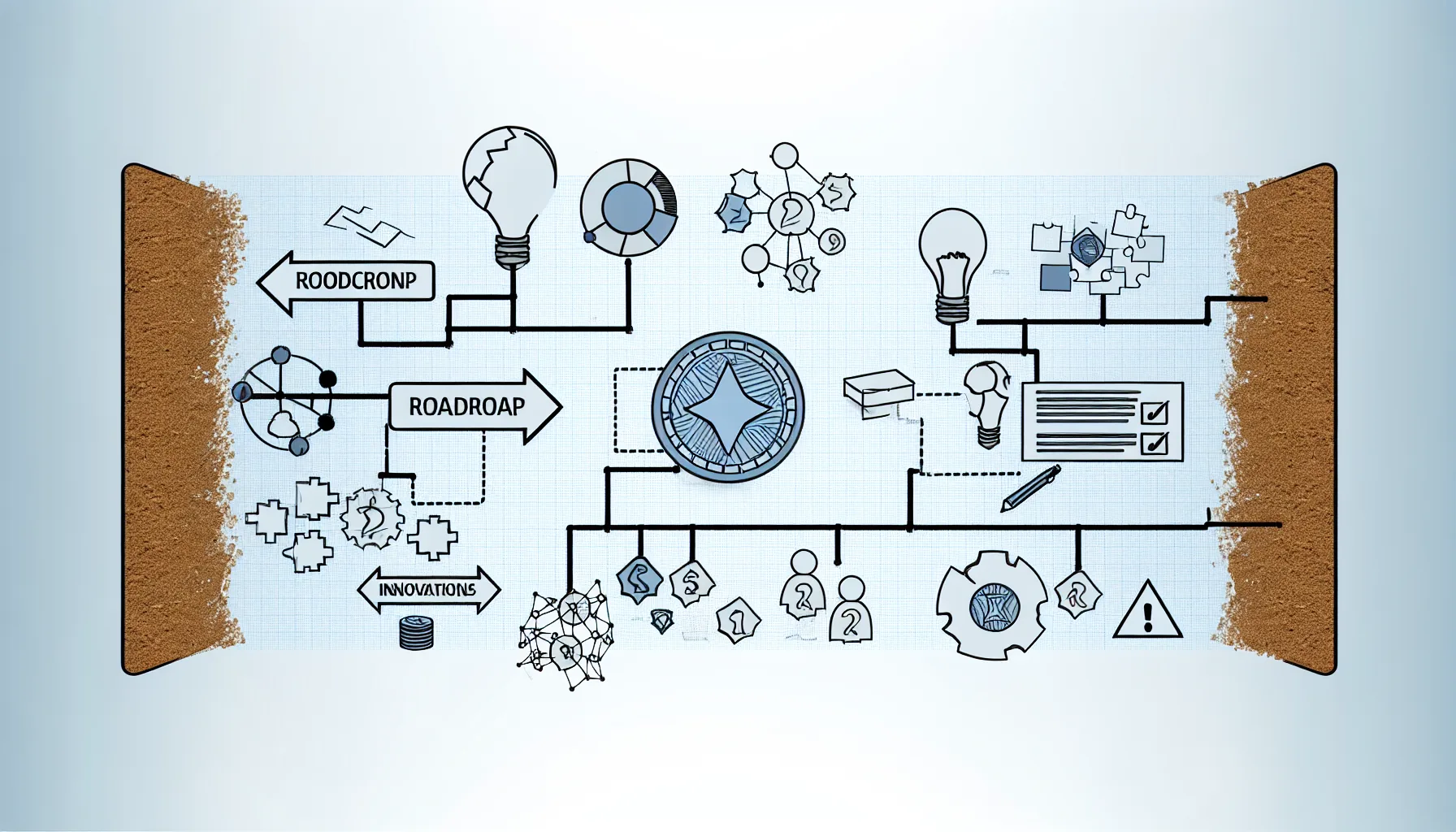
Ravencoin's Roadmap: Innovations and Challenges Ahead
BestDapps Moderator
RVN: Exploring Future Technical Prospects and Road Map
The Ravencoin (RVN) ecosystem has carved out a niche within the blockchain world, focusing on streamlined tokenization capabilities and decentralized peer-to-peer network enhancements. As the project evolves, its technical road map and prospects offer significant insights into where it may be headed, promising potential while also highlighting challenges faced in achieving its objectives.
Scalability and Network Efficiency Enhancements
One of Ravencoin’s critical ongoing priorities revolves around scalability. Built as a fork of Bitcoin, Ravencoin inherits a proof-of-work (PoW) consensus mechanism that emphasizes decentralization. However, as network usage expands — particularly for asset tokenization use cases — the need for greater transaction throughput has become increasingly apparent. Developers have been exploring potential optimizations to reduce block propagation delays and increase transaction processing efficiency, all while ensuring that the blockchain's core value of decentralization remains intact.
Another technical focus is on lowering the barrier for node participation. By making full node software lightweight and easier to operate, the network can improve its resilience, maintaining a diverse and distributed group of participants. These efforts are ongoing, and their success could have a direct impact on Ravencoin’s adoption as a robust blockchain platform for digital asset creation and transfer.
Enhanced Tokenization Framework
Ravencoin’s primary differentiator lies in its features for token creation and management. Its protocol allows users to issue unique tokens representing stocks, real estate, digital art, and more without requiring smart contract programming expertise. Future iterations are expected to bring greater flexibility to this system, potentially allowing for more complex token attributes such as royalty distribution, token expiration, or built-in governance features.
Furthermore, ongoing work to improve interoperability between Ravencoin and other blockchain platforms could significantly enhance the tokenization framework. Cross-chain bridges or compatibility with popular standards like ERC-20 could expand Ravencoin’s use cases, promoting its adoption within decentralized finance (DeFi) and digital asset ecosystems.
Mining Algorithm and Security Updates
Ravencoin employs the KAWPOW algorithm, designed to resist ASIC dominance and keep mining decentralized. Maintaining security while ensuring accessibility for GPU miners remains a cornerstone of its development road map. Discussions surrounding algorithm updates aim to preempt the possibility of centralization or vulnerabilities that could arise from technological advancements in mining hardware. Regular updates to the algorithm and other defenses against potential exploitation reinforce Ravencoin’s commitment to network security.
Diversifying Utility Through Layer 2 Features
Layer 2 solutions such as payment channels, secondary economies, or even integration of off-chain computation remain areas of interest for Ravencoin's long-term development. These developments could address current concerns regarding speed and cost-efficiency, enabling more practical and scalable usage for real-world applications.
Decentralized Governance Possibilities
While Ravencoin operates without a centralized body controlling its progress, future development might explore more formalized decentralized governance models. Enabling community-driven proposals and decision-making could enhance the vibrancy and responsiveness of the ecosystem while generating broader participation in the protocol’s growth.
Ravencoin’s technical prospects focus on building incremental network efficiencies and broader blockchain utility while staying tethered to the principles of decentralization and accessibility. Though much work remains to achieve these ambitious goals, the ongoing developments suggest a commitment to evolving capability without sacrificing the platform’s foundational values.
As FLO continues to carve out its niche in the cryptocurrency landscape, it brings unique features like metadata integration and decentralized governance. This…
SEAM is charting an ambitious course in the crypto landscape, focusing on scalability and interoperability to enhance decentralized applications. With a…
As Ethereum embarks on a transformative journey, its roadmap highlights crucial advancements in scalability, security, and sustainability. Discover how…