How NEAR Protocol Works
The NEAR Protocol is a decentralized application (dApp) platform built on a layer-1 blockchain. It aims to simplify the development of decentralized applications by resolving issues like scalability and user experience, which are prevalent in many blockchain ecosystems. NEAR achieves this through innovative approaches in its consensus mechanism and sharding technology.
Underlying Architecture
NEAR uses a unique consensus algorithm and architectural design to handle scalability challenges that often limit blockchain efficiencies. One of the key features is the Proof-of-Stake (PoS) consensus, combined with a dynamic sharding model that distributes processing tasks across multiple nodes. This helps the network achieve better resource allocation and performance.
Proof-of-Stake Consensus
Unlike Proof-of-Work (PoW) protocols used by networks like Bitcoin, NEAR employs Proof-of-Stake. In PoS, validators are chosen randomly based on the number of tokens they hold and are willing to "stake" as collateral. Validators are responsible for producing and validating blocks, and their rewards are directly proportional to the amount of NEAR coins they have locked up. This system avoids the high energy consumption associated with PoW algorithms and also reduces hardware barriers for node operators.
Sharding Technology
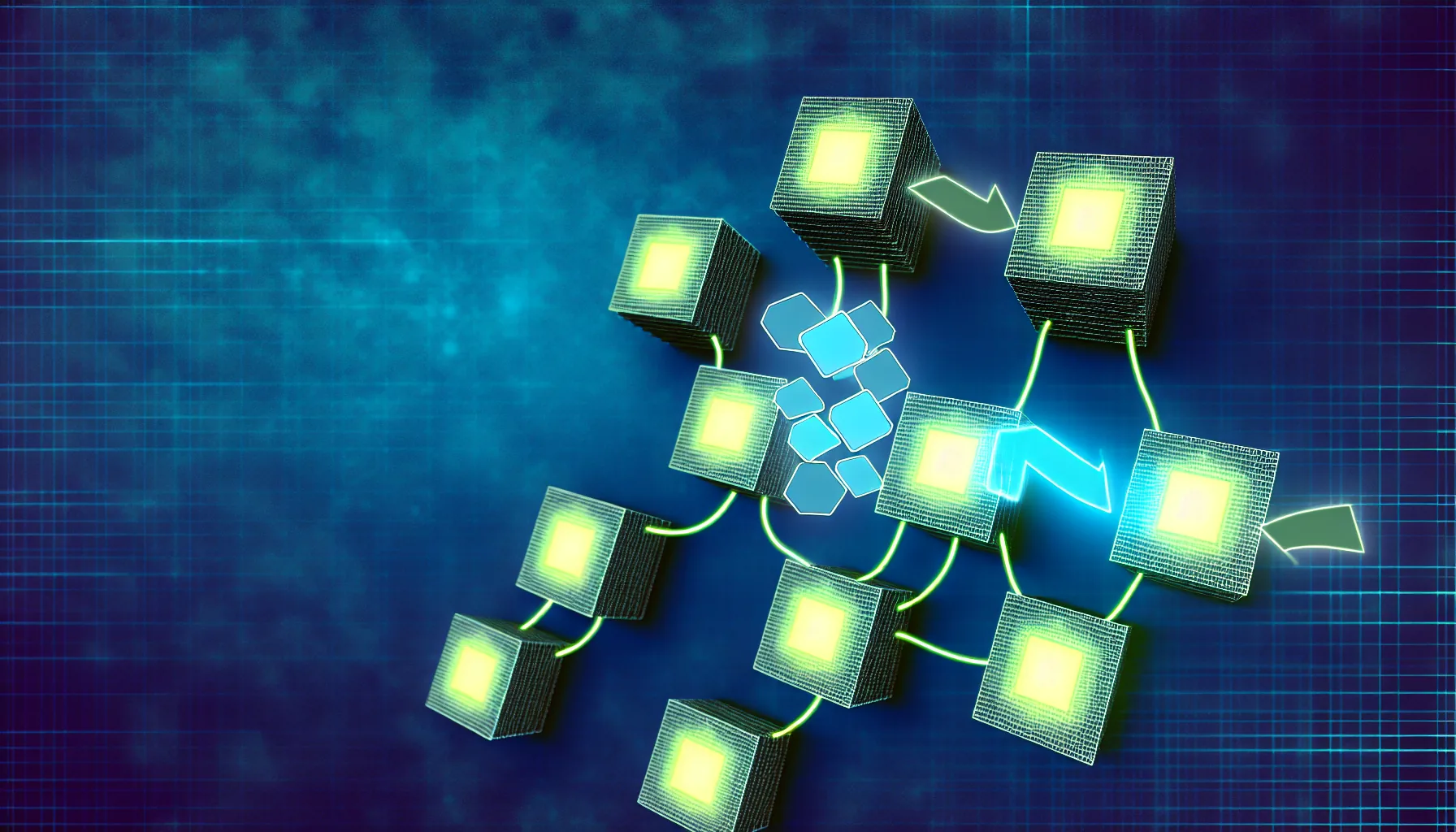
A fundamental aspect of NEAR’s scaling capabilities is its ‘Nightshade’ sharding mechanism. Sharding is the process of splitting the blockchain's data into smaller, more manageable chunks or “shards.” Each shard processes transactions independently, increasing overall throughput. Unlike other sharding implementations, Nightshade optimizes this by making each shard only store a fraction of the blockchain history while still ensuring all shards agree on the network's global state.
The main advantage of this system is that it can grow as demand increases. More shards can be added to help accommodate larger numbers of dApps and users. This contrasts with more monolithic blockchain designs, where every node must process all transactions on the entire network.
Developer-Friendly Tools and Ease of Use
To ease the development of decentralized applications, NEAR includes a range of developer tools. One of the standout features is NEAR’s use of WebAssembly (Wasm), a binary instruction format designed for high-speed execution. Developers can use common programming languages like Rust to build on NEAR, which increases the ecosystem’s accessibility for those who may not be familiar with Solidity or other blockchain-specific languages.
In addition, NEAR Protocol offers functionality like decentralized storage and token creation. It supports smart contracts, allowing developers to build apps with complex logic directly on the blockchain. The development experience is further enhanced by a streamlined onboarding process for users, aiming at lowering the usual technical barriers often associated with using blockchain applications.
NEAR’s State Finality
State finality refers to the guarantee that a block, once added, can no longer be altered. NEAR achieves faster block finality through the use of its PoS consensus and sharding systems. Transactions on NEAR are confirmed within seconds, allowing for rapid interaction between dApps and users. This contrasts with some older blockchains, where users have to wait for multiple confirmations to ensure their transaction is irreversible.
Economics and Fees
NEAR has built-in fee mechanisms, intended to provide both security and affordability. The protocol enforces low transaction costs, which is in part due to its high throughput enabled by sharding. Transaction fees, which include small percentages of NEAR tokens, are burned (permanently removed from circulation), theoretically decreasing the overall supply. The burning mechanism also adds a modest deflationary pressure to the token's economy.
The network also features a rewards pool for validators and stakers, drawn from inflation and transaction fees. This helps incentivize the ongoing operation and security of the network.
Governance on NEAR
Governance in the NEAR ecosystem follows a decentralized model. Stakeholders, both developers and users, have the ability to vote on protocol changes and upgrades to help ensure the system evolves along with its community’s needs. The governance process uses a system of proposals, which are suggestions for improvements or modifications to the protocol.