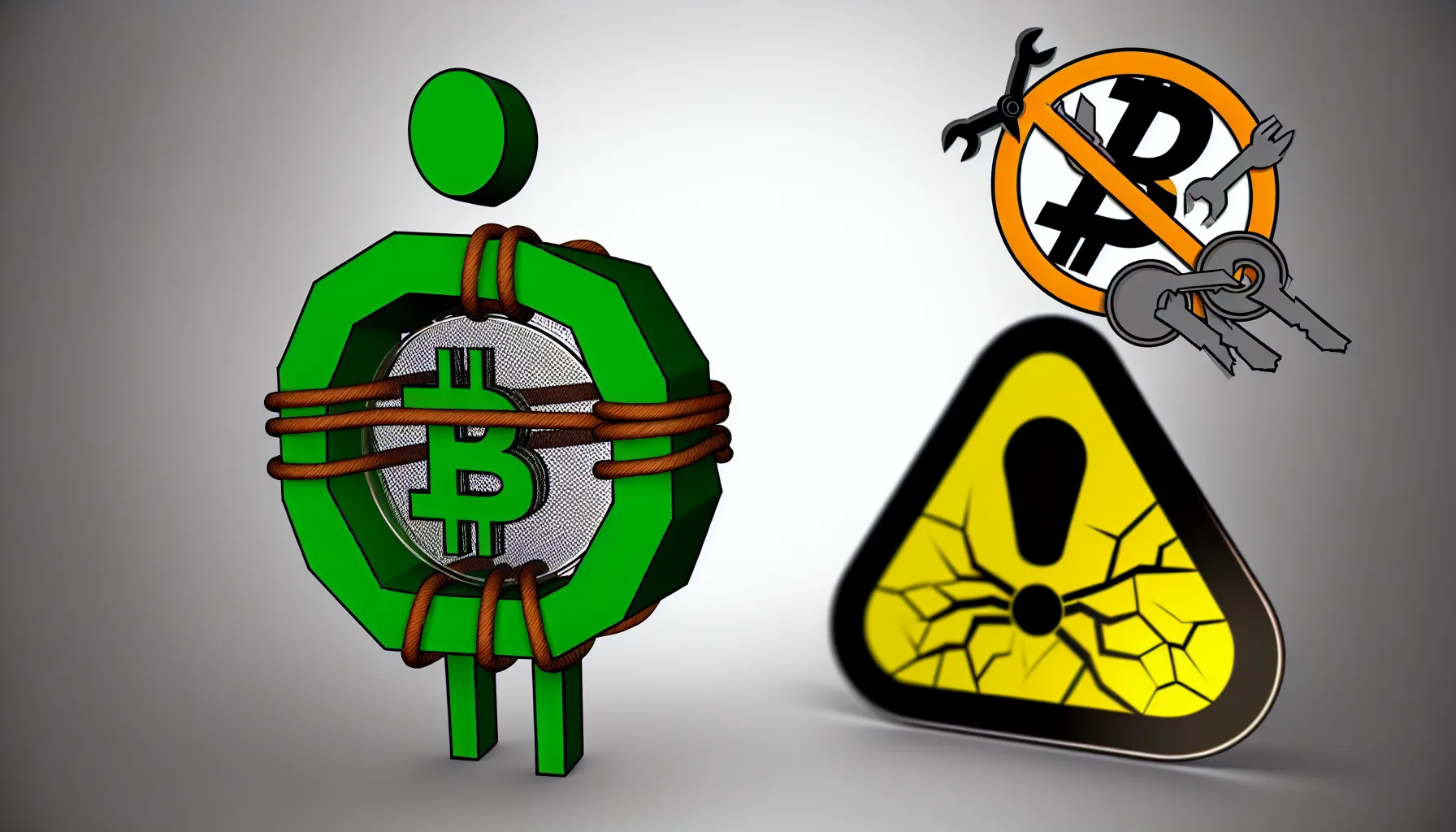
Critiques of Wrapped Bitcoin: Centralization and Trust Issues
BestDapps Moderator
Biggest Criticisms of Wrapped Bitcoin (WBTC)
Wrapped Bitcoin (WBTC) is an ERC-20 token that allows users to represent Bitcoin (BTC) on the Ethereum blockchain, enabling BTC to participate in decentralized finance (DeFi) protocols. Despite its utility, WBTC has faced significant criticisms around its design, centralization, and transparency. Below, we explore some of the most common and notable points of contention regarding WBTC.
Centralization Concerns
A major criticism of Wrapped Bitcoin lies in its centralization. The process of minting WBTC relies on a network of custodians and merchants, with BitGo serving as the primary custodian responsible for holding the Bitcoin that backs the WBTC. Critics argue that this setup contradicts the decentralized ethos of cryptocurrencies such as Bitcoin and Ethereum. Since users must trust a centralized entity like BitGo to secure the underlying BTC, the system remains vulnerable to potential mismanagement, hacks, or regulatory intervention.
Adding to this concern, the merchants and custodians involved in the issuance and redemption process must adhere to Know Your Customer (KYC) and Anti-Money Laundering (AML) requirements. While these measures align with compliance frameworks, they also introduce additional friction and create barriers for users who prioritize anonymity or censorship resistance in their crypto activities.
Risks of a Custodial Model
The custodial nature of WBTC has been a consistent point of critique. Unlike Bitcoin, where holders maintain control over their private keys, WBTC users rely on a centralized entity to hold BTC on their behalf. This custody-based system creates a single point of failure, exposing the reserves to risks like theft, fraud, or mismanagement. Detractors argue that this design undermines the core principles of Bitcoin, particularly its focus on self-sovereignty and trust minimization.
Lack of Transparency
Although WBTC aims to maintain transparency through regular audits and public proof of reserves, critics have questioned the adequacy of these measures compared to more decentralized tokenized Bitcoin alternatives, such as RenBTC or tBTC. The audit process relies on third-party verifications, not a trustless mechanism, which means users must rely on external institutions to ensure accountability. Any discrepancies between the stated reserves and the actual Bitcoin holdings would undermine user confidence and exacerbate trust issues.
Dependence on Ethereum
Another criticism stems from WBTC's dependence on the Ethereum blockchain. If Ethereum were to experience severe congestion, security vulnerabilities, or governance issues, users holding WBTC could face difficulties using the token effectively. Moreover, since WBTC is an ERC-20 token, its utility is intrinsically tied to the health and scalability of the Ethereum ecosystem.
Lack of True Decentralization
While WBTC facilitates liquidity and interoperability in DeFi, some argue that its reliance on centralized actors prevents it from being a genuinely decentralized solution. This perceived lack of true decentralization has led many Bitcoin purists and DeFi advocates to prefer alternative tokenization models that emphasize trustless, automated solutions over custodial arrangements.
Criticism from Bitcoin Maximalists
Finally, WBTC has also drawn criticism from Bitcoin maximalists, who question the need to tokenize Bitcoin on Ethereum at all. From their perspective, Bitcoin’s value proposition lies in its unique blockchain, and transferring its representation to Ethereum diminishes its integrity and purpose.
As TKO from Toko Crypto gains traction, significant criticisms have emerged regarding its utility and governance. From concerns about centralization and…
Aptos is making waves in the crypto world, but its rise is not without significant criticisms. From high centralization to regulatory risks, potential…