History of ZRX
The History of ZRX: Evolution of the 0x Protocol
The history of ZRX is deeply intertwined with the development of the 0x Protocol, an open-source framework designed to enable the peer-to-peer exchange of assets on the Ethereum blockchain. The protocol first emerged in 2016, amid the growing demand for decentralized exchanges (DEXs) and the realization that on-chain liquidity was fragmented and inefficient. Will Warren and Amir Bandeali, the co-founders of 0x, envisioned a solution that would allow developers to easily integrate decentralized trading functionalities into their applications.
The inaugural whitepaper for the 0x Protocol was introduced in early 2017, outlining a system where off-chain order relay was combined with on-chain settlement. This approach addressed key limitations of early DEXs, such as congestion, high transaction costs, and slow execution speeds. Later that year, in August 2017, the team successfully conducted its Initial Coin Offering (ICO), raising $24 million through the sale of ZRX tokens. These tokens play a dual role in the ecosystem: governance and relayer fees.
The first version of the 0x Protocol (v1) was launched shortly afterward in 2017. While groundbreaking in terms of introducing the concept of relayers, the protocol faced criticism for its relatively low adoption and limited developer tooling during its early iterations. By 2018, the team released 0x Protocol v2, which introduced support for non-fungible tokens (NFTs) and other asset types beyond ERC-20 tokens, broadening the scope of use cases. However, competition with emerging protocols like Uniswap, which championed automated market maker (AMM) models over the order book-based model used by 0x, challenged its market position.
Advancing the protocol further, the team rolled out v3 in late 2019. This update introduced new features such as staking mechanisms for ZRX holders and improved liquidity aggregation through a networked liquidity pool. While these enhancements addressed some prior criticisms, the growing preference for AMM-based systems in the DeFi ecosystem continued to divert attention from order book-style exchanges. The introduction of 0x Protocol v4 in 2021 aimed to reestablish its relevance by significantly improving gas efficiency and integrating with emerging blockchain standards, demonstrating the team’s commitment to adapting to evolving market conditions.
Despite its innovations, ZRX has often faced scrutiny regarding its governance model. The reliance on token holders to vote on protocol upgrades and changes has, in some cases, led to criticism over voter participation rates and decision-making speed. Additionally, the rise of multi-chain ecosystems and alternative DEX solutions has put pressure on 0x to maintain a competitive edge in an increasingly crowded market.
How ZRX Works
How ZRX Works: Exploring the Core Mechanisms of 0x Protocol
ZRX, the native token of the 0x Protocol, is integral to its decentralized exchange (DEX) functionality and governance. At its core, 0x operates as an open protocol that facilitates the peer-to-peer exchange of Ethereum-based tokens through smart contracts. Here's a breakdown of how the ZRX token interacts with and powers the ecosystem:
On-Chain and Off-Chain Components
The 0x Protocol employs a hybrid architecture that combines off-chain order management with on-chain settlement. This design reduces gas fees and network congestion on Ethereum, solving scalability issues typically associated with fully on-chain DEXs. Orders are created off-chain and only submitted on-chain during the settlement phase. Relayers (or liquidity providers) broadcast these orders across the network, enabling users to discover and match orders efficiently without committing computational resources to the Ethereum blockchain until necessary.
The Role of ZRX in the Ecosystem
ZRX has two primary functions within the 0x ecosystem: governance and liquidity incentives.
-
Governance: ZRX holders have the ability to participate in protocol upgrades by voting on improvement proposals. This governance mechanism ensures that changes to the protocol are decentralized and reflect the will of the stakeholders, although it has faced occasional challenges in balancing participation rates and decision-making efficiency.
-
Staking for Liquidity Rewards: Market makers can stake ZRX tokens to earn rewards from protocol fees generated by trades executed via 0x. These rewards incentivize liquidity provision, ensuring robust order book depth across the system. However, centralization concerns sometimes arise, as larger stakeholders can exert outsized influence on liquidity rewards distribution.
Smart Contract Layer and Extensibility
The 0x Protocol’s smart contracts are modular, allowing for upgrades without disrupting the overall system. This architecture enables developers to build custom trading solutions on top of the protocol or integrate 0x functionalities into other platforms. While this extensibility is a clear strength, it does introduce potential attack vectors. For example, poorly written third-party integrations could compromise user funds or introduce inefficiencies.
Interoperability and Limitations
Beyond Ethereum, 0x seeks to facilitate seamless token exchanges across multiple chains, though cross-chain interoperability remains a work in progress. The reliance on Ethereum also means the protocol is subject to the network’s scalability constraints, which might impact user experience when Ethereum is congested. Additionally, competition from other DEX protocols could dilute ZRX’s utility if adoption plateaus.
By addressing these challenges and fostering widespread usage, ZRX aims to remain an integral part of the evolving decentralized exchange landscape.
Use Cases
Use Cases for ZRX: Exploring the Functional Role of the 0x Protocol Token
The ZRX token serves as the backbone of the 0x protocol, a decentralized exchange (DEX) infrastructure that facilitates peer-to-peer trading of Ethereum-based assets. Its utility spans governance, staking incentives, and transaction fee payments, catering to a variety of participants within the DeFi ecosystem. However, while the ZRX token is central to the protocol’s vision of decentralized asset exchange, its use cases reveal both strength and areas of debate.
Governance in a Decentralized Framework
One of the primary use cases of ZRX lies in its governance utility. Token holders have the ability to vote on protocol upgrades, parameter changes, and other developmental decisions. By implementing a token-based voting mechanism, 0x ensures that decisions are decentralized and reflect the preferences of its community. However, the potential for governance to be overly influenced by large holders raises concerns about centralization risks. In cases where ZRX distribution is highly concentrated, smaller stakeholders might find their voices overshadowed, which is an issue often scrutinized in community-governance models.
Staking and Liquidity Incentives
ZRX also serves as a staking mechanism for market makers providing liquidity within the 0x ecosystem. Market makers stake ZRX to earn liquidity rewards, incentivizing participation and deepening liquidity pools. This staking utility ties the token directly to the platform’s operational health, as higher liquidity translates to reduced slippage and better user experiences. Nonetheless, critics argue that staking mechanisms sometimes prioritize short-term token lockups over sustainable liquidity provisioning, especially in cases where liquidity is driven more by farming rewards than intrinsic platform value.
Transaction Fee Payments
When using the 0x protocol, ZRX can be utilized to pay for relayer fees associated with trade settlements. Relayers act as intermediaries that broadcast orders to the network. By incentivizing relayers with ZRX, the platform creates a functional bridge between token value and exchange activity. However, given the increasing competition among DEX protocols, reliance on ZRX for fee payments comes under scrutiny. If users prefer DEXs with fee structures that allow for broader payment options (such as ETH or stablecoins), this could dampen ZRX’s adoption within the ecosystem.
Integration Beyond DEX Functionality
Another emerging use case for ZRX is its integration into third-party applications leveraging the 0x protocol’s API. Projects can tap into 0x liquidity without building their own infrastructure, and ZRX may play a role in value exchange within such implementations. However, the token’s involvement in these applications is often optional, leading to discussions about whether ZRX is critical to the broader adoption of the 0x protocol or if its utility is limited to niche scenarios.
ZRX Tokenomics
ZRX Tokenomics: A Detailed Breakdown
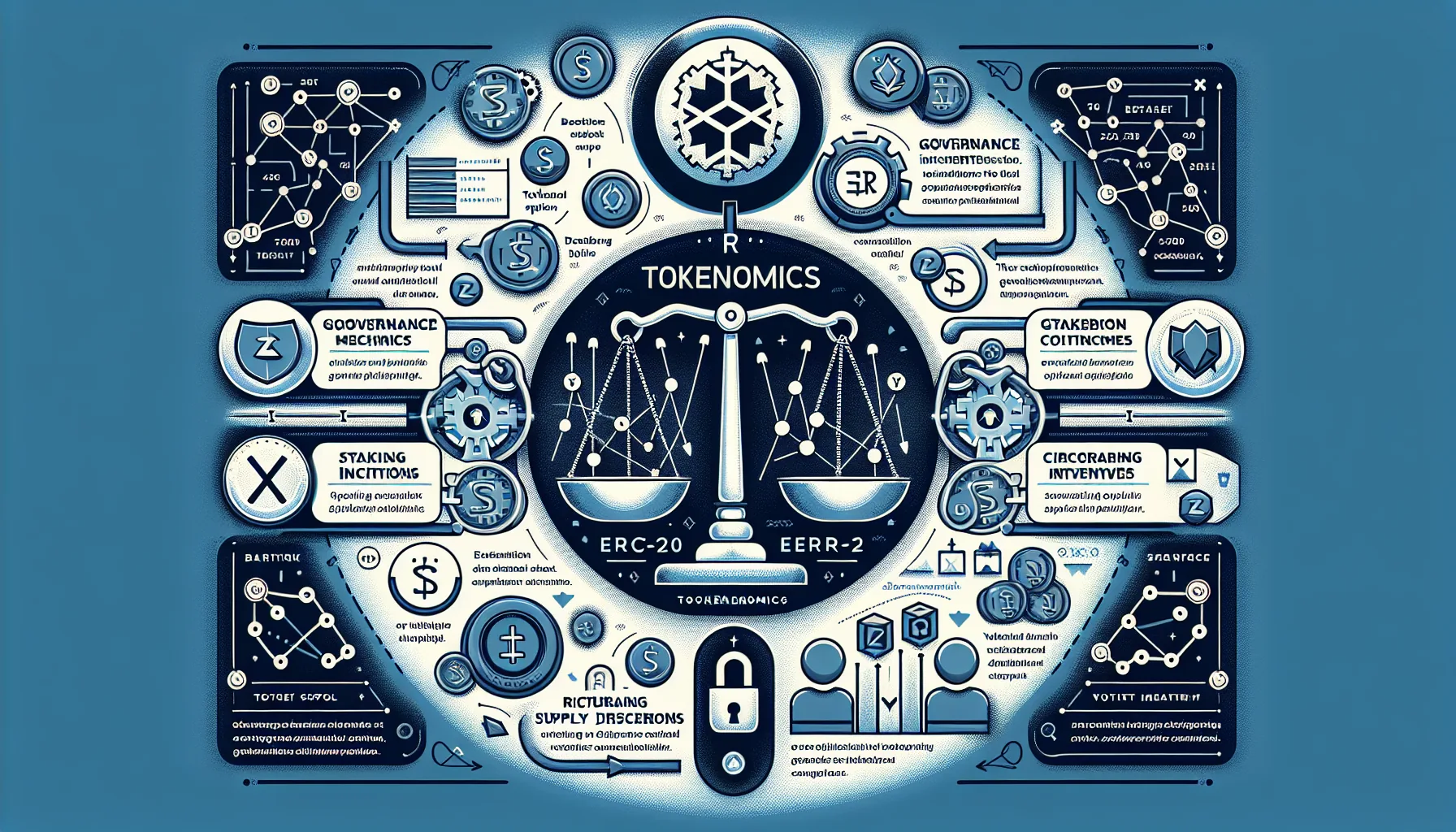
The ZRX token is central to the 0x protocol, providing a dual-purpose utility in governance and liquidity provision across decentralized exchanges. It operates on the Ethereum blockchain, adhering to the ERC-20 standard, but its tokenomics reflect a nuanced interplay between governance mechanics, staking incentives, and circulating supply dynamics.
Fixed Supply and Distribution
ZRX has a fixed maximum supply of 1 billion tokens, a feature that aligns with the ethos of scarcity-driven value in many decentralized ecosystems. However, token distribution has faced criticism within the crypto community, particularly regarding the allocation to insiders. A significant portion was initially reserved for founders, advisors, and the ZRX team, raising concerns about potential centralization of influence.
This high concentration among early stakeholders poses risks to the network's decentralization metrics. While gradual token vesting schedules have mitigated immediate selling pressure, the optics of disproportionate insider control continue to be scrutinized by the broader crypto community.
Governance Utility
One major utility of ZRX is its role in 0x protocol governance. The token allows holders to vote on protocol upgrades and directional proposals, making it a key asset for the project's community-driven evolution. However, low voter turnout in governance processes has been a recurring challenge. Critics point to the lack of meaningful incentives for smaller ZRX holders to engage in governance, furthering the argument that decision-making power is largely concentrated among whale addresses.
Staking Incentives
ZRX holders can stake their tokens to earn incentives from trading fees generated through the protocol. This staking mechanism is designed to reward active participation in liquidity provision. While the model theoretically aligns incentives between market-makers, traders, and token holders, its fee-sharing structure has come under fire for not being competitive enough compared to staking returns offered by rival protocols.
Additionally, staking rewards fluctuate based on network usage, which can create unpredictable yields for participants. This variability may disincentivize long-term commitment and lead to periods of reduced liquidity provision during market downturns.
Inflation and Circulating Supply Concerns
Although ZRX has no direct inflationary mechanics, questions surrounding circulating supply arise from the potential selling pressure exerted by previously allocated, but yet-to-be-activated, token reserves. Any sudden or large release of these tokens into the market could destabilize the price and undermine liquidity stability.
Tokenomics for ZRX therefore strike a delicate balance, but hurdles like governance participation, staking competitiveness, and distribution centralization remain key areas for ongoing refinement.
ZRX Governance
Governance in ZRX: Exploring Decentralized Decision-Making
ZRX, the native token of the 0x Protocol, plays a critical role in the governance framework of the 0x ecosystem. At the heart of this model is the objective of empowering ZRX token holders to influence protocol upgrades and changes, ensuring that the decentralized exchange infrastructure evolves in a manner aligned with its community's needs. However, while the governance system aligns with decentralized finance (DeFi) principles, it is not without challenges.
Token Holder Voting Power
Governance within the 0x ecosystem leverages a token-weighted voting mechanism. ZRX holders can propose and deliberate on protocol upgrades, providing the community with a say in shaping the platform's direction. The weight of each vote is proportional to the amount of ZRX held, a common approach in crypto projects that enables active token holders to have greater sway. However, this introduces concerns related to wealth concentration, as larger stakeholders can disproportionately influence outcomes, potentially sidelining smaller participants.
Delegate Model: Balancing Participation
To encourage broader participation, 0x embraces a delegation model. ZRX holders can delegate their voting power to representatives who act on their behalf. While this lowers the barrier for involvement and allows less active participants to have indirect input, it introduces trust issues. Delegates must act responsibly and align with the interests of those who assign them power. Mismatched incentives or centralized delegate dominance could undermine the decentralized ethos that governance aims to uphold.
Technical Proposals and Community Alignment
ZRX governance is more than just voting—it also involves drafting and discussing technical improvement proposals, often referred to as ZEIPs (0x Improvement Proposals). These proposals outline changes to the protocol, such as structural updates, fee adjustments, or integration features. While this process ensures transparency and community engagement, it requires participants to have a deep understanding of technical details. This complexity can alienate less savvy contributors, creating a disparity in influence between seasoned developers and average token holders.
Governance Execution and Risks
Beyond proposal discussions and voting, the execution of accepted changes relies on smart contracts. While this provides efficiency and immutability, it also introduces risks. Errors or exploits in governance-related contracts could lead to unintended consequences, with potentially significant impacts on the protocol. This highlights the need for rigorous audits and testing before deploying changes.
Governance in ZRX demonstrates a commitment to decentralized decision-making but faces challenges regarding equitable participation, transparency, and security.
Technical future of ZRX
ZRX Current and Future Technical Developments: A Deep Dive into the Protocol's Roadmap
Advancements in 0x Smart Contract Infrastructure
One of the most significant areas of ongoing development for ZRX, the utility and governance token underpinning the 0x Protocol, lies in its smart contract infrastructure. The 0x v4 protocol upgrade introduced modularity and gas-efficiency improvements, but there remain active challenges related to maintaining backward compatibility while integrating more advanced features. Future iterations are expected to focus on more robust on-chain settlement mechanisms, especially as decentralized exchanges (DEXs) demand improvements in liquidity routing across multiple blockchains. However, achieving true cross-chain interoperability without introducing complexity and potential attack vectors remains an active area of research and development.
Modular Governance: Toward Decentralized Control
The 0x governance model is transitioning toward increased token holder participation, facilitated by ZRX staking mechanisms. While delegation structures have improved voter accessibility, criticism persists regarding low voting participation among token holders. Future updates include potentially introducing quadratic voting or other weighted mechanisms to incentivize broader engagement. However, ensuring the governance system scales alongside expanded protocol functionalities while keeping decision-making decentralized poses significant challenges.
Off-Chain Order Relay Enhancements
The focus on off-chain order relay systems, a key differentiator for the 0x Protocol, remains a technical priority. Despite the introduction of the 0x API, which aggregates liquidity from various sources, bottlenecks related to off-chain relay reliability can still result in order failures during periods of high network congestion. The development team is working on improving off-chain relayer protocols and aligning these systems with emerging advancements like zk-rollups and optimistic rollups. This could, theoretically, permit scalability while retaining low latency, although implementation complexities will need resolution.
Interoperability with Layer-2 Solutions
0x has identified Layer-2 solutions as critical to addressing scalability bottlenecks and high transaction costs, especially as Ethereum gas fees remain competitive. The integration of zk-rollups is already underway, but fully leveraging zk-proofs for faster order matching and trade finalization remains in early stages. Mitigating risks associated with Layer-2 rollup dependency—such as centralized sequencers or the bridging of assets between Layer-1 and Layer-2—will be pivotal in ensuring long-term viability.
Developer Support and Open Source Contributions
To foster innovation, 0x Protocol remains open source, but there are barriers to attracting developers due to the increasing technical complexity of building on its framework. Future plans include enhancing developer documentation, providing additional SDKs, and supporting multi-chain deployment efforts. However, competition from other protocols with simpler on-ramping processes could dilute developer interest.
Comparing ZRX to it’s rivals
ZRX vs UNI: A Deep Dive into Decentralized Exchange Governance and Efficiency
When comparing ZRX (0x Protocol) to UNI (Uniswap), the most notable distinction lies in their approach to governance and the depth of their focus on decentralized exchange (DEX) infrastructure. While both tokens are integral to Ethereum-based DeFi ecosystems, they represent differing philosophies and implementations within the DEX sector.
Governance Model: Flexibility vs. Complexity
ZRX holders play a pivotal role in directing the protocol’s path, particularly around stake-based incentives and liquidity provider rewards. The 0x Protocol’s governance has traditionally emphasized flexibility, allowing developers and community contributors to propose modular upgrades to its relayers and order-matching mechanisms. However, this flexibility comes at the cost of complexity. Decisions involving ZRX governance frequently demand a more technical understanding, as 0x focuses heavily on advanced features like private RFQs (Request for Quotes) and interoperable liquidity aggregation.
UNI, by contrast, adopts a more straightforward token governance structure. Uniswap’s governance revolves around proposals that shape its core product—an AMM (Automated Market Maker). UNI governance has seen significantly higher participation rates, arguably due to simpler entry points and the broad appeal of its AMM-first system. This makes UNI more easily accessible to a larger swath of the DeFi user base, an area where 0x struggles to match its rival.
Liquidity and User Interaction
ZRX’s model emphasizes supporting professional-grade liquidity providers and OTC markets through its off-chain order relay and on-chain settlement system. This creates unique advantages for users looking to avoid slippage and interact in high-volume, cross-pair scenarios. However, its hybrid architecture requires multiple layers of integration, leading some to view its usability as less accessible for entry-level DeFi participants.
On the other hand, UNI's focus on AMMs eliminates dependency on external relayers or order books. This simplicity fosters massive adoption, particularly among newer users. However, the AMM design may not be ideal for professional traders handling large amounts, as it often incurs higher slippage compared to the 0x Protocol’s RFQ optimization.
Scaling and Ecosystem Integration
The 0x Protocol has positioned itself as a foundational infrastructure layer, with developers using its API to build bespoke DEXs tailored to niche use-cases. This adds versatility but can fragment liquidity across projects. Meanwhile, UNI's monolithic AMM structure centralizes its liquidity into a single venue. This consolidation has led to UNI dominating volume metrics, yet it limits flexibility for projects needing advanced customization.
In sum, ZRX’s focus on advanced liquidity mechanisms caters to specialized users, whereas UNI targets broader adoption through simplicity. Both have evident tradeoffs, with ZRX favoring precision and UNI thriving on ease of access. The distinction often boils down to the priorities of their respective user bases and ecosystem roles.
How Does ZRX Stack Up Against SUSHI?
When comparing ZRX (0x) to SUSHI (SushiSwap), the main point of differentiation lies in their respective approaches to decentralized finance (DeFi) infrastructure and governance. While both projects operate within the broader DeFi ecosystem, their focus areas and value propositions differ in ways that are worth scrutinizing.
Core Focus and Use Case
SUSHI is designed primarily as a decentralized exchange (DEX) and an Automated Market Maker (AMM), heavily focusing on providing liquidity and incentivizing trading through liquidity pool rewards and yield farming. ZRX, on the other hand, emphasizes its role as a liquidity aggregator and infrastructure provider, facilitating decentralized exchange functionality across multiple trading platforms. While SushiSwap is a self-contained AMM ecosystem, ZRX is more ecosystem-agnostic, enabling developers to integrate its protocol into their own platforms.
This divergence in focus means ZRX's interoperability gives it an edge in terms of flexibility, but it can lag behind SUSHI in providing a seamless, all-in-one user experience. SUSHI's single-platform approach allows for simpler onboarding of new users into DeFi, whereas ZRX requires third-party integrations, which may present a higher technical barrier.
Token Economics
When assessing token utility, SUSHI holders benefit from direct revenue-sharing incentives via platform fees, providing a tangible financial incentive tied to the exchange's growth. ZRX, in contrast, plays a utility role within the 0x ecosystem for governance and staking, with limited direct revenue-sharing features for token holders. While staking ZRX offers returns, the ROI for token holders often depends on the adoption of third-party integrations, making its value proposition less direct compared to SUSHI's clear link to transaction activity.
Governance Structures
Both protocols emphasize decentralized governance, but their approaches highlight important differences. SUSHI has faced criticism for governance issues, including cases of centralization and controversial leadership decisions in the project's earlier stages. In contrast, ZRX governance has leaned towards broader decentralization. However, ZRX's less prominent community engagement has sometimes been perceived as a lack of dynamism compared to SUSHI’s more vocal (although occasionally fractured) community.
Potential Limitations
While SUSHI benefits from brand recognition and an established user base in DeFi, ZRX’s reliance on external platforms for liquidity can create challenges for visibility and user acquisition. Additionally, ZRX's more developer-focused ecosystem can position it as less accessible to retail participants, giving SUSHI an edge in catering to a wider audience.
ZRX vs BAL: A Detailed Comparison of Two Decentralized Exchange (DEX) Protocol Tokens
When analyzing the decentralized finance (DeFi) ecosystem, it’s essential to understand how tokens like ZRX (0x) differentiate themselves from rivals such as BAL (Balancer). Although both projects exist within the same overarching domain of decentralized exchanges and liquidity provisioning, their approaches, utility, and ecosystems diverge in significant ways.
Core Use Case Divergence
ZRX is fundamentally a protocol token designed to power the 0x platform, with a focus on enabling developers to build decentralized marketplaces and integrate liquidity across various sources. BAL, the governance token of Balancer, is primarily aimed at incentivizing liquidity providers and managing the protocol’s smart pool configurations.
The Balancer protocol operates around the concept of automated market-making (AMM), wherein liquidity pools with adjustable weightings allow users to create personalized configurations tailored to their asset rebalancing needs. This differs from ZRX’s role in facilitating peer-to-peer exchanges and aggregating liquidity without locking users into predefined pool structures. ZRX’s modular focus on liquidity routing contradicts BAL’s preference for AMM-driven ecosystems, leaving both projects catering to somewhat distinct user bases.
Governance Mechanism Disparities
Governance plays a pivotal role in the future direction and sustainability of any DeFi protocol. ZRX token holders can vote on network fee structures, protocol upgrades, and funding decisions. Balancer’s governance mechanism, on the other hand, is centered on BAL holders enabling votes for fee adjustments, weighted pool parameters, or broader protocol initiatives.
One major distinction lies in complexity: Balancer’s governance often ties into its dynamic pool strategies, which can intimidate less experienced participants. In contrast, ZRX governance skews slightly toward protocol-specific upgrades, which might feel less intimidating but lacks the pool-level dynamism seen with BAL governance proposals. This inherently affects the perception of accessibility within their respective DAOs.
Challenges with Balancer Integration
One of the criticisms Balancer faces relates to the learning curve associated with its customizable weighted pools. While they offer significant flexibility to advanced users and liquidity providers, new entrants or smaller players often find themselves overwhelmed by the intricacies of balancing token proportions, managing impermanent loss risks, and understanding fee mechanics.
In comparison, ZRX’s intent to function as an underlying liquidity aggregator sidesteps the AMM-based complexities BAL faces head-on. However, this leaves ZRX potentially lacking the robust fee capture mechanisms that BAL achieves through its tightly integrated pools.
Tokenomics Comparison
Another notable differentiation lies in token distribution and value accrual. BAL suffers from criticism regarding inflationary risks, as new tokens continue to be distributed as liquidity mining rewards. Despite its role in sustaining user incentives, this system raises concerns about long-term sell pressure. ZRX, by contrast, faces criticism for its somewhat limited direct utility beyond governance and staking rewards. While BAL’s approach heavily incentivizes liquidity provision, ZRX leans toward fostering network interoperability, which appeals to a different class of users and developers.
Final Thoughts on Feature Contrast
Between ZRX and BAL, their differing focuses highlight the broader tension within the DeFi space between utility complexity and user accessibility. Whether liquidity aggregation without AMM reliance (ZRX) holds more sway than feature-rich pool mechanics (BAL) depends heavily on user priorities and project goals. Ultimately, for developers and traders weighing the tradeoffs, understanding these distinctions provides crucial insight when deciding between the ecosystems.
Primary criticisms of ZRX
Primary Criticism of ZRX: Challenges Facing 0x Protocol
The 0x (ZRX) protocol, while often praised for its role in enabling decentralized exchanges (DEXs) and its ambitions to create an open financial system, is not without its shortcomings. Below, we explore the main criticisms that have been directed toward ZRX, focusing on its token utility, competitive environment, governance, and broader ecosystem challenges.
Token Utility Concerns
One of the most persistent criticisms of ZRX relates to concerns over its token utility. Initially, ZRX was designed to serve as both a governance token and a means to pay protocol fees. However, fee payments with ZRX were later deprecated, leaving governance as its primary purpose. For many critics, this raises questions about the fundamental necessity of the token within the ecosystem. Decentralized finance (DeFi) projects that fail to convincingly integrate their token into the core functionality of their protocol are often labeled as overly reliant on speculative demand, and ZRX has not escaped this scrutiny.
Intense Market Competition
The decentralized exchange space has become fiercely competitive, with numerous protocols vying for dominance. Platforms such as Uniswap, Curve, and SushiSwap have developed models that don’t require intermediary layers like ZRX for trade execution. This has prompted critiques that 0x operates in a crowded market with limited differentiation. Additionally, these competing platforms have captured significant user attention and liquidity, which has posed an ongoing challenge for ZRX to maintain relevance in a rapidly evolving industry.
Governance Participation Issues
Although ZRX is intended to function as a governance token, governance in many DeFi ecosystems has faced hurdles in achieving broad participation, and 0x is no exception. A low rate of voter turnout among token holders has commonly been observed, leading to questions about whether true decentralization is being achieved. Critics argue that disproportionate influence by a small group of stakeholders could undermine the broader ethos of 0x's decentralized architecture.
Ecosystem Fragmentation
Another common critique centers around ecosystem fragmentation. Over time, 0x has introduced various products and services, such as Matcha (a DEX aggregator) and 0x API. While these innovations broaden the protocol’s reach, it's been suggested that this diversification could dilute focus, creating potential confusion for new users and stakeholders alike. Some argue that 0x has yet to firmly establish its identity amid its sprawling product portfolio, which could affect long-term ecosystem cohesion and community engagement.
Liquidity Limitations
The protocol has also faced challenges in consistently attracting and retaining liquidity, which is a critical factor in the success of any DEX-focused solution. Liquidity fragmentation across competing platforms has complicated 0x’s ability to position itself as the primary liquidity layer for the decentralized economy. Critics argue that without a clear advantage in aggregating liquidity, 0x risks being overshadowed by competitors offering more robust pools or innovative mechanisms.
Founders
ZRX Founding Team: Origins and Key Contributors
The 0x (ZRX) protocol owes its inception to a talented founding team whose expertise and vision have played a pivotal role in shaping the decentralized exchange (DEX) landscape. 0x was co-founded in 2016 by Will Warren and Amir Bandeali, both of whom brought deep expertise in engineering and finance to the project. Their shared goal was to create an open protocol that facilitates peer-to-peer trading of assets on the Ethereum blockchain, leveraging smart contracts to improve efficiency and reduce costs compared to traditional centralized exchanges.
Will Warren: Technical Vision and Early Challenges
Will Warren, who served as the protocol's inaugural CEO, was instrumental in defining 0x's technical architecture. With a background in engineering and applied physics, Warren brought technical depth to the project, leading the development of the protocol's initial smart contracts. However, some critics have noted that early versions of the protocol faced hurdles, including insufficient market adoption and usability issues in a fast-evolving DeFi ecosystem. Whether these challenges stemmed from overly ambitious goals or external market dynamics is debatable, but the founding team has demonstrated a consistent commitment to iterating and improving the protocol.
Amir Bandeali: Financial Expertise and a Dual Role
Amir Bandeali, formerly a fixed-income trader at DRW, contributed essential financial and strategic insights to the 0x ecosystem. His expertise in asset pricing and market dynamics informed the design of the protocol’s tokenomic model, particularly regarding the incentivization of relayers (intermediaries facilitating trading on the 0x network). Bandeali transitioned to the role of Chief Technology Officer (CTO) after co-founding, further demonstrating the team's flexibility in navigating rapidly changing responsibilities as the protocol grew. However, some in the crypto community have questioned whether the initial emphasis on relayers—a critical but challenging component to scale—may have hindered broader and faster adoption of the protocol.
Decentralized Development and Fragmented Leadership
The 0x founding team has touted the decentralization of leadership and development as core principles of the project, but this decentralization has occasionally drawn criticism. Some observers argue that the drive for decentralization has led to challenges in coordination and decision-making, potentially slowing the protocol’s ability to compete with more agile, centralized operations. Critics have also pointed to the absence of high-profile partnerships compared to some competing protocols, highlighting a potential gap in the team’s ability to market and position ZRX more prominently within the broader DeFi ecosystem.
Authors comments
This document was made by www.BestDapps.com
Sources
https://0x.org/
https://whitepaper.io/document/630/0x_whitepaper
https://github.com/0xProject/whitepaper
https://github.com/0xProject/0x-protocol
https://blog.0xproject.com/
https://0x.org/docs/guides
https://etherscan.io/token/0xe41d2489571d322189246dafa5ebde1f4699f498
https://0xtracker.com/
https://medium.com/0x
https://coinmarketcap.com/currencies/0x/
https://masari.io/asset/ZRX
https://defillama.com/protocol/0x
https://docs.0x.org/introduction/0x-cheat-sheet
https://forum.0x.org/
https://twitter.com/0xProject
https://www.coingecko.com/en/coins/0x
https://www.cryptocompare.com/coins/zrx/overview
https://docs.0x.org/tools/0x-api
https://tokeninsight.com/en/coin/0x
https://messari.io/asset/0x/profile


