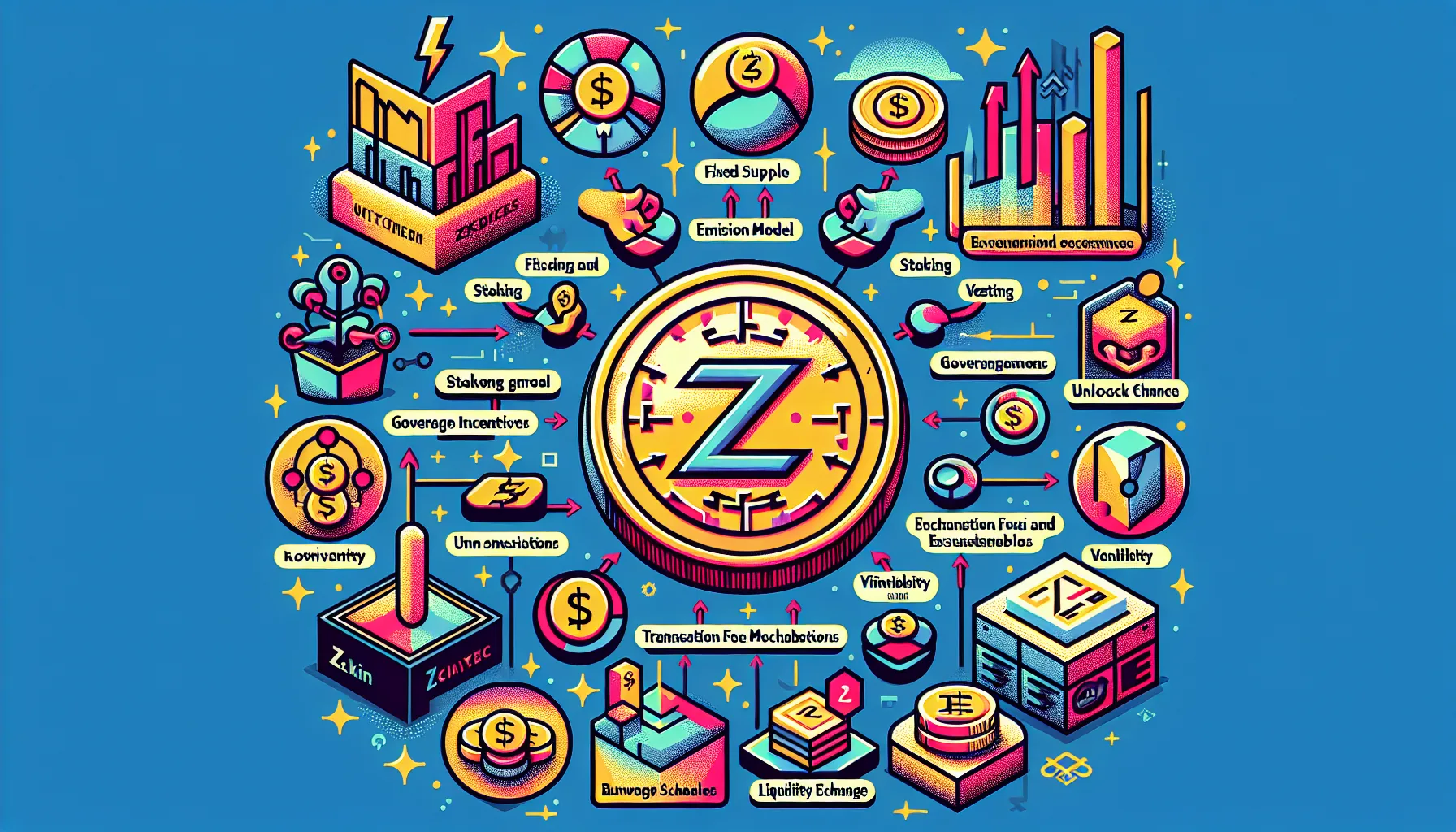
History of ZKF2
The History of ZKF2: Origins, Developments, and Key Events
Early Development and Launch
ZKF2 emerged from a specialized sector of the crypto space focused on zero-knowledge proofs (ZKPs) and Layer 2 scalability. The development team, composed of cryptographers and blockchain engineers, aimed to create a solution that pushed the boundaries of privacy and transaction efficiency. The initial whitepaper outlined a framework combining advanced zk-SNARK implementations with an optimized Layer 2 rollup model, positioning ZKF2 as a competitor in the scaling and privacy-focused blockchain niche.
The token launch followed a fair distribution mechanism, with a portion allocated to development, ecosystem incentives, and community participation. While initial adoption was limited to privacy-focused developers and early ZK enthusiasts, the protocol gained traction through integrations with existing DeFi platforms and Layer 1 solutions that sought to leverage trusted cryptographic proofs for scalability.
Challenges in Adoption and Technical Adjustments
Despite its theoretical advantages, ZKF2 faced hurdles in early adoption. One of the major concerns was usability—implementing zero-knowledge proofs efficiently required optimized cryptographic circuits, and early iterations suffered from high computational costs. Users reported transaction verification times that, while superior to some ZK-based alternatives, still posed a barrier to mass adoption.
Security audits revealed occasional vulnerabilities in the smart contract architecture, leading to patches and rapid iterations from the core team. Additionally, liquidity constraints emerged in decentralized finance integrations, as initial liquidity providers hesitated due to concerns over ecosystem stability. This led to multiple incentive adjustments and changes in staking mechanics to encourage participation without excessive inflationary pressure.
Key Upgrades and Ecosystem Expansion
Over time, ZKF2 introduced a series of updates to refine its protocol. Optimized proof aggregation techniques resulted in lower verification costs, reducing friction in decentralized applications. Strategic partnerships with larger Layer 1 and Layer 2 ecosystems helped integrate ZKF2's privacy and scaling solutions into more widely used DeFi protocols and NFT platforms.
The governance structure also evolved, with token holders gaining a more active role in protocol decisions. However, governance participation remained a challenge—voter apathy and centralized voting power among early adopters were ongoing concerns that the community attempted to address through various incentive models.
While ZKF2 carved a niche within the broader ZK ecosystem, its journey was characterized by both technical advancements and the persistent challenge of balancing efficiency, decentralization, and adoption.
How ZKF2 Works
How ZKF2 Works: A Deep Dive into Its Mechanism
ZKF2 operates as a zero-knowledge-based crypto asset designed to facilitate private and scalable transactions. It leverages advanced cryptographic proofs to validate transactions while maintaining confidentiality. The core mechanism involves a hybrid ZK-SNARK and optimistic rollup structure, optimizing both privacy and throughput.
Transaction Processing and Privacy
ZKF2 transactions are structured to hide sender, receiver, and transaction amounts, with only proof validity exposed to the network. This is achieved through zk-SNARKs, where a prover generates a cryptographic proof that a transaction is legitimate without revealing sensitive details. Validators check this proof against the chain’s consensus model, ensuring integrity without exposing private ledger data.
However, the privacy implementation has trade-offs. While zk-SNARK verification is efficient, proof generation can be computationally expensive, leading to potential latency for users submitting transactions. Additionally, decentralization concerns arise since generating proofs often requires hardware-optimized setups, which could limit broad participation.
Scalability Through Layer-2 Integration
ZKF2 incorporates an optimistic rollup mechanism alongside its zero-knowledge proofs to enhance scalability. Transactions are batched off-chain, with validity enforced through aggregated proofs before final settlement on the main chain. This design significantly reduces on-chain data load, lowering gas costs and improving throughput.
The reliance on optimistic finality introduces a challenge: a designated challenge period exists for fraud detection. In cases where a dispute arises, rollbacks or delays can occur until disputes are resolved, impacting transaction certainty. Moreover, rollup operators are critical to the ecosystem, and any centralization within them could affect network resilience.
Smart Contract Compatibility
ZKF2 maintains compatibility with smart contract environments through a specialized virtual machine adapted for zero-knowledge execution. This allows developers to deploy privacy-preserving dApps, where transaction history and state changes remain concealed. However, due to the computational complexity of zk-friendly contract execution, developers face restrictions on contract size and complexity. This could limit the types of applications feasible on ZKF2 compared to more conventional smart contract platforms.
Security and Potential Risks
The cryptographic security of ZKF2 depends on the integrity of its trusted setup, if applicable, and the correctness of its ZK-proof system. Any flaws in proof verification could lead to unverifiable transactions passing as legitimate. Additionally, if rollup operators collude or censor transactions, network neutrality could be threatened.
While ZKF2’s architecture enhances privacy and scalability, its reliance on advanced cryptography, potential centralization points, and hardware-intensive proof generation introduce inherent risks.
Use Cases
ZKF2 Use Cases: Privacy, Scaling, and Beyond
Enhancing On-Chain Privacy with ZKF2
ZKF2 is primarily leveraged for privacy-preserving transactions. By utilizing advanced zero-knowledge proofs, it enables users to validate transactions without revealing sensitive data. This makes it a preferred option for individuals and institutions that require financial confidentiality while maintaining verifiable integrity on-chain. However, privacy-focused assets often face regulatory challenges, and ZKF2 is no exception. Increased scrutiny on private transactions could impact its adoption in regulated environments.
Layer-2 Scaling Efficiencies
ZKF2 plays a crucial role in scaling blockchain networks by reducing computational overhead and optimizing transaction finality. Its integration with rollups, particularly ZK-rollups, allows for lower transaction costs and improved throughput. This makes it valuable for decentralized applications (dApps) that demand high transaction efficiency. Despite its advantages, integrating ZKF2 with existing infrastructures can be complex due to compatibility issues, requiring developers to adjust smart contracts or deploy specialized solutions.
DeFi and Secure Cross-Chain Transactions
Decentralized finance (DeFi) applications can leverage ZKF2 for privacy-protected lending, borrowing, and trading. By obscuring transaction details, it adds a security layer that prevents data exploitation while maintaining auditability. Additionally, ZKF2 is being explored for cross-chain interoperability, allowing assets and data to move securely without exposing transactional metadata. Despite its potential, adoption within DeFi is still hindered by liquidity fragmentation and the need for wider protocol support.
Enterprise and Institutional Use Cases
Institutions exploring blockchain-based solutions often require privacy guarantees for regulatory or competitive reasons. ZKF2 facilitates confidential enterprise transactions without compromising verifiability. In supply chain management, it can ensure data validity without disclosing proprietary information. However, enterprise adoption remains slow due to integration challenges, particularly when aligning ZKF2 with legacy systems and regulatory compliance frameworks.
Governance Considerations and Decentralization
ZKF2's governance mechanisms influence how it is adopted and upgraded. If heavily centralized governance exists, it could create trust concerns within decentralized ecosystems. Ensuring that governance mechanisms align with the broader principles of decentralization is critical for sustained use. Governance decisions also impact network security, particularly when privacy features are adjusted to comply with evolving regulations.
Smart Contract Applications and Security Implications
Developers employing ZKF2 for smart contracts gain access to enhanced security, reducing the risks associated with data leakage. However, implementing privacy at the smart contract level introduces complexity in debugging and auditing, as transaction details remain obscured. This can create challenges in ensuring compliance while maintaining transparency in permissioned environments.
ZKF2 Tokenomics
ZKF2 Tokenomics: Supply, Utility, and Distribution
Fixed Supply and Emission Model
ZKF2 operates with a fixed maximum supply, ensuring predefined scarcity. The emission schedule follows a gradual decline, preventing sudden supply shocks. However, concerns have been raised about initial token distribution, particularly regarding allocations to early investors and ecosystem contributors, which some argue create centralization risks.
Staking and Governance Incentives
ZKF2 integrates staking as a core mechanism, allowing holders to participate in network validation and governance decisions. Stakers receive rewards from transaction fees and protocol incentives. However, staking yield fluctuations can lead to liquidity imbalances, as high rewards often increase locked supply, reducing availability for exchange-based liquidity. Additionally, governance participation is weighted by stake size, raising concerns about influence concentration among large holders.
Utility Within the Ecosystem
ZKF2 tokens serve multiple functional roles, including gas fee payments, collateral in decentralized finance (DeFi) applications, and access to privacy-enhanced transactions. The token’s usage within its ecosystem directly impacts demand dynamics, but reliance on ecosystem adoption is a double-edged sword—if adoption stagnates, so does utility-driven demand.
Vesting and Unlock Schedules
A structured vesting schedule governs ZKF2’s release to early backers and core contributors, mitigating excessive early-stage sell pressure. However, periodic unlock events can lead to short-term volatility, as significant supply enters circulation. Market participants closely track these unlocks, adjusting their positions in anticipation of potential liquidity shifts.
Transaction Fee Burn Mechanism
A portion of transaction fees is burned, introducing a deflationary element into the tokenomics. While this model can support long-term scarcity, its actual impact depends on network activity. If transaction volumes decline, the burn rate slows, limiting its effectiveness as a compensatory mechanism against inflationary forces from staking rewards.
Liquidity and Exchange Considerations
Liquidity depth varies across centralized and decentralized exchanges, with availability often influenced by staking participation and token lockups. Lower exchange liquidity can contribute to price inefficiencies, making large trades more prone to slippage. Furthermore, reliance on specific liquidity providers may pose risks in case of unexpected disruptions in market-making activities.
Network Incentives and Sustainability
Sustaining incentives for validators, developers, and ecosystem participants remains a key challenge. If reward structures become unsustainable, network participation could decline, impacting security and development momentum. Adjustments to inflation parameters may be required over time to ensure long-term viability, though such changes can introduce unpredictability for token holders.
ZKF2 Governance
Governance Mechanics of ZKF2
ZKF2 governance is structured around a decentralized framework that relies on token-based voting and smart contract enforcement. Governance decisions are executed on-chain, minimizing reliance on off-chain intermediaries. Token holders can propose and vote on protocol changes, treasury allocations, and network upgrades, with voting power proportionate to token holdings. However, concerns about centralization arise, as voting influence skews toward large stakeholders.
Proposal Process and On-Chain Voting
Governance proposals in ZKF2 follow a structured lifecycle. A token holder must stake a predefined amount of ZKF2 tokens to submit a proposal. This requirement reduces spam but raises barriers for smaller participants. Once submitted, proposals enter the review phase, during which community discussion occurs. The actual voting mechanism relies on quadratic voting to partially mitigate wealth concentration but remains susceptible to sybil resistance issues.
On-chain voting utilizes a time-locked smart contract where token holders cast votes by signing transactions. Votes may be either snapshot-based or continuously delegated, depending on the governance model activated at the time. While this system ensures transparency, transaction fees can deter smaller voters, limiting broader participation.
Delegation and Governance Power Distribution
A key feature of ZKF2 governance is its delegation model. Token holders unwilling to vote directly can delegate their voting power to representatives. While this streamlines decision-making, it introduces risks of governance capture, where a small number of delegates exert outsized control. The protocol attempts to address this by imposing delegation limits and requiring regular re-validation of delegate authority. However, given the financial incentives tied to governance, collusion among large stakeholders remains a risk.
Smart Contract Enforcement and Proposal Execution
Once a proposal passes, execution is handled via immutable smart contracts. This eliminates human intervention but introduces rigidity—incorrect or exploit-prone proposals cannot be reversed without triggering a secondary governance vote. Governance timelocks further ensure that stakeholders have lead time before changes take effect, protecting against sudden, unexpected modifications.
Despite these safeguards, the reliance on automated execution creates vulnerability to governance attacks. If malicious proposals slip through due to voter apathy or misaligned incentives, they can significantly impact protocol integrity. Some community members advocate for failsafe mechanisms, but implementing such features without undermining decentralization remains a challenge.
Governance Limitations and Ongoing Challenges
While ZKF2 employs a theoretically decentralized governance model, practical challenges persist. Voter participation remains uneven, and smaller holders often choose delegation due to cost concerns. Additionally, governance attack vectors, including bribery and vote-buying, are potential threats. Addressing these issues without increasing complexity remains a core challenge for ZKF2’s governance architecture.
Technical future of ZKF2
ZKF2 Technical Roadmap and Future Development Plans
Current Technical Enhancements
ZKF2 is actively evolving its protocol to improve scalability, privacy, and interoperability. A key focus is on refining its zero-knowledge proof (ZKP) implementation to reduce verification overhead and improve transaction finality. Recent optimizations in proof aggregation aim to lower gas costs for on-chain verification, addressing concerns over network efficiency. Additionally, the protocol's state model is undergoing upgrades to enhance data availability, mitigating latency issues experienced in high-demand periods.
There have also been efforts to strengthen zk-Rollup compatibility, allowing ZKF2 to integrate more seamlessly with Layer 2 scaling solutions. However, challenges remain in optimizing prover efficiency, particularly in maintaining low computational requirements without compromising security.
Future Protocol Upgrades
The technical roadmap highlights multiple phased upgrades to enhance ZKF2’s core architecture:
-
Hybrid Recursive Proofs: The next iteration will introduce a hybrid recursion model, optimizing proof verification workflows across multiple computation layers. This is aimed at significantly reducing the cost and time required for complex proof generation. However, testing indicates that additional optimizations will be required to maintain network stability under increased loads.
-
Modular ZKP Frameworks: A transition toward modular proof systems is planned, allowing developers to build custom validity proofs optimized for specific transaction types. While this improves flexibility, it introduces potential fragmentation risks if not standardized properly across deployments.
-
Decentralized Sequencer Enhancements: The roadmap also includes decentralizing the transaction sequencing process to remove single points of failure. Current designs involve a consensus mechanism for sequencers, but latency issues remain an unresolved challenge, especially regarding fair ordering in congested periods.
-
Cross-Chain ZKP Validation: Plans for expanded cross-chain ZKP verification aim to improve composability between different blockchain ecosystems. However, security concerns remain a primary roadblock, as trust-minimized interoperability between disparate proof systems is complex and still under active research.
Technical Challenges and Ongoing Issues
Despite these planned developments, outstanding issues persist. The efficiency of the proving system remains a constraint, particularly in maintaining low latency for high-throughput applications. Additionally, the push toward modularization and decentralization introduces new coordination challenges that may impact network cohesion in early stages of implementation. Security risks tied to proof verification across multiple chains are also a concern, requiring further cryptographic and game-theoretic solutions before full deployment.
Comparing ZKF2 to it’s rivals
ZKF2 vs. ETH: A Technical and Functional Comparison
Scalability and Gas Fees
ZKF2 utilizes a zero-knowledge rollup architecture that significantly reduces the computational burden on the base layer. Unlike ETH, which still relies on Layer 1 transactions for many operations, ZKF2 batches and verifies transactions off-chain before posting succinct proofs on-chain. This results in lower gas fees and faster confirmations. While Ethereum has made strides with proto-danksharding developments, network congestion still affects overall transaction costs, making ZKF2 a more efficient alternative in terms of scalability. However, reliance on rollups introduces centralization risks if sequencers or validators operate in a permissioned manner.
Smart Contract Execution and Compatibility
ETH remains the dominant ecosystem for smart contracts due to its mature EVM infrastructure and established developer tooling. ZKF2, however, introduces its own execution environment optimized for zero-knowledge proofs. While this enables enhanced privacy and efficiency, it creates compatibility challenges. Developers accustomed to Solidity and existing Ethereum tooling must adapt to ZKF2-specific paradigms, potentially increasing development friction. Bridging assets and interoperability mechanisms exist but introduce risks related to liquidity fragmentation and smart contract vulnerabilities.
Security and Decentralization
ETH maintains one of the most decentralized and battle-tested proof-of-stake consensus mechanisms, supported by a globally distributed set of validators. In contrast, ZKF2’s reliance on rollup validation depends on a smaller subset of actors that generate and verify proofs. While cryptographic integrity ensures correctness, practical decentralization remains a concern due to the potential concentration of power within sequencers and state validators. Additionally, Ethereum’s censorship resistance benefits from a diverse participant set, whereas ZKF2’s architecture is more reliant on specific entities operating the rollup infrastructure.
Ecosystem and Adoption
Ethereum enjoys the largest developer and DeFi ecosystem, making it the default base layer for most decentralized applications. ZKF2, while benefiting from Ethereum’s security through rollups, lacks the same degree of network effect. This can limit the immediate composability of dApps migrating to ZKF2 unless robust cross-chain infrastructure is in place. While ZKF2’s improved performance metrics make it attractive for high-throughput applications, the challenge lies in gaining sufficient network adoption to compete with Ethereum’s deeply entrenched liquidity and developer community.
ZKF2 vs. SOL: A Detailed Comparison
Consensus Mechanism and Network Efficiency
ZKF2 and Solana (SOL) take vastly different approaches to achieving high transaction throughput. While Solana uses Proof of History (PoH) in combination with Proof of Stake (PoS) to optimize block creation speed, ZKF2 employs a zero-knowledge rollup structure to batch process transactions off-chain before submitting them on-chain.
Solana’s PoH mechanism allows it to process transactions in parallel, significantly reducing confirmation times. However, network congestion and validator requirements have historically led to performance bottlenecks and occasional chain halts. In contrast, ZKF2's rollup-based model prioritizes layer-2 scalability, offering quick finality with cryptographic proofs ensuring state integrity.
Scalability and Throughput
Solana is known for its high theoretical TPS (transactions per second), but real-world performance depends heavily on network conditions and validator alignment. The network has seen instances of degraded performance under high demand, largely due to its reliance on a single global state and monolithic block production.
ZKF2, by leveraging zero-knowledge rollups, processes transactions in batches before committing to the base layer. This minimizes on-chain congestion and reduces fees, albeit at the cost of some dependency on rollup operator centralization. Unlike Solana, which operates a single-layer architecture, ZKF2’s multi-layer approach creates a tradeoff between decentralization and efficiency.
Ecosystem and Developer Experience
Solana is structured to support high-performance dApps, particularly in DeFi and NFT markets. However, developers often face challenges related to network stability and monolithic block finality. This has resulted in instances where dApps experience liveness issues due to network downtimes.
ZKF2, focusing on a rollup-driven model, offers efficient computation without congestion affecting the underlying layer. However, complex cryptographic implementations mean higher barriers to entry for developers unfamiliar with zero-knowledge proofs, leading to a steeper learning curve.
Validator and Network Security Considerations
Solana operates using a high-performance validator set requiring significant hardware investment. This results in a relatively centralized validator landscape, as only well-funded participants can run nodes effectively.
ZKF2 alleviates some of these concerns by handling computation off-chain and only posting proofs on-chain, decreasing its reliance on high-powered validators. However, depending on the rollup architecture, it introduces different trust mechanisms, including reliance on sequencers that could become points of centralization.
ZKF2 vs. MATIC: Layer 2 Architectures and Trade-offs
Consensus Mechanism and Security Considerations
ZKF2 and MATIC both aim to scale Ethereum, but they take different architectural approaches. MATIC uses a Plasma and PoS-based sidechain secured by a separate validator set, while ZKF2 relies on zk-rollups with validity proofs. The distinction is critical: MATIC’s PoS chain inherits only partial security from Ethereum, as its validators can theoretically reorganize the chain. In contrast, ZKF2’s zero-knowledge proofs ensure that every transaction processed off-chain is cryptographically verified and settled onto Ethereum with finality. However, this comes at a cost—ZKF2's proof generation can be computationally expensive, leading to potential delays in proving large batches of transactions.
Transaction Costs and Efficiency
Transaction fee structures also differ significantly. MATIC’s sidechain benefits from lower gas costs since it batches transactions before committing checkpoints to Ethereum. However, validators require incentives, and network congestion can sometimes spike fees unpredictably. ZKF2, by contrast, compresses transactions into zk-proofs, significantly reducing data storage requirements on Ethereum. This efficiency often leads to lower fees in the long run, but proof generation can introduce operational costs that impact overall fee predictability.
Developer Ecosystem and Smart Contract Support
MATIC is EVM-equivalent, allowing developers to port Ethereum applications with minimal changes. ZKF2, depending on its implementation, may require adjustments for zk-friendly environments, limiting direct deployment of some Solidity-based contracts. While ZKF2 solutions are evolving toward greater EVM compatibility, certain complex smart contract interactions may still require modifications. This can hinder quick adoption for projects deeply embedded in Ethereum’s tooling.
Network Decentralization and Governance
While MATIC operates with a delegated staking system, its validator set is relatively small compared to Ethereum’s mainnet, raising concerns about potential centralization risks. ZKF2’s security model doesn’t require a standalone validator set, relying instead on Ethereum’s own security guarantees. However, aspects like sequencer centralization remain a challenge, as some zk-rollup implementations depend on single operators to order transactions. Ensuring censorship resistance in such a model requires further decentralization efforts.
Liquidity and Bridging Considerations
Asset movement between Ethereum and MATIC often involves trust assumptions, especially when using third-party bridges. In contrast, ZKF2 allows instant validity-proof-based withdrawals without relying on external bridge mechanisms. This reduces exposure to bridge exploits, a common risk in cross-chain ecosystems. However, ramping up liquidity on ZKF2 networks can take time, as users need incentives to migrate assets from other scaling solutions.
Primary criticisms of ZKF2
Key Criticisms of ZKF2: Scalability, Governance, and Security Concerns
Scalability Bottlenecks in High-Throughput Environments
One of the most significant criticisms of ZKF2 is its struggle with scalability under intense network demand. While the protocol leverages zero-knowledge proofs to enhance privacy and efficiency, the computational overhead required for verification increases as network activity rises. This can lead to latency issues, making transaction finality slower than competitors that utilize alternative Layer 2 scaling mechanisms. Additionally, the high verification costs for complex smart contracts limit its viability for applications requiring frequent on-chain interactions.
Governance Challenges and Centralization Risks
ZKF2’s governance model has been a point of contention, with concerns regarding the concentration of decision-making power among core developers and early adopters. The protocol’s upgrade process lacks clear decentralization safeguards, leading to skepticism about whether stakeholders have a meaningful influence on significant changes. Additionally, reliance on a small number of validators for certain critical functions raises concerns about censorship resistance and the possibility of collusion. This centralization risk contradicts the ethos of decentralization that many in the crypto space demand.
Security Vulnerabilities in Proof Generation
While ZKF2 depends on advanced cryptographic techniques, critics argue that its zk-SNARK implementation may introduce security risks. The reliance on trusted setup ceremonies, if not properly executed, could compromise the integrity of the system by enabling hidden exploits. Additionally, the complexity of zero-knowledge proof verification makes auditing more difficult, increasing the potential for undiscovered vulnerabilities that could be exploited by malicious actors. Security researchers have raised alarms about whether the network’s resilience against adversarial attacks has been sufficiently stress-tested.
Liquidity Fragmentation and Integration Concerns
A persistent issue for ZKF2 is liquidity fragmentation across different execution environments. Because it operates with custom cryptographic mechanisms, integrating with established DeFi protocols can be cumbersome. Bridging assets between ZKF2’s ecosystem and broader Layer 1 and Layer 2 networks is not always seamless, leading to inefficiencies and additional transaction costs. Traders and liquidity providers face challenges in ensuring deep market participation across multiple networks, which could limit adoption.
Regulatory Uncertainty and Compliance Limitations
As privacy-enhancing crypto assets face increasing scrutiny, ZKF2’s anonymity features may pose regulatory concerns. The protocol’s ability to facilitate transactions with minimal traceability has led to questions about compliance with anti-money laundering (AML) and know-your-customer (KYC) regulations. This uncertainty raises the risk of restricted exchange listings, limiting accessibility for institutional investors and reducing broader adoption prospects.
Founders
The Founding Team Behind ZKF2: Background, Expertise, and Challenges
Leadership and Core Developers
ZKF2 was founded by a group of cryptographers and blockchain engineers with prior experience in zero-knowledge proofs, Layer 2 solutions, and scaling protocols. The lead architect, widely known by their pseudonymous handle, has contributed to multiple zk-rollup projects before spearheading ZKF2. Their background in applied cryptography and circuit optimization has been instrumental in designing the protocol’s proving mechanism.
The core development team includes former engineers from prominent blockchain companies, specializing in smart contract security, decentralized computation, and cryptographic primitives. Several core contributors have published research on zk-SNARKs and zk-STARKs, which influenced parts of ZKF2’s design.
Academic and Industry Influences
Unlike some other zero-knowledge initiatives, ZKF2’s team is known for its industry-first approach rather than a purely academic one. While a few members have PhDs in cryptography, the majority come from engineering backgrounds within Layer 1 and Layer 2 protocol development. This has led to a heavy emphasis on real-world implementation rather than theoretical advancements, which has drawn both praise and criticism from the wider cryptographic community.
The lack of direct university affiliations with major cryptographic research labs has led some to question the long-term research depth of the project. Others argue that the team’s history of deploying working zk-rollup infrastructure outweighs the need for an academic pedigree.
Governance and Internal Disputes
While ZKF2 positions itself as a decentralized project, internal governance has come under scrutiny. Early contributors report disagreements over the balance between decentralization and protocol efficiency. Some issues arose related to how the team structured multisig control over smart contract upgrades, with concerns that a small group maintains outsized influence.
Additionally, key founding members have differing views on the roadmap—some advocating for aggressive integrations with Layer 1 ecosystems, while others push for a longer research-driven approach to improve proof aggregation. While these debates have not caused major forks or splits, they highlight internal friction on the protocol’s direction.
Departures and Recruitment Challenges
Since launch, ZKF2 has seen a few high-profile departures, including one of its early cryptography leads who later joined a competing zk-rollup initiative. Hiring remains a challenge given the niche skill set required for advanced zero-knowledge proof development. Despite offering competitive grants and incentives, the project has struggled to attract senior cryptographers, reflecting a broader hiring difficulty across the entire zk-focused sector.
Authors comments
This document was made by www.BestDapps.com
Sources
- https://zkf2.io/whitepaper.pdf
- https://zkf2.io/yellowpaper.pdf
- https://zkf2.io
- https://docs.zkf2.io/
- https://github.com/zkf2-protocol
- https://etherscan.io/token/zkf2
- https://coinmarketcap.com/currencies/zkf2/
- https://defillama.com/protocol/zkf2
- https://dune.com/zkf2/analytics
- https://zkf2.substack.com/
- https://medium.com/@zkf2
- https://mirror.xyz/zkf2.eth
- https://twitter.com/zkf2
- https://discord.gg/zkf2
- https://forum.zkf2.io/
- https://research.zkf2.io/
- https://zkf2.io/audits
- https://zkf2.io/roadmap
- https://blog.zkf2.io/


