History of ZIL
The History of Zilliqa (ZIL): A Blockchain Born for Scalability and Innovation
Zilliqa (ZIL) emerged in 2017 as a blockchain project designed to tackle scalability issues that plagued earlier networks. Its origin can be traced to the National University of Singapore, where the concept of sharding—a method to enhance transaction throughput—gained traction through academic research. The founding team, consisting of Amrit Kumar, Prateek Saxena, Xinshu Dong, and others, sought to translate this theoretical framework into a functional blockchain solution.
One of the pivotal milestones in Zilliqa’s history was its Testnet launch in 2017. This early release demonstrated the blockchain’s potential sharding capabilities, splitting the network into smaller groups (or shards) to process transactions in parallel. However, implementing a truly scalable sharded network was not straightforward. Technical hurdles, such as cross-shard communication and addressing potential single-shard attacks, presented significant challenges. Despite these obstacles, the team remained committed to their roadmap.
The Zilliqa Mainnet went live in January 2019, becoming one of the first public blockchains to implement sharding at the protocol level. This achievement distinguished Zilliqa from other projects, but it also revealed some trade-offs. While the network offered high throughput, adopting a novel consensus mechanism—Practical Byzantine Fault Tolerance (pBFT)—led to questions about decentralization. Unlike Proof-of-Work systems, pBFT required nodes to communicate extensively, which could become a bottleneck if the network grew too large.
Smart contract support was introduced through Zilliqa’s unique programming language, Scilla (Smart Contract Intermediate-Level Language). Scilla was designed to reduce vulnerabilities in contract coding, prioritizing security over flexibility. While this approach was well-received by developers concerned with safety, it limited adoption by teams accustomed to Solidity and Ethereum’s wide range of tooling. This learning curve initially hindered the creation of a thriving decentralized application (dApp) ecosystem on Zilliqa.
Another significant chapter in Zilliqa’s history was its decision to emphasize decentralized finance (DeFi) and non-fungible tokens (NFTs). While this pivot showcased the network’s versatility, it also drew criticism for a perceived lack of focus, leaving some questioning if the project was overly reactive to industry trends. This shift also raised concerns about congestion, as the increased activity brought noticeable strain to the network despite its sharding framework.
Zilliqa’s history illustrates a blockchain with ground-breaking concepts that struggled at times to marry theory with practical scalability.
How ZIL Works
How Zilliqa (ZIL) Blockchain Works: Sharding, Consensus, and Smart Contracts
Zilliqa (ZIL) operates on a high-performance blockchain architecture, leveraging a combination of sharding, Practical Byzantine Fault Tolerance (PBFT) consensus, and a focus on scalability to enhance transaction throughput.
Sharding: Enhancing Scalability
At its core, Zilliqa employs a technique called sharding, which involves dividing the network into smaller groups of nodes, known as shards. Each shard processes a subset of transactions in parallel, enabling the system to handle an increasing number of transactions as the network scales. Unlike traditional blockchains where every node validates all transactions, sharding allows for horizontal scaling, theoretically solving the issue of blockchain congestion.
However, implementing sharding introduces challenges. Cross-shard communication can be complex, requiring intricate protocols to ensure that transactions involving multiple shards are correctly validated. Though Zilliqa has implemented solutions to mitigate these difficulties, such as a directory service committee to manage shard coordination, the underlying complexity of sharding makes it more demanding to maintain compared to non-sharded networks.
Consensus: Practical Byzantine Fault Tolerance
Zilliqa uses a hybrid consensus protocol. Within its shards, nodes achieve consensus via a variant of the Practical Byzantine Fault Tolerance (PBFT) mechanism, which is fast and efficient for smaller groups. The shard-level consensus outputs are aggregated during a final PBFT phase at the network level. This dual-layer consensus structure ensures that transactions are both securely validated and finalized quickly, reducing the risk of forks.
That said, PBFT requires higher communication overhead as the number of nodes increases, which could theoretically create bottlenecks if the number of shards grows significantly. Additionally, PBFT assumes a certain threshold of honest nodes within each shard—compromising this assumption could pose security risks, particularly in the scenario of a Sybil attack.
Scilla: A Focus on Smart Contract Security
Zilliqa incorporates Scilla (Smart Contract Intermediate-Level Language), a purpose-built smart contract language, as part of its design. Scilla emphasizes formal verification and functional programming to minimize vulnerabilities such as reentrancy attacks. While this focus on robust security is a strength, Scilla’s unique syntax and paradigm present a barrier to adoption for developers familiar with Solidity or other mainstream smart contract languages.
Additionally, the specialized nature of Scilla potentially limits the compatibility of Zilliqa's ecosystem with broader cross-chain initiatives, as integration may require significant customization or bridging protocols.
Key Technical Limitations
While Zilliqa’s innovative design positions it as a scalable solution for throughput-intensive applications, the reliance on sharding and unique languages like Scilla results in somewhat niche use cases. Network fragmentation across shards and increasing coordination complexity remain open issues, and interoperability with other blockchains or systems may lag behind more generalized architectures.
Use Cases
Exploring the Use Cases of Zilliqa (ZIL) in Blockchain Ecosystems
Zilliqa (ZIL) is a blockchain platform that distinguishes itself through its innovative approach to scalability, employing a unique sharding mechanism. Unlike many crypto projects that focus on broad narratives, Zilliqa’s specific technical design aligns it to several niche yet impactful use cases within the blockchain ecosystem. However, like any blockchain project, its applications come with both strengths and limitations.
1. Decentralized Finance (DeFi) on Zilliqa
The Zilliqa blockchain provides a foundation for decentralized finance applications, leveraging low transaction fees and high throughput facilitated by its sharding model. Zilliqa aims to mitigate the bottlenecks common in congested networks, allowing for more predictable performance regardless of dApp usage spikes. ZIL also acts as the transactional currency for these DeFi interactions, powering activities such as staking, liquidity provision, and lending protocols. However, Zilliqa’s relatively small DeFi market share compared to Ethereum or Binance Smart Chain may limit access to liquidity and user adoption. Developers also need to grapple with Zilliqa’s custom scripting language, Scilla, which, while safer, has inhibited faster onboarding for some dev teams.
2. dApps and Smart Contracts
Zilliqa’s practical use cases are closely tied to its ability to host dApps with a focus on scalability-driven applications. The network’s tooling supports sectors such as gaming, advertising, and even supply chain management. Moreover, the platform pushes for smarter and more secure contract management through its Scilla language, which is specifically designed for formal verifications. Despite these advantages, developers unfamiliar with Scilla may face a steep learning curve, and the ecosystem’s relatively smaller community may result in less peer support compared to more saturated platforms like Ethereum.
3. Tokenized Assets and NFTs
The Zilliqa blockchain boasts features that make it suitable for tokenization, including NFTs. Due to its scalability-first design, it can handle large-scale token issuance and microtransactions with reduced latency. Several NFT marketplaces have emerged within the Zilliqa ecosystem, targeting artists and collectors. The major challenge for Zilliqa in this domain is competing with Ethereum, Solana, and other established NFT platforms, which dominate the cultural and market share aspects of the space.
4. Enterprise Applications
Zilliqa has explored applications beyond consumer-facing dApps, offering blockchain solutions for enterprises in industries like advertising (via its native partnership with projects such as Aqilliz). Its advantage lies in throughput-heavy operations that might otherwise suffer from congestion on legacy blockchains. However, greater competition from enterprise-grade blockchains such as Hyperledger and Hedera Hashgraph may constrain growth in this arena. Furthermore, enterprises may hesitate to adopt Zilliqa due to concerns over its network size and perceived decentralization levels.
5. Privacy-Preserving Applications
With several innovations in blockchain architecture, Zilliqa has positioned itself as a candidate for privacy-focused applications, particularly in areas requiring selective data transparency. However, its lack of integrated privacy features (such as native zero-knowledge proofs) means it lags behind platforms like Zcash or Monero in privacy-centric use cases.
In summary, Zilliqa excels in niche applications where scalability is a critical requirement but often struggles in mainstream adoption or liquidity competition. This dual positioning impacts its ability to expand use cases beyond its core success areas.
ZIL Tokenomics
Understanding Zilliqa's (ZIL) Tokenomics: A Deep Dive into Supply and Allocation Mechanics
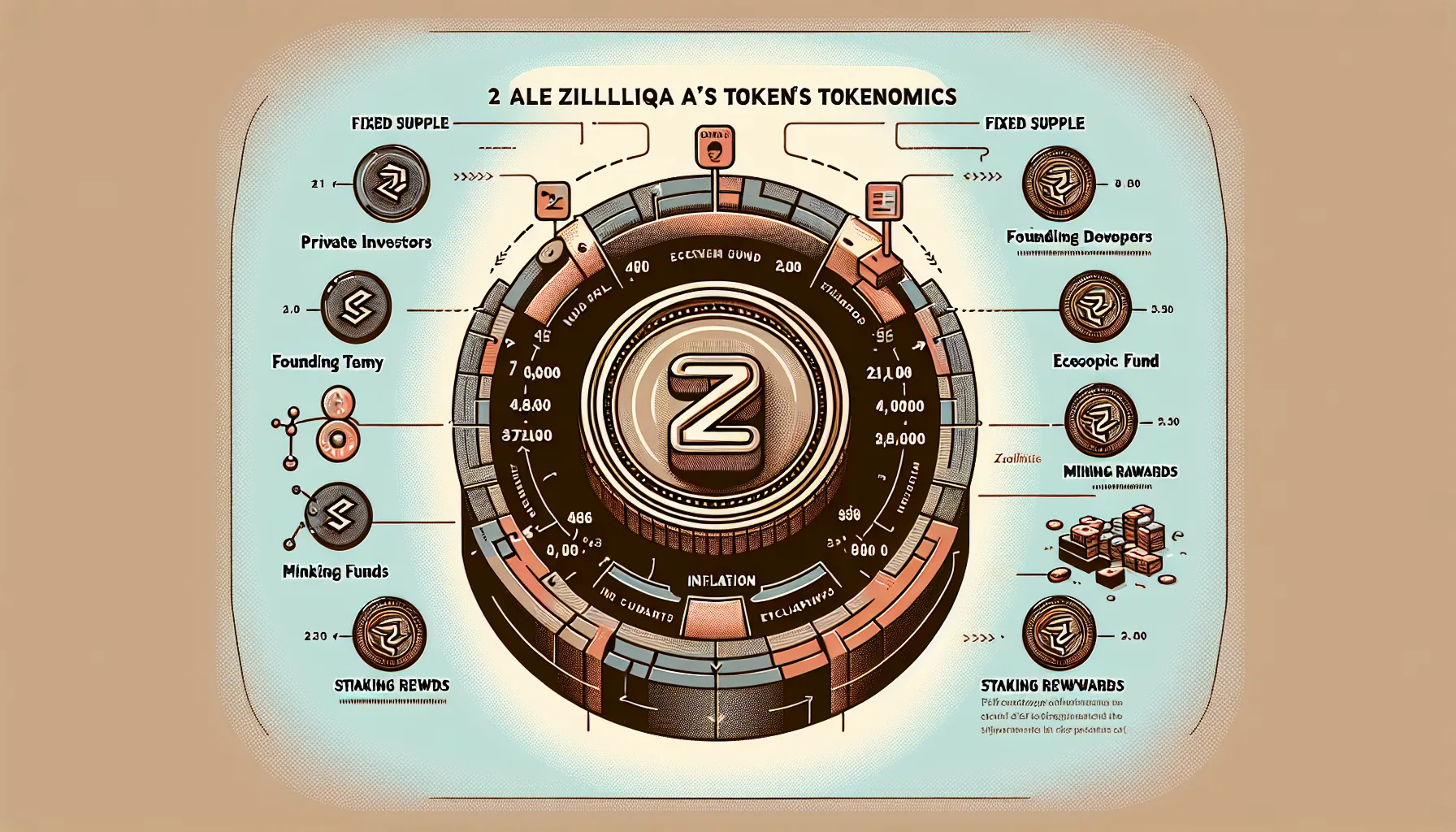
The tokenomics of Zilliqa (ZIL) is designed around a fixed maximum supply of 21 billion tokens, a feature aimed at promoting scarcity and reducing inflationary pressures over time. This capped supply ensures that ZIL remains a finite resource, unlike other cryptocurrencies with unlimited or inflationary supplies. However, the distribution and utility of ZIL within the Zilliqa ecosystem bring unique considerations that are worth analyzing in detail.
Supply Allocation and Initial Distribution
ZIL's initial token distribution was carried out through a token generation event (TGE), wherein a significant portion was allocated to private investors, the founding team, developers, and an ecosystem fund. Early-stage private investors often received tokens at a heavily discounted price, raising concerns about uneven wealth concentration. This has implications for token accessibility and the potential centralization of influence within the Zilliqa community.
Approximately 30% of the total supply was allocated to mining rewards. This allocation reflects Zilliqa's reliance on a hybrid proof-of-work (PoW) and practical Byzantine Fault Tolerance (pBFT) consensus mechanism. Despite the benefits of mining rewards for network security, the gradual release of these tokens increases circulating supply, potentially exerting sell pressure if miners liquidate their rewards rather than stake them.
Staking and Rewards Dynamics
Zilliqa introduced staking in an attempt to incentivize long-term holding and boost engagement within its ecosystem. Stakers earn rewards in ZIL, creating an ongoing emission of tokens. While staking mitigates sell pressure by locking up a portion of the circulating supply, it's worth noting that staking yields have declined as more participants join, which could diminish its appeal over time.
Moreover, large token holders (often characterized as "whales") may dominate staking rewards due to their disproportionate share of the supply. This imbalance raises questions about the decentralization of staking power within the ecosystem and the potential for governance centralization.
Token Utility and Ecosystem Integration
ZIL serves multiple roles within the Zilliqa ecosystem, from powering decentralized applications (dApps) and smart contracts to enabling transactions and paying network gas fees. However, the dual role of ZIL as both a utility token and a speculative asset creates challenges in maintaining price stability. For example, high transaction fees during periods of network congestion can discourage adoption, as users look for cost-efficient alternatives.
Inflationary Concerns and Vesting Structures
While the fixed supply provides long-term scarcity, the current emission schedule introduces short-term inflation risks that could dampen prices. Additionally, the vesting periods assigned to team and developer allocations have drawn scrutiny. If these tokens are released without oversight, they could contribute to sudden liquidity shocks in the market.
In summation, ZIL's tokenomics showcase both strengths, like its capped supply and staking mechanisms, and weaknesses, such as inflationary pressures and potential wealth concentration. These details must be critically examined by anyone evaluating ZIL's utility and role within the broader crypto landscape.
ZIL Governance
Governance of ZIL: Decentralization, Zilliqa Improvement Proposals (ZIPs), and Challenges
Zilliqa (ZIL) operates within a governance framework that aims to balance decentralization with efficiency, but like many blockchains, it faces challenges in achieving this equilibrium. Governance within the Zilliqa ecosystem is structured to foster community participation while addressing the technical and operational needs of the network. Below, we explore ZIL’s governance mechanisms, the role of the community, and potential limitations.
Decentralized Governance and Voting Mechanisms
ZIL’s governance relies on a form of decentralized collective decision-making. Token holders are granted voting power proportional to their ZIL holdings, allowing them to influence various proposals submitted to the network. Through regular voting events, stakeholders can shape decisions affecting protocol upgrades, network parameters, and ecosystem improvements.
However, token-centric voting systems inherently carry risks of centralization. Large stakeholders or entities with significant ZIL holdings can disproportionately influence outcomes, potentially sidelining small holders. Furthermore, questions about voter participation persist, as voter turnout and engagement rates often remain low in blockchain governance systems across the industry, and ZIL is no exception.
Zilliqa Improvement Proposals (ZIPs)
The primary vehicle for change within the Zilliqa network is the Zilliqa Improvement Proposal (ZIP) process. ZIPs allow developers, stakeholders, and ecosystem contributors to formally propose network upgrades, feature additions, or changes to governance policies. ZIPs are structured to break down proposals into clear, actionable steps, helping streamline implementation and minimize misunderstandings.
Yet, a notable challenge lies in the ZIP approval process. While the system encourages detailed deliberation, it can sometimes bog down in technical complexity, particularly for community members without advanced blockchain knowledge. This could limit inclusive participation and inadvertently privilege more technical actors during debates and decision-making.
Developer-Centric Oversight
On the operational side, Zilliqa’s governance has strong input from its core development team and associated entities, such as Zilliqa Research. While this ensures rapid implementation of crucial updates and a clear roadmap for the ecosystem, it raises questions about the level of decentralization in governance. Critics may argue that such influence could dilute the community's decision-making power, particularly when balancing short-term operational goals versus long-term decentralization priorities.
Smart Contract Governance Limitations
Although the Zilliqa network is built on a secure and scalable smart contract framework via its sharded architecture, implementing governance features directly in smart contracts is still evolving. This remains a hurdle to achieving fully automated, transparent on-chain governance. Manual interventions and off-chain coordination are still occasionally required, which may undermine the trustless ethos that many in the crypto space seek.
Governance Transparency and Communication
Finally, the transparency in displaying governance decisions and how these decisions are communicated to stakeholders remains an area where ZIL could enhance its processes. Ensuring that all participants, regardless of size or domain expertise, can access clear, unbiased information about governance proposals and their implications is crucial to maintaining credibility and engagement.
Technical future of ZIL
Current and Future Technical Developments for Zilliqa (ZIL)
Scilla Smart Contract Language: Advancing Security and Efficiency
Zilliqa continues to distinguish itself with its in-house, peer-reviewed smart contract language, Scilla. Designed for security and formal verification, Scilla mitigates many of the vulnerabilities that plague smart contracts on other blockchains. The language’s functional design makes it easier for developers to reason about contract behavior and conduct static checks. However, the steep learning curve for Scilla remains a challenge, potentially limiting developer adoption compared to more mainstream languages like Solidity.
EVM Compatibility and Cross-Chain Expansion
One of the most anticipated developments is Zilliqa’s move toward Ethereum Virtual Machine (EVM) compatibility. This upgrade aims to bridge Zilliqa’s robust infrastructure with the broader Ethereum ecosystem, allowing developers to deploy existing Solidity-based contracts on Zilliqa while leveraging lower fees and higher throughput. While this is a step forward in cross-chain operability, the integration complexity could introduce unforeseen delays or bugs, especially if interoperability standards between chains evolve over time.
Enhancing Sharding Implementation
Sharding has been Zilliqa's cornerstone innovation since its inception, enabling linear scalability in transaction processing. The network currently achieves significant throughput by dividing its blockchain into multiple shards that process transactions in parallel. Future improvements focus on optimizing state sharding to make it more efficient and ensure seamless communication across shards. Despite these advancements, the challenge of maintaining an adequate number of nodes to secure the network remains critical to prevent centralization risks.
Accelerating Zilliqa's Layer-2 Capability
Zilliqa’s ongoing exploration of Layer-2 scaling is designed to offload certain computations and storage needs, further enhancing its efficiency. Efforts in this area aim to deliver faster transaction times and broader use-case support for decentralized applications (dApps). However, the integration of Layer-2 solutions often introduces complexities in user experience and application development, particularly when aligning with Zilliqa’s unique execution model.
Gaming and Metaverse Infrastructure
The Zilliqa team is actively investing in infrastructure tailored for gaming and metaverse applications, leveraging its low fees and high throughput. Key developments include SDKs and APIs that allow game developers to integrate blockchain functionality seamlessly. While promising, the market’s fragmented adoption of blockchain gaming might limit immediate traction.
Governance and Decentralization Challenges
Zilliqa DAO represents the network’s push for decentralized governance, promoting community-driven decision-making. Despite its intentions, Zilliqa's governance mechanisms face criticism for limited voter participation and potential centralization, as voting power can sometimes be manipulated by a small number of ZIL token holders.
Comparing ZIL to it’s rivals
ZIL vs DOT: A Comparative Analysis of Key Differentiators in the Blockchain Ecosystem
When analyzing Zilliqa (ZIL) in comparison to Polkadot (DOT), it’s essential to focus on their distinct approaches to scalability, interoperability, and ecosystem development. While both projects aim to address fundamental challenges within blockchain technology, their strategies diverge significantly, leading to differences in their design, user cases, and adoption trajectories.
Scalability: ZIL's Sharding vs DOT's Relay Chain Architecture
Zilliqa is well-known as one of the pioneers of sharding technology, employing a network-layer solution that splits the blockchain into multiple shards to enable parallel processing of transactions. This approach allows ZIL to handle high throughput with low latency, which serves as a cornerstone of its scalability solution. However, ZIL’s reliance on sharding brings its own limitations, as it introduces potential complexities around cross-shard communication and state fragmentation—issues that become increasingly relevant at larger scales.
Polkadot, on the other hand, takes a different approach with its relay chain and parachain model. While it does not use sharding in the same way, Polkadot facilitates scalability by enabling multiple blockchains (parachains) to run in parallel and connect through its central relay chain. This architecture can process concurrent activities across systems but tends to focus less on raw transactional throughput and more on enabling diverse blockchains to interact seamlessly.
Interoperability: Cross-Chain Communication
One key area where Polkadot often gains attention is its focus on interoperability. Through its cross-chain messaging capabilities, Polkadot allows communication between parachains, as well as with external networks, without relying on third-party solutions. In comparison, Zilliqa has historically concentrated less on interoperability and more on optimizing its singular Layer 1 blockchain. While Zilliqa’s ecosystem supports bridges to other networks, they remain less robust and integrated than Polkadot’s native cross-chain framework.
This divergence highlights a tradeoff: ZIL offers high performance on a standalone basis but lags in facilitating broader inter-blockchain communication, arguably a growing concern in a multi-chain future.
Ecosystem Development and Customizability
ZIL’s ecosystem growth has been more focused on fostering dApps within niches such as DeFi and creator economies, leveraging its high throughput to attract developers seeking specific use cases. However, its smaller developer and user ecosystem, compared to Polkadot, raises questions about long-term network effects and adoption breadth. Polkadot’s parachain model encourages a wider variety of projects, allowing highly customizable blockchain solutions to be built for different industries within its broader ecosystem.
Ultimately, ZIL and DOT represent two distinct visions of what blockchain infrastructure can achieve, each with its respective strengths and limitations that cater to different developer and user priorities.
Zilliqa (ZIL) vs. Cardano (ADA): A Technical Comparison in Layer-1 Ecosystems
Zilliqa (ZIL) and Cardano (ADA) are both prominent Layer-1 blockchain platforms, but their approaches to scalability, consensus, and use cases differ significantly. Below, we explore how Zilliqa stacks up against Cardano in critical technical areas, highlighting strengths and potential weaknesses.
Consensus Mechanism: Practical Byzantine Fault Tolerance vs. Ouroboros
Zilliqa employs a Practical Byzantine Fault Tolerance (pBFT) consensus mechanism alongside its sharded architecture. This combination enables high transaction throughput by allowing shards to process transactions concurrently. The finality provided by pBFT ensures that once a block is agreed upon, it cannot be undone, which eliminates issues around probabilistic settlement.
Cardano, on the other hand, uses Ouroboros, a proof-of-stake (PoS) protocol designed to be energy-efficient while offering security guarantees comparable to proof-of-work. It uses a stake pool system, enabling decentralized block production but requiring delegation from users to maintain decentralized governance. Cardano’s emphasis on academic rigor and peer-reviewed research underpins its consensus mechanism, but critics argue this approach can slow actual implementation and adaptability.
While Zilliqa's deterministic finality ensures faster transaction confirmation times, Cardano's stake-based approach may offer more flexibility in supporting staking rewards and long-term decentralization.
Scalability Models: Sharding vs. Layered Architecture
Zilliqa is a pioneer in blockchain sharding, segmenting its network into smaller shards to process transactions in parallel. This design allows Zilliqa to achieve significant scalability as the number of nodes increases. However, managing inter-shard communication and balancing network load remain technical challenges, particularly as the ecosystem tries to scale further.
Cardano adopts a layered architecture that separates its settlement layer (used for ADA transactions) from the computation layer (used for smart contract execution). In theory, this separation enhances the network's adaptability for future upgrades but does not inherently offer the parallel processing advantages of Zilliqa’s sharding model. Cardano compensates for this by focusing on interoperability and additional scalability solutions like Hydra.
Smart Contract Platforms: Scilla vs. Plutus
Zilliqa’s Scilla programming language prioritizes security and formal verification, making it particularly attractive for developers building DeFi applications that need a higher degree of trust. However, Scilla's learning curve may deter developers already familiar with more widely-used languages like Solidity.
Cardano’s Plutus environment allows for functional programming and leverages Haskell, another secure and mathematically rigorous language. Yet, Haskell, similar to Scilla, is considered niche in the broader developer community, which could limit onboarding speed. Cardano’s growing focus on off-chain computation and interoperability via the Marlowe language also gives it an edge for highly specialized use cases.
Ecosystem Growth and Developer Engagement
Zilliqa excels in specific niches like gaming, NFTs, and tokenized assets, benefiting from increasing adoption thanks to its low transaction fees and high throughput. Cardano, however, has positioned itself as an enterprise-grade blockchain with a strong focus on identity solutions, supply chain traceability, and sustainability.
That said, Cardano has faced scrutiny for a slower pace of development and fewer live decentralized applications relative to its high market expectations. In contrast, Zilliqa's ecosystem is smaller but shows steady organic growth. Its tighter focus on executing sharding successfully contrasts with Cardano’s broader but slower-moving roadmap.
Conclusion
While both Zilliqa and Cardano aim to push the boundaries of scalability and decentralization in the blockchain ecosystem, their differing technical architectures and philosophies result in distinct strengths and limitations. This comparative lens highlights key trade-offs, depending on specific use case requirements and developer priorities.
ZIL vs. AVAX: Key Differences in Ecosystem and Performance
When comparing Zilliqa (ZIL) to Avalanche (AVAX), it’s crucial to evaluate the architectural distinctions, scalability approaches, and ecosystem dynamics that differentiate these two blockchain platforms in the high-paced Layer-1 competition.
Consensus Mechanisms: Practical Sharding vs. Subnets
Zilliqa leverages a unique sharded blockchain architecture paired with a consensus mechanism called Practical Byzantine Fault Tolerance (pBFT). This design ensures parallel transaction processing, thereby increasing throughput as the network scales. In contrast, Avalanche’s consensus algorithm employs a novel DAG (Directed Acyclic Graph) architecture and subdivides its ecosystem into subnets. Each subnet is an independent blockchain that can operate with unique parameters. While ZIL’s sharding improves efficiency across the main network, subnets on AVAX permit isolated scalability for specific use cases, albeit with potential fragmentation risks if subnet cooperation mechanisms falter.
Smart Contract Language: Scilla vs. Solidity Support
Zilliqa’s Scilla, a purpose-built smart contract language, is designed with security in mind, emphasizing formal verification to reduce vulnerabilities in contracts. However, its niche ecosystem and steep learning curve create barriers for developers accustomed to more ubiquitous languages like Solidity. Conversely, Avalanche operates with full Solidity compatibility through its contract chain (C-Chain), facilitating seamless DApp and protocol migration from Ethereum. While this gives AVAX a broader developer base, critics argue that Solidity’s prevalence also amplifies susceptibility to exploits found in poorly written code.
Transaction Speeds and Costs
Both Zilliqa and Avalanche aim to address transaction bottlenecks, but they achieve this through different methodologies. Zilliqa’s linear scalability model promises consistent improvements as node count increases, but real-world results sometimes face latency challenges during sharding synchronization. Avalanche, known for near-instant finality, often outperforms Zilliqa in end-user transaction speeds. However, Avalanche’s rising network usage can lead to higher transaction costs due to demand-driven fee models, whereas Zilliqa’s structure provides more predictable fee costs due to its fixed-rate per transaction setup.
Ecosystem Growth and Decentralization Challenges
When it comes to DApp and DeFi adoption, Avalanche benefits from its interoperability with Ethereum assets and protocols, positioning it as a significant hub in the multi-chain ecosystem. Zilliqa, while architecturally robust, has lagged in ecosystem development due to limited community size and slower developer activity, presenting hurdles for broader adoption. Additionally, Avalanche's reliance on Validator incentives for its proof-of-stake consensus raises occasional concerns over centralization risks, as large-stake validators disproportionately influence network operations. Zilliqa, while promoting decentralization through sharding, has been criticized for potential vulnerabilities arising from shard-specific attacks if malicious actors control enough nodes in a shard.
This contrast between Avalanche's broad interoperability focus and Zilliqa's specialized scalability niche highlights the differing priorities of these two blockchains, each catering to unique segments of the decentralized economy.
Primary criticisms of ZIL
Primary Criticism of ZIL: Examining the Pain Points
Network Scalability Challenges Despite Sharding
Zilliqa’s standout feature, sharding, aims to enhance scalability by dividing the network into smaller, parallel-processing nodes. While this concept is innovative, critics argue that Zilliqa's real-world scalability gains are limited by practical constraints. For instance, the efficiency of sharding decreases as the network expands, due to increased overhead in cross-shard communication. This bottleneck impacts transaction finality time and raises questions about the network's ability to handle genuinely massive adoption.
Smart Contract Limitations with Scilla
Scilla, Zilliqa’s native smart contract language, was designed to prioritize security over flexibility. While this approach minimizes certain types of exploits, it also narrows its appeal to developers. Some developers view Scilla as restrictive compared to more broadly used languages like Solidity on Ethereum. Additionally, the steep learning curve for Scilla has deterred a portion of the developer community from building on Zilliqa, limiting the ecosystem’s growth relative to other blockchain platforms.
Tokenomics and Inflationary Supply Concerns
ZIL operates with a fixed maximum supply of 21 billion tokens, but the existing inflationary token release schedule raises concerns for many investors. The phased token unlocking process, combined with the incentivization mechanisms for staking and mining, has led to criticisms around sell pressure. This structure is perceived as potentially diluting long-term value, making it less appealing to holders seeking utility beyond speculative profits.
Dependency on Niche Use Cases
The Zilliqa ecosystem has emphasized adoption in specific domains like gaming, DeFi, and NFTs. While this focused strategy has led to notable partnerships and use cases, skeptics point out that dependence on niche sectors could limit the network’s broader relevance. If interest in these specific areas wanes, Zilliqa’s ability to pivot into alternative markets may prove challenging, given its current technical and community focus.
Centralized Governance Concerns
Another frequent critique revolves around the perceived centralization of Zilliqa’s governance. A significant portion of decision-making power resides within the Zilliqa Research team, raising concerns among decentralization purists. While the team’s technical stewardship has driven development, critics argue this structure undermines the principles of community-oriented, decentralized decision-making foundational to blockchain technology.
Competition in the Layer-1 Blockchain Space
Zilliqa faces stiff competition from other layer-1 platforms that have rapidly gained traction. Cryptocurrencies like Solana, Avalanche, and others offer high throughput alongside robust ecosystems. Despite Zilliqa’s unique features, its relatively slower pace of network growth has been noted, leading some to question its ability to compete in an increasingly crowded market.
Founders
The Founding Team Behind Zilliqa (ZIL): A Technical Perspective
Zilliqa (ZIL) was conceptualized and developed by a team of researchers and engineers with expertise in distributed systems, cryptography, and blockchain technology. The project originated from the National University of Singapore (NUS), where a significant portion of the founding team was involved in academic research on blockchain scalability, a core challenge that Zilliqa aims to address through sharding. Despite the project’s academic roots, it has expanded to include technical professionals from diverse industries, creating a blend of theoretical knowledge and real-world development experience.
At the core of Zilliqa’s founding team is Amrit Kumar, who served as the project’s President and Chief Scientific Officer during its formative years. Kumar holds a PhD in Computer Science from INRIA and has contributed extensively to the fields of applied cryptography, game theory, and blockchain architecture. While his leadership was instrumental in translating Zilliqa from academic theory to implementation, criticisms have emerged regarding the project's occasional lack of cohesive communication strategy—an area not traditionally prioritized in technical teams.
Xinshu Dong, a co-founder and Zilliqa’s first CEO, played a vital role in steering the project in its early stages. Dong’s background in computer science and cybersecurity was pivotal in ensuring that Zilliqa addressed security concerns inherent to sharded blockchains. However, observers have pointed out that Dong’s subsequent transition out of an active leadership role raised questions about continuity and vision, especially during the project’s transition from research to commercialization.
Another critical figure is Prateek Saxena, a researcher in computer science who conducted pioneering work on blockchain scalability that laid the conceptual groundwork for Zilliqa. Saxena’s academic influence helped ensure that Zilliqa’s protocol was rigorously designed, but it has also led to criticisms that the team has prioritized technical perfection over pragmatic adoption strategies.
The team has also faced scrutiny regarding their ability to maintain momentum post-launch. While the technical foundations laid by its early contributors are robust, the subsequent departure or reduced involvement of key founding members, such as Xinshu Dong, has occasionally sparked concerns about leadership gaps. Additionally, some in the blockchain community have voiced concerns about whether the focus on research and development has diverted attention from marketing and fostering ecosystem-wide growth.
In summary, Zilliqa’s founding team displayed high levels of technical expertise and a research-driven approach, which shaped the project's architecture and identity. However, organizational challenges and leadership transitions remain points of discussion among the ZIL community and beyond.
Authors comments
This document was made by www.BestDapps.com
Sources
https://www.zilliqa.com/
https://docs.zilliqa.com/whitepaper.pdf
https://docs.zilliqa.com/scilla-overview.pdf
https://github.com/Zilliqa/Zilliqa
https://blog.zilliqa.com/
https://explorer.zilliqa.com/
https://stake.zilliqa.com/
https://github.com/Zilliqa/scilla-docs
https://zilswap.io/
https://docs.zilswap.io/
https://zilliqa.gitbook.io/dev-portal/
https://viewblock.io/zilliqa
https://zilliqa.com/technology
https://docs.zilliqa.com/zilliqa-technical-overview.pdf
https://github.com/Zilliqa/Zilliqa-JavaScript-Library
https://zilliqa.research.website/
https://zilliqa.org/consensus.html
https://zilliqa.gitbook.io/scilla-docs/
https://github.com/Zilliqa/scilla-vm
https://zilliqa.capital/