History of XYM
The History of XYM: Symbol’s Path from NEM’s Legacy
The story of XYM is deeply intertwined with NEM (New Economy Movement) and its original blockchain, NIS1. Designed as an enterprise-grade blockchain, NEM gained traction for its unique Proof-of-Importance (PoI) consensus mechanism, but as adoption grew, limitations began to surface. Scalability concerns, security improvements, and interoperability demands led to discussions within the NEM community about a next-generation blockchain.
The result was Symbol, a new blockchain network designed to build upon NEM’s strengths while introducing advanced features. XYM, the native token of Symbol, emerged through a snapshot and opt-in process that allowed NEM holders to claim XYM at a 1:1 ratio. This approach was significant, as it ensured continuity while preventing abrupt disruptions to the existing NEM ecosystem.
The Symbol launch faced multiple delays, complicating the transition. Security issues identified during testnet phases led to a postponed mainnet release, causing frustration within the community. While the project’s goal was to improve enterprise adoption with features like aggregated transactions, on-chain multi-signature accounts, and increased speed, the prolonged development cycle created uncertainty among early supporters.
A critical aspect of XYM’s history was its handling of governance. Unlike many next-gen blockchain migrations that simply fork or transition users automatically, Symbol’s development team opted for an opt-in process. This raised debates around adoption rates, as some NEM holders failed to claim their XYM, either due to lack of awareness or skepticism about the new network. The allocation method also created a split, leaving NEM and Symbol as two co-existing ecosystems rather than a complete migration.
Symbol's introduction aimed at attracting both enterprise and retail adoption, but its launch timing and competition within the blockchain space made market penetration challenging. The existence of NIS1 alongside Symbol further complicated branding and strategic direction, as developers and projects had to navigate between two chains with differing value propositions.
Security was a major area of focus during Symbol’s development, particularly in contrast to NEM’s past vulnerabilities. Lessons learned from previous exploits strengthened Symbol’s architecture, yet its delayed release and evolving governance structure contributed to market uncertainty post-launch.
XYM’s historical trajectory reflects a transition from legacy foundations to a more scalable blockchain, albeit with challenges in adoption, governance, and positioning within the broader crypto landscape.
How XYM Works
How Symbol (XYM) Works: Technical Mechanisms and Network Functionality
Symbol (XYM) operates as a hybrid blockchain network designed for enterprise solutions and financial applications. It employs a unique consensus mechanism, advanced multisignature capabilities, and on-chain asset management functionalities to streamline transaction processing and security.
Proof-of-Stake Plus (PoS+) Consensus
XYM utilizes Proof-of-Stake Plus (PoS+), an enhanced staking model that incentivizes network participation beyond traditional staking weight. Unlike standard PoS, where only token balance determines staking power, PoS+ also rewards active network engagement. This structure encourages wider participation, but it can lead to centralization risks if staking pools or large holders dominate harvesting rewards.
Harvesting Instead of Mining
Symbol replaces conventional mining with harvesting, where nodes validate transactions and earn rewards without high energy consumption. There are two types:
- Local Harvesting: A user runs a node and directly contributes computational power.
- Delegated Harvesting: Users delegate their stakes to a node, allowing them to earn rewards without running full infrastructure.
While delegated harvesting lowers entry barriers, it introduces potential trust concerns if nodes mismanage staking funds.
Multisignature & Account Restrictions
Symbol offers aggregate transactions and multisignature accounts that enable complex transaction logic. This allows multiple parties to co-sign transfers in a single on-chain action, reducing intermediary risk. Additionally, account restrictions allow users to limit recipient addresses or accepted tokens, providing an extra layer of security against unauthorized interactions.
Although these features enhance security, they can complicate transaction flows, requiring technical proficiency to configure correctly.
Native Asset Creation and Interoperability
The network enables on-chain asset tokenization, allowing businesses or individuals to issue and manage digital assets natively. Unlike smart contract-based tokenization models, Symbol’s approach reduces vulnerabilities linked to custom contract exploits. However, this also limits flexibility compared to fully programmable smart contract platforms.
Symbol supports cross-chain interoperability, but its adoption depends on external integrations, making its effectiveness contingent on external network adoption.
Node Infrastructure and Finality
XYM transactions achieve finality within seconds, utilizing a peer-to-peer network of nodes to validate and confirm blocks. Nodes require a minimum stake to participate, balancing security and decentralization. However, node operation costs and staking minimums may deter smaller participants.
The need for well-maintained infrastructure means that network health depends on continued validator participation. If node numbers decline, centralization risks could increase, impacting security guarantees.
Use Cases
XYM Use Cases: Real-World Applications and Adoption Challenges
Enterprise-Grade Tokenization
XYM is integrated into enterprise ecosystems to facilitate secure and scalable asset tokenization. The Symbol blockchain’s hybrid architecture allows businesses to issue, manage, and transfer tokenized assets while controlling access permissions. This is particularly relevant for regulated industries that require compliance-friendly solutions. However, adoption among enterprises remains a challenge due to competition from well-established tokenization platforms and the general hesitance of traditional firms to integrate blockchain technology at scale.
Supply Chain Transparency
One of the highlighted use cases of XYM is supply chain management, where Symbol's on-chain metadata and multi-signature capabilities enhance data integrity. Companies can use XYM-powered transactions to track goods, verify authenticity, and reduce fraud. Despite these advantages, real-world implementations remain limited compared to supply chain-focused blockchains that have already secured major partnerships.
Secure Digital Identity and Access Control
The Symbol network enables secure identity verification by leveraging multi-layered security features. Organizations can design permissioned access systems where identity-linked actions require XYM-based authorization. This use case is especially relevant for industries handling sensitive data. However, competition from zero-knowledge proof-based identity solutions highlights potential limitations in Symbol’s approach when it comes to privacy-enhancing technologies.
DeFi and Cross-Chain Interoperability
XYM is positioned within decentralized finance (DeFi) through applications such as staking and wrapped assets. Its interoperability features allow XYM to be bridged to external ecosystems, enabling participation in smart contract-driven services. Still, the absence of a native smart contract layer requires reliance on external bridging solutions, which introduces security risks and dependency on third-party services.
Tokenized Securities and Compliance-Focused Applications
Symbol provides a regulatory framework for compliant security token offerings (STOs), allowing issuers to enforce on-chain regulatory requirements. The blockchain’s built-in restrictions enable automated compliance, making it a viable option for financial institutions exploring digital securities. However, the highly fragmented STO landscape means Symbol must compete with networks that provide broader investor access and liquidity.
NFT Utility Beyond Digital Art
XYM supports non-fungible tokens (NFTs) with functional use cases beyond digital collectibles, such as gaming assets and intellectual property rights management. Unlike NFT-focused chains, the Symbol ecosystem prioritizes utility over speculation. Nonetheless, Symbol’s NFT adoption remains niche compared to blockchains that have a dominant presence in gaming or creative industries.
Challenges in Adoption and Competition
While XYM presents strong use cases across multiple industries, adoption barriers such as enterprise resistance, competition from dominant blockchain networks, and liquidity constraints impact its long-term viability. Furthermore, the reliance on external bridging for smart contract functionality poses security trade-offs, limiting its appeal in DeFi-heavy environments.
XYM Tokenomics
Symbol (XYM) Tokenomics: Supply, Inflation, and Distribution
Fixed Supply and Initial Allocation
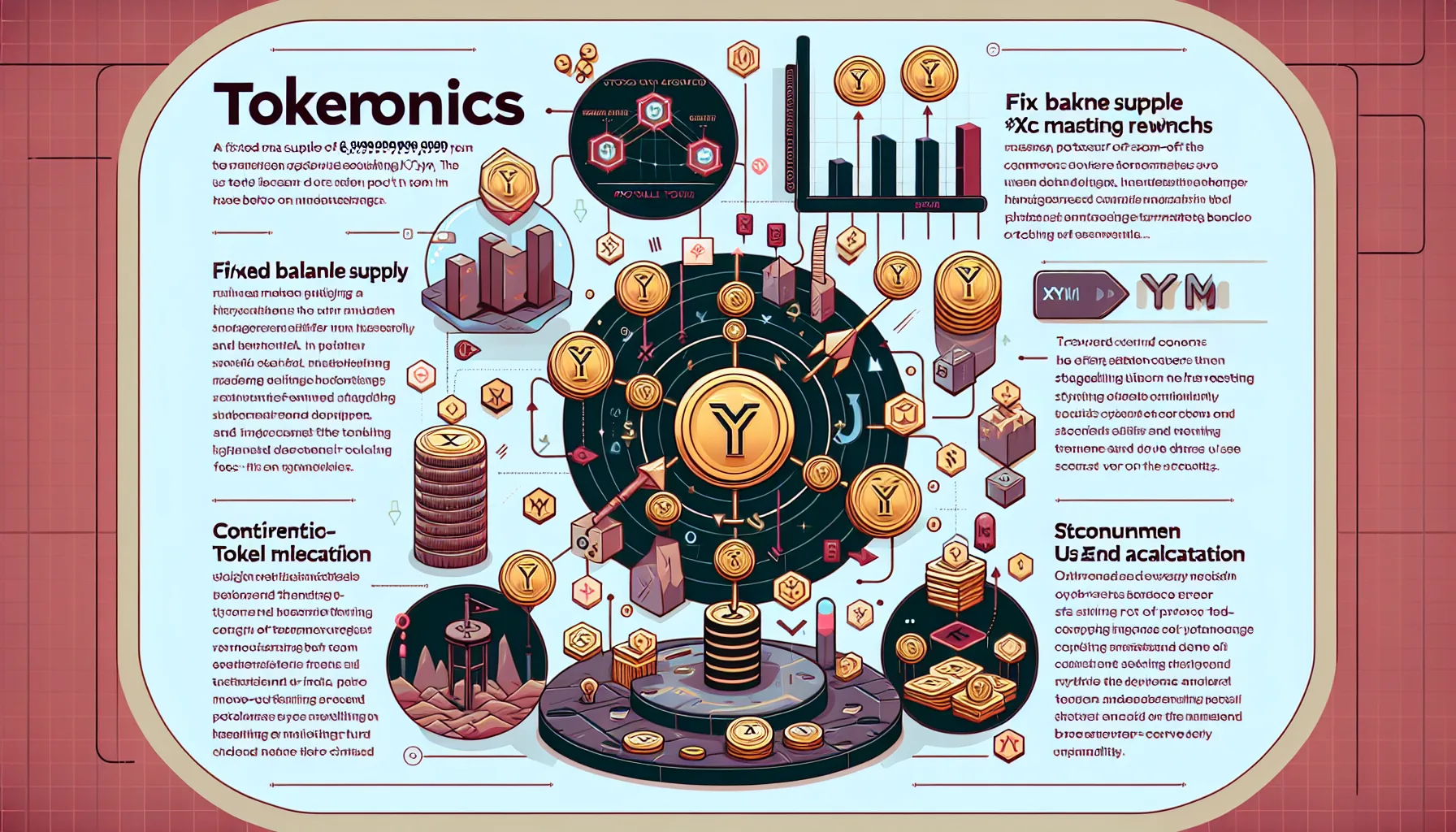
Symbol (XYM) has a fixed maximum supply of 8,999,999,999 XYM, ensuring no additional minting beyond this cap. The initial distribution stemmed from the opt-in snapshot of the NEM (XEM) network, where existing XEM holders received XYM at a 1:1 ratio. This method tied Symbol’s launch closely to NEM’s user base, which influenced early token concentration among existing stakeholders.
Inflation and Harvesting Rewards
Unlike entirely deflationary models, XYM employs an inflationary mechanism through its block rewards. Blocks are generated via Proof-of-Stake Plus (PoS+), where rewards get distributed to participants based on stake weight rather than pure coin holdings. While this design incentivizes network security and participation, its long-term impact on token velocity and inflation remains debated, especially in the absence of an aggressive token-burning mechanism.
Staking and Wealth Concentration
Symbol’s PoS+ consensus model encourages staking, but staking rewards disproportionately favor high-balance holders, leading to concerns about token centralization. The rich-get-richer effect is evident, as larger accounts receive greater harvesting rewards, a dynamic that may deter new participants from engaging in validation. Despite the network's emphasis on contribution-based staking, the reality remains that attaining competitive staking returns requires significant holdings.
Treasury and Ecosystem Funding
XYM lacks a built-in mechanism for self-sustaining ecosystem development, as there is no protocol-level treasury or automatic dev fund allocation. This means funding for core development or ecosystem incentives must come from external initiatives rather than block rewards. While this structure prevents inflationary treasury models that dilute existing holders, it also limits Symbol’s ability to sustain long-term development without reliance on third-party investments.
Exchange Liquidity and Utility Distribution
Despite Symbol’s technical advancements, token liquidity remains an area of concern, particularly outside of major exchanges. The absence of deep liquidity on multiple trading platforms limits XYM’s accessibility and integration into broader crypto ecosystems. Additionally, while XYM powers network-wide transactions, its use cases beyond transaction fees and staking remain relatively constrained compared to smart contract-centric assets.
Supply Dynamics and Long-Term Considerations
With a fixed supply and staking-driven distribution, XYM runs on a scarcity principle, but token velocity and concentration dynamics shape its long-term economic sustainability. High staking participation reduces circulating supply, potentially offsetting inflationary effects. However, the sustainability of its reward-based model depends on continuous network adoption and transactional demand—without which, XYM risks stagnating in passive holdings without significant on-chain activity.
XYM Governance
Governance in XYM: On-Chain Decision Making and Network Control
Symbol (XYM) employs a governance model that revolves around its unique consensus mechanism and delegated decision-making processes. Unlike traditional proof-of-stake systems, XYM relies on Proof-of-Stake Plus (PoS+), which factors in both stake weight and network activity to determine voting influence. This model impacts not only block validation but also governance decisions related to network upgrades and protocol adjustments.
Staking Influence and Governance Participation
XYM holders who participate in staking indirectly influence network governance. While the core protocol does not feature an explicit decentralized autonomous organization (DAO) or formalized governance voting, node operators have an outsized role in shaping network rules. Operators with higher importance scores—determined by a combination of delegated stake and ongoing transactions—carry more weight when contributing to protocol discussions and proposing changes.
This structure centralizes governance in a subset of actively engaged network participants rather than directly distributing decision-making power across all XYM holders. As a result, regular token holders have a limited direct role in critical governance matters unless they operate nodes or delegate their tokens to influential participants.
Core Development and Centralized Decision-Making
The governance model of XYM remains relatively centralized compared to purely community-driven blockchain networks. Much of the development direction is steered by core maintainers, with Symbol’s founding team and associated entities playing significant roles in defining upgrade priorities. While community proposals and discussions occur via forums and developer channels, final implementation tends to rely on core contributors rather than direct consensus from token holders.
This centralization presents a challenge, especially when controversial protocol changes or network modifications arise. Without a formalized on-chain governance mechanism, decision-making power remains concentrated in development teams and top node operators rather than being distributed evenly among all network participants.
Governance Limitations and Potential Risks
Symbol’s governance model faces several limitations. First, the lack of a structured on-chain voting process means that token holders have minimal direct influence on major protocol changes. This contrasts with governance models in other proof-of-stake chains where token holders vote on proposals through decentralized mechanisms.
Additionally, reliance on PoS+ can lead to governance power consolidating among long-standing, high-importance nodes. This could discourage new participants from entering governance discussions or exerting meaningful influence on network upgrades. Without mechanisms to rotate or rebalance governance power dynamically, the system risks becoming resistant to change and overly dependent on its existing stakeholder hierarchy.
Technical future of XYM
Symbol (XYM) Technical Roadmap and Development Updates
Ongoing Core Protocol Enhancements
Symbol's core protocol development focuses on improving transaction throughput, finality, and network security. Recent optimizations include refining aggregate transactions to reduce confirmation times and enhance the efficiency of multi-signature interactions. However, challenges remain in maintaining decentralization while improving performance, particularly as network usage scales.
A major area of improvement is Symbol’s consensus algorithm, Proof-of-Stake Plus (PoS+). Developers are exploring potential refinements to stake-weighted voting mechanisms to discourage centralization risks while improving block propagation efficiency.
Smart Contract and Layer 2 Integration Progress
Unlike EVM-compatible networks, Symbol's architecture employs native on-chain features such as multi-layered account permissions, metadata integration, and deterministic asset issuance. While these features reduce reliance on complex smart contracts, they also limit compatibility with widely adopted DeFi frameworks.
Efforts are ongoing to introduce greater Layer 2 interoperability without compromising Symbol’s unique security model. Developers have investigated bridges to EVM-based ecosystems, though achieving trust-minimized asset transfers remains a significant challenge.
SDK, API, and Developer Tooling Expansions
API performance and flexibility are critical to Symbol’s broader adoption. Work continues on improving REST and websocket endpoints to facilitate seamless transaction processing, event streaming, and block data retrieval. Several improvements to Symbol’s SDKs (for Python, TypeScript, and Java) aim to enhance developer experience, though documentation gaps and fragmented third-party tooling remain obstacles to broader adoption.
Network Governance and On-Chain Upgrades
Future upgrades will likely introduce governance enhancements to ensure sustainability. Discussions around on-chain voting mechanisms for protocol funding and decision-making are ongoing. However, governance adoption remains slow, and participation levels from XYM stakeholders fluctuate, raising concerns about long-term decentralization practices.
Additionally, Symbol's upgrade pathways depend on its compatibility with existing node infrastructure. Some past upgrades have required significant node operator intervention, slowing adoption rates. Proposals are being considered for smoother update rollouts with minimal manual intervention.
Privacy and Compliance Considerations
Symbol emphasizes transparency, yet developers are researching selective privacy solutions for enterprise users. Zero-knowledge proofs (ZKPs) and confidential transactions are being explored, though integrating these privacy-preserving methods without conflicting with regulatory standards poses a complex challenge.
Scalability and Long-Term Viability
Scaling Symbol beyond its current architecture remains a debated topic. Efforts to optimize block propagation under high transaction loads continue, but long-term scalability solutions such as sharding or rollups are still in theoretical stages. Ensuring that any new scalability implementation aligns with Symbol's existing security and economic model will be a key consideration in future updates.
Comparing XYM to it’s rivals
XYM vs. XRP: A Detailed Comparison
Consensus Mechanism: PoS+ vs. XRPL Consensus
XYM operates on a delegated Proof-of-Stake Plus (PoS+) consensus model, which enhances traditional PoS by incorporating reputation scoring to incentivize honest participation. This system helps prevent centralization risks while ensuring efficient transaction validation. Meanwhile, XRP relies on the XRP Ledger Consensus Protocol, which utilizes a network of trusted validators rather than miners or stakers. XRP's approach achieves high-speed finality, but it has faced criticism regarding its validator selection process, which some argue is more centralized compared to XYM’s staking-based model.
Speed and Transaction Efficiency
Both assets are designed for fast, low-cost transactions, but their architectures differ significantly. XRP boasts near-instant settlement times due to its unique consensus model, making it a strong choice for cross-border transactions. XYM also boasts high throughput but focuses more heavily on enterprise-grade solutions, particularly in areas like asset tokenization and on-chain automation via its built-in smart contract features. Unlike XRP, which lacks native smart contracts, XYM enables complex business logic without requiring separate layer-2 solutions.
Smart Contract Capabilities and Tokenization
XYM introduces native contract-like functionality without requiring external smart contract layers, a feature absent in XRP. XYM's on-chain mechanisms support features such as non-custodial multi-signature transactions, mosaics (custom assets issued on-chain), and namespace management, making it particularly suited for enterprise deployment. XRP, on the other hand, primarily functions as a settlement layer for payments and remittances, with smart contract support reliant on external solutions like Hooks or sidechains under development.
Centralization Concerns and Validator Control
One of the key criticisms XRP has faced is the perceived centralization of its validator system, as a significant portion of the network's trusted validators are run by Ripple or entities with affiliations to the company. In contrast, XYM's PoS+ model distributes validation based on staking participation and network reputation. However, XYM is not entirely immune to centralization risks either, as the distribution of staking power could potentially concentrate among a small number of high-stake holders.
Use Case and Adoption
XRP has established itself as a dominant force in cross-border payments and remittance networks, with institutional adoption being a core focus. XYM, building on its NEM roots, positions itself more towards enterprise blockchain applications, particularly in tokenization, supply chain management, and identity solutions. This divergence in target markets means the two assets rarely compete directly in practical implementations, even if their technological foundations share some similarities.
XYM vs. XLM: A Technical and Functional Comparison
Symbol (XYM) and Stellar (XLM) both aim to streamline transactions and improve blockchain-based value transfer, yet they differ significantly in architecture, consensus mechanisms, and data management.
Consensus Mechanism: Proof-of-Stake+ vs. Stellar Consensus Protocol
XYM operates on the Proof-of-Stake+ (PoS+) consensus algorithm, an evolved staking model that incentivizes network participation without requiring traditional mining. This model improves security while minimizing energy consumption. On the other hand, XLM utilizes the Stellar Consensus Protocol (SCP), a federated Byzantine agreement system that enables high-speed transactions by relying on trusted validator nodes.
While SCP allows XLM to achieve near-instant transaction finality, it has raised concerns about network centralization since the consensus process depends on a relatively small set of pre-approved validators. In contrast, PoS+ provides a more permissionless validation model, potentially improving decentralization but requiring active engagement from token holders through staking.
Transaction Speed and Cost
XLM is designed for low-cost cross-border payments with fees set deliberately low to facilitate micropayments and large-scale remittance activities. Stellar's architecture inherently supports rapid transactions with low latency, which has positioned XLM as a preferred option in payment networks.
XYM also boasts fast transactions with minimal fees, but its focus is more on enterprise applications and custom asset management rather than strictly remittance. Consequently, while XYM can match XLM in speed, its use case diversity means transaction costs can sometimes be influenced by additional functionality, such as multi-signature requirements or advanced smart asset configurations.
Smart Asset and Custom Token Functionality
XYM inherits and expands upon NEM’s smart asset system, enabling enterprises to create and manage custom tokens, multi-level permissions, and advanced metadata structures. This makes XYM particularly attractive for business applications requiring granular control over on-chain assets.
XLM, by contrast, offers token issuance but primarily focuses on facilitating financial interoperability rather than extensible asset customization. Stellar’s approach prioritizes streamlined payment processing and on-chain compliance tools, whereas XYM provides a broader set of modular blockchain utilities for more complex enterprise needs.
Network Participation and Governance
XYM’s staking model ensures ongoing incentives for network participants, reinforcing decentralization by distributing validation power among engaged users. XLM, however, has historically faced centralization concerns due to the dominance of the Stellar Development Foundation (SDF) in token distribution and node governance. While SCP allows for high-speed resilience, the reliance on predefined validators limits its adaptability compared to XYM’s more open staking-driven approach.
XYM vs. NEM: Evolution of the Chain and Key Differences
Symbol (XYM) and NEM (XEM) share a common origin, with XYM emerging as the next-generation iteration following NEM’s initial success. While both networks operate under the Proof-of-Importance (PoI) consensus mechanism, XYM introduced refinements aimed at addressing some of NEM’s limitations, particularly regarding scalability, security, and enterprise adoption.
Consensus Mechanics and Network Upgrades
NEM pioneered Proof-of-Importance as an alternative to Proof-of-Work and Proof-of-Stake, rewarding network participants based on both stake and activity. However, one of NEM’s key drawbacks was its aging architecture, which hindered its ability to scale effectively under demand. XYM preserves PoI but implements network optimizations that improve transaction throughput, lower resource consumption, and enhance security protocols.
Enterprise-Focused Features
One of XYM’s core differentiators is its emphasis on enterprise-grade solutions. While NEM became widely known for its mosaic asset system and private chain capabilities, some features became restrictive when compared to evolving blockchain standards. XYM builds upon this by introducing enhanced multi-layer security, deterministic finality, and more seamless integration for businesses requiring custom financial instruments.
Smart Contracts and Extensibility
A notable critique of NEM was its lack of native smart contract functionality, which restricted its ability to compete directly with platforms offering on-chain programmability. While XYM does not directly introduce Ethereum-like smart contracts, it provides an improved framework for multi-signature transactions, tokenization, and permissions-based asset management. This keeps XYM aligned with NEM’s asset-centric philosophy while allowing for more advanced use cases.
Network Performance and Adoption Challenges
NEM struggled with network congestion issues under high activity, and while XYM introduces efficiency gains, real-world adoption remains a challenge. The transition from NEM to Symbol required users to manually opt-in for the XYM snapshot, leaving a portion of the original NEM user base disconnected from the updated ecosystem. This fragmentation has led to challenges in liquidity distribution and sustaining developer engagement across both networks.
Governance and Community Engagement
XYM operates with an updated governance structure compared to NEM, aiming to incentivize network upgrades and community participation. However, governance adoption has been gradual, and questions remain regarding long-term decentralization. With NEM still operational alongside XYM, the dual-chain approach has created strategic uncertainty regarding ecosystem prioritization.
Primary criticisms of XYM
Primary Criticism of XYM: Challenges and Limitations
Centralization Concerns in XYM’s Network
Despite being positioned as an improved version of NEM’s blockchain, XYM faces criticism regarding its degree of decentralization. The harvesting mechanism, while more energy-efficient than traditional Proof-of-Work, has raised concerns over wealth concentration. Large stakeholders can maximize harvesting rewards, leading to a situation where network control tends to cluster around a select group of well-funded participants. This raises doubts about the potential for centralization within XYM’s ecosystem, limiting broader participation.
Limited Ecosystem Growth and Adoption
A frequent criticism of XYM revolves around its slower-than-expected adoption. While the technology offers unique features such as on-chain multi-signature accounts, hierarchical deterministic wallets, and powerful tokenization models, the developer ecosystem remains relatively small. Many blockchain projects succeed or fail based on third-party development and integrations, areas where XYM has struggled to gain significant traction compared to competing smart contract platforms. This adoption gap negatively affects network effects and real-world use cases.
Lack of Smart Contract Functionality
Unlike other leading blockchain platforms, XYM does not support traditional smart contracts in the same way as Ethereum or other Layer-1 competitors. Instead, it relies on pre-defined on-chain logic for transactions and complex business rules. While this approach enhances security by reducing execution risks and vulnerabilities common to smart contracts, it also restricts flexibility for developers. This limitation has contributed to a reduced number of decentralized applications (dApps) being built on XYM compared to ecosystems with Turing-complete smart contract capabilities.
Exchange Liquidity and Trading Availability
Despite being listed on multiple exchanges, XYM faces liquidity concerns when compared to more widely traded cryptocurrencies. Low liquidity can result in higher spreads and reduced ease of trading for larger participants. Additionally, integrations in decentralized finance (DeFi) remain sparse, limiting utility within lending, staking, and other financial applications. This lack of extensive liquidity and DeFi presence has restricted XYM’s accessibility for both retail users and institutional participants.
Competition from More Established Blockchains
XYM enters a competitive landscape where multiple blockchain platforms offer similar or superior functionalities. Established networks with larger developer communities and greater institutional backing pose challenges in attracting projects and partnerships to XYM. Without continuous innovation and aggressive adoption strategies, the project risks falling behind as developers and enterprises opt for ecosystems with better tooling, user bases, and interoperability with existing blockchain standards.
Founders
Symbol (XYM) Founding Team: Key Figures Behind the Blockchain
Origins and Key Contributors
Symbol (XYM) was developed by core contributors from the NEM ecosystem, emerging as a next-generation blockchain designed to improve upon its predecessor, NEM’s NIS1. The development and leadership of Symbol were primarily managed by core team members associated with NEM Group and its subsidiaries, including NEM Software and NEM Trading. These entities played a pivotal role in the restructuring efforts to revive and organize development after prolonged internal challenges within the original NEM Foundation.
Leadership and Development Challenges
One of the most notable aspects of Symbol’s development was the transition in leadership from the original NEM Foundation to NEM Group. This restructuring was necessary due to issues related to governance, financial mismanagement, and inefficiencies within the foundation. Key individuals from NEM Group were responsible for overseeing the launch of Symbol, bringing in corporate governance structures that were previously lacking. However, this transition was not without controversy, as some community members criticized the opaque decision-making processes and delays in Symbol’s launch.
Issues with Internal Governance
While Symbol’s launch represented a technical and strategic evolution, the founding team faced internal disputes over control and direction. Leadership changes affected continuity, and internal disagreements led to community frustrations, particularly regarding delays in the mainnet launch and the overall roadmap execution. Additionally, the restructuring of NEM Foundation into NEM Group centralizing control over project resources led to some concerns within the community about transparency and decision-making authority.
Key Technical Contributors
On the technical side, the Symbol blockchain benefitted from contributions made by long-time NEM developers and engineers specializing in blockchain security, enterprise integrations, and network upgrades. While the project initially had strong backing from industry veterans within the NEM ecosystem, leadership turbulence led to inconsistencies in communication and development pacing.
Post-Launch Team Evolution
Following the launch, Symbol’s founding team gradually shifted responsibilities towards community-led initiatives and third-party development contributions. While the original developers and founders set the groundwork, Symbol’s governance model has continued to evolve beyond its original leadership. However, concerns remain regarding long-term commitment from core developers and centralized decision-making structures set by the founding team.
While Symbol emerged from NEM’s historical developments, the founding team faced both structural challenges and governance concerns throughout its evolution, shaping the blockchain’s technical and strategic future.
Authors comments
This document was made by www.BestDapps.com
Sources
- https://symbolplatform.com/
- https://docs.symbol.dev/
- https://github.com/symbol
- https://symbolplatform.com/xym
- https://forum.symbol.dev/
- https://docs.symbol.dev/concepts/consensus.html
- https://docs.symbol.dev/concepts/architecture.html
- https://docs.symbol.dev/concepts/network.html
- https://github.com/symbol/symbol
- https://explorer.symbolblockchain.io/
- https://wallet.symbolblockchain.io/
- https://symbol.github.io/symbol-openapi/v1/docs.html
- https://sdk-docs.symbol.dev/
- https://nemgroup.medium.com/tagged/symbol
- https://twitter.com/NEMofficial
- https://github.com/symbol/symbol-desktop-wallet
- https://github.com/symbol/symbol-mobile-wallet
- https://github.com/symbol/desktop-wallet
- https://github.com/symbol/symbol-sdk-typescript-javascript
- https://github.com/symbol/symbol-openapi


