History of XRP
The History of XRP: Origins, Evolution, and Controversies
XRP's journey began in 2011 when developers David Schwartz, Jed McCaleb, and Arthur Britto sought to create a decentralized digital asset optimized for fast, low-cost transactions. This effort gave birth to the XRP Ledger (formerly known as Ripple Consensus Ledger), a highly efficient blockchain protocol designed to settle payments in mere seconds without the energy-intensive mining process seen in Bitcoin. In 2012, the trio founded a company that would later be known as Ripple Labs, with the goal of leveraging XRP and its underlying ledger for cross-border payment solutions.
Rather than being mined like Bitcoin or Ethereum, the entire supply of 100 billion XRP was pre-mined at inception. This unique token distribution model has spurred extensive debate, as roughly 80% of XRP was initially allocated to Ripple Labs, which in turn periodically released portions of the asset into circulation. Critics argue this approach centralized control and created regulatory uncertainties, raising questions about whether XRP aligns with the decentralized ethos of cryptocurrency.
A pivotal moment in XRP's history came when Ripple aimed to position itself as a transformative force in traditional finance. Partnering with banks and financial institutions, Ripple introduced its payment protocols (RippleNet) to use XRP as a bridge asset for international transactions. While the technology’s speed and cost-effectiveness impressed, skepticism about XRP's real-world adoption persisted, as many institutions reportedly used RippleNet without leveraging the XRP token itself.
Another major event in XRP history was Ripple's long-running legal battle with a U.S. regulatory entity over allegations XRP should be classified as a security. This litigation cast a shadow over the asset, creating compliance concerns for exchanges and other market participants. Delistings and trading restrictions followed in several jurisdictions, further compounding challenges for the token's mainstream adoption.
Despite these controversies, the XRP Ledger earned praise for innovations such as the introduction of built-in decentralized exchange functionality and pathfinding algorithms for optimizing payments. The ledger's ability to handle 1,500 transactions per second compared favorably to many first-generation blockchains, offering a compelling value proposition for use cases requiring scalability.
XRP's history is a complex interplay of visionary ideation, rapid technological evolution, and persistent scrutiny. Its pre-mined supply, association with Ripple Labs, and unique propositions in the payments space make it a continually polarizing asset in the crypto ecosystem.
How XRP Works
How XRP Works: A Deep Dive into the Token's Mechanism
XRP operates as the native digital asset of the XRP Ledger (XRPL), a decentralized blockchain specifically designed for fast and efficient cross-border transactions. Unlike traditional proof-of-work (PoW) blockchains such as Bitcoin, the XRP Ledger utilizes a unique consensus protocol, called the XRP Ledger Consensus Algorithm, which allows significantly lower transaction costs and settlement times.
Consensus Mechanism
The XRP Ledger does not rely on mining or staking to validate transactions. Instead, it uses a network of trusted nodes, referred to as "validators," to achieve consensus. Validators assess and agree on which transactions are accurate and should be added to the next ledger version. This setup enables XRP to finalize transactions in 3-5 seconds, while maintaining high throughput—reportedly capable of handling up to 1,500 transactions per second (TPS). However, a key criticism is that less than 200 active validators exist, and Ripple, the company backing XRP, reportedly hosts a significant share of these nodes. This has raised ongoing concerns about decentralization.
Role of XRP in the Ledger
XRP serves two primary purposes within the XRPL:
-
Bridge Asset: XRP is often used as a bridging currency for institutions to facilitate payments between currencies that lack a direct trading pair. This eliminates the need for pre-funded nostro/vostro accounts, reducing liquidity costs.
-
Transaction Fees: XRP is used to pay for transaction costs in the XRPL. A small amount of XRP (often fractions of a penny) is burned for each transaction, making it deflationary over time. While this burn mechanism theoretically benefits hodlers, the practical deflationary effect is minimal due to the sheer supply of XRP (100 billion tokens initially created).
Advantages and Trade-offs
The utility-driven design of XRP has its strengths but is not without trade-offs. On one hand, the ledger’s lightweight consensus mechanism provides speed and scalability advantages over PoW chains. On the other hand, questions about centralization persist. Ripple’s role in XRP's ecosystem has sparked debate, with skeptics arguing that their influence undermines the decentralized ethos of blockchain technology. Additionally, critics point out that XRP’s supply dynamics are nontraditional: the majority of tokens were pre-mined, with Ripple retaining control over a large percentage and periodically releasing funds from escrow, which some view as introducing token supply risks.
Smart Contract Limitations
Unlike other blockchain platforms such as Ethereum, the XRPL does not natively support fully programmable smart contracts. While it does allow for limited customizations via hooks (currently in development), this lack of flexibility can be seen as a disadvantage for developers seeking general-purpose programmability.
Use Cases
XRP Use Cases: Driving Efficiency in Cross-Border Transactions and Beyond
Streamlining Cross-Border Payments
XRP, the native digital asset of the XRP Ledger, is primarily recognized for its role in facilitating cross-border payments. Leveraging Ripple's On-Demand Liquidity (ODL) solution, XRP acts as a bridge currency, enabling financial institutions to settle transactions in seconds while bypassing the need for pre-funded nostro accounts. This has the potential to significantly reduce transaction costs and capital requirements in the global remittance market. However, adoption barriers remain, as regulatory uncertainties and integration challenges can deter institutions from fully implementing XRP in their operations. Furthermore, the reliance on Ripple as a central player raises questions about the ecosystem's long-term decentralization.
Liquidity Management
XRP's role in global liquidity management extends to both enterprises and liquidity providers. By serving as a universal settlement layer, XRP allows entities to source liquidity on demand, providing flexibility and cost minimization advantages over traditional financial infrastructure. This use case, however, is contingent on sustained network activity and liquidity depth. A notable limitation here is market fragmentation, as significant regional differences in XRP adoption and usage can diminish its efficacy as a truly universal asset.
Central Bank Digital Currencies (CBDCs) and Financial Infrastructure
The XRP Ledger also supports tokenization, positioning itself as a platform for central bank digital currencies and other digital assets. Governments and institutions can theoretically issue and manage CBDCs on the XRP Ledger due to its scalability, transaction speed, and low energy consumption compared to proof-of-work networks. That said, despite technical capability, XRP faces competition from private blockchain solutions and other public networks better aligned with specific regulatory frameworks or geopolitical preferences. The extent to which XRP can gain a foothold in CBDC implementation remains speculative as formal engagement with central banks varies significantly.
Micropayments and Web Monetization
Another emerging use case for XRP lies in micropayments and internet-of-things (IoT) monetization. Platforms like Coil leverage XRP as a payment method for web-based content creators, enabling frictionless streaming payments. While this highlights XRP’s practical utility beyond institutional finance, adoption remains niche. Scaling user participation in these contexts requires enhanced ecosystem support and mainstream integration, both of which are currently limited.
Smart Contracts and Interoperability Challenges
While XRP Ledger was not natively designed to support smart contracts, solutions like hooks and sidechains are being explored to expand its functionality. However, this delayed entry into decentralized financial activities (DeFi) and smart contracts puts the network at a strategic disadvantage compared to blockchain platforms like Ethereum or Solana, which lead in this space. Furthermore, developing interoperability solutions to seamlessly connect with other blockchains remains a crucial hurdle for XRP's expanded use cases.
XRP Tokenomics
XRP Tokenomics: Supply Dynamics, Distribution, and Centralization Concerns
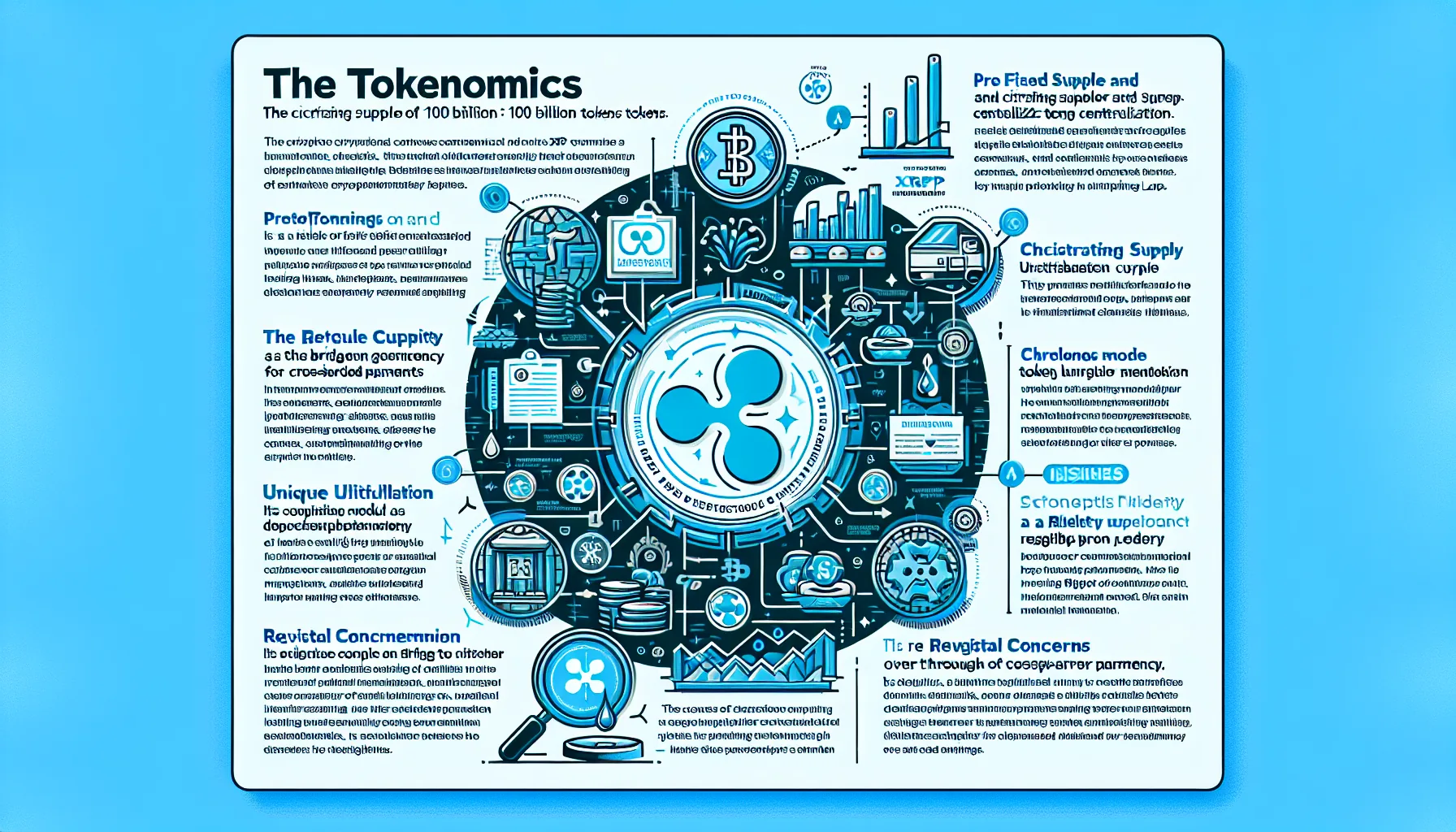
XRP’s tokenomics are deeply intertwined with its creation and distribution model, which has sparked both interest and controversy within the crypto community. Unlike many proof-of-work cryptocurrencies, XRP was pre-mined, meaning its entire supply of 100 billion tokens was created at inception. This fixed cap distinguishes XRP from inflationary assets but brings its own challenges regarding distribution and centralization.
Fixed Supply and Circulating Supply Challenges
Of the 100 billion XRP created, a significant portion remains locked or held by entities closely associated with Ripple Labs. While proponents argue that this fixed supply guarantees scarcity, others highlight concerns over circulating supply inconsistencies. Ripple uses an escrow system to release XRP into the market at regular intervals, but the pace and distribution mechanism have been criticized for being opaque and subject to central control. As of now, a large proportion of XRP is still held in Ripple’s escrow accounts or by insiders, potentially impacting liquidity and market behavior.
Allocation to Ripple Labs and Insiders
A controversial aspect of XRP’s tokenomics is the initial allocation. Ripple Labs and its founders retained a large percentage of the total supply at launch. This has fueled debates about centralization, as these holdings give Ripple and its stakeholders considerable influence over the XRP market. Critics argue that such concentrated ownership is a point of failure for decentralization, opening XRP up to potential manipulation or regulatory scrutiny.
Utility and Token Burn Mechanism
XRP has a unique utility in its role as a bridge currency for cross-border payments. A small amount of XRP is destroyed (burned) as transaction fees with each transfer, reducing the total supply over time. While this deflationary aspect positively affects long-term scarcity, the burn rate is very minimal in contrast to the total supply, limiting its immediate impact on tokenomics. However, this feature sets XRP apart from inflation-driven models seen in many other cryptocurrencies.
Centralization Concerns in Consensus Mechanism
Unlike proof-of-work or proof-of-stake systems, XRP operates on the XRP Ledger, utilizing a consensus protocol via a Unique Node List (UNL). While this mechanism is energy-efficient and allows for faster transaction speeds, it has also been criticized for its perceived centralization. Ripple Labs actively recommends and maintains the list of validators, raising concerns that the consensus process may not be as decentralized as other blockchain networks.
Regulatory Overhang and Supply Implications
The distribution and use of XRP are consistently under the microscope of regulatory bodies. The outcome of ongoing scrutiny could have far-reaching implications for its tokenomics, particularly Ripple’s ability to manage its allocated supply. The lack of clarity in this area creates an additional layer of uncertainty for stakeholders who are analyzing XRP’s economic framework.
XRP Governance
Governance in XRP: Key Mechanisms and Challenges
The governance model of XRP, the native cryptocurrency of the XRP Ledger (XRPL), is intentionally distinct from many other blockchain systems, reflecting its unique design and operational objectives. Unlike entirely decentralized blockchains like Bitcoin, XRP’s governance mechanism seeks to balance speed, efficiency, and decentralization. However, this hybrid approach comes with both strengths and criticisms.
XRP Ledger Consensus Protocol
At the heart of XRP’s governance lies the XRP Ledger Consensus Protocol (XRP LCP). Rather than relying on proof-of-work or proof-of-stake, XRPL employs a consensus mechanism that facilitates fast transaction finality and lower energy consumption. Validator nodes—trusted entities that participate in this consensus—confirm and validate transactions on the ledger. These validators don’t mine XRP but instead reach an agreement on the state of the ledger without incentives like mining rewards.
Validation and Decentralization Concerns
One aspect of XRPL governance that stirs ongoing debates is the selection and composition of validator nodes. Ripple, the company that initially created XRPL, occupies a central role in maintaining and proposing changes to the “Unique Node List” (UNL). The UNL is a curated list of validators that are deemed trustworthy, and it plays a critical role in achieving consensus. While Ripple has made efforts to decentralize the UNL by including third-party validators over time, critics argue that Ripple’s significant influence over the list limits true governance decentralization.
Amendment Process: Proposed Changes to the Ledger
Governance changes to the XRP Ledger occur through an “amendment process.” Proposed changes are submitted and must be approved by at least 80% of validators for two consecutive weeks to be activated. This governance structure ensures that changes can only be implemented with widespread consensus among network participants. While this protects the ledger from arbitrary changes, the high threshold for approval has sparked discussions about whether it slows innovation or creates bottlenecks for necessary upgrades.
The Role of Ripple and Its Influence
Ripple’s involvement in governance extends beyond the technical aspects. As one of the largest holders of XRP, Ripple’s economic influence raises questions about potential conflicts of interest. While Ripple asserts it doesn’t directly control the ledger or its governance, its position as both a founder and stakeholder inevitably ties its interests to the ecosystem’s development. Critics argue this creates a governance model that is not fully independent, potentially undermining the ethos of decentralization that many blockchain systems prioritize.
Technical future of XRP
XRP Technical Developments and Roadmap: Current and Future Innovations
Enhancements to XRPL's Performance and Utility
The core focus of XRP’s ongoing technical development lies in advancing the XRP Ledger (XRPL). One major area of innovation is the improvement of XRPL’s scalability and transaction throughput. Developers are actively working on enabling the ledger to handle a higher volume of transactions per second (TPS) without compromising decentralization. While XRPL's unique consensus mechanism already boasts impressive transaction speed and low fees, critics argue that further enhancements are necessary to meet the demands of large-scale institutional adoption.
Additionally, the integration of sidechains is gaining traction. By allowing specialized functionality to run in parallel to the main ledger, sidechains aim to expand the use cases of XRPL, such as supporting decentralized finance (DeFi), non-fungible tokens (NFTs), and smart contracts. However, questions remain about how sidechains will impact security and resource allocation across the network.
Federated Sidechains and Customization
One of the most talked-about future developments is the implementation of federated sidechains. This addition seeks to grant developers the freedom to build customized networks tailored for specific industries or use cases, all while leveraging the liquidity and interoperability offered by the XRPL. Despite the exciting potential, federated sidechains present technical concerns, particularly in terms of maintaining consensus integrity and preventing fragmentation of the ledger’s ecosystem.
Automated Market Makers and Native DeFi Integration
Another technical advancement under development is the introduction of automated market makers (AMMs). Designed to bring native decentralized liquidity pools to XRPL, AMMs could enhance liquidity provisioning and improve market efficiencies for XRP and other assets on the ledger. However, some within the XRP community have raised concerns about potential vulnerabilities introduced by these new mechanisms, such as the risk of impermanent loss facing liquidity providers.
Energy Efficiency and Environmental Focus
XRP's consensus protocol has always been energy-efficient, but there are ongoing efforts to further optimize its environmental impact. With growing global scrutiny on blockchain energy consumption, XRPL developers are exploring ways to enhance efficiency even at higher levels of network activity. However, critics argue that third-party infrastructure, such as exchanges and custodial services relying on XRPL, may negate some of these efficiency gains.
Technical Challenges in Decentralization
Despite its advancements, XRPL faces scrutiny over the perceived centralization of validator nodes. Ripple, the company behind many XRPL developments, still operates nodes that play a significant role in the consensus process. Continued efforts are being made to decentralize node operations, but skeptics highlight that meaningful progress in this area has been slow.
Comparing XRP to it’s rivals
XRP vs. XLM: Key Differences in Technology and Use Case
When evaluating XRP and Stellar (XLM), two blockchain platforms that share a similar focus on cross-border payments, their technical frameworks and underlying philosophies set them apart. While both aim to revolutionize how value transfers across borders, diving into the specifics reveals distinctions that position XRP and XLM for slightly different niches.
Core Design and Consensus Mechanisms
XRP operates on the XRP Ledger (XRPL), which employs a unique consensus protocol known as the Ripple Protocol Consensus Algorithm (RPCA). This design emphasizes speed and scalability, allowing XRP to process transactions in 3–5 seconds with minimal energy consumption. The protocol's reliance on validators, often approved by Ripple, has sparked long-standing questions about decentralization. Critics argue that this semi-centralized structure may expose XRP to regulatory and central point-of-failure risks, though supporters counter that such control ensures reliability for use by financial institutions.
XLM, in contrast, exists on the Stellar Network, utilizing the Stellar Consensus Protocol (SCP). SCP was explicitly designed to facilitate open participation, aiming for greater inclusivity and decentralization at the protocol level. For developers or institutions considering both platforms, this divergence in governance could be pivotal: XRP tends toward institutional-grade transactional trust, whereas XLM appears to lean into its broader access principles.
Differentiation in Target Markets
Ripple, XRP's main advocate, primarily targets large financial institutions, including banks and payment processors. XRP's primary utility centers on being a bridge asset in cross-border liquidity, enabling institutions to settle fiat currency relationships instantly. However, Ripple’s close association with XRP has led to ongoing scrutiny over asset classification and regulatory compliance, with various jurisdictions interpreting XRP differently.
XLM's approach to payments, while similar in functionality, is more focused on person-to-person (P2P) transactions, financial inclusion, and microtransactions. Institutions using Stellar often serve underserved regions or populations. This focus may make XLM more appealing for grassroots use cases but potentially less scalable to Ripple’s institutional ambitions.
Interoperability and Asset Tokenization
XRP has actively sought compatibility with traditional finance systems, with Ripple building tools like On-Demand Liquidity (ODL) to integrate seamlessly into banks’ workflows. However, XRP's lack of native smart contract functionality could limit its appeal in broader decentralized finance (DeFi) applications. Critics point out that this limits programmability compared to rivals with smart contract support.
While XLM lacks advanced DeFi capabilities as well, its focus on stablecoin issuance—such as the USDC partnership—hints at a potential edge in specific fintech realms. That said, XLM's transaction fees, though minuscule, are fractionally higher than XRP’s costs, raising questions about long-term efficiency in high-frequency institutional environments.
Key Takeaway for Crypto Enthusiasts
XRP differentiates itself from XLM through its institutional alignment, speed, and liquidity focus, but these strengths come with centralization trade-offs. Users and developers evaluating XRP’s use case should weigh these factors against their specific goals in blockchain deployment.
XRP vs ADA: A Head-to-Head Analysis
When comparing XRP and ADA, two notable players with distinct use cases in the blockchain and cryptocurrency landscape, the divergence in their technological goals and ecosystem priorities becomes apparent. While both projects aim to address inefficiencies in traditional systems, their approaches, adoption strategies, and design philosophies are fundamentally different.
Protocol and Use Case Differences
XRP is primarily designed for streamlining cross-border payments, focusing on banking and financial institutions. Through RippleNet and its use of XRP as an on-demand liquidity bridge, it minimizes settlement times and costs. ADA, in contrast, is centered on creating a decentralized platform for building smart contracts and decentralized applications (dApps). Backed by the Cardano blockchain, ADA leverages a peer-reviewed, academic-driven approach to achieve scalability, sustainability, and flexibility for blockchain-based innovation.
This distinction in focus reflects a significant technological divide. XRP is narrowly tailored toward a specific niche—global payments—giving it clarity of purpose, but this specialization also limits its broader use cases in the rapidly expanding DeFi and Web3 ecosystems. ADA, on the other hand, positions itself as an all-encompassing blockchain, making it compatible with a wider variety of applications. However, this broader scope also exposes it to challenges involving interoperability and producing real-world adoption at scale.
Consensus Mechanism Breakdown
XRP operates on a unique consensus protocol, the XRP Ledger Consensus Protocol, eschewing traditional mining and staking systems in favor of validators. This enables high throughput and energy efficiency but has drawn criticism due to concerns over decentralization; Ripple Labs' significant involvement and influence in the XRP ecosystem remain a hot topic in the crypto community.
ADA employs an entirely different mechanism: Proof-of-Stake (PoS) through its Ouroboros protocol. This allows ADA holders to stake their tokens to secure the network and participate in governance. Cardano’s staking model contrasts strongly with XRP’s non-stakeable nature, offering opportunities for passive income generation, which has become a growing appeal for ADA among retail investors. Critics, however, highlight ADA's slower pace of full feature implementation, a potential bottleneck in maintaining developer interest.
Regulatory and Governance Outlook
Regulation remains a cloud hanging over XRP, often tied to Ripple’s legal battles and debates over its classification as a security. ADA comparatively sidesteps these issues with a focus on decentralization and a more conservative approach to partnerships. However, while Cardano’s governance native tokenomics offer transparency and decentralization, they can also hinder swift decision-making. XRP benefits from Ripple's active involvement, offering centralized efficiency, but this advantage comes at a cost—the ongoing scrutiny from regulators.
The differences between these two projects have created distinct communities and use cases, and the comparison underscores their divergent paths in addressing blockchain’s potential.
Comparing XRP to Algorand (ALGO): A Technical and Functional Breakdown
When examining XRP and Algorand (ALGO) side-by-side, the gap lies in their approach to scalability, consensus mechanisms, and target use cases. Both share a focus on enabling fast transactions with low fees, but their underlying architectures, ecosystems, and adaptability present notable differences for those deeply familiar with blockchain technologies.
Consensus Mechanisms and Network Dynamics
XRP leverages the unique XRP Ledger Consensus Protocol, diverging from the more common Proof of Stake (PoS) or Proof of Work (PoW) models. This protocol relies on a set of validators to achieve consensus without mining, enabling finality within a few seconds. In comparison, Algorand employs a Pure Proof of Stake (PPoS) consensus mechanism, which allows dynamic validator participation based on token ownership. While PPoS provides a high degree of decentralization and security rooted in cryptographic randomness, XRP’s consensus algorithm has occasionally faced criticism for centralization due to Ripple’s role in vetting and maintaining validator nodes.
Transaction Costs and Scalability
Both platforms are optimized for high throughput, but XRP consistently stands out for its ultra-low transaction costs. XRP transactions often cost fractions of a cent, aimed primarily at cross-border payment use cases. Algorand also boasts low fees but expands beyond financial transactions into powering decentralized applications (dApps) and smart contracts. Involving smart contracts introduces operational overhead, which can marginally increase Algorand’s transaction costs and latency under complex usage conditions.
Smart Contracts & Development Ecosystem
A key divergence is Algorand’s robust support for smart contracts through Algorand Standard Assets (ASAs) and Layer-1 atomic swaps, making it concrete infrastructure for diverse DeFi and Web3 applications. XRP Ledger, while efficient for payments, has only recently introduced limited smart contract functionality and lags behind ALGO in fostering a developer-friendly ecosystem for decentralized applications. Algorand also integrates SDKs in popular programming languages and built-in tools for developers, while the XRP Ledger experiences slower developer adoption beyond its core financial focus.
Governance and Decentralization Perception
Algorand’s governance system enables token holders to vote on protocol upgrades, directly influencing its evolution. XRP’s governance is more opaque, with much of its roadmap shaped by Ripple Labs. This dichotomy can make XRP appear less decentralized in the eyes of blockchain purists. Moreover, ALGO’s consistent focus on decentralization contrasts with the ongoing debates over Ripple's influence in the XRP ecosystem.
Energy Efficiency
While both platforms are considered energy-efficient compared to traditional PoW blockchains, Algorand has branded itself as a carbon-neutral blockchain, integrating sustainability directly into its narrative. XRP achieves low energy consumption through its consensus mechanism but lacks an overarching sustainability commitment similar to Algorand’s.
In sum, XRP and ALGO, though both prioritizing scalability and low fees, diverge significantly in philosophies, use cases, and ecosystem maturity. These differences can influence institutional decisions and developer engagement across these competing ecosystems.
Primary criticisms of XRP
Primary Criticism of XRP: Controversies and Challenges
Centralization Concerns
One of the most prominent criticisms of XRP stems from its perceived lack of decentralization. Unlike cryptocurrencies such as Bitcoin or Ethereum, where mining ensures coin distribution and decentralization over time, XRP's entire supply of 100 billion tokens was pre-mined at inception. Ripple Labs retains a significant portion of these tokens, both directly and indirectly through escrow accounts. Critics argue that this creates a centralization issue, as Ripple Labs exerts outsized control over the asset's supply and potential market effects. This centralized structure diverges from the ethos of decentralization that underpins many blockchain projects.
Regulatory Uncertainty
Legal challenges have also clouded XRP’s reputation, particularly in relation to its classification as a security. Critics point to Ripple Labs’ alleged use of XRP sales to fund operations, raising concerns about whether XRP should meet the legal definition of a security under existing regulations. This legal ambiguity has led to heightened scrutiny from regulators, casting a shadow over XRP's legitimacy within the crypto ecosystem. The outcome of regulatory disputes could have far-reaching implications for XRP's future, and this uncertainty is often cited as a critical point of concern.
Limited Use Case Adoption
While XRP is marketed as a means to revolutionize cross-border payments, critics question the actual adoption of the asset among financial institutions. Many banks and payment providers using Ripple’s technology opt to utilize RippleNet’s xCurrent or On-Demand Liquidity (ODL) solution without relying on XRP itself. This creates skepticism about XRP's utility and whether its use is genuinely critical to the broader Ripple ecosystem. Detractors argue that much of XRP’s demand could be speculative rather than driven by real-world utility.
Tokenomics and Sell-Off Accusations
Ripple’s regular sales of XRP tokens from its escrow accounts have been criticized for exerting downward pressure on XRP's price. This has led some in the crypto community to accuse Ripple Labs of monetizing XRP at the expense of retail investors. The transparency of these sales and their perceived regularity have caused concern about Ripple’s long-term intentions with regard to XRP and its community.
Network Security and Validator Centralization
Another criticism revolves around XRP Ledger’s validator structure. While Ripple does not operate the majority of validators, it has significant influence over the recommended Unique Node List (UNL), which could potentially introduce a centralized point of control. Critics argue that this semi-centralized validator model could pose security risks, especially in scenarios requiring unilateral decision-making or protocol changes.
Perception of Over-Marketing
Lastly, skeptics often highlight Ripple Labs’ marketing of XRP as overly aggressive or intentionally misleading. Some critics claim that Ripple oversells the transformative promises of XRP, particularly in the enterprise finance space, creating a potential disconnect between actual adoption rates and stated goals. This perception has contributed to divided opinions about XRP's value proposition within the crypto landscape.
Founders
The Founding Team Behind XRP: Key Figures and Initial Vision
The creation of XRP was driven by a highly skilled team of individuals seeking to address inefficiencies in the traditional financial system. Ripple Labs, the company associated with XRP’s development, was co-founded in 2012 by Jed McCaleb, Chris Larsen, and Arthur Britto. Each member of the founding team brought unique expertise and played significant roles in XRP’s inception, though their journey was not without challenges.
Jed McCaleb: A Controversial Visionary
Jed McCaleb, known for creating the peer-to-peer file-sharing network eDonkey and the now-defunct Mt. Gox exchange, was instrumental in XRP’s creation. McCaleb envisioned XRP as a faster, more scalable blockchain network compared to Bitcoin. However, his tenure with Ripple Labs was short-lived due to reported conflicts over the project’s direction. After leaving Ripple in 2013, McCaleb co-founded Stellar, a competing blockchain project. Despite his departure, McCaleb’s early contributions remain critical to the XRP Ledger’s technological foundation. Notably, his ongoing sales of XRP over the years, stemming from his original allocation as a founder, have sparked debates within the crypto community, often raising concerns about potential downward price pressure on the asset.
Chris Larsen: The Strategic Architect
Chris Larsen, another co-founder, played a pivotal role in shaping Ripple’s focus on financial institutions. With a background in fintech, Larsen aimed to position XRP as a bridge asset for cross-border payments. His vision concentrated on enhancing liquidity and reducing transaction costs for banks and payment providers. Larsen’s strategic leadership helped Ripple form partnerships with major financial players, lending credibility to XRP’s use case. However, Larsen’s prominent public profile has made him a target in legal and regulatory disputes, notably within the U.S., raising concerns over Ripple’s influence on XRP.
Arthur Britto: The Enigmatic Developer
Arthur Britto, the least visible of the founding trio, was a co-architect of the XRP Ledger. His technical expertise was crucial to designing a consensus mechanism distinct from Bitcoin’s proof-of-work. Britto deliberately chose to maintain a low public profile, which has left many aspects of his involvement and motivations speculative. Some critics argue that his absence from ongoing discussions reflects a broader lack of decentralization in the ecosystem, as Ripple continues to exert significant control over XRP.
Ongoing Dynamics and Criticism
The initial distribution of XRP to the founding team has been a recurring point of contention. Concerns about centralization and the management of large XRP holdings owned by Ripple Labs have fueled skepticism in the crypto community. Furthermore, disputes among the founding team cast a shadow over the project’s early years and continue to influence perceptions of XRP to this day.
While the founding team is no longer fully intact, their legacy—both in achievements and controversies—remains intertwined with XRP’s identity.
Authors comments
This document was made by www.BestDapps.com
Sources
- https://xrpl.org/
- https://ripple.com/xrp/
- https://ripple.com/files/ripple_consensus_whitepaper.pdf
- https://github.com/ripple/rippled
- https://xrpscan.com/
- https://www.xrplstats.com/
- https://dev.to/ripple
- https://ledger.exposed/
- https://xumm.community/
- https://validator.xrpl.org/
- https://xrplorer.com/
- https://chain.info/asset/XRP
- https://www.cryptocompare.com/coins/xrp/overview
- https://www.coingecko.com/en/coins/xrp
- https://coinmarketcap.com/currencies/xrp/
- https://ripple.com/insights/
- https://xrpl.org/blog
- https://www.weusecoins.com/xrp/
- https://bitcointalk.org/index.php?topic=145506.0
- https://xrpl-labs.com/


