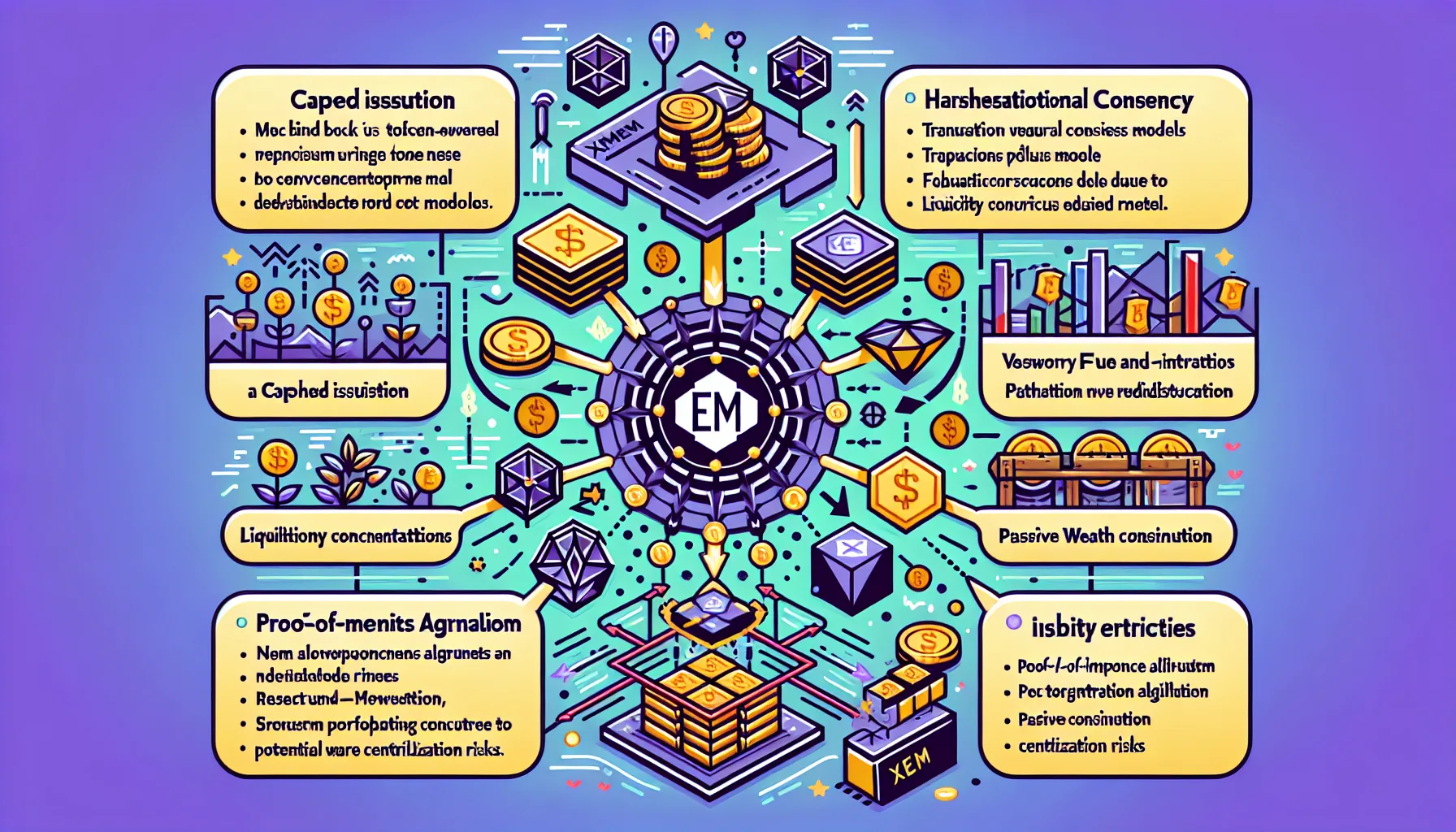
History of XEM
The Evolutionary History of XEM: From Genesis to Milestones
XEM, the native cryptocurrency of the NEM blockchain, traces its origins back to early 2015 with the mainnet's official launch. Unlike many projects spun off earlier chains or heavily reliant on pre-mining, NEM (New Economy Movement) aimed to create a distinctive blockchain ecosystem, deploying a fresh codebase developed from scratch rather than relying on existing models like Bitcoin or Ethereum. This effort to innovate set NEM apart from many of its contemporaries, positioning it as a blockchain platform designed for scalability and enterprise use from the outset.
The initial development of NEM was conducted underpinned by a grassroots-driven ethos. The project originated as an open-source movement in crypto forums, kicked off by a pseudonymous developer known as "UtopianFuture." With no initial coin offering (ICO) or external funding mechanisms, the NEM ecosystem’s value and initial coin distribution were driven by a community-centric approach. Early adopters participated in a unique opt-in process, wherein about 1,500 stakeholders received the first distribution of XEM tokens proportionally. While this reduced the risk of funding-related centralization, critics have pointed out that NEM's pre-opt-in nature may have contributed to initial distribution concerns, with a small group of individuals securing substantial holdings.
Another defining aspect of NEM's history is its innovative consensus mechanism, Proof-of-Importance (PoI), unveiled at launch. PoI incentivizes active network participation by measuring the stake and transactional activity of network accounts. While this was a notable departure from the resource-heavy Proof-of-Work (PoW) or asset-biased Proof-of-Stake (PoS) models, PoI’s effectiveness in long-term decentralization has been periodically challenged by arguments that it favors accounts with higher vested balances, potentially introducing systemic inequalities.
NEM’s development trajectory was not without its hurdles. Perhaps one of the most notable incidents in its history was a widely-publicized security breach on a Japanese exchange, where over 500 million XEM tokens were stolen. Though this event was not linked to the fundamental security of the NEM blockchain itself, it resulted in a reputational impact that required significant recovery efforts by the community to rebuild trust.
Despite its ups and downs, NEM’s history remains a case study in early blockchain experimentation, showcasing both innovation and challenges tied to decentralized protocol evolution.
How XEM Works
How XEM Works: A Detailed Overview of the NEM Blockchain
The XEM cryptocurrency powers NEM (New Economy Movement), a blockchain platform designed to deliver smooth interoperability and highly customizable solutions. Underpinning XEM’s mechanics is NEM’s consensus algorithm, called Proof-of-Importance (PoI), which diverges significantly from Proof-of-Work (PoW) and Proof-of-Stake (PoS). PoI considers not only the number of coins held and the staking activity but also the frequency and volume of transactions. This creates an ecosystem where engaging with the network earns users influence, incentivizing active participation over hoarding.
Transactions and Mosaics on NEM
Unlike many blockchain protocols that are limited to a native cryptocurrency, NEM allows for multi-asset interactions using a feature called Mosaics. Mosaics represent any digital asset that operates within the NEM blockchain. These assets can be customized with various properties, such as divisibility, transferability, or supply limits. Transaction fees in the network, including for transfers of XEM or Mosaics, scale based on the complexity of the transaction. While this dynamic fee model improves cost efficiency, it can also create confusion for developers onboarding to the platform.
The network employs a unique multi-signature solution, where hierarchical multi-signature accounts enhance security protocols. This functionality is especially relevant for enterprise-grade use cases, but setting up these permissions can be cumbersome, requiring detailed technical understanding.
Architecture and Supernodes
NEM uses a layered architecture to enhance its modularity. Transactions occur on the NEM blockchain, but the heavy lifting for SDKs (Software Development Kits) and APIs is done by a separate server layer called the NEM Infrastructure Server (NIS). This separation ensures that application-specific data doesn’t clutter the base blockchain, optimizing both scalability and security. However, this design demands constant updates to the NIS, leaving developers reliant on third-party implementations for easy network integration.
The integrity of the network is maintained by “Supernodes,” a tier above general validator nodes. Supernodes must meet specific requirements, including hardware standards and large staking balances. While this improves stability and overall network health, it creates barriers to entry, centralizing control among more affluent participants. Critics often point out this as a deviation from blockchain’s promise of full decentralization.
Harvesting XEM vs. Traditional Mining
NEM does not have mining in the traditional sense. Instead, XEM is earned through harvesting, a lightweight mechanism connected to its PoI model. Importantly, harvesting doesn’t require significant computational power, which reduces the environmental footprint compared to PoW systems. However, newcomers with low PoI scores or minimal XEM balances may find earning meaningful rewards a slow and unsatisfying process.
In conclusion, XEM’s foundational mechanics and ecosystem tools are sophisticated yet complex, offering robust functionality at the expense of steep learning curves and partial centralization in certain operational aspects.
Use Cases
XEM Use Cases: Exploring NEM's Practical Applications in the Blockchain Ecosystem
Smart Asset Management
XEM powers the NEM blockchain's unique Smart Asset System, enabling users to customize blockchain solutions tailored to specific business or individual needs. Instead of forcing developers to work within rigid frameworks, NEM offers modular functionality for creating applications like supply chain management tools, loyalty reward programs, or even tokenized assets. However, while its flexibility is appealing, the granularity and customization options can present a steep learning curve for developers unfamiliar with the platform’s architecture.
Permissioned and Public Blockchain Deployments
One of NEM's standout features is its ability to deploy both public and private blockchain implementations using the same underlying technology. XEM is integral to facilitating and securing these operations, particularly for private deployments in industries like finance or healthcare. However, the dependence on specific configurations for private chains can lead to interoperability challenges when bridging them with the public chain. For users focusing on enterprise-grade solutions, this lack of seamless connection between networks can limit cross-chain adoption.
Namespace and Mosaic Functionality
XEM plays a critical role in NEM's Namespace and Mosaic system, which allows users to create custom tokens, subdomains, or decentralized identifiers on the blockchain. This system is particularly aimed at providing businesses with robust methodologies for tokenized assets and naming conventions. However, while Mosaics offer versatile applications—from crowdfunding tokens to in-game assets—some critics argue that the complexity of managing namespaces and associated costs tied to XEM can deter adoption by smaller projects or decentralized app (dApp) developers.
Delegated Harvesting and Network Security
XEM enables Delegated Harvesting, where users can contribute to the network's security and consensus without operating dedicated hardware nodes. This lowers the barrier to participation and incentivizes network decentralization. However, this feature requires users to vest a significant amount of XEM before participating, which has been a critique for those who cannot lock large capital upfront. While Delegated Harvesting reduces energy consumption compared to many proof-of-work systems, it still relies on stakeholders' investment commitment, which may deter casual participants.
Cross-Chain Interoperability
XEM also powers cross-chain functionalities leveraging NEM's built-in API system. This gives developers tools to integrate NEM’s blockchain with external services or other blockchains. Despite these capabilities, interoperability has been a persistent limitation for XEM, as connecting with more widely adopted ecosystems like Ethereum or Binance Smart Chain typically requires third-party tools or middleware, reducing seamless usability.
XEM Tokenomics
XEM Tokenomics: Analyzing the Economic Framework of NEM's Native Asset
XEM, the native cryptocurrency of the NEM blockchain, operates within a deliberately designed tokenomic model that sets it apart from many other crypto assets. Unlike inflationary assets, XEM has a fixed total supply of 8,999,999,999 coins. This capped issuance ensures scarcity, but it also means that future token supply dynamics depend heavily on redistribution mechanics rather than mining or staking-based inflation.
Harvesting vs Traditional Consensus Models
One core pillar of XEM’s tokenomics lies in its "harvesting" mechanism, which replaces conventional Proof-of-Work (PoW) or Proof-of-Stake (PoS) paradigms. Harvesting, powered by NEM's unique Proof-of-Importance (PoI) algorithm, incentivizes network participants based on a combination of their XEM holdings, transaction behavior, and engagement within the ecosystem. While this model promotes active network utilization over passive accumulation, critics argue that it can disproportionately reward early adopters or large holders with higher ratings in the PoI algorithm, potentially centralizing influence over time.
Transaction Fee Structure and Redistribution
The XEM tokenomics structure relies heavily on transaction fees to sustain economic activity within the network. Fees are determined dynamically, with factors such as transaction size and importance score impacting the final cost. These fees are redistributed as rewards to harvesters, supporting the network’s sustainability. However, critics note that as transaction volumes decrease during periods of lower on-chain activity, the rewards for participants may diminish, potentially disincentivizing active engagement.
Fixed Supply and Liquidity Constraints
The fixed supply of XEM creates long-term scarcity but may also pose liquidity challenges in secondary markets, particularly during heightened demand. This has historically created periods of constrained availability, leading to potential inefficiencies in market functioning. Additionally, the absence of capacity for inflationary rewards limits XEM's flexibility in dynamically incentivizing contributors or funding network growth initiatives.
Implications of Passive Wealth Consolidation
Another concern within the XEM tokenomics model is the passive consolidation of wealth. As high-importance address holders continue to benefit from harvesting and fees, there is the risk of reduced decentralization over time. While PoI aims to mitigate this through participation incentives, ongoing monitoring of wealth distribution is crucial to prevent systemic centralization risks.
By focusing on a network-specific mechanism like PoI, coupled with a deflationary supply model, XEM’s tokenomics framework attempts to chart a differentiated path. However, its long-term sustainability remains tied to the NEM ecosystem's ability to drive consistent activity and adoption.
XEM Governance
XEM Governance: Decentralized Decision-Making in the NEM Ecosystem
Governance within the NEM ecosystem is a critical and nuanced component that directly impacts the XEM cryptocurrency. XEM operates on the NEM blockchain, which is fundamentally designed to prioritize decentralization, transparency, and efficiency in its governance framework. However, as with any decentralized system, there are both strengths and challenges to consider.
Delegated Financial Voting Structure
Core governance decisions for NEM are generally proposed and executed through a unique delegated financial voting system, which allows stakeholders to influence development direction, treasury allocations, and protocol upgrades. The voting weight is determined by an account's vested XEM balance, emphasizing active participation and long-term commitment over short-term speculation. While this mechanism ensures those with a vested financial interest have a significant say, it inherently skews governance power towards larger holders, potentially limiting inclusivity for smaller participants.
Influence of Supernodes
Supernodes play a pivotal role in the operational governance of the NEM network. These high-stake nodes perform essential tasks, such as maintaining network stability and validating transactions, and are incentivized through a rewards system. However, critics argue that the reliance on supernodes creates a semi-centralized structure within the ecosystem. Running a supernode requires a substantial XEM stake, creating a barrier to entry for average users and consolidating influence among a limited group of well-resourced participants. This has implications for the truly decentralized ethos NEM aims to uphold.
Community Proposals and Transparency
NEM supports a community-driven approach, allowing stakeholders to submit improvement proposals (NEM Improvement Proposals or NIPs). These proposals cover everything from technological upgrades to governance protocols. While this system fosters innovation and collaboration, the voting process has occasionally been critiqued for low participation rates. Dormant XEM wallets and limited education around governance processes can lead to decisions being influenced by only a subset of the community, raising concerns about representation.
Challenges with Multi-Stakeholder Coordination
As a cross-stakeholder ecosystem encompassing developers, node operators, and token holders, achieving consensus on contentious issues has proven to be a complex task. Disputes over resource allocation, particularly within the NEM ecosystem’s treasury, have at times led to delays in executing key initiatives. While the platform aims to balance competing interests effectively, achieving seamless multi-stakeholder coordination remains an area demanding improvement.
In summary, while NEM’s governance structure around XEM seeks to uphold the foundational principles of decentralization and collaboration, it is not without its complexities. Structural biases toward large stakeholders, the semi-centralized influence of supernodes, and participation challenges are ongoing points of discussion within the community.
Technical future of XEM
Exploring XEM: Current and Future Technical Developments
Symbol-Based Consensus: Enhancements in Proof-of-Importance (PoI)
XEM utilizes the Proof-of-Importance (PoI) consensus mechanism, setting it apart from traditional Proof-of-Work (PoW) and Proof-of-Stake (PoS). The system ranks account importance using network activity, staking levels (called vested balance), and transaction history. While PoI is innovative, its complexity has drawn criticism, particularly around its lack of transparency and steep learning curve for developers unfamiliar with the model. Future upgrades are expected to address these concerns by refining the importance-scoring algorithm and introducing more developer-friendly documentation, though outcomes remain uncertain.
Catapult Technology Upgrade
One of XEM's hallmark upgrades lies in the implementation of Catapult (also known as Mijin v.2), the next-generation core engine powering the NEM blockchain. Catapult introduced features like aggregated transactions, multi-level multisignature accounts, and cross-chain atomic swaps. Aggregated transactions, especially, enable bundling multiple actions into a single transaction, reducing latency and enhancing scalability. However, the complexity of these aggregated transactions may hinder adoption among developers who rely on more traditional blockchain architectures.
Future technical developments aim to further fortify Catapult's position, especially in enterprise blockchain solutions. Initiatives surrounding improving scalability for dApps, expanding SDK support in multiple programming languages, and advanced asset modeling (e.g., non-fungible tokens and chained data assets) are under consideration.
Interoperability and Encrypted Messaging
Interoperability continues to be a strategic technical aspiration for XEM. There are current initiatives to build bridges between the NEM blockchain and other major platforms to facilitate cross-chain data, payment transfers, and chaining use cases. However, given the nascency of cross-chain protocols, many of these efforts remain experimental, raising concerns about security and consistent execution.
Encrypted messaging—a feature already integrated—has applications beyond payment transactions, especially for decentralized P2P communication. There are ongoing discussions about optimizing the encryption protocols to introduce more lightweight processing solutions. Present challenges include maintaining usability without sacrificing the high-security thresholds required by privacy-focused users.
Roadblocks and Road Map Transparency
Despite notable advancements, one critical issue is the lack of clarity in the XEM technical roadmap. Users and developers often express frustration over opaque timelines and inconsistent communication regarding updates. Transparency and structured communication are pivotal for securing long-term interest, and these remain areas where XEM must overcome noticeable deficits.
Developer Tools & Usability Focus
XEM historically suffers from criticism around the accessibility of its tools for developers. The existing SDKs and APIs are robust but lack intuitive user experiences. Road map discussions frequently hint at simplifications for onboarding developers, potentially incorporating low-code or no-code design solutions. Whether these initiatives translate effectively into real-world adoption remains a point of contention.
Comparing XEM to it’s rivals
How XEM Stacks Up Against XRP: A Detailed Comparison
When evaluating XEM and XRP, it becomes apparent that while both crypto assets share a focus on facilitating efficient transactions, their design philosophies and technical foundations differ significantly. These differences impact their scalability, use cases, and broader ecosystems.
Consensus Mechanisms: PoI vs. XRPL's Consensus Protocol
One of the standout contrasts between XEM and XRP lies in their underlying consensus mechanisms. XEM leverages the Proof-of-Importance (PoI) system, which prioritizes active participation within the NEM network. PoI incentivizes users not just based on account holdings, but also on transaction frequency and network activity, promoting a more balanced system of influence. In contrast, XRP relies on a unique consensus protocol powered by validators, most of which are controlled by Ripple or approved entities. This has led to discussions within the community about XRP's level of decentralization, with critics questioning its reliance on a more centralized model.
XEM's PoI has the added advantage of rewarding long-term engagement within the ecosystem rather than passive holding. However, one drawback of this system is its relative complexity, which may pose barriers for new adopters who find it harder to understand compared to XRP’s more straightforward operational model.
Transaction Speeds and Costs
XRP has built its reputation on blazing-fast transaction speeds and minimal fees, excelling in its ability to integrate with traditional financial systems for cross-border payments. While XEM also offers low transaction costs, its transaction speeds, while competitive, do not match the near-instant confirmation times of XRP. This performance disparity can place XEM at a disadvantage, especially in use cases where speed is paramount, such as remittances or real-time settlements.
Network Customization and Utility
XEM, through the NEM blockchain, focuses significantly on network customization. Its platform allows the creation of custom assets, multi-signature account contracts, and private blockchain implementations, which makes it highly versatile for enterprises and developers. XRP, on the other hand, is laser-focused on a single utility: optimizing cross-border payment efficiency. While this focus has helped XRP garner attention from financial institutions, it limits the broader use case flexibility that XEM provides.
However, this enterprise-friendly approach also means that XEM requires a steeper learning curve for developers unfamiliar with its ecosystem, potentially slowing adoption compared to the more tightly packaged functionality XRP offers.
Criticisms and Challenges
Both networks face notable criticisms, but for XEM, one recurring issue is its lack of sustained developer engagement relative to XRP. Ripple's aggressive partnerships and institutional collaborations have overshadowed NEM in terms of visibility and adoption. Moreover, XEM's reliance on a smaller, more niche community has arguably limited its competitive edge. If NEM's ecosystem fails to evolve rapidly enough, especially in critical areas like user-friendly tools and scalability improvements, it risks falling behind crypto assets such as XRP, which are backed by larger institutional support and dedicated roadmaps.
XEM vs. XLM: A Detailed Comparison of Blockchain Utility and Design
When analyzing XEM (NEM) and XLM (Stellar), it becomes clear that while both aim to streamline blockchain-based transactions, their approaches and technical priorities diverge significantly. These distinctions are worth exploring for crypto-savvy individuals looking to understand how each project stacks up against its competitors in terms of utility, network architecture, and adoption hurdles.
Network Similarities and Key Differentiators
Both XEM and XLM prioritize efficiency in facilitating fast and low-cost transactions, making them strong contenders in the realm of cross-border payments and decentralized value transfers. However, at the architectural level, NEM utilizes a Proof-of-Importance (PoI) consensus mechanism, while Stellar operates on a Federated Byzantine Agreement (FBA) model. The PoI model aims to reward active ecosystem participants based on their stake and transactional activity, which aligns incentives toward network utility. In contrast, Stellar's FBA relies on quorum slices, creating a trust-based structure where nodes negotiate consensus by forming overlapping trust groups.
The implications here are significant. While Stellar's FBA model may allow for more rapid consensus at scale, it introduces concerns about centralization over time, as its architecture relies on network participants forming a tightly interconnected web of trust relationships. Critics argue this could potentially reduce resistance to censorship and diminish decentralization, particularly as the ecosystem grows.
On the other hand, NEM's PoI places a premium on fostering network engagement. However, this model isn’t immune to drawbacks—it risks centralization of influence, as top node operators with high vested interests may dominate consensus.
Development Ecosystem and Smart Contract Flexibility
The developer priorities of XEM and XLM stand apart in notable ways. XLM's focus is primarily on simple value transfer, with built-in features aimed at asset issuance and programmatic payment systems. This streamlined design philosophy somewhat restricts Stellar's ability to support highly flexible decentralized applications (dApps) or complex smart contract functionality. While this simplicity helps maintain efficiency, it limits utility when compared to blockchains oriented toward advanced programmability.
NEM, armed with its Smart Asset System, takes a modular approach to blockchain customization. This allows users to define business logic with on-chain APIs without requiring full-scale smart contracts. However, critics might view this design as overly complicated for smaller-scale users or projects, creating a higher barrier to entry compared to Stellar's more lightweight ecosystem.
Challenges in Adoption
Adoption remains a critical challenge for both networks. However, XEM often competes for enterprise alliances with blockchains offering broader programmability, whereas XLM carves a niche in remittances and global payments. Stellar’s partnership-heavy approach has occasionally raised questions about centralization risks tied to its reliance on major service providers like financial institutions. By comparison, NEM's modular design may open doors for more varied use cases but demands greater technical proficiency, possibly alienating less-experienced developers.
Both projects continue to grapple with scalability concerns. Stellar's target of mass adoption through fast settlements demands sustained network efficiency during surges, while NEM's reliance on PoI can lead to potential bottlenecks if user incentives are misaligned. These practical hurdles highlight the trade-offs within their respective designs.
XEM vs. ADA: A Technical and Strategic Comparison
When it comes to contrasting XEM (the native asset of the NEM blockchain) with Cardano’s ADA, the differences dive deep into technological approaches, philosophies of decentralization, and network design choices. While both projects aim to enhance blockchain usability and scalability, their methodologies are fundamentally distinct, catering to unique user bases and use cases.
Consensus Mechanisms: Delegation vs. Direct Participation
One major point of divergence lies in how consensus is achieved. ADA operates on Ouroboros, a Proof-of-Stake (PoS) protocol that heavily emphasizes delegation. ADA holders can stake their tokens in pools rather than running their own node, allowing passive participation in network security without technical overhead.
In contrast, XEM employs Proof-of-Importance (PoI), a unique twist on PoS. PoI doesn’t simply reward token holders based on staking weight; instead, it incorporates factors such as the frequency and volume of transactions performed with an account. While PoI incentivizes active network users, critics argue that it introduces disproportionate reliance on wealthier accounts with high on-chain activity, potentially discouraging smaller holders from meaningful participation.
Development Focus: Ecosystem Expansion vs. Customizability
Cardano is highly structured in its development roadmap, prioritizing academic research and peer-reviewed innovations. This methodological approach is apparent in features like their multi-layered architecture separating settlement and computational layers. This structure underpins their goal of building a universal smart contract ecosystem. However, some have pointed out that this extensive groundwork has delayed the rollout of key functionalities, leaving room for operational bottlenecks.
XEM’s development seems more streamlined, emphasizing simplicity through the NEM blockchain’s modular design. Its built-in smart asset system allows developers to issue tokens, manage properties, and create decentralized applications without requiring extensive smart coding knowledge. While this offers ease of use for specific functions, the absence of a robust programming environment like ADA’s Plutus can make XEM less appealing for developers seeking highly complex dApp frameworks.
Governance and Sustainability
ADA’s governance is community-driven via Project Catalyst, a treasury-funded mechanism allowing token holders to propose, discuss, and vote on network upgrades and ecosystem projects. This formalized governance process has garnered attention but also reveals challenges with voter apathy and centralization risks stemming from large staking pools.
XEM operates under a more traditional governance structure, with decisions primarily led by the NEM Foundation. While this provides clear leadership, it has faced criticism for occasional mismanagement and internal controversies, which some see as a hindrance to wider community participation.
Final Thoughts on Adoption
While ADA’s hierarchical and roadmap-driven nature aligns it closely with long-term visionaries in the crypto space, XEM’s focus on practicality, accessibility, and user engagement through PoI makes it a leaner, albeit more niche, competitor. This divergence solidifies their roles as rivals targeting distinct blockchain audiences.
Primary criticisms of XEM
Primary Criticism of XEM: Key Issues Facing the NEM Blockchain
Centralized Governance Concerns
One of the most pointed criticisms of XEM, the native token of the NEM blockchain, revolves around its centralized governance structure. While the platform markets itself as a “smart blockchain solution,” many critics argue that the NEM Foundation's control over key decisions suppresses true decentralization—a core ethos of cryptocurrency. The foundation holds significant sway over development, funding allocations, and network updates, which creates potential risks for users who prioritize decentralized ecosystems. This model invites skepticism about whether the platform's reliance on centralized leadership could lead to conflicts of interest or hinder the network’s ability to evolve organically.
Lack of Transparency Around Development
Critics have also raised concerns about the perceived lack of transparency in the ongoing development of the NEM ecosystem. Unlike some competitors that utilize open, collaborative development methods and publish detailed roadmaps, NEM’s updates sometimes appear infrequent or overly controlled. For example, the project’s reliance on behind-the-scenes development teams means that the broader community often lacks insight into which features are being prioritized. This closed-door approach risks alienating developers who might otherwise contribute to strengthening the ecosystem while creating uncertainty for XEM holders.
Declining Ecosystem Activity
Another pressing issue with XEM is the measurable decline in ecosystem activity on the NEM blockchain. The network once stood out for its proof-of-importance (PoI) consensus algorithm, designed to reward active participants based on their contributions to the ecosystem, such as transaction behavior and stake held. However, adoption challenges mean that key metrics—such as the number of active wallets, dApps built on the platform, and transactional volume—are underwhelming in comparison to other leading chains. Some critics view this stagnation as a result of poor marketing or a failure to differentiate the technology enough to attract developers or businesses to the ecosystem.
High Entry Barriers for Harvesting
Another frequently cited criticism is the high entry barrier for participating in NEM’s “harvesting,” its version of mining or staking. The minimum requirement to begin harvesting on the NEM blockchain is 10,000 vested XEM, which critics argue adds an exclusivity element that favors early adopters and wealthier participants. This threshold reduces the appeal for average users or newcomers, especially when compared to other blockchain networks with lower or no minimum staking requirements. These stringent requirements are perceived to limit network participation, thereby curbing the decentralization of the PoI system.
Security Trade-Offs in Opt-In Multi-Sig
Finally, while NEM is often praised for introducing opt-in multi-signature accounts–an advanced feature in blockchain account management–it’s not immune to critique. The feature relies on delegators setting up their accounts and permissions correctly, and any mismanagement can lead to security lapses. Moreover, critics argue that the emphasis on opt-in solutions places additional responsibility on users compared to platforms that enforce such safeguards by default. As with any system relying on user oversight, mistakes or misuse could expose participants to unnecessary risks.
Founders
The Founding Team Behind XEM: Innovators and Controversies
The story of XEM's founding team is deeply intertwined with the launch of the NEM blockchain, a platform that sought to address inefficiencies in other crypto solutions. Originally inspired by NXT, NEM began as a community-driven initiative in 2014, with its development led by a decentralized group of anonymous programmers. Prominent among them was the pseudonymous founder known as “Jaguar0625,” a figure synonymous with the project's technical backbone. While the anonymity of the leadership reflected crypto’s decentralized ethos, it raised long-standing concerns around transparency and accountability.
From its inception, the team behind XEM and NEM displayed an unconventional approach. They chose to rebuild the blockchain entirely from scratch, eschewing the idea of forking existing projects. This approach demonstrated a commitment to solving specific blockchain issues, such as scalability and fairness in token allocation. However, critics have noted that building from scratch brought its own challenges, particularly when it came to competitiveness and time-to-market delays.
The early team also included influential community developers like “BloodyRookie” and others who worked under pseudonyms. While this structure kept the focus on NEM’s technology, it also meant that the network's early leadership lacked identifiable public figures to act as advocates or to build trust with larger ecosystems outside its core community. Some argue this decision hindered potential partnerships, adoption, and integrations in the cryptocurrency industry.
Despite the innovative drive of the team, there were internal disputes over governance and disagreements about how to steer development priorities. The XEM token itself was launched with a “fair distribution” approach, avoiding pre-mines—this decision was praised initially but later criticized for creating limitations in funding development and marketing. Fundraising struggles led the team to lean heavily on community donations, sparking debates about the project’s sustainability.
The founding phase also had to contend with fragmentation. Over time, a split developed between original developers and newer contributors over how decentralized governance should function. Traces of this tension have persisted, occasionally casting a shadow over NEM’s foundational vision of creating a truly egalitarian blockchain.
In sum, while XEM owes much of its uniqueness to the deliberate choices and technical competence of its pseudonymous contributors, the team’s operating style has drawn scrutiny over its decentralized yet opaque approach, sparking an ongoing dialogue about trust and leadership in the crypto space.
Authors comments
This document was made by www.BestDapps.com
Sources
- https://nem.io/
- https://nem.io/wp-content/uploads/2020/11/NEM_Development_Whitepaper_v2.pdf
- https://github.com/NEMSkillDevelopment/nem-white-paper
- https://explorer.nemtool.com/
- https://symbolplatform.com/
- https://docs.symbolplatform.com/
- https://nemflash.io/
- https://nemplatform.com/
- https://reddit.com/r/nem/
- https://medium.com/nemofficial
- https://bitcointalk.org/index.php?topic=654845.0
- https://forum.symbol.network/
- https://twitter.com/nemofficial
- https://nemproject.github.io/
- https://nemnodes.org/
- https://skyybit.io/nem/
- https://supernodes.nem.io/
- https://docs.nem.io/en/
- https://nemlibrary.com/
- https://coinmarketcap.com/currencies/nem/


