History of XDC
The History of XDC: Tracing the Evolution of XinFin Network
Developed as part of the XinFin Network, XDC (XinFin Digital Contract) traces its origins to the broader objective of addressing inefficiencies in global trade and finance. Established to leverage the advantages of blockchain technology within enterprise-grade systems, XDC operates on a hybrid blockchain that integrates public and private network functionalities—a foundation steeped in strategic planning and iterations since its inception.
Initially conceptualized in 2017, the XinFin Network emerged with the goal of bypassing key obstacles in the traditional financial ecosystem. These obstacles included lack of transparency, prolonged transaction times, and high operational costs, particularly in the realm of cross-border payments and supply chain financing. To address these challenges, the team behind XinFin proposed a unique consensus mechanism, eventually resulting in the XDC token operating on a Delegated Proof of Stake (XDPoS) model. This model emphasized energy efficiency and governance, a conscious departure from the resource-heavy Proof of Work frameworks seen in earlier cryptocurrencies.
XDC started as an ERC-20 token, taking advantage of Ethereum's robust startup infrastructure to gain initial traction. However, by 2019, it migrated to its custom-built XDC blockchain, designed specifically to overcome Ethereum's limitations concerning scalability and transaction throughput. This shift significantly reduced transaction costs and increased network speed, differentiating XinFin from competitors in the enterprise blockchain space.
An essential milestone in XDC's history was its interoperability with the ISO 20022 financial messaging standard. By structuring XDC's architecture to integrate seamlessly with existing systems used by financial institutions, XinFin sought to position itself as a bridge between decentralized blockchain technology and centralized finance. While this strategy appealed to institutional adopters, it raised concerns among decentralization purists, wary of the potential compromises made to cater to traditional systems.
Additionally, the adoption of the XDPoS 2.0 protocol—focused on network security and double validation—highlighted XinFin's commitment to scaling its infrastructure while maintaining a low carbon footprint. Despite these advancements, XDC's journey has not been free from criticism. Skeptics have pointed to challenges in reaching widespread institutional adoption, as entrenched regulatory frameworks and the slow pace of onboarding within traditional finance remain significant hurdles.
XDC’s trajectory reflects its ambition to blend public blockchain transparency with private blockchain control, yet this dual-purpose approach continues to face scrutiny. Questions surrounding governance centralization and competition from newer hybrid solutions remain key points of debate in the crypto community.
How XDC Works
How XDC Works: A Technical Overview for Savvy Crypto Enthusiasts
XDC, the native cryptocurrency of the XinFin network, operates on a hybrid blockchain architecture that combines the benefits of both public and private chains. This structure is designed to enhance scalability, interoperability, and efficiency while addressing limitations common in other blockchain systems.
Hybrid Blockchain Framework
At its core, the XDC network employs a delegated proof-of-stake (DPoS) consensus mechanism, which enables faster transaction finality and lower energy costs compared to proof-of-work systems. The network's hybrid approach is a distinguishing feature. Public transactions can occur on the main XDC blockchain, which is accessible to all participants, while sensitive or enterprise-specific operations can occur on private sub-networks with restricted access. This duality is intended to offer flexibility to industries like trade finance and supply chain management, where privacy and transparency must coexist.
Smart Contracts and Interoperability
XDC is Ethereum Virtual Machine (EVM)-compatible, allowing developers to deploy and interact with Solidity-based smart contracts on the network. This compatibility enables easy migration of dApps and tokens between Ethereum and XDC, a feature that aims to streamline cross-platform interoperability. However, detractors have noted that this heavy reliance on EVM compatibility may constrain innovation, as it binds the ecosystem to Ethereum's existing framework instead of fostering unique programming solutions.
Moreover, XDC supports interoperability protocols like ISO 20022, which positions the network for potential adoption in legacy financial systems. While this integration with traditional finance adds utility, it also raises concerns about centralization, as alignment with existing institutional standards could necessitate compromises on decentralization.
Consensus and Governance Structure
The DPoS consensus mechanism requires participants—referred to as validator nodes—to stake XDC tokens in order to validate transactions and secure the network. Community participation in governance is weighted by token holdings, which critics argue may create power imbalances, favoring wealthy stakeholders over smaller participants. Although this issue is not unique to XDC, it sparks ongoing debates about the fairness of DPoS-based ecosystems.
Speed, Cost, and Limitations
XDC touts high transaction throughput and extremely low fees as competitive advantages. While the network is capable of processing thousands of transactions per second, critics often question whether such capacity will remain consistent under heavy, real-world usage. Additionally, achieving low fees depends on economic incentives, and it remains to be seen how sustainable these incentives will prove in practice.
The combination of technical compatibility, enterprise-grade features, and flexible architecture makes XDC a compelling, albeit not unchallenged, blockchain solution. Its hybrid model straddles the line between DeFi innovation and enterprise adoption, catering to a specialized niche of users. However, questions about centralization risks, network adaptability, and truly decentralized governance remain pertinent factors for its future development.
Use Cases
XDC Blockchain: Key Use Cases and Applications
Trade Finance and Supply Chain Optimization
The XDC Network has carved a niche for itself in the trade finance industry by offering decentralized solutions to an industry fraught with inefficiencies. Its hybrid blockchain architecture bridges the gap between private and public systems, enabling enterprises to digitize trade processes. Tools like TradeFinex leverage XDC to tokenize real-world financial instruments, such as invoices or letters of credit, often aimed at reducing counterparty risks and improving liquidity. However, adoption remains an uphill battle, as overcoming entrenched legacy systems and regulatory complexities across jurisdictions can slow down the integration process.
Cross-Border Payments
XDC is being adopted for fast, inexpensive cross-border transactions, leveraging its near-zero gas fees and sub-two-second transaction times. This positions it as a competitor to traditional payment systems like SWIFT, as well as other blockchain networks. Its interoperability with ISO 20022 messaging standards is a selling point for financial institutions. That said, scaling remains a question as the network grows—while XDC’s hybrid design is efficient, extensive adoption could push its infrastructure to its limits, which would require continued development and optimization.
Tokenization of Real-World Assets
The tokenization of physical assets—such as real estate, precious metals, and commodities—is another significant use case for XDC. By creating decentralized representations of these assets, the network facilitates easier transfer, fractional ownership, and improved transparency. However, regulatory skepticism and questions around legal enforceability are challenges for such applications. Ensuring that tokenized assets have clear provenance and compliance within diverse legal frameworks is critical.
Decentralized Applications (dApps) and Enterprise Adoption
Equipped with smart contract capabilities, XDC is increasingly being used for dApp development, with a focus on enterprise solutions. Its EVM compatibility allows developers to easily build or migrate projects from other blockchains like Ethereum. Use cases span industries such as insurance, trade, and logistics. On the downside, limited marketing penetration in the dApp space means developer interest currently lags behind larger smart contract platforms like Ethereum or Solana.
Energy Efficiency and Green Initiatives
XDC positions itself as an energy-efficient blockchain, which appeals to companies focusing on sustainability. This has potential for enterprises mindful of environmental impact. Yet, quantifying this claim against other blockchains that also tout energy efficiency (e.g., proof-of-stake networks) can make it difficult for XDC to differentiate its value in this department.
XDC Tokenomics
XDC Tokenomics: A Deep Dive into Supply, Distribution, and Incentives
Total Supply and Token Allocation
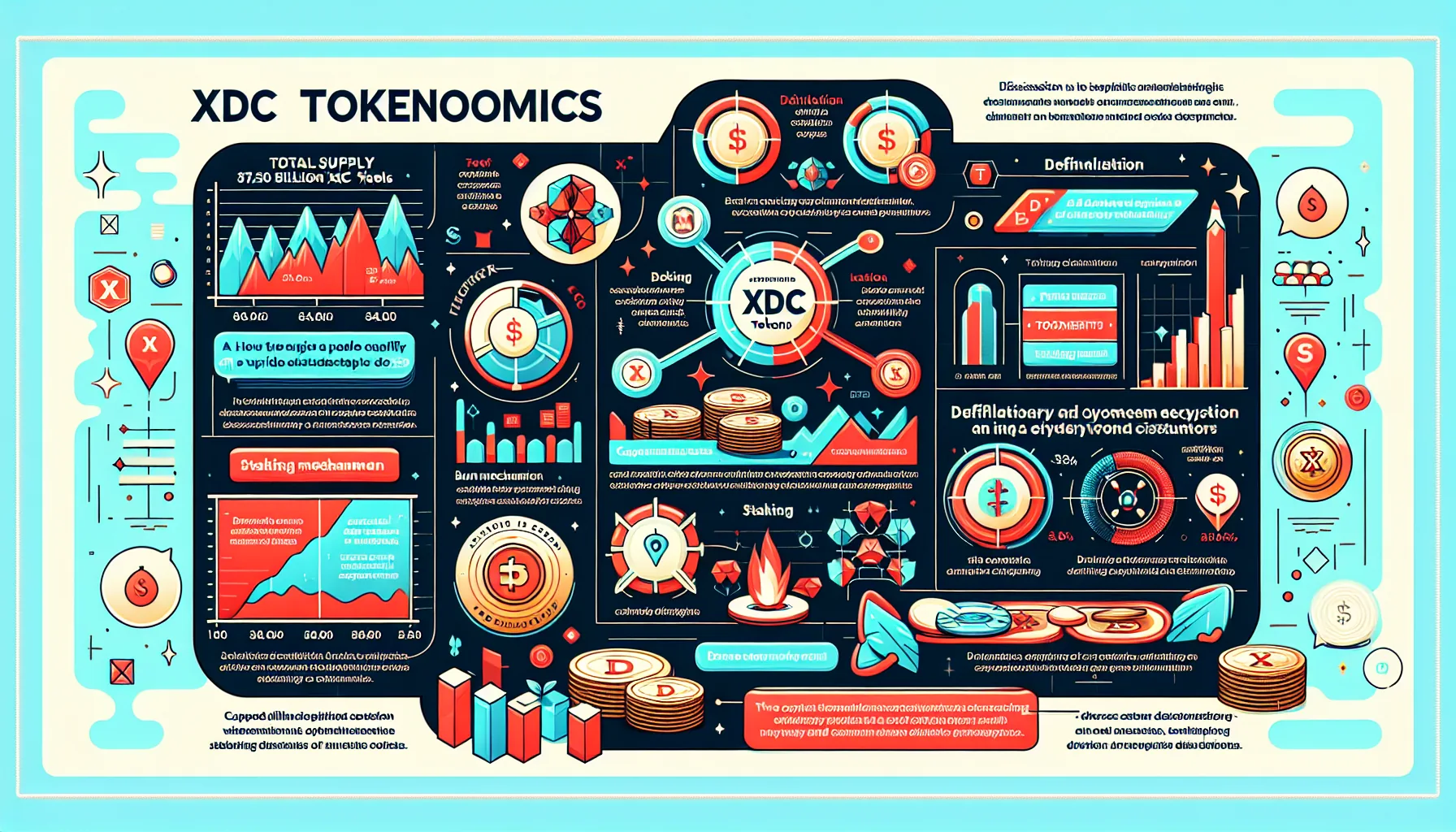
The XDC Network operates with a capped total supply of 37.5 billion XDC tokens, a predefined maximum that was established to ensure scarcity. Of this, a substantial portion was minted during the initial genesis block, with specific allocations to ecosystem stakeholders, early contributors, and development initiatives. While this fixed cap offers clarity, concerns exist around the concentration of token holdings. A significant percentage of XDC remains under the control of the founding team and affiliated entities. This has raised transparency questions about how these holdings are managed and their potential influence on the market.
Circulating Supply and Vesting Schedules
The circulating supply of XDC is naturally dynamic, constrained by various vesting schedules and ecosystem requirements. Token unlocking occurs in predefined intervals, primarily benefitting ecosystem expansion and operational funding. While this gradual release mitigates inflationary pressure, the lack of precise, publicly-shared benchmarks on vesting timelines may worry some investors about surprise sell-offs during major unlocking events. Such events could impact short-term liquidity dynamics and susceptibility to price manipulation.
Staking and Incentivization Mechanisms
Central to the XDC Network’s economics is staking. Token holders can stake XDC to become validator nodes, securing the network while earning staking rewards. The projected staking yields are designed to remain competitive, funded in part by network transaction fees. However, the need to maintain a balance between sufficient staking rewards and transactional cost efficiency presents an ongoing challenge.
Additionally, a notable portion of the ecosystem's incentives is allocated to fund development grants, partnerships, and community-driven projects. Critics, however, sometimes point to a lack of detailed reporting on how these funds are dispersed, raising concerns about mismanagement or favoritism in grant allocations.
Deflationary Features
XDC employs a burn mechanism, where a small percentage of transaction fees is permanently removed from the circulating supply. This deflationary mechanism directly combats long-term inflation. Despite this, some have argued that its impact is minimal given the relatively low fee structure of the network, which is designed to prioritize affordable transactions. The balance between cost-effective utility and meaningful deflation remains a nuanced issue.
Liquidity and Market Distribution
Liquidity for XDC is spread across both centralized and decentralized exchanges, with varying degrees of depth. While this multi-channel distribution offers versatility, the risk of thin liquidity on smaller platforms could lead to slippage during large trades. Inconsistent liquidity pools also create difficulties for arbitrage opportunities, which can discourage sophisticated traders. Additionally, concerns regarding centralized liquidity dominance might introduce vulnerabilities during periods of heightened market stress.
XDC Governance
XDC Governance: Decentralization, Framework, and Challenges
In the realm of governance, the XDC Network employs a hybrid mechanism combining delegated proof-of-stake (DPoS) and masternode architecture. This governance model aims to strike a balance between decentralization and performance, catering to enterprise-grade blockchain applications. However, the intricacies of this system merit closer examination, as they present both strengths and limitations.
At the core of XDC’s governance is its reliance on masternode operators, who hold significant responsibility in validating transactions and maintaining network security. To become a masternode, a participant must stake a substantial amount of XDC tokens—ensuring operators are financially invested in the network. This model promotes some level of decentralization by distributing decision-making power across multiple entities. However, the high staking requirement potentially centralizes authority in the hands of well-capitalized participants, raising questions about equitable accessibility and governance concentration.
Voting and protocol upgrades within the XDC ecosystem are determined through mechanisms linked to masternodes. Network participants, such as token holders, may not directly participate in governance decisions but rely on these selected nodes to act in the network’s best interest. While this streamlines decision-making compared to entirely permissionless systems, it risks reducing transparency and accountability if the masternodes prioritize their interests over those of the wider network.
Additionally, the XDC Network’s governance framework does not yet have a deeply formalized on-chain voting infrastructure for widespread community inclusion. In its current state, this could limit direct input from the broader ecosystem, especially compared to blockchain networks that emphasize open and inclusive governance models. Critics have questioned whether this approach may hinder the long-term adaptability of the platform as it scales.
Governance challenges also emerge in terms of incentivizing participation. XDC’s DPoS model provides rewards for masternode operators, but smaller token holders may have little economic reason to engage in the governance ecosystem beyond delegating tokens. This dynamic could lead to apathy among a segment of the community, further ceding influence to large stakeholders and potentially creating a governance system that prioritizes profitability over decentralization.
In summary, while the XDC Network employs a governance structure designed for efficiency and enterprise suitability, it brings inherent tradeoffs. Concerns around centralization, transparency, and inclusivity remain pertinent issues for stakeholders examining the long-term effectiveness of the platform’s governance architecture.
Technical future of XDC
XDC Network: Current and Future Technical Developments
Enhanced Scalability and Throughput Optimization
The XDC Network leverages a Delegated Proof of Stake (XDPoS) consensus mechanism to achieve high performance and low energy consumption. Current efforts are focused on further improving scalability to accommodate growing user adoption and enterprise applications. Developers are actively exploring optimizations at the protocol level to increase transaction throughput, aiming to surpass the 2,000+ TPS benchmark. While XDPoS performs better than traditional PoW systems in terms of efficiency, decentralization trade-offs remain a critical concern; the relatively small number of validators is an area that demands attention to mitigate centralization risks.
Smart Contract Enhancements and Interoperability
The XDC Network utilizes the Ethereum Virtual Machine (EVM) for its smart contract functionality, ensuring compatibility with Ethereum-based dApps. However, current development includes plans to move toward enhanced interoperability with non-EVM chains. Layer 2 scaling solutions and native cross-chain bridges are in progress to reduce friction for developers integrating with other blockchain ecosystems. This interoperability focus addresses a significant demand in the blockchain space but introduces potential vulnerabilities in bridge security, a critical issue given several high-profile exploits within the industry.
Privacy and Security Upgrades
Upcoming technical improvements may include advanced privacy frameworks for sensitive enterprise applications, integrating optional transaction confidentiality layers using zk-SNARKs or similar technologies. While confidentiality is a pressing demand for enterprises, balancing privacy features with regulatory compliance introduces technical and legal complexities. Security upgrades to combat smart contract vulnerabilities are reportedly under active development, aiming to provide developers with more robust libraries and tools for auditing.
Green Blockchain Innovations
XDC’s low-energy consensus protocol positions it as a "green" blockchain alternative. Projects underway include incorporating carbon credit tokenization and expanding ecosystem support for ESG-compliant (environmental, social, and governance) blockchain initiatives. However, anchoring the blockchain's future success solely on its energy efficiency could be risky, as the competitive landscape evolves with other chains adopting sustainable designs.
Technical Debts Being Addressed
The XDC Network is also addressing some of its less-publicized limitations, such as relatively limited documentation for developers compared to Ethereum or Solana, which may hinder adoption. Expansion of developer tools, better documentation, and further incentivizing contributions to its open-source ecosystem are technical debts that must be prioritized.
Long-Term Protocol Upgrades
The technical roadmap includes potential upgrades to integrate quantum-resistance cryptography, aiming to future-proof the network against emerging threats. However, such forward-looking developments are speculative and introduce challenges around implementation complexity and adoption timelines.
Comparing XDC to it’s rivals
XDC vs. XRP: A Detailed Comparison of Blockchain Utility and Use Cases
When exploring the competitive landscape of XDC Network, a clear comparison with XRP is key, as both assets target overlapping niches in blockchain-based financial ecosystems. However, while both focus on streamlining cross-border payments and improving financial infrastructure, their underlying approaches to achieving this differ substantially.
Consensus Mechanisms: PoS vs. Federated Consensus
One significant difference between XDC and XRP lies in their consensus mechanisms. XDC operates on a delegated Proof-of-Stake (dPoS) consensus model via its XDC01 protocol, emphasizing energy efficiency, scalability, and quick transaction finality. On the other hand, XRP leverages the Ripple Protocol Consensus Algorithm (RPCA), often referred to as a federated consensus model. While RPCA doesn’t require mining and is also energy-efficient, it relies heavily on a preselected set of validators. Critics of XRP's consensus system argue that this centralization makes it less decentralized than networks like XDC.
In contrast, XDC's dPoS system allows broader community participation via validator staking, though it has its pitfalls. Like any PoS system, concerns around wealth centralization due to staking weight do exist. However, XRP's validator set being largely operated by Ripple and affiliated parties raises recurring questions about its perceived decentralization.
Primary Use Case Divergence
Both XDC and XRP aim to disrupt banking operations, but their primary use cases highlight their differing focuses. XRP is widely recognized as a bridge currency for instant cross-border transactions, particularly focusing on the banking and remittance sectors. Its liquidity-focused design aims to replace Nostro-Vostro accounts, leveraging the On-Demand Liquidity (ODL) service.
XDC, on the other hand, leans more heavily into trade finance and enterprise adoption. It's specifically engineered to digitize global trade instruments like letters of credit, invoices, and supply chain transactions. XDC's integration with ISO 20022 standards furthers its interoperability for enterprise financial messaging. While XRP possesses similar ISO integration, it hasn't demonstrated a comparable emphasis on trade finance, providing a distinct specialization edge to XDC.
Scalability and Fee Structures
From a performance perspective, both networks are built for high throughput. XDC claims to achieve up to 2,000 transactions per second (TPS), whereas XRP is designed to process around 1,500 TPS. Cost efficiency is another area of divergence. XDC boasts near-zero transaction fees, often measured in fractions of a cent, making it ideal for high-volume enterprise use cases. By contrast, XRP fees, while still low compared to traditional systems, are incrementally higher, which could scale unfavorably in certain high-frequency applications.
Regulatory and Adoption Challenges
Neither XDC nor XRP is immune to challenges. XRP has faced prolonged scrutiny from regulators, specifically due to its association with Ripple's business model and the contentious classification of XRP as a security. In contrast, XDC's lower-profile approach in regulatory discussions has shielded it from similar legal battles. However, this lower profile might also mean lesser awareness and adoption pace compared to XRP, which, despite legal hurdles, enjoys widespread recognition across financial institutions globally.
Developer Ecosystem and Network Growth
Finally, the developer ecosystems around the two networks are strikingly different. XRP's ecosystem, while robust, is heavily reliant on Ripple Labs for developments and integrations. XDC, meanwhile, focuses on fostering independent development through an open-source model and partnerships like the Trade Finance Distribution Initiative (TFDi). However, the true strength of XDC's decentralization is sometimes questioned due to its masternode-based architecture, where control may still lean toward early adopters or more centralized entities.
By dissecting these nuanced differences, it becomes apparent how XDC and XRP diverge despite shared ambitions in reshaping traditional financial systems. Their unique approaches to solving stakeholder pain points define their individual value propositions and limitations.
XDC vs. XLM: A Comparative Analysis of Their Unique Blockchain Niches
When comparing XDC Network to Stellar (XLM), the differences in their underlying technology, core use cases, and target audiences become evident. Both projects aim to optimize cross-border transactions, but their approaches, ecosystems, and fundamental architectures contrast significantly, making this comparison an intriguing dive into the specifics of blockchain utility.
Consensus Mechanism and Network Design
XDC Network employs a delegated proof-of-stake (DPoS) consensus mechanism, which provides high throughput and low transaction costs. This design targets developers and enterprises looking for scalable and efficient infrastructures. On the other hand, Stellar leverages a unique Stellar Consensus Protocol (SCP), a federated Byzantine agreement (FBA) model. While SCP ensures fast finality and robust decentralization, its reliance on "quorum slices" can raise concerns about network centralization if too much influence is concentrated in a few key nodes.
This divergence highlights a potential limitation for XLM—Stellar’s SCP has faced scrutiny for dependency issues, where offline or malicious validators could cause delays in transaction finality, especially during high-stress periods.
Target Use Cases
XDC has carved out a niche in trade finance through integrations with ecosystems like TradeFinex, aiming to streamline global financial workflows, particularly for enterprise-grade operations. Its focus includes bridging digital and traditional financial systems via hybrid blockchain solutions. Stellar, conversely, positions itself primarily as a payments-focused network, with its emphasis on banking the unbanked and enhancing remittances through partnerships with financial institutions and NGOs.
This difference hints at potential scalability issues for Stellar when applied to non-remittance industries like trade finance, where the XDC Network holds a strategic lead with its enterprise-centric tools and standards.
Smart Contract Versatility
Another point of differentiation lies in smart contract support. XDC has full Ethereum Virtual Machine (EVM) compatibility, making it a straightforward choice for developers familiar with Ethereum-based ecosystems. Stellar, however, lacks native smart contract functionality, operating instead on a simpler scripting model. While this enhances scalability and minimizes execution risks, it may limit Stellar’s capacity to support complex decentralized applications (dApps).
This absence of robust smart contract functionality could make Stellar less attractive to developers pursuing tailored, enterprise-ready applications, a domain where XDC Network presents a more compelling option.
Transaction Costs and Accessibility
Both XDC and XLM are known for low-cost transactions; however, Stellar’s simplicity often makes it appealing for retail users in developing economies, whereas XDC prioritizes institutional-grade adoption. While this distinction can play to XLM’s advantage within grassroots ecosystems, it potentially stifles its competitiveness in more complex, permissioned environments where XDC thrives. Stellar's value proposition, therefore, may be limited in enterprise blockchain adoption due to its narrower use case spectrum.
XDC vs. QNT: Key Differences in Blockchain Utility and Focus
When comparing XDC (XinFin) to QNT (Quant), both projects address crucial pain points in blockchain technology, albeit with significantly different approaches and frameworks. While XDC prioritizes hybrid blockchain solutions aimed at trade finance and enterprise-grade decentralized applications (dApps), QNT focuses on cross-chain interoperability with its Overledger Network, bridging disparate blockchains for seamless data transfer and integration.
Interoperability Architecture and Scope
One defining distinction lies in how they approach interoperability. QNT’s Overledger functions as a middleware operating system designed to connect public and private blockchains as well as legacy systems. Its architecture supports communication across multiple distributed ledger technologies (DLTs) without requiring users or businesses to adopt a specific blockchain. This allows QNT to effectively act as a facilitator rather than a competitor within the blockchain ecosystem.
XDC, while it does implement interoperability features through its Ethereum Virtual Machine (EVM)-compatible smart contracts and bridge protocols, is predominantly focused on creating a robust hybrid environment for trade finance, tokenizing real-world assets, and improving settlement efficiency. This narrower focus makes XDC less of a broad interoperability solution like QNT and more of a specialized platform catering to a defined niche.
Economic Model and Token Utility
Another area of divergence is their native token utility. The XDC token is designed primarily for network transactions, gas fees, and collateralization within decentralized applications, particularly those targeting trade finance. On the other hand, QNT operates under a licensing model for enterprise use cases. QNT tokens are typically required to access the Overledger Network, with enterprise users needing to lock up QNT to activate services.
This licensing model introduces unique challenges for QNT, especially in terms of scalability and token liquidity. The dependency on token locking might limit adoption in scenarios where enterprises are unwilling to commit holding costs. XDC’s model, driven by transaction fees and simply-defined utilities, leans toward a more conventional blockchain economic structure that may appeal to an enterprise base already familiar with Ethereum-based frameworks.
Development Ecosystems
In terms of development ecosystems, QNT employs a proprietary framework for building multi-chain applications, which some developers argue creates barriers to entry due to the lack of open-source infrastructure. Conversely, XDC benefits from being open-source and EVM-compatible, attracting developers already versed in Ethereum standards.
Scalability Concerns
While QNT emphasizes a blockchain-agnostic vision, this approach can inadvertently create bottlenecks as the Overledger Network scales to integrate more chains. XDC, with its delegated proof-of-stake (dPoS) consensus, offers high throughput and low energy consumption, yet achieving the "hybrid ideal" of fully bridging private and public blockchains remains a persistent challenge for XDC's scaling ambitions.
This interplay of flexibility versus specialization offers clear trade-offs for users choosing between QNT and XDC. Ultimately, their target audiences and use cases are distinct, yet their competition for enterprise adoption inevitably places them side by side.
Primary criticisms of XDC
Primary Criticism of XDC: Unpacking the Concerns Surrounding the Network
-
Centralization Concerns and Masternode Control
One of the primary criticisms directed at XDC Network involves concerns about centralization, despite its positioning as a decentralized blockchain. The network operates on a delegated proof-of-stake (dPoS) consensus mechanism, where a relatively small number of masternodes are responsible for validating transactions and maintaining the network. Critics argue that this setup creates a concentration of power among masternode operators, making the network vulnerable to collusion or governance issues. Furthermore, the onboarding process for becoming a masternode includes holding a significant amount of XDC tokens. This high financial barrier could reduce the diversity of participants by favoring wealthy investors or early adopters, thereby reducing inclusivity—a core tenant of blockchain ethos. -
Opaque Token Distribution
Questions about the transparency of XDC's initial token distribution and allocation have also been a point of contention within the crypto community. Critics claim that the specifics of how tokens were originally allocated to founders, developers, and early contributors remain unclear. In a market that increasingly values openness and fairness, such perceived opacity can generate skepticism about the project's intentions and raise concerns about potential sell-offs by insiders. This lack of clarity fuels debates about whether XDC’s economic model is truly aligned with the interests of all stakeholders. -
Limited Developer Ecosystem and Adoption
While XDC claims to focus heavily on appealing to enterprise use cases, some have pointed out that this focus may come at the expense of fostering a robust developer ecosystem. Compared to more established chains like Ethereum, XDC faces criticism for a smaller base of developers creating decentralized applications (dApps) and limited tooling support. This could hamper XDC's ability to attract broader adoption and make it reliant on a niche segment of enterprise users, leaving critics questioning its long-term viability in a highly competitive blockchain space. -
Perceived Lack of Marketing and Community Engagement
Another recurring critique is the project’s seemingly subdued approach to marketing and community outreach. While some see this as a deliberate attempt to focus on enterprise development instead of hype-driven promotion, others argue it has left the broader blockchain community underinformed about XDC's unique value propositions. The lack of consistent communication channels or visible community-building efforts may contribute to its reduced visibility and adoption among retail users and developers alike. -
Dependence on Enterprise Use Cases
XDC Network emphasizes partnerships with enterprises for financial and supply chain applications. While noble in intent, this heavy dependency on enterprise adoption is risky. Critics point out that securing and sustaining enterprise-level adoption in blockchain is notoriously challenging, with slow onboarding processes, entrenched legacy systems, and regulatory hurdles. This focus could potentially restrict XDC's growth if enterprise adoption falls short of expectations.
Founders
Founding Team Behind XDC: Visionaries and Challenges
The XDC (XinFin Digital Contract) Network was co-founded by Atul Khekade and Ritesh Kakkad, both of whom have been integral in shaping the project's trajectory since its inception. Atul Khekade, often touted as a leading visionary in the blockchain-for-enterprise space, brought forth his experience in technology innovation and infrastructure projects. Prior to his work with XDC, Khekade was involved in various digital transformation projects, which provided him with a deep understanding of the inefficiencies plaguing legacy financial systems. This background reportedly served as the foundation for his belief in blockchain as a tool for solving real-world problems, particularly in trade finance.
Ritesh Kakkad, on the other hand, has a strong technology-focused background as a serial entrepreneur specializing in cloud computing and hosting services. His expertise in building scalable, secure technology systems is claimed to have been instrumental in developing the XDC network’s hybrid blockchain framework, which blends the benefits of private and public blockchain architectures.
A notable aspect of the founding team’s vision was their early emphasis on bridging gaps in trade finance, a niche market largely underserved by most blockchain networks at the time. Their decision to target this sector appears strategic but not without complications. Critics have questioned whether the founding team underestimated the challenges posed by integrating blockchain with the notoriously complex and regulation-heavy world of trade finance. Despite early partnerships and some traction within the industry, there remains skepticism about whether the network can scale actual adoption beyond small experimental implementations.
Another area of contention surrounding the founding team lies in transparency. While advocates of decentralized platforms generally expect high levels of openness, some community members have voiced concerns about the perceived centralization of decision-making within the XDC ecosystem. Though XinFin Foundation plays a prominent role in governance, skeptics allege it still grants a disproportionate amount of control to the founding team, which could polarize stakeholders over the long term.
Despite these potential challenges, the founding team's technical expertise and strategic focus stand out as key factors in XDC’s development. However, past criticisms related to governance issues and the complexities of their chosen industry niche highlight potential hurdles as the network matures. These aspects continue to frame ongoing discussions about the founding team’s role in the project.
Authors comments
This document was made by www.BestDapps.com
Sources
- https://xdc.org/whitepaper/
- https://xdc.org/technical-paper/
- https://github.com/XDCPay
- https://www.xinfin.org/
- https://docs.xdc.org/
- https://medium.com/xinfin/
- https://explorer.xinfin.network/
- https://github.com/XinFinOrg/XDPoSChain
- https://xdc.dev/
- https://xinfin.network/staking-overview
- https://github.com/XinFinOrg/XinFin-Node
- https://www.xdcwallet.org/
- https://xdcpay.xinfin.org/
- https://medium.com/frontend-survival-guide/xinfin-dpos-architecture-1699435b8b
- https://www.xdc.org/about-xdc-network/
- https://trustinclusive.com/single/xinfin
- https://github.com/XinFinOrg/ConsensusPaper
- https://explorer.xdc.org
- https://xdcf.io/


