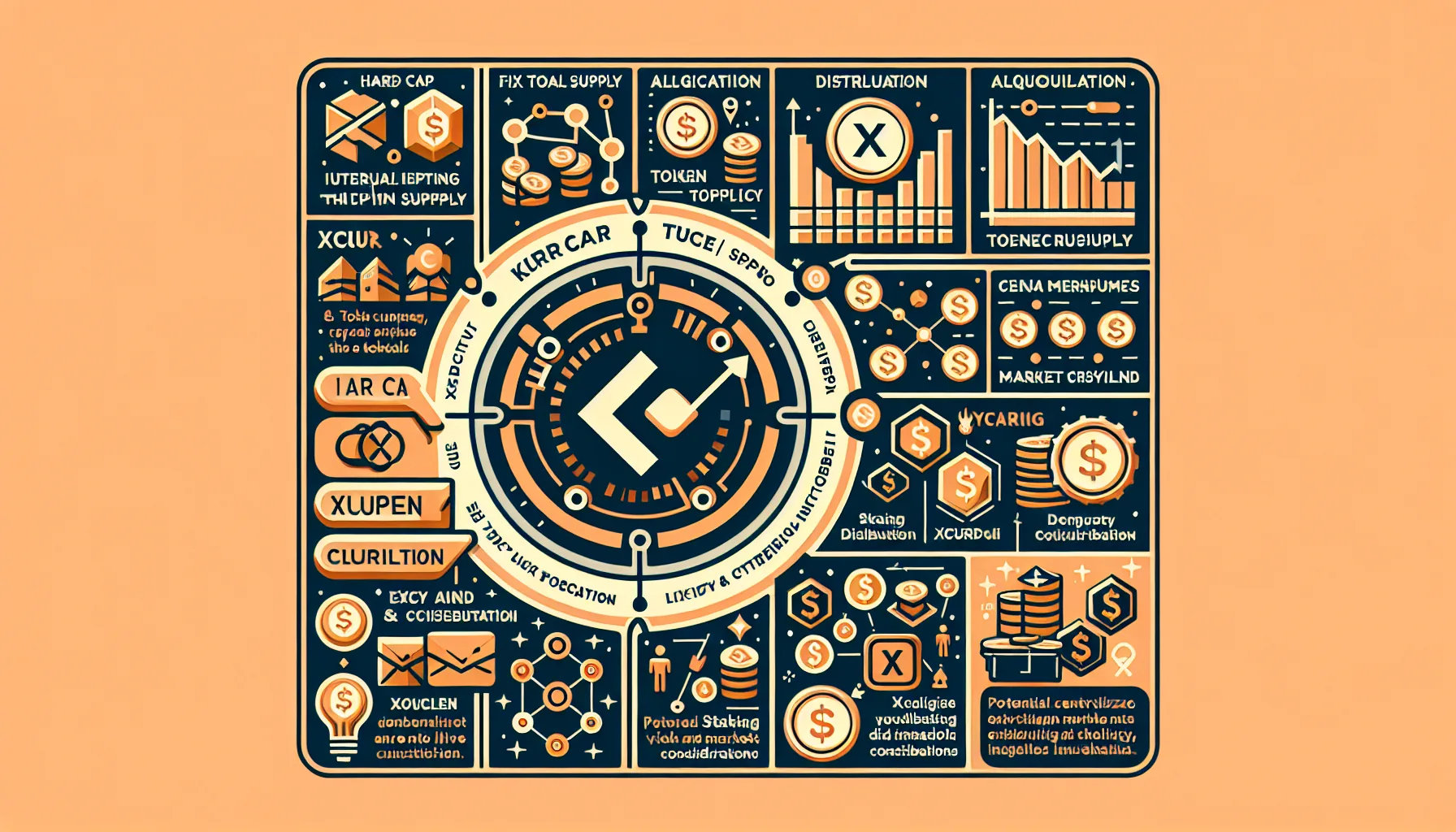
History of XCUR
The History of XCUR: Development, Challenges, and Evolution
Early Development and Token Launch
XCUR, the native token of Curate, was launched as part of an effort to create a gasless NFT marketplace and shopping ecosystem. The project aimed to provide a seamless user experience by eliminating common friction points in digital commerce, including high transaction fees and fragmented payment systems across blockchain networks. Initially, the team positioned XCUR as a multi-utility token for payments, staking, and governance within the Curate platform.
The launch of XCUR followed the typical trajectory of early crypto projects: private sales, public fundraising, and subsequent exchange listings. The liquidity and adoption of the token were influenced by the broader market conditions at the time, as well as strategic partnerships aimed at integrating XCUR into different e-commerce and blockchain ecosystems. However, like many utility-driven tokens, its adoption pace was closely tied to the growth and adoption of its underlying platform.
Exchange Listings and Adoption Hurdles
XCUR secured listings on several centralized and decentralized exchanges, increasing its accessibility. While this allowed more trading activity, liquidity constraints and market cycles played a role in shaping its price action and overall market sentiment. The token's utility was highly dependent on the adoption of the Curate marketplace itself, and any delays or obstacles in platform development directly impacted the perceived value of XCUR.
Regulatory uncertainties added another layer of complexity. As global regulatory frameworks evolved, some centralized exchanges delisted various tokens, affecting projects with smaller market caps, including tokens like XCUR. Additionally, liquidity struggles on decentralized exchanges led to concerns over long-term trading stability.
Technical and Ecosystem Developments
The Curate team introduced multiple integrations to expand XCUR’s utility beyond its primary ecosystem. These included cross-chain functionalities, allowing XCUR to operate on Ethereum, Binance Smart Chain, and other networks. The goal was to improve interoperability and accessibility, addressing issues of network congestion and high Ethereum gas fees.
Despite these advancements, adoption barriers persisted. The NFT marketplace space became increasingly competitive, with larger platforms dominating user activity. This competition placed pressure on Curate to differentiate itself, and by extension, increased scrutiny on XCUR’s long-term viability. Tokenomics also played a role, as supply-and-demand dynamics had to be carefully managed to prevent excessive inflation or price stagnation.
Community and Governance Challenges
XCUR’s governance mechanisms allowed token holders to participate in decision-making related to platform updates and ecosystem changes. However, governance participation was mixed, with engagement fluctuations based on market sentiment and token performance. Like many governance tokens, the effectiveness of decentralized decision-making depended on the engagement of a relatively small but active portion of the community.
At various points, the project faced skepticism regarding roadmap execution and communication transparency. Delays in feature rollouts and shifting priorities created uncertainty, influencing investor confidence. The team regularly introduced updates, but balancing roadmap delivery with realistic execution remained an ongoing challenge.
How XCUR Works
How XCUR Works: Mechanisms, Utility, and Network Functionality
XCUR operates as the native token of the Curate marketplace, facilitating transactions and providing incentives within its ecosystem. Designed primarily for payments, fee reductions, and staking, XCUR integrates with multiple blockchain networks to offer interoperability across different ecosystems.
On-Chain Transactions and Multi-Blockchain Support
XCUR is an ERC-20 token on Ethereum but also exists as a BEP-20 token on Binance Smart Chain (BSC). This dual-network approach aims to optimize transaction fees and processing times, with users able to swap between the two versions via cross-chain bridges. The token’s liquidity relies on decentralized and centralized exchanges supporting both standards, though network congestion and bridge delays can impact transaction efficiency.
Utility in Payments and Smart Contracts
Within Curate’s marketplace, XCUR is used as a medium of exchange for goods and services, with incentives such as lower fees for those opting to transact in XCUR instead of fiat or other cryptocurrencies. Smart contracts govern these transactions, ensuring automated escrow-like protection for buyers and sellers. However, the marketplace’s reliance on XCUR adoption means that fluctuations in liquidity and acceptance can impact its broader usability outside the Curate ecosystem.
Staking and Rewards Model
XCUR holders can stake tokens to earn rewards, typically derived from network fees and marketplace activity. Staking mechanisms vary, with lock-up periods influencing reward rates and token liquidity. While staking provides potential yield, the volatility of XCUR’s value introduces risk, and longer lock-up durations can limit accessibility to funds, especially in downturns.
Token Supply and Distribution Considerations
XCUR has a fixed supply, intended to reduce inflationary pressures. However, token distribution plays a role in liquidity availability, and concentration among early adopters or large holders may create price manipulation risks. Supply constraints also influence staking yields and transaction volume, directly affecting network activity and user incentives for participation.
Potential Network Limitations
Scalability and blockchain congestion can impact XCUR’s efficiency, especially on Ethereum during high gas fee periods. While Binance Smart Chain provides an alternative, its reliance on a separate validator structure introduces potential centralization concerns. Additionally, interoperability depends on third-party bridges, which can pose risks related to smart contract vulnerabilities and delays in cross-chain transfers.
Use Cases
XCUR Use Cases: Payments, NFTs, and E-Commerce Integration
XCUR for Payments and Merchant Adoption
XCUR serves as a payments token within the Curate ecosystem, facilitating transactions without reliance on traditional banking infrastructure. Merchants can accept XCUR for goods and services, providing a decentralized alternative to fiat-based payment systems. Its use in cross-border transactions eliminates intermediaries, reducing fees and settlement times. However, merchant adoption remains a challenge, as businesses require liquidity solutions and hedging strategies to mitigate volatility risks.
NFT Marketplace Utility and Transaction Fees
Within the Curate NFT marketplace, XCUR is used for purchasing, minting, and selling digital assets. The platform incentivizes users by offering reduced transaction fees when using XCUR compared to other cryptocurrencies. This structure encourages ecosystem participation, but dependency on a single asset for discounted fees may limit accessibility for users who prefer broader token options. Additionally, liquidity concerns in the NFT space could influence secondary market activity, affecting the practical usability of XCUR.
E-Commerce Cashback and Loyalty Applications
XCUR enables a cashback and loyalty rewards system when users transact within partner ecosystems. This model incentivizes spending while promoting token circulation. For merchants, integrating XCUR-backed rewards could enhance customer retention. However, the effectiveness of these incentives depends on sustained demand and usability beyond its native platform. Without widespread integration, the utility may remain confined to niche environments rather than mainstream retail adoption.
Interoperability with Other Networks
XCUR operates on multiple blockchain standards, enhancing flexibility for cross-chain usage. This multi-chain approach theoretically broadens its applicability beyond the Curate platform. However, interoperability remains dependent on liquidity availability across supported chains. Without deep liquidity pools and external adoption, bridging transactions may encounter slippage issues and high transaction costs, making seamless movement between chains challenging.
Staking and Incentives Mechanisms
XCUR holders can engage in staking mechanisms, earning rewards while supporting network sustainability. This feature offers an additional incentive for long-term holders but may introduce centralization risks if a small number of wallets control a disproportionate stake. Furthermore, the staking model must balance reward emissions with token supply constraints to avoid inflationary pressure that could impact market dynamics.
Barriers to Widespread Utility
While XCUR provides multiple use cases, broader adoption hinges on merchant participation, user demand, and liquidity stability. The reliance on in-ecosystem functionalities means utility remains largely dependent on Curate’s platform growth. Without external integrations or real-world adoption beyond its immediate ecosystem, XCUR’s use cases could face limitations in scalability and mainstream appeal.
XCUR Tokenomics
XCUR Tokenomics: Supply, Utility, and Distribution
Fixed Supply and Emission Model
XCUR operates with a fixed total supply, eliminating inflationary pressure that could dilute holder value over time. This hard cap places inherent scarcity on the asset, which can influence long-term demand. However, token utility and demand-side mechanics are critical in determining whether this fixed supply translates into sustained value retention.
Utility Within the Ecosystem
XCUR serves as the primary transactional token within its ecosystem, facilitating payments, rewards, and potential staking models. The inherent utility aims to position the asset as a core medium of exchange rather than a speculative vehicle alone. One notable concern is whether adoption within the ecosystem grows proportionally with supply circulation—without sustained usage, utility tokens risk becoming merely speculative assets.
Allocation and Distribution Breakdown
A detailed examination of XCUR’s allocation structure reveals multiple key segments, including development funds, team reserves, liquidity incentives, and ecosystem grants. A significant portion is often allocated for platform incentives, which can influence circulating supply dynamics. If vesting mechanisms are poorly designed or if large token unlocks occur abruptly, it could create sell-pressure events that destabilize price equilibrium.
Liquidity and Market Circulation
XCUR's liquidity depends largely on exchange support and liquidity provisioning strategies. Low liquidity can lead to increased slippage for traders, making large transactions inefficient. Additionally, a fragmented liquidity profile across multiple markets can result in price discrepancies, further impacting seamless trading experiences.
Potential Centralization Risks
Any concentration of XCUR among a limited number of holders raises concerns regarding network decentralization and potential market manipulation risks. If a disproportionate percentage of the total supply rests in a small number of wallets, this could lead to undesired volatility stemming from large movements. Transparency in token distribution remains crucial in mitigating these issues.
Fee Mechanisms and Token Burn Considerations
XCUR integrates various fee models within its ecosystem, potentially affecting circulating supply dynamics. Some platforms introduce token burn mechanisms to counteract supply inflation, but if burn rates fail to offset selling pressures, this may not be sufficient for long-term price stability.
Staking and Yield Implications
If staking mechanisms are implemented, the staking yield and lock-up periods will directly impact market supply pressure. High APY incentives often drive temporary demand but could suffer from dilution effects if emissions outpace real utility-driven adoption. Monitoring how staking rewards integrate with broader ecosystem demand is fundamental for assessing sustainability.
XCUR Governance
XCUR Governance: Decentralization and Decision-Making
XCUR, the native token of Curate, plays a role in governance, but the ecosystem’s structure raises key considerations regarding decentralization and control. Governance mechanisms are crucial for any blockchain-based project, defining how proposals are made, voted on, and implemented. While some crypto assets prioritize full decentralization, XCUR's governance has a more centralized aspect in decision-making processes.
Governance Structure and Control
XCUR does not operate under a fully decentralized autonomous organization (DAO) model. Instead, governance decisions are largely maintained by the core Curate team. This means that while community input may influence certain aspects, final authority remains centralized. The absence of a structured on-chain governance system limits direct token-holder influence over protocol modifications, new feature implementations, or treasury fund allocations.
Without decentralized governance, proposals and changes occur through off-chain discussions, community engagement, and direct team implementation. While this model ensures efficiency in decision-making, particularly in fast-evolving industries like NFT marketplaces and crypto commerce, it also reduces transparency and restricts token-holder participation in shaping the platform’s direction.
Token Utility in Governance
XCUR has limited governance functionality beyond influencing certain platform decisions through informal voting mechanisms. Unlike assets where token holders formally vote via smart contracts, XCUR-based governance is primarily advisory rather than binding. This reduces the likelihood of governance attacks but also marginalizes decentralized decision-making.
Without an enforced governance structure, updates and protocol changes rely on core team discretion. While this can prevent governance deadlocks or hostile takeovers seen in some DAOs, it also means that token holders do not have a guaranteed route to impact ecosystem policies.
Centralization Risks and Future Adaptability
Centralized governance models introduce risks, including unilateral decision-making and limited checks on team actions. If the governance system remains off-chain and informal, transparency concerns may arise regarding how decisions are made. Additionally, centralized control could lead to challenges in scaling governance if the ecosystem expands significantly.
Projects that opt for centralized governance often highlight efficiency and security as key advantages, reducing governance-related exploits. However, without a clearly defined transition pathway toward community-driven decision-making, reliance on core team control can be a long-term limitation.
XCUR’s governance framework remains a critical aspect of its broader utility, but its centralized approach raises questions about the balance between efficiency and decentralization. Token holders currently have minimal direct influence over major decisions, which impacts the asset’s governance-driven value proposition.
Technical future of XCUR
XCUR Technical Developments and Roadmap
Smart Contract Enhancements and Cross-Chain Expansion
XCUR is actively working on refining its smart contract architecture to enhance interoperability and security. With the increasing demand for cross-chain functionality, a key area of development is integrating with major blockchain ecosystems beyond Ethereum. Planned upgrades aim to enable efficient bridging mechanisms, reducing transaction friction when transferring assets between blockchains. However, cross-chain operability remains a technical challenge due to differing consensus mechanisms and security concerns that require rigorous testing before deployment.
Layer 2 Optimizations
To address network congestion and transaction costs, XCUR is exploring Layer 2 scaling solutions. Optimizations targeting rollups, such as Optimistic Rollups and ZK-Rollups, are under evaluation to improve transaction throughput and reduce latency. While these implementations can significantly enhance efficiency, selecting the right scalability model comes with trade-offs in decentralization and complexity. Ensuring compatibility with the existing ecosystem without compromising security is a critical hurdle.
Improvements in Staking and Governance Mechanisms
Enhancements to XCUR’s staking framework are being developed to incentivize long-term engagement without creating excessive inflationary pressures. Upcoming technical adjustments may introduce more dynamic staking mechanisms that adjust rewards based on network participation rates. Decentralized governance mechanisms are also under refinement, aiming for improved stakeholder voting systems to reduce governance centralization risks. However, achieving a balance between efficient decision-making and decentralized participation remains a challenge, as seen in other governance token ecosystems.
Marketplace Infrastructure Performance Upgrades
XCUR’s underlying marketplace infrastructure is undergoing optimizations to streamline on-chain and off-chain interactions. Technical upgrades focus on reducing settlement times and increasing the efficiency of order execution within the ecosystem. This includes potential integration with NFT standards to expand asset utility and improve smart contract logic for seamless payments. However, implementing these upgrades while maintaining backward compatibility for existing users adds development complexity.
Security and Compliance Enhancements
Security remains a primary focus, with ongoing audits and threat assessments to mitigate vulnerabilities. The roadmap includes strengthening smart contract security through automated monitoring tools and AI-driven anomaly detection. Compliance with evolving regulatory frameworks is being factored into development, though ensuring adherence to different jurisdictions while maintaining decentralization presents an ongoing challenge.
Developer and Ecosystem Growth Initiatives
Expanding developer engagement through SDKs, API integrations, and smart contract templates is a technical priority. Efforts to increase third-party development on XCUR’s infrastructure aim to create a more robust ecosystem, though challenges exist in attracting and retaining high-quality development talent in a competitive blockchain landscape.
Comparing XCUR to it’s rivals
XCUR vs. SHOPX: A Detailed Comparison
When evaluating XCUR in relation to SHOPX, the most immediate distinction arises in their approach to eCommerce integration and real-world adoption. While both assets cater to the digital commerce landscape, their methodologies and technological implementations create divergent paths.
Token Utility and Ecosystem Integration
XCUR is heavily focused on facilitating payments within eCommerce through direct merchant integration, acting as both a transactional currency and a rewards mechanism. SHOPX, on the other hand, leans into NFT-based access passes that enable brands to tokenize product ownership, pre-orders, and loyalty programs. This fundamental distinction shapes how both projects approach adoption: XCUR seeks to improve the checkout experience, whereas SHOPX reimagines how consumers gain access to products.
SHOPX’s focus on NFT-backed authentication introduces a new layer of digital ownership, but it also limits its applicability to merchants willing to engage in the complexities of NFT integration. XCUR, by maintaining a more straightforward tokenized payment structure, avoids the added friction of requiring merchants to shift their selling models. Yet, this relative simplicity prevents it from offering the kind of exclusivity and brand control that SHOPX’s infrastructure enables.
Merchant Adoption and Barriers to Entry
One of the major friction points for both platforms is onboarding businesses. XCUR aims for plug-and-play integrations with eCommerce solutions, giving traditional merchants an easier pathway to adoption. In contrast, SHOPX’s NFT-centric model demands a steeper learning curve for businesses unfamiliar with Web3 infrastructure.
However, XCUR’s reliance on merchant participation as a payment option comes with its limitations. Many businesses have been slow to embrace crypto payments, often due to price volatility and regulatory concerns. SHOPX, by focusing more on product tokenization rather than direct crypto payments, circumvents some of these adoption hurdles but at the cost of adding complexity to both buyers and sellers attempting to engage with its model.
Scalability and Network Efficiency
A key challenge for both platforms lies in transaction efficiency. SHOPX’s NFT verification model depends heavily on smart contracts, adding additional computational requirements to transactions. XCUR, with its focus on direct payments, circumvents these complexities but still faces challenges typical of crypto payments, such as transaction speed and network fees.
SHOPX’s Web3 dependency may hinder its ability to scale with mainstream merchants who lack blockchain familiarity, whereas XCUR’s strategy allows for easier integration but demands merchant willingness to embrace crypto transactions outright. Neither solution has fully resolved the balance between accessibility and decentralization, making them both subject to market dynamics and the evolving landscape of digital commerce.
XCUR vs. BUMP: Comparing Utility and Market Position
XCUR and BUMP both operate within the blockchain commerce and payments ecosystem, but their core functionalities and target areas differ significantly. While both aim to enhance transaction efficiency and improve e-commerce integration, they take distinct approaches in execution.
Utility and Ecosystem Adoption
XCUR primarily focuses on streamlining crypto payments in e-commerce, offering a marketplace and payment gateway that allows users to transact using various cryptocurrencies. Its broad integration strategy positions it as a direct competitor to traditional payment processors attempting to bridge Web2 and Web3.
BUMP, on the other hand, is centered on risk management and transaction security in crypto payments. It leverages an automated protection mechanism that functions as a decentralized fraud detection system, offering insurance-like coverage for transactions. This is a fundamentally different utility compared to XCUR, which prioritizes seamless integration with merchants over risk mitigation.
Transaction Speed and Cost Efficiency
One notable issue with BUMP's model is the added complexity it brings to transaction settlement. Since it introduces security layers and dispute resolution processes, transactions can sometimes experience latency, especially when disputes arise. While BUMP’s extra protection is valuable for reducing fraud, it contrasts with XCUR’s focus on rapid, frictionless transactions.
XCUR’s efficiency stems from its straightforward payment gateway approach, which avoids the delays associated with governance-heavy transaction arbitration. This makes XCUR potentially more suitable for high-volume merchants looking for uncomplicated crypto payment solutions. However, this speed comes at the cost of an additional risk layer that may concern users transacting in unstable market conditions.
Decentralization and Network Engagement
BUMP incorporates a staking-based participation model in which token holders help govern fraud detection rules and dispute resolution mechanisms. While this adds a layer of decentralization, it also introduces complexity in user engagement and governance. The necessity for active participation in governance can deter users who favor a more straightforward payment integration process.
XCUR, in contrast, does not require merchants or users to participate in governance decisions to use the ecosystem effectively. By keeping end-user interaction more streamlined, it removes barriers that could slow down adoption among non-technical users or businesses unfamiliar with staking models. However, this also means that users have less control over platform-level decision-making.
Conclusion-Free Comparisons
Both XCUR and BUMP aim to advance the usability of crypto in payments and commerce, but their mechanisms, efficiencies, and decentralization approaches differ significantly.
XCUR vs. GET: A Deep Dive into Key Differences
When comparing XCUR to GET, both projects operate within the digital commerce and ticketing ecosystem but take notably different approaches. While XCUR is centered around e-commerce and NFT integration, GET focuses primarily on event ticketing solutions powered by blockchain.
Use Case Differentiation: E-Commerce vs. Ticketing
XCUR positions itself as a bridge between cryptocurrency and mainstream shopping, offering a direct payment gateway for merchants and consumers. Its integration with NFTs allows brands and users to tokenize assets beyond just payments. In contrast, GET is focused on event ticketing, using blockchain to issue fraud-resistant and fully traceable digital tickets. The fundamental contrast is that GET has a niche focus on ticket issuance and anti-scalping measures, whereas XCUR caters to a broader spectrum of digital commerce.
Token Utility and Adoption Challenges
Both XCUR and GET have native tokens critical to their ecosystems, but their utility structures differ. The GET token is primarily used for issuing and validating event tickets, relying on partnerships with event organizers. Its adoption depends heavily on the willingness of ticketing companies and entertainment businesses to integrate blockchain-based solutions—a notoriously slow-moving industry in terms of technology adoption. XCUR, by contrast, is implemented as a direct spending mechanism, which broadens its usability but also requires extensive merchant buy-in. Both projects face the challenge of onboarding traditional businesses into blockchain solutions, but GET’s concentrated vertical could either be a benefit or a limitation depending on market acceptance.
Scalability and Ecosystem Growth
GET’s reliance on ticketing platforms for growth means its trajectory is tied to industry partnerships. If major event organizers do not adopt blockchain ticketing at scale, growth potential is constrained. Additionally, ticketing is a sector where regulatory considerations are strong, as jurisdictions might impose strict consumer protections. This adds an extra hurdle for GET to overcome compared to XCUR, which operates in the broader digital commerce landscape. However, XCUR also faces competition from larger, more established payment providers that may overshadow its blockchain advantages unless it secures major retail adoption.
Security and Fraud Prevention
Both projects emphasize fraud prevention, but in distinct ways. GET’s blockchain ticketing ensures transparency and prevents counterfeit ticket sales, making it attractive to event organizers seeking secure issuance. XCUR, handling payments and digital goods, faces different security concerns focused on transaction integrity and merchant guarantees. Cybersecurity is a critical factor for both, but GET’s model may require significant ticketing industry cooperation to combat fraud effectively at a large scale.
Primary criticisms of XCUR
Primary Criticism of XCUR
Liquidity Constraints and Exchange Support
One of the primary criticisms levied against XCUR is its liquidity constraints. Traders often report challenges in executing sizable trades without experiencing significant slippage. This issue is compounded by the fact that XCUR lacks deep order books on many major exchanges. While it is available on select platforms, the absence of consistent liquidity across multiple high-volume exchanges limits its accessibility for larger investors and inhibits efficient price discovery.
Utility and Adoption Concerns
Despite being marketed as a utility-driven asset, the real-world adoption of XCUR remains a point of contention. While the project has aimed to integrate cryptocurrency into e-commerce and payments, critics argue that merchant adoption is limited. Adoption bottlenecks occur due to both technical barriers and lack of demand from users, making the ecosystem feel more theoretical than practically usable in everyday transactions.
Smart Contract and Security Risks
As with any crypto asset relying on smart contract technology, XCUR is susceptible to vulnerabilities within its contract architecture. Security audits and best practices are crucial to maintaining user trust, but even small inefficiencies or overlooked loopholes can be exploited. Without continuous updates and external review from reputable audit firms, some investors express concern over the security robustness of XCUR’s infrastructure.
Centralization and Governance Issues
Decentralization is a major factor in assessing a cryptocurrency’s long-term viability. A common critique of XCUR is its governance structure, with some seeing it as overly reliant on centralized decision-making. Whether through token distribution patterns, development control, or governance mechanisms, concerns persist that a small group of stakeholders maintain disproportionate influence over the asset’s trajectory. This raises questions about the project’s long-term decentralization potential and aligns it more with corporate-style control rather than a truly decentralized crypto ecosystem.
Competition From Larger Ecosystems
XCUR operates within a highly competitive sector, where more established blockchain-based payment and commerce solutions already dominate. Projects with stronger network effects, deeper liquidity, and existing partnerships pose a significant challenge to XCUR’s market positioning. Given the reliance on integration with third parties for transactional utility, competing projects with broader adoption could make it difficult for XCUR to carve out significant market share.
Tokenomics and Incentive Structures
Skepticism around XCUR’s tokenomics also surfaces in discussions about its long-term sustainability. Effective incentive structures are critical for maintaining engagement from users, merchants, and liquidity providers. If rewards and staking incentives become either unsustainable or insufficiently appealing, the asset risks losing participation, which could further exacerbate liquidity challenges and overall ecosystem growth.
Founders
XCUR Founding Team: Origins, Leadership, and Challenges
The founding team behind XCUR, the native token of Curate, was instrumental in shaping the project's vision of a gasless, multi-chain NFT and e-commerce marketplace. The project's leadership initially positioned itself as a solution to inefficiencies within crypto-based marketplaces, focusing on user experience and cross-chain interoperability.
Leadership and Background
The key figure behind XCUR is Mo Tayeb, who played a central role in the project's early development and strategic direction. With experience in blockchain and fintech, his leadership was a driving force in Curate’s early adoption. However, unlike some crypto projects backed by high-profile industry veterans, Curate’s founding team was relatively under the radar in terms of prior large-scale blockchain success.
Marketing efforts leaned heavily on Tayeb’s direct community engagement, a common approach in crypto but one that sometimes raised questions about decentralization. While the team succeeded in fostering a strong community, critics pointed out that project leadership relied more on social engagement than on high-profile partnerships or institutional backing.
Team Transparency and Credibility Concerns
One notable challenge for XCUR’s founding team was a lack of deep transparency regarding key developers and operational roles. Unlike fully open-source, community-driven projects where contributors are widely known, Curate’s structural hierarchy remained less clear. This led to occasional concerns about accountability and long-term sustainability.
Questions were also raised regarding certain roadmap promises that faced delays or were only partially fulfilled. In a rapidly evolving DeFi and NFT space, adaptability is essential, but missed milestones sometimes tested community trust. The team’s ability to navigate these roadblocks influenced perceptions of the project's long-term viability.
Development and Execution Challenges
Technical execution posed another hurdle for the founding team. While the vision of a gasless NFT marketplace was compelling, the actual implementation faced scalability and liquidity challenges. Ensuring consistent volume and active user participation within the Curate ecosystem required iterative refinements.
Additionally, the broader market’s reaction to XCUR’s listings and utility played a role in shaping perceptions of the founding team's execution capabilities. As with many crypto projects, navigating partnerships, regulatory considerations, and exchange integrations presented challenges that impacted adoption and market positioning.
The interplay between strong community engagement and technical execution remains a defining factor for XCUR’s trajectory, with its founding team's strategic decisions influencing the broader ecosystem’s growth and challenges.
Authors comments
This document was made by www.BestDapps.com
Sources
- https://curate.style
- https://github.com/XCURToken
- https://etherscan.io/token/0xe1c7e30c42c24582888c758984f6e382096786bd
- https://bscscan.com/token/0xd52669712f253cd6b2fe8a8638d40c15757c1e79
- https://twitter.com/curateproject
- https://whitepaper.io/document/585/xcur-whitepaper
- https://coinmarketcap.com/currencies/curate/
- https://www.coingecko.com/en/coins/curate
- https://medium.com/curate
- https://t.me/curate
- https://discord.gg/curate
- https://bitcointalk.org/index.php?topic=5270020.0
- https://docs.curate.style
- https://defillama.com/protocol/curate
- https://dappradar.com/binance-smart-chain/marketplaces/curate
- https://cryptoslate.com/coins/curate/
- https://www.reddit.com/r/Curate/
- https://xcur-explorer.com
- https://api.curate.style
- https://nft.curate.style


