History of XAUT
The History of Tether Gold (XAUT): A Pioneering Asset in Tokenized Precious Metals
Tether Gold (XAUT) was introduced as a response to the growing demand for blockchain-based solutions that bridge traditional assets with cryptocurrency. Launched by the same team behind the widely-used USDT stablecoin, XAUT marked Tether's foray into the niche of tokenized commodity markets. Unlike fiat-backed stablecoins, XAUT was designed to represent ownership of physical gold, specifically one troy ounce of gold allocated in a London Good Delivery bar. This innovative design aimed to combine the enduring value of gold with the efficiency and flexibility of blockchain technology.
A key moment in XAUT's early trajectory was its issuance model. Unlike some tokenized commodities, XAUT tokens are directly tied to physical gold stored in specially managed vaults. Tether claims full reserves, and holders can allegedly verify the allocated gold through its certificate infrastructure. However, some skeptics in the crypto community have raised concerns regarding the opacity of Tether's gold reserves, similar to the controversies surrounding USDT's transparency practices in the past. Critics often point to the difficulty of independently auditing the vaults where these gold reserves are held and the lack of rigorous third-party verification processes.
From its inception, XAUT was built on two blockchain networks: Ethereum and TRON. This dual issuance model gave users flexibility in choosing between different ecosystems for transactions, with Ethereum offering robust security and decentralization, while TRON touted low transaction costs and higher throughput. The multi-chain launching approach was a strategic decision aimed at increasing accessibility, but some argue that it has also introduced unnecessary complexity, especially for less-experienced users navigating token standards and gas fees.
One notable challenge in XAUT’s history has been regulatory scrutiny. Being pegged to gold—a traditional safe-haven asset—places it under both cryptocurrency regulations and commodity oversight in certain jurisdictions. This dual exposure has caused occasional friction, particularly in terms of differing legal requirements and the potential for regulatory divergence in the future.
Despite these challenges, XAUT carved out its reputation by addressing a clear market demand for tokenized precious metals. It entered a competitive space where similar offerings, including PAX Gold (PAXG), already existed, but its close association with Tether's pre-established liquidity and ecosystem gave XAUT a distinct edge in market adoption. However, this connection has also led to criticism, with some questioning whether XAUT’s growth is sustainable independently of Tether's broader influence.
How XAUT Works
How XAUT Works: Behind the Mechanics of Tether Gold
XAUT, also known as Tether Gold, is a tokenized representation of physical gold, blending blockchain technology with the traditional gold market. Each XAUT token is reportedly backed by one troy ounce of physical gold stored in a secure vault, and users can verify the underlying reserves through public documentation. This marries gold’s perceived stability with the digital ease of cryptocurrency, offering users fractional ownership and blockchain-based transferability. However, the model introduces complexities under the hood that users must understand before engaging with the asset.
XAUT is built on multiple blockchain networks, including Ethereum (ERC-20) and TRON (TRC-20). This dual compatibility allows for versatile accessibility, as users can interact with the token using Ethereum or TRON wallets. Transactions involving XAUT are recorded on their respective blockchain, ensuring transparency and traceability. At the protocol level, XAUT operates as a standard fungible token, with each unit entirely interchangeable – reflecting the uniformity of its backing asset, gold. This approach is designed to enhance liquidity, but users should be cautious about cross-chain interoperability risks, as transferring XAUT between Ethereum and TRON networks can involve third-party bridge services, leading to potential vulnerabilities.
When purchasing XAUT, users typically go through a centralized issuer or an affiliated partner platform. These intermediary entities play a critical role in maintaining the one-to-one backing ratio between tokens in circulation and gold reserves. However, this structure introduces a point of centralized trust – a contentious issue among certain crypto purists. Custody of the underlying gold is managed by the issuer, who provides documentation of the reserves. While this is intended to assure users of the token’s backing, it does mean they rely on the integrity and operational transparency of a single entity.
Ownership verification is a crucial detail in how XAUT functions. Token holders can access specific serial numbers of gold bars corresponding to their stake. However, some crypto enthusiasts argue that this mechanism, while novel, does not eliminate concerns over asset rehypothecation or discrepancies between issued tokens and available reserves.
Finally, one critical operational limitation is withdrawal functionality. While customers can redeem XAUT tokens for physical gold, the process is not universally accessible – it often requires meeting minimum redemption thresholds (e.g., one full token corresponding to an ounce) and logistics in only specific, geographic regions. Such barriers make XAUT differently liquid compared to purely digital cryptocurrencies, potentially restricting usability for certain user bases.
Use Cases
Use Cases of XAUT: Applications and Limitations in the Crypto Ecosystem
The XAUT token, a gold-backed stablecoin tethered to the price of physical gold, has carved out specific use cases that leverage both blockchain technology and the intrinsic value of gold. While the range of applications is compelling, there are also notable limitations to its utility.
Wealth Preservation and Hedging
One of the core use cases of XAUT is wealth preservation. By representing ownership of gold on a blockchain, XAUT provides users with a way to hedge against inflation and currency fluctuations, similar to traditional gold holdings. For crypto-native users, this is especially significant, as it offers an option to diversify portfolios away from volatile cryptocurrencies without leaving the blockchain ecosystem. However, the accessibility of XAUT for hedging is contingent on liquidity within the token’s trading markets—thin liquidity can hinder efficient conversions, particularly during market stress.
Borderless and Fractional Gold Ownership
XAUT enables borderless and fractional ownership of gold, which is otherwise cumbersome and costly in traditional financial systems. Users can hold and transfer amounts of XAUT that represent minuscule fractions of a gold bar, broadening access to gold investments for individuals who don't have the means to acquire entire ounces or grams in physical form. However, questions surrounding the auditing of physical reserves and transparency in custody management can deter more skeptical users who demand verifiable guarantees of gold backing.
DeFi Integration and On-Chain Gold Utility
In decentralized finance (DeFi), XAUT has started to find utility as collateral in lending and borrowing platforms. Its stability (relative to gold’s price) makes it an attractive asset for smart contracts that require minimal volatility. Similarly, XAUT can be leveraged in liquidity pools, derivative contracts, and yield farming strategies. That said, its adoption in DeFi protocols remains limited compared to USD-pegged stablecoins due to gold’s lower monetary velocity and fewer integrations across major ecosystems.
Cross-Border Transactions and Settlement
For high-value cross-border payments, XAUT serves as a digital medium allowing for faster settlements compared to physical gold shipments or expensive fiat bank transfers. However, transaction speed and cost heavily depend on the underlying blockchain infrastructure. If the network experiences congestion or has high gas fees, the utility of XAUT for such use cases diminishes significantly.
Tax and Regulatory Considerations
From a tax perspective, jurisdictions may classify XAUT differently—either as a financial instrument, a commodity, or an investment asset—which can introduce complexities for users. Additionally, restrictions on the cross-border flow of gold-backed assets might limit its adoption in global trade. Users must also consider the centralized custody risks, as XAUT depends on a custodian to store the physical gold.
By addressing both opportunities and hurdles, XAUT showcases a niche but multifaceted role in the expanding crypto ecosystem. However, its utility is tightly bound to infrastructure, adoption, and transparency challenges.
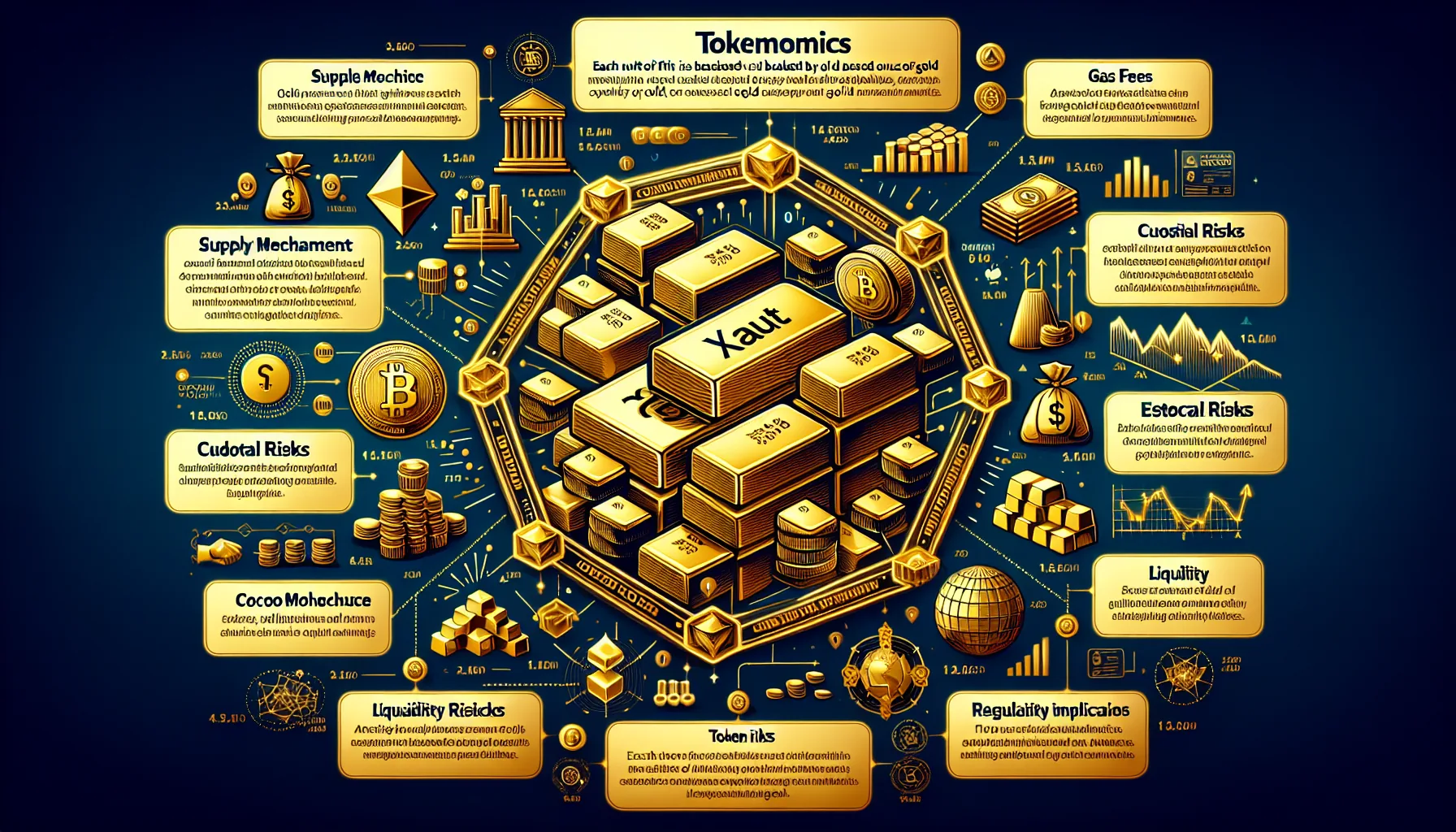
XAUT Tokenomics
XAUT Tokenomics: Understanding the Gold-Backed Framework
XAUT, the gold-backed crypto asset, operates on a distinct and nuanced tokenomics model that intertwines blockchain technology with traditional gold markets. Each XAUT token is purportedly backed by a physical troy ounce of gold, typically stored in secure vaults. This structure introduces unique dynamics compared to purely speculative or utility-driven cryptocurrencies. Here's a deep dive into the core mechanics driving XAUT's tokenomics.
1. Supply Mechanism and Backing Transparency
The supply of XAUT is theoretically tethered to the availability of allocated physical gold. This peg places an inherent cap on token issuance, tied directly to the amount of gold maintained by the issuing entity. However, the trust in this peg hinges on the transparency of gold reserves. While some third-party audits or attestations may help bolster confidence, lack of an immutable, on-chain proof of reserves remains a potential vulnerability for savvy investors. Misalignment between claimed reserves and circulating tokens could compromise the asset's fundamental premise.
2. Custodial Risks and Centralization Concerns
XAUT introduces an element of centralization through its reliance on physical vaults. This custody structure places significant trust in the issuer and storage providers to manage the gold reserves. Centralized control over issuance, redemption, and storage fosters efficiency but simultaneously exposes the system to risks such as regulatory crackdowns, mismanagement, or operational failure. For decentralization purists, this reliance on traditional custodial models may make XAUT less appealing than fully decentralized crypto assets.
3. Gas Fees and Multi-Chain Deployment
XAUT exists on multiple blockchain networks, such as Ethereum and TRON, which affects its operational cost and adoption dynamics. On Ethereum, high gas fees during periods of congestion can deter smaller transactions or increase holding costs. By contrast, lower-fee networks like TRON offer more cost-effective alternatives but may fragment liquidity and user adoption. Multi-chain deployment introduces flexibility but can also lead to logistical complications when users interact across different ecosystems.
4. Liquidity and On-Chain Activity
As a token heavily tied to real-world assets, XAUT's liquidity often depends on its use in DeFi protocols, trading pairs, and OTC markets. However, compared to cryptocurrencies with high velocity and speculative interest, XAUT may exhibit lower on-chain activity due to its intrinsic nature as a value-preserving asset. This could limit its appeal for traders seeking rapid arbitrage opportunities or yield farming prospects, leaving it more suited to long-term holders prioritizing stability.
5. Redemption Mechanism and Accessibility
XAUT tokens can, in some cases, be redeemed for actual gold bars. However, this feature is often limited to geographic areas or requires minimum redemption thresholds, which may alienate retail holders. Additionally, the redemption process introduces off-chain complexity and adds potential friction, particularly for global users in jurisdictions without straightforward access to the issuer’s services. This tiered accessibility model creates an uneven user experience that contrasts with the frictionless nature of traditional cryptocurrencies.
6. Regulatory and Tax Implications
As a gold-backed token, XAUT may face unique regulatory and tax considerations compared to traditional cryptocurrencies. For instance, jurisdictions may classify XAUT differently based on its linkage to gold, which could influence its treatment for capital gains, VAT, or import/export restrictions on gold ownership. This regulatory ambiguity may present challenges to broader adoption, particularly in markets with strict cryptocurrency oversight or gold control laws.
XAUT Governance
Governance of XAUT: Examining Decision-Making and Control
The governance structure of XAUT, a gold-backed crypto asset, is a critical factor for investors and participants aiming to understand the decision-making processes that underpin its operations. Unlike decentralized cryptocurrencies such as Bitcoin or Ethereum, XAUT operates under a governance model that is inherently more centralized, largely due to its reliance on a single issuing entity.
Centralized Governance Model
XAUT is issued and managed by Tether, linking each token to a specific allocation of gold stored in audited vaults. This centralized governance structure means operational decisions—such as adjustments to the gold reserves or token issuance/redemption processes—are made solely by the Tether management team. While this centralized approach ensures a streamlined operational model, it also means that participants must place significant trust in Tether's transparency, security protocols, and adherence to regulatory standards. For individuals who prioritize decentralization, this could represent a compromise in the principles of distributed systems.
Smart Contract Management and Transparency Concerns
The deployment and management of XAUT on supported blockchain networks are handled under Tether’s exclusive oversight, highlighting another area where trust plays a vital role. While Tether has implemented mechanisms to audit their physical gold holdings, concerns persist within the crypto community regarding the transparency and frequency of these audits. Mistrust arises from potential gaps in verifying that each XAUT token is fully backed by the claimed gold reserves. Without consistent, trustless proof mechanisms, questions around the soundness of XAUT's governance remain a recurring critique.
Regulatory Oversight and Potential Risks
Governance of XAUT is also affected by external regulatory pressures, given its connection to physical assets and fiat systems. Tether is required to comply with financial guidelines and legal frameworks in jurisdictions where XAUT operates. Such compliance introduces the risk of unilateral decisions being made to align with regulations, including freezing or restricting certain wallets, which has been a contentious issue in broader crypto governance debates. These actions could create friction between the issuer and token holders, exacerbating concerns for participants who value autonomy over their assets.
Limited Community Input
Unlike decentralized governance models that rely on community voting or distributed consensus mechanisms, XAUT operates without public input in its governance framework. Token holders have no formal influence on key decisions, such as treasury management, changes to operational policies, or platform integrations. This lack of participatory governance underscores an asymmetry in power dynamics, which can deter users who advocate for governance structures aligned with the decentralized ethos of the broader crypto ecosystem.
Technical future of XAUT
Current and Future Technical Developments of XAUT: Examining the Roadmap
XAUT (Tether Gold) continues to operate as a blockchain-based representation of physical gold ownership, and its technical development is closely tied to advancements in tokenization and interoperability. However, certain ongoing challenges and potential improvements remain part of its evolving roadmap.
Deployment Across Multiple Blockchains
One of the key areas of focus is XAUT’s cross-chain compatibility. Currently, XAUT is supported on Ethereum as an ERC-20 token and on Tron as a TRC-20 token. These dual deployments allow users to access the asset in ecosystems tailored to varied preferences—Ethereum for decentralized finance (DeFi) compatibility and Tron for low transaction costs. Nevertheless, the lack of integration with other emerging, high-throughput blockchains like Solana or Avalanche may hinder its utility for users who prioritize lower latency and expanded scalability.
Additionally, the reliance on Ethereum raises concerns about gas fee variability, which occasionally disincentivizes broader adoption during periods of network congestion. The development of layer 2 scaling solutions, such as zk-rollups or optimistic rollups, could potentially mitigate this, but as of now, XAUT has not made any significant movement toward layer 2 implementations.
Smart Contract Audits and Security Enhancements
Security remains a critical concern given XAUT’s underlying function as a tokenized version of real-world gold. While its current smart contracts have undergone auditing, ongoing security updates are required to safeguard against vulnerabilities emerging in the fast-evolving crypto space. Improved mechanisms for contract transparency, access control, and risk mitigation—such as multi-signature wallets for custodial transactions—could further solidify user confidence. However, adoption of additional cutting-edge DeFi security protocols, like on-chain monitoring or automated exploit detection, appears limited at this stage.
Custodial Transparency and On-Chain Data Integration
One technical challenge for XAUT lies in enhancing auditing procedures related to its physical gold reserves. While Tether claims to back each token 1-to-1 with allocated gold, auditing mechanisms remain off-chain and are conducted manually by third parties. Efforts toward directly integrating proof-of-reserve data on-chain would drastically increase transparency and could be facilitated through oracles or cryptographic attestations. However, existing technical frameworks appear underdeveloped in this regard, positioning transparency as an ongoing area for improvement.
Future Potential in Decentralized Finance (DeFi)
Although XAUT has been introduced to liquidity pools and lending platforms, its utility in broader DeFi ecosystems remains subdued compared to other stablecoins. Improved functionality, such as integration into automated market makers (AMMs) or enhanced collateralization options, could make XAUT more attractive for DeFi participants. Expanding to networks with native support for stable asset trading could also diversify its use case. Without active updates in DeFi-specific interoperability, its role in decentralized financial applications will likely remain secondary.
Scalability Concerns
Broader adoption of XAUT relies heavily on the scalability of the networks it inhabits. Ethereum’s upgrade path, particularly following its shift to Proof of Stake (PoS), could improve throughput and transaction efficiency, indirectly benefiting XAUT. However, delays in Ethereum’s roadmap, combined with XAUT’s slow expansion to alternative chains, could impede its growth. This lack of proactive scaling is a critical technical constraint that developers may need to prioritize.
Comparing XAUT to it’s rivals
XAUT vs PAXG: A Detailed Comparison of Gold-Backed Tokens
In the realm of tokenized gold assets, Tether Gold (XAUT) and PAX Gold (PAXG) have emerged as prominent players, each offering unique advantages while facing specific challenges. This section explores the key differences between XAUT and PAXG, highlighting critical aspects such as custody structure, accessibility, liquidity, and user experience.
Custody and Trust Dynamics
One of the foundational differences between XAUT and PAXG lies in how the underlying gold is custodially managed. XAUT represents direct ownership of physical gold stored in Switzerland, a jurisdiction known for its robust vaulting infrastructure and supportive regulatory environment for precious metals. However, details about the specific auditing processes for Tether Gold’s vaults remain relatively opaque, which can raise transparency concerns for potential users.
On the other hand, PAXG offers more granular transparency regarding its custody, audited by third-party firms with regular public reports. For crypto-savvy investors, this difference matters significantly, as the level of reported proof of reserves often influences trust in the underlying asset.
Accessibility and Minimum Investment Thresholds
A potential obstacle for XAUT adoption lies in its comparatively high minimum transaction size—one XAUT token corresponds to one troy ounce of gold, currently representing a considerable initial investment for smaller participants. This creates barriers for individuals seeking to invest incrementally or for those experimenting with tokenized gold for the first time.
In contrast, some of its rivals are structured to allow fractional ownership, broadening access for retail investors and those with smaller portfolios. This difference is especially relevant for traders or DeFi enthusiasts seeking flexibility in portfolio allocation while hedging against market volatility.
Liquidity and Exchange Integration
XAUT circulation is partly constrained by limited exchange listings relative to PAXG, which enjoys broader integration across major centralized and decentralized platforms. For high-frequency or institutional traders, this could present an issue when attempting to execute large orders or access deep liquidity on exchanges without significant slippage.
While XAUT does support ERC-20 trading on Ethereum, limited pairing options and lower trading volumes compared to PAXG restrict its appeal as a liquid asset for both spot trading and leveraging into DeFi protocols. The narrower market activity for XAUT can sometimes result in reduced utility compared to its competitors.
Transaction Costs and Gas Fees
Another consideration arises from the network landscape. Like PAXG, XAUT operates on Ethereum’s ERC-20 framework, exposing users to Ethereum’s notoriously high gas fees during periods of network congestion. For frequent traders or those participating in decentralized finance, this can affect cost efficiency. However, XAUT does not yet offer native solutions to mitigate operational cost burdens, such as multi-chain compatibility or Layer 2 support, which some gold-backed platforms have begun to explore.
Regulatory and Credibility Concerns
Regulation is a critical factor for tokenized assets tied to real-world commodities. XAUT’s association with Tether, a company periodically scrutinized for its practices in the stablecoin space, might color its reputation among certain investors. For those seeking gold-backed tokens primarily for stability and confidence, this association could create hesitation. Moreover, the lack of publicly accessible reserve verification reports for XAUT could deter institutional interest.
This comparative analysis underscores that, while XAUT offers strong backing as a gold-pegged stablecoin, it faces specific challenges when benchmarked against primary competitors like PAXG.
Comparing XAUt to GLD: Digitized Gold vs. Traditional Gold ETFs
When comparing XAUt (Tether Gold) with GLD (SPDR Gold Shares), the conversation naturally centers on the profound differences between digital tokenized gold on a blockchain and a traditional gold-backed Exchange Traded Fund (ETF). While both assets provide exposure to gold, their mechanisms, accessibility, and underlying frameworks create notable contrasts.
Custodianship and Ownership Transparency
A key differentiator between XAUt and GLD lies in the structure of ownership. XAUt is a crypto asset where token holders are claimed to own allocated physical gold held in custodied vaults. Ownership can theoretically be verified on-chain, leveraging blockchain transparency. However, this model depends on trust in the issuing entity (Tether), their auditing processes, and whether token holders can actually redeem physical gold without excessive friction.
In contrast, GLD operates within the traditional financial system. GLD shareholders don’t own physical gold directly but rather shares that correspond to a trust holding gold in vaults. Regulatory oversight, while strong, could potentially limit direct gold access in the case of systemic disruptions. Moreover, shareholders rely heavily on centralized brokerage accounts, reducing user autonomy compared to XAUt's self-custody options.
Accessibility and Barriers to Entry
XAUt’s strength encompasses its borderless nature. Acquiring or trading XAUt simply requires access to a compatible exchange or crypto wallet, eliminating many geographical restrictions associated with traditional ETFs. However, this presumes users are comfortable navigating blockchain ecosystems, which still require a level of technical literacy. Additionally, network fees for token transfers, especially on Ethereum, where XAUt operates, can be prohibitive during periods of congestion, diminishing cost-efficiency for smaller trades.
GLD, on the other hand, is highly accessible to investors within regulated jurisdictions through traditional financial platforms like brokerages or retirement funds. This familiarity provides ease of use but limits participation for those outside the sphere of centralized financial systems. The barriers created by account requirements and regulatory eligibility can alienate a substantial portion of global participants.
Liquidity and Tradability
GLD benefits from operating in traditional finance hubs like the NYSE Arca, providing deep liquidity and narrow price spreads driven by institutional trading. This level of maturity ensures stability in trading conditions. In contrast, XAUt’s liquidity is inherently tied to the fragmented crypto exchange ecosystem, where trading volumes and price discovery may vary dramatically depending on the platform. Users face exposure to fragmented markets and potential slippage during significant trades.
Counterparty Risks and Institutional Trust
Both assets exhibit counterparty risk, but their exposures differ. Investors in GLD are subject to risk stemming from traditional custodians, regulatory environments, and the complexities of ETF structures. XAUt amplifies these counterparty risks by introducing dependence on the issuer to maintain gold reserves and logistical systems for redemption. Additionally, the opacity surrounding Tether’s operational history continues to raise questions among analysts despite claims of asset backing.
In summary, while both XAUt and GLD provide mechanisms for gaining exposure to gold, their differing operational frameworks, risk profiles, and accessibility options define separate audience utilities.
Comparing XAUT to BTC: A Tale of Two Assets
When analyzing XAUT—Tether’s gold-backed stablecoin—against Bitcoin (BTC), the contrasts are stark, as both crypto assets cater to fundamentally different market narratives and user bases. XAUT represents physical gold ownership through tokenization, offering stability linked to a tangible store of value, while Bitcoin embodies the decentralized, deflationary ethos of digital scarcity. This divergence directly influences their respective use cases, user adoption, and risk profiles within the crypto ecosystem.
Use Case Divergences
At its core, XAUT functions as a bridge between traditional wealth preservation and blockchain transparency. Its peg to allocated gold makes it appealing to investors seeking minimal volatility through exposure to a historically stable asset. In contrast, Bitcoin appeals to a different demographic: those looking for permissionless, censorship-resistant digital money that operates outside the confines of centralized financial systems.
This divergence in purpose shapes how these assets behave in portfolios. XAUT serves as a hedge against fiat inflation while maintaining a familiar correlation to physical gold. Bitcoin, on the other hand, is often seen as an asymmetric risk asset, with high potential for both dramatic gains and significant losses. For crypto traders and portfolio optimizers, this difference in volatility makes BTC and XAUT complementary but non-substitutable assets.
On-Chain Dynamics
XAUT and BTC also differ significantly in their blockchain mechanics. Bitcoin operates on its native blockchain, leveraging proof-of-work (PoW) consensus, separate from any centralized entity. This decentralization is a key selling point but comes with the tradeoff of longer transaction times and higher energy intensity. XAUT, in contrast, exists as a token on Ethereum and TRON, meaning its security and functionality are inherently tied to the underlying blockchains’ infrastructure.
Critics of XAUT point to this reliance on centralized entities—namely Tether—as a potential single point of failure. Bitcoin, despite occasional centralization concerns about mining pools, lacks this centralized counterpart. For crypto purists, the presence of custodial risk in XAUT may limit its appeal compared to Bitcoin’s censorship resistance and autonomy.
Market Behavior and Audience
The audience for each token also diverges. Bitcoin’s appeal lies in its potential to disrupt global financial systems, and it’s often held by early adopters, institutional investors, and nation-states looking to diversify foreign reserves. XAUT, on the other hand, generally attracts risk-averse traders or those with specific interest in gold without wanting to exit the blockchain space.
It’s worth noting that Bitcoin’s liquidity, broader market integration, and notoriety far outpace XAUT. As of now, XAUT remains a niche product in the crypto space when compared to Bitcoin’s towering dominance as the original and largest cryptocurrency by network size and adoption. This disparity underscores the unique challenges XAUT faces in carving out a competitive position while remaining relevant to its own target audience.
Primary criticisms of XAUT
Primary Criticism of XAUT: Limitations in Tokenized Gold Stability and Utility
One of the primary criticisms of XAUT, a gold-backed crypto asset, lies in the inherent trade-offs between decentralization, liquidity, and trust. While XAUT is designed to tokenize gold ownership, aiming to bridge the traditional safe-haven asset with digital efficiency, questions surrounding counterparty trust, limited utility, and broader market integration remain.
Counterparty Risk and Centralization Concerns
Despite being marketed as a stable and secure store of value, XAUT's reliance on centralized entities for custody and redemption creates trust-based weaknesses that contradict the principles of decentralization associated with blockchain technology. Holders of XAUT must place significant trust in the underlying issuer to ensure that the physical gold reserves are verifiable, auditable, and properly allocated. This reliance drastically differs from decentralized cryptocurrencies like Bitcoin, where trust is minimized through network consensus rather than third parties.
Issues such as limited transparency into the auditing process and claims verification for gold reserves become critical pain points for critics. While issuers may provide periodic reporting, independent verifiability and the degree of alignment with actual blockchain transactions often fall under scrutiny.
Limited DeFi Integration and Liquidity Issues
Despite the growing popularity of decentralized finance (DeFi) ecosystems, tokenized assets like XAUT remain relatively underutilized in the space. XAUT's focus on mimicking gold's stability inadvertently impacts its fungibility and liquidity when compared to cryptocurrencies designed explicitly for trade or collateral purposes in DeFi protocols.
Many DeFi platforms that adopt XAUT face challenges around integrating physical asset-backed tokens into systems inherently built for highly liquid, digital-native crypto assets. Furthermore, liquidity pools involving XAUT often suffer from reduced trading volumes, which introduces higher slippage risks and impedes broader adoption across decentralized exchanges (DEXs).
Physical Asset Redemption Complexities
Another criticism surrounds the physical redemption process. While XAUT holders are technically entitled to physical gold delivery under certain conditions, the procedure itself is far from seamless. Logistical challenges such as geographic limitations, shipping fees, and compliance with local regulations often emerge as barriers. For many holders, the high costs associated with redemption processes reduce the practical utility of XAUT as a directly exchangeable asset for physical gold.
These factors create friction for users who might otherwise consider using XAUT as an alternative to other gold investment vehicles. Such logistical constraints diminish the appeal of XAUT for those seeking both digital and tangible ownership of gold without compromise.
Founders
Founding Team Behind Tether Gold (XAUT): Leadership and Controversies
The founding team behind XAUT, also known as Tether Gold, is closely tied to the same team responsible for Tether (USDT), the highly scrutinized stablecoin pegged to the U.S. dollar. This connection means that while XAUT benefits from the infrastructure and market familiarity of its parent organization, it also inherits the ongoing controversies and questions surrounding Tether and its management.
The core team behind XAUT includes members from Tether Limited and iFinex Inc., the same entity that operates Bitfinex, one of the largest and most polarizing cryptocurrency exchanges in the world. Executives like Jean-Louis van der Velde (CEO), Giancarlo Devasini (CFO), and Stuart Hoegner (General Counsel) play significant roles in the operation and oversight of Tether’s products, including XAUT. These individuals have faced extensive scrutiny for Tether's broader business practices, such as whether its assets fully back its issued tokens, including Tether Gold.
Critics have pointed out that transparency has been a persistent issue within the organization. While Tether claims that XAUT is backed by physical gold stored in secure vaults, detractors have raised questions about the auditing process and whether the backing reserves are independently verified. Unlike some of its competitors who lean into more robust third-party audits, Tether has historically released piecemeal attestations that lack the level of granular detail some crypto users demand, which may reduce trust even among the savvy investor class.
Adding another dimension to the founding team’s story is the legal scrutiny the entities linked to Tether and Bitfinex have faced globally. Both the New York Attorney General's Office and regulators in other jurisdictions have investigated the organization for misleading claims over its reserve practices. While Tether has often resolved these cases through settlements or improved disclosures, the controversies have left lingering doubts about the overall integrity of the team’s operations.
Despite these challenges, the team’s expertise in both the stablecoin and crypto ecosystems is evident in XAUT’s technical design and its ability to provide gold-backed exposure with all the functional advantages of a tokenized asset. However, this technical capability is paired with the reputational baggage of a leadership group that operates in a contentious and highly regulated space, which remains a sticking point for potential institutional and retail adopters alike.
Authors comments
This document was made by www.BestDapps.com
Sources
- https://tether.to/xaut/
- https://tether.to/wp-content/uploads/2020/01/tether-gold-xaut-whitepaper.pdf
- https://etherscan.io/token/0x4922a015c4407f87432b179bb209e125432e4a2a
- https://www.coingecko.com/en/coins/tether-gold
- https://coinmarketcap.com/currencies/tether-gold/
- https://gold.tether.to/
- https://github.com/TetherTo/tether-gold-contracts
- https://cryptobriefing.com/what-is-tether-xaut/
- https://academy.binance.com/en/articles/what-is-tether-gold-xaut
- https://nomics.com/assets/xaut-tether-gold
- https://medium.com/tether/tether-gold-is-now-available-on-the-ethereum-blockchain-a16dce8bcd7f
- https://www.kraken.com/en-us/prices/xaut-tether-gold-price-chart
- https://blog.btcmarkets.net/posts/what-is-tether-gold-xaut
- https://support.tether.to/hc/en-us/articles/360041331272-What-is-Tether-Gold-XAUT-
- https://decrypt.co/resources/what-is-tether-gold
- https://www.investopedia.com/terms/t/tether-gold.asp
- https://blockspot.io/coin/tether-gold/
- https://www.fxstreet.com/cryptocurrencies/news/what-is-tether-xaut-and-why-is-it-unique-202207191501
- https://tokenmetrics.com/crypto/tether-gold


