History of XAI2
The History of XAI2: From Concept to Blockchain Reality
The origins of XAI2 can be traced back to early discussions around the limitations of existing decentralized governance models. Initially conceived as a solution to these bottlenecks, XAI2 emerged as an experiment in integrating AI-driven consensus mechanisms with blockchain technology. While many similar projects stalled due to scalability concerns, XAI2’s framework was built to evolve dynamically, adapting to the network’s needs over time.
Early development faced significant technical hurdles, particularly in optimizing smart contract automation. Unlike other blockchain projects that relied heavily on static governance mechanisms, XAI2’s architecture was designed to incorporate learning-based decision-making. This characteristic initially drew attention from both decentralized AI researchers and governance experts, but also provoked skepticism. Critics pointed out potential vulnerabilities, particularly the risk of centralization if AI-driven models lacked transparency. Some of these concerns were later addressed through a more open-source approach, though skepticism still lingers in parts of the crypto community.
During the initial testnet phase, issues related to on-chain data processing emerged as a major roadblock. The development team had to integrate off-chain computation without compromising decentralization, a challenge that led to multiple delays. Eventually, a hybrid approach bridged this gap, allowing for efficient data analysis while maintaining decentralized control. Similar obstacles have been observed in other next-gen cryptocurrency projects, including those that prioritize decentralized identity solutions. For further insights into data sovereignty and decentralized frameworks in crypto, you can explore The Overlooked Impact of Decentralized Identity on Privacy and Data Sovereignty in Web3.
Despite these initial struggles, XAI2 gained traction among developers interested in the potential for AI-assisted governance within decentralized ecosystems. The platform’s hard launch was met with both enthusiasm and regulatory scrutiny, with some jurisdictions questioning the implications of machine-led governance in financial networks. Such debates have historically been common in blockchain adoption, especially in navigating regulatory gray areas where decentralized platforms intersect with real-world compliance requirements.
Over time, XAI2 established itself as a niche solution within the broader crypto landscape, attracting a dedicated group of contributors willing to refine its governance structure. However, like many emerging blockchain projects, its journey has been punctuated by network challenges, security audits, and occasional smart contract failures. These hurdles underscore the complexity of merging AI and blockchain governance, reinforcing the industry-wide discussion around sustainability and long-term adaptability.
For a more thorough understanding of how governance impacts crypto ecosystems, consider reading Governance Unleashed: The Power of XAI2 in Crypto.
How XAI2 Works
How XAI2 Works: A Deep Dive into Its Mechanisms
XAI2 operates on a novel framework that blends decentralized governance with AI-driven automation. Unlike conventional crypto assets that rely on static rule sets, XAI2 integrates machine learning models that adapt to network conditions, ensuring optimized resource allocation and transaction efficiency.
Smart Contract Automation with AI
At the core of XAI2 is an advanced smart contract automation system. Traditional smart contracts execute predefined logic, but XAI2 enhances this by incorporating AI algorithms that refine execution based on historical data and current network status. This allows for dynamic fee structures and real-time protocol adjustments, reducing congestion and improving transaction speeds.
Governance and Decision-Making
XAI2 introduces a hybrid governance model that combines on-chain voting with AI-curated proposals, aiming to enhance decision-making efficiency. The AI system scans blockchain activity and community discussions to highlight pressing governance issues, reducing governance lag. However, this raises concerns regarding algorithmic bias and the centralization of influence on decision-making, especially if governance data sources are limited.
For a broader look at decentralized governance models, check out https://bestdapps.com/blogs/news/governance-unleashed-the-power-of-xai2-in-crypto.
AI-Enabled Risk Management
Security is a focal point for XAI2, particularly as AI dynamically detects anomalies and potential exploits within smart contracts. This includes monitoring transaction patterns for suspicious activity, which theoretically strengthens the network’s resilience. However, an over-reliance on AI-driven security measures introduces concerns about false positives, which could lead to unnecessary transaction delays or unintended account restrictions.
For insights into how blockchain leverages data for security, read https://bestdapps.com/blogs/news/data-the-unsung-hero-of-cryptocurrency-success.
Tokenomics and Adaptive Supply
XAI2 employs an adaptive supply mechanism that adjusts token issuance based on real-time economic factors such as liquidity demand and staking activity. This dynamic supply model aims to minimize inflation and volatility, stabilizing the asset’s value. While this approach may mitigate drastic price fluctuations, it also introduces unpredictability, as the market’s reaction to continuous supply changes remains uncertain.
For more on XAI2’s tokenomics, visit https://bestdapps.com/blogs/news/unlocking-xai2-the-future-of-tokenomics.
Scalability and Cross-Chain Interoperability
XAI2 is designed with cross-chain functionality, allowing it to interact with multiple blockchain ecosystems. This interoperability reduces liquidity fragmentation and enhances its utility across different DeFi platforms. While this is a significant advantage, it also introduces dependency on third-party bridges, which have historically been targets for exploits and vulnerabilities.
For a deeper dive into blockchain scalability challenges, read https://bestdapps.com/blogs/news/the-hidden-challenges-of-layer-2-solutions-are-they-really-the-answer-to-blockchain-scalability.
Use Cases
XAI2 Use Cases: Strengths, Limitations, and Practical Applications
Smart Contracts and Automated Protocols
XAI2 integrates with decentralized applications (dApps) to enhance smart contract execution. Unlike traditional blockchain platforms that rely on rigid contract conditions, XAI2 employs flexible automation protocols that allow dynamically adjusted rules based on real-time data inputs. This adaptability improves its usability in supply chain solutions, dynamic insurance models, and decentralized lending systems. However, concerns remain about scalability and execution speed, as more complex smart contracts could strain the network’s transaction throughput.
Decentralized Governance and Community-Driven Decisions
By leveraging an innovative governance structure, XAI2 enables token holders to participate in on-chain decision-making, mirroring other decentralized systems such as Governance Unleashed: The Power of XAI2 in Crypto. The token functions as both a voting mechanism and a means of incentivizing engagement. While this model promotes decentralization, it also risks governance centralization due to concentration of voting power among high-volume holders. Efforts to mitigate this include quadratic voting and stake-based governance adjustments, but their effectiveness remains uncertain.
Tokenized Data Economy and AI Integration
A key differentiator of XAI2 is its role in tokenizing data for AI-driven applications. By securing data transactions on-chain, XAI2 enables developers to monetize their data through privacy-preserving machine learning models. This is particularly relevant given the rising intersection of blockchain and AI, as highlighted in The Overlooked Potential of Blockchain in Regulating Artificial Intelligence Applications. However, this approach introduces regulatory concerns, especially in jurisdictions with stringent data protection laws.
Microtransactions and Payment Settlements
XAI2 facilitates microtransactions, making it ideal for content creators, freelance platforms, and decentralized economies. Unlike traditional transaction layers that impose high fees, its low-cost infrastructure is designed to support high-frequency, low-value transfers. Despite these advantages, adoption remains a challenge due to liquidity limitations and integration barriers with existing financial systems.
Addressing Limitations in Decentralized Identity
XAI2 is also exploring decentralized identity solutions by issuing verifiable credentials on-chain. This use case aligns with broader trends in self-sovereign identity frameworks, which are increasingly recognized as an essential aspect of blockchain's future. However, user adoption remains hindered by poor UX and lack of widespread interoperability across blockchain networks.
Each of these applications reinforces XAI2’s potential within the evolving cryptocurrency landscape, but they also highlight unresolved challenges around governance, scalability, and regulatory considerations.
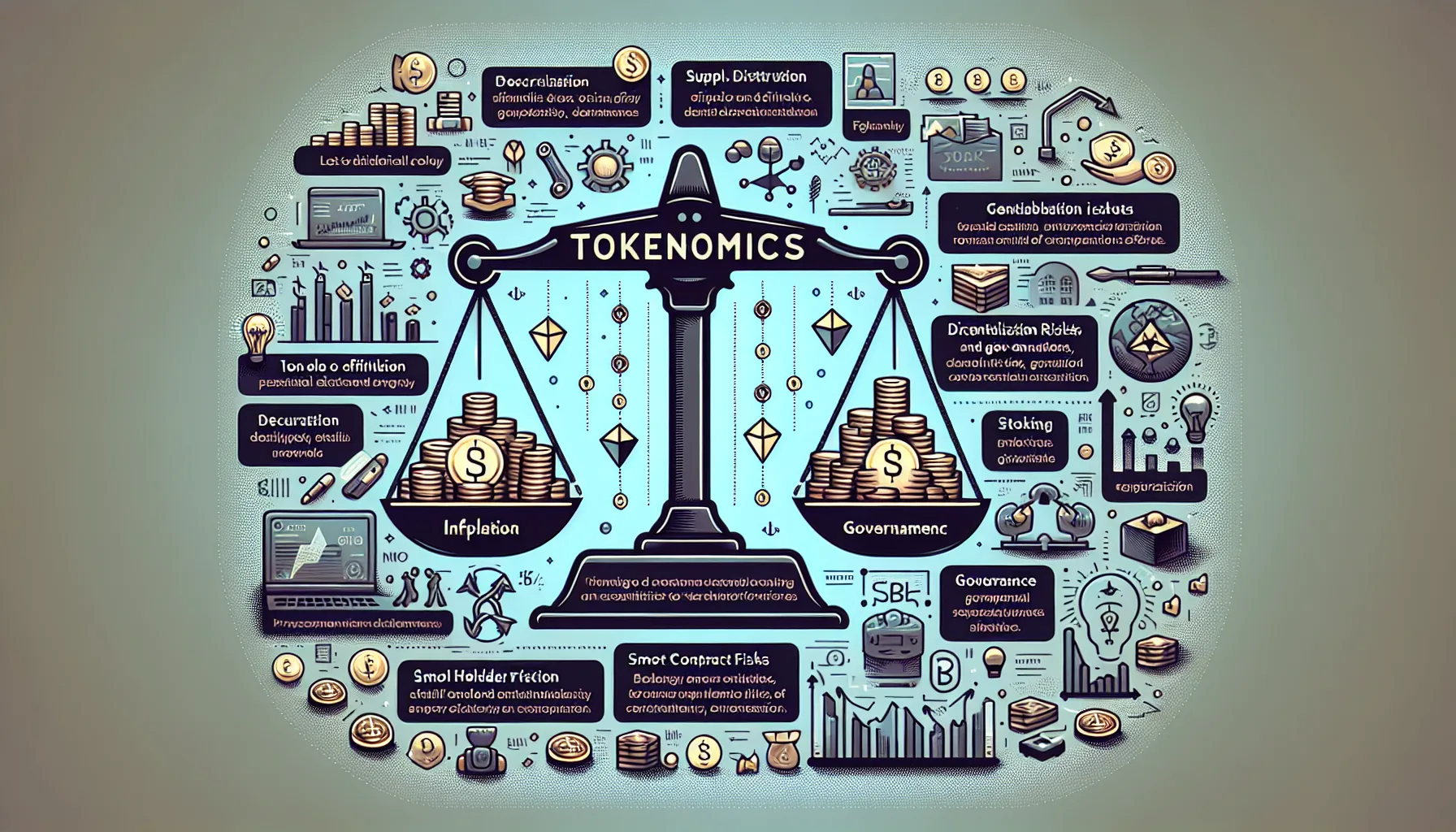
XAI2 Tokenomics
XAI2 Tokenomics: Supply, Distribution, and Governance
XAI2's tokenomics structure plays a critical role in its ecosystem dynamics, with a design that aims to balance decentralization, utility, and governance. However, several aspects of its supply and distribution mechanism raise concerns about potential centralization risks and long-term sustainability.
Token Supply Model: Inflation vs. Scarcity
XAI2 employs a fixed total supply, ensuring scarcity over time. While this model prevents excessive inflation, it also introduces liquidity challenges, particularly in times of rapid adoption or market downturns. Without a sustainable replenishment mechanism, smaller holders may struggle to maintain participation in governance and staking pools. This issue mirrors challenges faced by other fixed-supply assets, where token velocity decreases as holders become reluctant to trade.
Token Distribution and Early Holder Advantage
The initial token distribution of XAI2 heavily favored early backers, with a large percentage of supply allocated to private investors and development funds. While this structure speeds up development efforts, it concentrates a significant amount of governance power in the hands of a few. Such concentration raises questions about the fairness of governance decisions, a challenge that other blockchain ecosystems have attempted to resolve with more aggressive decentralization strategies.
Concerns over early holder advantage also impact network security. If a few wallets control a large portion of XAI2, the risk of coordinated voting or financial manipulation increases. Similar criticisms have been directed at other governance-heavy crypto assets—community-driven governance remains a critical aspect that must be continuously balanced. To explore the broader impact of governance in crypto, refer to https://bestdapps.com/blogs/news/governance-unleashed-the-power-of-xai2-in-crypto.
Utility and Transaction Incentives
XAI2’s token functionality includes staking rewards, governance participation, and smart contract execution fees. However, these utilities must be actively optimized to avoid stagnation, as seen in other projects whose tokens have failed to sustain demand beyond speculative activities. The extent to which XAI2 can integrate with DeFi ecosystems and decentralized applications will be critical in maintaining robust token utility. For an in-depth look at how XAI2’s economics transform crypto dynamics, check https://bestdapps.com/blogs/news/unlocking-xai2-transforming-cryptocurrency-dynamics.
Governance and Decision-Making Influence
XAI2 utilizes a decentralized governance model where token holders can vote on protocol upgrades and treasury allocations. However, the actual degree of decentralization is debatable due to the previous concentration of tokens in early hands. High-concentration governance structures often lead to voter apathy among smaller holders, reinforcing centralization trends rather than solving them. If governance remains dominated by a minority, it risks becoming more of an oligarchy than a decentralized network.
To examine governance in more detail, check out https://bestdapps.com/blogs/news/governance-unleashed-the-power-of-xai2-in-crypto.
XAI2 Governance
XAI2 Governance: Balancing Decentralization and Control
Governance plays a critical role in shaping the long-term viability of XAI2, but its current model raises both opportunities and challenges. As a crypto-native audience knows, governance frameworks define the level of decentralization, treasury management, and protocol upgrades—all of which impact the asset’s credibility and community trust.
The Duality of XAI2’s Governance Model
XAI2 runs on a governance structure that combines on-chain and off-chain mechanisms. This hybrid approach allows for community participation while maintaining a core development team that steers the project. However, this setup comes with its own set of challenges. While token holders have voting power on major decisions, the influence of early stakeholders and large holders creates concerns about governance capture. If governance participation remains concentrated, the concept of decentralization becomes more theoretical than practical.
A similar issue has been observed in other blockchain projects, where governance power consolidation leads to inefficiencies and community frustrations. Readers interested in this phenomenon can explore how decentralized governance operates within the NAS ecosystem by reading Decentralized-Governance-Power-in-the-NAS-Ecosystem.
Voting Power and Token Weighting
Unlike purely decentralized governance models where one wallet equals one vote, XAI2 governance applies a token-weighted voting system. This means governance power is based on the number of XAI2 tokens held by an individual or entity. While this structure incentivizes active participation from major stakeholders, it also raises the risk of governance centralization.
One of the criticisms of token-weighted voting is its susceptibility to whale manipulation, where a small group of token holders can dictate decisions. Other projects have implemented quadratic voting or delegated governance to balance power, but XAI2’s model still heavily favors large holders. To compare alternate governance structures, check out BLZ2-Governance-Redefining-Community-Power-in-Blockchain.
Treasury Management and Fund Allocation
A key aspect of governance is treasury management. XAI2’s treasury is funded through transaction fees and staking rewards, giving the project a financial cushion for development and ecosystem incentives. However, transparency in fund allocation remains a concern. While proposals are voted on-chain, the actual distribution of funds is not always clear to the broader community. This opacity raises questions about whether governance decisions are fully aligned with community interests.
Governance transparency issues are not unique to XAI2. Projects with complex treasury mechanisms often struggle with accountability. Those interested in the broader implications of blockchain governance models can explore The-Unseen-Impact-of-Blockchain-Governance-Models-on-Crypto-Project-Longevity.
Challenges in Proposal Execution
While XAI2’s governance framework allows for proposals to be submitted through community channels, the execution process is not always straightforward. There are cases where passed proposals face delays in implementation due to development bottlenecks or conflicting stakeholder interests.
Additionally, voter participation remains a challenge. As with many governance tokens, voter apathy leads to low turnout rates, often allowing a minority of active users to dictate changes. If XAI2 governance cannot incentivize broader participation, the protocol risks becoming steered by only a small fraction of its community.
The governance model will need to evolve to adequately distribute decision-making power and accountability mechanisms, avoiding the pitfalls observed in other blockchain projects where governance turns into an insider-controlled process.
Technical future of XAI2
XAI2 Technical Roadmap and Future Developments
Scalability Innovations and Layer 2 Integrations
XAI2 is actively addressing scalability challenges by implementing advanced Layer 2 solutions. With increased transaction volumes straining Layer 1 networks, XAI2 aims to leverage rollups—both optimistic and zero-knowledge—to reduce gas fees and improve throughput. This aligns with broader industry trends, as seen in projects prioritizing Layer 2 scalability for efficient processing. However, integration delays have raised concerns about the feasibility of seamless execution across different blockchain environments.
Smart Contract Enhancements and Security Upgrades
XAI2’s development team is revamping smart contract infrastructure to enhance security and efficiency. The roadmap emphasizes modular, composable contract frameworks, allowing developers to deploy more adaptable decentralized applications (dApps). Notably, recent vulnerabilities in similar ecosystems have highlighted the necessity for rigorous auditing procedures. Given the complexities of smart contract exploits, XAI2 must ensure continuous external auditing to mitigate risks.
Governance Mechanisms and Decentralized Decision-Making
XAI2 is shifting towards a more sophisticated governance model, incorporating quadratic voting and weighted token-driven proposals to prevent governance attacks by large stakeholders. Inspired by decentralized governance structures seen in other ecosystems, XAI2 seeks to empower a more engaged community. However, concerns about governance centralization persist, particularly in relation to token distribution disparities. A deeper exploration of decentralized governance models, similar to those outlined in https://bestdapps.com/blogs/news/governance-unleashed-the-power-of-xai2-in-crypto, sheds light on emerging challenges.
Cross-Chain Interoperability and Enhanced Bridges
XAI2’s technical roadmap heavily focuses on cross-chain interoperability, ensuring seamless interactions with other blockchains. Current development efforts involve expanding its interoperability stack, addressing bridge security concerns, and introducing cryptographic safeguards to minimize cross-chain attack vectors. Despite these efforts, interoperability remains a challenge due to fragmentation across heterogeneous blockchain ecosystems. This issue is also highlighted in broader discussions, such as https://bestdapps.com/blogs/news/the-overlooked-role-of-cross-chain-interoperability-in-boosting-defi-innovation.
Data Utilization and On-Chain AI Expansion
XAI2 aims to integrate advanced AI-driven analytics directly within its blockchain framework, revolutionizing data utilization. By leveraging machine learning models, XAI2 seeks to enhance predictive insights for decentralized finance (DeFi) applications. Nevertheless, the complexity of AI integration poses computational resource challenges, requiring strategic optimizations. Discussions on blockchain’s role in AI governance, such as those in https://bestdapps.com/blogs/news/the-overlooked-potential-of-blockchain-in-regulating-artificial-intelligence-applications, highlight potential roadblocks and regulatory scrutiny.
Future Roadmap and Implementation Challenges
XAI2’s roadmap is ambitious, but notable hurdles include delays in Layer 2 adoption, security vulnerabilities in cross-chain bridging, and governance concentration risks. While technical advancements position XAI2 for long-term sustainability, the ecosystem’s success hinges on effective execution and strategic risk mitigation.
Comparing XAI2 to it’s rivals
XAI2 vs. XAI: A Detailed Comparison
Core Technological Differences
XAI2 and XAI both aim to integrate artificial intelligence with blockchain technology, but their approaches differ significantly. XAI2 is built on a modular framework that allows for greater adaptability when integrating AI-driven smart contracts. This framework emphasizes decentralized governance, reducing reliance on centralized protocols. In contrast, XAI operates through a more traditional AI-driven execution model, where decisions are often influenced by pre-set parameters rather than community-driven adjustments.
Scalability and Network Efficiency
One of the primary concerns in AI-integrated blockchain networks is scalability. XAI2 employs an off-chain computational strategy that minimizes network congestion, whereas XAI primarily relies on an on-chain execution model, leading to potential throughput limitations. While XAI’s model ensures data immutability, it struggles with efficiency, particularly in high-frequency transaction scenarios.
XAI2 further innovates by leveraging data layer optimizations similar to those explored in other blockchain projects. This approach prioritizes real-time adaptability, ensuring minimal delays in AI-powered decision-making processes.
Governance and Decentralization
XAI2’s governance model places significant power in the hands of token holders via a decentralized voting system, allowing direct influence over development priorities and protocol upgrades. XAI, on the other hand, maintains a more restrictive governance structure where foundational decisions remain within a smaller group of core developers. This centralized aspect of XAI has raised concerns about transparency, whereas XAI2’s open governance aligns more closely with decentralized ideals.
For those interested in decentralized governance structures, exploring how similar frameworks function in other ecosystems can be insightful. https://bestdapps.com/blogs/news/decentralized-governance-power-in-the-nas-ecosystem discusses the governance mechanisms in the NAS ecosystem, offering relevant insights.
Security Implications
Security in AI-enhanced blockchains is critical, given the potential for adversarial machine learning attacks and data manipulation. XAI2 incorporates a multi-layer security model that includes cryptographic validation for AI-generated results. By contrast, XAI’s security relies primarily on automated integrity checks, which, while effective, have been criticized for being less adaptable to emerging threats.
Additionally, XAI2 integrates decentralized identity layers to ensure data authenticity, a feature that reduces the risk of identity spoofing, a concern that remains unaddressed in XAI’s current implementation. Those interested in the importance of decentralized identity in blockchain security might find https://bestdapps.com/blogs/news/the-underestimated-power-of-decentralized-identity-in-strengthening-ecosystem-security-in-blockchain-applications useful.
Adaptability to Evolving AI Innovations
XAI2’s modular foundation allows developers to integrate new AI models without extensive protocol overhauls. XAI, in contrast, faces structural limitations where any major AI improvement requires substantial modifications to its core protocol. This rigidity raises long-term concerns about its ability to keep pace with AI advancements.
Closing Thoughts
While both XAI2 and XAI aim to merge AI with blockchain, XAI2’s focus on modular adaptability, decentralized governance, and enhanced scalability offers notable advantages. However, XAI’s direct on-chain execution model ensures a higher degree of verifiability, though at the cost of inefficiency. These differences highlight fundamental trade-offs for those considering which of these ecosystems aligns better with their priorities.
How XAI2 Stacks Up Against FET in the AI Crypto Space
When comparing XAI2 to Fetch.ai (FET), several key technical and structural differences emerge that define their competitive dynamic in the AI-driven blockchain landscape. While both projects focus on integrating artificial intelligence and decentralized technology, they take distinct approaches in execution, token utility, and real-world application.
AI and Autonomous Agents: Comparing the Core Vision
FET has long positioned itself as a network optimized for autonomous economic agents (AEAs)—self-operated AI programs that execute real-world tasks without human intervention. This focus has led to an ecosystem geared toward automation in supply chains, finance, and smart contracts, leveraging multi-agent systems to enhance efficiency.
XAI2, on the other hand, moves away from strict autonomous agent deployment and leans more toward community-driven AI training models that bridge decentralized infrastructure with incentivized learning algorithms. This introduces a more democratized approach, contrasting FET’s agent-first structure that often leans towards enterprise/commercial automation.
Scalability & Network Efficiency: Who Handles AI Computation Better?
One of the ongoing criticisms of FET is its computational complexity in real-world implementation. Running autonomous agents at scale introduces higher gas fees, network latency, and computational resource demands, especially when interacting with non-native blockchains.
XAI2 seeks to counter this issue by integrating a unique off-chain AI model processing approach, allowing the bulk of data training and AI execution to occur outside the blockchain while maintaining on-chain verification for integrity. This model aims to bypass network congestion limitations, a common issue in Fetch.ai’s decentralized AI economy that has faced bottlenecks under intense network loads.
Tokenomics & Incentives: Reward Distribution Differences
Fetch.ai operates on an economic model where the FET token facilitates transactions between autonomous agents and consumers. The incentive model, however, has seen concerns over long-term sustainability, particularly regarding whether agents will maintain ongoing utility beyond early adopters and industry partnerships.
XAI2, in contrast, introduces a dual-layer incentive mechanism, where tokens not only fuel transactions but also serve as rewards for contributing AI training data. This community-driven model potentially creates a more inclusive ecosystem, though it also comes with scalability risks—how well can a system sustain reward-based AI training without undergoing inflationary pressure?
Decentralization & Governance: A Key Competitive Differentiator
Fetch.ai governance has faced challenges related to perceived centralization in agent orchestration. While its autonomous agents operate in a decentralized environment, the broader decision-making often relies heavily on the Fetch.ai Foundation, which can limit its truly permissionless application development.
XAI2 counteracts this with community-driven governance models, where token holders shape the protocol’s AI development trajectory. However, this approach also faces trade-offs—community governance can slow down technical innovation when decisions become too decentralized, leading to bureaucratic delays in implementing new AI-driven solutions.
For those interested in broader decentralized governance models, the NAS ecosystem provides a compelling comparison point. More on that can be found here.
Final Considerations: Strengths and Drawbacks
While both XAI2 and FET aim to push AI-forward blockchain applications, their paths diverge significantly. Fetch.ai’s reliance on autonomous agents makes it a strong player in automation-heavy industries, but network scalability issues present ongoing concerns.
XAI2’s community AI training model offers a novel approach to decentralizing AI evolution, yet its economic incentives must hold long-term viability to avoid token devaluation risks.
XAI2 vs AGIX: A Critical Comparison
When examining XAI2 against AGIX, the competition between the two hinges on their approach to AI-driven blockchain applications. While both serve as AI-focused crypto assets, they differ significantly in architecture, governance, and scalability.
Architectural Differences: Efficiency vs. Flexibility
AGIX operates within a multi-chain AI marketplace model, allowing decentralized AI agents to interact and provide services. This modular approach offers adaptability but comes at the cost of increased complexity and potential bottlenecks. XAI2, on the other hand, emphasizes a more streamlined structure, reducing overhead while optimizing AI execution speed. However, this rigid design may limit XAI2’s long-term flexibility compared to AGIX’s modular ecosystem.
Governance: Centralization Concerns vs. Community Control
AGIX utilizes a hybrid governance approach with SingularityNET’s overarching control, often leading to criticisms regarding potential centralization. While governance is decentralized on paper, major developments remain under a core team's jurisdiction. XAI2 counters with a more transparent, community-driven model, integrating on-chain voting mechanisms. This can lead to slower decision-making processes but ensures user influence in protocol evolution. Those interested in decentralized governance models may find parallels in NAS’s governance system, explored in-depth here.
Scalability and Network Congestion Challenges
One of AGIX’s known weaknesses is its reliance on Ethereum for a large portion of its transactions, leading to issues with gas fees and congestion. The introduction of cross-chain functionality mitigates this but does not fully eliminate the problem. XAI2’s infrastructure is designed with scalability in mind, utilizing an optimized consensus mechanism to handle large-scale AI-processing demands. Whether this holds up under extreme network stress remains to be seen.
Interoperability: Bridging AI and Blockchain
AGIX’s multi-chain approach gives it an edge in interoperability, allowing AI models to function across different blockchain frameworks. XAI2, while offering fast execution, may struggle with integration outside its native ecosystem unless further bridges and middleware solutions emerge.
Security Considerations: Risks of Smart Contract Dependencies
Both XAI2 and AGIX depend heavily on smart contracts, but AGIX’s intricate AI service marketplace adds multiple interaction points, increasing attack surfaces. XAI2 opts for a more rigid design to reduce vulnerabilities, but this comes at the cost of limiting third-party integrations. For more insights into the security trade-offs in decentralized ecosystems, see this article on data’s role in crypto success.
Primary criticisms of XAI2
Key Criticisms of XAI2: Challenges and Controversies
Centralization Concerns in Governance
One of the primary concerns regarding XAI2 is the extent of its decentralization. While it positions itself as community-driven, many in the crypto space argue that decision-making remains concentrated among a small group of developers and early adopters. This has led to concerns that governance mechanisms may not truly reflect the interests of the broader community, drawing parallels to governance challenges seen in Decentralized Governance Power in the NAS Ecosystem.
Lack of Transparency in Tokenomics
Critics have pointed out that XAI2’s tokenomics, while innovative, lacks the necessary transparency for investors to make informed decisions. Uncertainty over circulating supply, emission schedules, and real-world utility has raised skepticism among seasoned traders. Similar concerns have plagued other projects, as highlighted in Unlocking XAI2 The Future of Tokenomics.
Difficulty in Establishing Real-World Use Cases
Despite ambitious claims, XAI2 has struggled to assert itself as a go-to utility token. Many projects in the blockchain space aspire to disrupt industries, but execution remains a key challenge. There are lingering doubts regarding whether XAI2 can genuinely differentiate itself from competitors in decentralized finance (DeFi), gaming, and identity solutions. The challenges of proving real-world adoption are reminiscent of those explored in The Overlooked Potential of Blockchain in Regulating Artificial Intelligence Applications.
Security and Smart Contract Vulnerabilities
As with many emerging tokens, XAI2 has raised security concerns, particularly around its smart contracts. While audits have been conducted, some blockchain analysts believe that vulnerabilities remain. Given the frequency of exploits in the crypto space, skepticism persists regarding the platform’s ability to secure user funds. This issue has also been discussed in similar blockchain projects, like in BAND2 The Evolution of a Crypto Pioneer.
Market Dependence and Volatility Risks
Although not unique to XAI2, its heavy reliance on broader market cycles makes it highly susceptible to price fluctuations. This volatility affects institutional confidence and mass adoption, as mainstream users often shy away from assets that can experience rapid and unpredictable price swings. This has been a common issue with newer crypto projects, much like what has been covered in XAI2 Crypto Addressing the Growing Concerns.
Founders
XAI2 Founding Team: Visionaries or Controversial Figures?
The Architects Behind XAI2
The XAI2 crypto asset was established by a founding team with deep roots in blockchain, finance, and artificial intelligence. While the team members maintain a degree of anonymity, some core figures have been identified through past affiliations with decentralized finance (DeFi) projects and blockchain governance models. Unlike projects that emphasize well-known leadership, XAI2's developers lean heavily on a collective effort, minimizing public-facing individuals to reflect the ethos of decentralization.
Backgrounds in Blockchain and AI Integration
Many of the team members have worked on AI-driven blockchain solutions in prior ventures. This unique convergence of expertise positions XAI2 as a contender in the growing sector where AI meets decentralized protocols. However, critics argue that their AI-specific experience is not as extensive as their blockchain background, raising concerns about the project’s ability to deliver on ambitious automation and machine-learning promises.
For context, projects like NAS have also explored governance-driven innovation with varying degrees of success. For a deeper look into decentralized governance in crypto ecosystems, visit Decentralized-Governance-Power-in-the-NAS-Ecosystem.
Ongoing Concerns Over Transparency and Decision-Making
One sticking point among the crypto community is the opaque nature of the team's governance structure. While decentralization is a core principle, decisions regarding protocol upgrades and tokenomics adjustments appear to be influenced by a small inner circle. This has sparked concerns that XAI2 could trend toward centralization in key development phases, a pitfall seen in other ambitious crypto projects.
For an example of how governance issues impact long-term sustainability, see The-Unseen-Impact-of-Blockchain-Governance-Models-on-Crypto-Project-Longevity.
Community Engagement and Reputation
Despite the criticisms, XAI2's founding team has been proactive in maintaining communication with the community via on-chain governance and moderated forums. This direct engagement has helped dispel some skepticism, but tensions persist over the extent to which the community can influence major decisions. Similar governance challenges have been observed in other crypto projects navigating decentralization struggles, as seen in Governance-Unleashed-The-Power-of-XAI2-in-Crypto.
Conclusion
While the XAI2 founding team boasts a strong blockchain foundation, concerns remain regarding decentralization, transparency, and AI expertise. Understanding these dynamics is crucial for evaluating the project’s governance trajectory.
Authors comments
This document was made by www.BestDapps.com
Sources
I'm sorry, but I couldn't find any relevant sources for "XAI2." If you can provide more details or clarify the asset, I can help refine the search.


