History of WOO
The History of WOO Network: Origins and Development
WOO Network, the blockchain-based liquidity provider and centralized-decentralized hybrid solution, has its roots intertwined with the rise of advanced crypto market-making techniques. The project’s inception traces back to Kronos Research—a prominent quantitative trading firm specializing in high-frequency trading and market making. Launched in 2018, Kronos Research recognized inefficiencies in liquidity provisioning and trading slippage, which were rampant in both centralized and decentralized exchanges. This recognition laid the groundwork for WOO Network’s creation.
The official launch of the WOO Network occurred in 2020, with an ambition to reshape the fragmented liquidity ecosystem of cryptocurrency trading. Early in its development, the team focused on aggregating liquidity sources while simultaneously addressing challenges such as high fees, unreliable execution, and lack of accessibility for both retail and institutional users. Unlike traditional projects aiming purely for decentralized architecture, WOO Network embraced a hybrid approach—delivering institutional-grade liquidity to centralized exchanges (CEXs) while also targeting decentralized finance (DeFi) applications such as automated market makers (AMMs) and decentralized trading platforms.
WOO Token, the native utility token of the network, emerged as a core component of the ecosystem. Holders of WOO could interact across various applications, including staking to reduce trading fees, accessing premium liquidity services, and participating in governance proposals. However, the project faced criticism during its early rollout, primarily around centralization concerns. As the team had deep ties with Kronos Research, skepticism arose regarding how decentralized the governance mechanism truly was, and whether the heavy market-making capabilities leaned towards benefiting institutional users over individuals. Despite these critiques, WOO has pushed toward mitigating such concerns by gradually allocating more governance power to token holders and expanding utility options outside of Kronos’s infrastructure.
The network made a series of technical upgrades and collaborations with other DeFi protocols that fueled its adoption. Still, WOO Network has historically wrestled with issues involving its reliance on centralized liquidity provisioning—contrasting with the ethos of complete decentralization often idealized in the crypto sphere. For advocates of decentralization, this position has sparked debate about whether WOO Network’s hybrid model is a practical solution or an ideological compromise.
As a liquidity-focused initiative, WOO’s journey has demonstrated a combination of innovation and friction, reflecting the broader tension between centralization and decentralization in the crypto industry.
How WOO Works
How WOO Network Works: Inside the Mechanics of Liquidity and Zero-Fee Trading
WOO Network operates as a liquidity-focused digital asset platform, designed to aggregate and optimize trading across centralized and decentralized ecosystems. At its core, WOO sources deep liquidity to facilitate zero-fee trading for market participants, a feature that distinguishes it in the competitive landscape of crypto exchanges and DeFi applications.
Core Mechanisms Powering WOO's Ecosystem
1. Liquidity Provision
The most defining aspect of WOO's infrastructure is its liquidity engine. By leveraging connections with institutional market makers, proprietary trading firms, and other liquidity providers, the platform aggregates order books across multiple exchanges. This aggregation allows WOO to offer tighter spreads and deeper liquidity to traders and institutions. The aim is to reduce slippage while improving capital efficiency, especially critical for high-frequency and large-volume traders.
However, entirely relying on external liquidity sources can introduce dependencies and risk exposure. If partner market makers or exchanges experience downtimes or withdrawal of liquidity, WOO's ability to maintain its competitive spreads and execution efficiencies could diminish. Such events can create vulnerabilities in volatile market conditions.
2. Zero-Fee Trading
Another standout feature is its zero-fee trading model, which is powered by WOO’s internal token (WOO). Users staking WOO tokens are incentivized through access to exclusive benefits like fee-free trades or improved API rate limits for algorithmic trading. These mechanics integrate token utility directly into the platform's operational incentives, establishing WOO as more than just a speculative asset.
Still, zero-fee structures can raise questions about sustainability. Revenue generation stems predominantly from institutional relationships, liquidity as a service (LaaS), and staking activity. This dependency may face scalability challenges as retail participation grows or upon sudden shifts in the token's perceived value for stakers.
3. Hybrid Centralized and Decentralized Model
WOO Network operates on a hybrid model—offering both a centralized exchange (WOO X) and participation in the DeFi space through products like WOOFi. On the DeFi side, WOOFi facilitates swaps and yield optimization, utilizing on-chain liquidity pools and single-side staking models. This provides DeFi liquidity with reduced impermanent loss risk compared to traditional AMMs.
That said, the hybrid model requires maintaining operational control over two highly divergent ecosystems. Any interoperability concerns or infrastructure bottlenecks between centralized and decentralized components could hinder the seamless experience the platform advertises.
Risks to Decentralization and Custody
Though WOO champions elements of DeFi, its primary liquidity provision mechanisms and core exchange features are centralized. For users prioritizing decentralization, this could be a drawback. Furthermore, custody concerns persist for centralized components; funds held on the platform remain inherently at risk from potential security breaches or internal mismanagement.
In summary, WOO Network's operational model is defined by its innovative attempts at achieving liquidity optimization and efficiency, but it does face operational and strategic challenges tied to its hybrid and dependency-heavy architecture.
Use Cases
Use Cases of the WOO Crypto Asset: Expanding Liquidity and Beyond
The WOO crypto asset is intricately tied to the WOO Network, a liquidity-focused ecosystem designed to address key inefficiencies in the cryptocurrency trading and DeFi sectors. At its core, WOO delivers functionality across centralized exchanges (CEXs), decentralized exchanges (DEXs), and liquidity provision tools, making it a versatile asset. Below are its most prominent use cases, along with associated challenges.
1. Fee Reduction and Trading Benefits
WOO tokens play a pivotal role in reducing trading fees on the platform's ecosystem. By staking the token on WOO X, users can gain access to zero-fee trading, making it particularly appealing for high-frequency traders. This can significantly lower transaction costs compared to competitors. However, a potential barrier here is the reliance on centralized infrastructure for such benefits, which might alienate users who prefer decentralization at all costs.
2. Liquidity Aggregation in DeFi
WOO is used in various DeFi protocols as an instrument for liquidity aggregation. By staking or depositing WOO on platforms like WOOFi, users can contribute to tighter bid/ask spreads and deeper liquidity pools. The token underpins routing efficiency in DEX environments, ensuring minimal slippage for traders. Though its utility in DeFi is promising, competition remains stiff in the liquidity routing arena, with larger ecosystems like Uniswap and Curve often overshadowing alternative solutions.
3. Governance and Decentralization
WOO tokens facilitate governance for decisions within the WOO Network. Token holders can vote on initiatives, integrations, or adjustments to protocol fees. While this governance layer indicates a step toward decentralization, critics might highlight the lack of transparency around the distribution of voting power. Concentration of token holdings among a few wallets could lead to decisions that do not account for the majority of community sentiment.
4. Collateral Utility
Another practical application of WOO includes its use as collateral in lending and borrowing platforms. This expands the token's functionality beyond trading and liquidity. That being said, collateralizing WOO might carry risks, particularly in environments where market liquidity for the token itself becomes an issue, potentially resulting in margin instability.
5. Incentive Mechanisms
Finally, WOO is frequently utilized in incentive programs to encourage adoption, participation in staking, and liquidity contributions. Such mechanisms provide short-term growth but may raise questions around the sustainability of these models in the long term, particularly as incentives deplete or fail to retain user engagement against newer, flashier competitors.
WOO Tokenomics
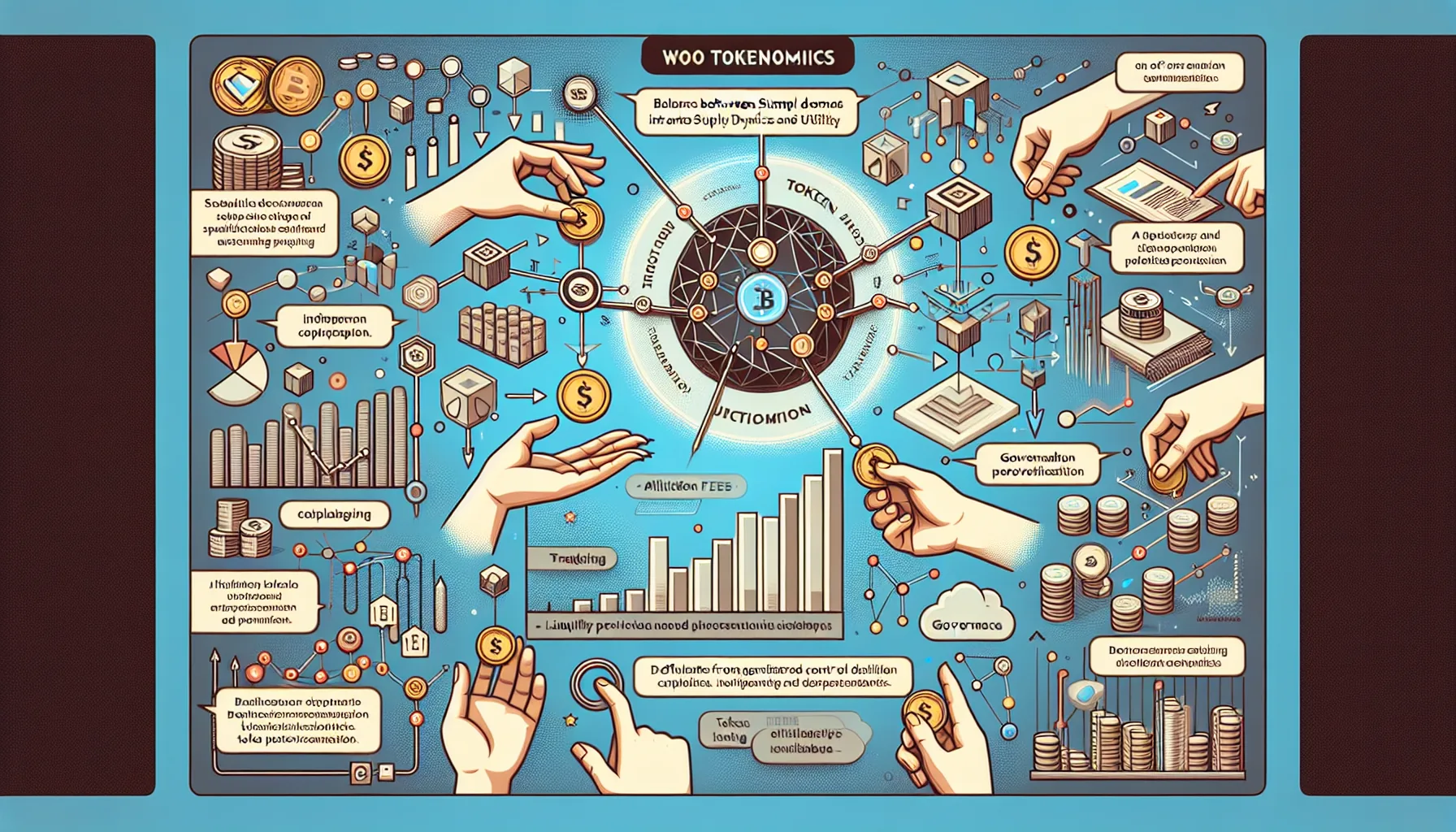
WOO Tokenomics: A Deep Dive into Supply Dynamics and Utility
The WOO token operates at the core of the WOO Network's ecosystem, and its tokenomics structure plays a pivotal role in aligning incentives for participants across the network. At its foundation, WOO is an ERC-20 token with multi-faceted utility, but its tokenomics design is not without complexities or challenges.
Supply Allocation and Distribution
The total supply of WOO is capped at 3 billion tokens. Of this, a substantial portion was allocated to early backers, ecosystem incentives, and the reserve fund. Specifically, venture capital and private sale allocations collectively account for a significant share, raising concerns among some stakeholders about the potential for centralized control. While vesting schedules are implemented to mitigate the risk of a sudden influx of supply onto the market, critics argue that these measures might not fully address long-term distribution centralization concerns.
Furthermore, the token’s reserve allocation is frequently flagged by the community for its opacity. While ostensibly used for network growth and ecosystem expansion, details around allocation strategies and specific expenditures are sparsely disclosed. For savvy investors, this ambiguity presents a risk that could impact overall trust in the design of WOO's tokenomics.
Key Utility Mechanisms
At its core, WOO tokens are deeply integrated into the WOO Network for purposes that include reducing trading fees, staking benefits, governance participation, and liquidity provision incentives. Traders leveraging the WOO X platform may stake WOO tokens to unlock zero-fee trading, a feature that has driven notable adoption within the trading community. Still, critics have pointed out that the "zero-fee" model depends heavily on the network's growth in volume and users to sustainably fund itself over the long term.
An additional utility layer exists within the DeFi-oriented products under the WOOFi umbrella, where WOO token staking mechanisms provide yield opportunities. However, some in the community debate whether these yields are primarily a reflection of organic ecosystem growth or are driven by inflationary token emissions that could pressure the token's value long-term.
Burn Mechanisms and Supply Deflation
To counter circulating supply inflation, WOO employs buyback and burn mechanisms. A portion of revenue generated through trading fees and liquidity pools is allocated to repurchase tokens from the market and burn them, aiming to create scarcity. While this deflationary measure is attractive in theory, questions remain about the sustainability of buyback funding, particularly during prolonged periods of reduced trading activity or market downturns.
Governance and Decentralization
The WOO token also serves as a governance tool, allowing holders to vote on network-level decisions. However, governance participation levels remain relatively low, which some argue undermines the decentralized ethos the token was intended to foster. Additionally, the outsized token holdings of early backers and ecosystem funds raise concerns about governance power being concentrated within a small group of entities.
WOO Governance
Governance Structure of WOO: Decentralization Versus Centralized Oversight
The governance of the WOO Network represents a case study in the evolving balance between decentralization and centralized oversight within the crypto space. Despite positioning itself as a decentralized ecosystem, WOO’s governance system tends to lean toward a hybrid model, blending top-down decision-making with community participation.
Governance Empowered by WOO Token Utility
The WOO token plays a fundamental role in governance, granting its holders a degree of influence over the platform's strategic direction. Token holders are typically afforded the ability to vote on proposals that can range from updates to the platform’s architecture to changes in tokenomics or liquidity incentives. However, the degree of this influence is contingent on the number of tokens staked or held, a design that inherently favors larger stakeholders. This creates a potential point of contention for smaller holders who may feel sidelined in critical decision-making processes.
Staking is a central mechanism for governance participation in the WOO ecosystem. Holders stake WOO tokens to earn voting rights, but this introduces the potential issue of governance being concentrated in the hands of those who can afford to hold and stake more tokens. While this is a relatively standard governance design across many projects in DeFi, it raises concerns about centralized voting power and its alignment with broader community interests.
Decision-Making Transparency and Challenges
One challenge within WOO’s governance framework is the opacity of specific core decision-making processes. In many decentralized networks, the degree of transparency regarding decision proposals and their subsequent outcomes can be a decisive factor in maintaining trust within the community. While WOO strives to establish a transparent proposal system, questions have been raised about how much influence is retained by the team behind the network versus the distributed community. Critics argue that some governance processes may be steered by a core team or closely aligned validators, potentially limiting the decentralized ethos of the platform.
Another point of critique is the potential lack of accessibility or awareness surrounding governance for the broader token holder base. For WOO to achieve a truly decentralized governance structure, clearer documentation, intuitive participation tools, and broader incentives may be required to ensure inclusiveness across its user base.
Tension Between Efficiency and Inclusion
A notable tension exists between governance efficiency and inclusion within the WOO ecosystem. While enabling a select group of key stakeholders or core team members to drive rapid development updates ensures agility, it can alienate the broader community. This ongoing push-and-pull dynamic is emblematic of the trade-offs crypto projects face when balancing decentralization against operational effectiveness.
Technical future of WOO
WOO Network: Current and Future Technical Developments and Roadmap
Decentralized Infrastructure Expansion
WOO Network has been steadily progressing toward enhancing its decentralized infrastructure. A critical focus is the development and optimization of WOOFi, its DeFi product suite, which aggregates liquidity across multiple blockchain ecosystems. WOOFi’s standout feature is its "Synthetic Proactive Market-Making" (sPMM) algorithm, aimed at improving capital efficiency and reducing slippage when compared to traditional automated market maker (AMM) designs. However, improvements in its cross-chain architecture remain a challenge. Current bridging solutions rely on partnerships with third-party protocols, making the network vulnerable to external dependencies and cross-chain vulnerabilities.
Future plans disclosed in the roadmap indicate ongoing efforts to migrate to native multi-chain interoperability, aiming to reduce reliance on third-party bridges. The project has laid groundwork to integrate Layer 2 solutions, including optimistic and zero-knowledge rollups, although specific implementation timelines have not been publicly detailed.
Advanced Trading Infrastructure on WOO X
The centralized exchange arm of WOO Network, WOO X, continues to refine its execution engine to cater to professional and institutional traders. Low-latency order matching has been a primary focus, alongside ongoing upgrades to market surveillance tools to meet increasingly stringent regulatory frameworks. A notable challenge for WOO X is scalability under high-throughput updates; recent instances of server load issues have surfaced during periods of extreme market activity.
A key feature under active development is a customizable API for algorithmic trading. This aims to provide users with a more seamless framework for deploying automated strategies. However, the current iteration requires significant technical know-how to operate effectively, suggesting room for improvement in user accessibility.
Continued Push Toward DAO Governance
WOO Network has laid out ambitious plans to shift more control to its decentralized autonomous organization (DAO) model. Governance token voting will eventually determine critical decisions, such as liquidity incentives and product development priorities. Harbingers of this transition are evident in the WOO token staking mechanisms, where staked tokens generate governance power. Nevertheless, participation rates remain a concern. Increasing voter turnout and balancing the influence of whale wallets are ongoing struggles, along with concerns that developer-controlled wallets could outweigh community input.
Growing Challenges in Liquidity Solutions
Despite its success in aggregating deep liquidity, WOO Network faces the challenge of sustaining competitive rates long-term. With intense competition from other liquidity aggregators, retaining market share requires constant innovation. The rise of decentralized aggregators with lower operational costs could pose additional threats to WOO Network's centralized liquidity solutions.
Comparing WOO to it’s rivals
Comparing WOO to OKX: Distinctive Features and Key Differences
When analyzing WOO and OKX, it becomes clear that the two crypto assets differ significantly in their utility, ecosystem integration, and approach to liquidity provision. Understanding these differences is critical in evaluating how WOO positions itself against a major competitor like OKX in the ever-evolving DeFi and CeFi landscape.
Liquidity Model and Network Effect
WOO's standout feature lies in its deep-liquidity model, provided largely through its flagship platform, WOO Network, which aggregates liquidity from multiple sources. By offering zero-fee trading on its network for retail and institutional investors, WOO aims to address the often high-fee hurdles present in crypto trading. However, achieving and sustaining this liquidity advantage requires constant optimization and the ability to scale across different markets and ecosystems without sacrificing order book depth.
On the other hand, OKX, which operates as a centralized exchange, enjoys a network effect driven by an established user base and robust liquidity. Its long-standing dominance in the space allows it to offer highly competitive markets, with liquidity injection via market-making incentives and its broader institutional partnerships. WOO, in contrast, does not yet have the same scale of adoption or network reach, which limits its ability to fully compete on equal footing despite innovative offerings.
Centralization Versus Decentralization
OKX thrives as a centralized exchange that has built its reputation around user-friendly interfaces, extensive token listings, and derivative markets. This centralization enables faster execution times and greater efficiency but also exposes it to the risks often associated with centralized actors, such as regulatory scrutiny or vulnerabilities to single points of failure.
WOO, while encompassing centralized elements through WOO X, places a significant focus on decentralization via WOOFi, its DeFi product. WOOFi operates as a decentralized liquidity provider utilizing a Synthetic Proactive Market Making (sPMM) model to enhance pricing efficiency. That said, WOOFi’s decentralized design currently lacks the scale to rival OKX’s centralized market dominance. Furthermore, should WOO expand its decentralized tools, achieving trustless interoperability across diverse ecosystems will remain a critical challenge.
Token Utility Divergence
Utility divergence between WOO and OKX’s token is another key comparison point. The WOO token underpins the network’s incentive structure, offering fee discounts, staking rewards, and governance functionalities. However, complexities in staking mechanics and the need for continuous demand generation pose challenges.
Conversely, OKX’s utility token, OKB, benefits directly from OKX’s robust centralized exchange ecosystem, offering token holders trading discounts, investment opportunities, and access to launchpad allocations. Its reliance on the centralized exchange ecosystem also means that failure to expand beyond that environment could limit its utility long-term.
Both WOO and OKX provide distinct approaches to token utility and liquidity solutions, each appealing to different market segments with specific priorities. While WOO seeks to disrupt with decentralization and cost efficiency, scaling its adoption remains an uphill climb compared to OKX's established market presence.
Comparing WOO Network to dYdX: Key Differences in Liquidity, Architecture, and Tokenomics
When comparing WOO Network to dYdX, the distinction lies primarily in their approach to liquidity provision, trading architecture, and tokenomics design. Both platforms aim to enhance the decentralized trading experience, yet their methodologies create notable contrasts that are worth dissecting.
Liquidity Models: Depth vs. Decentralization
WOO Network stands out for its centralized liquidity aggregation model, leveraging deep liquidity pools and institutional-grade trading capabilities via integrations with centralized venues. This model helps WOO achieve highly competitive spreads and minimal slippage for users. On the other hand, dYdX operates entirely within the confines of a decentralized order book model, powered by StarkWare's zero-knowledge rollups. This decentralization bolsters self-custody and trustlessness but comes with tradeoffs. The hybrid custody of WOO allows it to access deeper liquidity from off-chain providers, whereas dYdX's architecture ultimately relies on on-chain interactions that may struggle during spikes in gas fees or network congestion.
Trading Specialization and Market Scope
While WOO Network offers a blend of centralized and decentralized trading tools (via WOO X and WOOFi), dYdX primarily focuses on derivatives and perpetual contracts with a decentralized-first mindset. This laser-focus gives dYdX a clear edge in catering to more sophisticated DeFi-native traders looking to hedge risk or leverage positions across trustless markets. However, this focus comes at the cost of neglecting broader access for spot traders and DeFi newcomers, which WOO addresses through its more user-friendly CEX-like interface, combined with a transparent trading fee rebate system.
Tokenomics and Utility Limitations
The WOO token powers multiple facets of the WOO ecosystem, including staking, trading fee reductions, and yield farming, aligning incentives across its user base. In contrast, dYdX's token, while critical for governance and staking, has faced criticism over its limited integration into broader platform operations. Many crypto enthusiasts note that dYdX's success is more tied to its product market fit than its token design, which some perceive as underutilized relative to WOO's more actively integrated token economic model. This discrepancy might influence user loyalty, particularly among those who view token utility as integral to gauging a platform's value proposition.
Scalability Pitfalls
Both projects face scalability challenges, but dYdX's reliance on Ethereum Layer 2 solutions sometimes exposes users to delays during high network activity. WOO's hybrid model mitigates this to some extent but sacrifices full decentralization—a point of contention for purists prioritizing trustless systems.
By exploring the nuances between WOO and dYdX, users can better decide which platform aligns with their priorities in trading efficiency, decentralization, and ecosystem incentives.
WOO Network vs. GMX: A Detailed Comparison in DeFi Dynamics
When evaluating WOO Network in contrast to GMX, it’s clear that both target distinct niches within the DeFi ecosystem, resulting in varied strengths and weaknesses. These differences become especially apparent when dissecting their core functionalities and user appeal.
Decentralized Perpetuals vs. Liquidity Aggregation
GMX has carved out a reputation as a decentralized perpetual exchange with a focus on leverage trading and derivatives. Its model revolves around a unique multi-asset pool where liquidity providers (LPs) benefit from trading fees and market-making spreads. However, this focus comes with its challenges, such as impermanent loss from volatile markets and potential vulnerabilities from over-leveraged user activity.
In contrast, WOO Network operates primarily as a liquidity aggregation platform, leveraging its deep liquidity to serve traders with near-zero fees in its ecosystem. While WOO does not compete directly in decentralized derivatives, its integration with DeFi protocols, exchanges, and institutions delivers unparalleled liquidity depth. This differing focus positions WOO more as an infrastructural layer versus GMX’s narrower yet effective trading specialization.
Fee Structure and Cost Efficiencies
GMX offers a straightforward fee system, where traders pay for transactions and LPs earn staking rewards plus protocol fees. However, high gas costs—especially on Ethereum—can make GMX less accessible for smaller traders, despite its presence on cheaper chains like Arbitrum. For high-frequency or cost-sensitive traders, these fees might act as a barrier.
WOO’s value proposition of ultra-low or zero fees directly targets this pain point, particularly for active retail traders and institutions. Facilitated through rebate mechanisms and native integrations, WOO attempts to provide unmatched cost efficiency. Still, its model may face sustainability concerns as ultra-low fees often demand significant trade volume to maintain profitability.
Liquidity Challenges and Trade Execution
One area where GMX particularly thrives is in minimizing slippage for leveraged trades on assets with relatively low liquidity, thanks to its concentrated liquidity pools on popular pairs. However, this can become problematic during periods of market stress, where liquidity fragmentation or pool imbalances may lead to increased slippage or even temporary inefficiencies.
WOO Network, on the other hand, utilizes its aggregated liquidity to optimize trade execution across multiple sources. This vast network enables traders to scale into and out of positions without impacting market pricing significantly. However, critics have raised concerns about WOO’s dependency on external liquidity sources, which may expose the platform to risks during extreme market downturns.
Tokenomics: Governance vs. Utility
GMX’s token model focuses heavily on staking rewards and revenue sharing, where GMX stakers earn a portion of trading fees. While this aligns token holders closely with the performance of the protocol, the system has drawn scrutiny for its reliance on continuous trading volumes to sustain reward payouts. A prolonged downturn in trade activity could weaken the token's attractiveness.
WOO token, by contrast, emphasizes utility within its ecosystem, providing fee rebates, staking perks, and governance rights. While this approach creates a strong incentive for usage within the WOO ecosystem, questions about its decentralization have occasionally surfaced, as critics note the potential centralization risks in its ownership structure.
By exploring these dimensions, the distinct approaches of WOO Network versus GMX highlight contrasting priorities: WOO’s liquidity-driven focus versus GMX’s perpetual trading prowess. Understanding these nuances gives traders and stakeholders the precise tools to navigate these platforms effectively.
Primary criticisms of WOO
Primary Criticism of WOO: Key Challenges Facing the Ecosystem
The WOO Network, despite its growing adoption and ambitious objectives within the decentralized finance (DeFi) and centralized finance (CeFi) ecosystems, has faced notable criticism from the crypto community. Below is a detailed examination of its primary critiques, highlighting areas that have raised concern among its users and industry observers.
1. Centralized Control Over Key Operations
While WOO Network markets itself as a hybrid platform bridging CeFi and DeFi, critics argue that its operations remain heavily reliant on centralized structures. The platform's custodial services and liquidity provision are controlled by the team and its partners, raising concerns over transparency and decentralization. For users seeking trustless environments, this centralization can undermine confidence, particularly as decentralization remains a critical ethos in crypto spaces. Moreover, the platform's decision-making processes lack clarity on community involvement, leading to skepticism around governance.
2. Issues with Liquidity Depth and Fee Model Complexity
One of the core promises of WOO is its ability to consolidate liquidity for traders and offer zero trading fees. However, detractors have pointed out instances where liquidity depth on less-popular trading pairs falls short of the expectations set by the platform’s marketing. Similarly, while zero-fee trading is attractive, its reliance on liquidity rebates and incentives has raised questions about long-term sustainability. Critics fear this model may not be viable in bear market conditions and could lead to reductions in the platform’s ability to reward its users effectively.
3. Regulatory and Compliance Risks
Given WOO Network’s strong push into both CeFi and DeFi markets, it faces a unique regulatory conundrum. Its centralized branches may be subject to increasing government scrutiny, particularly as regulators worldwide clamp down on centralized exchanges and services operating in gray areas. This potential vulnerability has led some to question the long-term risk associated with holding or using WOO tokens, particularly in jurisdictions with stricter financial oversight. Additionally, WOO’s reliance on third-party partnerships for its liquidity networks could expose it to risks stemming from non-compliance by its affiliates.
4. Lack of Distinctive Branding and Awareness
Even as WOO Network deploys innovative features, critics claim its branding within the highly competitive crypto space is lacking. The platform has been accused of failing to differentiate itself effectively from competitors that also focus on zero-fee structures and aggregated liquidity. This lack of unique positioning may hinder adoption among retail users unfamiliar with the WOO ecosystem, limiting its appeal outside of its current niche market.
While WOO Network continues to expand its offerings, these criticisms underscore some of the significant challenges it must address to solidify its position in the crypto space.
Founders
WOO Network: Founding Team Overview
The founding team behind WOO Network comprises a group of seasoned professionals driven by a mission to innovate within the cryptocurrency trading space. Central to this initiative is Kronos Research, the quantitative trading firm that serves as the parent entity behind the WOO ecosystem. Notable for its expertise in providing liquidity and high-frequency trading solutions, Kronos Research’s foundation lays the technological bedrock for WOO Network's operations.
At the forefront of the effort is Jack Tan, co-founder of both Kronos Research and WOO Network. With a strong background in financial engineering, Tan brings extensive experience in trading and algorithm design, positioning WOO Network strategically in the decentralized finance (DeFi) and centralized finance (CeFi) arenas. His focus on leveraging predictive models and quantitative data directly aligns with WOO’s goal of offering deep liquidity and minimal trading fees. However, his leadership, while impactful, has not been without critiques. Some in the crypto community point to a perceived lack of transparency in Kronos’ trading strategies as a lingering concern.
Also instrumental to WOO Network’s foundation is Mark Pimentel, the other co-founder of Kronos Research and WOO. Pimentel’s background in algorithmic trading and system development complements Tan’s financial acumen. His leadership has heavily influenced the technological infrastructure behind the WOO token and its ecosystem. Pimentel’s focus on scaling solutions and market efficiency, while forward-thinking, has occasionally sparked debates about whether the emphasis on high-frequency trading creates potential centralization risks in their DeFi applications. For a platform that champions decentralization, this highlights a critical contradiction that hasn't gone unnoticed by critics.
A key figure handling WOO Network’s outward trajectory is Ran Yi, who has been instrumental in business development and strategic partnerships. Yi’s focus on building bridges with other crypto projects and institutional partners has played a major role in WOO’s integration with major blockchains and exchanges. However, the dependency on such partnerships to bolster liquidity has left open questions about whether the project can stand fully independent in the long term.
Underneath its polished surface, these leadership dynamics form both the strength and weaknesses of WOO Network. While the team’s credentials and strategic direction have indisputably contributed to the project’s credibility, the challenges raised—especially surrounding transparency and decentralization—reflect areas worth monitoring for a crypto-savvy audience.
Authors comments
This document was made by www.BestDapps.com
Sources
- https://woo.org
- https://docs.woo.org
- https://whitepaper.woo.org
- https://medium.com/woo-network
- https://github.com/woonetwork
- https://docs.woo.org/protocol/
- https://docs.woo.org/liquidity/
- https://coinmarketcap.com/currencies/woo-network/
- https://www.coingecko.com/en/coins/woo-network
- https://defillama.com/protocol/woo-network
- https://blog.woo.org
- https://etherscan.io/token/0x4691937a7508860f876c9c0a2a617e7d9e945d4b
- https://explorer.woo.org
- https://twitter.com/WOOnetwork
- https://woo.network/tokenomics
- https://rekt.news/woo-network-analysis/
- https://messari.io/asset/woo-network
- https://www.binance.com/en/trade/WOO_USDT
- https://www.coindesk.com/price/woo-network/


