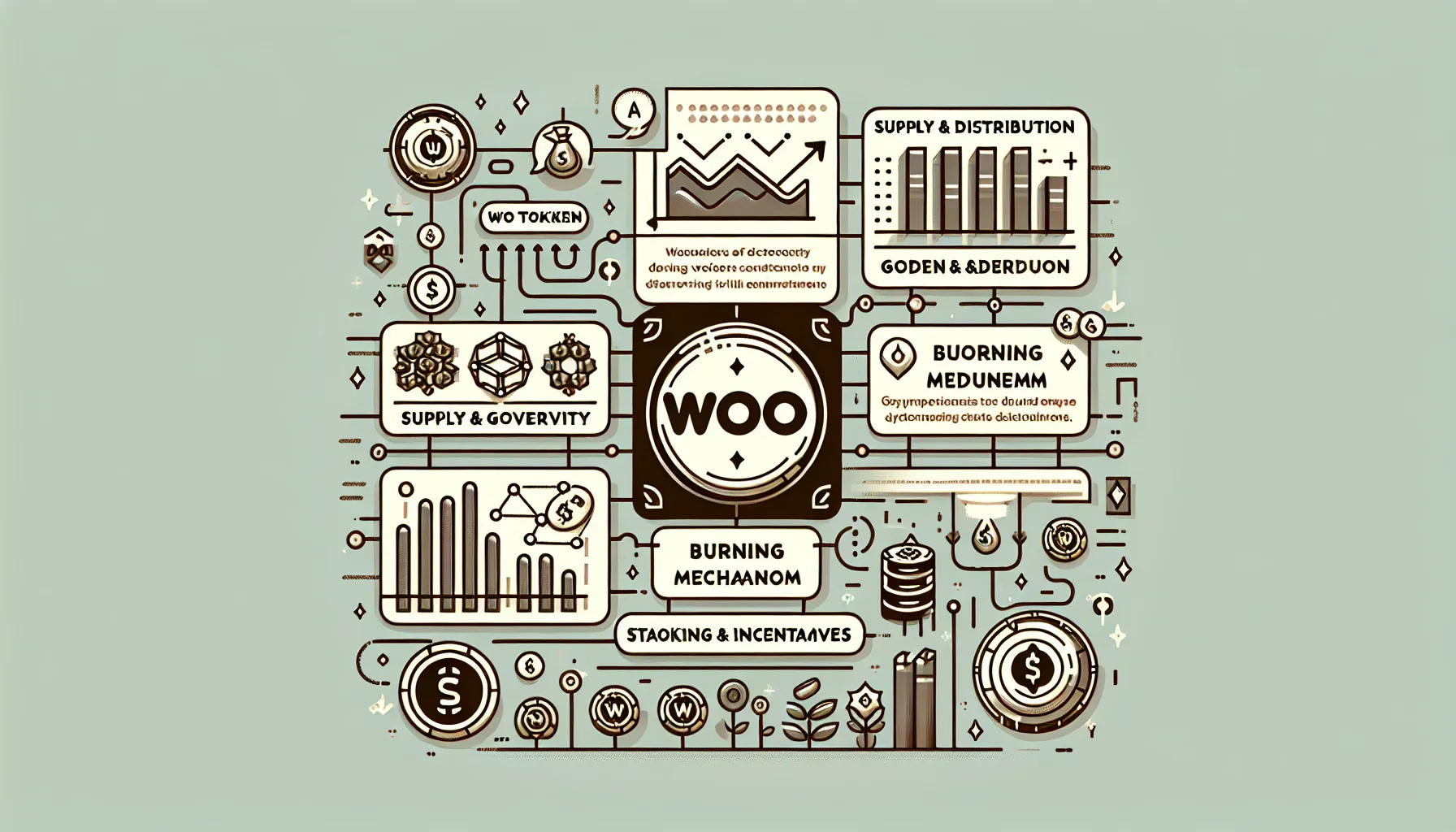
History of WOO
The History of WOO Network and Its Evolution in Crypto
WOO Network was founded with the goal of addressing inefficiencies in cryptocurrency trading and liquidity. The project originated in 2019 as a venture by Kronos Research, a prominent quantitative trading firm specializing in both high-frequency and arbitrage trading. Kronos Research’s expertise provided WOO Network with a strong foundation in market dynamics, allowing it to tackle widespread issues such as fragmented liquidity and high trading costs prevalent across cryptocurrency markets.
The inception of WOO Network was closely aligned with the rise of decentralized finance (DeFi) and the need for deeper liquidity pools. Early on, WOO’s focus was on creating a robust liquidity network designed for institutional traders, exchanges, and market-making firms. By aggregating liquidity from multiple sources, including top-tier exchanges and private pools, WOO gained traction for its ability to mitigate issues like slippage, which are particularly problematic for high-volume trades.
In 2020, the network expanded its services, launching WOO X, a zero-fee trading platform that promised institutional-grade liquidity and trading infrastructure without the costly fees associated with mainstream exchanges. This was a unique approach, but it also raised questions about its sustainability and business model. The use of a zero-fee structure drew both attention and skepticism within the crypto ecosystem, with critics questioning how the platform could remain viable in a competitive market without traditional revenue streams.
The rollout of the WOO token (WOO) was another critical milestone in the project’s history. As an ERC-20 token with cross-chain integrations, WOO was designed to function as a utility token across the network. Users could stake WOO to unlock benefits like reduced fees, enhanced API functionality, and higher borrowing limits in DeFi applications. While this utility-focused approach has been well-received, it is not without challenges. Critics have pointed out that tokenomics, including inflationary concerns and reliance on staking rewards, could impact long-term stability.
In tandem with its growth, WOO Network has also faced hurdles. Its rapid expansion in the DeFi space necessitated improvements to scalability and security, particularly as the platform began integrating with multiple Layer-1 and Layer-2 blockchains. The reliance on external liquidity providers has occasionally led to concerns regarding centralized points of failure, a notable issue for a project operating in the DeFi ecosystem, where decentralization is a core principle.
WOO’s history reflects both innovation and complexity, cementing its position as a significant player in crypto while grappling with the challenges of maintaining a competitive and sustainable infrastructure.
How WOO Works
How WOO Network Works: Bridging Liquidity and Efficiency in Crypto Trading
WOO Network is designed to address liquidity inefficiencies in the cryptocurrency trading ecosystem by aggregating liquidity from multiple sources, including top-tier exchanges, market makers, and its proprietary liquidity pools. At its core, WOO operates as an advanced trading infrastructure that connects institutional-grade tools and retail accessibility, powered by the WOO token as its utility and governance asset. Here's a breakdown of how it functions:
Liquidity Aggregation through WOO X and WOOFi
One of WOO’s primary strengths lies in its ability to pool liquidity. WOO X, its centralized trading platform, offers zero-fee trading to users while maintaining deep liquidity across various trading pairs. This is accomplished through a network of integrations with other prominent exchanges and liquidity providers, which feed into WOO's proprietary architecture.
On the decentralized side, WOOFi taps into a unique synthetic Proactive Market Making (PMM) algorithm to provide an efficient Automated Market Maker (AMM) system. Unlike traditional AMMs reliant on constant product formulas (e.g., Uniswap), PMMs dynamically adjust liquidity distribution by concentrating it around active trading prices. However, this approach has a potential downside in markets experiencing low trading volumes, where thin order books could still lead to elevated slippage compared to competitors.
The Role of Staking and Utility for WOO Token
The WOO token functions as more than just a transactional asset; it acts as the linchpin for ecosystem incentives. Users can stake WOO tokens within the platform to unlock enhanced features, such as higher withdrawal limits or better API rate limits for traders utilizing algo-driven strategies. Additionally, staking enables revenue-sharing benefits, with a portion of platform fees distributed back to stakers — an attractive model for users seeking yield without active participation.
That said, reliance on staking for incentives has drawn scrutiny. Token inflation tied to staking rewards can create long-term supply pressures, particularly if platform adoption fails to scale proportionally with token emission rates. This risk could affect token dynamics for participants over time.
Cross-Ecosystem Synergy: Bridging CeFi and DeFi
Another standout mechanism is WOO’s ability to bridge liquidity between centralized finance (CeFi) and decentralized finance (DeFi). WOO X users benefit from deep liquidity, typically associated with centralized solutions, while assets can seamlessly interact with DeFi protocols like WOOFi. This duality highlights flexibility but introduces centralization concerns — especially as centralized entities can still act as potential chokepoints for liquidity transfer.
While WOO Network’s efficiency and unique mechanisms offer value, its dual reliance on centralized and decentralized models introduces complexity and potential risk. Challenges in both liquidity depth and tokenomics could pose hurdles in achieving sustained ecosystem equilibrium.
Use Cases
WOO Crypto Asset: Core Use Cases Explored
The WOO token is integral to the WOO Network ecosystem, powering various functions and services tailored to institutional and retail traders. Below are some of its most notable use cases:
1. Fee Reduction on Trading Platforms
WOO token holders can leverage their holdings to reduce or completely eliminate trading fees on platforms within the WOO Network, such as WOO X. This function caters to active traders seeking cost-efficient trading environments. However, this structure raises questions about long-term token sustainability, as fee-reduction models often rely on steady demand that can be difficult to maintain in bear markets.
2. Liquidity Incentives
WOO plays a significant role in incentivizing liquidity provision across decentralized finance (DeFi) integrations. Through its usage in liquidity mining programs, market participants earn rewards for providing liquidity on decentralized exchanges (DEXs). While this serves to deepen liquidity pools and enhance the trading experience, critics argue that liquidity mining can lead to unsustainable token emissions and impermanent loss risks for liquidity providers.
3. Staking Rewards
The staking mechanism allows WOO token holders to lock their assets into the network in return for staking rewards, often expressed as a percentage yield. Stakers may also unlock additional platform benefits such as reduced spreads or enhanced API access for algorithmic traders. However, stakeholders must weigh the risk of locking tokens in volatile market environments against the potential rewards offered.
4. Governance and Voting
WOO token holders hold participatory rights in certain governance decisions across the ecosystem. While decentralized governance is a compelling concept, its application within WOO has been critiqued as limited when compared to other DeFi projects. This could restrict the community's ability to influence the trajectory of the token or the development of the broader WOO Network.
5. Cross-Platform Interconnectivity
WOO is utilized as a bridge asset across multiple crypto platforms within the WOO Network and beyond, enabling cross-exchange functionality and utility. Nonetheless, the dependence on third-party integrations for broader adoption poses a potential challenge, as success in interconnectivity often relies on external projects continuing to support or collaborate with the WOO ecosystem.
6. Collateral Usage
WOO tokens can also be pledged as collateral in DeFi lending platforms. This use case opens up flexible opportunities for token holders but introduces the inherent risk of liquidation if the token experiences significant price crashes.
Overall, the functionality of the WOO token provides multiple utility layers, but its reliance on continued demand, external integrations, and token lockup mechanisms may affect its resilience under different market conditions. Stakeholders should critically assess the trade-offs associated with each use case before engaging with the asset.
WOO Tokenomics
Deep Dive into WOO Tokenomics
Understanding the tokenomics of the WOO crypto asset is essential for evaluating its ecosystem dynamics and intrinsic value. The WOO token, issued by WOO Network, plays a pivotal role in fueling the platform's operations while incorporating utility and incentive mechanisms. However, as with any tokenomic model, WOO has its strengths and its challenges.
Supply and Distribution Model
The WOO token has a capped maximum supply, which is fixed to ensure scarcity. A significant portion of the total supply was allocated during early funding rounds and ecosystem development, while the remainder is distributed across staking rewards, liquidity incentives, and team reserves. This introduces potential concerns about token concentration. For instance, tokens allocated to early investors or the team, due to their inherent vested schedules, can lead to questions about centralization if held disproportionately. Such concentration could pose a risk for long-term decentralization if not actively balanced.
Token Utility
WOO derives its primary utility from its function within the WOO Network. The token powers the platform by serving as a core medium for reducing trading fees, unlocking advanced features, and incentivizing liquidity provision. This dual utility as both a cost-saving mechanism and governance token is appealing to users and is engineered to drive network engagement. However, such multi-faceted utility begs the question of whether long-term demand for the token can be sustained within a competitive marketplace of similar exchange and DeFi-centric assets.
Governance Considerations
WOO tokens grant holders governance rights, enabling participation in key decision-making processes regarding protocol upgrades and operational changes. While this decentralized decision-making model is a critical feature, the real-world effectiveness of governance remains contingent on active participation by token holders. Apathy among retail participants or an imbalance in voting power due to whale-dominated holdings can skew governance outcomes, potentially raising concerns about fairness and accountability.
Burning Mechanism
A notable feature of WOO tokenomics is its token burn mechanism. A percentage of platform revenues is regularly used to buy back and burn WOO tokens, reducing the circulating supply over time. On paper, this deflationary strategy can benefit holders by theoretically enhancing scarcity. However, dependence on continued platform success to maintain buyback activity makes this mechanism vulnerable to external factors and wider market conditions, which could impact its consistency and effectiveness.
Staking and Incentives
Staking is central to WOO's tokenomic model, offering participants rewards in exchange for locking their tokens. The staking model is designed to enhance liquidity while incentivizing participant retention. However, as with any reward-based system, the sustainability of staking rewards is influenced by the rate of new user adoption and consistent trading volumes. If participation stagnates, staking yields could face pressure, impacting the attractiveness of the ecosystem.
WOO's intricate tokenomics reflect a balance of scarcity, utility, and rewards but are not without risks tied to concentration, governance participation, and the broader crypto market's health.
WOO Governance
WOO Network Governance: An In-Depth Analysis
Governance is a critical component of any decentralized crypto ecosystem, and WOO Network’s governance framework has significant implications for community participation and the protocol’s direction. While the project incorporates certain decentralized principles, scrutiny reveals both its strengths and areas needing development.
Governance Token Utility
WOO Token serves as the primary vehicle for governance within the network. Holders are granted the ability to participate in decision-making, including proposals related to system upgrades, treasury allocation, and network parameters. However, a concentration of tokens among large holders raises questions about the practical decentralization of power. Critics argue that token-weighted voting mechanisms can unintentionally empower whales to dominate governance processes, potentially sidelining smaller stakeholders.
Voting and Proposal Mechanism
Governance mechanisms on WOO Network utilize a proposal and voting structure common in many DeFi projects. Proposals can be initiated by the community or team members but typically require a minimum threshold of token holdings to submit, an approach that ensures spam proposals are kept at bay. Despite this, the high barrier may inadvertently limit contributions from smaller, though innovative, participants. Once proposals are submitted, voting periods are announced, during which token holders stake their WOO tokens to cast a vote. This staking mechanism introduces a commitment cost to decision-making but may deter casual voter participation.
On-Chain vs. Off-Chain Governance Dynamics
Although WOO promotes decentralization, certain elements of their governance operations remain opaque. A hybrid approach exists where governance proposals are conducted on-chain, but key discussions often occur in off-chain forums or community calls. This system may compromise transparent decision-making, as crucial conversations and pre-vote lobbying are not always accessible to the broader community. Critics also underline the potential for off-chain negotiations to undermine the ethos of trustless governance.
Developer Influence
Another critical governance aspect is the influence of core developers. While their expertise ensures protocol security and innovation, their disproportionately significant role in the decision-making process raises concerns about centralization. The team’s involvement in presenting and promoting proposals has led to debates about whether true community-led governance is feasible under such circumstances.
Governance Evolution
Though WOO Network's governance model has matured since launch, its practical implementation demonstrates tensions typical of token-based ecosystems. Issues such as voter apathy, whale dominance, and the balance between decentralization and efficiency remain topics of ongoing conversation among the WOO community.
Technical future of WOO
Current and Future Technical Developments and Roadmap of WOO Network
Scalability and Network Enhancements
WOO Network has prioritized scalability to handle increasing transaction volumes and liquidity demands across its ecosystem. The development focus includes optimizing the performance of WOO X, its centralized trading platform, and WOOFi, its DeFi offering. Upcoming enhancements reportedly involve reducing transaction latencies while improving order execution precision on WOO X. A technical challenge here involves maintaining ultra-low trading fees and deep liquidity without compromising system stability under heavy user activity, which remains an ongoing concern.
On the DeFi side, recent efforts to enhance WOOFi’s cross-chain operability are pushing technical boundaries. WOOFi makes use of a synthetic Proactive Market Maker (sPMM) model, which seeks to improve trading efficiency compared to constant-product automated market makers (AMMs). While the sPMM model has shown promise, skepticism persists around how it will maintain resilience in volatile market conditions and handle impermanent loss mitigation as new assets are onboarded.
Layer-2 Integrations
The WOO Network has signaled its intention to deepen integration with emerging Layer-2 solutions to reduce gas costs and enhance transaction speeds. By leveraging rollup technologies, the aim is to solidify WOOFi as an accessible and cost-effective decentralized exchange for users. However, the challenge remains in ensuring reliable interoperability between WOO Network's multiple operational layers and maintaining seamless user experiences across chains. Critics argue that existing Layer-2 scaling solutions may bring additional complexity to liquidity routing and settlement finality, which could become a bottleneck for WOOFi’s sPMM technology.
Decentralized Governance Expansion
WOO Network is gradually incorporating decentralized governance mechanisms through its WOO token. A technical milestone involves implementing on-chain voting tools for token holders to participate in key decision-making. While this step aligns with broader DeFi decentralization principles, questions remain around participation rates and whether governance processes can scale effectively without becoming centralized among a smaller subset of large holders, a common challenge in the space.
Multi-Chain Ecosystem Development
To capture a broader audience, WOO Network is focusing on expanding its multi-chain ecosystem. Compatibility with Ethereum, BNB Chain, and other Layer-1 networks is being bolstered to extend WOOFi’s functionality. Future plans purportedly include entering ecosystems like zkSync and StarkNet, although technical hurdles such as fragmented liquidity and unifying fee structures may arise. The team faces critical decisions on how to manage shared resources without diluting the network's liquidity density across too many chains.
Security and Auditing Efforts
Maintaining security has been a core priority, with regular smart contract audits playing a key role. However, as WOOFi explores more cross-chain operations, vulnerability risks increase, particularly during bridging operations. The technical team has adopted a cautious approach, but past exploits in the industry remain a reminder of potential pitfalls. Observers remain watchful of how effectively WOO Network can mitigate such risks through proactive updating and community-driven bug bounty programs.
Comparing WOO to it’s rivals
WOO Token vs. FTT: Key Comparisons in Utility and Ecosystem Dynamics
When comparing WOO to FTT—a token associated with centralized exchange ecosystems—unique distinctions emerge in functionality, user benefits, and value capture mechanisms. Despite both tokens being tied to platforms aimed at optimizing crypto trading, their underlying approaches illustrate contrasting priorities that reflect their respective ecosystems.
Utility and Fee Mechanisms
WOO excels in its mission to provide zero-fee trading, a feature made possible by its deep liquidity network and the integration of WOO Network's order-book models. Users who stake WOO tokens gain access to these trading benefits, effectively reducing cost frictions for both retail and institutional traders. In contrast, FTT centers its value proposition around fee discounts for traders on its associated exchange. While FTT's structure incentivizes larger holdings through multiplier effects, the benefits are largely tiered and geared toward high-volume users. This difference highlights WOO’s inclusivity versus FTT’s volume-centric token rewards model.
Ecosystem Breadth and Decentralization
A notable distinction lies in the ecosystems these tokens underpin. WOO has increasingly diversified beyond centralized trading by developing WOOFi, its decentralized liquidity platform, which expands token utility while supporting a hybrid approach to crypto infrastructure. FTT, on the other hand, was heavily tied to its centralized platform, with most utility concentrated within that single ecosystem. This dependence poses questions about its broader applicability and resilience in a market trending toward decentralization.
Tokenomics and Buyback Systems
Both WOO and FTT have implemented token buyback-and-burn mechanisms to sustain long-term deflationary tokenomics. While FTT historically focused on burning determined percentages of trading fees, WOO incentivizes holding and staking through enhanced access to liquidity and trading capabilities. However, WOO’s success in achieving sustained token utility is subject to competition within the rapidly evolving DeFi landscape, whereas FTT's reliance on centralized income streams introduces vulnerabilities associated with platform trust and operational dependencies.
Challenges and Liquidity Access
Liquidity dynamics further differentiate these tokens. WOO leverages its deep integration with multiple liquidity providers to ensure tight spreads and competitive order execution. However, this model requires consistent liquidity inflow to maintain its edge. FTT, while benefiting from strong exchange branding, could be criticized for centralized liquidity reliance, which has the potential to exacerbate systemic risk for its ecosystem when trust is strained.
In summary, WOO and FTT reflect distinct strategic choices in token design, ecosystem priorities, and liquidity structures, with each presenting both strengths and inherent trade-offs for crypto market participants.
WOO Network vs dYdX: A Head-to-Head Analysis in Decentralized Trading
When comparing WOO Network to dYdX, a leading decentralized derivatives exchange, it's evident that both platforms cater to advanced traders but do so through distinct approaches, trade-offs, and infrastructures. While WOO Network thrives on its seamless liquidity aggregation and fee-reducing incentives, dYdX has carved a niche in perpetual contracts and decentralized trading innovation.
Core Technology and Architecture Differences
dYdX operates on StarkWare’s ZK-rollup technology, allowing it to offer an impressive combination of scalability, low gas costs, and near-instant transactions. This technological choice positions dYdX as a high-performance solution for perpetual contract trading with minimal latency—an essential feature for derivatives traders. In contrast, WOO Network—though versatile—relies heavily on its hybrid CeDeFi architecture. Its off-chain order book mechanism enables WOO to provide zero-fee trading, but this partially centralized approach may raise concerns for purists favoring fully decentralized systems.
Liquidity and Market Depth
While dYdX effectively pools significant liquidity for futures and perpetual markets within its decentralized ecosystem, its focus remains tightly narrowed on these instruments. WOO Network, on the other hand, innovatively aggregates liquidity from multiple venues, including CEXs, DEXs, and its own ecosystem. This makes WOO a more comprehensive choice for traders seeking diverse asset exposure or better capital efficiency. However, some users have noted that dYdX’s market depth for derivatives outmatches WOO’s efforts in niche derivatives trading, given dYdX's laser-focused platform design.
Fee Structures and Incentives
Fee flexibility is a crucial battleground between the two. WOO offers zero-fee trading for its users, particularly those staking the WOO token. dYdX, while not technically zero-fee, employs a maker-taker fee model with competitive rates, especially for high-volume traders. Nonetheless, dYdX users must still account for protocol costs, such as gas fees during withdrawals to Ethereum layer 1, something WOO’s hybrid approach sidesteps through centralized elements. Still, WOO’s fee advantage may not carry as much value for traders who prioritize decentralized integrity over cost savings.
Governance and Token Dynamics
A significant contrast lies in governance. dYdX operates under a decentralized framework, emphasizing its goal of transitioning to a community-driven staking model. In WOO Network's ecosystem, decision-making authority remains more centralized, though it is steadily integrating decentralized elements. This difference appeals to fundamentally different audience segments—one geared towards institutional-grade trading under a centralized structure (WOO), the other seeking governance participation and DeFi-native principles (dYdX).
Potential Drawbacks
While dYdX enjoys a level of trust due to its fully decentralized operations, some power users experience frustration with forced reliance on StarkNet—a layer-2 solution that requires users to adapt to a unique ecosystem. Comparatively, WOO Network’s CeDeFi hybrid design can be seen as technically inconsistent, straddling two worlds without fully committing to one. This duality may alienate users on both ends of the spectrum—those prioritizing decentralization and those expecting more centralized reliability.
By isolating these technical and structural differences, WOO Network and dYdX occupy two distinct niches in the ecosystem, each courting users with sharply defined priorities. The divergence in their design philosophies encapsulates the broader debate surrounding decentralization’s trade-offs in efficiency, cost, and user trust.
WOO Network vs GMX: A Detailed Comparison
When comparing WOO Network to GMX, there are key distinctions in their value propositions, underlying technological frameworks, and target audiences — all of which shape their competitive dynamics in the decentralized finance (DeFi) ecosystem.
Decentralization and Execution Models
A core differentiation between WOO and GMX lies in their decentralization approach. GMX operates as a decentralized perpetual exchange, emphasizing non-custodial trading through its perpetual futures protocol. Unlike WOO, which leans on its hybrid infrastructure (encompassing both centralized and decentralized solutions through WOO X and WOOFi), GMX fully commits to on-chain execution. This gives GMX a purist appeal among DeFi enthusiasts who prioritize decentralized governance and transparency. However, this focus also brings about potential drawbacks: on-chain execution models can suffer from higher slippage and reduced scalability, especially during periods of high network congestion. Meanwhile, WOO’s hybrid infrastructure allows for scalable liquidity solutions, though it occasionally faces the criticism of relying on centralized components.
Liquidity Models
GMX utilizes a unique liquidity aggregation mechanism through its GLP token, which acts as a liquidity provider pool. This model has its advantages, offering token holders an opportunity to earn real yield via a share in trading fees. However, reliance on the GLP token creates design risks, as pool value can be sensitive to market conditions. On the other hand, WOO leverages its deep liquidity ecosystem, aggregating flow across networks to offer industry-leading spreads and minimal fees through WOOFi. Many traders appreciate WOO’s zero-fee model and deep order books, but critics point to its dependency on centralized exchanges for liquidity sourcing, which may introduce counterparty exposure risks.
Audience and Use Cases
The audiences targeted by WOO and GMX also differ significantly. GMX has established itself as a go-to platform for DeFi-native users interested in permissionless derivatives trading. Its relatively straightforward interface, combined with access to perpetual futures, has positioned it well within the niche of experienced protocol users. In contrast, WOO aims for a broader audience, combining professional traders (through its advanced trading tools) with retail users seeking simple, low-cost DeFi solutions. This versatility expands its potential user base but also comes at the cost of stretching its focus across multiple platforms and user types.
Security and Smart Contract Risks
GMX’s smart contracts have been audited, and its commitment to a fully decentralized framework minimizes certain risks, but it doesn't negate vulnerabilities entirely. Flash loan attacks, oracle manipulation, and smart contract exploits remain a threat in the DeFi space. Conversely, while WOO’s hybrid model has helped mitigate some on-chain risks, its partial reliance on centralized infrastructure brings about its own set of challenges, particularly surrounding trust assumptions and custodial risks.
In summary, the WOO-GMX dynamic reflects broader debates in the crypto space: centralization versus decentralization, scalability versus purism, and the trade-offs of liquidity models. Each platform has distinct strengths and weaknesses, catering to different segments of the market.
Primary criticisms of WOO
Primary Criticism of WOO: Issues Facing the Ecosystem
The WOO ecosystem, while innovative in its design and goals, is not without its share of criticisms. Despite its appeal to traders and institutions, concerns related to centralization, tokenomics, platform sustainability, and regulatory uncertainties have been consistently raised by the crypto community.
Centralization Risks and Reliance on WOO Network
One of the primary criticisms of WOO revolves around its perceived centralization. While the platform portrays itself as a decentralized liquidity network, critics argue that much of its key decision-making and operational infrastructure remains heavily dependent on the core WOO Network team. This centralization could make the ecosystem vulnerable to internal mismanagement or external regulatory pressures, undermining trust among users who expect decentralization as a cornerstone of crypto-based platforms.
Additionally, the dependency on the central entity raises concerns about open participation and transparency, particularly for those skeptical of the lack of a community-driven governance model. A more decentralized structure may alleviate these concerns, but until more robust measures are implemented, doubts about its resilience in a decentralized crypto landscape persist.
Tokenomics and Utility Questions
The WOO token’s role in the ecosystem is another source of critique. While the token serves multiple purposes—such as fee reduction, staking, and governance—some argue that its utility mainly benefits a narrow subset of users, particularly high-frequency traders or large-scale liquidity providers. For retail participants, the token’s value proposition might feel less compelling unless they are deeply engaged with the platform.
Moreover, concerns about token inflation and distribution have been raised. Critics question whether the circulating supply dynamics are sustainable in the long term or whether the token will face diminishing demand as competition from other liquidity networks intensifies.
Platform Sustainability and Competition
WOO’s core value proposition lies in offering deep liquidity with zero or low fees. However, skeptics argue that this model may not be sustainable without continuous external capital or incentives to attract and retain users. In the absence of a clear and long-term revenue-generation strategy, some worry that the platform could struggle to maintain its competitive edge against rivals with more diversified ecosystems or revenue streams.
Regulatory Uncertainty
Lastly, like many crypto projects, WOO is not immune to regulatory scrutiny. Its role in improving liquidity and reducing fees may inadvertently position it as a target for regulators aiming to crack down on centralized exchanges or DeFi platforms functioning in gray legal frameworks. A lack of clarity around how WOO will adapt to evolving regulations remains a significant concern among seasoned crypto participants.
Founders
WOO Network Founding Team: Key Players Behind the Ecosystem
The WOO Network, a liquidity-focused crypto ecosystem, owes its origins to Kronos Research, a quantitative trading firm founded in 2018. Kronos Research was co-founded by two industry veterans, Jack Tan and Mark Pimentel, who have since played pivotal roles in laying the groundwork for WOO. Both founders bring an extensive background in trading, quantitative analysis, and crypto innovation, reinforcing the platform’s focus on liquidity and market efficiency.
Jack Tan: Bridging Finance and Blockchain
Jack Tan, one of the key architects of WOO Network, cultivated his expertise in high-frequency trading during his career in the traditional financial sector prior to entering the cryptocurrency space. An advocate of leveraging technology for market optimization, his work with Kronos Research revolved around developing advanced trading strategies—insights that heavily influenced WOO’s architecture. However, critics argue that Tan's early traditional finance approach may have led the platform to mirror centralized financial models in certain aspects, raising questions about its level of decentralization.
Mark Pimentel: The Quantitative Visionary
Mark Pimentel, the co-founder alongside Tan, has a distinct edge in quantitative finance and algorithmic trading. His background includes developing proprietary trading systems capable of capitalizing on inefficiencies in volatile markets. This prior experience helped Pimentel contribute significantly to the liquidity algorithms at the core of WOO Network’s design. However, some skeptics point out that such a heavy focus on algorithmic structuring could make WOO reliant on quantitative strategies that may falter in prolonged periods of low market volatility.
The Founding Cultural DNA: Quantitative Roots, Collaborative Focus
One of the defining attributes of the WOO Network’s founding team is their strong quantitative DNA inherited from Kronos Research. This allows the team to maintain a distinctive competitive edge in liquidity provision and market-making. Yet, this quantitative-first approach has occasionally led to criticism within the crypto ecosystem, particularly from more decentralized and open-source purists who see WOO's strategy as too institution-focused.
Challenges in Leadership Transparency
While Tan and Pimentel have proven expertise in their fields, questions have been raised about the transparency of the founding team. WOO Network operates in a hybrid model between centralized and decentralized principles, leaving some users questioning how much influence the core founders maintain over long-term network governance. This, combined with the relatively quiet public profiles of the founders compared to those leading other major projects, contributes to uncertainty regarding their strategic vision for completely decentralizing the ecosystem.
The founding team’s execution, while drawing substantial strength from their quantitative trading background, also invites sharper scrutiny for its centralized undertones in an industry increasingly moving toward decentralization.
Authors comments
This document was made by www.BestDapps.com
Sources
- https://woo.org/
- https://woo.org/whitepaper.pdf
- https://docs.woo.org/
- https://github.com/woonetwork/
- https://coinmarketcap.com/currencies/woo-network/
- https://www.coingecko.com/en/coins/woo-network
- https://medium.com/woonetwork
- https://etherscan.io/token/0x4691937a7508860f876c9c0a2a617e7d9e945d4b
- https://crypto.com/price/woo-network
- https://www.binance.com/en/trade/WOO_USDT
- https://www.kraken.com/prices/woo-network-woo-price-chart
- https://docs.woo.org/products/woo-x
- https://defillama.com/protocol/woo-network
- https://dappradar.com/binance-smart-chain/finance/woo-network
- https://www.messari.io/asset/woo-network/profile
- https://www.wbf.info/en/W-Network-Trading-Details
- https://rekt.news/woo-network/
- https://decrypt.co/crypto-prices/woo-network


