History of VITE
The History of VITE: Origins and Development of the Ecosystem
VITE emerged in 2018 as a decentralized blockchain protocol founded with a distinct focus on addressing scalability and performance challenges inherent in earlier blockchain platforms. The project was spearheaded by a development team with prior experience in tech startups and blockchain innovation, leveraging a strong technical foundation to design a platform that utilizes Directed Acyclic Graphs (DAG) rather than the traditional blockchain structure.
VITE’s unique approach stemmed from the desire to create an ecosystem optimized for high throughput and low latency, catering predominantly to decentralized applications (dApps) and enterprise-level solutions. The project deviated from conventional Proof-of-Work (PoW) and Proof-of-Stake (PoS) algorithms, instead implementing a proprietary consensus mechanism called Snapshot Chain Structure combined with a Delegated Proof-of-Stake (DPoS) framework. This architectural choice enabled VITE to achieve feeless transactions—a key differentiator—and improve network efficiency.
The early token distribution phase was conducted via an Initial Coin Offering (ICO). While it successfully raised initial capital, the ICO process for VITE was modest compared to other crypto projects launched during the same time period. However, questions have been raised about token allocation, with some critics highlighting concerns that the distribution model concentrated a significant share of tokens with the development team and early backers, potentially posing risks related to centralization.
A defining element of VITE's history was its decision to launch its own public chain in 2019, eschewing reliance on Ethereum or other established networks. Building a mainnet from the ground up solidified VITE's vision for independence but also introduced no shortage of challenges. The transition to an operational mainnet was met with several delays, which drew criticism from the crypto community about missed deadlines and a lack of clear timelines. Despite these setbacks, the chain eventually went live, marking a pivotal milestone in VITE's development.
In the years following its launch, the VITE ecosystem expanded to include a range of applications, including the ViteDEX decentralized exchange. Yet, scaling adoption has proven to be a persistent hurdle. Developers faced hurdles around tool availability, infrastructure maturation, and competition from other high-performance blockchains. These issues raised questions about whether VITE could sustain long-term relevance within the competitive crypto sector.
While VITE's innovative technical choices garnered respect, they also opened the doors to scrutiny about implementation delays, user adoption rates, and governance centralization. These historical factors continue to shape discussions about the platform's impact and role in the crypto ecosystem.
How VITE Works
How VITE Works: Exploring Its Unique Architecture and Mechanics
VITE operates as a high-performance, next-generation decentralized application platform designed around a Directed Acyclic Graph (DAG) ledger architecture. Unlike traditional blockchain models, which rely on sequenced, linear block structures, VITE’s use of DAG allows for asynchronous transactions and high scalability. This section delves into the inner workings of VITE’s architecture, detailing its novel technical mechanisms while also addressing potential challenges.
Snapshot Chain Structure: Streamlining Consensus
At the core of VITE's architecture is its Snapshot Chain structure, a unique mechanism that ensures consensus across the network. While individual accounts on VITE maintain their own chains (Account-Blockchains), a Snapshot Chain periodically records and broadcasts the network’s latest state. This decouples consensus from transaction verification, enabling near-instant finality without the need for heavy computational resources. However, this model relies heavily on the stability and accuracy of Snapshot Block Producers, introducing potential centralization concerns if these nodes are not adequately decentralized or incentivized.
Dual-Layer Consensus: Delegated Proof-of-Stake Meets Asynchronicity
VITE employs a Delegated Proof-of-Stake (DPoS) consensus mechanism modified for its asynchronous model. In this system, elected supernodes validate transactions and produce Snapshot Blocks, effectively securing the network. DPoS enables higher throughput and energy efficiency compared to traditional Proof-of-Work systems. However, critics of DPoS argue that it can lead to economic centralization, as voting power is often unevenly distributed among stakeholders with significant token holdings.
Non-Blocking Transactions: Token Transactions Split Inbound and Outbound
A standout feature of VITE's DAG architecture is its split transaction system. Transfers are divided into "send blocks" and "receive blocks," which means that senders and receivers confirm their respective parts independently. This avoids full network-wide locking, enabling higher transaction throughput. However, this model places greater responsibility on end users, as unreceived transactions could remain unresolved if the receiver fails to generate the corresponding receive block in time.
VITE Virtual Machine (VVM) and Smart Contracts
VITE further introduces the VITE Virtual Machine (VVM), which is optimized for handling decentralized applications and smart contract execution. The platform leverages a Solidity-like language for compatibility with existing Ethereum-based projects. However, the VVM supports an asynchronous, message-driven architecture, requiring developers to adapt their coding practices for state persistence and inter-contract communication, which may present a steep learning curve.
Fee-Less Model with Quota and Resource Licensing
One of VITE’s most advertised features is its fee-less transaction model, sustained through a quota-based system. Users acquire transaction quota by staking VITE tokens or participating in resource licensing markets. While this removes transaction costs for the user, stakers bear the risk of economic fluctuations affecting token demand and the incentives tied to holding VITE, potentially limiting broader ecosystem participation.
Use Cases
Exploring VITE's Use Cases: Decentralized Tech in Action
VITE is a high-performance blockchain designed around a Directed Acyclic Graph (DAG) architecture and a unique Snapshot Chain structure. Its use cases are largely rooted in its near-instant transaction speed, zero-fee model, and ability to support decentralized applications (dApps) with seamless scalability. Below, we explore the most prominent applications and discuss important nuances to consider for each.
1. Decentralized Payment Infrastructure
One of VITE’s core use cases is facilitating fee-less and instant payments through its native token, VITE. This capability is particularly appealing for microtransactions, remittances, and any payment models where transaction costs are a bottleneck. By eliminating fees, VITE enhances financial inclusivity and usability across borders. However, despite its innovative foundation, merchant adoption remains fragmented, limiting its potential as a mainstream payment solution. Additionally, since network growth is tied to adoption, scalability could face pressure if the demand for bandwidth exceeds resource allocation.
2. Governance Platforms
VITE powers decentralized on-chain governance through its ability to delegate voting rights and execute system changes transparently. Its staking model enables token holders to actively participate in the decision-making process without worrying about inflationary mechanisms undermining their stakes. That said, centralization risks may arise if large stakeholders dominate voting power. This issue is not unique to VITE, but it’s particularly important to monitor in a growing ecosystem with increasing on-chain activity.
3. dApp Deployment
The VITE network supports smart contract functionality, allowing developers to build decentralized applications tailored to diverse use cases, including DeFi protocols, gaming applications, and asset management tools. With a developer-friendly model, VITE simplifies dApp execution by separating transactional consensus and computational processes. However, its smart contract language differs from Ethereum’s Solidity, which could create barriers for developers already entrenched in Ethereum’s ecosystem. Additionally, the ecosystem’s dApp catalog remains relatively modest compared to more established chains, which raises questions about developer retention and long-term competition.
4. Cross-Chain Asset Transfers
VITE’s cross-chain gateway solutions provide users with decentralized bridges to move assets between blockchains. This interoperability feature broadens its use cases, particularly in multi-chain environments demanding liquidity transfers. Still, cross-chain bridging in any blockchain introduces risks, such as potential vulnerabilities in the bridge’s underlying code or challenges in managing liquidity pools effectively.
5. Token Issuance and Utility Creation
Projects can use VITE to issue custom tokens with practical use cases across various industries. Its zero-fee structure is especially advantageous for startups, as it keeps operational costs minimal. However, the low barrier to entry also invites concerns over the creation of low-quality assets or outright scams, which can dilute the network’s credibility over time.
VITE presents multiple robust use cases, but its ecosystem is not without challenges. Understanding the nuances of its applications is critical for developers and investors aiming to leverage its strengths.
VITE Tokenomics
VITE Tokenomics: A Deep Dive into the Mechanics and Distribution
The tokenomics of VITE, the native asset of the Vite blockchain, plays a pivotal role in driving the ecosystem's functionality, incentivization structures, and governance. By understanding VITE's tokenomic design, stakeholders can evaluate its operational sustainability, economic incentives, and potential challenges.
TOKEN SUPPLY AND DISTRIBUTION
VITE's total supply was initially established through its genesis block, with no subsequent mining or inflation mechanisms in place. The token distribution emphasized project development and ecosystem growth:
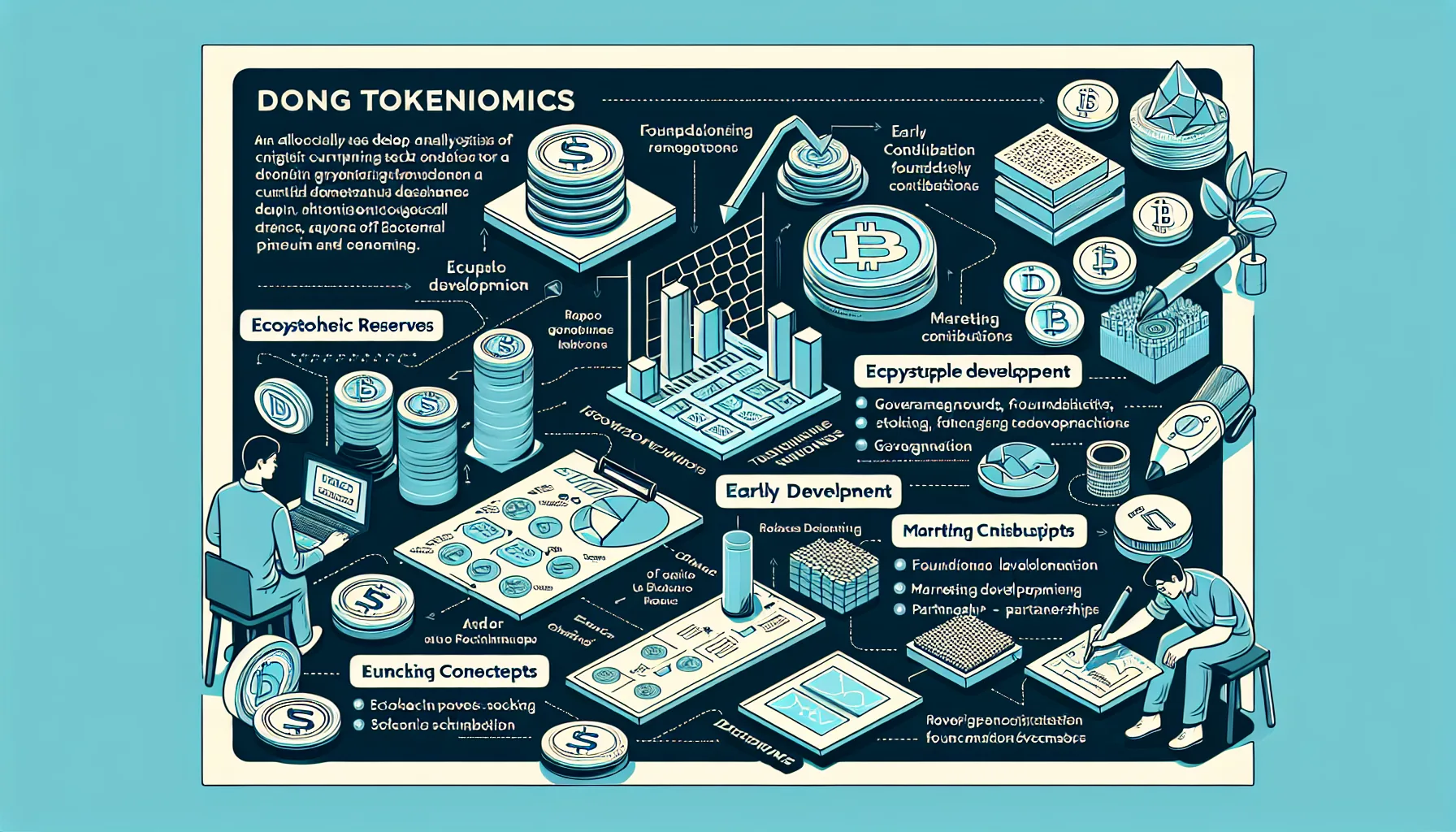
- Token Allocations: A considerable proportion of tokens were allocated to ecosystem reserves, foundational development, and early contributions, with a smaller fraction reserved for marketing initiatives and partnerships. This structure suggests a robust focus on ecosystem utility but also raises questions about centralization risks during the initial phases.
GOVERNANCE, STAKING, & UTILITY MECHANISMS
VITE is tightly woven into network governance and utility layers within the blockchain's 'Zero-Fee' paradigm.
VITE Governance
Exploring VITE Governance: Decentralization and Challenges
VITE’s governance structure reflects its commitment to decentralization, enabling stakeholders to directly influence the network's evolution. Built on a Directed Acyclic Graph (DAG) architecture, VITE leverages its unique Delegated Proof of Stake (DPoS) consensus mechanism to facilitate governance decisions. This section delves into the intricate specifics of VITE’s governance system, highlighting its strengths, mechanics, and potential areas for improvement.
The Role of VITE Token in Governance
The VITE token serves as the fundamental unit of participation within the governance framework. Token holders can stake their VITE to vote for Snapshot Block Producers (SBPs), which are akin to validators in conventional blockchain networks. These SBPs play a pivotal role in confirming and recording transactions on the network, as well as proposing and voting on protocol-level changes. The staking mechanism ensures that governance is, in theory, a collaborative process, incentivizing stakeholders to act in the long-term interest of the ecosystem.
However, one potential concern lies in the concentration of power. While the DPoS model is designed to enhance efficiency and scalability, it inherently risks centralizing decision-making among a select few SBPs. This could undermine the decentralized ethos of the network, particularly if smaller stakeholders feel their influence is marginal in comparison to larger token holders.
Voting Frequency and Proposal System
VITE governance operates on a continuous voting model, allowing stakeholders to update their votes for SBPs at any time. This ensures flexibility and enables the community to hold SBPs accountable for their performance. Additionally, the governance mechanism supports on-chain proposals, where participants can suggest changes to the protocol, such as modifications to technical parameters or enhancements to the network infrastructure.
While this system empowers token holders, the low participation rates observed in many DPoS-based networks remain a potential challenge for VITE. Voter apathy or lack of active engagement could limit the effectiveness of governance decisions, leaving critical upgrades or changes in the hands of only a fraction of the community.
Economic Incentives and Potential Misalignments
Economic incentives are integral to VITE governance, where SBPs are rewarded for their contributions to the network. However, this structure can provoke unintended consequences, such as the emergence of cartel-like behavior among SBPs. If certain SBPs collude to secure voting power, they may prioritize self-enrichment over ecosystem integrity. Furthermore, reliance on token-based voting inherently ties governance power to wealth distribution, raising concerns about equity and accessibility within the system.
In summary, while VITE’s governance model showcases innovation rooted in decentralization and community participation, it reflects broader challenges faced by DPoS ecosystems. The balance between efficiency and decentralization, alongside the goal of fostering active engagement, remains a dynamic and evolving element of VITE’s governance landscape.
Technical future of VITE
VITE: Current and Future Technical Developments and Roadmap
VITE has positioned itself as a distinctive player in the blockchain ecosystem by leveraging a Directed Acyclic Graph (DAG) architecture alongside an asynchronous transaction model. These technical advancements underpin its focus on scalability, efficiency, and real-time transaction capabilities. However, the project isn't without challenges, and understanding its current and future technical roadmap reveals both opportunities and hurdles.
Current Technical Architecture and Highlights
At the core of VITE's innovation is its use of a DAG-based infrastructure, which eliminates the bottlenecks commonly associated with traditional blockchain designs. Unlike chain-based approaches, VITE allows transactions to be confirmed asynchronously. This is powered by the Snapshot Chain structure, which helps maintain network security while providing high throughput. A distinguishing feature of VITE is its zero-fee transaction model, achieved by requiring users to stake tokens rather than directly paying transaction fees, which has garnered both praise and criticism. While this mechanism reduces the friction of microtransactions, it introduces token dependency for network usage, posing challenges for new users unfamiliar with staking mechanisms.
The platform also employs a hierarchical consensus layer based on Delegated Proof-of-Stake (DPoS). While this provides high performance and low transaction latency, DPoS environments are frequently critiqued for their potential susceptibility to centralization. In VITE's case, the role of Full Nodes and Supernodes requires continual observation to ensure decentralization isn't compromised over time.
The advancement of smart contracts written using Solidity++ on VITE represents a technical strength. The language builds on Solidity's foundation but introduces new optimizations tailored to the asynchronous nature of the VITE chain. This improves execution efficiency in certain decentralized application (dApp) scenarios. However, Solidity++ has a limited developer community compared to Ethereum's Solidity, which may slow ecosystem growth.
Future Roadmap and In-Progress Developments
VITE's roadmap places significant emphasis on expanding its ecosystem and enhancing interoperability. A key focus lies on the development of cross-chain compatibility via the VITE Bridge. This feature intends to enable seamless transfers of assets between VITE and other blockchains, potentially increasing adoption. Yet, technical execution remains complex, and interoperability solutions often face vulnerabilities like bridging exploits, an industry-wide risk.
Another critical area of development is the layer-2 solutions roadmap. Building on its scalability-focused architecture, VITE aims to provide new tools for layer-2 implementations, potentially positioning itself as a solution provider for projects needing efficient settlement layers. However, the roadmap is ambitious, and the actual delivery of these solutions will depend on tackling technical and resource challenges.
Key upgrades to governance mechanisms and community-driven improvements to the staking model are also under consideration. Enhancements aiming to decentralize validator participation and reduce Supernode control are being explored as part of an effort to address lingering concerns about centralization risks associated with DPoS.
Notable Challenges Ahead
Despite a technically advanced infrastructure, VITE faces well-recognized challenges. Continued reliance on niche technology like DAG and a proprietary smart contract language creates onboarding hurdles for new developers. Additionally, the network's zero-fee model, while appealing, may impact future sustainability, especially if network activity surges without a clear fee mechanism for supporting long-term operations.
The project's ability to execute on its roadmap will likely depend on both resource allocation and broader crypto adoption trends. While its focus on innovation is evident, execution risks remain, particularly in rapidly evolving areas like interoperability and governance.
Comparing VITE to it’s rivals
Comparing VITE to IOTA: A Deep Dive into DAG-Based Blockchains
In the landscape of Directed Acyclic Graph (DAG) blockchains, VITE and IOTA are two projects tackling scalability, fee elimination, and decentralization but taking markedly different approaches to achieve their goals. While both leverage DAG to deviate from the limitations of traditional blockchain architectures, the nuances between their implementations reveal key distinctions that affect usability, security, and ecosystem growth.
Consensus Mechanisms: VITE's Snapshot Chain vs. IOTA's Tangle
One of the prominent technical differences between VITE and IOTA lies in their consensus mechanisms. VITE relies on a Snapshot Consensus Group mechanism on top of its DAG structure to finalize transactions. This additional layer offers faster and more reliable transaction confirmations but introduces a level of trusted oversight, as the Snapshot Chain depends on a semi-centralized group of nodes to validate the state.
IOTA, alternatively, operates on the Tangle, where confirmation is peer-to-peer, requiring each transaction to validate two prior transactions. While this removes the need for miners entirely, it poses unique vulnerabilities, such as susceptibility to low network activity. Historically, IOTA has required centralized components, like the Coordinator, to ensure network security during periods of low transaction throughput, raising concerns about decentralization.
Fee-Free Model: Shared Philosophy, Divergent Execution
Both VITE and IOTA pursue the fee-free model to make microtransactions feasible and appeal to applications in IoT and enterprise settings. VITE achieves this through its quota-based resource allocation, which operates similarly to Ethereum GAS but is pre-allocated based on a user's VITE holdings or staking activity. This approach encourages active participation while ensuring fair access to network resources.
IOTA, in contrast, inherently eliminates fees through the Tangle’s structure and lack of miners. However, this simplicity has created bottlenecks in incentivizing validators during periods of low usage, resulting in challenges to network growth and adoption.
Smart Contract Capabilities vs. IoT Orientation
One area where VITE distinguishes itself is its support for Turing-complete smart contracts. This functionality positions VITE as a broader platform for decentralized application development and blockchain-based services beyond basic value transfer. IOTA, historically more focused on IoT applications, has only recently begun experimenting with smart contract functionality through extensions like IOTA Smart Contracts. This slower progression has left IOTA playing catch-up in this critical aspect of blockchain technology.
Security and Development Ecosystem
Security remains a contentious point for both platforms. VITE benefits from its Snapshot Chain mechanism but inherits the risks of semi-centralized validation. IOTA, on the other hand, has faced criticism for security vulnerabilities, most notably the issues related to its proprietary cryptographic algorithms. Although these vulnerabilities have been addressed over time, trust in the ecosystem has faced setbacks, further complicated by the project’s evolving development roadmap.
VITE and IOTA, while sharing similar foundations in DAG, exhibit unique trade-offs in consensus mechanisms, feature sets, and network security. These differences highlight the complexity of the evolving blockchain space, especially among novel architectures striving to overcome the limitations of traditional blockchains.
Comparing VITE and NANO: A Technical Dive Into Two DAG-Based Cryptocurrencies
When placing VITE side by side with NANO, the distinctions in architecture, use cases, and network designs become evident. Both projects rely on Directed Acyclic Graph (DAG) structures, but their varied approaches result in unique strengths and limitations.
Consensus Mechanism: Snapshot Chain vs. Open Representative Voting
VITE utilizes a dual-layered architecture, employing a Directed Acyclic Graph (DAG) structure for user operations and a delegated consensus mechanism known as Snapshot Chain. This design prioritizes scalability and supports features like smart contracts. By contrast, NANO focuses exclusively on payments and employs its Block Lattice structure combined with Open Representative Voting (ORV). NANO's choice of ORV ensures low energy consumption, but its purely payment-centric focus makes it less versatile compared to VITE's broader functionalities, such as token issuance or decentralized apps (dApps).
One critical differentiation lies in centralization risks. While both systems claim decentralization, VITE's community often raises questions about the influence of its delegated nodes, given their concentrated power. Meanwhile, NANO’s ORV relies on prominent representatives, which similarly introduces concerns about de facto centralization.
Fee Structure and Economic Models
Both VITE and NANO are fee-less networks, but they achieve this through different economic mechanics. NANO’s approach is extremely lightweight, avoiding token minting and solely relying on users’ Proof of Work (PoW) for anti-spam purposes. VITE, on the other hand, incorporates a credit-based structure where network actions require the accrual of VITE tokens. This introduces a potential barrier for users lacking the on-hand token balance to interact with the network, whereas NANO’s low barrier-to-entry design may be more approachable for first-time users.
Smart Contract Capability
A notable divergence is VITE’s integration of Solidity-compatible smart contracts, granting extensive utility beyond simple transactions. NANO, staying true to its payments-only philosophy, lacks smart contract capabilities entirely. While this means NANO boasts simplicity and speed, it also limits its adaptability for evolving DeFi trends or custom blockchain applications. VITE’s compatibility with smart contracts could attract developers in search of a more versatile platform but comes at the cost of increased complexity.
Speed and Finality
Performance between the two projects is nuanced. NANO is renowned for its near-instant transaction settlement, leveraging its minimalistic network design to offer unparalleled speed. VITE also prioritizes fast confirmations but introduces an extra layer of finality through its Snapshot Chain mechanism. This added security layer is beneficial for critical dApps but may slightly add overhead compared to NANO’s raw transactional efficiency.
Ecosystem and Adoption Challenges
The stark difference in ecosystems is another focal point. NANO fosters a tightly defined, payment-first ecosystem that doesn't cater to developers working on feature-rich applications. Conversely, VITE’s ecosystem embraces multi-purpose adaptability but suffers from slower network adoption due to its relative complexity and lack of user familiarity.
Both platforms display notable trade-offs in efficiency, functionality, and adoption pathway. While each has carved a unique niche, assessing them requires understanding these fundamental differences in design philosophy and execution.
Comparing VITE to Nervos Network (CKB): A Technical Breakdown of Differences
VITE and Nervos Network (CKB) cater to vastly different blockchain niches, with core differentiators in architecture, consensus, and usability for developers. While VITE positions itself as a high-performance, asynchronous blockchain leveraging Directed Acyclic Graphs (DAGs) to eliminate bottlenecks in transaction throughput, Nervos Network (CKB) operates in a layered architecture designed explicitly to address long-term blockchain data sustainability and cross-chain interoperability.
Consensus Mechanism: Asynchronous Versus Traditional
VITE utilizes its unique Snapshot Chain Structure powered by the Hierarchical Delegated Proof of Stake (HDPoS) consensus mechanism. This asynchronous structure emphasizes high-speed transactions by decoupling sending and receiving processes, promoting scalability and responsiveness. By contrast, Nervos leverages Proof of Work (PoW) at the base layer for its Common Knowledge Base, prioritizing data security and decentralization. While PoW ensures trust minimization and guarantees long-term preservation of on-chain states, it often sacrifices transaction speeds—a stark divergence from VITE's approach of optimizing for network performance.
Smart Contract Interactions: Flexibility in Focus
A critical distinction lies in how each protocol handles smart contracts. VITE employs Solidity++, a variant of Solidity, enabling compatibility with Ethereum-based developers and frameworks. It is specifically designed for scalability and asynchronous smart contract execution in its DAG ledger framework. In comparison, Nervos double-downs on flexibility with its RISC-V-based virtual machine, the CKB-VM. By enabling developers to write smart contracts in almost any programming language, Nervos broadens its appeal to non-blockchain developers but increases complexity in its tooling and learning curve.
Tokenomics and Usability
CKB introduces an innovative "store of value model" leveraging its native CKB token for sustainable network operations. It allows users to deposit tokens as "state rent" for on-chain data storage, ensuring economic incentives align with the longevity of the network. VITE, on the other hand, incorporates a dual-token economy featuring VITE as the main currency and a quota system requiring users to stake VITE for transaction privileges. While this approach reduces transaction costs, it may alienate smaller participants who struggle with staking minimums.
Developer Experience and Ecosystem Growth
Although both ecosystems present developer-friendly innovations, Nervos places greater emphasis on modular development through its layered stack designed for long-term interoperability. These layers offer scalability benefits but add complexity, potentially slowing adoption. Meanwhile, VITE prioritizes an all-in-one ecosystem with its native decentralized exchange (ViteX), wallet, and payment solutions, aiming for quicker integration yet risking centralization concerns due to tightly coupled components.
Ultimately, VITE and Nervos (CKB) reflect divergent priorities, with one focused on high-speed, cost-efficient dApp hosting and the other on ensuring blockchain sustainability and developer freedom.
Primary criticisms of VITE
Primary Criticisms of VITE: Challenges Facing the Ecosystem
Centralization Concerns in Governance
A recurring criticism of VITE centers around its governance model, which some argue exhibits centralization tendencies. Although the platform leverages a Delegated Proof of Stake (DPoS) consensus mechanism, decisions and network control can become disproportionately influenced by a small group of supernodes. This concentration of voting power raises questions about the platform’s commitment to decentralization—one of the foundational principles that many cryptocurrency investors and users prioritize. Critics argue that this model leaves the network susceptible to potential collusion or manipulation by a handful of influential actors.
Liquidity Constraints
VITE’s lack of liquidity in various markets is another point of contention. While the project has worked on building out its ecosystem, the availability of the token on prominent exchanges remains limited in comparison to more widely adopted cryptocurrencies. The lower trading volumes and limited exchange listings can lead to inefficiencies, slippage, and challenges when trying to move in or out of positions, particularly for traders handling large sums. This can deter institutional participation, a critical factor for widespread adoption and credibility in the cryptocurrency landscape.
Complexity of Node Operations
Running a full VITE node, particularly one that participates as a supernode, has been described as technically demanding and resource-intensive by critics. While the network’s architectural approach, including its Directed Acyclic Graph (DAG) structure, boasts theoretical advantages in scalability, the practical burden on users who wish to contribute to network stability can deter wider participation. This aspect is seen as a gap in accessibility, as it narrows the pool of potential validators to those with both technical know-how and sufficient hardware infrastructure.
Limited Ecosystem Adoption
A key value proposition of VITE lies in its promise as an ecosystem for decentralized applications (dApps), yet critics often highlight the limited traction of these dApps compared to competitors. The scalable and feeless transaction model—while technically promising—has not translated into significant user adoption or developer activity at levels comparable to other blockchain networks with similar functionalities. This shortcoming leads to concerns about the network’s ability to sustain long-term value and fend off competition.
Communication and Marketing Gaps
Another criticism revolves around VITE's outreach and communication strategy. Skeptics point to occasional gaps in transparent communication from developers and a perceived lack of concerted marketing efforts to expand the network's user base. Without clear and continuous engagement, some argue that VITE risks falling behind in an increasingly crowded field of blockchain platforms vying for developer and user attention.
Founders
The Founding Team Behind VITE: Visionaries and Controversies
VITE, a next-generation blockchain ecosystem, owes its origins to a team of blockchain enthusiasts and developers with a focus on scalability and decentralized efficiency. The project was launched by an experienced group with roots in software engineering, distributed computing, and blockchain architecture. Among the most notable figures in its founding is Richard Yan, who has played a central role in shaping the project’s vision.
Richard Yan holds impressive credentials, with a professional history that spans Goldman Sachs and other high-profile financial and technology ventures. His background in traditional finance combined with his pivot to blockchain is often cited as a pivotal strength for VITE, helping to bridge the gap between the crypto ecosystem and broader financial industries. However, critics have pointed out that Yan’s experience skews heavily toward theoretical frameworks and business strategy rather than in-depth technical expertise. For a blockchain ecosystem as technically complex as VITE, this raises questions about whether the team can continue to address evolving technical demands at scale.
A key figure driving the technical development of VITE is Chris Li, the platform’s Chief Technology Officer. Li brings substantial experience in distributed systems, with prior work in developing high-performance computing solutions. Under his leadership, the VITE platform implemented its Directed Acyclic Graph (DAG) architecture, one of its primary innovations. However, despite the technical promise of DAG, there have been murmurs within the crypto community about challenges in integrating this architecture with smart contract compatibility—a matter directly tied to the initial design choices made by the team.
The broader VITE team includes a mix of engineers and marketing professionals, many of whom have prior experience in blockchain and cryptography projects. Despite the strong resumes, transparency has sometimes been a sticking point. The founding team has been criticized for what some see as limited disclosure about how development timelines are managed and how the platform maintains consistency in decentralization—a key value proposition.
In summary, while the VITE founding team exhibits credentials that have bolstered the platform’s reputation, lingering concerns about technical scalability, transparency, and the decision-making structure persist within the crypto-savvy community. This tension between innovation and execution reflects a nuanced reality that’s worth considering for anyone following VITE’s journey.
Authors comments
This document was made by www.BestDapps.com
Sources
- https://vite.org/
- https://github.com/vitelabs
- https://vite.org/whitepaper/
- https://docs.vite.org/
- https://explorer.vite.net/
- https://medium.com/vitelabs
- https://github.com/vitelabs/go-vite
- https://github.com/vitelabs/vite-tokens
- https://vite.wiki/
- https://snapshot.org/#/vite
- https://www.coingecko.com/en/coins/vite
- https://coinmarketcap.com/currencies/vite/
- https://vite.org/articles/2021/09/24/vite-bridge-overview/
- https://vite.org/articles/2021/12/15/vite-2-8-5-release/
- https://docs.vite.org/go-vite/devtools/
- https://forum.vite.net/
- https://github.com/vitelabs/solidity-extensions


