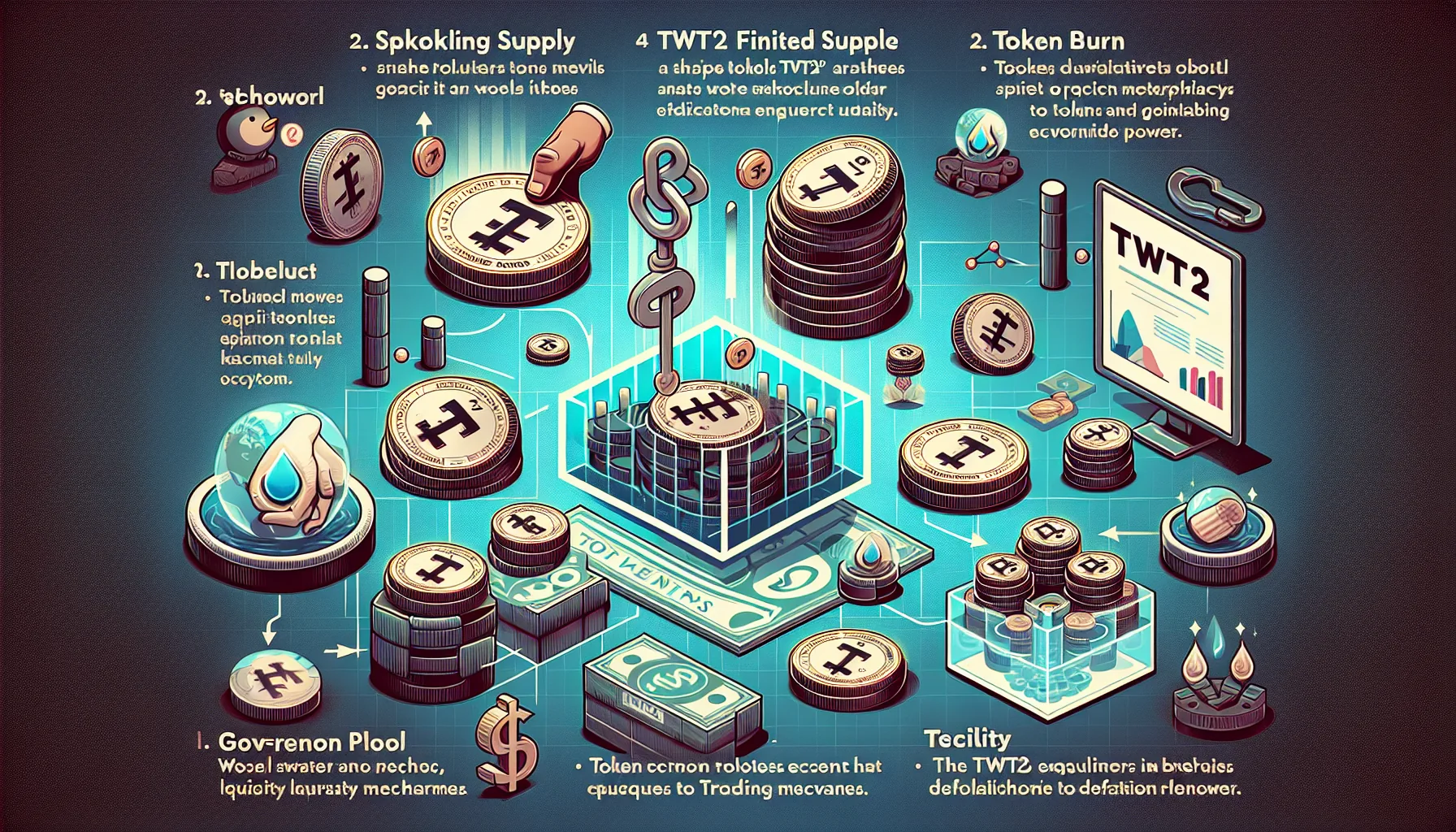
History of TWT2
The History of TWT2: Origins, Development, and Key Events
TWT2 has its roots in the broader evolution of utility tokens designed to enhance decentralized ecosystems. Emerging as an extension of governance and incentive-driven mechanisms, TWT2 was introduced to address scalability and usability concerns faced by earlier iterations. The token’s launch was marked by a fair distribution model aimed at promoting decentralization, with initial allocations targeting active ecosystem participants rather than a traditional fundraising event.
Early Development and Technical Foundation
The initial development of TWT2 built upon established blockchain frameworks but introduced modifications to improve transaction efficiency. Early iterations leveraged a lightweight consensus mechanism aimed at reducing gas costs—an improvement over previous models that often struggled with network congestion. Despite these technical advancements, early adoption was met with skepticism, as critics questioned whether the enhancements were substantial enough to justify a fork or new issuance rather than improvements to existing infrastructure.
Adoption Challenges and Ecosystem Integration
Adoption hurdles became apparent as the broader crypto community weighed TWT2’s utility against alternative solutions. While designed to provide governance functionality and transactional advantages within its native ecosystem, liquidity constraints posed an obstacle in the early phases. Exchange listings were initially limited, and concerns arose over token distribution fairness despite efforts to avoid heavy concentration in whale addresses. Still, organic usage grew as more projects integrated the token into staking models and decentralized finance applications.
Security concerns also played a role in shaping the token’s adoption trajectory. Early smart contract audits revealed minor vulnerabilities that required iterative fixes, reinforcing the need for continuous upgrades. While no major exploits occurred, certain design choices drew scrutiny, particularly around token minting mechanisms and their long-term implications for supply control.
Governance Evolution and Community Influence
As TWT2’s ecosystem matured, its governance model underwent several revisions in response to user feedback. Governance mechanisms initially intended to be lightweight evolved into more structured frameworks, allowing for community-driven improvement proposals. However, governance participation remained lower than anticipated in the early stages, prompting discussions about incentive structures. The balance between decentralization and decision-making efficiency became an ongoing debate, with governance token holders split between prioritizing rapid protocol upgrades and maintaining resistance to centralization.
The historical trajectory of TWT2 underscores the challenges inherent in launching and sustaining a crypto asset within a competitive ecosystem. As the token's role in governance, staking, and network utility continues to develop, past events highlight ongoing considerations for its future adaptability.
How TWT2 Works
How TWT2 Works: Mechanisms and Functionality
TWT2 operates on a smart contract infrastructure designed for utility-driven tokenomics within its ecosystem. At its core, TWT2 leverages blockchain-based governance, staking mechanisms, and transaction fee structures to support its use case. Unlike purely speculative assets, TWT2 integrates on-chain functionality that interacts with decentralized applications, allowing users to access services or dictate protocol parameters.
Token Utility and Smart Contract Interactions
TWT2’s primary function is tied to its smart contract architecture, which enforces transaction rules, governance participation, and potential staking incentives. The token is programmed to interact with a predefined set of contract functions, enabling seamless execution of operations such as voting, payments, or access privileges. Token holders engage with the smart contracts by signing cryptographic transactions that validate ownership and dictate protocol-level interactions.
A key operational element in TWT2’s framework is automated fee deductions. Whether as gas fees for internal transactions or service-related charges within its ecosystem, these token-related fees influence liquidity movement. The presence of automated mechanisms facilitates structured token burns or redistribution, depending on how the governing contracts are deployed and updated.
Governance and Decision-Making Framework
TWT2 integrates decentralized governance mechanisms, allowing holders to participate in protocol decision-making. Smart contracts governing TWT2 are configured to accept votes based on token-weighted influence, meaning users with larger holdings exert more control over proposed changes or upgrades.
One potential challenge with this system is the concentration of influence among large stakeholders. Depending on how voting power is distributed, governance decisions may favor majority holders, potentially sidelining smaller participants. Additionally, like many token-based governance models, voter apathy can result in low participation rates, affecting decision-making efficiency.
Security and Potential Risks
The security of TWT2 is contingent on the robustness of its smart contracts and the underlying blockchain infrastructure. If vulnerabilities exist within the contract code or if governance mechanisms are exploited, the protocol may be susceptible to unforeseen risks. A potential issue could arise from poorly audited smart contracts, leading to vulnerabilities that could be exploited by bad actors.
Another structural concern is liquidity reliance. If TWT2 operates within a decentralized finance (DeFi) environment, the availability of liquidity pools and secondary market activity will directly impact usability. Token holders may experience limited transaction efficiency during periods of reduced market engagement or network congestion.
The technical framework supporting TWT2 continues to evolve based on ecosystem demand and governance decisions, shaping the token’s ongoing utility and operational efficiency.
Use Cases
TWT2 Token Use Cases: On-Chain Utility and Ecosystem Integration
Governance and Decision-Making
TWT2 plays a key role in governance by enabling token holders to participate in protocol-level decision-making. Holders can vote on proposals that impact network upgrades, fee structures, and feature developments. A common challenge in governance models is low voter turnout, which can lead to centralization of decision-making power among a few large stakeholders. Additionally, governance mechanisms that rely on staking TWT2 for voting risk discouraging participation due to potential opportunity costs.
Transaction Fee Discounts
Within its supported ecosystem, TWT2 can be used for reduced transaction fees on certain dApps and DeFi platforms. Users holding or staking TWT2 may receive lower trading fees, making it a cost-saving mechanism for active participants. However, fee reductions depend on platform adoption, and if integration remains limited, the token’s utility in this area could be constrained.
Staking and Yield Generation
TWT2 supports staking, allowing holders to earn rewards by locking their tokens in network validators or DeFi pools. This incentivizes token retention while providing passive income opportunities. However, staking carries risks such as impermanent loss, smart contract vulnerabilities, and liquidity constraints if users need to unstake their tokens during market shifts.
Cross-Platform Payments
Some platforms accept TWT2 as a payment method for services, subscriptions, and licensing within their ecosystem. This use case relies heavily on merchant adoption and liquidity availability. If TWT2 lacks widespread payment integrations, usability concerns may limit its role as a transactional asset.
Rewards and Incentives
TWT2 is commonly used in incentive programs for user engagement, referrals, and platform-specific rewards. While this model helps drive adoption, excessive reliance on rewards can lead to inflationary pressures, reducing long-term sustainability. The effectiveness of incentive structures depends on balancing token distribution without diluting value.
NFT and Metaverse Applications
Integrations with NFT marketplaces and metaverse projects allow TWT2 to be used for purchasing digital assets or staking within virtual environments. Adoption in this space is competitive, and without strong partnerships or a robust infrastructure, its role in NFTs and metaverse ecosystems could be overshadowed by competing tokens.
Security and Custody Considerations
The usability of TWT2 is also dependent on secure storage and accessibility. If native wallets or third-party integrations lack strong security measures, users may risk asset exposure. Additionally, reliance on centralized exchanges for liquidity could pose custodial risks due to potential platform vulnerabilities.
TWT2 Tokenomics
TWT2 Tokenomics: Supply, Distribution, and Utility
Fixed Supply and Emission Model
TWT2 operates with a finite supply, which imposes a hard cap on total token issuance. This predetermined limit serves multiple purposes, primarily preventing unchecked inflation and ensuring scarcity-driven value retention. However, the implementation of this model raises questions regarding future liquidity dynamics, particularly if demand outpaces availability. Unlike inflationary models that continuously introduce new tokens into circulation, TWT2’s emission strategy requires careful allocation to sustain network incentives.
Initial Distribution and Allocation
At launch, TWT2 tokens were distributed across multiple segments, including ecosystem development, team reserves, community incentives, and liquidity provisioning. A notable portion was committed to early supporters and strategic partners, introducing concerns regarding potential supply centralization. While vesting schedules curb immediate sell-offs, large allocations to insiders may impact long-term decentralization. Transparency around vesting and unlock schedules remains critical for evaluating future market pressure.
Staking and Governance Incentives
TWT2 integrates a staking mechanism that allows holders to lock tokens in exchange for rewards. The reward distribution model accounts for factors such as staking duration and network participation, encouraging long-term holding. Staking yields, however, fluctuate based on overall participation rates, potentially diluting returns as more users engage. Additionally, governance influence is proportional to token holdings, reinforcing a system where vested participants drive decision-making. While this aligns incentives for active contributors, it also risks governance disproportionately favoring larger holders.
Utility in the Ecosystem
TWT2 has multiple on-chain utilities, including transaction fee reductions, governance participation, and access to exclusive features within its ecosystem. The token’s integration with platform-native services enhances its intrinsic demand. However, if adoption stagnates or alternative utility tokens offer competitive advantages, demand-driven sustainability may weaken. Dependence on ecosystem growth remains a key factor in the token’s continued relevance.
Liquidity Considerations and Market Dynamics
Liquidity provisioning mechanisms play a crucial role in TWT2’s trading environment. The presence of decentralized liquidity pools mitigates order book depth issues but introduces risks linked to impermanent loss for liquidity providers. Market-driven fluctuations in supply-demand balance also influence trading efficiency and slippage. Additionally, centralized exchange listings impact accessibility, though reliance on third-party platforms exposes holders to counterparty risks inherent in custodial environments.
Token Burn and Deflationary Mechanisms
TWT2 incorporates controlled burn mechanisms to offset circulating supply and introduce scarcity effects. However, the rate and impact of these burns remain subject to variability in transaction volumes and protocol activity. While deflationary mechanics can strengthen long-term value retention, their effectiveness hinges on sustained network engagement. If transactional activity declines, burn effects may not sufficiently counterbalance supply emissions over time.
TWT2 Governance
TWT2 Governance: Decentralization and Decision-Making Structure
On-Chain Governance Mechanisms
TWT2 incorporates an on-chain governance model where token holders directly influence protocol upgrades, treasury allocations, and strategic direction. Governance participation requires staking TWT2 tokens, ensuring that only those with economic stake in the network influence decision-making. Voting power typically scales linearly with the number of tokens held, which can lead to centralization risks if large holders dominate the decision-making process.
Proposal Process and Execution
Governance proposals follow a structured process: they are first discussed within the community, then formalized into proposals, and finally voted on by token holders. The execution of successful proposals is often automated through smart contracts, minimizing reliance on centralized actors. However, the efficiency of execution depends on governance contract upgrades, which themselves require community consensus—sometimes slowing down urgent changes.
Governance Token Distribution and Concerns
A critical factor in the governance system is token distribution. If early adopters or internal teams maintain a substantial percentage of the supply, governance can become skewed. While delegation mechanisms allow smaller holders to consolidate voting power, they often lead to governance apathy, where smaller participants fail to engage directly. This dynamic introduces the risk of governance attacks or decisions that favor large token holders over the broader ecosystem.
Off-Chain Influence and Coordination
While TWT2’s governance is executed on-chain, off-chain discussions—often taking place on forums, social media, and governance platforms—heavily influence proposal outcomes. The challenge lies in ensuring transparency in these discussions and preventing interest groups from exerting disproportionate control over governance narratives before votes happen. Coordination tools such as governance councils or stewards can help guide discussions, but they may introduce centralization risks if not sufficiently decentralized.
Upgradeability and Governance Risks
TWT2’s governance framework includes upgrade mechanisms that allow protocol improvements. However, excessive flexibility in upgradeability can introduce risks, including exploitable governance loopholes where malicious actors attempt to push through proposals that grant them excessive control. Safeguards such as timelocks, quorum thresholds, and security audits play a crucial role in preventing governance-related attacks, yet balancing security with agility remains a persistent challenge.
Impact on Network Sustainability
Governance decisions directly impact the long-term sustainability of TWT2. Treasury management, staking incentives, and protocol fee structures are often controlled through governance votes. Poorly designed incentives can lead to inflationary tokenomics or misaligned priorities, raising concerns about the protocol's ability to sustain itself without excessive governance interventions.
Technical future of TWT2
TWT2 Technical Developments and Roadmap
Smart Contract Enhancements and Layer 2 Integrations
TWT2 is actively refining its smart contract architecture to enhance security, efficiency, and interoperability. Recent updates focus on minimizing gas fees through optimized contract execution, reducing computational overhead, and integrating more efficient token transfer mechanisms. The development team is also evaluating Layer 2 scaling solutions to improve transaction throughput without the need for significant base-layer changes. While these enhancements improve speed and cost-effectiveness, they may also introduce complexity in cross-chain interactions, requiring additional security audits and optimization efforts.
Governance System Refinements
The governance system is undergoing modifications to ensure a more balanced voting structure and prevent potential centralization risks. Upcoming proposals are expected to shift weight away from heavy token holders, possibly introducing quadratic or time-weighted voting to mitigate governance capture. However, this shift could lead to friction within the community, particularly among long-term holders who may perceive these changes as dilutive to their influence.
Multi-Chain Expansion and Compatibility Challenges
TWT2 is expanding beyond its native chain, working on integrating with multiple networks to increase liquidity and usability. Efforts include bridging solutions that enable seamless token transfers between EVM-compatible chains and alternative Layer 1s. While these initiatives increase exposure, they also introduce smart contract risks, particularly in bridge security – a historically weak point for many projects. Ensuring robust security audits and avoiding single points of failure remains a key technical challenge.
Privacy and Confidential Transactions
With growing concerns over on-chain transparency, TWT2 developers are exploring privacy-enhancing features such as zero-knowledge proofs or confidential transactions. While these additions aim to improve user security, they also raise regulatory concerns that could affect exchange listings and institutional adoption. The implementation of these privacy mechanisms must balance compliance and decentralization, making it a crucial technical and strategic decision.
Developer Tooling and SDK Improvements
To foster adoption, TWT2 is prioritizing improvements to its developer resources, including an upgraded software development kit (SDK) and expanded API support. The goal is to streamline dApp development and broaden integration possibilities. However, fragmentation between versions and backward compatibility concerns remain areas requiring careful coordination.
Security and Auditing Initiatives
Given the evolving threat landscape, TWT2 is ramping up security measures, including continuous smart contract audits, enhanced bug bounty programs, and real-time monitoring systems. However, as security improves, there is always a trade-off in development speed, often leading to delays in feature rollouts.
Roadmap Considerations and Potential Risks
Despite a well-defined technical roadmap, execution risks such as governance disputes, security vulnerabilities, and regulatory barriers could impact progress. The team must navigate these challenges while maintaining decentralization and technological innovation.
Comparing TWT2 to it’s rivals
TWT2 vs USD: A Comparative Analysis
Stability and Volatility
TWT2 and USD operate on fundamentally different stability models. While the USD is managed by a central authority—primarily the Federal Reserve—TWT2 functions in a decentralized environment, with its supply and governance dictated by algorithmic or community-driven mechanisms. USD’s stability is derived from governmental backing and extensive global adoption, which makes it the preferred unit of account for everyday transactions, trade, and financial reserves. TWT2, by contrast, is susceptible to greater fluctuations based on market sentiment, liquidity, and adoption cycles.
Liquidity and Acceptance
The USD has universal recognition and is accepted in all sectors, from global trade to everyday retail transactions. It enjoys unparalleled liquidity, with near-instant conversions available in forex markets and banking institutions. TWT2, while tradable on crypto exchanges, faces limitations in direct real-world usage. Merchant adoption is considerably lower, and its liquidity is dependent on exchange listings, order book depth, and network activity. Though decentralized finance (DeFi) integrations provide avenues for leveraging TWT2 within digital ecosystems, it does not match the accessibility of USD in traditional markets.
Inflation and Supply Dynamics
USD follows an inflationary model, with monetary policy decisions influencing supply through interest rate adjustments, quantitative easing, and fiscal interventions. Over time, USD tends to lose purchasing power due to controlled inflation. TWT2, depending on its tokenomic structure and potential supply caps, may have deflationary elements or mechanisms that counteract dilution. If programmed for scarcity, TWT2 could theoretically serve as a hedge against inflation, though this is contingent on adoption and sustained demand.
Censorship Resistance and Control
A significant advantage of TWT2 over USD is its resistance to centralized control. USD transactions are subject to government oversight, banking regulations, and potential seizure by authorities. Cross-border transfers require compliance with financial institutions and regulatory frameworks. TWT2 transactions, assuming they occur on a decentralized network, offer permissionless settlement, reducing dependency on intermediaries. However, network fees, security risks, and blockchain congestion can impact transaction efficiency.
Smart Contract Integration
Unlike USD, which operates primarily as a fiat currency without inherent programmability, TWT2 may feature smart contract compatibility. This expands its use case for automated financial workflows, lending protocols, and incentive structures without intermediary reliance. However, risks such as contract exploits, governance vulnerabilities, or liquidity fragmentation pose challenges that centralized currencies like USD do not encounter.
TWT2 vs Gold: A Digital Alternative to a Timeless Asset
Gold has long been considered a store of value, a hedge against inflation, and a safe haven asset in times of economic uncertainty. TWT2 positions itself as a digital alternative, but how does it compare to gold in terms of security, liquidity, and practical use?
Security and Custodianship
Gold's value is tied to its physical scarcity and historical importance. However, securing physical gold comes with challenges, including storage costs, security risks, and the reliance on custodians or third parties for safekeeping. In contrast, TWT2 allows for self-custody through blockchain-based wallets, removing the need for intermediaries.
That said, self-custody presents its own risks. While users avoid counterparty risk, they take on personal responsibility for key management. Losing access to private keys can mean permanent asset loss, which is not an issue with gold stored in a vault. Additionally, smart contract vulnerabilities or exploit risks in decentralized custody solutions remain concerns for digital assets, whereas gold is unaffected by such technical risks.
Liquidity and Market Access
Gold benefits from deep global liquidity, with established markets that include physical bullion, ETFs, futures contracts, and central bank reserves. Investors can access gold through various financial products, making it a highly tradable asset. However, converting physical gold into cash can be cumbersome and often comes with high premiums and logistical challenges.
TWT2 operates within the crypto ecosystem, offering direct peer-to-peer transfers and access to decentralized finance (DeFi) applications. On-chain transactions allow for immediate global liquidity without reliance on traditional banking infrastructure. However, liquidity depth is largely dependent on the adoption and market capitalization of TWT2. While popular digital assets like Bitcoin and Ethereum have deep liquidity pools, newer tokens may face challenges in maintaining consistent buy and sell pressure.
Use Cases and Functional Utility
Gold is primarily a store of value rather than a medium of exchange. Although it has industrial applications in sectors like electronics and jewelry, its role in daily transactions is limited. Gold-backed stablecoins exist, but they introduce reliance on custodians to verify holdings.
TWT2, as a digital asset, integrates with blockchain-based platforms, potentially offering programmability and interoperability within smart contract ecosystems. If supported by DeFi protocols, holders may use it for lending, collateralization, or earning yield. However, its long-term viability depends on adoption, and if market participants do not recognize it as a reliable asset, its utility could remain restricted within niche applications.
TWT2 vs. Stocks: Key Differences for Crypto Investors
When comparing TWT2 to traditional stocks, significant differences emerge in market structure, accessibility, and underlying value. Investors accustomed to equities will find both advantages and challenges in transitioning to TWT2 or incorporating it into a diversified portfolio.
Market Structure and Trading Accessibility
Unlike stocks, which trade on regulated exchanges with set trading hours, TWT2 operates in a 24/7 market. This difference allows for continuous price discovery but also introduces volatility risks, as major price swings can occur outside traditional stock market hours. Additionally, stocks benefit from stringent regulatory oversight, while TWT2, like many crypto assets, exists in a relatively less regulated space. This lack of oversight can be a double-edged sword—providing freedom from intermediaries but also exposing investors to potential security breaches, liquidity concerns, and fraud risks.
Trading accessibility is another key distinction. Stocks generally require brokerage accounts, KYC compliance, and settlement periods, while TWT2 is typically traded on decentralized and centralized crypto exchanges with instant settlement. This can be advantageous for traders seeking faster execution but comes with the added responsibility of managing private keys and secure storage.
Underlying Value and Ownership Model
Stocks represent fractional ownership in a company, often with legal rights such as voting power or dividend entitlements. Their value is tied to company performance, earnings reports, and broader economic conditions. In contrast, TWT2 is not backed by corporate earnings but rather by network utility, adoption, and market demand. This fundamental difference means valuation models used for stocks—such as P/E ratios or discounted cash flows—do not directly apply to TWT2. Instead, factors like tokenomics, governance mechanisms, and ecosystem development play a more significant role in determining its perceived value.
Volatility and Market Influence
Equities are influenced by macroeconomic events, corporate performance, and monetary policy, whereas TWT2 operates in an ecosystem where liquidity, exchange dynamics, and broader crypto sentiment have outsized impacts. Stock markets have circuit breakers and trading halts to prevent extreme volatility, a feature largely absent in crypto markets. This can make TWT2 riskier for traditional investors unfamiliar with rapid price movements.
Additionally, while stocks are typically affected by institutional investor behavior, TWT2’s price can be driven by crypto-native factors, including on-chain activity, staking mechanisms, and developer engagement within its ecosystem. These variables create unique risks and opportunities, shaping how investors perceive TWT2 in a landscape distinct from equities.
Primary criticisms of TWT2
Primary Criticism of TWT2
Centralization Concerns and Governance Issues
One of the most persistent criticisms of TWT2 is its governance structure, which some argue does not align with the core ethos of decentralization. While TWT2 positions itself as a community-driven asset, a significant portion of the token supply remains concentrated in the hands of early stakeholders. This raises concerns about the actual degree of on-chain governance participation, as key decisions may be disproportionately influenced by a small group rather than the broader holder base.
Liquidity and Exchange Support Limitations
Liquidity challenges have also been a major point of contention. Despite TWT2’s adoption in certain crypto circles, its market depth is still relatively thin on some major exchanges. This can result in high slippage for large transactions, potentially discouraging institutional or large-scale traders from engaging with the token. Additionally, limited fiat on-ramps and inconsistencies in exchange listings may impact accessibility for newer adopters.
Smart Contract and Security Risks
While TWT2 has undergone code audits, some critics highlight potential vulnerabilities in its smart contract framework. Past issues related to contract efficiency and minor security patches have raised questions about the robustness of its codebase. Additionally, since TWT2 operates within a larger blockchain ecosystem, dependencies on external networks introduce risks that are beyond the control of the token's own development team.
Utility and Long-Term Adoption Challenges
Another significant critique focuses on the actual utility of TWT2 beyond its speculative value. While there are use cases associated with the token, skeptics argue that these functionalities could be replicated by alternative projects with stronger network effects. Furthermore, concerns exist about whether TWT2’s adoption rate is sufficient to sustain long-term demand, especially given competition from better-established assets with deeper integration into decentralized finance (DeFi) ecosystems.
Tokenomics and Inflationary Risk
Although TWT2’s tokenomics were designed with incentives in mind, some critics believe that reward structures may contribute to inflationary pressures over time. If the incentive mechanisms are not properly balanced, excess token issuance could dilute existing holdings. Additionally, if newly minted tokens primarily flow to insiders or yield farmers rather than organic users, it could create sustainability issues in the broader token economy.
Branding and Ecosystem Fragmentation
Finally, TWT2 has faced criticism related to branding consistency and ecosystem fragmentation. Some community members argue that the project lacks a coherent long-term strategy for expanding its ecosystem, leading to fragmented development efforts. This has resulted in uncertainty regarding the token’s position within the competitive landscape, particularly when compared to rival projects with more aggressive marketing and clearer roadmaps.
Founders
The Founding Team Behind TWT2: Key Players and Challenges
TWT2 was launched by a team with deep expertise in blockchain development, security, and decentralized applications. The founding members have backgrounds in cryptography, smart contract engineering, and community-driven governance models. Unlike many anonymous crypto projects, the core team of TWT2 has maintained a visible presence in the industry, engaging with developers and users across various platforms.
Core Team Members and Expertise
The project was initiated by a group of blockchain engineers who previously worked on scalable Layer-1 solutions and decentralized finance (DeFi) infrastructures. One of the key figures is an Ethereum smart contract developer with prior experience in enterprise blockchain adoption strategies. Another notable contributor has a background in cybersecurity, focusing on decentralized identity verification and wallet security protocols.
While these technical strengths have given TWT2 a strong foundation, the project also integrated experts in tokenomics. Their goal was to design a governance system that aligns incentives for long-term adoption. However, some in the crypto community have raised concerns over potential centralization risks, as certain team members hold significant influence over the ecosystem’s development roadmap.
Controversies and Challenges
One recurring discussion involves the level of transparency in the team’s decision-making processes. Although the developers frequently release technical updates, some community members have expressed concerns over closed-door strategic decisions. This has led to debates over whether TWT2 truly embraces full decentralization or operates under a semi-centralized development model.
Additionally, while the founding team possesses strong technical expertise, criticisms have emerged regarding their ability to handle large-scale adoption challenges. Some early adopters have pointed out that the project’s user experience and on-chain efficiency could be optimized further. These concerns highlight the balancing act between innovation and maintaining a seamless user experience.
Influence on the Ecosystem
Despite concerns, the founding team has played a crucial role in shaping TWT2’s development. Their technical choices, particularly regarding smart contract security and network scalability, have impacted the asset’s positioning within the broader crypto market. Furthermore, the team’s ability to attract key partnerships has contributed to its ongoing relevance, though critics argue that reliance on external integrations could pose long-term risks.
TWT2’s founding team remains a pivotal force in the asset’s evolution, with both strengths and areas for improvement shaping the project’s trajectory.
Authors comments
This document was made by www.BestDapps.com
Sources
- https://twt2.io/whitepaper
- https://github.com/twt2-project/twt2-core
- https://twt2.io/yellowpaper
- https://twt2.io/tokenomics
- https://twt2.io/roadmap
- https://twt2.io/docs
- https://medium.com/twt2-project
- https://etherscan.io/token/0xTWT2
- https://bscscan.com/token/0xTWT2
- https://coinmarketcap.com/currencies/twt2
- https://www.coingecko.com/en/coins/twt2
- https://twt2.io/audits
- https://twt2.io/governance
- https://defillama.com/protocol/twt2
- https://dappradar.com/binance-smart-chain/defi/twt2
- https://twt2.io/security
- https://forum.twt2.io
- https://discord.gg/twt2
- https://twitter.com/twt2official


