History of TWT
The History of Trust Wallet Token (TWT)
Trust Wallet Token (TWT) emerged as the native utility token of Trust Wallet, a decentralized and non-custodial crypto wallet designed to support a wide variety of digital assets across different blockchain networks. Its history is closely tied to the evolution of Trust Wallet itself and its adoption within the broader cryptocurrency ecosystem.
Trust Wallet was originally founded in 2017 by Viktor Radchenko, who sought to provide a secure and user-friendly wallet that could store Ethereum and ERC-20 tokens. The wallet quickly grew in popularity due to its open-source nature, flexibility, and ability to integrate with multiple blockchain networks. In 2018, Binance, one of the largest cryptocurrency exchanges by trading volume, acquired Trust Wallet. This acquisition brought significant attention to the wallet and its functionalities but also sparked debates about its “decentralized” nature post-acquisition.
The creation of TWT took place in response to the need for a utility token to incentivize user engagement within the Trust Wallet ecosystem. Initially launched as a BEP-2 token on the Binance Chain, TWT was later bridged to the Binance Smart Chain (BSC) as a BEP-20 token to leverage the BSC's improved smart contract capabilities and lower transaction fees compared to Ethereum. This transition helped facilitate smoother cross-chain operations and positioned TWT within the expanding DeFi landscape.
From its inception, TWT was distributed to promote community involvement. A large portion of the supply was allocated through giveaways, referrals, and in-app promotional activities. While this strategy proved effective in attracting new users, it also generated criticism regarding token distribution fairness. Some argued that the initial distribution favored early adopters, leaving subsequent users with fewer opportunities to earn TWT. Furthermore, questions about the centralization of supply distribution arose, given Binance’s significant influence over the ecosystem.
TWT gained recognition as a utility token primarily by granting holders certain benefits within the Trust Wallet app. These include governance voting rights, discounts on in-app crypto purchases, and participation in community-led proposals. Critics, however, have pointed out that the full potential of these utilities remains untapped, with limited governance mechanisms and relatively low participation from smaller token holders.
Overall, the history of TWT reflects a combination of strategic growth, community incentives, and ongoing challenges. Its journey from a promotional token to an integral part of the Trust Wallet ecosystem underscores both the opportunities and complexities inherent to utility token models.
How TWT Works
How Trust Wallet Token (TWT) Operates: A Deep Dive
Trust Wallet Token (TWT) operates as a BEP-20 and BEP-2 token within the Binance ecosystem, with a fundamental purpose of incentivizing user engagement, enabling governance, and supporting utility-based functionality in the Trust Wallet ecosystem. Its design is tightly coupled with empowering users of the Trust Wallet app, while also providing mechanisms for decentralized decision-making and fee discounts. Below is a breakdown of how TWT works under its distinct layers of functionality.
Governance and Utility
At its core, TWT provides governance rights to its holders, allowing them to influence the future development of Trust Wallet features. The governance structure works through voting mechanisms where token holders are given weight proportionate to their holdings. This decentralization enables the Trust Wallet community to make decisions about aspects like adding specific blockchain integrations or modifying existing utilities.
TWT distinguishes itself by integrating direct utility into the wallet experience. Users who hold TWT receive benefits, such as staking rewards and fee discounts for cryptocurrency swaps within the Trust Wallet interface. Some integration features also extend to third-party decentralized applications (dApps) available via the wallet, creating interoperability between TWT and the larger ecosystem of DeFi-enabled services.
Leaning on the Binance Smart Chain
Since the token operates on Binance Smart Chain (BSC), it benefits from fast block confirmations and low transaction fees compared to Ethereum-based ERC-20 tokens. This choice of architecture makes TWT suitable for frequent small-value transactions, an essential feature for its micro-reward distribution and fee-discount mechanisms within the wallet ecosystem. However, this reliance on BSC limits TWT to the ecosystem and its compatible tools, meaning non-BSC chains provide little direct utility for TWT.
Limited Use Beyond Trust Wallet
One of the challenges for TWT is its narrow scope of use outside the Trust Wallet application. While the token has clear benefits for frequent users of the wallet, its value proposition becomes questionable for holders seeking multi-platform utility or those outside the Binance-focused ecosystem. For a crypto-savvy audience, this lack of broader interoperability can be seen as a main drawback, especially as decentralized finance and wallet features grow chain-agnostic over time.
Security Implications and Custody
Since TWT relies on user-driven custodial control within the Trust Wallet, its security is significantly impacted by user decisions such as private key management and device security. While decentralized systems lean on trustlessness, the reliance on a centralized entity like Binance for certain integrations invites scrutiny regarding how genuinely decentralized the ecosystem is. Misalignment between Binance's corporate goals and TWT governance decisions could theoretically lead to conflicts of interest.
Use Cases
Use Cases of TWT: Empowering Decentralized Wallet Management
The Trust Wallet Token (TWT) is primarily designed as a utility token within the Trust Wallet ecosystem, offering a range of use cases that align with the platform's goal of facilitating easy, secure management of digital assets. Below, we explore its practical applications while outlining some of the associated limitations.
Governance Participation Within Trust Wallet
One of the core functions of TWT is its role in governance. Holders of TWT can participate in decision-making processes related to the Trust Wallet's development and feature integrations, such as voting on app updates or wallet functionality improvements. However, while governance may empower users, the influence is proportional to token holdings, which could lead to centralization of decision-making power among large token holders.
Fee Discounts for Cryptocurrency Transactions
TWT offers discounts on fees when interacting within the Trust Wallet ecosystem, particularly for services like token swaps. This incentivizes users to hold and utilize TWT for their transactional needs. That said, the broader utility is confined to the native wallet environment, limiting its use for users who operate across multiple wallets or platforms.
Incentivizing User Engagement and Education
TWT is frequently distributed as a reward for participating in Trust Wallet’s educational campaigns or as part of referrals and promotional activities. This gamified usage encourages wallet adoption and user engagement. However, the reliance on such reward structures could dilute the perceived value of the token over time if not managed carefully, particularly in an ecosystem saturated with airdrop-based incentives.
Direct Access to DeFi Ecosystem Features
TWT simplifies access to decentralized finance (DeFi) protocols directly from the wallet interface, including staking and yield farming opportunities. While this lowers entry barriers for less experienced users, it should be noted that DeFi integration has inherent risks, such as smart contract vulnerabilities and potential regulatory scrutiny.
Ensuring Secure Key Management and Backup Mechanisms
Trust Wallet emphasizes the importance of non-custodial key management, and TWT serves to reinforce this ethos by providing users with enhanced tools and guides to protect their assets. Yet, technical complexities inherent to self-custody may remain challenging for a significant portion of users, potentially leading to user error or loss of funds.
Overall, the utility of TWT remains tightly interwoven with the Trust Wallet platform, which facilitates specific crypto asset activities geared toward fostering decentralized and user-friendly asset management. However, its ecosystem-dependent functionality presents both opportunities and constraints for broader adoption.
TWT Tokenomics
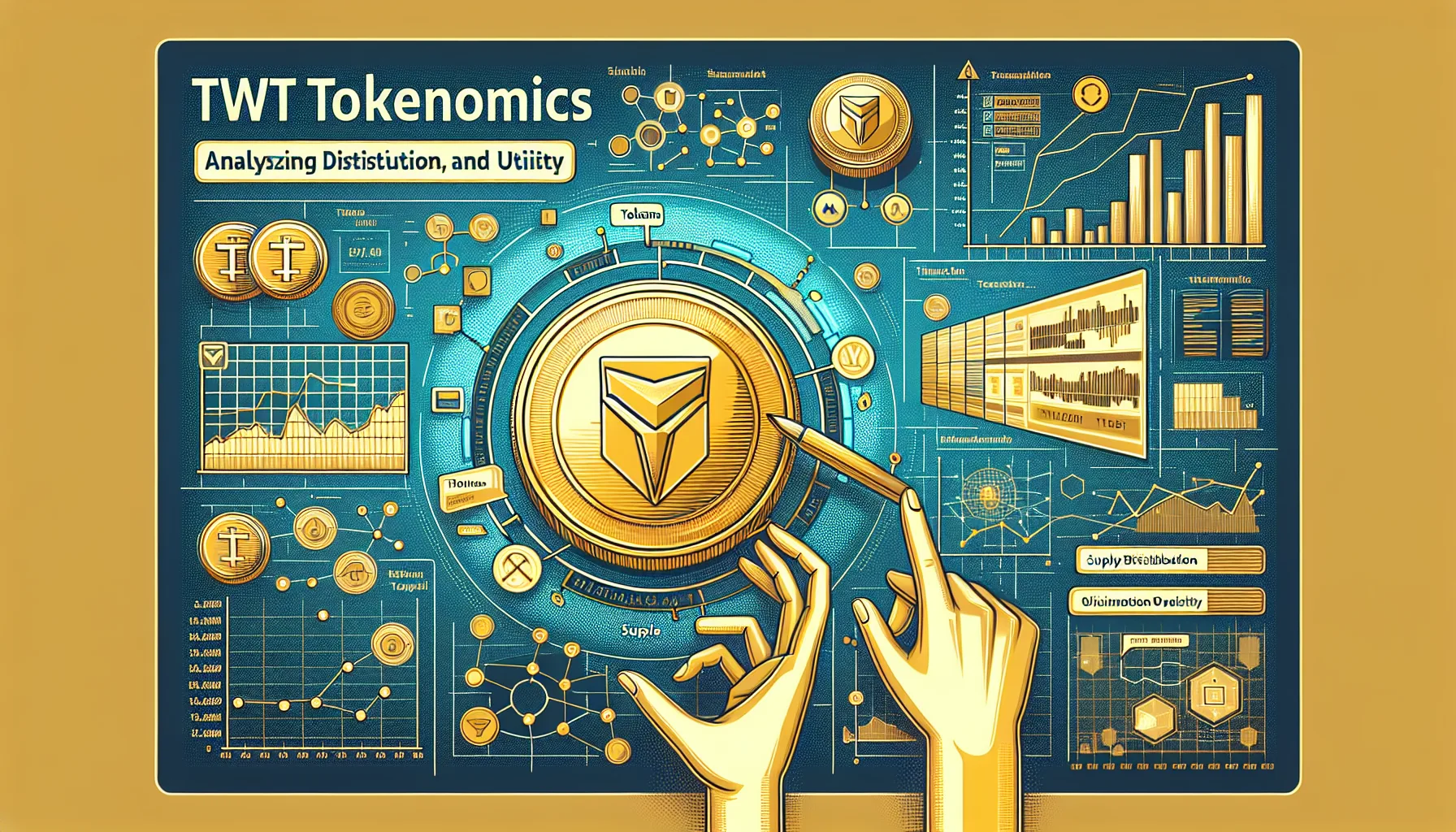
TWT Tokenomics: Analyzing Supply, Distribution, and Utility
The tokenomics of Trust Wallet Token (TWT) is structured to fuel its utility within the Trust Wallet ecosystem while maintaining pertinent mechanisms that influence its value dynamics. Understanding its supply structure, allocation model, and on-chain utility sheds light on the advantages and the potential challenges of this crypto asset.
Fixed Supply and Distribution Model
TWT operates on a fixed maximum supply of 1 billion tokens, with no mechanisms for inflation or staking-based emissions. This fixed cap creates scarcity, which can appeal to holders. However, since there is no ongoing minting or incentive structure for validators, its ability to engage long-term network participants through token rewards is limited.
The initial token distribution concentrated a significant portion of the supply in ecosystem incentives, community development, and partnerships. These allocations contribute to adoption but also raise questions about centralization, as the team and ecosystem stakeholders likely possess a large share of tokens. While quarterly token burn events help suppress the circulating supply, their impact on overall token value depends heavily on adoption metrics rather than purely supply-side controls.
Governance and DAO Implications
TWT holders can participate in Trust Wallet’s governance decisions, such as feature upgrades or future strategic integrations. While this governance utility might appeal to the community, its execution has yet to fully mature into a decentralized autonomous organization (DAO) framework. A lack of active governance engagement from a sufficiently broad base of token holders could pose risks related to decision-making centralization, which is a concern in many governance token models.
On-Chain Utility
TWT's utility is tightly tied to the Trust Wallet ecosystem. It offers discounts when purchasing crypto assets using the wallet, rewards for referrals, and serves as the access token for premium features. While these use cases may incentivize wallet users to hold TWT, the token's dependency on one application for its value proposition could hinder broader market adoption. This reliance presents a clear risk if the Trust Wallet's competitive position in the wallet space is ever challenged.
Market Liquidity and Trading Activity
Despite TWT’s prevalence across multiple blockchain networks, including Binance Smart Chain and Ethereum via BEP-20 and ERC-20 standards, the token's market activity is predominantly concentrated around select exchanges. This asymmetric liquidity distribution could potentially lead to challenges in price stability and limits for traders seeking efficient markets.
TWT Governance
Governance Structure of Trust Wallet Token (TWT)
The governance framework surrounding Trust Wallet Token (TWT) is a critical element in understanding its role within the ecosystem. As a utility token, TWT provides token holders with the capability to participate in governance decisions that shape the trajectory of Trust Wallet's development and functionality. However, while the governance model has notable strengths, it also raises questions and potential challenges that merit examination.
Decentralized Decision-Making via TWT
TWT enables a decentralized governance mechanism where holders can vote on proposals related to the Trust Wallet ecosystem. These proposals can span a wide range of decisions, including feature upgrades, integrations with new blockchains, or changes to user experience principles within the wallet. The token gives the community a direct voice, embodying a decentralized ethos by allowing stakeholders to influence the direction of the platform they use. However, participation rates in such governance activities remain a concern. Low voter turnout often limits the diversity of opinions, potentially leading to decisions being dominated by a relatively small subset of large token holders.
Governance Token Distribution and Power Dynamics
A significant aspect of any crypto asset's governance is the distribution of tokens. With TWT, its governance framework may be criticized for being susceptible to centralization, depending on the concentration of tokens. If token ownership becomes overly concentrated in the hands of a few entities or individuals, it could potentially undermine the decentralized nature of the governance process. This imbalance poses risks of governance capture, where decisions disproportionately favor the interests of a minority, contradicting the principle of decentralized control.
Off-Chain vs. On-Chain Governance
Currently, TWT's governance mechanics align more closely with off-chain decision-making, where discussions often take place on forums or social media platforms before proposals are implemented on-chain. While this hybrid approach allows for open dialogue and community feedback, it introduces inefficiencies and potential delays. In contrast, a fully on-chain governance model could streamline decision-making and make the process more transparent and trustless. However, implementing robust on-chain governance mechanisms may require further technical development, which introduces its own set of challenges, including smart contract vulnerabilities and execution risks.
Governance Participation Incentives
A common challenge across many governance-token ecosystems applies to TWT as well: how to incentivize meaningful participation. Without ongoing incentives, whether financial, reputational, or otherwise, there is a risk of voter apathy, where many token holders do not actively participate in governance. This can result in governance outcomes that fail to represent the interests of the wider community and instead cater to the preferences of highly active or financially interested participants.
Technical future of TWT
Current and Future Technical Developments and Technical Road Map for Trust Wallet Token (TWT)
Enhanced Cross-Chain Interoperability
A core focus of Trust Wallet Token’s (TWT) technical development lies in advancing cross-chain compatibility within the Trust Wallet ecosystem. As a utility token operating across multiple chains, including Binance Smart Chain (BSC) and Ethereum, TWT continues to benefit from improvements in bridging infrastructure. However, there are ongoing concerns about the reliance on third-party solutions for bridging functionality, which introduces potential vulnerabilities and bottlenecks. Trust Wallet developers are reportedly exploring options to integrate native cross-chain features, potentially through interoperability protocols like Cosmos SDK or Polkadot’s Substrate framework. These enhancements aim to reduce friction for users transacting across different blockchain ecosystems.
Expanding Governance Mechanisms
Currently, TWT holders can participate in governance decisions related to the Trust Wallet ecosystem, such as proposing feature updates or allocating development resources. However, one identified limitation is the lack of an on-chain voting mechanism that ties voting power to actual usage or wallet activity. Future road map items are anticipated to include deploying more robust decentralized governance models, potentially leveraging quadratic voting or time-weighted staking to improve fairness and incentivization. This technical shift may address concerns over centralization while fostering a more active and representative user base.
Smart Contract Security Enhancements
Security remains an integral part of TWT’s ongoing technical agenda. The Trust Wallet team has faced scrutiny over vulnerabilities in earlier iterations of its wallet smart contracts, especially concerning audit transparency and response times. Future updates are expected to introduce more advanced auditing procedures and automated security tools, such as formal verification, to further reinforce the integrity of TWT-related activities. External audits from multiple firms have been proposed, but progress in this area has been slow, raising concerns for some in the crypto-savvy community.
Integration of Multi-Function Liquid Staking
One major development hinted at in the technical blueprints is the addition of liquid staking capabilities for TWT holders. This would allow users to stake tokens while still retaining liquidity through derivative assets. While innovative, implementing such functionality carries risks, particularly around smart contract complexity and potential attack vectors in liquid staking pools. It remains unclear whether Trust Wallet will partner with existing service providers or design an isolated solution, as both approaches have trade-offs concerning scalability and trust.
Focus on Decentralized Application (dApp) Support
To bolster the utility of TWT, Trust Wallet developers are actively enhancing compatibility with decentralized applications (dApps). This includes optimizing Web3 integration layers and expanding partnerships with blockchain networks beyond EVM-compatible chains. However, achieving seamless interaction with non-EVM ecosystems such as Solana or Near poses significant technical challenges. The absence of universal standards in wallet-dApp communications has created fragmentation, which developers will need to overcome through modular architecture and comprehensive API toolkits.
Comparing TWT to it’s rivals
TWT vs. SFP: A Detailed Comparison of Crypto Wallet Ecosystem Tokens
When analyzing TWT (Trust Wallet Token) alongside its rival SFP (SafePal Token), both projects reflect different approaches to attracting users within the crypto wallet ecosystem, yet their divergences reveal fundamental distinctions in design, utility, and perceived limitations.
Utility Scope and Ecosystem Integration
TWT primarily serves as a governance and utility token within the Trust Wallet ecosystem, offering holders benefits such as fee discounts and voting rights on key updates within the app. Its utility is tightly integrated with Trust Wallet’s broad multi-chain capabilities, offering compatibility with thousands of crypto assets and dApps. In contrast, SFP operates within the SafePal ecosystem, extending beyond governance and discounts to include staking rewards and exclusive airdrops. This gives SFP an edge in incentivizing longer-term holding, but it also positions it as reliant on broader tokenomics factors, which can detract from its core wallet utility focus.
Decentralization and Self-Custody Focus
Both ecosystems emphasize self-custody, but there is a notable difference in their approaches. Trust Wallet remains entirely software-based, catering to a wide audience of mobile and desktop users who value simplicity and accessibility. SFP, on the other hand, is tightly linked to the SafePal hardware wallet, a distinction that appeals to users prioritizing cold storage security. However, this hardware dependency may alienate more casual crypto users or those unwilling to invest in standalone devices, restricting adoption to a somewhat narrower demographic compared to Trust Wallet's extensive reach.
Adoption and Ecosystem Development Risks
Trust Wallet leverages Binance’s financial and technical backing, while SafePal also benefits from association with Binance as an investor. However, TWT's reliance on Binance raises questions about its true level of decentralization and potential vulnerabilities to strategic shifts by the exchange. On the other hand, while SFP also benefits from Binance’s involvement, its relatively slower ecosystem growth compared to Trust Wallet may limit its ability to compete directly for user adoption, particularly among those seeking a one-stop, multi-chain solution.
Token Distribution and Supply Dynamics
TWT operates on a deflationary model driven by token burns, which helps to align its value with user growth and ecosystem adoption. SFP, while also deflationary to some extent, involves higher token emission rates that may dilute value over time if not matched by sufficient demand. This dynamic introduces additional risk for SFP holders, as its token supply can inadvertently outpace adoption metrics, creating pressure on token performance.
While both tokens excel in carving out niches within their ecosystems, contrasting approaches to utility expansion, accessibility, and token economics bring forth unique challenges that impact their competitive positioning.
TWT vs. C98: A Detailed Comparison of Crypto Wallet Assets
When comparing Trust Wallet Token (TWT) with Coin98 (C98), both tokens serve as critical utility assets within their respective ecosystems, each targeting the growing demand for decentralized finance and wallet-based solutions. However, significant divergences in scope, design, and functionality set these two projects apart.
Ecosystem Scope and Wallet Integration
TWT operates as the native token of Trust Wallet, a widely adopted non-custodial cryptocurrency wallet emphasizing asset management, staking, and seamless dApp exploration. In contrast, C98 is deeply integrated into the Coin98 ecosystem, which extends beyond a decentralized wallet into a multi-chain DeFi toolkit. Coin98’s platform includes a built-in swap service, cross-chain bridges for asset transfers, and DeFi-specific products like portfolio tracking. While TWT focuses on simplicity and accessibility for onboarding new users into decentralized ecosystems, Coin98 pushes toward more advanced functionality catering to complex DeFi operations.
This divergence means that TWT has a broader community appeal but may lack the sophisticated DeFi integrations offered by C98. Crypto-savvy users gravitating toward multi-chain DeFi activities often find Coin98 more flexible, while those seeking straightforward, secure wallet solutions view Trust Wallet — and by extension TWT — as more intuitive.
Governance and Ecosystem Incentives
When it comes to governance, TWT and C98 take markedly different approaches. TWT primarily functions as a governance token within its ecosystem, enabling voting on Trust Wallet features and updates. Although decentralized governance is a positive, critics argue that TWT’s governance utility is underutilized due to limited community-driven proposals.
C98, on the other hand, combines utility with a dual-token system (C98 and X98) to address governance and rewards more comprehensively. However, this complexity can create confusion among users unfamiliar with multi-layered token ecosystems. Additionally, C98's governance often focuses on decisions linked to its broader DeFi platform rather than wallet-specific upgrades. This could dilute the focus for users who only rely on Coin98 for wallet functionality.
Cross-Chain Strategy
Both TWT and C98 strive for multi-chain compatibility, but their strategies differ. Trust Wallet supports a wide range of blockchains, enabling users to store, send, and receive various crypto assets. Coin98 takes this further by embedding native cross-chain swaps and bridging services directly into its wallet. While this adds significant utility, critics point to scalability issues and occasional inefficiencies in bridging latency for C98. Conversely, Trust Wallet’s reliance on external dApps for similar functions might seem less integrated but ensures smoother operations and avoids putting additional strain on its wallet infrastructure.
User Accessibility and Target Audience
C98’s user interface is geared heavily toward experienced DeFi users who understand cross-chain mechanics. This, while powerful, can alienate less technical users. TWT’s simplicity, by contrast, has played a critical role in onboarding more mainstream crypto enthusiasts. Still, Trust Wallet’s ecosystem has been criticized for limited depth compared to the extensive features offered by Coin98.
Overall, TWT and C98 each dominate different niches within the crypto wallet space, with C98 excelling in advanced DeFi tools but struggling with user accessibility, while TWT champions simplicity but may lag in innovation for high-demand DeFi utilities.
TWT vs. RUNE: A Deep Dive into Key Differentiators
When comparing Trust Wallet Token (TWT) with ThorChain's RUNE, it’s immediately clear that while both cater to the decentralized crypto space, their value propositions lie in distinctly different domains. Each token comes with its strengths, but also its own limitations, depending on the context in which they operate.
Functional Scope: Wallet Utility vs. Liquidity Network
TWT is tightly integrated with the Trust Wallet ecosystem, positioning itself as a utility and governance token for wallet users. Its primary focus is enhancing the user experience within the Trust Wallet interface by offering discounts on transactions, governance voting, and incentivizing wallet activity through rewards. TWT is intrinsically tied to the adoption and active use of the wallet.
In contrast, RUNE powers ThorChain, a decentralized liquidity protocol designed to facilitate cross-chain swaps and liquidity pools. RUNE’s role is far more expansive as it directly mediates between various blockchain ecosystems. It isn’t bound to a single product or interface like TWT but serves as the backbone for decentralized liquidity across multiple networks.
Decentralization Focus
RUNE’s architecture places heavy emphasis on decentralization by enabling trustless swaps and liquidity provisioning through its multichain network model. ThorChain’s ability to execute cross-chain swaps without wrapping assets sets it apart in terms of tech innovation. However, this also introduces complexities, as its network demands higher technical maintenance and is more susceptible to exploits unless highly scrutinized.
TWT, while distributed to a wide audience of Trust Wallet users, doesn’t operate within the same decentralized framework. Its utility is intrinsically linked to Trust Wallet, which, while non-custodial, still relies on a centralized development team for ongoing improvements and ecosystem support. For purists in decentralization, this could be seen as a drawback when compared to RUNE’s trustless setup.
Market Usage and Risks
TWT benefits from the simplicity of being targeted toward end-users of a wallet application. However, this dependency on Trust Wallet limits its applications outside of that specific user scope. If wallet adoption stagnates, TWT’s utility could face challenges in scaling beyond its immediate ecosystem.
RUNE’s utility spans a broader scope but introduces additional risk due to the complexity of its liquidity protocol. Issues such as systemic risk in the form of asset impermanence or economic attacks on liquidity pools have already been concerns within the ThorChain ecosystem. These vulnerabilities could be off-putting to risk-averse users.
Community Dynamics
RUNE commands attention in the developer and liquidity provider communities, addressing cross-chain architecture challenges. On the other hand, TWT is more appealing to retail users who prioritize straightforward utility tokens with immediate, tangible use cases. This divergence shapes the communities they attract and influences the long-term sentiment surrounding the tokens.
Comparatively, TWT’s focus feels like a streamlined entry point into crypto utility, whereas RUNE represents a more complex infrastructure play. Each comes with its trade-offs, depending on user priorities.
Primary criticisms of TWT
Primary Criticism of TWT: Evaluating Trust Wallet Token’s Limitations
1. Centralization Concerns
One of the primary criticisms of TWT (Trust Wallet Token) is its perceived connection to centralization, despite its association with decentralized finance (DeFi). As TWT is the utility token of Trust Wallet, a wallet acquired by Binance, there are concerns over the level of influence that a centralized entity like Binance might exert. This criticism highlights a tension between the community’s expectations of decentralization and the organizational structure behind the project. While Trust Wallet itself operates as a non-custodial solution, critics point to the trust factor inherently required with Binance’s historical involvement.
2. Limited Use Case Outside Trust Wallet
Another concern often raised is the token’s narrow range of utility. TWT is fundamentally designed to offer benefits primarily within the Trust Wallet ecosystem—covering features such as payment for DApp services, discounts on in-app purchases, and governance participation. However, this concentrated utility restricts its broader application outside of Trust Wallet, raising doubts about its long-term value proposition. Critics argue that unless its use case evolves to engage broader layers of the crypto ecosystem, TWT’s relevance may diminish over time as other utility tokens emerge with wider applicability.
3. Governance Restrictions and Accessibility
While TWT enables governance voting within its ecosystem, the practical scope of this feature has been questioned. Many crypto-savvy users criticize the limited transparency surrounding how governance proposals are framed, how decisions are implemented, and whether token holders’ influence is substantial in shaping the Trust Wallet platform. The lack of details regarding governance mechanics further limits trust among those wary of token-infused governance models with unclear accountability.
4. Regulatory Risks Tied to Binance
Given its association with Binance, TWT faces scrutiny tied to regulatory risks. Binance has frequently been in global regulatory discussions, casting a shadow over projects linked to it. Critics worry about indirect impacts on TWT should Binance face restrictions or enforcement actions within certain jurisdictions, potentially impacting its circulation, acceptance, or perception within the wider crypto community.
5. Token Distribution and Whale Concerns
Questions around the token’s distribution have also surfaced, with specific concerns about potential whale dominance. The risk of a few wallets holding a significant percentage of TWT tokens could undermine the decentralized ethos and raise fears of price manipulation or other market inequalities. Such distribution dynamics typically stir criticism within crypto communities that prioritize fair access and decentralization.
Founders
Founding Team Behind TWT: Unveiling the Minds Behind Trust Wallet Token
Trust Wallet Token (TWT) is deeply integrated into the ecosystem of Trust Wallet, a decentralized, non-custodial cryptocurrency wallet known for its user-centric design and wide-ranging functionality. The founding team that brought both Trust Wallet and its native token, TWT, to life is rooted in a blend of technical expertise, blockchain vision, and entrepreneurial drive, but their background and evolution also raise some nuanced considerations.
Viktor Radchenko: Driving Vision and Strategy
The primary figure behind Trust Wallet, and by extension TWT, is Viktor Radchenko, a Ukrainian-born entrepreneur and developer. Before venturing into blockchain, Radchenko had a background in mobile app development, most notably creating applications focused on logistics and transportation. His deep technical knowledge became instrumental in Trust Wallet's development, as he envisioned a product that offered seamless, secure access to decentralized finance (DeFi) tools and protocols.
Radchenko’s commitment to open-source development plays a significant role in Trust Wallet’s infrastructure, but his decision to sell Trust Wallet to Binance in mid-2018 sparked debate. While the acquisition brought financial backing and corporate support, critics argue that the involvement of a centralized exchange may dilute Trust Wallet and TWT’s decentralized ethos over time. Questions around the decision remain, especially among crypto purists.
Binance’s Overarching Influence
Post-acquisition, Trust Wallet became closely tied to Binance’s expanding ecosystem. Though Radchenko continued to oversee operations after the sale, the influence of Binance has grown significantly. This corporate integration introduces both opportunities and concerns. On the one hand, Binance’s resources have supercharged the development of the wallet and token, broadening its capabilities and user reach. On the other hand, skeptics have raised valid concerns about the potential trade-offs between innovation and compliance with Binance’s corporate strategy.
Anonymous Contributors and Transparency Gaps
While Radchenko and Binance are recognizable names linked to TWT’s development, the broader team working on Trust Wallet and its token ecosystem remains relatively anonymous. Although decentralization advocates often embrace anonymous contributions to public projects, for TWT, the lack of transparency on its current development team’s identities has occasionally raised eyebrows within the crypto community. This opacity makes it challenging to assess the scope and direction of active development, particularly regarding decision-making priorities within the ecosystem.
Concluding Thought
The TWT story cannot be separated from the team dynamics behind its creation, evolution, and alignment with Binance’s expansive ecosystem. The mix of individual initiative, corporate backing, and semi-anonymity creates a complex, multi-faceted legacy. This founding narrative continues to shape user perspectives, governance expectations, and its place in crypto discourse.
Authors comments
This document was made by www.BestDapps.com
Sources
- https://trustwallet.com/
- https://github.com/trustwallet
- https://trustwallet.com/token
- https://docs.trustwallet.com/
- https://coinmarketcap.com/currencies/trust-wallet-token/
- https://coingecko.com/en/coins/trust-wallet-token
- https://trustwallet.com/assets/TWT_Whitepaper.pdf
- https://medium.com/trustwallet
- https://bscscan.com/token/0x4b0f1812e5df2a09796481ff14017e6005508003
- https://www.binance.com/en/trade/TWT_BTC
- https://community.trustwallet.com/
- https://academy.binance.com/en/articles/what-is-trust-wallet-token-twt
- https://www.gemini.com/cryptopedia/twt-trust-wallet-token
- https://dappradar.com/binance-smart-chain/utilities/trust-wallet
- https://etherscan.io/token/0x4b0f1812e5df2a09796481ff14017e6005508003
- https://cryptoslate.com/coins/trust-wallet-token/
- https://trustwalletdeveloper.notion.site/
- https://pancakeswap.finance/info/token/0x4b0f1812e5df2a09796481ff14017e6005508003