History of TRB2
The History of TRB2: Evolution, Challenges, and Key Developments
TRB2’s origins are deeply tied to the broader Tellor ecosystem, which was created to provide a decentralized oracle solution for smart contracts. The need for reliable, trustless data in DeFi and other blockchain applications led to the launch of the original Tellor token (TRB). However, the development of TRB2 arose as part of an effort to address specific limitations and improve the original system's efficiency, security, and scalability.
Early Development and Rationale for TRB2
The transition from TRB to TRB2 was driven by a combination of protocol upgrades and economic changes. Governance discussions within the Tellor community highlighted certain inefficiencies in mining reward structures, security concerns, and the need for a more refined dispute resolution process. These factors led to the introduction of TRB2 as an evolution of the original TRB model rather than an entirely new standalone asset.
One of the key motivations behind TRB2 was the need to optimize oracle data sourcing and reduce reliance on previous incentive structures that had potential vulnerabilities. It was designed to streamline the Tellor system's staking and dispute mechanisms while maintaining a decentralized and permissionless data validation process.
Technical Adjustments and Enhancements
TRB2 introduced modifications to the previously existing reward and penalty models, impacting how reporters (data submitters) interact with the network. The upgrade aimed to balance incentives so that data integrity could be ensured while reducing long-term inflation concerns that might have affected TRB’s economic sustainability.
This transition also included updates to staking requirements and slashing conditions, which increased participation security but also raised barriers to entry for some smaller players in the network. The shift led to a more structured mechanism for resolving disputes within the Tellor system, but it also sparked discussions regarding decentralization trade-offs.
Network Adoption and Security Considerations
Following its implementation, TRB2 faced both positive adoption and skepticism from certain community segments. On one hand, the upgrade introduced a more robust framework for incentivizing accurate data reporting. On the other hand, some participants questioned whether specific changes could create centralization risks by favoring larger stakeholders over smaller, independent reporters.
Security also remained a point of discussion, as historical attacks on oracle protocols highlighted potential vulnerabilities in decentralized data sourcing mechanisms. Ensuring that TRB2 remained resistant to manipulation was an ongoing challenge, with continuous governance proposals aiming to refine aspects of the protocol’s security assumptions.
Governance and Market Impact
Governance played a significant role in TRB2’s history, as decision-making around protocol upgrades heavily influenced its adoption. The community remained actively engaged in discussions regarding staking economics, slashing conditions, and broader security measures. The governance dynamics shaped how TRB2 was deployed and integrated into various DeFi ecosystems, affecting its overall utilization.
How TRB2 Works
How TRB2 Works: Consensus, Oracles, and Mechanism Design
TRB2 operates as an oracle network designed to provide decentralized, verifiable off-chain data for on-chain applications. It builds on the principles of its predecessor but includes crucial modifications to its consensus model, data validation process, and incentive structure.
Consensus and Data Validation
TRB2 secures data integrity through a hybrid Proof-of-Work and staking mechanism. Miners or stakers submit data points, which are then aggregated using a weighted consensus approach. Unlike traditional oracle models that rely solely on reputation-based reporting, TRB2 incorporates dispute-resolution layers to detect and penalize false reporting.
One core function of TRB2 is data aggregation, where multiple providers submit values for a given query. These submissions are weighted based on staked collateral and historical accuracy, minimizing the risk of outlier manipulation. However, if erroneous data is repeatedly submitted, disputes can be raised, leading to penalties or slashing mechanisms against bad actors.
Oracle Infrastructure and Data Feeds
TRB2’s oracles retrieve data from multiple off-chain sources and push it on-chain where smart contracts can access it. The system supports requests for price feeds, verifiable randomness, and real-world event data. To enhance reliability, a redundancy mechanism is implemented, ensuring that no single oracle provider can dictate final values.
A key challenge with TRB2’s oracle model is latency in data updates. Since data fetching and consensus rely on decentralized participation, there is a non-negligible time gap before finalized values are committed. This delay, while improving security against instant manipulation, may limit its usability for high-frequency trading applications.
Incentive Structure and Security Trade-offs
Participants in the TRB2 network earn incentives via native token emissions and transaction fees. Rewards scale based on accuracy and participation frequency, aligning incentives with honest data reporting. However, this model introduces potential centralization risks—larger stake holders or miners may dominate reporting power, influencing outcomes disproportionately.
Another concern is economic security. The staking mechanism is vulnerable to capital-concentrated attacks where malicious actors accumulate enough stake to bias certain data submissions. While the system includes penalty mechanisms, it remains susceptible to long-range attacks if an attacker gains substantial historical control.
Scalability and On-Chain Efficiency
To reduce gas costs, TRB2 optimizes data batching and compression techniques. However, the process of frequent validation and k-layer verification can introduce additional computational overhead. Adoption in high-throughput environments may require layer-2 integrations or alternative storage solutions to maintain efficiency.
Use Cases
TRB2 Use Cases: Applications and Considerations
Decentralized Oracle Functionality
TRB2 serves as a key component within decentralized oracle networks, providing off-chain data to smart contracts. Its core functionality allows dApps to request and verify external data, ensuring secure and manipulation-resistant aggregation. This is particularly relevant for DeFi protocols that require precise price feeds, settlement data, and various real-world inputs. However, reliance on oracle solutions like TRB2 introduces potential attack vectors, including data manipulation by malicious nodes and economic vulnerabilities within the staking or dispute resolution mechanisms.
Smart Contract Data Validation
Many blockchain applications need verified external data that cannot be natively accessed. TRB2 facilitates this by allowing developers to integrate its infrastructure into their contracts. This extends to sectors beyond DeFi, such as insurance (weather or supply chain data), prediction markets (event outcome verification), and synthetic assets (cross-chain price tracking). The efficiency of this data retrieval, however, depends on the robustness of smart contract implementations and the decentralized security of the TRB2 ecosystem.
Incentivized Data Reporting
TRB2’s network structure incorporates a staking or reward-driven model where participants compete to provide accurate data. This creates a decentralized data economy where independent actors validate and share critical information. However, incentive structures must be carefully designed to prevent Sybil attacks, collusion, or the manipulation of lesser-known data sets where verifiability is weaker.
Secure and Transparent Governance Mechanisms
Protocol decisions within TRB2 often involve governance participation from token holders. This includes adjustments to economic models, upgrades, or security enhancements. While decentralized governance is a critical strength, it also introduces risks related to voter apathy, concentration of voting power, and governance attacks by entities accumulating a significant share of tokens.
Cross-Chain Interoperability and Expanding Integrations
The ability of TRB2 to function across multiple blockchains increases its utility for cross-chain applications. Interoperability ensures its data feeds can serve different ecosystems, enhancing its relevance within multi-chain DeFi strategies. However, security risks associated with cross-chain bridging remain an ongoing challenge, as weaknesses in bridge technologies have been commonly exploited in the broader crypto space.
Potential Scalability and Latency Issues
As demand for decentralized data sources grows, the TRB2 network must scale efficiently while maintaining reliability. High transaction costs or slow data retrieval times on congested networks could pose challenges for latency-sensitive applications like high-frequency trading or liquidation mechanisms in DeFi lending protocols.
TRB2 Tokenomics
TRB2 Tokenomics: Supply Mechanisms, Distribution, and Incentive Structures
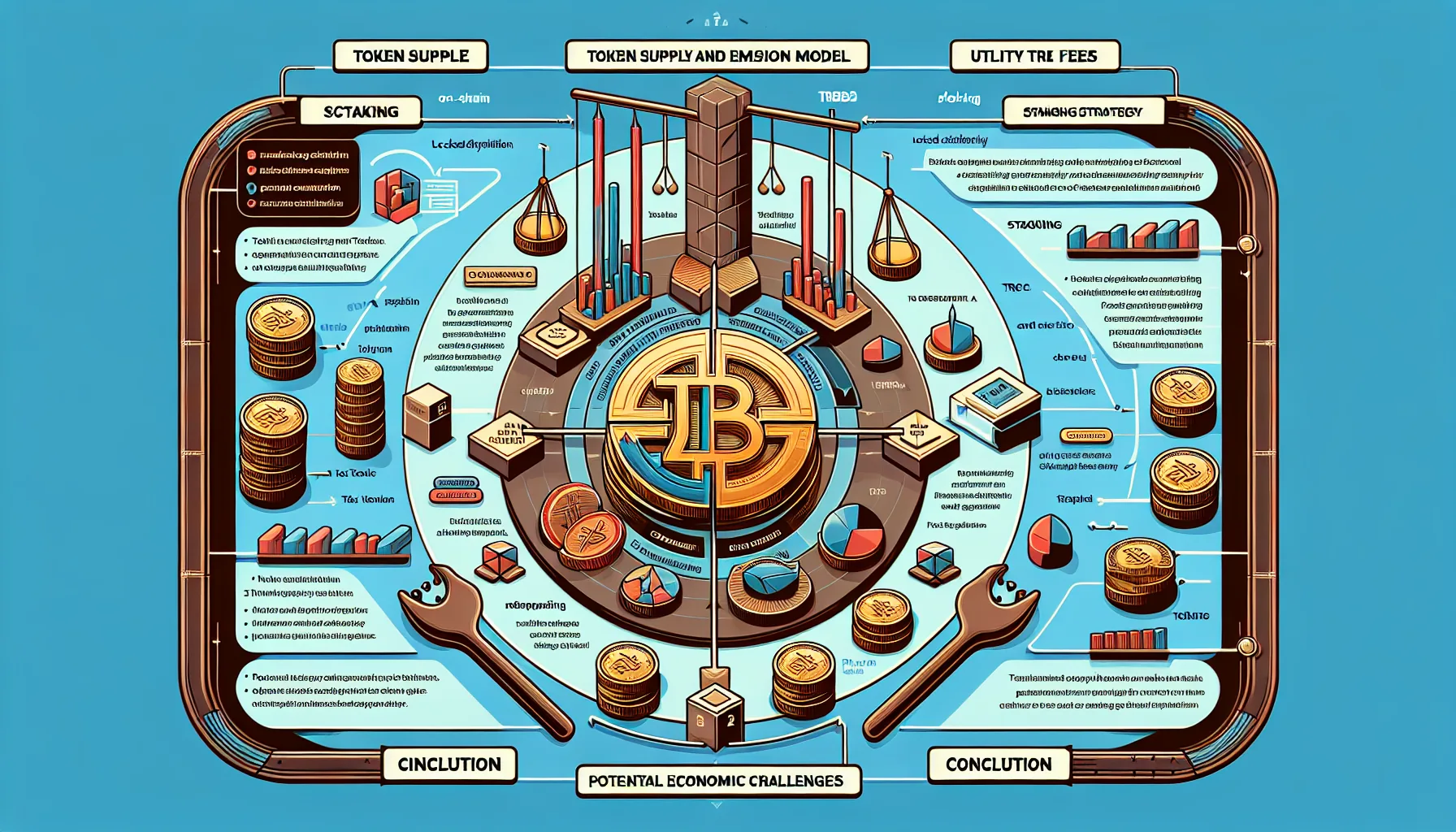
Token Supply and Emission Model
TRB2 has a predefined token supply model designed to maintain a balance between scarcity and usability. The emission structure follows a controlled schedule, ensuring tokens enter circulation at a predictable rate. Fixed supply caps can provide deflationary tendencies, while controlled emissions help mitigate inflationary pressure. However, if the emission rate is misaligned with network demand, it could lead to unoptimized liquidity distribution or unwanted volatility.
Distribution Strategy and Allocation
The allocation of TRB2 tokens is segmented across multiple stakeholder groups. Early contributors, developers, ecosystem participants, and potential governance reserves each receive portions of the token supply. A key factor in its design is how vesting schedules and unlock periods impact circulating supply. If large allocations are concentrated among early holders or team members, the risk of supply shocks increases when tokens unlock, leading to potential market instability.
Staking and Utility Incentives
A core aspect of TRB2’s tokenomics is its staking mechanism, rewarding participants who lock tokens within the system. This incentivization model encourages holding, which can reduce selling pressure but may also lead to liquidity constraints if staking requirements are too rigid. Additionally, staking yields must be balanced to prevent inflationary rewards that dilute token value over time.
On-Chain Fees and Governance
The role of TRB2 in on-chain transactions and fee structures influences its economic sustainability. If transaction fees are excessively high, network adoption may slow down, whereas minimal fees risk insufficient incentivization for infrastructure providers. Governance participation using TRB2 adds another layer of token utility, but centralized token holdings could skew decision-making power toward a minority, raising concerns about decentralized governance effectiveness.
Potential Economic Challenges
Token velocity is a critical consideration—if TRB2 circulates too rapidly without strong value accrual mechanisms, speculative trading could dominate practical use cases. Additionally, dependency on external factors such as liquidity incentives or bridges to other chains can introduce risks of capital flight if more attractive alternatives emerge. Any discrepancies in token burn models or deflationary mechanisms also require evaluation to ensure long-term economic stability.
Conclusion
Understanding TRB2’s tokenomics requires analyzing supply structures, stakeholder allocations, utility incentives, governance participation, and potential macroeconomic risks. The sustainability of its economic model hinges on balancing incentives with network stability to maintain long-term viability.
TRB2 Governance
TRB2 Governance: Decentralization, Voting Mechanisms, and Protocol Control
Governance within TRB2 is structured to balance decentralization with functional decision-making, relying on token-based voting to influence protocol changes. Token holders wield governance power, allowing them to propose and vote on protocol upgrades, parameter adjustments, and treasury allocations. This framework ensures that key decisions remain community-driven rather than dictated by a centralized entity.
On-Chain Voting and Participation
TRB2 governance operates through an on-chain voting mechanism, where token ownership translates into voting power. This model theoretically enables a more democratic decision-making process but also introduces potential centralization concerns if voting power is concentrated among a small number of holders. Voting proposals range from technical upgrades to parameter adjustments, each requiring a specified quorum and threshold for approval.
Low voter engagement remains a common challenge in governance-focused crypto assets. A limited number of participants can lead to governance stagnation, where critical updates face delays or fail to pass due to insufficient turnout. Additionally, as with other token-based governance models, there is a risk that large stakeholders exert disproportionate influence over key decisions, potentially sidelining smaller participants.
Treasury and Fund Allocations
TRB2 governance also manages the project's treasury, a critical aspect for long-term sustainability. Treasury funds are allocated based on community proposals, addressing areas such as development incentives, ecosystem expansion, and security audits. While this grants flexibility, treasury management poses risks, particularly if proposals lack thorough vetting or if short-term interests overshadow long-term protocol stability.
Smart Contract Upgradability and Risks
Protocol governance extends to smart contract upgradability, allowing enhancements without hard forks. While this feature facilitates adaptive improvements, it also introduces risks. If governance mechanisms are exploited or if malicious proposals pass due to voter apathy, protocol integrity could be compromised. Implementing safeguards, such as time-locked upgrades and multi-signature confirmations, can reduce these risks, but they do not eliminate them entirely.
Governance Tokenomics and Incentives
Governance tokenomics play a crucial role in participation rates. If governance rewards are insufficient or if staking opportunities outside of governance provide higher returns, voter turnout may suffer. Conversely, excessive governance incentives can lead to speculative behavior, where voting decisions are driven by short-term financial interests rather than the protocol’s long-term success. Balancing these factors is an ongoing challenge for TRB2 governance.
Technical future of TRB2
TRB2 Technical Developments and Roadmap
Ongoing Enhancements in TRB2’s Oracle Infrastructure
TRB2 continues to refine its oracle architecture to improve decentralization, scalability, and resistance to manipulation. A key focus area is the enhancement of data reporting mechanisms, ensuring that pricing and other off-chain data are aggregated in a more fault-tolerant and tamper-resistant manner. This includes ongoing iterations on dispute resolution mechanisms to mitigate attack vectors such as data spoofing and Sybil exploits.
Additionally, optimizations in gas efficiency are in development to address the cost overhead of on-chain reporting. This remains a crucial point, as high transaction fees can limit participation from data reporters, reducing the oracle’s overall integrity and resilience.
Smart Contract Upgrades and Consensus Refinements
Technical improvements to the underlying smart contract logic are another active area of work. Efforts are concentrated on reducing execution time for oracle dispute processes while maintaining a high level of security. Innovations in cryptographic verification methods are being explored to streamline how validators reach consensus on reported data. There are also ongoing tests to improve compatibility with multiple blockchain environments, particularly in adapting TRB2’s oracle system to function more seamlessly with layer 2 rollups.
A challenge in this area is the trade-off between security and efficiency. Tighter security measures can introduce complexity into dispute arbitration, which could slow down critical data flows. Developers are actively seeking solutions to balance these concerns without compromising oracle reliability.
Future Integrations and Cross-Chain Expansion
The long-term roadmap envisions expanding TRB2’s functionality beyond its current deployment. Cross-chain operability is a major technical milestone, with strategic focus on integrating with EVM-compatible chains and alternative layer 1 ecosystems. Advanced bridging mechanisms are being considered to facilitate secure and trust-minimized communication between chains, which presents engineering hurdles around message finality and potential reorg vulnerabilities.
Another technical goal is the introduction of more automated verification processes, leveraging zk-proofs and other cryptographic techniques to enhance data integrity without increasing node workload. However, these solutions bring implementation complexities in terms of computational requirements and smart contract compatibility, which remain active areas of research.
Despite these advancements, challenges persist in ensuring full decentralization while handling increased oracle demand across multiple networks. The roadmap indicates iterative updates rather than a single major overhaul, with core improvements being shipped in phases to maintain network stability.
Comparing TRB2 to it’s rivals
TRB2 vs. TRB: Key Differences in Oracle Functionality and Ecosystem
Smart Contract Integration and Data Accuracy
TRB2 and TRB share a common lineage but diverge in their approach to data oracles. TRB2 enhances oracle efficiency by refining input validation mechanisms, potentially reducing vulnerabilities associated with data manipulation. TRB, on the other hand, relies on a competitive dispute resolution system that incentivizes validators to challenge incorrect data. This distinction impacts performance—while TRB2 seeks lower latency in oracle responses, TRB maintains a decentralized verification process that may introduce slight delays but enhances resilience against manipulation.
Decentralization and Security Trade-Offs
A core difference lies in how each protocol balances decentralization with efficiency. TRB prioritizes a more open participation model where staking and disputes govern data accuracy. TRB2 modifies this by incorporating optimizations that, while improving speed, may introduce reliance on a smaller subset of validators. This trade-off could raise concerns regarding censorship resistance, as a more streamlined validation system may consolidate influence among fewer participants, whereas TRB’s wider distribution of dispute arbitration creates a more adversarial security environment.
Gas Fees and Cost Efficiency
The cost model between TRB2 and TRB also presents notable contrasts. TRB’s dispute-based system can lead to unpredictable costs due to the need for arbitration and staking challenges. TRB2 aims to address this by optimizing smart contract execution, potentially reducing the overall expenditure on transaction fees. However, this efficiency comes at the expense of fewer dispute checks compared to TRB, which could be a critical consideration for users prioritizing absolute data integrity over cost reduction.
Adoption and Developer Environment
TRB benefits from early adoption and a well-established footprint in decentralized applications requiring economic-based oracle security. TRB2 introduces refinements aimed at expanding usability, especially in environments where lower latency is preferred over maximal decentralization. Despite these adjustments, developer adoption remains a key challenge for TRB2, as transitioning from a widely adopted system like TRB requires clear incentives for migration.
Scalability Considerations
TRB2 incorporates optimizations designed to improve scalability across larger datasets, whereas TRB’s dispute-based model may face constraints when handling extreme throughput demands. However, TRB’s model provides stronger guarantees in adversarial environments, highlighting an important point of consideration for protocols with high-value smart contract dependencies.
TRB2 vs. API3: A Detailed Comparison
Decentralized Oracle Architecture
TRB2 and API3 both operate in the decentralized oracle space but use different architectures to achieve data integrity. API3 employs first-party oracles, meaning data providers supply data directly to smart contracts without intermediaries. This eliminates reliance on third-party data nodes, reducing potential attack vectors. In contrast, TRB2 follows a more distributed approach, depending on a wider network of participants who validate and secure data through its consensus mechanism.
Staking and Incentive Models
API3 utilizes a staking-based security model where participants stake API3 tokens into the insurance-backed API3 DAO. This approach allows for on-chain dispute resolution but also introduces potential liquidity risks, as the staked tokens could be slashed in case of data accuracy failures. TRB2 integrates a more direct miner-driven reward mechanism, incentivizing participation through algorithmically determined payouts. This setup minimizes dependency on staking but may expose the network to economically motivated manipulation if not properly balanced.
Governance Structures
Both projects implement decentralized governance, but API3 is structured around its DAO, where token holders influence protocol upgrades, treasury management, and oracle network decisions. TRB2, while also evolving towards decentralized governance, focuses on a hybrid model that incorporates both community-driven decisions and protocol-enforced rules. Differences in governance flexibility can impact the speed of development as API3’s DAO model requires extended voting periods, whereas TRB2 can implement some updates more dynamically.
Security Considerations
API3's major security challenge lies in its reliance on first-party data providers, which, while reducing third-party exposure, places significant trust in these providers maintaining reliable infrastructure. API3 mitigates some risks through its insurance fund, but this does not eliminate the possibility of systemic failures if multiple providers fail simultaneously. TRB2, by contrast, distributes responsibility across a wider participant base, but this approach also requires stronger economic incentives to discourage collusion or inaccurate reporting.
Adoption and Integration
API3 has positioned itself within highly targeted partnerships, especially focusing on enterprise-level adoption with existing Web2 data providers. This strategy facilitates lower friction for real-world integration but can also lead to bottlenecks if adoption does not scale widely. TRB2’s strategy leans more towards open participation, which can increase network decentralization but may result in inconsistent data quality if network incentives are not continuously optimized.
TRB2 vs LINK: A Deep Dive into On-Chain Oracle Capabilities
Network Architecture and Decentralization
One of the key differences between TRB2 and LINK is how they handle oracle decentralization. LINK operates through a large network of independent node operators that aggregate data off-chain before submitting results on-chain. This approach enhances flexibility and reliability but introduces potential centralization risks through the reliance on trusted nodes. TRB2, on the other hand, focuses on a fully on-chain model where data reporters submit information directly to the blockchain without intermediate aggregation. While this reduces trust assumptions, it can lead to gas inefficiencies during periods of network congestion.
Data Verification and Integrity
LINK employs a reputation-based system where node operators are incentivized to provide accurate data to maintain their staking rewards. However, this model does not eliminate the possibility of collusion or Sybil attacks from well-funded entities controlling multiple nodes. In contrast, TRB2 uses an economic security mechanism where competing data submissions are subject to dispute resolution, allowing the network to economically penalize inaccurate reports. This system ensures robustness but can result in delayed data finalization and increased operational costs for reporters.
Cost Structures and Scalability
One of the strongest differentiators between TRB2 and LINK is transaction cost efficiency. LINK relies on off-chain computations to aggregate data, reducing on-chain costs but requiring additional trust in the aggregation process. TRB2 ensures that all computations and verifications occur on-chain, which enhances transparency but also makes it vulnerable to high gas fees, especially on Ethereum. This could limit its usability for applications requiring frequent data updates, whereas LINK can delegate computations off-chain to maintain operational efficiency.
Flexibility in Oracle Customization
LINK provides a broad range of oracle services that extend beyond price feeds, including verifiable randomness (VRF) and automation services. This wide functionality gives it an edge in multi-purpose applications beyond DeFi. TRB2 remains more focused on decentralized data reporting within a trust-minimized framework, which enhances security but limits its applicability compared to LINK’s broader service offerings.
Market Adoption and Ecosystem Integration
With LINK being an established leader in the blockchain oracle space, it benefits from deeper integrations with major DeFi protocols and enterprise-grade partnerships. TRB2, as a newer entrant, has a smaller adoption footprint, which may limit its reach in mainstream oracle deployments. However, its emphasis on full on-chain transparency may attract specific use cases that require verifiable data provenance without reliance on external aggregation layers.
Primary criticisms of TRB2
Primary Criticism of TRB2
Centralization Concerns in Node Governance
One of the primary criticisms of TRB2 revolves around its node governance model, which some argue exhibits elements of centralization. While the network operates on a purported decentralized oracle framework, skeptics point to the concentration of power among a limited number of node operators. The ability for a small subset of participants to influence data validation or network upgrades can pose systemic risks, particularly when trustless, decentralized verification is a major selling point of oracle-based solutions.
Potential Data Manipulation Risks
As an oracle-driven system, TRB2’s reliability is contingent on the accuracy and integrity of the off-chain data it delivers. Critics highlight the vulnerability of low-liquidity oracles to price manipulation, particularly in environments where a small number of data providers control a significant portion of reported values. This opens up the possibility for oracle failures, front-running attacks, and inaccurate data delivery, which could significantly impact smart contracts relying on this information.
Network Scalability and Congestion Issues
TRB2’s architecture has been called into question for its ability to handle high-throughput scenarios. Some blockchain analysts argue that as demand for decentralized data feeds increases, the platform may struggle with network congestion, delayed updates, and an overall decline in efficiency. These concerns are further exacerbated by potential cost inefficiencies when transaction fees surge, making data retrieval expensive for developers integrating TRB2’s oracles into their applications.
Smart Contract Security Vulnerabilities
The integration of TRB2 into various DeFi ecosystems brings forward concerns regarding smart contract security. Historically, oracles have been targeted as weak points in decentralized financial infrastructures, and TRB2 is no exception. While security mechanisms are in place to prevent system exploits, past instances of oracle-based attacks in the broader cryptocurrency market raise concerns about whether TRB2 has implemented sufficient countermeasures to mitigate risks such as flash loan exploits and data spoofing attacks.
Code Transparency and Audit Scrutiny
Critics also point to how TRB2’s codebase and upgrade mechanisms may not always be fully transparent to the broader community. While audits and security reviews are conducted, some developers question the rigor of these processes and the extent to which the broader community can independently verify critical updates. Limited transparency in governance decisions and roadmap changes can erode trust among developers and potential integrators.
Founders
TRB2 Founding Team: Origins, Backgrounds, and Key Figures
The founding team behind TRB2 is composed of a mix of early blockchain developers, decentralized finance (DeFi) contributors, and cryptographic researchers. While the project shares some overlap with Tellor’s original creators, TRB2’s development has involved new participants who have taken a different approach to decentralization, governance, and economic models.
Key Figures Behind TRB2
One of the most notable aspects of TRB2’s founding team is its partial anonymity. While certain members have been publicly involved in the development and promotion of the protocol, others remain pseudonymous. This has led to some concerns within the crypto community regarding long-term accountability, particularly in a market where anonymous development teams have sometimes posed risks.
Despite this, known contributors to TRB2 have experience in oracle infrastructure, smart contract engineering, and economic game theory. Some of them previously worked on earlier versions of decentralized oracle systems, either as direct contributors or in advisory roles. The team comprises individuals with prior involvement in Ethereum-based DeFi applications, giving them insight into how on-chain data needs to be structured for security and usability.
Technical Expertise and Development Approach
The team behind TRB2 has emphasized the need for a more efficient and decentralized oracle mechanism, aiming to improve upon established models without introducing excessive complexity. Their backgrounds suggest strong familiarity with modular oracle construction, cryptoeconomic security, and trust-minimized data verification. These aspects are reflected in TRB2’s design, which introduces refinements in data validation methods compared to earlier oracle protocols.
However, the team’s approach has also drawn critical scrutiny. Some developers in the oracle space have raised concerns about whether TRB2’s modifications introduce unexpected attack vectors or reduce robustness in adversarial conditions. Additionally, questions have emerged regarding the project's governance structure and how much influence the founding team retains over key components, such as dispute resolution and protocol upgrades.
Controversies and Community Trust
Since TRB2’s creation, there have been debates within the crypto community about the team’s decision-making processes and transparency. While some applaud their technical enhancements, others question whether the team’s relatively opaque nature introduces risks, particularly in a sector where trust in data accuracy is critical.
Additionally, past incidents involving oracle manipulation across DeFi protocols have heightened scrutiny on projects like TRB2. Some critics argue that without a fully open governance process, there is potential for centralization risks despite the project’s claims of decentralization. The founding team's role in navigating these concerns remains a focal point of discussion within the ecosystem.
Authors comments
This document was made by www.BestDapps.com
Sources
- Official Website
- Whitepaper
- GitHub Repository
- Docs and API Reference
- Ethereum Contract on Etherscan
- Governance Forum
- Tellor Discord
- Tellor Blog
- Tellor Improvement Proposals (TIPs)
- Audit Reports
- Tellor Data Specifications
- Tellor Oracle Mechanism
- Tellor Staking Mechanism
- Tellor Dispute Process
- Historical Price Feeds
- Tellor Twitter
- Tellor Community Discussions
- Tellor YouTube Channel
- Binance Academy - Tellor Overview


