History of THG
The History of THG: From Genesis to Adoption Challenges
Thetan Arena Governance Token (THG), integral to Thetan Arena's play-to-earn ecosystem, was first introduced as part of the blockchain-based multiplayer online battle arena (MOBA) project developed by WolfFun in collaboration with KardiaChain. The initial concept for Thetan Arena and the introduction of THG were driven by the ambition to merge competitive gaming with decentralized finance (DeFi), enabling players to own in-game assets, influence game development, and earn rewards in a transparent, decentralized manner.
THG's genesis block was launched on Binance Smart Chain (BSC) to capitalize on the chain's scalability and lower transaction costs. Early on, buzz surrounding THG was amplified through a combination of its initial DEX offerings (IDO) and strategic partnerships with prominent investors and gaming influencers. This approach helped drive significant interest among crypto and gaming communities alike, giving THG a strong start. However, the rapid influx of new users put a strain on the ecosystem, highlighting scalability and operational issues, particularly during periods of high network congestion.
THG's tokenomics design introduced a capped total supply with emissions allocated across multiple verticals, such as staking rewards, gameplay incentives, and governance allocation. While this model was positioned as a long-term sustainability plan, some critics questioned the aggressive vesting timelines for early investors and the potential for disproportionate control by founding teams and private backers.
Over time, THG's real-world adoption faced challenges related to player retention and integration of non-crypto-native audiences. The initial hype surrounding the play-to-earn model drew a swarm of speculative participants, some of whom abused the system by leveraging bots or multi-account farming, ultimately leading to ecosystem imbalances. To address these challenges, the developers implemented stricter verification measures and revised reward algorithms, but some stakeholders felt these changes deterred casual gamers, a key demographic the platform had hoped to attract.
Moreover, the governance functionality tied to THG, while theoretically empowering, struggled in practice due to low participation rates in community voting. Critics argue this has partly undermined the token’s utility as a tool to influence ecosystem development, raising concerns about centralized decision-making.
Despite its innovations in combining blockchain and gaming, THG’s history underscores the complexities of maintaining equilibrium in token economics, fostering meaningful user engagement, and scaling decentralized ecosystems. This layered history continues to shape discussions around THG's long-term alignment with its original vision.
How THG Works
How THG Works: Tokenomics and Core Mechanics
Thetan Arena Governance Token (THG) operates as a core utility token within the Thetan Arena ecosystem, primarily serving both governance and reward purposes. Its functionality is deeply tied to the interplay between economic incentives, gameplay dynamics, and decentralized decision-making. Here’s a closer breakdown of its core mechanics and how they shape user interactions in this crypto-integrated ecosystem.
In-Game Utility and Earning Mechanisms
One of THG's primary roles is its utility within Thetan Arena’s play-to-earn ecosystem. Players earn THG through competitive gameplay, special in-game events, staking, and by participating in tournaments or leaderboards. Unlike soft currencies generated in excessive supply within some blockchain games, THG operates with a defined supply cap, introducing scarcity. While rewards can incentivize active participation, this structure also raises concerns about token over-distribution, as the balance between rewarding early adopters and maintaining long-term token stability is notoriously challenging in P2E models.
Additionally, THG is required to upgrade high-tier heroes, which introduces token burn mechanics. While this helps reduce circulating supply, the reliance on this mechanism means demand for advanced heroes must remain strong. A decline in active player numbers or decreasing enthusiasm for high-level play could diminish this core use case, directly impacting token utility.
Governance and Decentralization
As a governance token, THG enables holders to participate in decision-making processes affecting the ecosystem. Proposals range from game updates to economic model adjustments, giving users a role in future developments. However, governance power is proportional to token holdings, often favoring large stakeholders. This centralization risk could alienate smaller players, undermining claims of a fully decentralized ecosystem. Furthermore, participation rates in governance models often lag behind expectations, potentially leaving significant decisions in the hands of a few holders.
Staking Systems and Rewards
Staking is another pillar of the THG economy. Holders can lock tokens in exchange for staking rewards and other benefits, incentivizing token retention. However, staking structures often face sustainability issues. If rewards primarily depend on inflationary token issuance or diminishing player-generated fund inflows, the model risks collapse over time. Market saturation of highly liquid tokens due to unstaking periods could exert sell pressure, affecting overall token value and viability in secondary markets.
Scarcity vs. Growth Challenges
While THG integrates deflationary mechanisms like token burns and caps on supply, balancing scarcity with ecosystem growth remains a persistent challenge. The success of these mechanics largely hinges on the platform’s ability to sustain and grow its user base. Without a consistent influx of new players or sustained engagement from existing participants, the entire ecosystem risks stagnation, potentially leading to underutilization of THG’s functionalities.
In conclusion, while THG possesses a well-thought-out system for tokenomics and utility, its longevity and efficacy rely heavily on maintaining a robust player community and addressing inherent decentralization trade-offs.
Use Cases
Use Cases of THG: Driving Thetan Arena’s Ecosystem
THG (Thetan Gem) serves as the primary utility token within the Thetan Arena play-to-earn ecosystem, underpinning a diverse range of functionalities that cater to both active gamers and investors in the blockchain gaming space. The token’s use cases revolve around governance, rewards, in-game utility, and staking—each of which plays an essential role in maintaining the game’s economy and incentivizing player activity.
Governance Mechanism
THG enables token holders to participate in the governance of Thetan Arena’s decentralized ecosystem by giving them voting rights on proposals that influence the platform's development, such as gameplay mechanics, economic adjustments, or reward system modifications. While this decentralized governance model provides a sense of control and ownership for participants, it also brings challenges like voter apathy or potential centralization of voting power among large token holders, which could diminish the democratic intent of the system.
In-Game Transactions and Rewards
THG acts as a critical medium for premium in-game purchases and participation in special events within the Thetan Arena, such as limited-time tournaments. Moreover, it is distributed as rewards to players who perform well in matches or actively contribute to the ecosystem. However, critics have noted potential economic imbalances due to the reliance on token rewards; an overabundance of THG distributed as rewards could lead to inflationary pressure, undermining its value as a utility token.
Staking for Benefits
One of THG’s key utility functions is staking. Participants can stake THG to earn additional rewards or gain access to exclusive gameplay features, including advanced character skins or unique battle modes. While staking encourages token retention and aligns with the play-to-earn model, concerns arise over its sustainability if the reward pool is not carefully managed. Excessive token issuance through staking incentives could lead to dilution, which may dampen the long-term appeal of holding THG.
Cross-ecosystem Utility
Though THG’s utility is primarily concentrated within Thetan Arena, its potential for cross-platform utility remains a topic of exploration. The project’s ability to integrate THG into broader blockchain ecosystems—such as partnerships with other gaming platforms or DApps—will likely determine whether it gains traction beyond its current niche. Without clear interoperability or avenues for external utility, the token may face limitations in maintaining its relevance to crypto-savvy users who favor assets with broader applications.
THG’s utility-driven design is inherently tied to its ecosystem's health and growth, making its adoption and economic stability critical factors for its long-term viability. However, challenges like inflationary pressure, concentrated influence in governance, and potential limitations in interoperability highlight areas for improvement in its current implementation.
THG Tokenomics
Exploring THG Tokenomics: Supply Mechanics, Distribution, and Incentives
Tokenomics plays a central role in defining the long-term viability and growth potential of Thetan Arena’s native token, THG (Thetan Gem). A thorough understanding of its economic design reveals both its strengths and limitations, providing critical insights for crypto-savvy stakeholders.
Fixed Supply Model and Allocation Breakdown
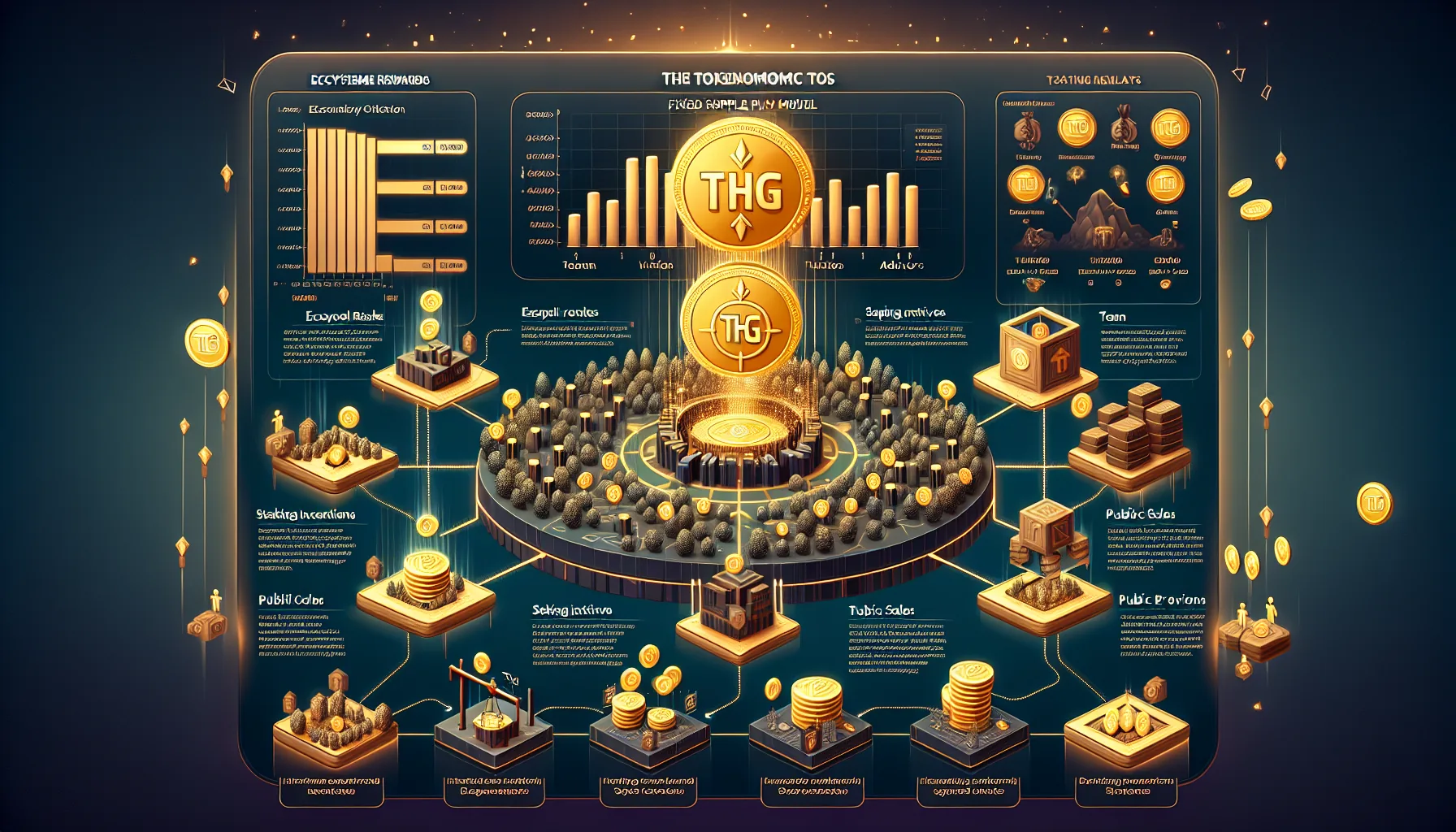
THG operates on a fixed total supply model, capped at 420 million tokens. While a finite supply may signal scarcity-driven value appreciation, the distribution strategy warrants a closer look. The allocation is segmented as follows: a significant portion is reserved for ecosystem rewards, followed by allocations for staking incentives, team and advisors, public sales, and liquidity provisions. Notably, a smaller allocation is locked for community initiatives. This segmented approach reflects an ambition to support ecosystem growth and incentivize participation; however, it does raise concerns regarding centralization risks, particularly around the tokens allocated to the team and advisors, which could result in concentrated power if not properly vested.
Vesting Schedules and Unlock Concerns
The vesting schedules for THG are a key factor in its tokenomics structure. Typically, team and advisor tokens are subject to lock-up periods to mitigate sudden market dumps post-token generation events. However, critics argue that even with time-based vesting, the eventual unlocking of large amounts of THG runs the risk of introducing supply shocks, which could destabilize its market dynamics. This makes tracking vesting milestones critically important for users attempting to predict potential price movements.
Rewards Structure and Utility
THG serves multiple purposes within Thetan Arena’s ecosystem. From functioning as a play-to-earn reward in its blockchain gaming environment to enabling governance voting, the token underpins user engagement. However, the high rate of token emission for in-game rewards creates inflationary pressure that may devalue THG unless paired with robust token sinks or utility avenues. While staking provides a deflationary mechanism, its effectiveness depends on the rate of participation and whether it incentivizes long-term holders as opposed to short-term speculators.
Potential Risks to Consider
One potential pitfall is the reliance on gaming activity to sustain demand. A significant drop in player engagement or migration to competing ecosystems could lead to reduced demand for THG, amplifying the impact of inflation over time. Furthermore, high staking yields, albeit attractive, may become unsustainable if the ecosystem's growth fails to keep pace with token emission rates.
By evaluating these aspects, crypto enthusiasts gain a clearer understanding of THG’s tokenomics and the potential challenges tied to its economic framework.
THG Governance
Governance in THG: Decentralization and Challenges
Thetan Arena’s native token, THG (Thetan Gem), incorporates governance features designed to grant holders a voice in the ecosystem's development. Governance within THG follows a model aimed at decentralization, enabling token holders to propose and vote on key changes to the ecosystem. However, while the structure aspires to empower community-driven decision-making, several intricacies and potential limitations exist.
Token-Weighted Voting Mechanism
THG relies on a token-weighted voting mechanism, where the influence of a participant in governance is proportional to the amount of THG they hold. While this system ostensibly democratizes control within the community, it can also lead to a phenomenon often criticized in blockchain governance: token hoarding. Large stakeholders or entities can dominate voting outcomes, effectively sidelining small or retail investors. This disparity poses questions about whether governance in THG genuinely reflects the collective interests of its diverse community.
Proposal System and Accessibility
The governance process allows proposals to be submitted by token holders, opening the door for the community to influence critical updates, mechanics, and game-related economics. However, the process for initiating proposals can sometimes require a significant threshold of tokens or additional resources to gain traction. This requirement may inadvertently gatekeep participation, favoring large holders or organized groups over average players and smaller investors.
On-Chain Transparency
As a blockchain-based governance system, THG employs on-chain voting, ensuring transparency in the decision-making process. The immutability of recorded votes allows for public scrutiny, encouraging accountability among contributors and stakeholders. Yet this transparent infrastructure is not immune to potential trust issues. Concerns such as vote-buying and outside influence remain prevalent risks in token-based governance models, including THG’s.
Pace of Governance Decision-Making
An inherent challenge in decentralized governance systems is balancing efficiency with inclusivity. THG’s decentralized approach may slow down the implementation of decisions, as reaching consensus through votes requires time and widespread participation. While this safeguards against hasty, unilateral changes, the delayed pace can hinder adaptability in a highly dynamic gaming and crypto environment.
Community Representation
Another notable challenge is ensuring equitable representation across different user groups within Thetan Arena. Players, developers, and investors may have conflicting priorities—players may prioritize gameplay enhancements, whereas investors might favor systems that ensure token price stability or value accrual. Ensuring that governance decisions account for these differing perspectives presents a governance complexity that THG continues to navigate.
Technical future of THG
Current and Future Technical Developments for THG
Advanced Cross-Chain Compatibility
The THG asset is actively progressing toward enhanced interoperability through cross-chain integration. Recent technical updates suggest a focus on minimizing reliance on a single blockchain infrastructure. By implementing bridges and leveraging multi-chain frameworks, THG aims to allow seamless transactions across major ecosystems without compromising security or decentralization. However, like many projects pursuing cross-chain compatibility, questions around bridge vulnerabilities and long-term reliability remain a concern. Hacks exploiting cross-chain bridges in the broader crypto sphere serve as reminders of the potential risks inherent in multi-chain architectures.
Smart Contract Upgrades
THG developers are rolling out updates to its smart contract architecture, prioritizing efficiency and security. A notable enhancement under exploration is modular contract design, aimed at simplifying upgrades without requiring a complete redeployment of older contracts. This could reduce friction for protocol updates, but such modularity adds complexity, increasing the attack surface for sophisticated exploits. Moreover, THG’s reliance on external security audits brings transparency but risks delayed deployment schedules if vulnerabilities are discovered late in the process.
Layer 2 Scaling Solutions
To address growing scalability demands, THG is integrating Layer 2 solutions such as rollups. These updates are designed to lower transaction costs and boost throughput without sacrificing the integrity of the base layer. However, the adoption of Layer 2 technologies introduces dependencies on external infrastructure, which could pose fragmentation risks should differing Layer 2 solutions fail to synchronize effectively. Additionally, transitioning users onto Layer 2 platforms can create temporary adoption bottlenecks, potentially impairing network activity.
On-Chain Governance Advances
A significant aspect of THG’s roadmap includes the development of a more decentralized on-chain governance mechanism. Proposed upgrades incorporate quadratic voting mechanisms to reduce the influence of large token holders in governance decisions. While this could increase fairness, implementing such systems can introduce vulnerabilities relating to Sybil attacks. Ensuring robust identity verification tools while maintaining pseudonymity is a technical challenge that remains unresolved.
Development Bottlenecks
Despite its ambitious roadmap, the long-term sustainability of THG’s technical developments depends on sufficient resource allocation for research and development. Like many crypto projects, the reliance on a small core development team and community contributors creates risks associated with burnout, delayed feature rollouts, or prioritizing popular updates over foundational technical necessities. Maintaining developer momentum and ensuring proper incentives for contributions are ongoing issues to monitor.
Comparing THG to it’s rivals
Comparing THG to AXS: Key Differences in Utility, Ecosystem, and Tokenomics
Utility and Gaming Ecosystem
THG (Thetan Arena) and AXS (Axie Infinity) both serve as core utility tokens within their respective gaming ecosystems, but they cater to fundamentally different gameplay styles and user demographics. THG powers an esports-centric MOBA gameplay model, heavily emphasizing competitive player-versus-player (PvP) mechanics and fast-paced engagement. In contrast, AXS operates in a turn-based, strategy-driven environment that leans on collectible characters (Axies) as a core part of its gameplay loop.
THG appeals strongly to players seeking action-oriented gameplay where skill heavily influences outcomes. However, this style of play also imposes high learning curves and demands consistent engagement to remain competitive, potentially limiting casual adoption. On the other hand, the slower-paced gameplay of AXS may cater more effectively to users interested in casual play, leaving room for THG to differentiate itself on esports potential but at the cost of excluding less invested users.
Tokenomics and Earning Mechanics
When comparing THG to AXS, a key differentiator lies in the earning mechanisms and token utility. Both tokens offer governance rights, staking, and a play-to-earn component. However, in AXS's ecosystem, token holders can achieve additional benefits by participating in the breeding market for Axies, creating a recurring revenue stream outside of in-game rewards. THG, meanwhile, limits most of its earning potential to direct payout mechanisms from competitive matches or staking rewards, which may result in reduced appeal for users seeking diverse pathways to profitability.
This concentrated focus on direct rewards in THG can also lead to higher fluctuations in demand and value tied to the game's active user count. AXS benefits from its multi-layered economy, which integrates NFT ownership and trading in ways that THG currently lacks, often leading to more robust token retention.
Community Engagement and Barriers to Entry
AXS has an established reputation for cultivating a deeply loyal community owing to its long-standing dominance in the GameFi space. Its ecosystem incentivizes repeat play and retention through its Axie NFT economy, although it comes with a steep financial barrier to entry that has been widely criticized. THG offers a more accessible entry model, largely due to its free-to-play setup. However, the emphasis on skill-based rewards and competition over casual participation might alienate users who cannot consistently compete at higher levels.
While THG reduces initial barriers for adoption, it faces challenges in maintaining user engagement compared to the more ecosystem-driven model of AXS, which benefits from diversified retention strategies. These dynamics highlight stark differences in audience segmentation between the two ecosystems, with THG focusing on competitive players versus AXS’s broader utility landscape.
THG vs. SAND: A Detailed Comparison
When examining the competitive landscape between Thetan Arena’s THG and The Sandbox’s SAND, it becomes clear that while both assets operate within the broader play-to-earn (P2E) ecosystem, their core focuses and underlying structures reveal key differences—and challenges—for THG.
Platform Utility and Ecosystem Scope
SAND benefits from its integration into The Sandbox, a metaverse platform that emphasizes user-generated content, virtual land ownership, and modular game creation. This multi-faceted utility allows SAND to serve as both a governance token and a medium of exchange across its expansive digital ecosystem. Comparatively, THG's primary role lies within Thetan Arena, a competitive multiplayer online battle arena (MOBA) game. While THG does enable player rewards, staking, and governance, its utility is inherently narrower, confined primarily to the game’s in-app economy. Critics argue that this limited scope creates a reliance on user engagement within a single title, potentially restricting the token’s long-term adaptability.
Decentralization and Control
Decentralization is another area where SAND holds a distinct edge. Through NFTs, user-created assets, and its DAO (Decentralized Autonomous Organization) model, The Sandbox offers a level of decentralized content ownership that fosters broader community participation. THG’s ecosystem, on the other hand, shows greater centralization. While THG holders can participate in governance, decision-making ultimately revolves more heavily around the game studio’s vision, which could deter users seeking a more open-ended, player-driven governance model.
Revenue Streams and Economic Design
SAND’s economic design is heavily augmented by its virtual land sales, NFT marketplace, and integration of third-party brands, which continuously attract new revenue streams into its ecosystem. THG, meanwhile, is more reliant on gameplay monetization, such as cosmetic purchases and staking incentives. Although these elements enhance replayability for gamers, the absence of external revenue contributors might signal potential fragility in sustaining token value, especially should user engagement wane.
Target Audience and Game Design Philosophy
Finally, a critical distinction lies in audience targeting. SAND appeals to both gamers and blockchain enthusiasts who value creative freedom and digital property ownership. In contrast, THG zeroes in on skill-based competition and casual gaming. While this focus generates appeal among MOBA fans, THG risks failing to capture interest from broader, metaverse-oriented demographics—a key growth driver for rivals like SAND.
In sum, while both THG and SAND cater to the P2E category, SAND’s diversified use cases and active integration into the burgeoning metaverse space spotlight fundamental differences—and challenges—THG faces in competing within this dynamic landscape.
THG vs. GALA: A Focused Comparison in Play-to-Earn Ecosystems
When comparing THG (Thetan Arena) to GALA (Gala Games), both crypto assets operate within the Play-to-Earn (P2E) ecosystem, yet they are built on distinct value propositions and project architectures. These differences significantly impact their usability, community, and market perception.
Ecosystem Breadth and Depth
GALA takes a decentralized platform approach, building a broad gaming ecosystem where various developers can launch their games. This multi-game framework allows GALA to act as a hub for different types of P2E experiences, offering cross-title synergies. In contrast, THG focuses exclusively on Thetan Arena, a single multiplayer online battle arena (MOBA) game. While this dedication can result in a more polished product for its sole title, it limits the range of games benefiting from its ecosystem.
GALA’s diversified model inherently attracts a wider range of gamers and developers, creating potential for larger-scale adoption. However, it also presents challenges such as quality control across its game library and potential dilution of user engagement across titles. While THG avoids these issues by maintaining a singular focus, this approach also makes it vulnerable to competition from newer MOBAs or shifts in gamer preferences.
Token Utility in Practice
One of the sharp contrasts lies in the utility of the tokens within these ecosystems. GALA is designed for multi-game interoperability, positioning itself as a utility token that connects players across its gaming catalog. In the case of THG, the token is more tightly integrated into the gameplay mechanics of Thetan Arena, used for activities like purchasing in-game assets, staking, and earning rewards.
While GALA’s approach toward cross-platform utility adds flexibility, it can dilute the token’s core use case, which could deter adoption in the short-term for users who prefer specialization. Meanwhile, THG’s focus provides a more concentrated value proposition but risks over-reliance on a single game.
User Experience Challenges
From a user experience (UX) standpoint, GALA benefits from its efforts to foster a decentralized gaming-first platform but occasionally receives criticism for complex onboarding due to the need for integration across multiple games and wallets. THG, by focusing on one game, simplifies the onboarding process for its player base. However, by anchoring itself to the MOBA genre, the audience might feel constrained, particularly if Thetan Arena experiences dips in user retention or content updates.
Infrastructure and Scalability
Another differentiator is scalability. GALA’s framework is inherently more scalable since its infrastructure is designed to support multiple titles and player bases simultaneously. On the other hand, THG, while optimized for the unique needs of Thetan Arena, might encounter bottlenecks should the game’s user base scale dramatically.
Primary criticisms of THG
Primary Criticism of THG: Addressing Key Challenges
Centralized Governance Concerns
One of the most debated aspects of THG lies in concerns regarding its governance model. Despite being branded as a community-focused asset, critics argue that significant decision-making power remains concentrated in the hands of its core development team and early stakeholders. This perceived centralization raises questions about the project's commitment to decentralized principles, a foundational ethos in the cryptocurrency space. Skeptics point out that such governance structures can lead to potential conflicts of interest, as well as unclear accountability in instances of project mismanagement or controversial updates to the network.
Token Utility Limitations
Another common criticism involves THG's utility within its ecosystem. While the token has specific use cases, detractors argue that these are limited in scope and fail to justify consistent demand. This could hinder long-term adoption, especially in an environment where competing crypto assets continue to diversify their functionalities. Additionally, some have questioned whether the ecosystem's reliance on THG as a primary medium of exchange creates unnecessary friction, particularly when compared to lower-fee alternatives.
Unsustainable Incentive Models
The rewards system tied to THG, though initially appealing, has faced scrutiny over its sustainability. Questions have arisen about whether its tokenomics enable a balanced supply-and-demand dynamic or if early incentives heavily favor initial adopters at the expense of long-term token holders. Critics suggest that if these rewards mechanisms are not adjusted, there is a risk of oversaturation in the token’s circulating supply, which could dilute its perceived value within the market.
High Barrier to Entry
Some in the crypto community have voiced concerns about THG's accessibility. Specifically, engaging with the network often requires users to navigate complex processes, such as staking procedures or managing external wallets, which may deter potential participants unfamiliar with such tasks. This high barrier to entry limits THG's appeal and adoption, particularly among non-technical users who might otherwise contribute to the asset’s growth.
Security and Transparency Questions
Lastly, there have been occasional critiques regarding transparency in THG’s development roadmap and security audits. Although THG has not experienced any catastrophic breaches to date, skeptics note that information surrounding its smart contract audits and security protocols isn’t always easily available. The lack of detailed reports and updates can foster apprehension, especially among institutional or more risk-averse investors.
Founders
The Founding Team Behind THG: Insights Into the Minds Shaping the Project
The team behind THG (Thetan Arena’s native cryptocurrency) comprises a blend of experienced blockchain developers, game enthusiasts, and strategic visionaries, each bringing specialized expertise to the project’s ecosystem. Despite the game-centric focus of THG, its team structure distinctly aligns with many blockchain-first initiatives, emphasizing technical leadership alongside creative execution.
Leadership and Visionaries in Blockchain Gaming
The foundational leadership of THG stems from a collaboration between blockchain developers and gaming veterans. This hybrid expertise is at the project's core, aiming to merge the play-to-earn (P2E) ecosystem with competitive multiplayer gaming—for which Thetan Arena is known. The project, however, has received some criticism for lacking high-profile names within the blockchain industry, raising skepticism among certain crypto-savvy circles about the team's visibility and broader experience in global decentralized finance ecosystems.
Core Developers Pushing the Technological Backbone
THG’s development team is highly skilled in blockchain architecture, creating a robust infrastructure that powers the token’s integration into the gaming platform. Multiple members have previous experience with smart contract creation, custom Layer-2 solutions, and scalable tokenomics. However, the whitepaper is noticeably tight-lipped on individual credentials, leaving room for questions about transparency. Such omissions have occasionally been viewed as a disadvantage by analysts demanding more accountability in crypto projects of this scale.
Strategic Advisors: Balancing Gaming and Crypto Expansion
A significant portion of the team’s strategic direction appears to be influenced by advisors who specialize in gaming adoption and blockchain marketing. Their efforts have centered around the token fueling a gamified economy, although critics argue that this emphasis on earning mechanics over organic gameplay risks alienating traditional gamers. Advisory priorities lean heavily toward token utility optimization—an area where scalability concerns still linger, particularly when onboarding larger user bases.
Issues Regarding Team Transparency
One notable issue is the relative lack of public-facing information about the founding team. While blockchain and gaming are inherently collaborative industries, the anonymity—or, at times, pseudonymity—of key THG contributors leaves some doubt in the minds of skeptics. Additionally, there’s limited access to detailed interviews or appearances by leadership to address tough questions about the token’s long-term governance model. For a crypto-savvy audience, these omissions can be seen as gaps that could erode confidence, particularly regarding institutional adoption and regulatory alignment.
Authors comments
This document was made by www.BestDapps.com
Sources
https://thetanarena.com/
https://docs.thetanarena.com/
https://bscscan.com/token/0x24802247bd157d771b7effa205237d8e9269ba8a
https://thetanarena.medium.com/
https://twitter.com/ThetanArena
https://whitepaper.thetanarena.com/
https://coinmarketcap.com/currencies/thetan-arena/
https://coingecko.com/en/coins/thetan-arena
https://thetanarena.gitbook.io/
https://github.com/wolffun/thetan-arena-docs
https://docs.binance.org/smart-chain/wallet/wallet-overview.html
https://dappradar.com/binance-smart-chain/games/thetan-arena
https://playtoearn.net/blockchaingame/thetan-arena
https://cryptoslate.com/coins/thetan-arena/
https://bsc.news/tag/thetan-arena
https://medium.com/playtoearn/thetan-arena-economy-overview-bfcd8e6c6b9e
https://blog.thetanarena.com/
https://research.binance.com/en/projects/thetan-arena
https://nftcalendar.io/event/thetan-arena/
https://www.altcoinbuzz.io/nft/thetan-arena-a-quick-introduction/


