History of SYSP
The History of SYSP: Development, Challenges, and Milestones
SYSP originated as a blockchain project aimed at integrating decentralized infrastructure with real-world use cases. Launched by an independent development team, its early roadmap focused on building a scalable and efficient ecosystem with enhanced security features. From its inception, SYSP positioned itself as a utility-driven crypto asset rather than just another speculative token.
Early Development and Launch
SYSP’s whitepaper outlined a hybrid consensus mechanism designed to balance decentralization with transaction efficiency. The project’s codebase was initially built on a modified blockchain framework, taking elements from existing networks while implementing unique optimizations. The launch phase included a fair distribution model, aiming to avoid common pitfalls like pre-mined allocations or excessive centralization.
However, early development was not without hurdles. The initial testnet phases revealed key performance inefficiencies, leading to multiple iterations before developers stabilized its consensus model. Some community members also expressed concerns regarding governance structures, particularly regarding decision-making transparency in protocol upgrades.
Network Expansions and Smart Contract Integration
After its mainnet launch, SYSP expanded its functionality, incorporating smart contract capabilities to support decentralized applications. This transition was met with mixed reactions; while it enhanced network utility, it also introduced new complexities, including increased attack vectors. Smart contract vulnerabilities were highlighted in early deployments, necessitating multiple security audits and patches.
During this period, SYSP saw fluctuating adoption rates. Developer activity showcased continuous improvements, but real-world usage remained concentrated within specific niches rather than broad adoption. Network congestion during peak periods further revealed scalability concerns, pushing the development team to introduce layer-two scaling solutions and improved transaction processing.
Governance and Community Challenges
Governance within the SYSP ecosystem has been a recurring point of discussion. Initially governed by a small core team, the project later moved towards more decentralized decision-making. However, disagreements over protocol upgrades sparked governance disputes, with some factions arguing about power imbalances in decision-making processes.
Certain forks and competing proposals emerged within the ecosystem, leading to shifts in developer alignment. While this demonstrated a flexible governance structure, it also highlighted fragmentation risks that could affect the long-term stability of SYSP’s development.
Security Incidents and Protocol Adjustments
Like many blockchain projects, SYSP has faced security challenges, including attempted exploits targeting smart contracts and network vulnerabilities. Some of these incidents resulted in temporary disruptions, forcing rapid response measures from both developers and node operators. In response to security concerns, SYSP continuously adjusted its protocol, implementing various hard forks and updates aimed at strengthening its resilience.
How SYSP Works
How SYSP Works: Consensus, Security, and Utility
SYSP operates on a hybrid blockchain architecture designed to balance decentralization, security, and efficiency. At its core, it utilizes a Proof-of-Stake (PoS) mechanism for validation and governance, while incorporating select elements of delegated verification to optimize transaction throughput. This design reduces the energy consumption seen in Proof-of-Work (PoW) systems while still aiming for robust network security. However, the reliance on PoS also introduces challenges, particularly concerning potential centralization risks if a small number of entities accumulate significant staking power.
Staking and Validator Mechanisms
SYSP holders can participate in the network by staking their tokens, which not only secures the blockchain but also enables governance participation. Validator nodes are chosen based on staking weight, meaning entities with higher stakes have greater influence over block production. This design encourages long-term commitment but may also pose risks if governance patterns lead to undue centralization. Additionally, validator slashing mechanisms are in place to penalize malicious activity, ensuring compliance with network rules.
Smart Contract Functionality
SYSP supports smart contracts, allowing developers to deploy decentralized applications (dApps) on the network. These contracts are executed using a custom virtual machine (VM), optimized for low-cost operations. However, due to compatibility constraints, developers may face limitations when porting contracts from Ethereum-based ecosystems, requiring modifications in code structure. Gas fees remain relatively stable due to the PoS model, but fluctuations in transaction demand can still create unpredictable cost spikes.
Privacy and Security Layers
The blockchain integrates optional privacy-enhancing features, providing users with the ability to conduct shielded transactions. This is achieved through cryptographic techniques that obscure sender and recipient details while maintaining overall ledger integrity. However, adoption of privacy features remains inconsistent across dApps, leading to a fragmented experience where privacy is not uniformly enforced. Potential regulatory scrutiny on privacy-focused transactions may also influence future protocol adoption.
Cross-Chain Compatibility and Limitations
SYSP offers interoperability features, enabling communication with select external blockchains through bridge contracts. This allows asset transfers and data sharing across ecosystems but comes with security trade-offs. Cross-chain interactions introduce potential attack vectors, particularly in bridge vulnerabilities, as seen in other blockchain exploits. Additionally, certain wrapped asset implementations rely on third-party custodians, who introduce counterparty risks.
Token Utility and Network Economics
The SYSP token functions as the primary medium for transaction fees, staking rewards, and governance. The emission schedule is structured to balance inflationary rewards for stakers while maintaining relative scarcity. However, as with many PoS ecosystems, long-term sustainability of rewards is contingent on continued network participation and utilization. If staking yields decline, validator incentives may weaken, impacting overall security and decentralization.
Use Cases
Syscoin (SYSP) Use Cases: Bridging Layer 1 and Layer 2 With Security and Scalability
1. Trustless Asset Transfers and Tokenization
Syscoin provides a unique dual-chain architecture that allows trustless asset transfers between Bitcoin’s security model and Ethereum’s programmability. This makes SYSP a strong candidate for enterprises and projects seeking to issue tokens with Bitcoin's proof-of-work security while maintaining EVM compatibility. However, adoption barriers exist, as developers accustomed to either Bitcoin or Ethereum might face a learning curve integrating both paradigms.
2. Decentralized Finance (DeFi) Without Congestion Issues
Because Syscoin leverages rollups and zk-proofs while maintaining finality through Bitcoin’s merged mining, it offers a highly scalable environment for DeFi applications. Users can engage in lending, borrowing, and yield farming without excessive gas fees. That said, while Layer 2 scalability is theoretically strong, real-world adoption still depends on liquidity migration from other established ecosystems like Ethereum and Solana.
3. NFTs with Immutability and Low Costs
Syscoin enables NFTs to be issued and traded while benefiting from its UTXO model, improving security and efficiency. Its rollup functionalities also ensure reduced transaction costs compared to Ethereum. However, while this creates a compelling alternative, competition from other NFT-focused blockchains raises questions about sustained usage and marketplace support.
4. Permissionless DAOs and Governance Mechanisms
The hybrid-chain approach allows decentralized autonomous organizations (DAOs) to function efficiently, enabling on-chain governance with lower transaction costs. Smart contracts built on Syscoin’s Layer 2 infrastructure can handle DAO operations without the cost overhead present on Ethereum. However, governance tool availability and third-party integrations are still catching up with more mature DAO ecosystems like Arbitrum and Optimism.
5. Cross-Chain Interoperability Without Trusted Bridges
Syscoin’s zk-rollups and ZK-Rollup-as-a-Service provide a trust-minimized way to bridge assets across multiple chains. This eliminates the risks seen in centralized bridges, which have been prone to hacks and exploits. Still, interoperability adoption remains a challenge, as projects tend to stick with more established cross-chain protocols like Wormhole or Axelar.
6. Regulatory-Compliant Tokenization for Enterprises
SYSP facilitates enterprise-grade tokenized assets, enabling security tokens and real-world asset (RWA) integration. Its EVM compatibility and Bitcoin-backed security make it an attractive choice for regulated entities. However, the challenge remains in convincing institutions to shift from private blockchain solutions like Hyperledger or permissioned Ethereum chains.
SYSP Tokenomics
SYSP Tokenomics: Supply, Distribution, and Utility
Fixed Supply and Emission Schedule
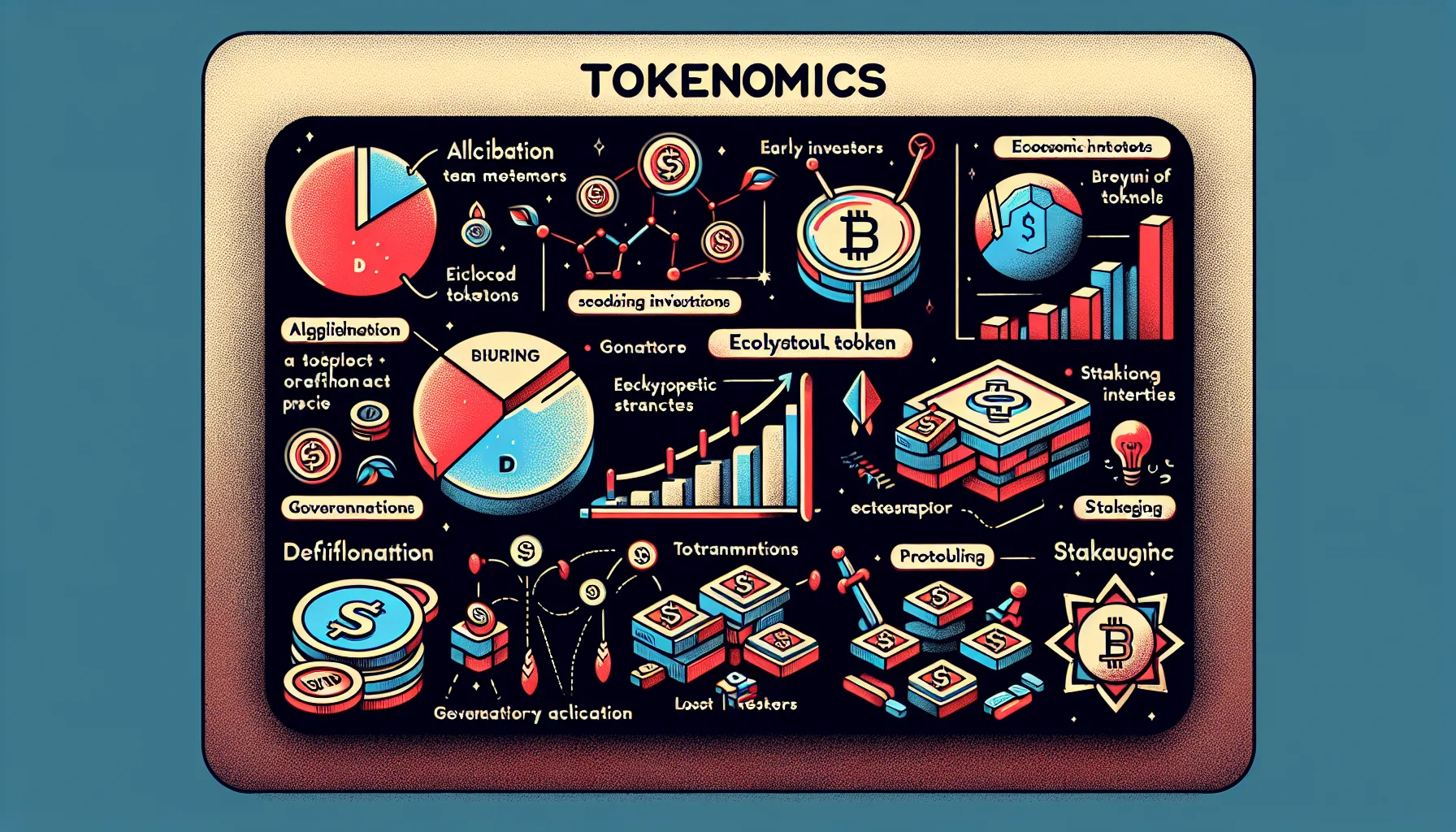
SYSP operates on a fixed supply model, ensuring that no additional tokens can be minted beyond its predefined cap. This hard cap introduces a deflationary aspect to the asset, as tokens lost over time (via forgotten private keys or burned transactions) will gradually reduce the circulating supply. The emission schedule was defined at genesis, with the initial distribution allocating a portion to early adopters, liquidity incentives, and development funding. The rate of emission has since decreased in accordance with the predefined vesting schedules, minimizing the risk of constant sell pressure from early recipients.
Allocation and Distribution Risks
A significant percentage of SYSP's total supply was allocated to team members, early investors, and ecosystem incentives. While this is standard among many crypto assets, it does introduce concentration risks. Any significant unlocking of these tokens could lead to short-term supply shocks if recipients decide to liquidate their holdings. Publicly available wallet analytics show that a relatively small number of addresses hold a large share of the supply, which could impact price stability if they act in coordination.
On-Chain Utility and Use Cases
SYSP is designed as a multi-purpose utility token, facilitating various network functions beyond simple transfers. Key use cases include governance participation, staking mechanisms, and protocol fee payments. While staking rewards offer yield opportunities for long-term holders, they also contribute to circulating supply inflation if rewards are constantly sold rather than restaked. Governance participation allows token holders to vote on protocol upgrades and funding proposals, but voter turnout has varied, leading to concerns about governance centralization among a small group of highly invested participants.
Liquidity and Market Dynamics
SYSP trades on both centralized and decentralized exchanges, maintaining a presence in multiple trading pairs. While liquidity depth is sufficient for most traders, there have been periods of reduced liquidity, particularly on decentralized trading venues. Low liquidity environments can contribute to heightened volatility, as large orders have a disproportionate impact on price movement. Additionally, dependency on external liquidity providers means that market-making activities influence spreads and slippage levels, affecting entry and exit efficiency for traders.
Inflation, Burns, and Long-Term Supply Dynamics
Although SYSP adheres to a fixed supply model, certain in-protocol mechanisms influence effective supply. Governance-controlled token burns periodically remove some tokens from circulation, counteracting inflationary effects from staking rewards. That said, the net impact of staking emissions versus token burns remains a subject of debate, as sustained staking-related inflation could dilute long-term token value unless burn mechanisms scale accordingly.
SYSP Governance
SYSP Governance: On-Chain Decision-Making and Challenges
Decentralized Governance Structure
SYSP operates under a decentralized governance framework where token holders actively participate in protocol decisions. Governance proposals are submitted on-chain, and voting is executed through a staking mechanism. Token holders who stake SYSP tokens gain the ability to influence protocol upgrades, parameter adjustments, and treasury allocations. However, the effectiveness of governance largely depends on voter participation, which can be inconsistent due to governance fatigue and token holder apathy.
Proposal Submission and Voting Mechanism
Any eligible participant can submit proposals, but there are threshold requirements, such as a minimum token stake or delegation support, to prevent spam. Voting typically follows a time-locked process where proposals remain open for a designated period before execution. SYSP governance relies on a quorum requirement to ensure decisions represent a significant portion of the community, though achieving quorum remains a persistent challenge in decentralized systems.
Role of Delegation in Governance
SYSP allows for governance delegation, enabling token holders to assign their voting power to representatives or DAOs focused on governance participation. While delegation increases voter efficiency, it also raises concerns about centralization if too much influence is concentrated in large stakeholders. This can lead to governance capture, where a small number of entities dictate protocol direction, potentially undermining the decentralized ethos.
Treasury and Budget Allocation
Governance also extends to treasury management, with SYSP’s treasury funds being allocated based on community-approved proposals. These funds are used for development, ecosystem growth, and grants. However, without rigorous scrutiny, treasury spending can become inefficient or misallocated. Ensuring transparency and accountability in fund distribution remains a key governance concern.
Governance Security and Risks
Smart contract-based governance introduces additional security risks, including governance takeovers through token accumulation or potential exploits in the voting contracts. SYSP relies on smart contract audits and time-locked execution to mitigate risks, but governance-related exploits remain an industry-wide issue. Additionally, low voter engagement exposes governance to manipulation by a minority of concentrated holders.
Governance Efficiency vs. Decentralization
Balancing governance efficiency with decentralization is an ongoing challenge for SYSP. While decentralized governance promotes inclusivity and community control, it often leads to slow decision-making and bureaucratic inefficiencies. Implementing off-chain discussions in tandem with on-chain voting can help improve coordination but also introduces risks of informal control by influential stakeholders.
Technical future of SYSP
SYSP Technical Roadmap: Current and Future Developments
Layer-2 Scaling Strategy and On-Chain Optimization
SYSP's development trajectory includes a strong focus on improving scalability without compromising decentralization. The project is currently experimenting with ZK-Rollups to reduce transaction costs and improve throughput. However, challenges remain in integrating these optimizations while maintaining compatibility with existing smart contracts. Gas fee reductions and faster finality are primary goals, but real-world performance under high network load still needs to be validated.
Smart Contract Enhancements and Upgrade Mechanisms
SYSP developers are working on modularizing smart contract components to allow for more flexible upgrades without requiring hard forks. This approach aims to implement EIP-2535 (Diamond Pattern) to improve contract efficiency and reduce storage costs. On-chain governance will play a role in approving contract updates, but community skepticism about security risks in upgradeable contracts could slow adoption.
Cross-Chain Interoperability and Bridge Security
Interoperability remains a core focus, with ongoing efforts to enhance bridge security between SYSP and major blockchain ecosystems. The protocol is testing threshold signature schemes (TSS) to improve security against smart contract exploits. Despite these efforts, past vulnerabilities in bridging mechanisms across the crypto space highlight the critical need for robust external audits.
Decentralized Validator Incentives and Governance Evolution
SYSP’s staking model is under revision to balance validator incentives with network security. There are concerns about validator centralization, and proposals are being discussed to modify staking weights to prevent dominance by large entities. A governance shift towards quadratic voting is also being explored, potentially enhancing decision-making fairness. However, implementing this without creating attack vectors for Sybil exploits remains a challenge.
Developer Toolkit and API Expansions
Developer adoption is a key priority, with new SDKs and enhanced GraphQL APIs being rolled out to simplify dApp integration. Lack of comprehensive documentation has been a hurdle for third-party developers, and improving developer experience is an ongoing effort. Plans exist to introduce Rust-based smart contract support, alongside existing Solidity compatibility, but this transition requires significant testing before full deployment.
Privacy and Confidential Transactions
A roadmap item generating significant discussion is the implementation of privacy-enhancing technologies such as zero-knowledge proofs (ZKPs). While regulators have scrutinized privacy features on public chains, SYSP aims to offer optional confidential transactions without compromising compliance. The trade-off between privacy and legal scrutiny remains unresolved.
Comparing SYSP to it’s rivals
SYSP vs BTC: Evaluating Core Differences
Consensus Mechanism and Network Security
SYSP and BTC utilize fundamentally different consensus mechanisms. BTC operates on Proof of Work (PoW), relying on miners to validate transactions and maintain network security. This model ensures high levels of decentralization and robustness but comes at the cost of significant energy consumption and slower transaction finality. In contrast, SYSP employs a more energy-efficient model, which allows for faster confirmation times while maintaining security. However, the trade-off often comes in the form of varying degrees of decentralization, depending on the distribution of validators or miners across the network.
Transaction Speed and Scalability
BTC’s block time and block size limitations inherently cap its transaction throughput, leading to potential network congestion and high fees during peak activity. While Layer 2 solutions like the Lightning Network aim to mitigate these issues, BTC’s base layer remains constrained in terms of transaction capacity. SYSP, on the other hand, offers a more scalable approach by employing a design that enables increased throughput and lower fees. However, any improvements in scalability must be weighed against factors such as network security and resistance to centralization risks.
Smart Contract Capabilities
While BTC primarily functions as a decentralized store of value, its scripting language is intentionally restrictive to minimize security vulnerabilities. This limits BTC’s ability to support complex smart contracts and decentralized applications (dApps) on its base layer. SYSP, however, incorporates an architecture that facilitates programmability, allowing for a wider range of use cases beyond simple value transfer. That said, increased smart contract functionality also introduces new attack vectors, requiring rigorous security measures to prevent exploitation.
Network Fees and Usability
BTC transaction fees fluctuate based on network congestion, often making small everyday transactions impractical during high-demand periods. Fee estimation and priority adjustments remain a challenge for BTC users. SYSP’s structure is designed to offer more stable and predictable transaction costs, reducing friction for frequent transfers and decentralized applications. However, any fee model needs to strike a balance between affordability and sustainability, ensuring that validators or miners remain incentivized without imposing excessive costs on users.
Store of Value vs. Utility Focus
BTC is primarily recognized as a digital store of value, often compared to "digital gold." Its value proposition is centered around scarcity, security, and decentralization. SYSP, while also maintaining certain store-of-value characteristics, introduces additional functionality tailored toward a broader range of applications. This dual-purpose approach can increase network utility but also requires ongoing development and security enhancements to maintain stability and trust.
Comparing SYSP to ETH: Smart Contracts, Fees, and Network Efficiency
SYSP and ETH both cater to developers building decentralized applications (dApps), but they differ significantly in execution, cost structures, and governance. Ethereum’s dominance in the smart contract space is undeniable, but its network challenges create opportunities for alternative systems like SYSP.
Smart Contract Functionality and Execution
Ethereum introduced the concept of Turing-complete smart contracts, powered by the Ethereum Virtual Machine (EVM). This allows developers to write complex contracts, but execution on the Ethereum network can become sluggish under congestion. SYSP takes a different approach, prioritizing streamlined execution and reduced computational overhead to ensure transactions and contract interactions remain efficient. While Ethereum’s robust developer ecosystem provides extensive tooling and support, SYSP’s focus on optimization may appeal to teams seeking faster settlement times.
Gas Fees and Cost Considerations
Transaction fees on Ethereum are determined by gas prices, which fluctuate based on network demand. During periods of high activity, executing smart contracts can become prohibitively expensive. SYSP, by contrast, implements a different fee mechanism aimed at reducing costs for users and developers. However, Ethereum’s high fees come with the tradeoff of greater liquidity and broader adoption, which SYSP has yet to fully match. For projects relying on cost-effective transactions, SYSP may present an alternative, but Ethereum remains an established hub for high-value settlements.
Network Security and Economic Model
Ethereum’s transition to proof-of-stake (PoS) has shifted the network away from traditional mining-based security while introducing staking incentives for validators. SYSP employs an alternative consensus approach that aims to balance decentralization with efficiency. While Ethereum’s validator distribution is extensive, staking centralization concerns have arisen with large entities controlling significant portions of staked ETH. SYSP’s security model addresses different concerns, but whether it can match Ethereum’s resilience against attacks remains debated.
Developer Ecosystem and Adoption
Ethereum boasts a vast developer network, extensive protocol integrations, and broad institutional recognition. SYSP, while offering distinct technical advantages, does not yet rival Ethereum’s depth in ecosystem support. Compatibility with widely adopted standards like ERC-20 and ERC-721 ensures Ethereum maintains its lead in tokenization and NFT markets, whereas SYSP may need to enhance compatibility or offer novel advantages to compete at scale.
Ethereum’s head start in adoption and liquidity presents hurdles for newer platforms. While SYSP seeks to address efficiency and cost concerns, Ethereum’s network effects remain a dominant factor in its continued relevance.
SYSP vs. Solana (SOL): A Technical and Functional Comparison
When analyzing SYSP in relation to Solana (SOL), the most immediate distinction comes from their architectural design and consensus mechanisms. Solana employs a hybrid consensus model that integrates Proof of History (PoH) with Proof of Stake (PoS). This approach allows Solana to process transactions rapidly with high throughput. In contrast, SYSP follows a different validation process that prioritizes network decentralization over sheer transaction speed.
Transaction Throughput and Fee Structure
Solana is recognized for its high transaction per second (TPS) rate, often surpassing competing blockchain networks. This speed advantage is achieved through its unique block propagation method, reducing latency but also introducing different failure points. Comparatively, SYSP operates with a transaction structure that avoids some of the known bottlenecks in Solana’s model but does not reach the same raw TPS output.
In terms of fees, Solana maintains a low-cost ecosystem where transaction fees remain consistently lower compared to several blockchain networks. SYSP, on the other hand, has a fee system that reflects its on-chain governance and incentive models differently, which can lead to variations in cost-efficiency depending on network usage.
Network Stability and Downtime Concerns
One area where Solana has faced criticism lies in network stability and the history of outages caused by congestion or validator-related issues. The network has undergone multiple downtimes due to its requirement for validator synchronization and fast block finalization. SYSP, in contrast, is designed with a focus on mitigating such failures through its approach to consensus enforcement. However, this results in trade-offs where Solana’s aggressive optimization efforts allow for greater scalability, whereas SYSP emphasizes resilience.
Smart Contract Execution and Developer Ecosystem
Solana leverages the Rust and C programming languages for its smart contract development, which provides enhanced security and efficiency at the cost of a steeper learning curve. SYSP, in contrast, uses an alternative framework that aligns with its blockchain logic and governance model, offering advantages for developers already familiar with its structure. This makes onboarding easier but may limit cross-compatibility with Solana-native decentralized applications (dApps).
The differences between SYSP and Solana extend beyond performance metrics into fundamental blockchain philosophies—one emphasizing speed and scalability, while the other prioritizes decentralization and fault tolerance.
Primary criticisms of SYSP
Primary Criticism of SYSP
Centralization Concerns
One of the most significant criticisms of SYSP stems from concerns over centralization. While the project markets itself as decentralized, skeptics point to a high degree of developer or foundation control over network governance. Token distribution has also been scrutinized, with a notable percentage allocated to insiders, raising questions about whether the system is truly resistant to manipulation. Governance mechanisms often face criticism for not being sufficiently transparent or inclusive, leading to concerns about decision-making bottlenecks controlled by a small group of stakeholders.
Network Scalability and Performance Issues
Despite its technical framework, some users report that SYSP suffers from network inefficiencies under heavy transaction loads. While early-stage adoption masked these concerns, increased usage has highlighted potential bottlenecks in transaction throughput and finality times. If network congestion worsens, SYSP risks falling behind competing ecosystems that prioritize scalability solutions such as layer-2 integrations or alternative consensus mechanisms.
Smart Contract Limitations
SYSP’s smart contract environment has faced criticism regarding both security and flexibility. Developers working within the ecosystem have pointed out existing constraints that limit the complexity and efficiency of what can be built. Additionally, prior smart contract vulnerabilities have raised questions about the security model and the thoroughness of audits conducted on the platform. These issues contribute to developer reluctance, potentially stalling ecosystem growth.
Exchange Liquidity and Trading Accessibility
While SYSP is listed on several trading platforms, users frequently express frustration over liquidity concerns. Thin order books, high slippage, and limited trading pairs contribute to an inconsistent trading experience, particularly for those executing larger transactions. Additionally, the reliance on a small number of exchanges for meaningful liquidity increases counterparty risks for traders, making it harder to exit positions efficiently.
Ecosystem Development Challenges
Critics argue that the pace of ecosystem expansion for SYSP has been underwhelming compared to competitors. While there are projects building on SYSP, adoption remains a challenge, with major DeFi platforms and NFT developers prioritizing other blockchain environments. The lack of strong developer incentives and strategic partnerships could be limiting the scope of real-world use cases, questioning the long-term viability of the project’s network effects.
Regulatory and Compliance Risks
As with many crypto assets, SYSP is not immune to regulatory scrutiny. Some argue that the project's structure could make it vulnerable to future regulatory challenges, particularly if governance is perceived to be centralized or if tokenomics raise securities concerns. Depending on jurisdictional interpretations, these risks could impact broader adoption and integration with mainstream financial partners.
Founders
The Founding Team Behind SYSP: Background and Key Figures
The founding team behind SYSP is composed of individuals with a mix of blockchain development, cybersecurity, and decentralized finance experience. While the exact details of early contributors are not entirely transparent, a few key figures have emerged as instrumental in the project’s initial development.
Origins and Key Contributors
SYSP was founded by a group with a background in peer-to-peer networks and open-source software. The early stages of the project were largely driven by developers who had previously contributed to similar privacy-focused blockchain initiatives. However, one of the ongoing criticisms of the founding team is the limited public information available about them. While some individuals are partially doxxed, others remain pseudonymous, which has led to questions about long-term accountability and governance.
One of the more well-known figures associated with SYSP is a developer with a track record in cryptographic security. They played a critical role in designing the protocol’s initial framework, particularly the smart contract architecture and consensus mechanisms. However, despite their influence, the project does not revolve around a single leader, opting for a more decentralized approach to decision-making.
Technical Strengths and Issues
The technical team behind SYSP is recognized for its focus on secure infrastructure and permissionless innovation. Many of the core developers have experience with ZK-SNARKs and other cryptographic privacy solutions, which have been integrated into the project’s core functionality. This has given SYSP a strong foundation from a technical standpoint, although some implementations have faced delays due to the complexity of the technology.
A notable challenge that arose during the project’s early stages was the difficulty in onboarding external contributors. Due to the somewhat insular nature of the founding team, there have been reports of fragmented communication between core developers and new entrants looking to contribute. While this has improved with time, it initially slowed development and led to uncertainty within the community.
Governance and Decentralization Concerns
While SYSP promotes itself as a decentralized initiative, the involvement of its founding team in governance decisions has been a point of discussion. While no single entity is in full control, early contributors still hold significant influence over protocol changes. This has caused debates about whether true decentralization has been fully achieved or whether informal centralization persists.
The founding team’s role remains significant, even as governance mechanisms evolve. Some community members have called for greater transparency regarding how early decisions were made and who retains control over key infrastructural components. Without clear documentation on the transition from founding leadership to a more autonomous community-driven model, concerns about centralization risks remain a persistent issue.
Authors comments
This document was made by www.BestDapps.com
Sources
- https://syscoin.org/
- https://syscoin.org/whitepaper
- https://github.com/syscoin
- https://explorer.syscoin.org/
- https://medium.com/@syscoin
- https://syscoin.readthedocs.io/
- https://bitcointalk.org/index.php?topic=421615.0
- https://twitter.com/syscoin
- https://discord.gg/syscoin
- https://coinmarketcap.com/currencies/syscoin/
- https://www.coingecko.com/en/coins/syscoin
- https://syscoin.org/roadmap
- https://github.com/syscoin/sips
- https://www.linkedin.com/company/syscoin/
- https://www.reddit.com/r/syscoin/
- https://syscoin.org/news
- https://syscoin.org/technology
- https://syscoin.org/development
- https://www.youtube.com/c/Syscoin


