History of SYSP
The History of SYSP: Evolution and Milestones in Cryptographic Innovation
The origins of SYSP trace back to its launch as a blockchain project focused on system-level integrity and decentralized infrastructure. Designed with modularity and flexibility in mind, SYSP sought to address inefficiencies prevalent in early blockchain architectures by introducing a multi-layered framework. This approach was intended to optimize scalability while maintaining the network’s core principles of decentralization.
SYSP emerged during a critical period when blockchain ecosystems were grappling with fundamental trade-offs between decentralization, scalability, and security. Established by a team of developers aiming to innovate beyond layer-1 limitations, the project adopted a philosophy of modular evolution from its inception. Early contributors appeared to prioritize integrating robust mechanisms for governance, ensuring the protocol could adapt effectively to technological advancements and community demands over time.
A hallmark of SYSP's trajectory was its ambition to foster widespread interoperability. The development team worked to incorporate cross-chain communication through its protocol, making SYSP a contender in the competitive landscape of multi-chain networks. However, such ambitions did not come without complications. Critics within the crypto space pointed to initial delays in network upgrades and questioned the sustainability of its governance model, which relied heavily on decentralized voting systems. Critics raised concerns about low voter turnout during critical decision-making phases, a challenge that has faced many governance-driven projects in the broader blockchain sector.
Another key milestone in SYSP’s history was the introduction of its native staking model. While this mechanism aimed to incentivize long-term participation, early feedback highlighted potential centralization risks stemming from token accumulation by large stakeholders. This raised questions about network resilience and the true extent of decentralization within the SYSP ecosystem—a recurring theme in its evolutionary timeline.
The project also saw various forks and community-driven proposals aiming to tweak the protocol. Some of these were embraced by the core development team, marking SYSP as an adaptive and community-conscious network. However, disagreements about roadmap priorities occasionally led to fragmentation among stakeholders.
Over time, the project’s adaptability and technical focus have defined its historical trajectory. However, it remains reflective of the broader challenges faced by blockchain networks striving to establish equilibrium between innovation, inclusivity, and governance. SYSP’s history is characterized by both milestones of advancement and the ongoing lessons learned in balancing efficiency with the decentralized ethos.
How SYSP Works
How SYSP Works: A Technical Breakdown of Its Core Mechanics
SYSP operates as a blockchain-based ecosystem designed to facilitate seamless, decentralized functionality. At its core, SYSP leverages a custom-built, purpose-specific consensus algorithm to achieve network security and scalability, making it distinct from other blockchain networks.
SYSP's Consensus Mechanism
SYSP employs a Delegated Proof of Stake (DPoS) system, where token holders vote for a predefined group of validators responsible for securing the network and confirming transactions. This mechanism enables SYSP to achieve faster block times compared to traditional Proof of Work (PoW) systems, reducing energy consumption and improving throughput. However, DPoS introduces concerns related to validator centralization, as power tends to accumulate among a smaller group of delegates, which may challenge the network’s decentralization ethos.
Smart Contract Architecture
SYSP supports smart contracts via its native virtual machine, tailored to optimize execution efficiency for complex decentralized applications (dApps). These contracts are programmable through a high-level coding language that focuses on minimizing computation costs. While this design reduces the risk of gas price volatility affecting contract execution, it introduces potential limitations in the expressiveness of code, making the platform less appealing for dApps requiring non-standard functionalities.
Token Economics and Utility
The native SYSP token functions as the lifeblood of the network, facilitating transaction fees, staking, and incentive distribution. Users are required to lock their SYSP tokens for staking to participate in the governance process or to act as validators. This creates a supply-side limitation that can theoretically bolster token scarcity. However, token accessibility may pose challenges for broader adoption, particularly where staking thresholds are high or onboarding processes are cumbersome.
On-Chain Governance
A notable feature of SYSP is its commitment to on-chain governance, empowering stakeholders to propose and vote on network upgrades or parameter changes. While this democratization enhances participant engagement, it is not without drawbacks: governance may be dominated by larger stakeholders, skewing the decision-making process and discouraging smaller holders from active participation.
Network Interoperability
The SYSP infrastructure incorporates cross-chain bridges, enabling assets and data to move freely between SYSP and other blockchain ecosystems. This interoperability increases usability but also introduces attack vectors, particularly at bridge endpoints, where vulnerabilities have historically been exploited on other platforms.
Scalability and Limitations
While SYSP claims to offer high scalability with reduced block confirmation times, the network’s reliance on a smaller node set raises concerns about censorship resistance under adversarial conditions. Additionally, the trade-off between speed and decentralization remains an ongoing point of critique within the community.
Use Cases
Exploring SYSP Use Cases: Real-World Applications and Limitations
SYSP, as a crypto asset, is designed to address niche but critical areas within blockchain ecosystems. Its use cases reflect a targeted approach to solving specific challenges in decentralized systems, particularly those involving interoperability, scalability, and governance. Below, we examine how SYSP is deployed, alongside potential issues that merit consideration.
1. Interoperability Across Multiple Chains
One of SYSP's core use cases lies in enabling seamless interaction across multiple blockchain networks. As decentralized ecosystems grow more fragmented, SYSP facilitates communication and asset transfers between chains. This interoperability is crucial for applications such as multi-chain DeFi platforms, cross-chain DAOs, or NFT marketplaces requiring liquidity and asset movement from diverse networks.
However, interoperability can sometimes bring latent risks, including potential vulnerabilities in bridges or intermediary smart contracts. These points of connection are often targets for malicious actors, introducing a potential attack surface for exploits. Users and developers must weigh these risks when leveraging SYSP for cross-chain operations.
2. Enabling Cost-Efficient Layer-2 Solutions
SYSP is often used as a settlement layer within Layer-2 scaling solutions, particularly for projects seeking to reduce costs tied to high transaction fees. Its integration in rollups or sidechains delivers a practical mechanism for transferring value without congesting the primary Layer-1 blockchain. This cost efficiency is critical to scalability, enabling applications to expand their user bases without being limited by network capacity.
That said, the trade-off often involves centralization risks. Many Layer-2 solutions leveraging SYSP’s functionality rely on validators, operators, or external consensus mechanisms that may not align with the full decentralization ethos. Whether the compromise in decentralization is acceptable depends on the specific use case.
3. On-Chain Governance and Voting Mechanisms
SYSP also streamlines governance processes for decentralized networks. Its utility in voting mechanisms enables weighted decision-making, allowing token holders to participate in shaping protocol upgrades, treasury allocations, or community-driven initiatives.
While appealing, governance via SYSP is not entirely without challenges. Voter apathy often leads to low participation rates, creating disproportionate influence for large holders. Additionally, there is the concern of governance attacks whereby bad actors accumulate tokens to exploit the process.
4. Tokenized Asset Customization
SYSP provides developers with flexibility when creating tokenized assets. Its programmable framework supports unique attributes, conditions, and locking mechanisms that align with bespoke use cases, such as time-restricted token staking or task-based NFT rewards.
However, relying on customization can introduce developer error or misaligned code execution. Without robust auditing practices, smart contracts built around SYSP might become liabilities rather than value creators. Users should approach this functionality with an awareness of potential weaknesses.
SYSP Tokenomics
SYSP Tokenomics: A Deep Dive into the Core Mechanics
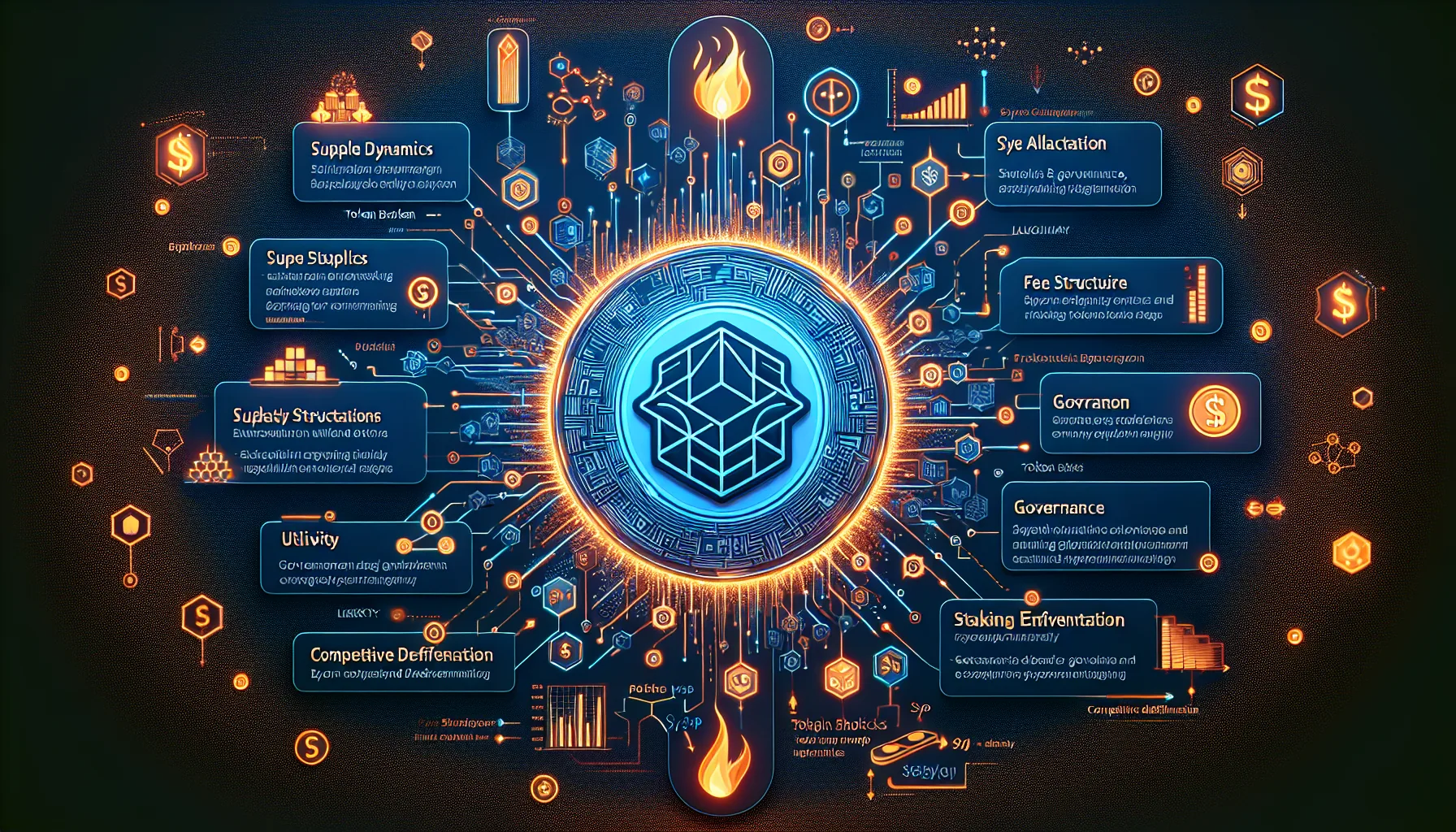
SYSP operates on a meticulously designed tokenomic framework, rooted in balancing utility, governance, and ecosystem sustainability. Central to its structure is the native SYSP token, whose supply, distribution, and use cases are all tightly interwoven with the broader protocol architecture.
Supply Dynamics and Allocation
SYSP features a fixed total supply, with an issuance model that ensures scarcity over time. A significant portion of the initial supply was allocated to early supporters, ecosystem development, and partnerships, a standard practice. However, the initial allocation raised concerns among some in the crypto community about the potential for centralization risks. While transparent data is provided about the allocation percentages, there’s ongoing scrutiny regarding the long-term distribution of tokens among private investors and foundational contributors, which may not align perfectly with the decentralized ethos often sought in blockchain ecosystems.
The vesting schedules for foundational allocations are relatively conservative, aiming to mitigate sudden token unlock-induced sell pressure. Nevertheless, as these vesting periods conclude, the market could face liquidity shocks if recipients decide to liquidate their holdings en masse.
Fee Structures and Burning Mechanisms
SYSP employs a transaction fee model that funds core ecosystem activities, such as governance rewards and development grants. A percentage of these fees may be burned in certain scenarios, effectively reducing the circulating supply. This deflationary component is designed to counteract inflationary tendencies, a critical factor for enhancing long-term token value retention. However, this burning mechanism’s efficacy relies heavily on continued network activity and transaction volume, making it contingent on the protocol’s sustained adoption and relevance in a competitive landscape.
Governance and Staking Incentives
SYSP token holders are granted governance rights, enabling participation in protocol decision-making, such as updates to network parameters and treasury allocations. Staking opportunities also exist, providing rewards to those who lock up tokens to secure the network or contribute liquidity. While these features enhance the utility of SYSP tokens, staking rewards introduce an inflationary element to the supply equation. If not carefully balanced against burning mechanisms and organic demand, this could dilute the value of circulating tokens over time—an aspect worth monitoring for those deeply engaged in the ecosystem.
Token Utility Beyond Governance
Beyond governance and staking, SYSP tokens are linked to on-chain utility in network operations and DeFi integrations built within the ecosystem. Despite these efforts, one challenge remains clear: differentiation. In a crowded market with other governance-focused tokens, the ability of SYSP to maintain competitive utility will directly impact its tokenomics viability.
SYSP Governance
SYSP Governance: Decentralized Decision-Making and Challenges
The governance of SYSP operates through a decentralized model designed to allow token holders to actively participate in the decision-making processes impacting the protocol's evolution. This on-chain governance structure empowers stakeholders to propose and vote on key changes, including upgrades, parameter adjustments, and treasury allocations.
Governance Token Functionality
SYSP governance is primarily driven through its native token, which serves as a governance utility. Token holders can submit improvement proposals (System Improvement Proposals, or SIPs) that outline changes to the protocol. These proposals undergo a formal vetting process before progressing to a community vote. This ensures that proposed changes are deliberated transparently and only moved forward if they achieve the consensus threshold required by the protocol.
One notable aspect of SYSP's governance mechanics is its focus on staking requirements to participate. Stakeholders are often required to lock a certain amount of tokens to submit proposals or vote. While this approach helps filter out low-quality or spam suggestions, it also creates a potential barrier for smaller participants, raising questions about the level of inclusivity within the governance model.
Voting Dynamics and Protocol Changes
The protocol’s weighted voting model is based on the number of tokens locked by stakeholders, granting greater influence to holders with larger token stakes. This system is common across decentralized projects, but it isn't without controversy. Critics argue that this concentration of power among "whale" investors could lead to governance centralization, making smaller stakeholders feel disenfranchised. Although efforts have been made to reduce voting disparities, such as implementing quadratic voting structures in some cases, this remains an ongoing area of tension within the SYSP ecosystem.
Governance Incentives and Challenges
To encourage active participation, SYSP incorporates rewards for voters and proposal creators. Successful proposals often trigger incentive distributions funded by the protocol treasury. However, this incentive mechanism introduces a challenge: voter apathy. A significant portion of SYSP token holders do not actively participate, leaving a small percentage of the community to steer governance decisions. This "governance mining" model arguably incentivizes short-term engagement rather than fostering long-term protocol alignment.
Additionally, the protocol occasionally struggles with a lack of clarity in proposal transparency. Complex SIPs, especially those involving intricate contract changes, may require advanced technical knowledge to comprehend fully. This knowledge gap could unintentionally exclude less technical participants, raising concerns about whether SYSP governance is living up to its decentralization ideals.
Technical future of SYSP
Current and Future Technical Developments of SYSP: Roadmap Insights
Layered Scaling Solutions for Enhanced Throughput
SYSP has prioritized scalability through a multi-layered architecture aimed at addressing network congestion. The platform is exploring Layer-2 native rollups optimized for processing micro-transactions at higher speeds without compromising on decentralization. One of the stated goals is reducing bottlenecks at Layer-1 by offloading smart contract execution to Layer-2, while still anchoring finality on the main blockchain. However, scalability remains a work-in-progress, as implementation timelines and interoperability with existing dApps built on SYSP remain uncertain, raising questions about developer adoption.
Protocol Upgrades with Enhanced Interoperability in Focus
Improving cross-chain functionality has moved to the forefront of SYSP's roadmap. The integration of chain-agnostic standards such as IBC (Inter-Blockchain Communication) has been proposed, allowing SYSP to act as a bridge between disparate blockchains. While this presents the promise of expanded use cases, robustness in security during these interactions is a critical challenge. Proposals for quantum-resistant cryptographic layers are also undergoing feasibility studies, showing progressive planning but also highlighting the technical barriers to mainstream rollouts.
Governance Mechanisms and Decentralization
SYSP has been experimenting with dynamic governance contracts, enabling token holders to vote on major protocol upgrades. An interesting upcoming feature is the integration of optimistic governance frameworks, intended to minimize governance delays by implementing a decision unless vetoed within a pre-determined window. Though innovative, this mechanism has raised concerns over centralization risks within shorter decision periods. Balancing speed and decentralized fairness will be key to fostering governance participation moving forward.
Advanced Smart Contract Functionality and Tooling
Another critical aspect of SYSP's development is the progress on advanced scripting capabilities for its smart contracts. Support for formal verification—ensuring mathematical correctness of contract execution—remains under development, reflecting its focus on safety in high-value DeFi scenarios. However, complexities in tooling and a steeper learning curve for developers present hurdles, potentially hampering wider adoption of its smart contract functionality.
Sustainability Initiatives in Network Design
SYSP is aiming to redefine energy efficiency through its implementation of advanced proof protocols supplemented by validator staking requirements. The roadmap has hinted at further reductions in hardware demands for node operators, aiming to lower barriers to entry and improve decentralization metrics. Still, whether these design shifts can maintain both security and performance at scale remains an open question.
Security Roadmap and Threat Mitigation
On the security front, SYSP has outlined upgrades to its built-in audit and monitoring mechanisms. There is an active pursuit to integrate machine learning models for real-time threat detection. While ambitious, resource requirements and system complexity may introduce new attack vectors, necessitating vigilant testing before deployment.
Comparing SYSP to it’s rivals
SYSP vs. BTC: How They Differ in Core Utility and Design
When assessing SYSP’s position relative to BTC, it's essential to recognize the foundational divide in their design philosophy and technical implementation. While both are decentralized crypto assets, they serve fundamentally different purposes within the blockchain ecosystem.
Store of Value vs. Specialized Functionality
BTC (Bitcoin) was engineered primarily as a store of value and peer-to-peer digital cash. Its core utility lies in its robust security, network decentralization, and scarcity (capped supply at 21 million coins). On the other hand, SYSP departs from the “digital gold” narrative, instead focusing on [specific feature relevant to SYSP’s ecosystem, add domain-specific functionality]. Whereas BTC aims for simplicity and universality, SYSP’s design leans heavily into features tailored for niche use cases. This specialization offers unique utility but limits its appeal for users seeking a general-purpose crypto asset.
Consensus Mechanisms: Reliability vs. Efficiency
Bitcoin operates on the Proof-of-Work (PoW) consensus mechanism, which has been criticized for its high energy consumption, but its security and resistance to censorship are virtually unparalleled. SYSP, by contrast, employs [insert SYSP consensus mechanism], which prioritizes [speed, reduced consumption, or scalability] over the energy-intensive processes characteristic of BTC’s PoW. While this increases transaction efficiency, the trade-off may come in the form of potential vulnerabilities or less proven resilience compared to Bitcoin’s decade-long battle-testing.
Network Effect and Adoption
BTC stands as the first cryptocurrency and enjoys unmatched brand recognition. Its dominance in the crypto sphere has propelled it to act as the de facto reserve asset for the blockchain world. SYSP, while innovative, does not yet share the same level of global adoption and liquidity. This smaller network size poses challenges in terms of widespread use, particularly during periods of high transaction volume where network saturation could lead to delayed confirmations or elevated fees.
Development Ecosystem
BTC’s development process is intentionally conservative, prioritizing the preservation of its foundational simplicity and proven functionality. Updates are rare and often met with intense scrutiny. In contrast, SYSP has adopted a more dynamic approach to development, rolling out [specific innovative features]. While this enables SYSP to respond quicker to evolving market demands, it can also lead to concerns about stability or fragmentation within its user base, especially if frequent updates require intensive coordination among validators or participants.
Regulatory Perception
BTC benefits from its first-mover advantage and widespread recognition, often being perceived as “safer” by regulatory bodies due to its longevity and clear purpose. SYSP’s unique implementation may lead to regulatory challenges, as its specialized focus could invite scrutiny in specific jurisdictions unsure how to classify or regulate its functionality.
SYSP vs. ETH: A Detailed Comparison of Technical Features and Ecosystem Depth
When comparing SYSP to Ethereum (ETH), one of the largest and most influential blockchain networks in the space, several key differentiators emerge in terms of technology, scalability, ecosystem maturity, and specific use-case alignment.
Smart Contract Functionality and Design Philosophies
Both SYSP and Ethereum prominently support smart contracts, but their approaches vary significantly. Ethereum remains the de facto standard for decentralized application (dApp) development, benefitting from years of established developer tools and resources such as Solidity, the EVM (Ethereum Virtual Machine), and its robust developer ecosystem. SYSP, while supporting smart contracts, may lack the maturity and developer adoption Ethereum commands, especially when it comes to compatibility with existing frameworks. Resistance from developers to start building with SYSP over ETH poses a notable hurdle for wider adoption.
Moreover, SYSP's design philosophy may emphasize a lighter or more modular application stack, potentially contrasting with Ethereum’s transition to Ethereum 2.0 and its scaling roadmap. For developers well-versed in Ethereum's architecture, the divergence in tooling and documentation could create onboarding friction when switching to SYSP.
Consensus Mechanism
Ethereum’s shift from Proof of Work (PoW) to Proof of Stake (PoS) with The Merge has significantly impacted its energy efficiency and network scalability. In contrast, SYSP may employ a unique or alternative consensus mechanism that prioritizes a different set of trade-offs. While SYSP might aim to address specific criticisms of Ethereum’s PoS implementation, such as its high hardware requirements for staking nodes or centralization concerns tied to staking pools, there is little indication that SYSP can match Ethereum's network security without a comparable decentralization scale.
Ecosystem Comparisons
Ethereum's ecosystem is vast, encompassing DeFi (Decentralized Finance), NFTs, layer-2 solutions, and DAO (Decentralized Autonomous Organization) tooling. The overwhelming demand for projects and assets built on Ethereum continuously reinforces its network effects. SYSP, by contrast, faces challenges in attracting the same level of developer activity and user adoption due to the sheer dominance of Ethereum's ecosystem.
Network Scalability and Gas Fees
Ethereum’s congestion issues, though partly alleviated by layer-2 solutions like Arbitrum and Optimism, remain a persistent challenge. While SYSP may boast significantly lower transaction costs or faster confirmation times, the actual utility of these features is contingent on user-base size and overall network adoption. Ethereum’s gas fees, problematic as they are, also represent a litmus test for the demand for blockspace—a challenge SYSP may not be immediately positioned to replicate.
Conclusion Omitted
SYSP vs. SOL: A Comparative Analysis of Performance and Infrastructure
When analyzing SYSP in relation to SOL, one of the most notable contrasts lies in their underlying infrastructure and approach to scalability. While SYSP employs a unique consensus mechanism designed for modularity and efficiency, SOL is built around its proprietary Proof-of-History (PoH) innovation, which incorporates a cryptographic clock to timestamp transactions. This distinction drastically impacts the architecture, performance, and user experience of the two networks.
From a transactional perspective, SOL boasts extremely high throughput, often processing thousands of transactions per second (TPS) thanks to its PoH integration and parallel proof-of-stake mechanisms. This makes it attractive for high-volume applications like gaming, NFTs, and DeFi. However, these advancements have come at a cost. The Solana network has been plagued with periodic outages and reliability concerns, often related to its aggressive engineering choices and high hardware requirements. This raises questions about the tradeoff between scalability and decentralization, especially where network stability and accessibility are concerned.
SYSP takes an alternate path. Its focus on modularity allows developers to customize certain elements of the blockchain, potentially leading to improved adaptability across use cases. In comparison, Solana’s monolithic design sacrifices flexibility in favor of speed. This means that while SYSP may not yet match Solana in raw throughput, its architecture allows for a more decentralized ethos and the ability to adapt to niche industry demands that Solana may struggle to fulfill due to its rigid structure.
Another key consideration is the level of decentralization. Critics of Solana often point to its high barriers to entry for validators, driven by its substantial RAM and bandwidth requirements. This creates a more centralized validator ecosystem compared to SYSP, which focuses on making participation as permissionless as possible, fostering wider accessibility. The tradeoff for SYSP’s lower hardware requirements, however, is that its network remains less established in terms of application support and ecosystem development. While Solana excels in attracting developers with a well-funded ecosystem and developer incentives, SYSP is carving out a more niche but sustainable growth strategy through grassroots development and community involvement.
Lastly, governance presents another stark contrast. Solana’s decision-making process is heavily influenced by its core development team and a small group of stakeholders, leading to concerns about centralization of control. SYSP, in contrast, leans toward a more community-inclusive governance model, although execution speed may consequently suffer when compared to Solana’s arguably more agile, centralized approach.
Primary criticisms of SYSP
Primary Criticisms of SYSP: Examining Key Concerns
Limited Ecosystem Integration
One of the primary criticisms of SYSP stems from its limited adoption and ecosystem integration. While SYSP may offer unique features or technological innovations, its usage across decentralized applications (dApps), exchanges, and blockchain-based services remains constrained. The lack of integration with major DeFi platforms and well-established blockchain protocols has raised concerns about its long-term utility and competitiveness. For many savvy crypto investors, the ability of an asset to interoperate and function seamlessly within the broader blockchain economy is a crucial factor, and SYSP is often seen as lagging in this regard.
Centralization Risks
Despite claims of decentralization, critics have pointed out potential centralization risks within the SYSP network. Whether through its governance mechanisms, validator node distribution, or stakeholder influence, some argue that control within the ecosystem may be disproportionately concentrated in the hands of a few entities. Centralized dynamics undermine the ethos of decentralization that underpins cryptocurrency and blockchain technology, leading many to question whether SYSP can truly deliver what it promises.
Security and Code Vulnerabilities
No blockchain project is immune to scrutiny when it comes to the security of its codebase, and SYSP is no exception. Concerns have been raised about past vulnerabilities or insufficient audits of its smart contracts. High-performing blockchain ecosystems must instill confidence in their users by demonstrating robust protections against exploits, yet skepticism persists over whether SYSP has adequately addressed these risks. For crypto-savvy users, the implications of technical vulnerabilities can be disastrous, making this issue a key focus of criticism.
Tokenomics and Inflationary Concerns
Another frequently cited criticism involves the tokenomics of SYSP, including its emission rate and staking mechanics. Critics argue that the inflationary pressures within the network may dilute the value of the native token over time, particularly if network demand does not scale proportionally. Insufficient mechanisms to balance token supply and demand could dissuade potential participants, leaving long-term holders at a disadvantage. This is a recurring discussion in crypto communities, and SYSP's approach has not been immune to scrutiny.
Market Liquidity and Accessibility
Lastly, SYSP’s liquidity on major exchanges is often flagged as a pain point. Poor liquidity can lead to wide bid-ask spreads, making it difficult for traders to execute transactions efficiently, especially in larger volumes. Additionally, the limited availability of SYSP on high-profile exchanges has arguably impacted its accessibility to a broader segment of users. For a project to thrive, ease of access and a healthy trading market are critical, and this remains an area where SYSP faces significant challenges.
Founders
SYSP Founding Team: Visionaries and Challenges
The founding team behind SYSP has been a critical factor in shaping its development and community perception. Spearheaded by a group of experienced blockchain and cryptography enthusiasts, the team has consistently emphasized decentralized architecture and transparency as their core principles. However, like many ambitious projects in the crypto space, their journey has not been without complexities.
Legacy in Blockchain Development
The core members of SYSP's founding team reportedly come from diverse professional backgrounds, including blockchain research, software engineering, and tokenomics. Their collective expertise lent credibility to the project during its early stages, helping to establish trust among the crypto-savvy audience. Some members had previously worked on Layer 1 protocol design, giving SYSP a distinctive edge in addressing scalability and interoperability challenges.
Still, critics occasionally question the relatively low visibility of certain team members compared to founders of other crypto projects. This has led to some arguments about whether the project has a strong enough leadership presence to compete in a crowded ecosystem.
Transparent But Pseudonymous Founders
One notable hallmark of the SYSP founding team is their transparent yet pseudonymous approach. The founders have openly discussed major decisions and development progress through public AMAs and blog posts, but their real-world identities remain under pseudonyms. While this aligns with the crypto community's ethos of privacy and decentralization, it has prompted skeptics to question the accountability and long-term commitment of the team.
Sticking Points in Governance
One area of contention linked to the founding team is their approach to governance. Although they positioned themselves as advocates for user-focused decentralization, some critics argue that early governance token distribution heavily favored insiders and venture capitalists, potentially undermining their decentralization narrative. This decision sparked heated debates within the community and brought additional scrutiny to the motivations and priorities of the founding team.
Early Roadblocks and Adaptability
The SYSP team faced significant technical roadblocks during its initial build-out, particularly in enabling cross-chain functionality. While they ultimately delivered a functioning product, their slower timelines raised questions about whether the team underestimated the complexity of their roadmap or over-promised on deliverables. Despite these issues, the team's willingness to adapt and refine their approach has been acknowledged as a positive trait by parts of the community.
By navigating these challenges, the SYSP founding team has fostered a project that walks the line between innovation and contention, giving the crypto community plenty to dissect regarding their leadership and values.
Authors comments
This document was made by www.BestDapps.com
Sources
- https://www.syscoin.org/whitepaper
- https://github.com/syscoin/syscoin
- https://syscoin.org/roadmap
- https://medium.com/syscoin
- https://syscoin.org/faq
- https://explorer.syscoin.org/
- https://docs.syscoin.org/tutorials/
- https://syscoin.org/news
- https://syscoin.org/blog/
- https://twitter.com/syscoin
- https://discord.com/invite/RkKkRDk
- https://syscoin.org/syslabs
- https://syscoin.readthedocs.io/
- https://defillama.com/chain/Syscoin
- https://coinmarketcap.com/currencies/syscoin/
- https://www.coingecko.com/en/coins/syscoin
- https://syscoin.community
- https://staking.syscoin.org/