History of SYSP
The History of SYS Project (SYSP): Tracing Its Evolution
SYS Project (SYSP) traces its roots to the early wave of blockchain innovation, positioning itself as a platform that sought to emphasize scalability, security, and decentralization. The project began with the ambition of enabling both individuals and enterprises to manage digital assets and smart contracts in a way that merged usability with blockchain efficiency. SYSP emerged as a hybrid layer-1 and layer-2 blockchain, building on Bitcoin’s architecture while introducing new functionality to address gaps in the crypto ecosystem.
Initially released as an open-source project, the early development team focused on integrating advanced technological features, including merge-mining with Bitcoin to leverage its hash power, which added an extra layer of security to the network. This design enabled SYSP to remain decentralized while maintaining compatibility with Bitcoin’s infrastructure, attracting miners who could support both blockchains simultaneously without additional energy costs. However, this move also brought complications, as merge-mining introduced dependency issues. Critics noted potential centralization risks, with concerns raised about how a concentrated pool of miners might influence the stability of the network.
The project evolved further with the introduction of asset tokenization capabilities, allowing users to issue and manage digital assets directly on the blockchain. These features were innovative at the time but faced adoption challenges in explaining their relevance outside niche crypto communities. As competition from other smart contract platforms grew, SYSP had to contend with comparative limitations in attracting a developer ecosystem, as larger ecosystems like Ethereum began dominating the decentralized application space.
At one point, SYSP transitioned into a more modular network approach, incorporating sidechains to take specific functionalities off the main chain. While this approach theoretically reduced congestion and increased transaction speeds, the sidechain architecture was met with skepticism. Blockchain purists pointed out that utilizing separate chains could potentially dilute decentralization or introduce vulnerabilities if the sidechains were not sufficiently secure.
A notable period in SYSP’s history was marked by governance debates. Attempts to balance decentralization with governance efficiency led to conflicts between community-driven initiatives and team-led development decisions. Critics often highlighted communication gaps between developers and the wider user base as a recurring issue during these periods of contention.
SYSP’s history reflects not only its technical ambitions but also the challenges inherent to competing in an ever-expanding blockchain landscape.
How SYSP Works
How SYSP Works: A Deep Dive into Its Decentralized Framework
SYSP operates as a decentralized blockchain platform designed around scalable and secure smart contracts, leveraging a hybrid consensus model. At its core, the network combines Proof-of-Stake (PoS) functionality with a mechanism for ensuring governance autonomy through on-chain voting. This architecture ensures decentralized control while maintaining efficiency, a pivotal aspect in its ecosystem.
Core Mechanism: Modular Smart Contracts
The standout feature of SYSP's blockchain is its modular approach to smart contracts. Developers are afforded the ability to craft and deploy lightweight, customizable contracts using SYSP’s native scripting language. While this design supports enhanced adaptability, there is a steep learning curve for new developers unfamiliar with the language, potentially limiting adoption at the protocol development level.
By focusing on modularity, SYSP emphasizes reusability of code, reducing computational redundancy across the network. This design optimizes transaction throughput; however, larger, more complex contracts can still bottleneck execution due to resource-intensive computations. Users must account for potential trade-offs when deploying contracts on-chain.
Consensus and Governance
SYSP's hybrid consensus mechanism integrates PoS with on-chain governance. Validators are selected via staking mechanisms, ensuring the network avoids relying on energy-intensive Proof-of-Work (PoW). The governance model allows token holders to propose and vote on network-level changes, including protocol upgrades.
This democratic approach ensures decentralized decision-making but also introduces potential vulnerabilities. A high concentration of token holdings could enable centralized influence over votes, raising concerns about governance manipulation. Additionally, voter apathy can lead to low participation rates, risking stagnation in protocol advancements.
Privacy and Interoperability
SYSP prioritizes user privacy by incorporating zero-knowledge proof (ZKP) technology. This allows for the validation of transactions without revealing sensitive data. While ZKP ensures user anonymity, it adds significant computational overhead, potentially slowing down block validation times compared to networks that forgo privacy-centric protocols.
In terms of interoperability, SYSP supports cross-chain bridges, facilitating interactions with other blockchain ecosystems. These bridges enhance its utility but introduce vulnerabilities—historical exploits in cross-chain protocols across the broader crypto landscape demonstrate the necessity for constant auditing and improvement.
Network Security and Scalability
SYSP employs a sharded network structure to improve scaling efficiency. Shards enable parallel processing of transactions, preventing bottlenecks typical in monolithic blockchain structures. Despite this, shard-to-shard communications can sometimes experience latency, particularly under high network utilization, negatively impacting user experience.
Security remains an ever-present challenge. With an increasing number of developers leveraging SYSP’s platform for decentralized applications (dApps), the potential for vulnerabilities in contract code increases. As with any blockchain project, ensuring rigorous audit processes is critical for minimizing exploit risks.
Use Cases
SYSP Use Cases: Unlocking Practical Applications in Blockchain Ecosystems
SYSP, often spotlighted for its technical adaptability, offers a range of use cases that target both blockchain enthusiasts and enterprise-level applications. Its multi-faceted functionality makes it suitable for specific niches while carrying certain bottlenecks that warrant attention. Below, we dive into the prominent real-world applications and challenges associated with this crypto asset's deployment.
Decentralized Identity Systems
One of SYSP’s core applications lies in decentralized identity (DID) management. By leveraging its blockchain infrastructure, SYSP enables non-custodial identity verification, giving users direct control over their credentials without relying on centralized authorities. This makes it suitable for creating tamper-proof, self-sovereign identities, particularly in finance, healthcare, and governmental systems. However, scalability remains an issue for large-scale identity verification when compared to more specialized DID-focused protocols. Verification speed and blockchain bloat are notable pain points.
Tokenized Asset Management
SYSP supports the creation and management of tokenized assets, making it a powerful tool for businesses seeking to digitize traditional assets like real estate, commodities, or intellectual property. Its smart contract capabilities enable programmable liquidity and royalty mechanisms for automated compliance and revenue distribution. Still, interoperability with other tokenization platforms could hinder its adoption in cross-chain ecosystems. Users may face friction when integrating SYSP-based tokens into wallets or marketplaces optimized for more widely used standards.
Custom Blockchain Deployments
SYSP’s architecture allows developers to spin up custom blockchains tailored to specific organizational needs. This use case empowers companies to design permissioned or hybrid blockchains while benefiting from SYSP’s decentralized security model. Additionally, its modular approach is well-suited for industries that demand compliance with localized regulations, such as supply chain tracking or regulated gaming. That said, the technical barrier for developers unfamiliar with SYSP’s framework can be steep, often resulting in slower deployment cycles compared to more developer-friendly ecosystems.
Privacy-Centric Financial Transactions
Privacy-focused features make SYSP attractive for participants in confidential financial operations. Layered encryption protocols within SYSP facilitate private payment channels that shield transactional metadata. This has drawn interest in sectors such as legal consulting and international trade, where protecting sensitive financial data is paramount. On the flip side, privacy-centric features might invite greater regulatory scrutiny in jurisdictions with stringent anti-money laundering (AML) laws. Lack of clear compliance frameworks could deter institutional players from integrating SYSP into regulated environments.
Decentralized Application Support
As a platform for dApp development, SYSP offers a solid foundation for building decentralized apps across diverse verticals, including gaming, DeFi, and content creation. It excels at providing low-latency transaction finality, which is critical for dApp performance. However, its ecosystem's relative size might limit the network effect for developers seeking a broad audience, raising concerns about user adoption in competitive sectors.
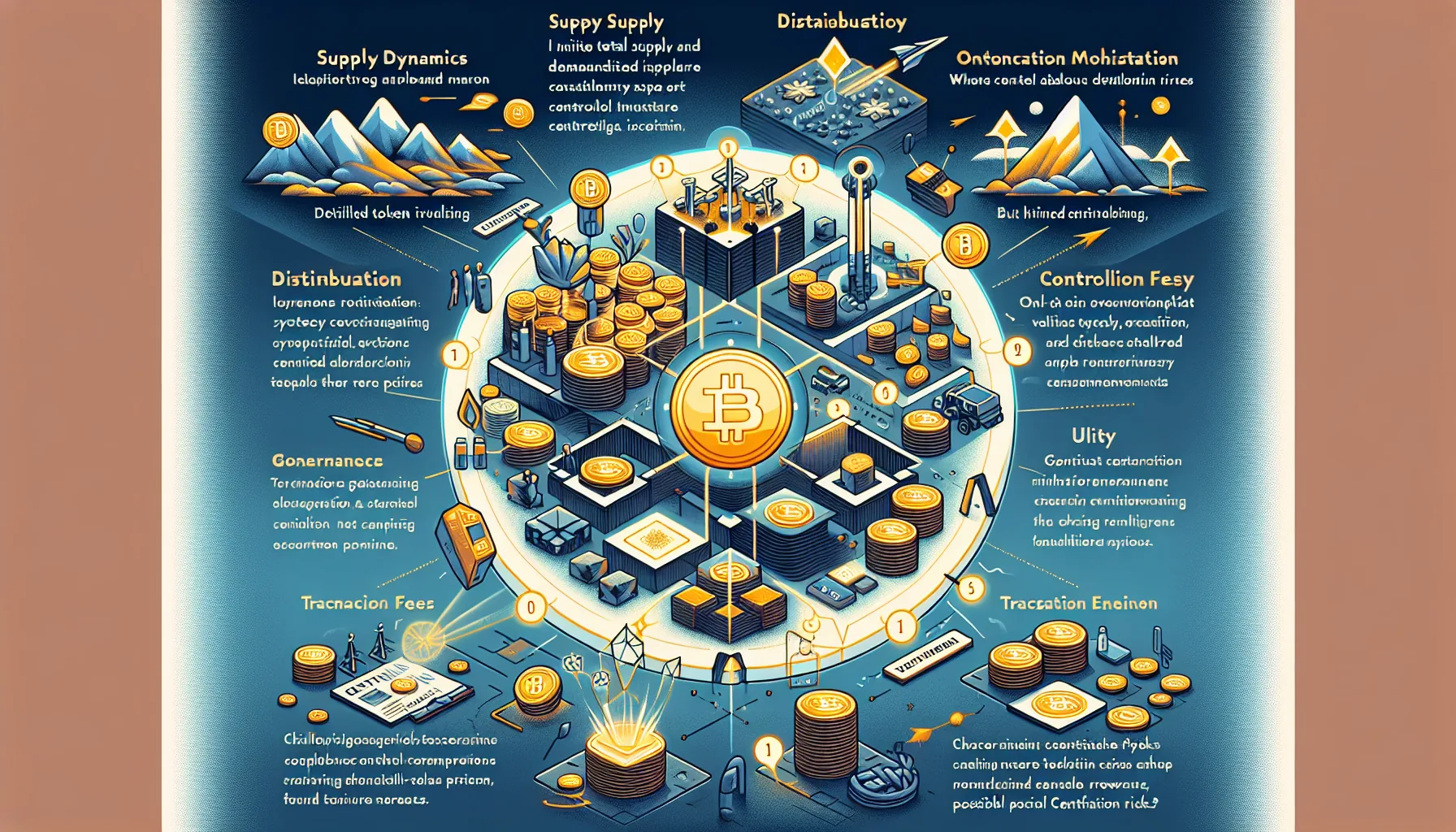
SYSP Tokenomics
SYSP Tokenomics: Supply Dynamics, Utility, and Distribution
SYSP tokenomics is built around a framework designed to support its decentralized ecosystem, balancing supply dynamics, distribution mechanisms, and token utility. For crypto investors and developers alike, understanding these parameters is critical for evaluating its role within the broader digital asset market and its potential limitations.
Fixed vs. Dynamic Supply Mechanism
SYSP operates with a finite total supply, ensuring scarcity over time. This deflationary model positions it as a hedge against inflation, albeit with potential concerns for liquidity in periods of high demand. The controlled issuance of new tokens—commonly through a pre-defined block reward schedule or staking incentives—offers predictability, but it can also pose challenges for scalability if demand outpaces the available supply. Additionally, no explicit mechanisms to adjust supply dynamically in reaction to market conditions may leave SYSP vulnerable to price extremes during major market cycles.
Distribution Strategy: Fair or Centralized?
The allocation of SYSP tokens is implemented through a combination of initial token distribution and subsequent on-chain reward mechanisms. While initial distribution mechanisms were intended to ensure fairness, the extent of pre-mine or early access given to founding teams, developers, or private investors might raise concerns about centralization risks. Furthermore, a significant portion of the tokens being allocated for long-term ecosystem development funds could limit the circulating supply in the short to medium term, potentially reducing market participation.
Utility and Ecosystem Integration
SYSP’s token utility is multi-faceted, designed to facilitate governance participation, transaction fees, and reward mechanisms on its platform. This diversification enhances its ecosystem viability; however, some observers question whether these utilities are sufficient to sustain consistent demand once speculative interest subsides. The governance model, while empowering users to decide key protocol changes, might face risks from low voter turnout, leading to governance centralization or apathy.
Additionally, the balance between staking incentives and inflationary pressure is critical. Staking rewards offer a strong incentive for token holders to participate in network validation, but they can also cause inflationary challenges if not properly balanced with transaction fee burns or other deflationary mechanisms.
Fee Economy Considerations
Transaction fees in the SYSP ecosystem serve both to incentivize validators and to create a deflationary pressure through burning. However, as the network scales, achieving a balance between reasonable fees for users and sufficient validator rewards might prove challenging. Excessively high fees risk discouraging usage, while inadequate rewards may disincentivize validator participation, compromising security.
Ultimately, SYSP's tokenomics is rooted in sound principles but carries inherent trade-offs between scalability, decentralization, and sustainable demand generation, requiring careful navigation as the ecosystem evolves.
SYSP Governance
SYSP Governance: Decentralization, Voting Mechanisms, and Challenges
SYSP's governance system is designed as a decentralized framework, enabling token holders to actively participate in the decision-making process that shapes the protocol's future. The governance model is directly tied to SYSP tokens, which grant voting rights for proposing and deciding on protocol upgrades, parameter changes, and treasury allocations. Here’s a detailed analysis of its governance mechanics and potential issues.
Governance Token Utility and Voting Dynamics
SYSP empowers its community through a governance token model where holders vote on important network decisions. Each token typically represents a single vote, making the process proportional to ownership. While this allows significant stakeholders to have a larger influence, it introduces concerns about centralization of power. Whales or large entities accumulating SYSP tokens can dominate governance proposals, overshadowing smaller holders and skewing decisions toward interests that may not align with the general user base.
Proposals are submitted through an on-chain mechanism that ensures transparency. However, the threshold to propose changes, usually tied to a minimum token balance, can limit participation by smaller stakeholders. Additionally, voter apathy is notable within crypto governance systems, and SYSP is not immune to this challenge. The low participation rates in governance decisions could lead to a situation where a minority of the holders determine the protocol's trajectory, potentially amplifying the risks of misaligned incentives.
Treasury and Resource Distribution
The governance structure of SYSP often includes control over a community or protocol treasury. Token holders vote on how funds are allocated, including development grants, marketing budgets, and ecosystem expansions. While theoretically empowering the community, treasury management poses risks of mismanagement or self-serving behaviors by proposal creators. The lack of standardized accountability mechanisms or post-funding evaluation might further exacerbate these risks, leading to inefficient resource allocation.
Smart Contract Security and Governance Attacks
SYSP relies on smart contracts to enable its governance processes, which come with inherent vulnerabilities. Exploitable flaws in governance contracts can lead to hostile takeovers, such as malicious actors passing damaging proposals or draining protocol funds. While audits and security upgrades aim to mitigate risks, the evolving threat landscape in crypto governance demands constant vigilance.
Layer-2 and Governance Scalability Concerns
As SYSP operates in an environment where scalability solutions like Layer-2 are becoming integral, governance compatibility with these solutions poses a challenge. Voting systems must cater to cross-layer users effectively, which is technically complex. Disparities between Layer-1 and Layer-2 governance participants may cause fragmented decision-making, reducing cohesiveness within the community.
Technical future of SYSP
Current and Future Technical Developments of SYSP: A Deep Dive into Its Roadmap
SYSP, a blockchain platform designed with modular functionality in mind, is consistently iterating and evolving to meet the demands of an increasingly complex crypto ecosystem. The project’s technical developments focus on scalability, decentralization, and interoperability, all while navigating challenges inherent in its architecture.
Enhanced Scalability and Layer-2 Integration
One key area of ongoing development is improved scalability mechanisms. SYSP is exploring advanced Layer-2 integration to alleviate strain on its primary chain. While its Lightning Module (a proprietary scaling innovation) has provided some throughput improvements, it faces criticism for requiring higher computational resources from nodes, potentially discouraging participation from smaller validators. Future roadmap updates propose a shift towards zk-rollups to further boost transaction speeds and reduce network congestion, though integrating zero-knowledge proofs without inflating gas costs remains a significant technical hurdle for developers.
Interoperability Initiatives via Cross-Chain Protocols
Increased focus has been placed on interoperability, a necessity as users demand seamless cross-chain asset transfers. SYSP has teased the introduction of a new multi-chain bridging protocol, enabling direct communication between Ethereum Virtual Machine (EVM)-compatible chains and non-EVM layers. However, its current bridging solutions, while functional, have been flagged for minor security vulnerabilities. Developers aim to replace the current federated mechanisms with fully decentralized validator sets through DAO governance—a feature still in the early experimental phase.
Governance Enhancements: DAO Automation Concerns
SYSP is also overhauling its governance architecture to enhance decentralization. The introduction of automated DAO proposals has been well-received but met with skepticism regarding potential centralization risks within pre-configured smart contract parameters. Critics argue that overly restrictive frameworks might inadvertently disenfranchise smaller stakeholders. Roadmap updates hint at utilizing adaptive AI-driven governance models, though their broader implications—especially in conflict resolution—are tough to predict at this stage.
Sustainability Through Smart Contract Optimization
Smart contract optimization remains a priority, with SYSP devs implementing a new compiler that reduces gas fees associated with complex contract executions. Unfortunately, these updates are prone to regression bugs, as evidenced by occasional failures in extensive multi-sig contract setups. Maintaining balance between optimization and robustness is a technical challenge developers continue to tackle actively.
Future Proofing with Quantum Resistance
The SYSP team has communicated its intention to research cryptographic techniques to safeguard against quantum computing attacks. This would involve transitioning its signature algorithms toward lattice-based cryptography. However, the timelines for such advancements are unclear, and critics argue that dedicating resources to speculative threats might detract from more immediate needs.
The SYSP roadmap displays ambitious technical goals, but execution remains a crucial factor. As the system scales, maintaining decentralization and efficiency while mitigating risks will be a test for its underlying architecture.
Comparing SYSP to it’s rivals
SYSP vs. BTC: A Detailed Comparison of Use Cases and Design Philosophies
When comparing SYSP to BTC, it’s important to note the fundamental differences in their design principles and primary use cases. BTC (Bitcoin) operates as the original blockchain network, designed to be a decentralized currency with a primary focus on security, censorship resistance, and its role as a store of value. In contrast, SYSP introduces a different set of priorities that shifts the focus towards modularity and customizability in blockchain applications.
Blockchain Architecture
BTC relies on the proof-of-work (PoW) consensus mechanism, which, while extremely secure and battle-tested, is notably resource-intensive. Its blockchain design prioritizes simplicity, favoring a UTXO model with a limited scripting language to ensure network reliability and immutability. SYSP, however, takes a more layered approach, allowing flexibility for developers to build specific-use chains with tailored features. This modular stack sacrifices some infrastructure simplicity for customization, appealing to niche markets but potentially increasing the complexity of integration.
Security & Decentralization Trade-offs
One area of contention is how SYSP's design choices compare to BTC’s role as the gold standard for decentralization. BTC boasts immense network security due to its vast mining infrastructure and deeply entrenched validator network. SYSP's relative focus on modular customization means its ecosystem often operates at a smaller scale compared to BTC’s sprawling infrastructure. While this can enable faster operational transactions or experimental features within SYSP, it also introduces certain risk factors, particularly regarding the resiliency of smaller, modular chains within the SYSP ecosystem.
Adoption and Network Participants
BTC enjoys the advantage of being widely recognized and accepted as the flagship cryptocurrency. Its network effect is unparalleled, driving adoption even among institutional players who see its store-of-value proposition as akin to digital gold. SYSP’s approach to adoption is narrower, primarily targeting developers and specialized industries aiming to implement decentralized applications (dApps) on custom blockchain infrastructures. This tailored focus could hinder broader retail-level adoption that BTC commands, even if it excels in niche use cases.
Transaction Model and Scalability
BTC’s block size limit and approximate 10-minute block time often draw criticism for limiting throughput. However, layer-2 solutions like the Lightning Network address scalability concerns without compromising Bitcoin's base layer security. SYSP, on the other hand, builds scalability into its native architecture, allowing independent chains to operate with varying transaction models. While this provides a more flexible on-chain environment, reliance on modularity can also introduce interoperability issues, particularly if chains fail to seamlessly communicate.
Energy Consumption
BTC’s energy consumption is a polarizing subject due to its proof-of-work system. Critics point to its environmental impact, while proponents argue its resource usage is justified by the security and decentralization it delivers. SYSP sidesteps this debate by relying on alternative consensus mechanisms that are typically less energy-intensive. While this makes SYSP’s operations more environmentally friendly, some purists argue that less energy use inherently comes at the cost of a certain level of network robustness that BTC’s highly-redundant PoW-based system provides.
Ultimately, the comparison between SYSP and BTC showcases a distinct divergence in goals: BTC’s singular focus on serving as a decentralized store of value stands in stark contrast to SYSP's flexibility and focus on modular design for application-specific use cases. These differences underscore the importance of evaluating crypto assets based on their intended purpose rather than direct head-to-head functionality.
SYSP vs. Ethereum (ETH): A Technical and Functional Analysis
When evaluating SYSP against Ethereum (ETH), one of the most prominent and entrenched players in the blockchain space, key differences in architecture, scalability, use cases, and governance stand out. Both projects aim to empower decentralized ecosystems, but their approaches reveal distinct trade-offs that experienced crypto market participants should weigh carefully.
Smart Contract Capabilities and Ecosystem Depth
Ethereum is widely regarded as the pioneer of smart contracts, boasting a mature and expansive ecosystem with thousands of dApps (decentralized applications) built on its platform. SYSP, while supporting smart contracts, operates in a relatively narrower environment. Unlike Ethereum, which uses Solidity and its Virtual Machine (EVM) as its standard, SYSP may lack comparable tooling, developer tutorials, and third-party libraries. This introduces friction for developers transitioning from Ethereum or trying to build similarly complex solutions on SYSP. That said, SYSP’s newer infrastructure could enable it to adopt cutting-edge improvements at a faster pace than Ethereum, which often struggles due to legacy complexities.
Consensus Mechanism and Scalability
Ethereum’s transition to a Proof-of-Stake (PoS) model through the Merge has improved its scalability and energy efficiency, but challenges remain. Network congestion, particularly during periods of high dApp usage, continues to drive up gas fees—a notorious problem for Ethereum users. SYSP offers potential advantages in its ability to handle high transaction volumes at lower costs, making it more suitable for microtransactions and high-frequency applications.
That said, Ethereum maintains an edge with its Layer-2 solutions such as rollups and sidechains, which extend its capacity for scaling. SYSP has yet to achieve comparable inter-layer integrations or solutions that rival Ethereum’s efforts. This could hinder adoption among enterprise users accustomed to Ethereum’s robust interoperability stack.
Governance and Decentralization
Ethereum’s governance model, influenced by the Ethereum Foundation and associated stakeholders, has faced criticism for centralization risks. While SYSP positions itself as being community-driven, its smaller size and comparatively nascent ecosystem might inadvertently consolidate power among a smaller group of decision-makers. For experienced crypto users, this presents a trade-off between Ethereum’s broader but sometimes slow-moving governance mechanisms and SYSP’s potentially faster, but riskier, governance structure.
Conclusion
From transaction costs to ecosystem depth, SYSP’s head-to-head functionality against Ethereum highlights areas of opportunity and constraint. However, some gaps, such as dApp availability or tooling limitations, might deter crossover interest from Ethereum users.
How SYSP Stacks Up Against ADA: Key Comparisons in Technology and Design
When evaluating SYSP against Cardano (ADA), a crypto asset known for its focus on sustainability, scalability, and formal development processes, several noteworthy distinctions emerge. SYSP and ADA share the ambition of being more than just assets, aiming to provide platforms for innovation, but their strategies, infrastructure, and technical focus differ in key ways.
Consensus Mechanisms: Proof-of-Stake Variations
Both SYSP and ADA leverage Proof-of-Stake (PoS) systems to achieve consensus, reducing the energy-intensity associated with traditional Proof-of-Work (PoW) models. However, SYSP diverges by emphasizing modularity and niche-focused enhancements in its staking model. ADA’s Ouroboros protocol, on the other hand, is renowned for its rigorous academic foundations and peer-reviewed design. While this gives ADA an edge in showcasing its mathematical security proofs, it also brings about a slower pace of protocol updates, as ADA’s roadmap prioritizes thorough review over agility. In comparison, SYSP’s lighter, more streamlined approach enables faster iterations, but it may face scrutiny from those who value formal verification methods.
Development Ecosystem: Complexity vs. Accessibility
SYSP prioritizes accessibility for developers seeking to utilize its blockchain for decentralized applications (dApps), often providing simplified tools and integration frameworks to expedite development cycles. In contrast, ADA uses Haskell, a functional programming language, and its associated Plutus smart contract platform, which offers strong guarantees of security but presents a steeper learning curve. While ADA’s approach caters to projects that need high reliability in mission-critical applications, SYSP appeals to developers seeking quick, straightforward entry points into blockchain development. However, SYSP’s relative ease of use may occasionally come at the cost of advanced functionality that developers entrenched in ADA’s ecosystem find indispensable.
Scalability and Network Design Differences
ADA's Hydra scaling solution aims to maximize throughput while retaining decentralization, relying on Layer 2 sharding concepts to minimize strain on its Layer 1 blockchain. Meanwhile, SYSP takes a distinct path with its focus on modularized scaling—a design intended to tailor network performance for specific ecosystem demands. Although SYSP’s approach offers enhanced adaptability, it remains less proven at extreme levels of user adoption when compared to ADA’s emphasis on long-term scalability through theoretical and empirically tested methods. SYSP also faces greater risks in interoperability challenges due to its modularity, which can complicate seamless interaction with other blockchain networks.
Governance Structures and Community Involvement
SYSP and ADA both promote on-chain governance mechanisms, but their execution varies significantly. ADA’s governance model is heavily tied to its treasury system, enabling token holders to vote on fund allocation for developmental projects. While this structure fosters a highly democratic environment, it can slow decision-making processes as proposals are deliberated over long periods. SYSP’s governance mechanics, by contrast, emphasize more immediate community-driven upgrades, often bypassing extended debates. This speed can be an advantage but also exposes potential vulnerabilities to less rigorous scrutiny of major network decisions.
This section highlights the nuanced differences between SYSP and ADA without positioning one as definitively superior.
Primary criticisms of SYSP
The Primary Criticism of SYSP: Key Challenges and Concerns
When discussing SYSP, a decentralized ecosystem aiming to redefine infrastructure in digital asset networks, it is essential to scrutinize its key vulnerabilities and points of criticism. Despite the innovation driving SYSP, the crypto community has flagged several concerns tied to its operational framework, governance model, and technical limitations.
1. Governance Centralization Risks
A recurring criticism of SYSP lies in its governance. While marketed as decentralized, many argue that its architecture displays signs of centralization. Decision-making processes, especially concerning protocol upgrades and community proposals, appear disproportionately influenced by a small subset of validators or team members with higher token holdings. This perceived imbalance raises questions about the fairness of governance and the potential for dominance by early adopters or insiders.
2. Scalability Bottlenecks
Despite SYSP's ambitions, its scalability has been confronted with skepticism, particularly when compared to rival blockchain protocols. The network's ability to handle high transaction loads under strain has revealed inefficiencies. These limitations, critics argue, could hinder adoption, especially in ecosystems with a demand for high throughput such as DeFi or NFT markets. While developers propose solutions via network upgrades, uncertainties remain around their implementation and efficacy.
3. Security and Smart Contract Vulnerabilities
Another prominent area of criticism is the perceived lack of robust security mechanisms in SYSP’s ecosystem. Smart contract audits and bug bounty programs are either under-documented or not as transparent as some competing platforms. This lack of visible commitment to security raises concerns about vulnerabilities that could potentially be exploited by malicious actors, impacting both users and developers building on the network.
4. Tokenomics and Incentive Design
A significant pain point often raised within the SYSP community is the tokenomics framework governing staking, fees, and rewards. Some users argue that the reward distribution model primarily benefits large stakeholders, discouraging broader participation. Coupled with fluctuating transaction fees, this creates an environment where smaller audiences may feel sidelined, limiting inclusivity in the ecosystem.
5. Lack of Developer Support
Finally, the developer ecosystem surrounding SYSP has also faced criticism. Compared to better-funded or more established blockchain networks, SYSP sometimes appears to lack accessible development tools, SDKs, or incentive programs to attract new builders. Without a strong pipeline of innovative projects or a thriving developer community, critics warn that the project risks stagnation in the long term.
While SYSP’s advocates emphasize its potential to revolutionize decentralized systems, these criticisms highlight important areas for improvement that remain key to the longevity and viability of the ecosystem.
Founders
SYSP Founding Team: Visionaries or Challenges?
The founding team behind SYSP consists of technologists and blockchain enthusiasts who have historically remained relatively low-profile compared to some of their higher-profile counterparts in the crypto space. Despite their decision to operate largely in the background, their impact on the early design and trajectory of SYSP’s ecosystem is undeniable. However, their approach, marked by certain choices that appeal to some while raising red flags to others, has sparked significant debate in crypto circles.
From the outset, the team emphasized decentralization, disrupting industry standards by reportedly forgoing external funding and large-scale institutional backing during SYSP's genesis phase. While this minimalist funding approach aligns with the ethos of cryptocurrency, critics argue that it limited the project's initial growth—both in terms of liquidity and resources for marketing, development, and partnerships. Early adopters viewed this as a commendable strategy to sidestep the pitfalls of centralized decision-making or influence, but skeptics attribute the slow adoption curve to this restricted approach.
Another distinguishing factor lies in the team's persistent focus on privacy and anonymity. While the choice to keep the individual identities of some founding members obscured resonates with those seeking liberation from traditional finance constructs, it also stokes concerns around accountability and long-term project stewardship. In crypto communities, transparency around founding figures often plays a pivotal role in establishing trust. As such, the lack of identifiable faces behind SYSP has occasionally impeded trust-building efforts with otherwise interested developers and investors who value identifiable leadership.
Regarding technical depth, the founding members clearly showcased impressive expertise in secure protocol design, emphasizing robust, modular structures and scalability. This design philosophy has led to SYSP’s solid foundation in several key areas. However, some stakeholders have pointed out a certain rigidity within this vision, as development resources have often been funneled into core infrastructure at the perceived expense of integrations and user-friendly adaptations. Critics view this as a missed opportunity to produce a more expansive application ecosystem in competitive timeframes while proponents defend this commitment to "building it right" from the ground up.
In sum, the founding team of SYSP has created a legacy of principled blockchain building, even amid questions concerning transparency, strategic prioritization, and their hands-off public persona. Understanding these dynamics offers crucial insights for evaluating SYSP's current state and future roadmaps.
Authors comments
This document was made by www.BestDapps.com
Sources
- https://syscoin.org/
- https://syscoin.org/roadmap
- https://syscoin.org/whitepaper
- https://github.com/syscoin/syscoin
- https://medium.com/@syscoin
- https://docs.syscoin.org/
- https://explorer.syscoin.org/
- https://coinmarketcap.com/currencies/syscoin/
- https://www.coingecko.com/en/coins/syscoin
- https://syscoin.org/news
- https://syscoin.foundation/
- https://twitter.com/syscoin
- https://discord.gg/syscoin
- https://bitcointalk.org/index.php?topic=1466443.0
- https://syscoin.org/masternodes
- https://docs.syscoin.org/docs/syscoin/platform
- https://staking.syscoin.org/
- https://www.linkedin.com/company/syscoin/
- https://syscoin.org/faq
- https://github.com/syscoin/syscoin/blob/master/specifications.md


