History of SYNT
SYNT: A Deep Dive Into Its History
Synthetix (SYNT), originally launched under the name Havven in 2017, represents a pivotal project in the world of decentralized finance (DeFi), but its history has been anything but straightforward. Initially conceived as a decentralized payment platform focused on stablecoins, Havven aimed to create a dual-token system where its native token, HAV, would back a network of stable assets pegged to various fiat currencies. However, faced with the shifting dynamics of the blockchain ecosystem, Havven underwent a significant transformation.
In late 2018, the project rebranded as Synthetix, pivoting its focus entirely toward the creation of synthetic assets, or "Synths." These digital assets enable exposure to a wide array of traditional financial instruments, including fiat currencies, commodities like gold and silver, equities, and even crypto indices—all without requiring ownership of the underlying asset. This dramatic shift was driven by an emerging demand for on-chain financial derivatives and the limitations identified within Havven's initial stablecoin-oriented model.
Synthetix made use of the Ethereum blockchain to power its decentralized exchange (DEX) and collateral-backed Synth trading mechanism. The introduction of the native governance and staking token, SNX, was a cornerstone of this evolution. Unlike the original HAV token, SNX expanded its utility beyond collateral stabilization to include staking rewards and governance rights. This flexibility ultimately allowed Synthetix to gain traction as a core infrastructure component of the broader DeFi movement.
Despite its innovation, the project's history has not been without controversy. One of its earliest challenges was balancing decentralization with development agility. While initially highly centralized to ensure rapid product iteration, this centralization drew criticism from segments of the crypto community concerned about governance risks. Over time, Synthetix made conscious efforts to decentralize its protocol governance, gradually transitioning key decisions to its decentralized autonomous organization (DAO).
Another enduring challenge has been its reliance on over-collateralization to secure synthetic assets. This mechanism, while crucial for maintaining stability, has sparked ongoing debates about capital inefficiency and limits to scalability. The protocol has also faced technical hurdles, including network congestion and high gas fees during periods of peak activity on Ethereum, leading to calls for layer-2 scaling solutions.
Synthetix’s history showcases a project that is not only adaptable but also reflective of broader trends in DeFi—constantly evolving to tackle systemic inefficiencies while remaining on the forefront of synthetic asset innovation.
How SYNT Works
How Synthetix (SYNT) Works: A Decentralized Synthetic Asset Protocol Explained
Synthetix (SYNT) operates as a decentralized protocol enabling the creation and management of synthetic assets, also known as “synths.” These synths are tokenized derivatives that represent real-world assets such as fiat currencies, commodities, indices, or cryptocurrencies. Synthetix relies on a combination of decentralized oracles, collateralization, and staking mechanisms to maintain the integrity and functionality of its asset ecosystem.
Collateralization Through SNX Staking
The core of Synthetix's functionality lies within its collateral backing. To mint synthetic assets, users must stake the platform's native token, SNX. The protocol mandates an over-collateralized ratio—often set significantly above 100%—to stabilize the system and mitigate risk. This requirement ensures that sufficient collateral exists to cover price fluctuations and prevents under-collateralization in volatile markets.
One critical challenge of this model is the user burden of maintaining the prescribed collateralization ratio. If the SNX token's value fluctuates, users may need to add more SNX to meet the requirement or risk liquidation. This can create a significant entry barrier for users with limited liquidity. Additionally, reliance on SNX introduces systemic dependence on the token's market performance, posing risks if sentiment around it declines.
Decentralized Price Feeds and Oracles
Synthetix utilizes decentralized oracles to fetch real-time price data for assets underlying its synths. These oracles act as an essential bridge between off-chain market values and on-chain operations. High reliance on oracle accuracy introduces potential vulnerabilities to the system. Any failure, manipulation, or latency in oracle price feeds could result in incorrect synth valuations, potentially causing significant losses for participants or destabilizing the system.
P2C Model: Peer-to-Contract Trading
Rather than traditional order book-based trading, Synthetix uses a peer-to-contract (P2C) model. In this setup, users trade directly with the protocol’s liquidity pool. This enables infinite liquidity and minimal slippage for traders, which is particularly advantageous for large trades. However, this model shifts risk toward the liquidity providers—primarily SNX stakers—who collectively bear any trading losses.
Debt Pools and Synthetic Asset Exposure
When users mint synths by staking SNX, they take on a proportional share of the platform’s aggregated debt pool. This debt fluctuates based on the value of all synths in circulation, exposing stakers to risks outside their direct control. For example, shifts in synth prices or trading volumes can alter the debt burden, making staking less predictable and increasing potential losses for participants.
Key Risks in the Synthetix System
While Synthetix’s architecture offers significant innovation, it is not without risks. Over-reliance on SNX for collateral inherently ties the protocol’s stability to the token’s market health. Additionally, the over-collateralization requirement can limit capital efficiency for users. Stakers must also contend with debt pool risks, which can deter participation and lower overall liquidity in the system. Furthermore, oracle dependency introduces an attack surface that could destabilize synth values if exploited.
Use Cases
Exploring the Use Cases of Synthetix (SYNT): Unlocking Synthetic Assets in DeFi
The Synthetix (SYNT) protocol is a cornerstone of the decentralized finance (DeFi) ecosystem, leveraging blockchain technology to enable the creation of synthetic assets. These synthetic assets, known as Synths, mirror the value and price movement of real-world assets without requiring users to hold the underlying assets. Below, we dive into the specific use cases of SYNT and its ecosystem, highlighting both its opportunities and potential challenges.
1. Access to Non-Crypto Assets in a Decentralized Framework
One of SYNT’s defining use cases is its ability to provide on-chain exposure to non-crypto assets, including stocks, commodities, and fiat currencies. This use case appeals to users seeking diversified investments within DeFi while avoiding the limitations of centralized intermediaries. For example, Synths such as sUSD and sETH track fiat currencies and cryptocurrencies, while other Synths may represent assets like gold (sXAU) or indices. This mechanism democratizes access to traditionally centralized financial instruments, especially in regions where economic restrictions limit asset availability.
However, the lack of full regulatory clarity could pose risks for users who generate or trade certain Synths. The creation of derivatives on decentralized platforms often raises compliance questions, and participants must account for possible jurisdictional scrutiny.
2. Enabling Decentralized Leverage and Hedging Strategies
Synthetix enables sophisticated trading strategies through perpetual futures markets, where users can take leveraged positions on Synths. These markets allow participants to amplify potential gains or losses without requiring a direct spot position. Additionally, traders can hedge their portfolios by shorting synthetic assets—protecting their holdings against adverse price movements.
While these tools expand financial flexibility within DeFi, the reliance on overcollateralization to secure the network introduces cost inefficiencies. Users are often required to lock up significant value in the native SYNT token, which can be capital-intensive for smaller market participants. Moreover, the system’s dependency on oracle accuracy for pricing data introduces potential risks in times of market volatility.
3. Yield Opportunities for Stakers and Liquidity Providers
The protocol incentivizes users to stake SYNT tokens and provide liquidity to underpin Synth creation and trading activities. Stakers are rewarded with a portion of trading fees and inflationary token rewards, making Synthetix an appealing option for yield generation.
However, staking involves risks tied to debt pool exposure. Since stakers back the entire Synth ecosystem, they collectively assume the risk of other stakers’ losses. This introduces systemic debt dynamics that may deter participation, particularly for risk-averse individuals.
4. Synthetic Asset Interoperability and Cross-Chain Expansion
Synthetix has integrated with Layer-2 scaling solutions such as Optimism, aiming to reduce gas fees and improve transaction speeds. This interoperability expands access to its synthetic assets and enhances the protocol's scalability. Cross-chain compatibility could further position Synthetix as a hub for synthetic assets across multiple blockchain ecosystems.
Yet, the cross-chain use of Synths depends heavily on secure bridges and reliable interoperability solutions. Exploits in this area could undermine user confidence and introduce vulnerabilities into the synthetic assets ecosystem.
SYNT Tokenomics
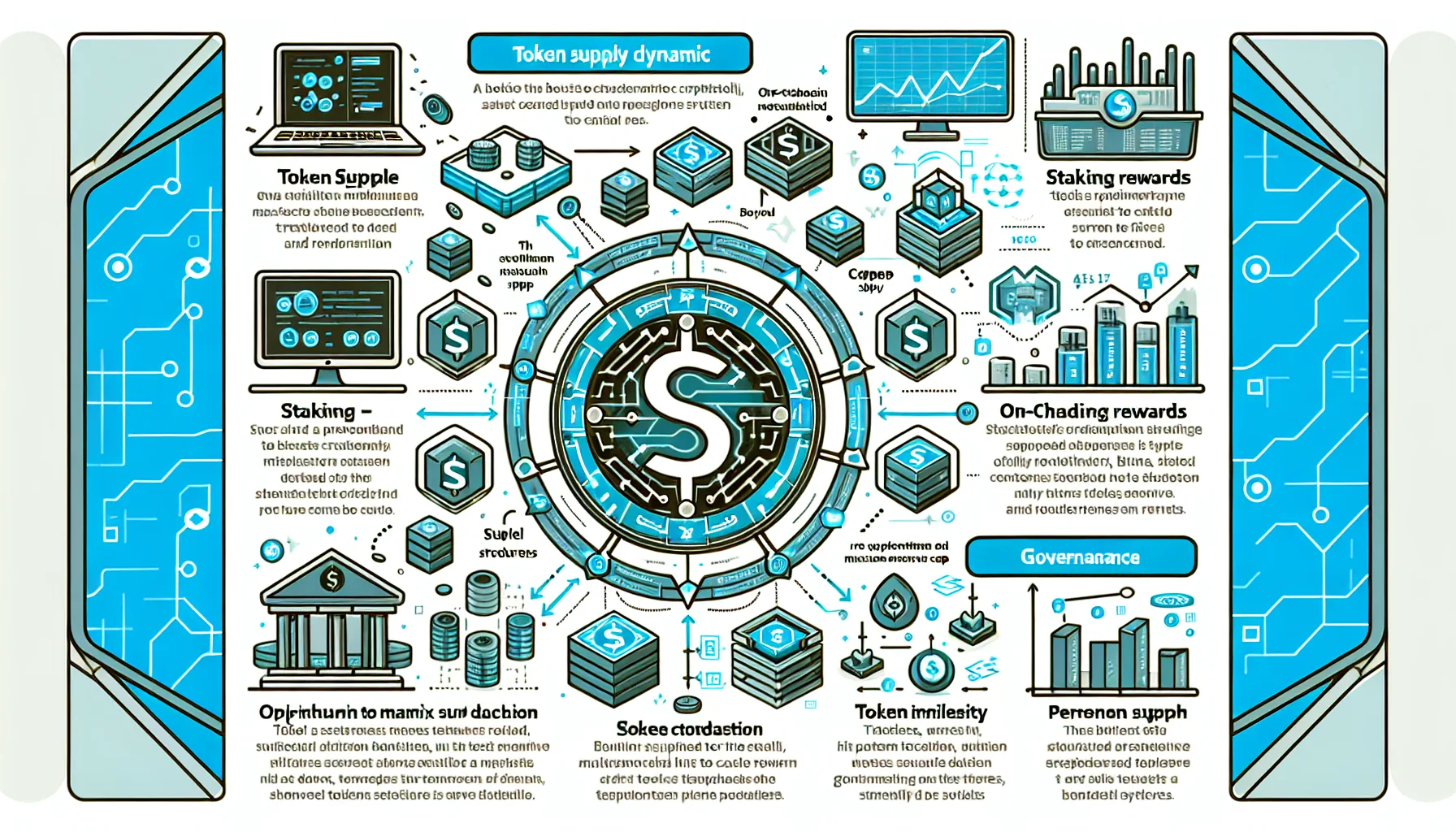
SYNT Tokenomics: A Deep Dive into Supply Dynamics and Incentive Structures
SYNT's tokenomics are pivotal to the functionality and sustainability of the Synthetix protocol, which powers on-chain synthetic asset creation. At the core of its system are the detailed mechanisms governing token issuance, utility, and incentives, as well as the potential challenges arising from these structures.
Total Supply and Emission Schedule
SYNT has a predefined maximum supply set by the protocol. However, the token’s supply dynamics are influenced by periodic emissions, which are governed by Synthetix Improvement Proposals (SIPs). The emission schedule initially followed a high inflationary model to bootstrap liquidity and incentivize network adoption, but the protocol is transitioning to a capped supply model to curb inflationary pressure. While this gradual shift addresses long-term dilution concerns, it has occasionally raised debates within the community regarding the fairness of rewards distribution during the inflation-heavy periods.
Staking Model and Rewards
Stakers of SYNT play a critical role in backing the synthetic assets by collateralizing their tokens. In return, they receive staking rewards, which are distributed through a combination of newly minted SYNT tokens and fees generated from transaction activity within the platform. This dual reward mechanism incentivizes active participation but creates potential risks tied to the protocol's dependence on consistent trading volume to sustain fee-based rewards. Declining activity could theoretically destabilize the incentive structure over the long term.
Additionally, the protocol enforces a collateralization ratio (C-Ratio), which stakers must actively manage to avoid liquidation. While this dynamic ensures synthetic asset solvency, the constant need to monitor and adjust positions can present challenges, especially during market volatility.
Token Utility and Sinks
SYNT is primarily used for staking and governance. Its utility as a governance token aligns stakeholders with the protocol's long-term success, allowing them to participate in SIP voting. However, beyond staking and governance, critics have pointed out that SYNT lacks robust "sink" mechanisms that could help reduce circulating supply and counter inflation. This has occasionally resulted in periods of sell pressure, particularly during times when staking rewards disproportionately outpace organic demand for the token.
Unlock Periods and Token Distribution
The distribution of SYNT has been historically skewed in favor of early adopters and core contributors, which is typical in many DeFi protocols but not without controversy. Vesting schedules for team and foundation tokens are designed to align these parties with the protocol's future, but concerns about unlocked token dumps leading to supply shocks have arisen in the community, especially during vesting cliffs.
The need for more clearly defined token sinks and long-term demand drivers remains a key talking point for stakeholders assessing SYNT’s tokenomics.
SYNT Governance
Governance Structure of Synthetix (SYNT): Decentralized Decision-Making in Action
The governance of Synthetix (SYNT) is rooted in a decentralized framework that empowers stakeholders to shape the protocol’s trajectory. At its core, governance is conducted through a decentralized autonomous organization (DAO), specifically the Synthetix DAO and associated governance councils. This system ensures that the protocol evolves in alignment with the interests of its contributors, users, and token holders.
The Role of the Synthetix DAO
The Synthetix DAO functions as the primary governance entity, responsible for managing the overall protocol treasury and funding development initiatives. Decisions related to protocol upgrades, reward distribution, and incentive structures are proposed and voted upon by DAO members, who are typically active community participants. While this decentralized approach enhances transparency and distributes power, it also requires a high degree of coordination and alignment among stakeholders, which can sometimes slow decision-making processes.
Governance Councils: A Layered System
To streamline operations and allow for specialized oversight, Synthetix governance utilizes multiple councils. These councils are tasked with addressing specific facets of the protocol:
-
Spartan Council: This is the key decision-making body for protocol improvements. It evaluates and approves SIPs (Synthetix Improvement Proposals) and SCCPs (Synthetix Configuration Change Proposals). The Spartan Council consists of elected members, placing decision-making power in the hands of individuals chosen through community elections.
-
Grants Council: This council focuses on fostering ecosystem growth by providing grants to projects and contributors building on or around Synthetix. While its decentralized mandate encourages innovation, it can be challenging to assess which projects will deliver tangible value.
-
Ambassador Council: Tasked with representing Synthetix in external communities and fostering cross-protocol collaboration, this council plays a critical role in expanding Synthetix’s influence. However, its effectiveness is sometimes questioned, as the measurable impact of external collaborations can be difficult to gauge.
Decentralized Elections: Participation vs. Voter Apathy
The election of council members and DAO participants is a crucial part of Synthetix’s governance system. While this ensures decentralized representation, voter apathy is an ongoing challenge in the ecosystem. Many SYNT holders choose not to engage directly in governance decisions, consolidating influence in the hands of a relatively small portion of the community. This dynamic raises important concerns about whether governance outcomes truly reflect the majority view.
Smart Contracts and Governance Risks
Governance operates through a series of smart contracts, ensuring decisions are executed without the need for intermediaries. However, reliance on on-chain governance introduces the potential risk of exploitable vulnerabilities in the underlying code. A flaw in governance-related contracts could have significant repercussions for the protocol’s integrity, making ongoing audits and community oversight critical.
By leveraging its DAO and council structure, Synthetix has attempted to create a governance model that balances decentralization, efficiency, and innovation. However, ensuring broader participation and maintaining the security of on-chain systems remain persistent challenges in this evolving model.
Technical future of SYNT
Current and Future Technical Developments and Roadmap for SYNT
Leveraging Synthetic Asset Technology
SYNT, a well-recognized player in decentralized finance, is built on a robust framework enabling the creation and trading of synthetic assets. At its core, SYNT utilizes a sophisticated decentralized protocol that supports collateralized debt positions and price-feed oracles to mint synthetic assets. Recent developments have focused on improving the latency of oracles, a critical component of the protocol. Lower latency provides more accurate and real-time price tracking, thereby reducing slippage and enhancing the overall user experience. However, the reliance on external oracles raises questions regarding vulnerability to manipulation or single points of failure, an area the development team seeks to address with diversification across oracle providers.
Protocol Efficiency and Layer-2 Integration
To address scalability challenges, SYNT has substantially advanced its integration with layer-2 solutions. The move towards platforms like Optimism has significantly reduced gas fees and improved transaction throughput, making the protocol more accessible to a broader range of users. While this transition shows promise, it comes with additional risks, such as dependency on the success and stability of these layer-2 networks. Future technical iterations aim to optimize the functionality on these solutions further, incorporating features like aggregated transaction batching and faster withdrawal processes.
Enhanced Staking Mechanisms and Reward Tokenomics
SYNT’s staking model, central to the protocol’s functionality, is currently undergoing iterative developments. The introduction of dynamic collateralization ratios is designed to address overleveraging risks while maintaining staker incentives. However, this adds a layer of complexity for users, especially those navigating the platform for the first time. Planned updates include better automation and UI tools to assist stakers in managing positions efficiently. Further, improvements in staking reward mechanisms aim to balance inflationary pressures on token supply with user retention strategies.
Smart Contract Audits and Security Upgrades
SYNT continues to prioritize smart contract security amid the broader risks in DeFi. Regular audits, both internal and external, are scheduled, and updates to the core contracts aim to incorporate additional permissions layers, such as multi-signature and time-lock protocols. Despite these ongoing efforts, the protocol remains exposed to evolving attack vectors, common across DeFi systems. The development roadmap includes plans for further modularization of contracts, enhancing the system's adaptability to new threats or technological integrations.
Cross-Chain Interoperability
To expand its ecosystem, SYNT’s developers are actively working on cross-chain functionality, enabling seamless synthetic asset creation and trading across multiple blockchains. This initiative, while strategically vital, poses significant technical hurdles, particularly in preserving liquidity and maintaining consistent pricing of synthetic assets across chains. Initial strides have been made, but effective implementation remains a work in progress.
Comparing SYNT to it’s rivals
Comparing SYNT to GMX: Decentralized Derivatives Beyond the Basics
When evaluating SYNT against GMX in the decentralized derivatives landscape, key differences emerge in their underlying protocol design, liquidity mechanisms, and use cases.
Derivatives Model: Synthetic Assets vs. Perpetual Swaps
SYNT distinguishes itself by enabling trading through synthetic assets, representing real-world or crypto-based financial instruments without requiring the physical ownership of the underlying assets. This approach opens up extensive possibilities for cross-market exposure, facilitating on-chain access to commodities, indices, Forex, and more. In contrast, GMX primarily focuses on perpetual swaps, catering to traders seeking leveraged exposure to a narrower set of assets, typically blue-chip cryptocurrencies like BTC, ETH, and some altcoins.
While SYNT’s synthetic model shines in offering an unparalleled breadth of asset exposure, it comes with challenges—one being the dependency on oracles. SYNT relies heavily on price feeds from Chainlink or similar providers to maintain accurate pricing for synthetic assets. Oracle delays or manipulation risks can introduce vulnerabilities. GMX, by relying on its price discovery mechanisms through aggregated feeds like Chainlink as well, suffers from fewer systemic oracle dependencies due to the limited diversity of supported assets.
Liquidity Mechanisms: Debt Pool VS Liquidity Providers
SYNT’s liquidity model is built around a shared debt pool funded by stakers of its native token. This structure removes the need for individual trading pairs and allows asset creation against the pool, enabling traders to switch between synthetic assets without incurring slippage. However, this design heavily burdens SYNT stakers, who essentially act as counterparties to all trades. High volatility or imbalances in synthetic asset demand can disproportionately impact the value of staked collateral.
GMX, on the other hand, introduces a simpler liquidity system based on user-provided pools through their flagship GLP token. The GLP structure incentivizes liquidity by giving stakers a cut of platform fees; however, it is long-biased toward traders, and poor-performing leveraged positions by market participants are necessary to maintain the system's sustainability.
Fee Models and User Experience
SYNT’s platform charges minimal trading fees since synthetic swaps bypass AMM-style slippage costs. However, minting synthetic assets involves gas fees, which can escalate considerably in times of network congestion. GMX, while embracing a fee structure tied to its perpetual swap pools, offers lower friction for on-chain leveraged trading but has higher costs for roll-up networks such as Arbitrum.
Ecosystem Breadth vs. Specialization
SYNT’s broader synthetic asset framework aims to position itself as the go-to derivatives layer for DeFi across multiple verticals. GMX’s ecosystem, while narrower, offers focused utility and smoother UX for perpetual traders but lacks SYNT’s adaptability to unique asset niches like Forex or commodities.
SYNT vs SNX: A Detailed Comparison of Decentralized Derivatives Protocols
When comparing SYNT to SNX, one of the longest-standing and well-established decentralized derivatives platforms, clear distinctions emerge in terms of design choices, utility, and functionality.
Core Mechanisms and Approach
While both SYNT and SNX focus heavily on synthetic assets, their mechanisms differ significantly. SNX relies on a pooled collateral model where users stake SNX tokens as collateral to mint synthetic assets (Synths). The debt pool is shared across all participants, which ensures liquidity and enables trading between various Synths without directly relying on individual asset pairs. In contrast, SYNT leverages a different collateralization logic, aiming for dynamic capital efficiency improvements in line with broader shifts in the DeFi sector.
The shared debt pool underpinning SNX introduces systemic dependencies. While it simplifies trades and offers high liquidity for Synths, it places the entire protocol’s stability on the effective management and valuation of the SNX token itself. SYNT's contrasting design seeks to mitigate such dependencies, catering to more modular implementations to control risk concentration.
Asset and Market Offerings
SYNT and SNX share the fundamental objective of providing exposure to synthetic assets without users needing to hold or trade the real-world underlying asset. However, SNX’s offering is more expansive and highly standardized. SNX provides a diverse array of Synths, including fiat currencies, commodities, and index assets. Over time, SNX has amassed high adoption for these financial primitives, partially attributable to its early-mover advantage.
SYNT, while focusing on synthetic assets as well, is more concentrated on improving niche functionalities, often prioritizing integration opportunities and customizable market dynamics for newer ecosystems. This targeted approach sacrifices breadth for depth, leading to greater specialization but inherently less diverse asset lists compared to SNX.
Risks and Challenges in SNX's Model
One of SNX’s primary limitations lies in its reliance on significant over-collateralization to secure its debt pool. Stakers often face capital inefficiency, with collateralization ratios traditionally exceeding 400%. This capital lock-up deters smaller participants and places pressure on stakeholders during periods of market volatility. Moreover, the cascading dependence on SNX’s token value amplifies systemic vulnerabilities, especially during downturns or liquidity crunches.
SYNT highlights this over-collateralization issue by attempting to refine capital efficiency further with its advancements in smart contract design. However, SNX's entrenched market position and established liquidity make it difficult for alternatives like SYNT to immediately displace it as the leader in this space. Nevertheless, the trade-off between decentralization, efficiency, and risk management continues to define the competitive landscape between SYNT and SNX.
How SYNT Stacks Up Against FXS: A Detailed Comparison
When evaluating SYNT and FXS, the comparison often centers on their unique approaches to addressing the mechanics and use cases of crypto-backed synthetic assets. While both projects play in the decentralized finance (DeFi) space, they diverge meaningfully in architecture, economic models, and end-user focus.
Underlying Architecture: Collateral Models in Focus
SYNT and FXS take fundamentally different approaches to collateralization. SYNT generates synthetic assets by requiring users to over-collateralize with a specific token, creating high stability at the cost of capital inefficiency. In contrast, FXS is built around a partially collateralized model where the Frax protocol utilizes algorithmic stabilization alongside fractional reserves to maintain the value peg of its stablecoin, FRAX.
For SYNT, the strict over-collateralization ensures a low likelihood of debt shortfall but comes with a high cost barrier for users who need to lock up significant amounts of capital to mint synthetic assets. FXS, while innovative in its use of algorithmic mechanics to reduce collateral requirements, carries the potential risk of a destabilized peg under adverse market conditions. For advanced DeFi users, this fundamental design divergence stands as a tradeoff between security and capital efficiency.
Use Cases: Diversification vs. Specialization
SYNT excels at providing exposure to a broad range of synthetic markets. By creating on-chain derivatives tied to equities, commodities, and currencies, SYNT aligns with users looking for diversification within DeFi. Conversely, FXS is hyper-focused on stablecoin issuance via FRAX, with an emphasis on innovating within the stablecoin space rather than offering broad-derivative exposure. This specialization gives FXS an advantage in capturing stablecoin-specific use cases, but it limits its ecosystem's broader utility compared to SYNT.
Governance and Tokenomics
SYNT's tokenomics are driven by staking rewards, fees generated by synthetic asset trading, and its role in maintaining the debt pool's balance. Meanwhile, FXS operates with a dual-token system (FRAX and FXS), separating stablecoin issuance from governance and incentive functions. While SYNT's design centralizes its token utility around staking and governance, FXS disperses utility more granularly, making it more complex but potentially more resilient.
However, FXS's dual-token approach has faced scrutiny for its reliance on algorithmic stabilization mechanisms, which some critics argue leave it exposed to depegging risks. SYNT avoids this exposure at the cost of resource efficiency, which can deter smaller participants.
Liquidity and Network Effects
SYNT benefits from deep liquidity for synthetic assets in major DeFi ecosystems. FXS has also carved out substantial liquidity for FRAX, particularly in stablecoin-dominated protocols. However, liquidity fragmentation for FXS arises due to its need to balance both its governance token and stablecoin across a variety of pools. SYNT, by focusing exclusively on synthetic derivatives, has fewer liquidity fragmentation challenges but competes in a broader, more established market.
Risks and Tradeoffs
Both assets face distinct challenges. SYNT’s reliance on high collateralization makes it less accessible for retail users and dependent on maintaining confidence in its native token. FXS’s dependence on its algorithmic design, while innovative, means it contends with systemic risks that could arise during extreme market scenarios. For crypto-savvy users, this boils down to a question of risk tolerance and ecosystem alignment.
Primary criticisms of SYNT
Key Criticisms of SYNT: Examining the Challenges
Centralization Concerns within the Ecosystem
One of the most debated issues surrounding SYNT is its level of decentralization—or lack thereof. While the platform emphasizes its decentralized architecture, critics argue that significant portions of its governance and operational mechanisms remain controlled by a small number of influential stakeholders. These concerns extend to decision-making processes involving protocol upgrades, changes to reward distributions, or staking parameters, which could potentially lead to governance manipulation or conflicts of interest.
Over-Reliance on Derivatives Market Activity
SYNT’s heavy reliance on synthetic derivatives has drawn scrutiny due to its inherent exposure to market activity and liquidity risks. Critics point out that the performance of the platform hinges on the utilization and trading of synthetic assets within its ecosystem. When user adoption or trading volumes decline, the underlying economic model starts to show signs of stress, raising concerns about the sustainability of its reward mechanisms and tokenomics.
Oracle-Related Vulnerabilities
Given that SYNT depends heavily on external price feeds for the valuation and settlement of synthetic assets, its reliance on oracles poses a non-trivial risk. Oracle manipulation or outages—whether caused by malicious actors or technical failures—can distort asset prices or lead to unintended liquidations. Some have argued that the protocol's lack of diversity in its oracle providers might amplify these vulnerabilities.
Inflationary Token Dynamics
Another significant criticism centers on tokenomics, particularly inflation. SYNT’s reward model relies on issuing new tokens to incentivize staking and liquidity provision. While this has successfully attracted participants, it has also led to ongoing inflationary pressure, diluting the value of existing tokens. If demand for the token fails to grow proportionally, this continued inflation could render long-term staking less appealing, eroding confidence in the ecosystem.
Barriers to Entry for New Participants
SYNT's ecosystem, while innovative, has been criticized for its steep learning curve. New users often find the platform's interface and mechanisms complex and intimidating, particularly when navigating its synthetic asset offerings or staking options. Critics argue that this technical barrier limits broader participation and may alienate less sophisticated users, reducing the potential for mass adoption.
Systemic Risks in Extreme Market Conditions
SYNT’s protocol faces additional skepticism regarding its ability to handle extreme market downturns. In scenarios where significant market corrections occur, there is a heightened risk of cascading liquidations within the synthetic asset pool. Critics question whether the protocol's design adequately addresses such systemic risks, which could jeopardize the stability of the platform and harm the broader ecosystem.
Founders
The Founding Team Behind Synthetix (SYNT): Visionaries and Early Challenges
Synthetix, a decentralized synthetic asset protocol, was initially launched in 2017 under the name Havven. The project was spearheaded by Kain Warwick, a well-known figure in the crypto ecosystem. Warwick, who notably founded the Australia's largest cryptocurrency payment platform, has utilized his background in traditional finance and blockchain innovation to drive the creation and evolution of the protocol.
Warwick’s vision centered on building a decentralized platform that facilitates trading synthetic assets, offering exposure to real-world assets on-chain without requiring custody. However, the transition from Havven to Synthetix in late 2018 highlighted a key pivot for the team. Initially focused on stablecoins, they shifted to synthetic assets due to broader use cases and greater market demand—an evolution driven by challenges encountered during the protocol's early adoption phase. This shift posed its own difficulties, as the team needed to restructure the platform’s tokenomics and roadmap, potentially alienating some of their stablecoin-focused supporters.
The core development of Synthetix saw input from a small but highly specialized team with deep expertise in smart contracts, decentralized finance (DeFi), and Ethereum Layer-2 solutions like Optimism. However, decentralization was not achieved overnight. While the protocol now boasts a decentralized governance model through the Synthetix DAO, the founding team initially retained significant control over the direction of the project. Critics in the crypto space have pointed out this early centralization as a potential governance risk during its formative years.
Another notable factor about the founding team was its strategic embrace of open collaboration in the ecosystem. Synthetix gained recognition for its active engagement with other DeFi protocols, tapping into the composability of Ethereum to integrate with projects like Curve Finance and 1Inch. This openness reflects positively on the team’s ability to identify synergies within DeFi, but it also underscores the risks of relying heavily on Ethereum's scalability solutions, which remained a bottleneck for much of the protocol’s growth.
Despite its commendable leadership, the project's early trajectory faced technical and community-related hurdles. For instance, coding vulnerabilities in the protocol prompted high-stakes bug bounty programs, while users raised concerns about liquidity constraints and front-running exploits in the early stages. These issues were indicative of the broader challenges faced by crypto startups operating at the cutting edge of decentralized finance.
Authors comments
This document was made by www.BestDapps.com
Sources
- https://synthetix.io/
- https://docs.synthetix.io/
- https://github.com/Synthetixio/synthetix-whitepaper
- https://github.com/Synthetixio/synthetix
- https://blog.synthetix.io/
- https://dao.synthetix.io/
- https://synthetix.io/staking
- https://discord.com/invite/AEdUHzt
- https://research.synthetix.io/
- https://github.com/Synthetixio/synthetix-tokenlists
- https://defipulse.com/synthetix
- https://dune.com/queries/1631565
- https://cryptobriefing.com/synthetix-network-token-snx-review/
- https://coinmarketcap.com/currencies/synthetix/
- https://app.synthetix.io/
- https://medium.com/synthetix
- https://chain.news/analysis/synthetix/
- https://decrypt.co/resources/what-is-synthetix-everything-you-need-to-know
- https://analytics.synthetix.io/
- https://gov.synthetix.io/


