History of SYNT
The History of Synthetix (SYNT): Evolution and Milestones in Decentralized Synthetics
Synthetix (SYNT) began as a project that sought to redefine how financial derivatives operate within the blockchain ecosystem. Originally launched in 2017 under the name Havven (HAV), it focused on creating a decentralized stablecoin system backed by a dual-token model. Havven’s stablecoin component, nUSD, was collateralized by its native token, HAV, to maintain stability through a dynamic supply adjustment mechanism. However, the vision soon expanded beyond stablecoins to embrace a broader synthetic asset platform, leading to the project’s rebranding as Synthetix in late 2018.
Under its new identity, the Synthetix protocol shifted its focus to synthetic assets, which represent real-world assets like fiat currencies, commodities, stocks, and cryptocurrencies in a decentralized and permissionless manner. This pivot leveraged Ethereum’s capabilities, utilizing smart contracts to create “Synths” that move in price with their underlying asset without requiring users to directly hold or trade the actual assets. The choice to expand into synthetic markets signaled an ambitious attempt to challenge traditional financial systems, but also introduced operational complexities and regulatory risks.
A key milestone in Synthetix's development was the introduction of its staking mechanism in 2019. By staking SYNT tokens, network participants provided collateral to back Synths, earning fees and staking rewards in return. This model established a strong link between token utility and network participation, fostering an engaged community of stakers. However, this also meant that the protocol's security is highly reliant on token price and liquidity, which could present vulnerabilities under extreme market conditions.
Synthetix also pioneered decentralized governance through the implementation of the Synthetix Improvement Proposal (SIP) framework. This opened the door for community-driven decision-making, allowing participants to propose and vote on protocol upgrades and parameter adjustments. While this move towards decentralization was widely lauded, it also introduced potential bottlenecks in the decision-making process, as diverse opinions can sometimes delay critical updates.
Despite its innovations, Synthetix faced challenges during its early years. Scalability issues on Ethereum, exacerbated by high gas fees, created friction for users minting and trading Synths. To address this, the protocol announced a transition to the Optimistic Ethereum scaling solution, aimed at lowering costs and improving transaction speeds. However, the reliance on Layer 2 technology introduced integration complexities and potential centralization concerns in its early adoption phases.
Synthetix’s history underscores its role as an experimental arm of decentralized finance (DeFi), navigating both the opportunities and obstacles inherent in building a synthetic asset ecosystem.
How SYNT Works
How Synthetix (SYNT) Works: A Deep Dive into the Protocol
Synthetix (SYNT) operates as a decentralized synthetic asset issuance platform built to enable the creation, exchange, and tracking of tokenized assets that mirror real-world or digital asset values. These synthetic assets, referred to as Synths, enable users to gain exposure to various assets without directly holding or interacting with them. Here’s a comprehensive breakdown of how Synthetix works at its core technical and functional levels.
Minting Synths Through Collateralization
The core mechanism behind Synthetix revolves around the minting of Synths through the over-collateralization of the protocol’s native token, SNX. To mint Synths, users lock up SNX tokens as collateral in a smart contract. The collateralization ratio (C-Ratio) is set by the protocol to ensure there is sufficient backing for issued Synths. A typical challenge users face here is the potential for their positions to be liquidated if their C-Ratio falls below the required threshold due to market fluctuations in SNX valuation. Active management of collateral and manual rebalancing is often necessary, adding friction for participants.
Synth Exchange Mechanism
Synthetix’s unique offering is its asset exchange model, which takes place entirely on-chain and leverages pooled collateral. Users can trade Synths (e.g., sUSD for sBTC) directly within the Synthetix ecosystem without requiring counterparties. The protocol uses an oracle-based price feed to determine real-time exchange rates. This trust in oracles, however, exposes Synthetix to risks such as oracle manipulation or latency in price updates, which could lead to inaccurate pricing, especially during periods of extreme market volatility.
Debt Pool Dynamics
Another crucial element of Synthetix is its system-wide debt pool, which represents the total value of Synths issued and outstanding within the protocol. Every SNX staker who mints Synths is proportionally responsible for the debt in the pool, regardless of which Synth they initially issued. This shared debt model introduces a potential downside: fluctuations in the value of Synths in circulation can result in indirect exposure to unwanted assets. For instance, users minting sUSD are still partially exposed to the value shifts of sBTC or other Synths held by the protocol.
Fees and Rewards
Synthetix incentivizes SNX stakers by distributing exchange fees (in sUSD) and inflation rewards. Exchange fees are generated whenever users trade between Synths. However, these rewards are only accessible if stakers maintain their collateralization ratio within the acceptable limits. This creates a balancing act for participants, as staking incentives may not always outweigh the costs of maintaining a compliant C-Ratio, particularly during bearish conditions.
Limitations and Challenges in Scaling
While Synthetix enables decentralized exposure to a diversified range of synthetic assets, it does face several scaling challenges and inherent risks. Gas costs on the underlying blockchain can deter smaller users from interacting with the protocol. Additionally, its reliance on SNX as the sole collateral type could limit user utility and diversification. Centralization of oracle providers for asset pricing remains another point of contention, potentially impacting trust in the platform.
Synthetix’s technical design is ambitious in its pursuit of on-chain synthetic asset liquidity; however, its operational intricacies and associated risks highlight the complexity of maintaining a robust and equitable system for all participants.
Use Cases
Exploring the Use Cases of Synthetix (SYNT) in DeFi
Synthetix (SYNT) has established itself as a foundational protocol in the decentralized finance (DeFi) ecosystem, providing unique use cases that target derivatives trading and synthetic asset creation. Its protocol is built on Ethereum and leverages smart contracts to enable users to gain exposure to a wide variety of assets without directly holding them. Below, we’ll delve into its primary use cases and the considerations they bring.
Synthetic Asset Creation
One of the core functionalities of Synthetix is its ability to generate synthetic assets, referred to as "Synths." These assets are pegged to the value of real-world assets, including cryptocurrencies (sBTC, sETH), fiat currencies (sUSD, sEUR), commodities (sXAU for gold), and even indices. The creation of Synths allows for the decentralized trading of these assets without requiring actual ownership or custody.
This opens up significant opportunities for users who want exposure to certain markets but are constrained by regulatory barriers or access limitations. For example, a trader can get exposure to the value of gold through sXAU without needing to purchase physical gold or interact with centralized intermediaries.
However, one challenge with synthetic assets is their dependency on liquidity and accurate price oracles. Synthetix’s reliance on Chainlink oracles means that any issues with delayed price feeds or oracle manipulation could directly impact the system’s performance.
Hedging and Risk Mitigation
Synthetix offers users the ability to hedge their portfolios through inverse Synths (e.g., iBTC, iETH). These inverse Synths are designed to move in the opposite direction of their underlying asset's value, enabling users to capitalize on declining prices or reduce risk in volatile markets.
While this is a vital use case, it’s worth noting that inverse Synths come with specific expiration dates and are automatically rebalanced at certain price thresholds. This setup can create time sensitivity for users, especially for long-term strategies, forcing them to monitor market conditions closely to avoid liquidation or forced repositioning.
Non-Custodial Derivatives Trading
Through its decentralized exchange (Synthetix Exchange), users can trade Synths with deep liquidity and zero slippage. This approach enables seamless execution of trades but comes at the cost of overcollateralization. To mint Synths, users must lock up SNX tokens as collateral, with a collateralization ratio that may feel restrictive—frequently requiring over 400%. This high collateral requirement can make the system capital-inefficient compared to centralized alternatives.
Furthermore, stakers—who lock up SNX tokens—bear the systemic debt of the protocol, which can fluctuate based on supply-demand imbalances of Synths. This creates risks for participants, as debt positions are not fixed and could increase during adverse market conditions.
Cross-Asset Exposure with Minimal Friction
Synthetix enables users to move between assets without intermediaries or traditional trading pairs. By simplifying accessibility to cross-asset trading, it eliminates reliance on centralized counterparties. However, since this functionality is contingent on platform stability and liquidity, any disruptions or insufficient liquidity could hinder the user experience and limit its scalability.
Challenges and Considerations
While Synthetix presents compelling use cases, its reliance on SNX staking, third-party oracles, and high collateral thresholds introduces potential bottlenecks. Additionally, regulatory scrutiny surrounding synthetic assets could pose challenges in specific jurisdictions, adding a layer of unpredictability for users.
SYNT Tokenomics
Tokenomics of Synthetix (SNX): A Deep Dive into the Mechanisms
Synthetix (SNX) serves as the backbone of the Synthetix protocol, a decentralized liquidity provisioning platform for creating synthetic assets (Synths). The tokenomics of SNX are a critical part of how the protocol functions, ensuring stability, incentivizing participation, and maintaining its ecosystem integrity.
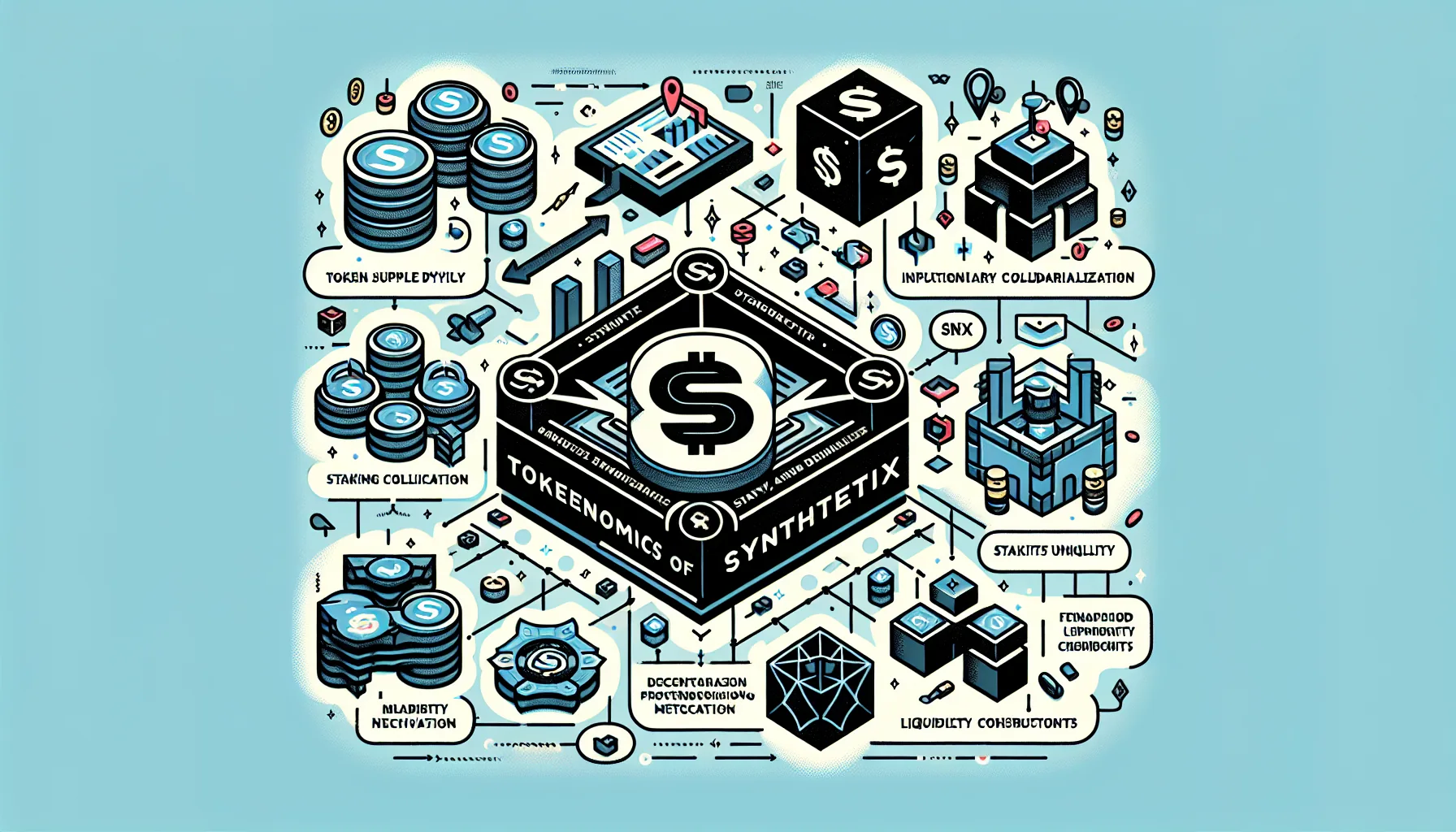
SNX Supply Dynamics and Staking Collateralization
The initial supply of SNX was fixed, but the protocol implemented inflationary adjustments through a pre-defined schedule to incentivize early participants and bootstrap the network. This inflation mechanism, while effective initially, introduces questions around long-term supply sustainability and its potential impact on token holder value dilution.
SNX holders are required to stake their tokens to mint synthetic assets. However, the high collateralization ratio—currently set at approximately 400%—creates a significant capital inefficiency. While this ratio helps ensure the system is overcollateralized to absorb volatility, it can deter both retail and institutional users from participating, as substantial capital must be locked without equivalent short-term yield benefits.
Utility of SNX: Beyond Governance
SNX is more than just a governance token; its primary role is collateral for Synths. Stakers earn rewards in two ways: (1) SNX inflation rewards, and (2) a share of the trading fees generated through Synth exchanges. However, the trading activity and fee generation highly depend on user adoption and transaction volume on the platform, factors that remain variable and could impact staker incentives negatively in periods of low activity.
Additionally, the reliance on SNX staking introduces systemic risks. A sharp decline in SNX token value directly impacts the collateralization of the system, potentially destabilizing the protocol if stakers are unable to meet collateral ratio requirements during high-volatility scenarios. This creates a feedback loop that could require emergency interventions, such as increasing collateralization ratios or liquidating Synth positions, impacting user confidence.
Inflationary Concerns Versus Deflationary Pressures
Over time, the protocol plans to transition to a deflationary model by tapering inflation rewards. While this is essential for long-term token value preservation, it raises questions about whether trading fees alone will provide sufficient incentives for SNX staking without inflationary rewards. This shift might place the protocol at a crossroads, where balancing decentralization, liquidity, and participant incentives becomes increasingly complex.
Liquidity Constraints and Market Interactions
SNX liquidity is primarily tied to its use in the Synthetix protocol. This reliance can limit market optionality and pose a challenge for broader adoption. Furthermore, the concentration of SNX holdings among early adopters and protocol insiders poses centralization concerns, creating uneven power dynamics within governance structures and liquidity flows.
Final Thoughts on Synthetix Tokenomics
Synthetix’s tokenomics present a unique blend of innovation and challenges. Designed to incentivize network participation and ensure stability, its mechanisms require constant fine-tuning to avoid systemic risks, optimize user incentives, and maintain balance in an evolving DeFi landscape. Understanding these dynamics is essential for anyone engaging with the SNX ecosystem or building on the protocol.
SYNT Governance
Governance in the Synthetix Ecosystem: Decentralized Decision-Making and Challenges
Synthetix (SYNT) has established an intricate governance framework designed to uphold the decentralized ethos while maintaining functionality and adaptability. Governance within Synthetix is primarily driven by its token holders, who play a key role in shaping the protocol’s evolution. This section delves into the governance mechanisms, notable governance entities, and several challenges inherent to decentralized decision-making in the Synthetix ecosystem.
Synthetix Governance Model and Entities
The governance of Synthetix is anchored in several key structures, including the SynthetixDAO, Spartan Council, and token-holder voting. The Spartan Council functions as the primary decision-making body, consisting of elected members tasked with assessing and approving Synthetix Improvement Proposals (SIPs). This council represents an innovative experiment in on-chain governance, combining democratic principles and technical vetting.
In addition to the Spartan Council, the SynthetixDAO holds significant power, focusing on the treasury, smart contract upgrades, and broader operational decisions. Unlike purely token-based voting systems seen in some protocols, Synthetix governance strategically incorporates both meritocratic and token-weighted mechanisms to address shortcomings of simplistic on-chain voting models.
Token Holder Participation and Proposal Process
SYNT token holders are central to governance, but their involvement primarily takes the form of electing Spartan Council members and evaluating proposals that impact the network. Governance proposals and decisions primarily flow through the creation and review of Synthetix Improvement Proposals (SIPs) and Synthetix Configuration Change Proposals (SCCPs). Proposals undergo rigorous discussion via protocol forums and Discord before being subjected to council votes, ensuring transparency and community input at early stages.
However, token-holder participation has faced challenges common to governance in decentralized systems: low voter turnout, governance fatigue, and lack of technical expertise on the part of regular participants. These barriers have sometimes raised concerns over the effective representation of the broader community's interests.
Challenges in Decentralized Governance
While Synthetix governance demonstrates a structured and layered approach, several challenges underscore the complexities of decentralized systems. Power distribution between the Spartan Council and the SynthetixDAO occasionally raises questions about centralization risks, particularly around decision-making opacity in the latter. Furthermore, as the protocol grows, aligning the interests of diverse stakeholders—ranging from stakers to integrators—has proven increasingly difficult.
Another core issue is the scalability of governance. Prolonged deliberation times for proposals and the growing complexity of SIPs can slow down critical protocol advancements, creating potential risks of stagnation in an ever-competitive DeFi landscape. Balancing efficient decision-making with inclusive governance remains an ongoing struggle for Synthetix.
Technical future of SYNT
Exploring Synthetix (SYNT): Current and Future Technical Developments
Transition to Optimism Layer 2
Synthetix has made significant technical strides by migrating its operations to Optimism, an Ethereum Layer 2 scaling solution. This move aimed to address high gas fees and network congestion on Ethereum's base layer. However, while the transition has largely resulted in faster and cheaper transactions, challenges remain. User adoption on Optimism continues to grow but not without barriers, such as wallet compatibility issues and the additional onboarding steps required for bridging assets to Layer 2. Additionally, developers face the ongoing task of ensuring decentralized functionality and security on this new scaling layer, which differs significantly in infrastructure from Ethereum Layer 1.
Cross-Asset Swaps and Atomic Synths
The Synthetix ecosystem focuses on enhancing liquidity provisioning and trading efficiency through innovations like cross-asset swaps. Enabled by Synthetix V2’s protocol upgrades, users can now execute trades directly between synthetic assets (Synths) without relying on traditional order books. This mechanism relies heavily on deep pooled liquidity and oracle price feeds, which have historically posed latency or accuracy concerns. Although strides have been made to minimize slippage and front-running vulnerabilities, the inherent dependency on Chainlink oracles introduces an element of centralized reliance—a point of concern for purists advocating fully decentralized infrastructures.
V3: Modular Architecture and Governance Changes
Synthetix V3 is currently underway, introducing a modular framework aimed at improving scalability and composability. V3 intends to decouple system components, allowing developers and third-party platforms to build on Synthetix more efficiently. Key features include permissionless Synth creation, improved collateral staking mechanics, and a governance upgrade intended to facilitate faster decision-making processes. However, such architectural overhauls come with risks, including potential bugs and security vulnerabilities in untested modules. The team has sought to mitigate these through rigorous audits, but the complexity of Synthetix's financial contracts inherently increases the attack surface.
Expanding Multi-Chain Integrations
Synthetix has expressed technical ambitions to further its footprint across multiple chains beyond Ethereum and Optimism. As interoperability protocols like LayerZero and Wormhole gain traction, Synthetix faces technical challenges including maintaining oracle synchronization across chains and ensuring that synthetic assets remain fully collateralized across fragmented ecosystems. Any desynchronization or exploit could lead to cascading failures impacting both users and the protocol's staking and liquidity components.
Fee Reclamation and Front-Running Mitigation
One of the lingering technical pain points for Synthetix is fee reclamation—a mechanism designed to combat oracle latency issues. While this system prevents unfair trades during periods of price volatility, it often introduces delays and frustrations for users seeking immediate execution. Efforts to address these concerns include exploring faster oracle updates and Layer 2-exclusive strategies, though these remain in development and are not yet fully refined.
Comparing SYNT to it’s rivals
Synthetix (SYNT) vs SNX: A Comparison of Synthetic Asset Protocols
Synthetix (SYNT) and SNX both operate in the niche of synthetic asset protocols, enabling users to trade tokenized representations of real-world or digital assets without requiring direct exposure. While SYNT is designed for interoperability and aims to decentralize the synthetic ecosystem across multiple chains, SNX has long been considered a pioneer in the field, with notable differences in design and execution.
Collateral Dynamics and Liquidity Pooling
A core distinction lies in their approach to collateralization. SYNT employs a more flexible model where collateral types, staking incentives, and partnerships with liquidity providers aim to decentralize trading and reduce slippage across integrated platforms. In comparison, SNX takes a highly controlled approach, relying primarily on its native token for overcollateralization. This tight dependency on the SNX token increases systemic risks during market downturns, as heavy corrections in SNX can deplete the protocol's collateral reserves more rapidly.
Additionally, SYNT’s focus on liquidity aggregation through cross-protocol collaboration gives it a distinct advantage in addressing liquidity fragmentation. SNX, while effectively leveraging its liquidity through Synthetix Exchange and its integration with protocols like 1inch and Curve, has faced criticisms for being less resilient against large trades with high slippage under certain market conditions.
Token Utility and Governance Approach
The SYNT token emphasizes participation beyond staking by offering roles in governance across decentralized teams. Through this, SYNT aims to encourage innovation across its expanding array of synthetic asset trading mechanisms. Meanwhile, SNX governance maintains centralized oversight through the Synthetix DAO, which has been both a benefit and critique. The streamlined management provides quicker decision-making but has also sparked debates over centralization risks.
From a token utility perspective, SNX holders rely heavily on staking rewards tied directly to network usage. However, as competition grows in the synthetic trading market, SNX faces challenges concerning diminishing reward ratios relative to staking lock-ups and inflation mechanisms, especially compared to SYNT’s growing focus on ecosystem utility via multi-chain strategy.
Onboarding Complexity and Ecosystem Accessibility
SYNT focuses heavily on reducing barriers for new users via modular integrations and partnerships with bridges and wallets, catering to a multi-chain audience. SNX users, on the other hand, often encounter steep learning curves due to the specific mechanics of staking and minting assets in its ecosystem. These processes require deeper technical knowledge, which could be a roadblock for user base expansion outside of seasoned crypto participants.
Scalability and Technological Focus
SNX has made significant strides with its L2 integration, particularly on Optimism, to lower gas fees and improve trade efficiency. However, the pace at which SYNT deploys upgrades across its growing interoperability stack with layer-1 and non-EVM chains suggests a broader focus on scalability. This difference in execution strategy demonstrates that SYNT prioritizes a chain-agnostic approach, while SNX remains more tightly aligned with Ethereum’s scaling efforts.
Both protocols bring unique strengths and trade-offs to the table, but these distinctions highlight fundamental philosophical and technical divergences shaping their evolution in the synthetic asset space.
Comparing Synthetix (SYNT) to GMX: A Deep Dive into Derivatives and Decentralized Trading Models
When contrasting the operational mechanics and market positioning of Synthetix (SYNT) with GMX, two distinct approaches to decentralized finance (DeFi) derivatives emerge. While both platforms cater to sophisticated traders seeking exposure to synthetic and leveraged assets without intermediaries, their architectural differences reveal unique strengths and trade-offs.
GMX operates primarily as a decentralized perpetual futures protocol, notable for its emphasis on low-fee, high-efficiency perpetual swaps and spot trading. Where SYNT relies on a novel synthetic asset issuance model powered by liquidity-backed debt pools, GMX uses a liquidity provider (LP) system driving its “GLP” pool for collateral and settlement functionality. This divergence highlights contrasting philosophies: SYNT prioritizes creating a broad suite of synthetic asset exposures, while GMX laser-focuses on the simplification of perpetual trading mechanics.
A significant advantage of GMX lies in its pricing mechanism, which integrates Chainlink oracles and a time-weighted average price (TWAP) from centralized exchanges to minimize vulnerability to front-running and price manipulation. By contrast, Synthetix relies on oracle feeds to price its synthetic assets, which, while versatile and robust, has historically raised concerns around latency and dependency on centralized oracle infrastructure. Traders accustomed to sharp precision in order execution may gravitate toward GMX for this reason, especially within low-slippage environments.
Another area of divergence is user engagement with platform fees and incentives. GMX stands out by offering 70% of trading fees directly to GLP holders, making it particularly attractive to liquidity providers. In comparison, the rewards structure in SYNT is distributed across the staking pool of SNX tokens, which incentivizes collateralization but exposes stakers to higher systemic risk tied to debt volatility within the protocol. The performance of SYNT during periods of high market activity is frequently scrutinized due to its need for high collateral efficiency to stabilize synthetic assets, whereas GMX’s model benefits from a more straightforward integration of real assets and liquidity pools.
That said, GMX's focus on niche functionality, like perpetuals, can limit its adaptability to emerging DeFi trends or expanding beyond trader-centric use cases. In contrast, Synthetix’s broader offering of synthetic stocks, currencies, and commodities gives it a versatility that GMX currently does not match. For users drawn to cross-asset trading flexibility, this may represent a key differentiator.
Ultimately, the choice between SYNT and GMX for advanced DeFi participants will hinge on whether users prioritize a deep synthetic ecosystem or a streamlined perpetual trading experience. Both models highlight the evolving innovation in decentralized derivatives but speak to differing use cases within the crypto landscape.
Synthetix (SYNT) vs. dYdX (DYDX): A Deep Dive into Decentralized Derivatives
When comparing Synthetix (SYNT) to dYdX (DYDX), a critical distinction lies in their approach to decentralized derivatives and the mechanisms underpinning their respective ecosystems. Both platforms aim to push the envelope of DeFi innovation, but their methodologies and focus areas are fundamentally different, leading to distinct strengths and limitations.
Core Architecture: Liquidity Pool vs. Order Book Model
Synthetix leans on its robust liquidity pool model to enable the creation of synthetic assets, thereby providing traders access to a diverse range of markets such as commodities, forex, and equities. In contrast, dYdX is built around a decentralized order book system, mimicking the experience of traditional trading platforms. This distinction highlights a tradeoff: SYNT prioritizes deep and consistent liquidity through pooled risk-sharing, while dYdX offers a more trader-centric, granular control over trades and order placement.
However, dYdX’s reliance on an off-chain order book framework has drawn criticism for reducing decentralization — a point often emphasized as a limitation in the DeFi ethos. While the order book model offers enhanced efficiency and speed compared to the purely on-chain execution of Synthetix, it introduces a layer of trust in external infrastructure, which some DeFi advocates view as a compromise.
Access to Derivatives Markets
Synthetix shines in its flexibility, enabling synthetic versions of a broader spectrum of assets, including non-crypto instruments. Conversely, dYdX is tightly focused on perpetual swaps and margin trading, serving a niche audience of crypto-native traders seeking leveraged products. This narrow focus is a double-edged sword: while it positions dYdX as a go-to platform for perpetual contracts, its limited scope may deter users looking for exposure to traditional asset classes.
Collateral and Capital Efficiency
A significant pain point for both platforms remains collateral efficiency. On Synthetix, users must over-collateralize transactions with SNX tokens to maintain the network’s stability, which can tie up large amounts of capital. dYdX, while offering up to 20x leverage in certain pairs, has faced scrutiny for its risk parameters in volatile market conditions, raising concerns of liquidation cascades and reduced accessibility for smaller traders.
Governance and Community Dynamics
While both projects utilize governance tokens, dYdX has recently migrated towards a decentralized autonomous organization (DAO) structure that hands control to its token holders. For Synthetix, governance remains highly participative but centered around protocol improvements managed by working groups like Spartan Council. Ultimately, both governance models demonstrate room for growth, particularly in fostering active, widespread community engagement outside the core development teams.
Security and Risks
dYdX’s semi-off-chain structure has sparked ongoing debates over the potential centralization risks, especially with reliance on third-party nodes. Meanwhile, Synthetix faces its own challenges with oracle dependency, as inaccurate price feeds could lead to cascading failures in its synthetic markets. Users must weigh these tradeoffs depending on their risk tolerance and view on decentralization principles.
While dYdX has staked its claim in the fast-paced realm of crypto derivatives trading, its points of divergence with Synthetix emphasize how contrasting approaches to decentralization, market offerings, and user experience cater to different user bases within the DeFi landscape.
Primary criticisms of SYNT
Primary Criticism of SYNT: Key Concerns in the Synthetic Asset Ecosystem
1. Dependency on Over-Collateralization
One of the most frequently cited criticisms of SYNT's ecosystem lies in its reliance on over-collateralization. To issue synthetic assets, participants must lock up collateral far exceeding the value of the synthetics they create. While this mechanism is designed to absorb market volatility and protect the system's security, it presents a major inefficiency in capital usage. For many investors, this locked liquidity represents significant opportunity costs, and it limits broader adoption due to the high entry barrier for smaller participants. Critics argue that the protocol may struggle to compete with other systems that offer more capital-efficient mechanisms for synthetic asset creation.
2. Centralization Concerns in Governance
Although SYNT is often positioned as decentralized, there are ongoing debates within the crypto community regarding the concentration of governance power. The centralized decision-making tendencies—often influenced by major stakeholders—can hinder smaller token holders from proposing or influencing meaningful changes. The potential for governance capture by whales or vested interests introduces risk, particularly in cases where their decisions might favor short-term gains over the long-term health of the ecosystem. Additionally, frequent adjustments to protocol parameters (e.g., collateralization ratios, reward structures) have sometimes caused friction within the community, leading to perceptions of unstable governance practices.
3. Exposure to Price Oracle Risks
SYNT relies heavily on external price oracles to maintain the peg of its synthetic assets to their underlying real-world counterparts. This dependency exposes the system to oracle risk, such as manipulation, delayed updates, or data inaccuracies. A failure in the oracle network—whether through price feed inconsistencies or malicious activity—could lead to significant consequences, including insolvencies or mispricing of assets. While efforts to integrate decentralized oracles have been made, these issues persist as a potential vulnerability in the architecture.
4. Limited Use Cases for Synthetic Assets
Synthetic assets issued through SYNT are often criticized for their lack of utility beyond trading or speculative purposes. While the platform offers exposure to various asset classes, including traditional financial instruments, detractors argue that true adoption of synthetic assets in everyday financial transactions or as integral parts of DeFi ecosystems remains limited. The argument revolves around synthetic assets failing to solve real-world problems that can't already be addressed by existing financial systems or competing blockchain protocols—raising questions about their long-term value proposition.
5. High User Complexity
SYNT's protocol caters to crypto-savvy users, which creates a knowledge barrier for broader adoption. New users often find the staking, minting, and burning processes challenging to navigate, creating a learning curve that can deter wider participation. Furthermore, the need for active system management—such as rebalancing debt positions and adhering to evolving protocol rules—can feel overly cumbersome, particularly during market downturns when participants are already dealing with external pressures. This high level of complexity undermines accessibility and raises concerns about scalability.
6. Market Volatility and Debt Pool Fragility
The debt pool mechanism, which underpins the value of synthetic assets, is highly sensitive to market volatility. When the value of the collateralized assets fluctuates drastically, it can create strain within the debt pool, increasing pressure on stakers. This dynamic has led to instances of disproportionate losses for participants, particularly during market downturns. Such fragile economic incentives have been criticized as unsustainable, with some questioning if the current debt model is robust enough to sustain harsher market conditions over time.
Founders
The Founding Team Behind Synthetix: Innovators and Controversies in DeFi
Synthetix, one of the most transformative projects in the decentralized finance (DeFi) ecosystem, owes its inception to a team known for their technical expertise and entrepreneurial spirit. Founded in 2018 as Havven, Synthetix was later rebranded by its primary architect, Kain Warwick. His vision of creating a protocol that enabled synthetic asset issuance and trading has been instrumental in shaping its trajectory. However, like many blockchain ventures, the founding team’s journey is not without its complexities and polarizing elements.
Kain Warwick: From Web2 to Web3
Kain Warwick, the most prominent figure associated with Synthetix, has a history in traditional tech and payments systems. Before diving into blockchain, Warwick founded Blueshyft, a successful retail payment platform in Australia. His transition into decentralized technology demonstrated his ability to bridge Web2 ideology with the emerging Web3 ethos. Warwick's hands-on involvement with Synthetix has lent the project credibility within DeFi circles, but his outspoken and sometimes combative online presence has also drawn criticism. Some argue that his unfiltered communication style has occasionally alienated parts of the community, prompting debates over leadership tone in decentralized projects.
The Team Structure: Open Yet Centralized Origins
While Synthetix has matured into a decentralized platform with community-governed protocols, its origin story was much more centralized. The founding team established clear roadmaps and maintained a strong grip on direction early on. This approach ensured rapid development and focused vision, but critics have highlighted potential issues with decentralization and decision-making transparency during those initial phases. These early criticisms of the founding team concentrated on the paradox of promoting a decentralized ethos while operating in a centralized fashion to ensure development milestones.
As the protocol expanded, additional engineers, smart contract developers, and community managers joined the team. Their ability to deliver complex features like staking derivatives and improved oracle infrastructure has been both praised and questioned. Critics often cite the challenges in seamless execution and on-chain governance transitions as evidence of growing pains under the founding team's leadership.
Challenges in Vision Execution
One of the notable hurdles faced by the founding team was the complexity of aligning protocol upgrades with community expectations. Even amongst crypto natives, the technical literacy required to participate in governance processes has been a contentious issue. Some stakeholders argue that the founding team did not sufficiently prioritize user accessibility during crucial phases of growth. This created divides between early adopters and new entrants, spotlighting the technical nature of Synthetix as both a strength and weakness under its founding team.
Authors comments
This document was made by www.BestDapps.com
Sources
https://synthetix.io/
https://docs.synthetix.io/
https://blog.synthetix.io/
https://github.com/Synthetixio/synthetix
https://research.synthetix.io/
https://etherscan.io/token/0xC011A72400E58ecD99Ee497CF89E3775d4bd732F
https://whitepaper.synthetix.io/
https://community.synthetix.io/
https://www.coingecko.com/en/coins/synthetix-network-token
https://www.defillama.com/protocol/synthetix
https://www.binance.com/en/trade/SNX_USDT
https://cryptobriefing.com/defi-project-synthetix-snx-token/
https://decrypt.co/resources/what-is-synthetix
https://academy.binance.com/en/articles/what-is-synthetix-snx
https://twitter.com/synthetix_io
https://coinmarketcap.com/currencies/synthetix/
https://nansen.ai/report/synthetix-network-unlocking-liquidity-in-synthetic-assets
https://app.synthetix.io/
https://medium.com/synthetix
https://dexscreener.com/ethereum/0xC011A72400E58ecD99Ee497CF89E3775d4bd732F