History of SYLO2
The History of SYLO2: Unpacking the Crypto Asset's Development and Milestones
SYLO2 stands as a significant evolution in the Sylo ecosystem, having emerged through a series of deliberate and strategic technological advancements. Its history is deeply tied to addressing the limitations of its predecessor and responding to the broader trends in decentralized infrastructure. The motivation behind SYLO2's creation was driven by the need to meet improved scalability, robustness, and a more refined token economy that could better serve its ecosystem's goals.
Initially conceptualized as a response to deficiencies observed in earlier iterations of the Sylo protocol and token model, SYLO2 underwent substantial debate and planning before implementation. Core contributors in the development process prioritized a rethinking of its interoperability and utility within Web3 frameworks. While the original SYLO token operated effectively within its primary function—powering micro-payment channels in a decentralized communication protocol—challenges arose around transaction throughput and broader network adoption, especially as the user base expanded.
SYLO2 emerged as a token upgrade rather than a completely new protocol, retaining core compatibility with its predecessor to ensure a seamless transition for users and decentralized application (dApp) partners in the ecosystem. This rollout, while calculated, was not without obstacles. Questions around governance arose, as skeptics argued that the process of designing and migrating to SYLO2 lacked sufficient community consensus mechanisms, leaving critics to label it overly "developer-driven." These criticisms led to friction between stakeholders but also underlined the growing complexity of balancing tokenomics with democratic decision-making in decentralized ecosystems.
One notable historical element of SYLO2 was the inclusion of enhanced mechanisms for reward distribution. Unlike its predecessor, which faced issues with inequitable reward allocation among liquidity providers and stakers, SYLO2 aimed to mitigate these imbalances through a novel redistribution model. However, the implementation of these changes was criticized by a segment of node operators, who pointed out potential centralization risks arising from the tightened control over reward distributions. Some argued this change disproportionately benefited larger holders rather than smaller participants in the network.
Furthermore, the history of SYLO2 is also marked by an emphasis on ecosystem integrations. The token's development coincided with a push to expand its use cases beyond its origins in in-app payments, driving applications beyond peer-to-peer communication. This diversification strategy brought both innovation and complexity, as new users entering the ecosystem often struggled with an onboarding process that some critics considered overly technical and lacking in usability.
In essence, the history of SYLO2 is a story of calculated evolution balanced by trade-offs. From addressing scalability limitations to navigating governance critiques, the token's trajectory reflects the growing pains of ambitious crypto projects striving to remain relevant in an ever-changing industry.
How SYLO2 Works
How SYLO2 Works: A Deep Dive into Its Technical Framework
SYLO2 leverages a unique, hybrid architecture that optimizes decentralized operations while ensuring scalability and interoperability within the broader crypto ecosystem. At its core, the asset operates on a dual-layered infrastructure combining incentivized blockchain mechanisms with off-chain functionalities, enabling seamless and efficient execution of its use case.
Core Functions and Protocol Design
SYLO2 integrates a proof-of-stake (PoS) consensus mechanism, which governs its on-chain operations. This ensures energy efficiency compared to proof-of-work systems while simultaneously enhancing network security through validator and delegator staking. Validators are required to prove their reliability and computational accuracy, or face slashing penalties, ensuring the integrity of network operations.
On the off-chain side, SYLO2 employs distributed node clusters that handle bandwidth-heavy processes such as real-time data exchange or interaction requests. This mitigates potential latency and blockchain congestion, which are persistent bottlenecks in many traditional blockchain models. The hybrid nature of this approach allows resource optimization by maintaining critical transactions on-chain while relegating transient or frequent operations off-chain.
Tokenomics Integration
The SYLO2 token plays a central role in incentivizing both users and service providers within the network. Microtransactions, staking rewards, and the cost of executing smart-contract-enabled actions are paid in SYLO2, creating a circular token economy. However, this heavy reliance on the native token poses risks. Market fluctuations can directly impact operational costs within the network, possibly discouraging user activity and adoption during periods of volatility.
Interoperability and Compatibility
SYLO2 places significant emphasis on cross-chain compatibility. Through integration with standardized frameworks like bridges and multi-chain wallets, the asset can interact with other major blockchain networks. This interoperability broadens accessibility and fosters ecosystem collaboration. However, reliance on external bridges introduces potential security vulnerabilities, such as the risk of compromised smart contracts or attack vectors arising from third-party integrations.
Scalability and Network Efficiency
While SYLO2’s hybrid model provides theoretical scalability, it requires continuous upkeep to prevent network degradation. The distributed architecture relies heavily on node operators, whose participation is crucial. A drop in node activity or staking participation could have significant impacts on the network’s performance and reliability, making decentralization a potential challenge. Additionally, the current model assumes that off-chain operations will scale proportionally with the user base, though this has yet to be consistently proven in high-demand scenarios.
In summary, despite its innovative architecture and forward-thinking features, SYLO2 faces inherent challenges tied to token volatility, reliance on user participation, and external integrations. These factors will likely remain pivotal considerations as the network evolves.
Use Cases
Exploring Sylo2 Use Cases: Applications and Limitations
Sylo2, as an advanced crypto asset, brings a diversified range of potential use cases across the decentralized ecosystem. However, its functionality is inherently tied to its architecture and network integrations, which come with both opportunities and limitations. Below are some of the specific use cases and considerations for Sylo2.
Decentralized Communication Infrastructure
One of Sylo2's primary applications lies in supporting decentralized communication networks. It powers peer-to-peer messaging and data sharing protocols, eliminating the need for centralized entities such as servers or cloud platforms. This structure enhances user privacy and minimizes the risk of censorship. However, the trade-offs include the scalability challenges commonly faced by peer-to-peer systems. High latency and dependency on active node participation can potentially impair user experience, particularly during off-peak hours when fewer nodes are active.
Micropayments for dApps and Streaming Media
Sylo2 lends itself well to powering micropayments within decentralized applications (dApps) and media streaming services. Its microtransaction-friendly design enables frictionless payments for services like pay-per-message, micro-subscriptions, or tokenized tipping systems. While this is beneficial in theory, network congestion and transaction velocity remain pressing concerns. Sylo2’s transaction throughput must align with its adoption rate to avoid prohibitive fees or delayed confirmations, factors that could undermine its usability in high-frequency applications.
Decentralized Identity Management
Sylo2 facilitates decentralized identity (DID) solutions by enabling users to securely store, share, and validate identity proofs without relying on centralized storage mechanisms. These features make it appealing for use in digital ID verification and secure access to private or gated content. However, the inherent risk of losing access to private keys poses a significant barrier. If users lose control of their keys, the recovery of personal identifiers or credentials becomes virtually impossible—causing irreversible issues.
Incentivized Node Operations
Sylo2 supports its network infrastructure by incentivizing node operators to participate in data routing, message delivery, and resource-sharing activities. These incentives contribute to maintaining system decentralization. That being said, the reliance on token rewards creates a potential vulnerability: if Sylo2's value is perceived as unstable, it may deter operators from committing resources, ultimately weakening network resilience.
By enabling crucial functionality in decentralized ecosystems, Sylo2 positions itself as a versatile asset with both promising applications and notable challenges. Users and developers alike must weigh its utility against its inherent constraints when deciding how to integrate it within their systems.
SYLO2 Tokenomics
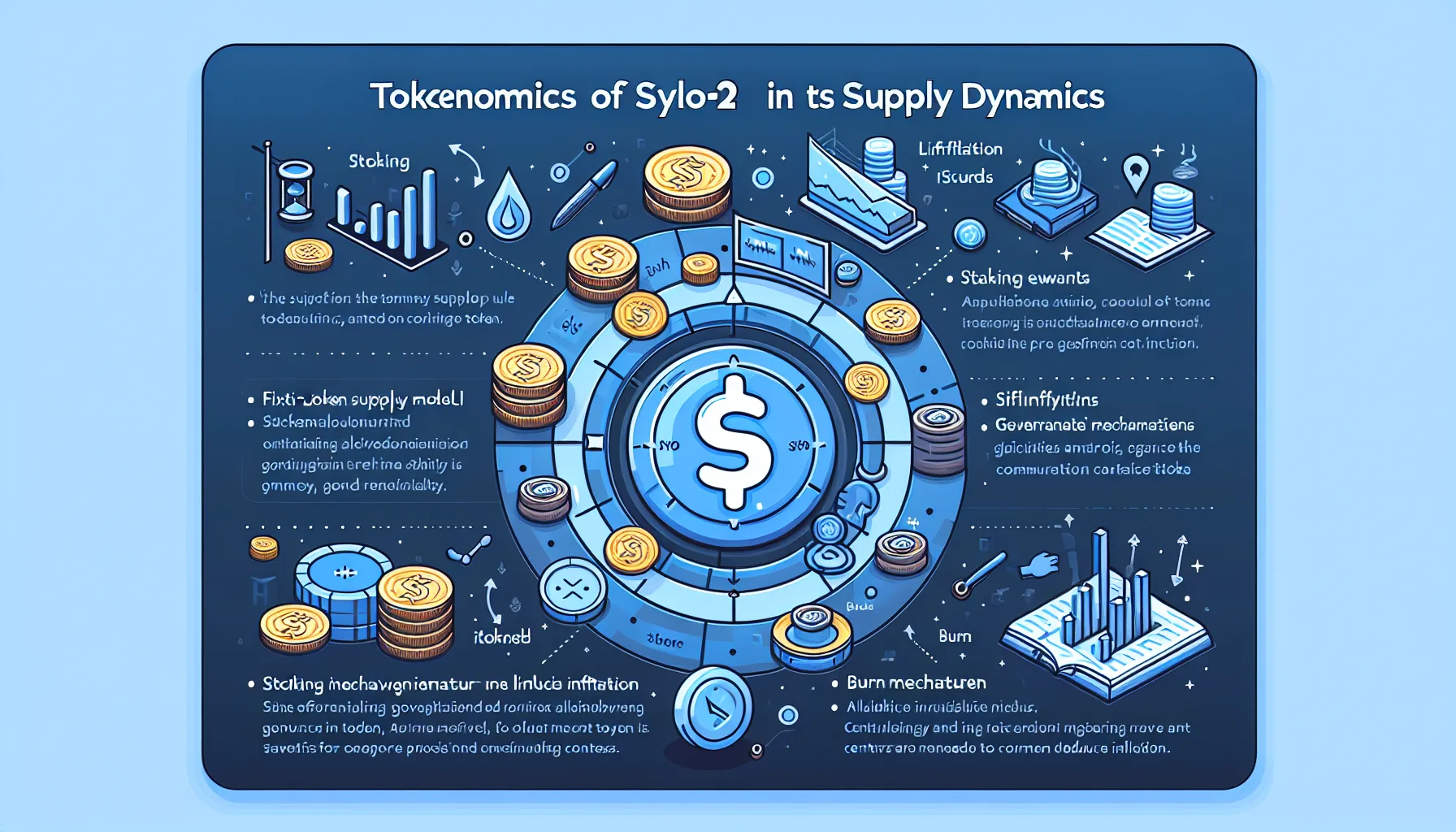
Tokenomics of SYLO2: A Deep Dive into Its Supply Dynamics
The tokenomics of SYLO2 are pivotal to understanding how this crypto asset operates within its ecosystem. At its core, SYLO2 relies on a fixed-token supply model, paired with a deflationary mechanism. However, what sets SYLO2 apart is its distribution framework, governance allocation, and reward structure, all of which present unique strengths and raise some concerns.
Supply Breakdown and Emission Schedule
SYLO2 features a predefined maximum supply, with controlled token emissions that follow a decreasing issuance model over time. A significant portion of the supply was allocated at launch for ecosystem development, staking rewards, and liquidity incentives. While the burn mechanism is designed to minimize inflationary tendencies by reducing circulating supply, its effectiveness heavily depends on network activity—a variable that has shown inconsistent growth patterns.
The token-release schedule is weighted toward the early years post-launch, raising questions about long-term token scarcity. Investors with an eye for sustainability have noted that this accelerated release may create downward pressure on SYLO2’s market valuation during the initial distribution period. Additionally, there’s limited transparency on lockup conditions for team-held tokens, which could introduce concerns about potential sell-offs.
Governance Allocation and Control
SYLO2 operates on a DAO-like governance model, requiring token holders to stake SYLO2 to participate in decision-making processes for the protocol's future. However, the tokenomics structure reveals a concentrated governance allocation toward early backers and institutional stakeholders. This raises potential issues with centralization, as it effectively grants substantial influence to a small subset of token holders, which could deter broader participation.
Incentive Model for Staking and Rewards
SYLO2's staking model is robust, designed to reward both validators and delegators. The Annual Percentage Yield (APY) adjusts dynamically, balancing incentives with the token's inflation rate. However, the model’s reliance on high staking participation could lead to a smaller pool of actively tradable tokens, which may impact liquidity. Conversely, lower staking participation could reduce the security guarantees for the network, highlighting a delicate reliance on community engagement.
Challenges in Token Utility
While SYLO2 has multiple use cases—including transaction fees within its ecosystem and rewards distribution—some users have expressed concerns over the limited scalability of these use cases as adoption grows. Token spending and utility are closely tied to the platform itself, meaning its broader adoption is contingent on the project's success, leaving the asset somewhat siloed within its ecosystem.
SYLO2 Governance
Governance Mechanisms of SYLO2: Decentralized Decision-Making in Focus
SYLO2's governance framework is designed to empower its community with on-chain decision-making capabilities, aligning with the principles of decentralization. Token holders actively participate in voting processes, shaping the trajectory of the network's features, upgrades, and resource allocation. However, while the governance model promotes inclusivity, it is not without its challenges.
Proposal Initiation and Voting Process
SYLO2’s governance structure allows stakeholders to submit proposals addressing protocol modifications, fund allocation from reserved treasuries, or updates to the ecosystem’s technical parameters. Typically, a minimum token holding threshold is required to propose changes, which ensures the process isn't overwhelmed by low-value or malicious suggestions. On-chain voting systems tally support or opposition based on the number of tokens staked in favor of a proposal. While this approach enables speedy decision-making and transparency, it raises concerns about the broader implications of "token-weighted democracy," particularly the risk of governance centralization among large token holders.
Distribution of Voting Power
One inherent challenge in SYLO2's governance lies in the concentration of voting power. Larger stakeholders or entities controlling substantial amounts of SYLO2 tokens can disproportionately affect the outcome of proposals. This imbalance raises questions about whether the system truly reflects the diverse will of the broader community or merely reinforces the influence of a few dominant parties. Though measures like quorum thresholds and proposal vetting are in place to prevent abuse, these mechanisms are not immune to exploitation by colluding entities or governance apathy from smaller tokenholders.
Treasury Management and Oversight
SYLO2’s treasury system operates as a core part of its decentralized governance, funding ecosystem development initiatives, grants, and community-driven projects. Proposals seeking funds from the treasury undergo rigorous on-chain votes. While transparent, the treasury’s decision-making process depends heavily on active participation from tokenholders, making the system vulnerable to underutilization or even stagnation when interest wanes. Further scrutiny arises over accountability and the long-term tracking of funds to ensure their intended use benefits the network as a whole.
Evolution and Governance Risks
As SYLO2's ecosystem evolves, the rigidity of its governance structure could hinder its adaptability to external factors or technological advancements. Unlike fully dynamic governance systems that update rules in response to specific scenarios, SYLO2’s approach often relies on pre-defined timelines and procedures. This can delay critical upgrades or prevent timely responses to vulnerabilities. Critics argue that the balance between decentralization and flexibility might still need refinement to effectively scale alongside the network.
Technical future of SYLO2
SYLO2: Current and Future Technical Developments & Technical Roadmap
The technical evolution of SYLO2 demonstrates a strong emphasis on both scalability and decentralized infrastructure upgrades. At its core, SYLO2 operates as a next-generation decentralized communication platform, enabled by blockchain and privacy-preserving technologies. One critical technical development has been its transition towards greater integration of zk-SNARKs, which enhances the privacy layer by ensuring secure, verifiable transactions without compromising user data. However, implementation of such advanced cryptographic protocols comes with increased computational overhead, which poses challenges for users operating on less robust hardware.
Another significant development lies in the optimization of its decentralized node infrastructure. SYLO2 has begun transitioning its resource-heavy node ecosystem into a more modular framework, allowing nodes to specialize in specific tasks, such as transaction validation, content delivery, or relay communication. This modularity aims to reduce network congestion and improve the experience for end-users. However, this transition has also exposed ongoing risks related to dependency on incentivization mechanisms to ensure consistent participation from node operators.
From a scalability standpoint, SYLO2 is actively exploring the integration of Layer-2 scaling solutions. These are projected to enhance throughput for its ecosystem, particularly concerning microtransactions within decentralized applications (dApps) that rely on high transaction speeds and low costs. The adoption of Layer-2 solutions has been slow, however, as initial testing highlighted synchronization issues between Layer-1 and Layer-2, requiring further optimization.
The technical roadmap for SYLO2 is oriented heavily toward fostering ecosystem interoperability. One upcoming feature includes support for cross-chain communication. This would potentially allow SYLO2 to interact seamlessly with other blockchain networks, facilitating token transfers and dApp interoperability without centralized bridges. The timeline for this integration remains vague, as the development team is reportedly contending with the complexities of managing cross-chain security and consensus.
The roadmap also highlights the integration of decentralized identity (DID) standards, aimed at fortifying the trust layer of the SYLO2 ecosystem. While this will expand its potential use cases in sectors like decentralized finance (DeFi) and non-fungible tokens (NFTs), the trade-off lies in the increased complexity of maintaining secure user identities tied to decentralized operations.
In summary, SYLO2’s technical trajectory underscores both innovation and the challenges inherent in cutting-edge blockchain development. The balance between scalability, decentralization, and use-case expansion remains an ongoing technical hurdle as it seeks to fulfill its roadmap objectives.
Comparing SYLO2 to it’s rivals
SYLO2 vs. SYLO: A Detailed Comparison
When analyzing SYLO2 and its direct rival SYLO, a handful of critical differentiating factors emerge, particularly in utility, tokenomics, and ecosystem integration. While both projects share a common lineage in name and technological foundation, their divergence in approach makes a compelling case for comparison.
Token Utility: Expanded Use Cases of SYLO2
SYLO2 diverges significantly from SYLO in its token utility framework. SYLO has primarily been geared toward enabling microtransactions and acting as a consumable utility token within its dApp ecosystem. Specifically, SYLO is extensively utilized for communication-related activities, such as incentivizing peer-to-peer networking and settlement.
SYLO2, by contrast, broadens its scope of utility. On top of replicating many of SYLO’s original functions, SYLO2 incorporates additional governance features, enabling token holders to participate actively in shaping network-level protocol changes. This inclusion of governance gives SYLO2 a competitive edge but also presents a potential vulnerability: if underutilized or mismanaged, governance mechanisms can suffer from low voter turnout or disproportionate influences from large stakeholders, thereby undermining decentralization.
Tokenomics: Supply Dynamics and Distribution Models
SYLO adopts a traditional fixed supply model, with a heavy emphasis on incentivizing user engagement within its platform early on. While this strategy has contributed to adoption, critics have pointed toward inflationary pressure from incentivized rewards potentially diluting long-term value.
SYLO2, however, has introduced a dynamic circulating supply that integrates elements of token burn mechanisms to regulate supply economics. Though this deflationary strategy can enhance scarcity, it also raises concerns regarding the tempo and transparency of burns. Abrupt or overly aggressive supply reductions could strain liquidity pools or disincentivize organic trading within decentralized exchanges.
Ecosystem Integration: SYLO’s Strength vs. SYLO2’s Adaptability
SYLO has positioned itself as synonymous with its core communication dApp. This deep integration into its parent platform lends SYLO a stronghold within a niche. However, critics argue that this narrowed focus limits its applications outside its ecosystem.
SYLO2 takes a more modular approach by aiming to interoperate across diverse DeFi and Web3 ecosystems. While this allows for a broader appeal, it could dilute its branding or lead to technical trade-offs when striving for compatibility across multiple blockchains.
Closing Observations on Rivalry
The rivalry between SYLO2 and SYLO is defined by trade-offs in specialization and adaptability. Their distinctions in governance, tokenomics, and application breadth provide each asset with unique strengths and challenges that set the stage for continued comparisons.
SYLO2 vs. VRA: A Focused Comparison in the Competitive Landscape
When analyzing SYLO2 in relation to its rival VRA (Verasity), several critical distinctions emerge that demonstrate how the two assets diverge in use case, architecture, and market positioning. Both projects target unique challenges within the blockchain ecosystem, but the comparison reveals overlapping domains that bring their strengths and flaws into sharper relief.
Revenue Models and Incentive Structures
At its core, VRA is renowned for its patented Proof-of-View (PoV) technology designed to tackle ad fraud and ensure transparency in digital advertising metrics. This feature creates a revenue model deeply tied to the advertising sector, where VRA incentivizes participants through mechanisms intended to reward both viewers and publishers. In contrast, SYLO2 integrates microtransactions within its decentralized communications and networking protocols, giving it broader applicability across industries not limited to advertising. However, critics of SYLO2 argue that its diverse use cases lack the singular niche focus that makes VRA’s PoV technology so compelling to its adopters, particularly in the media and esports industries.
Token Utility and Adoption Layers
VRA's token utility is tightly aligned with its ecosystem services, such as staking for profit-sharing opportunities and usage within the Verasity marketplace. This targeted design fosters loyalty among a user base that benefits directly from holding the asset. On the other hand, while SYLO2 supports staking and microtransactions, its higher-level abstraction as a utility token for multiple decentralized applications has been criticized for diluting its adoption potential. Savvy users may perceive this broader functionality as either a strength or a drawback, depending on whether they value specificity over flexibility.
Scalability and Ecosystem Maturity
In terms of scalability, VRA’s integration within ad tech and gaming ecosystems provides a clear roadmap for adoption. However, the reliance on specific industries also exposes vulnerabilities, as regulatory pressures or changes in these sectors could disproportionately impact the project. In comparison, SYLO2 has aggressively promoted its interoperability across various networks, but this level of cross-compatibility is still in its infancy and arguably creates technical complexity that may deter larger-scale enterprise adoption.
Community and Accessibility
Community-driven growth is another area where VRA historically benefits from a more vocal and engaged user base, particularly among gamers and esports enthusiasts. This grassroots support gives VRA an edge in awareness but can also saddle the project with the perception of being narrowly focused. SYLO2’s appeal is more generalized, but it struggles with securing the same level of organic enthusiasm due to its relatively complex onboarding processes and less identifiable flagship feature.
SYLO2 vs. COTI: A Technical and Functional Comparison
When analyzing SYLO2 in comparison to COTI, several key distinctions stand out in terms of both technical architecture and use-case specialization. While both projects position themselves as fundamental infrastructure players in the blockchain space, their approaches and underlying mechanisms diverge significantly, catering to different niches within the decentralized ecosystem.
Key Differentiators in Consensus Mechanisms
COTI is rooted in its proprietary Trustchain protocol, which employs a Directed Acyclic Graph (DAG) structure to enhance scalability and transaction throughput. This design enables it to process thousands of transactions per second, theoretically outpacing traditional blockchain architectures. SYLO2, by contrast, opts for a blockchain-centric consensus layer that prioritizes decentralization but may face throughput limitations as network activity scales. The divergence in consensus methodologies highlights a trade-off: SYLO2 accentuates decentralization and security, while COTI pursues speed and efficiency at the potential cost of network resilience against centralization risks.
Payment Ecosystem vs. Communication-Centric Model
COTI’s primary focus is on developing an enterprise-centric payments ecosystem. With tools like the COTI Pay platform, it aims to replace traditional financial intermediaries by enabling merchant services, stablecoin issuance, and fee optimization. By contrast, SYLO2’s focus expands into decentralized communication, emphasizing privacy-preserving peer-to-peer messaging and interaction mechanisms. This differentiation in application scope leads to a fundamental divide in target user bases: COTI leans heavily into financial technology and B2B partnerships, whereas SYLO2 appeals to users prioritizing secure and confidential communication solutions.
Interoperability and Flexibility Gaps
COTI markets itself as an enterprise-grade solution by actively integrating fiat gateways and centralized user-facing interfaces. While this promotes real-world usability, it can alienate purists within decentralized finance (DeFi) who value autonomy over convenience. SYLO2, catering to privacy-centric ideals, operates within a stricter decentralized framework, which can limit its scope for widespread adoption. For developers, the relatively restrictive customizability and programmability of COTI’s ecosystem—including reliance on a DAG rather than layer-1 or layer-2 compatibility—may present a limitation when compared to other blockchain-native platforms.
Tokenomics and Governance Challenges
Another point of differentiation lies in governance and financial models. COTI’s structure skews more centralized, as evidenced by its heavy reliance on strategic partnerships and enterprise adoption strategies. This centralization—while beneficial for scalability and expediency—underscores potential risks in governance inflexibility. SYLO2 contrasts this by leaning on more organic, user-driven network governance; however, this comes with its own challenges, such as slower decision-making processes and potential difficulties in consensus-building.
Strengths and Weakness Trade-offs
Ultimately, the SYLO2 versus COTI debate reflects broader philosophical questions in blockchain: scalability versus decentralization, enterprise integration versus individual sovereignty, and adoption expediency versus ideological purity. While COTI excels at lowering barriers for small businesses and enterprises seeking blockchain efficiency, it may alienate more privacy-focused, decentralization-minded participants—a user demographic that SYLO2 is well-positioned to serve.
Primary criticisms of SYLO2
Primary Criticism of SYLO2: Evaluating Key Concerns
Lack of Comprehensive Use Case Adoption
One of the primary critiques aimed at SYLO2 is its struggle to achieve widespread real-world adoption beyond its core user base. While the team behind the project has championed its utility in decentralized communication and digital asset management, skeptics argue that the actual integration of SYLO2 into mainstream industries remains limited. Critics suggest that its functionality is overly niche, appealing mainly to a narrow segment of crypto enthusiasts, which could impede its ability to scale effectively in the long term.
Network Decentralization Under Scrutiny
Although decentralization is a pillar of SYLO2’s mission, concerns exist about whether the project has achieved the robust, distributed architecture it promises. Detractors highlight that the management and operation of certain network nodes appear to be controlled by a relatively concentrated group of stakeholders, potentially undermining the claim of decentralized governance. This perceived centralization could raise questions about the network’s resilience and neutrality, particularly as it scales.
Tokenomics Complexity and Utility Questions
SYLO2’s tokenomics are perceived as unnecessarily complex by a segment of critics. Specifically, the multiple-layered staking and reward mechanisms have been criticized for being difficult to understand, even among crypto-savvy users. Users have pointed out that the convoluted structure can deter participation and hinder ecosystem growth. Additionally, some assert that the actual utility of the token within the network appears limited, with fewer tangible use cases for holders who do not actively participate in staking or network operations.
Competition from Established Protocols
SYLO2 operates in a fiercely competitive environment, facing direct competition from other, better-established decentralized communication and services protocols. Critics argue that its unique value proposition may not be sufficiently distinguishable to gain a competitive edge. Furthermore, these established networks often have larger existing user bases, higher liquidity, and more robust developer ecosystems—key factors that SYLO2 may struggle to match.
User Experience Barriers
Another point of criticism is the project’s user experience, particularly for non-technical users. Some community feedback suggests that onboarding into the SYLO2 ecosystem is too cumbersome, with a steep learning curve required to interact with its wallet, communication tools, or staking functionality. This not only limits adoption but also poses a barrier to fostering broader community involvement. Critics emphasize that without addressing these usability concerns, SYLO2 risks alienating potential contributors and users.
Founders
The Founding Team Behind SYLO2: Expertise and Challenges
SYLO2’s creation stems from the collective effort of a multidisciplinary team that merges experience in blockchain, cryptography, and decentralized technologies. Founded by a core group of visionaries, the team is known for their expertise in decentralized communication protocols and privacy-preserving systems. This foundation plays a pivotal role in shaping the current and future iterations of SYLO2's ecosystem.
The founding members have a strong track record in delivering secure, scalable, and user-focused decentralized solutions. At its core, the team includes individuals with technical backgrounds in protocol engineering, a necessary skill set for developing SYLO2’s underlying infrastructure. Notably, the involvement of senior developers with specialized knowledge in distributed systems emphasizes the project's commitment to building robust technology. These credentials position the team as credible within the crypto sphere.
However, there are challenges worth noting. Skeptics point to a lack of transparency regarding certain anonymous contributions or advisory roles in the early stages of SYLO2’s development. While anonymity is often accepted in the cryptocurrency space, particularly among privacy-focused projects, this has sometimes raised concerns among institutional and retail investors about decision-making accountability. Additionally, information about funding allocation and financial oversight by the team has been limited, sparking discourse among the SYLO2 community about the need for more frequent updates or disclosures.
The founding team is also deeply involved in the promotion and integration of decentralized identity systems. These efforts align closely with SYLO2’s focus on interaction security. However, critics argue that the team's ambitions in the identity space could lead to potential overextension of the project's resources, raising questions about whether long-term sustainability might suffer due to competing priorities.
Despite the team's technical capabilities, some in the crypto community argue that the project’s communication style can introduce friction. The technical jargon used in updates and documentation is often aimed at developers rather than end users or non-technical stakeholders, which has led to a perceived gap in engagement for broader adoption. On the other hand, this approach could reflect the team's focus on maintaining high standards for their protocol’s integrity rather than diluting the messaging for mass-market appeal.
With a growing ecosystem under development, the founding team’s role remains central to every facet of SYLO2. While their experience and technical expertise are evident, ongoing discussions about transparency, focus, and community alignment underscore the importance of continued attention to governance and execution strategies.
Authors comments
This document was made by www.BestDapps.com
Sources
- https://www.sylo.io/
- https://github.com/sylo
- https://sylo.io/whitepaper.pdf
- https://etherscan.io/token/0xf293d23bf2cdc05411ca0eddd588eb1977e8dcd4
- https://coinmarketcap.com/currencies/sylo/
- https://www.coingecko.com/en/coins/sylo
- https://medium.com/sylo-io
- https://www.reddit.com/r/sylo/
- https://www.binance.com/en/price/sylo
- https://www.kraken.com/en-us/prices/sylo
- https://www.blockchain.com/explorer/assets/sylo
- https://support.sylo.io/hc/en-us
- https://sylo.io/blog/
- https://defillama.com/protocol/sylo
- https://sylo.io/developers
- https://twitter.com/sylo
- https://discord.com/invite/sylo-io
- https://www.youtube.com/channel/UCqcmR42_kFwAGnD_U5IkWCA


