History of SWISE
The History of SWISE: Staking Precision Through Evolution
The origins of SWISE lie in the emergence of staking-focused protocols designed to address the scalability and decentralization challenges of Ethereum’s transition to Proof-of-Stake (PoS). SWISE was introduced as the utility and governance token within the framework of the StakeWise ecosystem, a liquid staking platform aimed at optimizing staking yields while mitigating some of the pain points traditionally associated with staking Ethereum.
SWISE was minted following the launch of StakeWise in an effort to decentralize governance and incentivize user participation in the protocol. The token was strategically distributed via liquidity mining programs, staking incentives, and partnerships designed to bootstrap activity on the platform and cultivate community ownership. However, the initial tokenomics sparked debate within the community, particularly concerning the proportions allocated to early contributors, development teams, and community rewards, which led to concerns about long-term decentralization.
StakeWise and, by extension, SWISE gained traction during the rise of liquid staking protocols. The platform addressed a significant bottleneck traditional stakers faced: the inability to unlock liquidity for staked ETH. By splitting staked ETH into representative tokens, sETH2 and rETH2, SWISE was positioned as the linchpin to these innovations, empowering governance decisions over protocol upgrades, fee structures, and treasury management.
Despite its early successes, SWISE's history has not been without friction. Questions around centralization risks emerged as StakeWise's development was initially concentrated around a core team. Some critics within the crypto community pointed out that the node operator selection process could potentially lead to centralization vulnerabilities, undermining one of Ethereum's core values. Furthermore, governance participation using SWISE, while promising in concept, faced low voter turnout in comparison to total circulating supply—a common challenge among many governance tokens, but one that invited scrutiny nonetheless.
SWISE underwent several refinements to its governance model and token utility structure as the StakeWise protocol evolved. Governance decisions made by SWISE holders shaped significant developments, from rebalancing fees across the protocol to promoting integrations with DeFi platforms, which amplified the token’s role in broader ecosystems. However, balancing rapid development with the need for a decentralized approach has been an ongoing, iterative process.
Through its growing prominence, SWISE has carved out a niche in the competitive liquid staking space. However, the ecosystem’s long-term trajectory hinges on its ability to preserve decentralization and adapt governance frameworks to encourage deeper user engagement—a challenge echoed throughout its history.
How SWISE Works
How SWISE Works: Decentralized Governance for Ethereum Staking
SWISE, the governance token of the StakeWise protocol, powers a decentralized and community-driven approach to Ethereum staking. At its core, SWISE is integral to the governance framework, enabling holders to vote on protocol updates, fee structures, and allocation of treasury funds. Through governance proposals and voting mechanisms, SWISE holders collectively determine the trajectory of Rocket Pool, granting them oversight over critical parameters that shape the network's operations.
Rocket Pool itself is a decentralized staking infrastructure for Ethereum that allows users to stake ETH through either Node Operators or tokenized staking pools. SWISE links directly to this ecosystem by empowering users to have a voice in how staking incentives are distributed, how network fees are managed, and how the protocol adapts to Ethereum's continually evolving landscape.
One of the key facets of SWISE is its use in aligning incentives. Node Operators on Rocket Pool are required to deposit 16 ETH of their own collateral to operate validator nodes, and SWISE plays a part in shaping the reward and penalty structures for these users. Through governance voting, the community can decide how staking rewards are distributed between Node Operators and rETH holders (users who participate in pooling). This balance ensures network security while keeping the staking process equitable.
However, this decentralized model isn’t without challenges. The governance process hinges on active participation from SWISE holders, and low voter turnout can hinder the protocol’s ability to respond swiftly to critical issues. Additionally, since SWISE is primarily tied to governance rather than utility (e.g., staking or burning mechanisms), its value proposition depends heavily on sustained interest in Rocket Pool’s ecosystem and the growth of Ethereum staking.
Another consideration is the technical complexity for users unfamiliar with governance-oriented tokens. Unlike straightforward staking assets, SWISE requires a thorough understanding of the Rocket Pool ecosystem and governance protocols. This can present a barrier to new participants who may hesitate to engage actively in voting processes.
Lastly, due to its inherent dependence on Rocket Pool’s success, SWISE’s functionality is indirectly tied to Ethereum’s staking adoption and overall network health. Any systemic risks to Ethereum—be it regulatory pressures or technical flaws—could ripple through the Rocket Pool ecosystem and diminish the utility of SWISE.
Understanding SWISE necessitates diving deep into decentralized governance and how it underpins operations for Ethereum staking infrastructure. While SWISE brings significant benefits in terms of platform decentralization and decision-making, its effectiveness is closely tied to the ecosystem's engagement and the broader Ethereum landscape.
Use Cases
Exploring the Use Cases of SWISE Token in DeFi Staking
The SWISE token has carved out a specific niche within the Ethereum-focused staking ecosystem by serving as the governance and utility token for the ssv.network. As a decentralized staking infrastructure, ssv.network aims to improve Ethereum validator operations by leveraging distributed validator technology (DVT). SWISE plays an integral role in powering this ecosystem, but its use cases also reveal certain challenges alongside its strengths.
Governance and Decentralized Decision-Making
One of the primary use cases of SWISE is its role in decentralized governance. Token holders can actively participate in decision-making processes within the ssv.network by voting on proposals related to operational parameters, network upgrades, and treasury allocation. This governance model is designed to ensure that the network remains both adaptive and community-driven. However, like many governance tokens, SWISE faces standard challenges, including the concentration of voting power in the hands of large token holders. This centralization of influence could undermine the decentralized ethos of the network over time unless addressed.
Incentivizing Validator Network Growth
SWISE also plays a pivotal role in incentivizing activity on the network. Node operators and stakers can earn SWISE rewards as compensation for their contributions to network security and decentralization. By distributing rewards, the token acts as a lubricant for network participation within the Ethereum staking ecosystem, especially for entities seeking a more resilient staking mechanism via distributed architecture. However, the sustainability of these reward mechanisms could be questioned, especially if the demand for SWISE drops or if the token’s inflation surpasses network adoption.
Network Fee Payments
Another use case of SWISE includes its potential as a payment token for services provided on the ssv.network. Node operators may require SWISE for operating fee payments, further aligning the token’s utility with the infrastructure it supports. While this fosters consistent token demand, it could also raise concerns about usability barriers, given that occasional token illiquidity or high Ethereum gas fees might complicate transactions for users.
Bootstrapping Security Through Delegation
SWISE enables users to delegate their governance power to skilled participants within the staking ecosystem, increasing engagement and reducing governance inaction. However, this may inadvertently foster the emergence of governance cartels if delegators prioritize convenience over diversity in representation.
By focusing on governance, rewards, payments, and delegation, SWISE forms the backbone of ssv.network’s tokenomics, yet its reliance on these mechanisms presents risks if adoption trends shift or vulnerabilities in token distribution arise.
SWISE Tokenomics
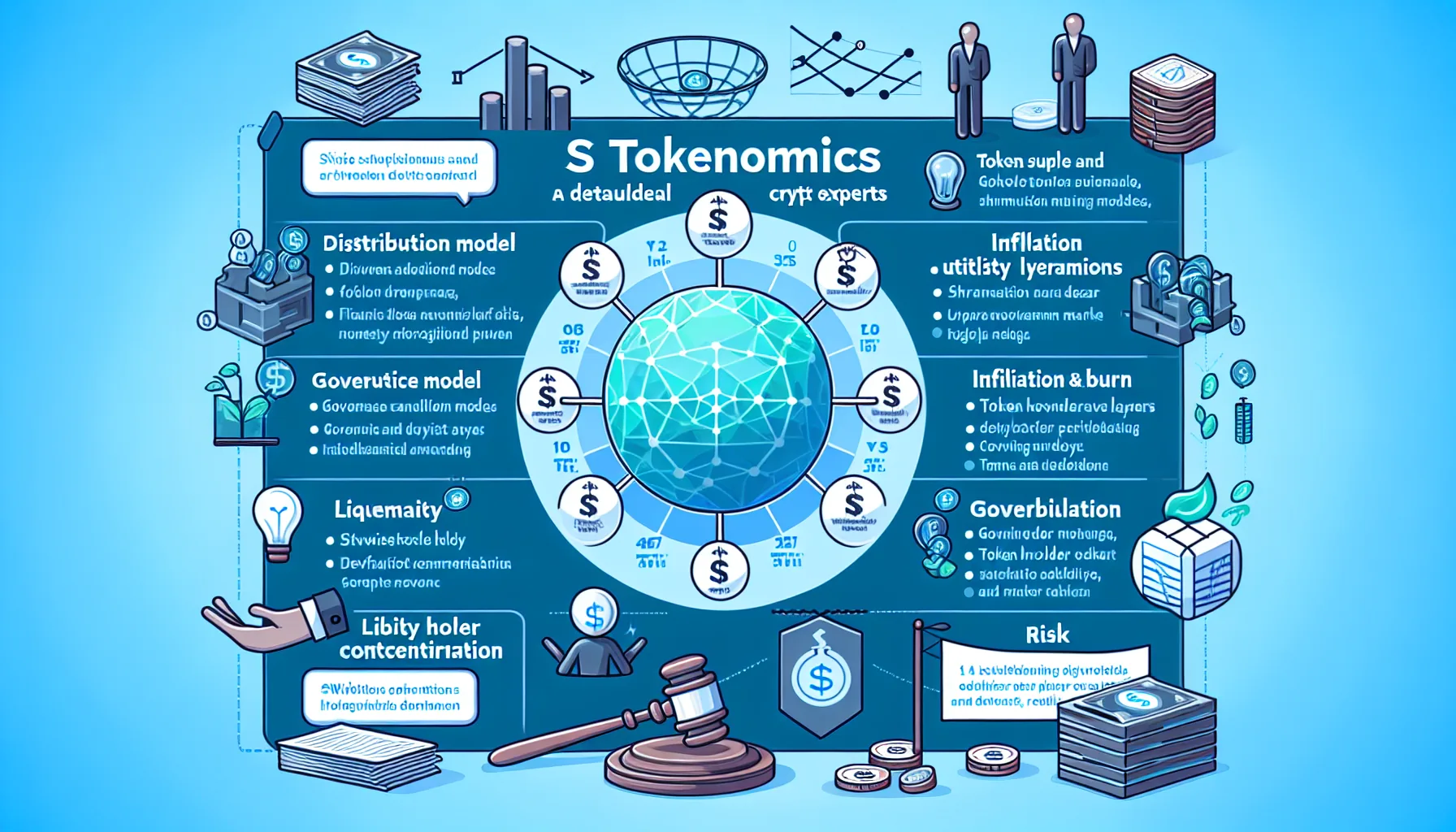
SWISE Tokenomics: A Detailed Breakdown for Crypto Experts
Token Supply and Distribution Model
SWISE operates on an optimized token supply model designed to incentivize decentralized staking governance. The total token supply is fixed, ensuring scarcity and predictable mechanics for long-term economic viability. An allocation framework directs SWISE distribution across multiple categories, including community incentives, protocol development, team allocations, and liquidity provisioning. A sizable portion of the tokens are locked or vested over set periods, mitigating risks of immediate market dilution. However, tokens reserved for early supporters or team members can cause concerns about centralization if not transparently managed.
Governance and Utility Layers
SWISE holders work as integral participants within the governance structure of the protocol it supports. The token enables decentralized voting on proposals, validator onboarding strategies, fee configurations, and network upgrades. Although this builds community engagement, governance participation rates in similar ecosystems sometimes skew due to concentrated holdings, meaning smaller stakeholders could potentially get diluted in decision-making processes. SWISE tokenomics inherently assumes that most holders engage actively, yet historical patterns from other crypto projects suggest passive participation is often prevalent.
Beyond governance, SWISE has functional utility within liquidity rewards programs and helps in maintaining security across the staking network. The reward structure is pivotal in directing validators' actions, yet complex APY mechanics may deter some users who find it too opaque to fully understand. Additionally, staking could indirectly amplify token supply inflation via rewards, presenting oscillating pressure on valuation stability.
Inflation and Burn Mechanisms
SWISE tokenomics aim to balance inflationary mechanisms (via staking rewards) with deflationary components such as protocol-driven token burns. Limited documentation on dynamic parameters leaves open questions about whether the burn mechanism is sufficient to displace inflation over prolonged periods. This lack of clarity can be seen as both a flexibility advantage and a transparency drawback.
Liquidity and Market Dynamics
The team has provisioned clear allocations to liquidity pools, ensuring smoother trading activity across decentralized exchanges. While commendable, high dependency on external liquidity providers introduces risks of impermanent loss or sudden liquidity crunches during market volatility. Additionally, while reward programs are designed to bootstrap liquidity, reliance on continuous incentives could put downward pressure on the utility outside of staking-specific use cases.
Token Holder Concentration and Distribution Risk
A deep dive into tokenomics also highlights questions around holder concentration. Token distribution audits often reveal potential centralization concerns—where larger holders could exercise outsized influence. This creates risks for governance manipulation and liquidity dominance that could undermine decentralized ethos. While mechanisms exist to counter such centralization trends, their effectiveness within SWISE's ecosystem remains a subject of on-chain observation.
SWISE Governance
Governance Dynamics of SWISE: Decentralized Decision-Making at Scale
SWISE, as the governance token of the StakeWise protocol, plays a critical role in shaping the future of the platform through a decentralized and community-driven governance model. Token holders wield voting power proportionate to their stake, enabling them to propose, debate, and vote on key protocol changes, upgrades, and parameter adjustments. While this may align with crypto-native values of decentralization, several nuances and challenges emerge in SWISE's governance structure.
Token Distribution and Power Dynamics
A key consideration in SWISE governance is the distribution of tokens and its impact on voting power. If SWISE ownership is disproportionately concentrated among a small group of holders, this could lead to governance centralization and decision-making that prioritizes the interests of whales over the broader community. Such centralization challenges the intent of decentralized governance and creates the potential for governance capture, where smaller retail participants have little influence on protocol decisions. Evaluating the protocol’s measures to mitigate this risk is essential.
Alignment of Stakeholders
One notable feature of SWISE is its integration within StakeWise’s ecosystem. This creates a direct incentive alignment between SWISE token holders and users of the platform. However, misalignment can still occur between long-term and short-term holders. For instance, short-term holders may push for proposals that create immediate benefits (e.g., fee reductions or rewards adjustments) at the expense of long-term protocol health, while long-term holders may favor higher reserves or conservative upgrades. This ideological and temporal divide inherent in token-based governance can complicate consensus-building.
Proposal Framework and Participation Hurdles
The governance process involves creating proposals that are subject to community scrutiny and eventual votes. However, proposal creation requires both technical expertise and token thresholds, which may exclude smaller holders or less technically savvy participants from actively influencing protocol direction. Moreover, voter apathy—common in many DAOs—magnifies the influence of a minority of active participants. The weighting of votes toward large stakeholders, combined with potential low voter turnout, could result in governance outcomes that lack broad consensus.
Governance Transparency and Accessibility
Another factor is whether SWISE governance decisions are effectively communicated to the broader community. Complex proposal structures or opaque processes could alienate or discourage meaningful participation. Accessibility also applies to off-chain discussions typically hosted in forums or social media platforms, where informal debates shape governance outcomes well before the on-chain vote.
While SWISE governance aspires to decentralization, its functionality is closely tied to how effectively stakeholder incentives are balanced, participation barriers are lowered, and power dynamics are managed.
Technical future of SWISE
SWISE: Current and Future Technical Developments and Technical Roadmap
Enhancements in Ethereum Staking Infrastructure
At its core, SWISE operates as a governance token for StakeWise, an Ethereum-based liquid staking platform. StakeWise has prioritized introducing innovative staking mechanisms to optimize validator performance and reward distribution. This includes the implementation of dual-token tokenomics (sETH2 for pooled ETH and rETH2 for rewards), enabling a more efficient and transparent means of accruing staking rewards while facilitating enhanced liquidity. However, there are ongoing challenges with scaling these systems to accommodate Ethereum’s increasing validator set, particularly as staking adoption continues to rise post-Merge. Architectural changes to handle greater volumes of staked ETH without compromising decentralization or increasing risks of slashing are expected to be pivotal.
Smart Contract Improvements
Technical audits and refinements of the underlying smart contracts serve as a critical component of SWISE's roadmap. Despite StakeWise’s strong focus on on-chain security, its current framework must contend with the evolving threat landscape in DeFi and Ethereum staking protocols. Future iterations of its contracts are expected to implement advanced optimizations for gas efficiency while also minimizing potential attack vectors. A key development under consideration is the reduction of reliance on centralized infrastructure for operational processes. Decentralizing critical staking operations and governance mechanisms would further align with the broader ethos of Ethereum but introduces complexities in balancing efficiency and trustlessness.
Protocol-Level Upgrades and L2 Integrations
With the evolution of Ethereum Layer-2 (L2) solutions, SWISE's technical direction points toward increased interoperability with L2 scaling solutions. By enabling liquidity for sETH2 and rETH2 on networks such as Arbitrum and Optimism, StakeWise aims to lower user fees and mitigate congestion seen on Ethereum's Layer-1 network. However, the integration of L2 staking comes with hurdles, such as ensuring the seamless transfer of staking rewards across different chains and maintaining coherence between its multi-chain state. Competitive pressures from other platforms, also exploring L2 staking, may impact StakeWise's ability to secure dominance in this niche.
Validating Decentralization Goals
One notable gap in SWISE’s current roadmap involves decentralizing staking node operations. StakeWise remains reliant on whitelisted validator operators—raising concerns around centralization risks within an ostensibly decentralized ecosystem. A long-term goal, yet to be fully detailed, is the expansion of permissionless validator operations, enabling non-whitelisted participants to contribute directly to the network's uptime. Achieving this would require the careful design of economic incentives and slashing mechanisms that avoid compromising network reliability. How this evolution will balance benefits to individual SWISE holders against broader network decentralization remains a question of both technical feasibility and strategic intent.
Comparing SWISE to it’s rivals
sWISE vs. LDO: A Detailed Comparison of Competitive Dynamics
When comparing sWISE with LDO, one of the most notable distinctions lies in their respective approaches to decentralization and governance. sWISE, built around fostering decentralization within the staking ecosystem, emphasizes community-driven governance through a diversified set of stakeholders. In contrast, LDO's governance structure, while robust, is often criticized for its disproportionately high power concentration among select whale token holders and early contributors. This disparity highlights a key tension in crypto governance: sWISE positions itself as an alternative to such concentrated control, though the trade-off often manifests in longer decision-making processes and slower feature rollouts.
On the technical front, LDO has exceptionally high market penetration due to its early-mover advantage and seamless integrations with Ethereum liquid staking. sWISE, on the other hand, serves as an alternative liquid staking derivative that promotes decentralization by leveraging validator diversity while working toward minimizing node operator centralization risks. That said, LDO continues to dominate in terms of total value locked (TVL) in liquid staking protocols, creating a high barrier for challengers like sWISE to achieve comparable adoption metrics.
One critical differentiator is the inclusion of staking rewards. LDO generates its staking yield by aggregating ETH staking rewards through its derivative model, where the efficiency of rewards distribution is directly tied to the quality of governance and validator performance. sWISE, however, has leaned heavily into promoting decentralized validation frameworks, but this comes with an ongoing challenge—the yield provided by sWISE-backed Ethereum staking may not always match the efficiency of LDO-backed staking nodes. This disparity can sometimes raise questions among yield-maximizing users about whether sWISE can remain competitive on purely financial terms.
Protocol security is another vital area of comparison. Both sWISE and LDO are non-custodial in their approach, but the concentrated validator reliance in LDO has drawn scrutiny regarding systemic risk. sWISE promises risk reduction by preventing dominant single-entity validator reliance, which, if executed successfully, addresses a critical concern for long-term ecosystem robustness. However, achieving this technical ideal without sacrificing usability or returns remains a work in progress.
Finally, brand strength and integrations heavily favor LDO. It boasts partnerships and integrations with a wide range of DeFi platforms, allowing its users to immediately maximize their liquidity options. In contrast, sWISE is gradually carving out its niche but still faces an uphill climb in terms of securing broad acceptance in the DeFi landscape.
While sWISE mitigates some of its rival’s shortcomings, it also presents unique adoption challenges that remain unresolved at this stage.
SWISE vs. RPL: A Focused Comparison
When comparing SWISE and RPL, both projects cater to the Ethereum staking ecosystem but approach it with distinct mechanisms and value propositions. This section will highlight how SWISE differentiates itself from RPL, alongside potential benefits and drawbacks in direct comparison.
Decentralization Design
RPL operates with a decentralized node infrastructure underpinned by Rocket Pool’s permissionless staking model. It emphasizes creating opportunities for smaller node operators by lowering the financial threshold from Ethereum’s required 32 ETH deposit. However, RPL requires node operators to provide additional collateral in the form of its native token, introducing a dual-token dependency. This collateral requirement enables a robust system that protects staked user funds but can discourage participation due to the complexity of managing both ETH and RPL positions.
On the other hand, SWISE eliminates the need for additional collateral in its design. This makes it appealing to those who prefer a leaner, single-token model for participation without the burden of cross-token exposure. The trade-off here is that RPL arguably promotes a stronger alignment between node operators and its ecosystem through collateralization, while SWISE focuses on optimizing simplicity and accessibility.
Yield Structures and Token Dynamics
RPL benefits from a flexible rewards model, allowing node operators to capture a larger share of staking rewards if they operate efficiently. However, this model inherently creates variability in returns, particularly among smaller operators who may lack access to economies of scale. With SWISE, reward structures focus on consistent, predictable yields across its staking pools, potentially offering a more uniform experience for end-users. Nevertheless, critics of SWISE might argue that this predictability sacrifices some incentives for efficiency or innovation that RPL incentivizes through its dynamic reward framework.
Governance and Community Participation
Both SWISE and RPL feature governance systems that empower holders of their respective tokens to influence protocol-level decisions. While RPL token holders primarily contribute to protocol decisions through Rocket Pool’s DAO, the protocol has faced occasional critiques of governance centralization, given that larger RPL holders wield disproportionate weight. SWISE governance aims to address this imbalance with mechanisms that encourage a more egalitarian distribution of influence, but the trade-off often involves a slower, more deliberate decision-making process, which may frustrate participants seeking rapid innovation.
Potential Bottlenecks
Despite RPL's influence in the Ethereum staking space, it has faced challenges tied to its scalability. Rocket Pool relies heavily on the onboarding of individual node operators, and its capacity may be limited by growth in this segment. SWISE, by comparison, avoids these constraints due to its pooled staking model, but skeptics have noted that pooled staking solutions may inherently trade decentralization for scaling simplicity.
Comparing sWISE to FRAX: Key Differentiators and Challenges
When directly comparing sWISE and FRAX, it’s essential to distinguish the unique attributes each crypto asset brings to the decentralized finance (DeFi) ecosystem. While both serve critical use cases and cater to overlapping communities, their fundamental designs, purposes, and mechanisms reveal nuanced contrasts.
Architecture and Mechanisms
sWISE operates as the staking derivative token for the Swell Network, tied specifically to the Ethereum ecosystem. Its intent revolves around maximizing staking efficiency, offering liquid staking opportunities, and enabling users to maintain exposure to staked ETH while participating in DeFi. FRAX, on the other hand, serves as a cornerstone in the algorithmic stablecoin space. Its hybrid fractional-reserve design makes it a distinct contender in the stablecoin market while also integrating staking and DeFi yields as supporting features.
This key difference means that sWISE focuses on ETH-centric staking optimizations, while FRAX balances its mint-and-burn mechanisms with stability management. While they share an emphasis on user capital efficiency, sWISE has a narrower focus rooted in Ethereum staking, whereas FRAX’s operational design targets a wider range of DeFi applications tied to stability rather than direct staking.
Liquidity Utilization
FRAX benefits from a mature liquidity framework, as it relies on deep stablecoin liquidity pools critical to maintaining its peg. Its role and relationships with Curve pools, for example, strengthen its influence across DeFi. sWISE, while growing as a liquid staking solution, often faces challenges regarding liquidity prioritization due to its specialization. Ensuring accessible liquidity while retaining decentralized ETH staking access remains an uphill task for sWISE compared to FRAX's already-established liquidity dominance.
Risk Profiles
A critical difference comes down to the respective risk models. sWISE inherits risks tied to liquid staking, such as validator underperformance, slashing events, and staking withdrawal delays. Meanwhile, FRAX balances algorithmic stability and fractional reserves, introducing its own brand of protocol-specific risks, including potential depegging during market stress. Here, sWISE might have an edge for crypto users wary of stablecoin systemic dependencies but remains susceptible to risks unique to its staking-focused ecosystem.
Audience and Use Case
The target audience for both assets is another striking contrast. sWISE appeals primarily to ETH holders committed to staking while staying liquid. Conversely, FRAX appeals to participants leveraging stable value assets across diverse DeFi protocols. This distinction means the two aren’t fully interchangeable, serving different niches within crypto-savvy communities.
In comparing sWISE to FRAX, the analysis highlights not only the divergence in functionality but also the inherent trade-offs driven by their respective focuses in the crypto ecosystem. Each asset holds its place, yet their paths diverge sharply based on utility, risk tolerance, and liquidity strategies.
Primary criticisms of SWISE
Primary Criticisms of SWISE: Key Challenges for the Ecosystem
-
Centralization Concerns Despite Staking Narrative
One primary criticism of SWISE stems from its perceived vulnerability to centralization risks. While it positions itself as a decentralized staking governance protocol, detractors argue that its token distribution raises concerns. A significant portion of SWISE tokens is allocated to early adopters, team members, and strategic partners, which could concentrate voting power in the hands of a few entities. For a protocol that aims to support decentralized Ethereum staking, this imbalance in governance power can lead to decisions that prioritize specific groups over broader community interests. -
Dependency on LST Dominance
SWISE’s reliance on the Liquid Staking Token (LST) ecosystem introduces potential fragility. The premise of the protocol’s growth is heavily intertwined with the adoption and performance of liquid staking as a norm across crypto markets. Skeptics worry that competition from other staking-focused solutions or emerging consensus mechanisms could erode the relevance of LSTs altogether. This creates uncertainty about SWISE’s long-term viability if market preferences shift or regulatory scrutiny targets staking-based mechanisms. -
Regulatory Vulnerabilities
The regulatory landscape poses a significant hurdle for SWISE. Given its close integration with staking—a topic of increasing scrutiny—some critics question the protocol’s legal resilience across jurisdictions. Authorities may view staking services as securities under certain frameworks. If SWISE or its ecosystem partners are classified as such, the project could face restrictions or compliance burdens that limit its adoption and growth. Additionally, its governance token could face classification challenges, opening more legal uncertainties. -
Potential Centralized Validator Influence
SWISE operates within a staking ecosystem where large-scale validator operators dominate. Critics argue that while the protocol promotes decentralization, in practice, the underlying validator network remains concentrated among a few large players. This could lead to situations where SWISE governance decisions may amplify, rather than mitigate, existing centralization trends in Ethereum staking—a contradiction to the ethos of decentralization. -
Token Utility Concerns
While SWISE holders have the ability to participate in governance, detractors note that this utility may not be compelling enough to drive organic demand for the token. Governance tokens across the cryptocurrency space have faced growing criticism for creating value largely through speculative interest rather than intrinsic functionality. Without additional use cases or value propositions, some participants see SWISE as yet another governance token with limited direct utility. -
Operational Complexity for Users
SWISE’s approach to decentralized staking governance includes intricate mechanisms that might alienate less sophisticated participants. Critics argue that responsible decision-making in the protocol requires comprehensive knowledge of staking operations, validator risks, and governance nuances. This steep learning curve could unintentionally create barriers to entry, limiting the diversity and inclusivity of the protocol’s governance body.
Founders
Deep Dive into the Founders of SWISE: The Driving Force Behind the Protocol
The founding team behind SWISE, the governance token of the StakeWise protocol, is composed of individuals with significant experience across blockchain development, decentralized finance (DeFi), and crypto-native technologies. Their backgrounds reveal a blend of technical and entrepreneurial expertise tailored to the unique challenges of staking and decentralized governance. However, like many projects in the crypto space, questions around transparency, decentralization, and potential risks are worth examining.
Expertise and Professional Backgrounds
The core members of the SWISE founding team have positioned themselves as experts in Ethereum staking infrastructure. The main figurehead, according to publicly available information, is known for combining a deep technical understanding of Ethereum’s Proof of Stake (PoS) system with product development skills. This has allowed StakeWise to craft a protocol that simplifies ETH staking while remaining competitive in terms of yield optimization.
At the same time, contributors with a history in finance and tokenomics have influenced the design of SWISE as a governance token. Key decisions surrounding token distribution and DAO (Decentralized Autonomous Organization) mechanics have benefited from their experience. This skill mix has been instrumental in building the StakeWise ecosystem, but whether these backgrounds cement a long-term edge in a crowded staking landscape remains to be seen.
Transparency and Decentralization Concerns
One critical talking point extends to the level of transparency within the founding group. While the team has made strides in building trust through the protocol's technical reliability, some community members have highlighted gaps in communication around long-term governance roadmaps and decision-making processes. For a governance token like SWISE, this raises legitimate concerns about how decentralized the protocol truly is, particularly when key stakeholders might exercise outsized influence in practice.
Similarly, the composition of the team reflects a centralized layer of decision-making authority, a common critique in protocols structured around governance tokens. Some stakeholders have questioned whether the founding team’s utility in jumpstarting the project inherently conflicts with the aim of handing over meaningful control to the SWISE community.
Risk Factors: Founder Centralization
Another challenge lies in the “founder dependence” phenomenon, where the project's success disproportionately hinges on the activity and direction of key team members. This may leave SWISE exposed to risks if leadership priorities change or if founders transition out of active roles. Ensuring that SWISE scales into a truly decentralized ecosystem will require broader community engagement and technical contributions from a diverse user base, something the founding team must actively foster.
By focusing on these dynamics, the founding team's role in shaping SWISE continues to evolve as the protocol matures in a highly competitive staking ecosystem.
Authors comments
This document was made by www.BestDapps.com
Sources
- https://www.swise.com/
- https://docs.swise.com/whitepaper
- https://github.com/swise-org/swise-core
- https://etherscan.io/token/SWISE
- https://medium.com/@swise
- https://docs.swise.com/tokenomics
- https://defillama.com/protocol/swise
- https://dune.com/swise-analytics
- https://twitter.com/swise_protocol
- https://blog.swise.com/roadmap-2023
- https://forum.swise.org/
- https://coinmarketcap.com/currencies/swise/
- https://www.coingecko.com/en/coins/swise
- https://uniswap.org/pools/swise
- https://www.swise.com/audits
- https://messari.io/asset/swise
- https://cryptoslate.com/coins/swise/
- https://tokeninsight.com/en/coins/swise
- https://etherscan.io/address/0x...SWISE
- https://rekt.news/swise-postmortem/


