History of STPT
The History of STPT: Origins and Evolution in the Crypto Ecosystem
STPT, or Standard Tokenization Protocol, launched with the mission of enabling asset tokenization and seamless, compliant transfer of tokenized assets across jurisdictions. It was introduced as part of the broader push to address inefficiencies in traditional financial systems by leveraging blockchain technology, with an emphasis on decentralized governance and compliance.
The origin of STPT can be traced back to the development of Blockzone, a platform designed to promote token adoption and collaboration within the crypto community. STPT acted as the native token for Blockzone’s ecosystem, facilitating decentralized applications (dApps) and incentivizing community participation. The protocol gained significant early traction by focusing on enabling businesses to issue and manage tokenized assets effortlessly while adhering to complex regulatory requirements.
Despite its promising foundation, STPT's history encountered notable challenges. One significant hurdle revolved around adoption within traditional financial markets. While the protocol emphasized compliance and regulatory alignment, these aspects presented barriers for integration in heavily-regulated environments, affecting its ability to gain recognition from established financial institutions. Critics also raised concerns around the centralization risk associated with specific governance mechanisms in its early stages, which appeared to contrast its claim of enabling decentralized control.
Another pivotal development in STPT's trajectory came with the introduction of features aimed at blockchain interoperability. Over time, its creators shifted focus to address scalability and cross-chain solutions, enabling users to operate across multiple blockchain networks. Though this adaptation enhanced its utility, some crypto-savvy users questioned whether STPT's core proposition had diluted as it began competing with more generalized interoperability protocols.
Early partnerships and integrations were another defining part of its history. STPT secured collaborations with projects aimed at tokenization of real-world assets, such as equity and real estate. However, skepticism arose as some partnerships struggled to deliver on promised use cases, reflecting broader industry challenges in bridging blockchain solutions with real-world assets.
A lingering issue was market skepticism about whether tokenization platforms like STPT could differentiate themselves effectively amidst competition from both crypto-native protocols and traditional financial institutions exploring their digital strategies. While STPT maintained its efforts to expand functionality and adoption, its progress was often met with mixed reviews from the community, with some viewing it as a solid protocol and others questioning its ability to achieve mass-market adoption in a highly competitive ecosystem.
How STPT Works
Understanding How STPT Works: A Technical Dive into Standard Tokenization Protocol
At its core, STPT (Standard Tokenization Protocol) operates as an open-source protocol focused on enabling tokenized asset issuance and seamless compliance across jurisdictions. It is built on Ethereum’s ERC-20 standard but extends significantly beyond traditional token functionality by integrating on-chain and off-chain components for specific governance and compliance features.
On-Chain Infrastructure
The STPT token itself represents the protocol’s utility layer, facilitating transactions, token issuance, and governance processes. What makes STPT unique lies in its integration of compliance directly into its smart contracts. These smart contracts include a robust set of functionalities for permissions, identity verification, and access controls for token transfers. For example, only whitelisted parties that fulfill specific KYC/AML criteria may interact with certain tokenized assets on the network, allowing issuers to satisfy regulatory demands without sacrificing operability.
A standout element in the STPT ecosystem is the integration of lock/unlock mechanisms to enable registered asset transfers. Only users who meet pre-set conditions established by the issuing entity can participate in specified transactions, bypassing manual oversight typically required for regulatory compliance. This process minimizes inefficiencies while helping ensure that tokenized assets adhere to the underlying jurisdiction’s legal framework.
Off-Chain Processes
Key to the STPT framework is its off-chain compliance interface, seamlessly bridging real-world identity verification with blockchain functionality. Through the use of validators, users undergo screening processes for jurisdictional compliance, including KYC/AML checks and accreditation. By anchoring these results into the chain while isolating sensitive user information, this dual approach effectively marries blockchain transparency with privacy controls—though it does raise questions about reliance on the accuracy of third-party validators.
Tokenization Framework Challenges
Despite its innovative compliance infrastructure, the most prominent challenge facing STPT is usability in environments that require multichain/interop solutions. While the protocol primarily supports Ethereum, as diverse blockchains continue to emerge, the lack of native cross-chain functionalities may require intermediate technologies or bridges, which introduce additional risks such as smart contract vulnerabilities and latency.
Additionally, the protocol’s reliance on validator-based compliance presents a potential point of failure. Centralized or compromised validator nodes could disrupt the ecosystem or pose a barrier to entry for legitimate participants. This reliance also introduces scalability concerns, as the off-chain compliance layer must expand to handle increasing workloads efficiently.
By offering a blend of on-chain automation and off-chain compliance, the STPT framework caters to highly regulated sectors—but this approach demands continual refinement to remain robust against challenges stemming from evolving regulatory landscapes and decentralized ecosystem growth.
Use Cases
Exploring STPT Use Cases: Unlocking Tokenized Governance and Asset Management
The blockchain-powered ecosystem underpinning the STPT token, or Standard Tokenization Protocol, presents a variety of robust use cases primarily designed to facilitate tokenized asset governance and secure, efficient digital asset management. As an Ethereum-based token adhering to strict token compliance standards, its adoption is aimed at solving specific pain points within decentralized finance (DeFi) and broader blockchain ecosystems. However, while its features aim to enhance utility and compliance, STPT is also subject to certain limitations that savvy crypto users should recognize.
Tokenization of Digital Assets
At its core, STPT’s primary use case revolves around enabling streamlined tokenization of digital assets for organizations and projects. The STPT protocol provides customizable frameworks for creating compliant tokenized representations of real-world or digital assets. This use case is particularly valuable for businesses aiming to issue tokens in a regulatory-compliant manner, as STPT utilizes the Secure Token Exchange Protocol (STEP) to ensure adherence to jurisdictional requirements. However, skepticism in adoption may arise due to the fragmented regulatory landscape across nations, which could present barriers to interoperability and cross-border token issuance.
Governance Mechanisms in Decentralized Applications
Another notable use case for STPT is its integral role in decentralized governance. The token facilitates on-chain voting mechanisms where holders can participate in key decision-making processes within decentralized applications (dApps) that leverage the STPT protocol. This framework supports transparent and decentralized collaboration without the need for third-party intermediaries. However, this governance-centric use case is heavily dependent on active community engagement; low participation rates in governance voting can lead to under-utilization of the STPT protocol and concentration of power among a small subset of stakeholders.
Bridging Liquidity with Multi-Chain Asset Transfers
STPT’s capabilities extend to enabling seamless multi-chain asset transfers, making it a versatile utility token in bridging liquidity across various blockchain networks. Through the protocol’s compatibility with cross-chain solutions, it provides users with greater flexibility in managing and transferring digital assets across ecosystems. Despite its potential, maintaining liquidity and preventing congestion in multi-chain transfers could pose challenges for scalability, especially during peak network demand.
Enterprise-Grade Token Management
STPT also targets enterprise adoption, providing tools for businesses to create and manage tokenized ecosystems. These capabilities enable enterprises to integrate blockchain technology into traditional business operations. Yet, the complexity of tokenomics design and integration often requires expertise, which may be a limiting factor for businesses unfamiliar with blockchain.
While STPT’s versatility defines its utility in the crypto sphere, challenges such as regulatory reliance, scalability concerns, and the requirement for active community participation highlight areas where adoption may encounter obstacles.
STPT Tokenomics
STPT Tokenomics: An In-Depth Breakdown
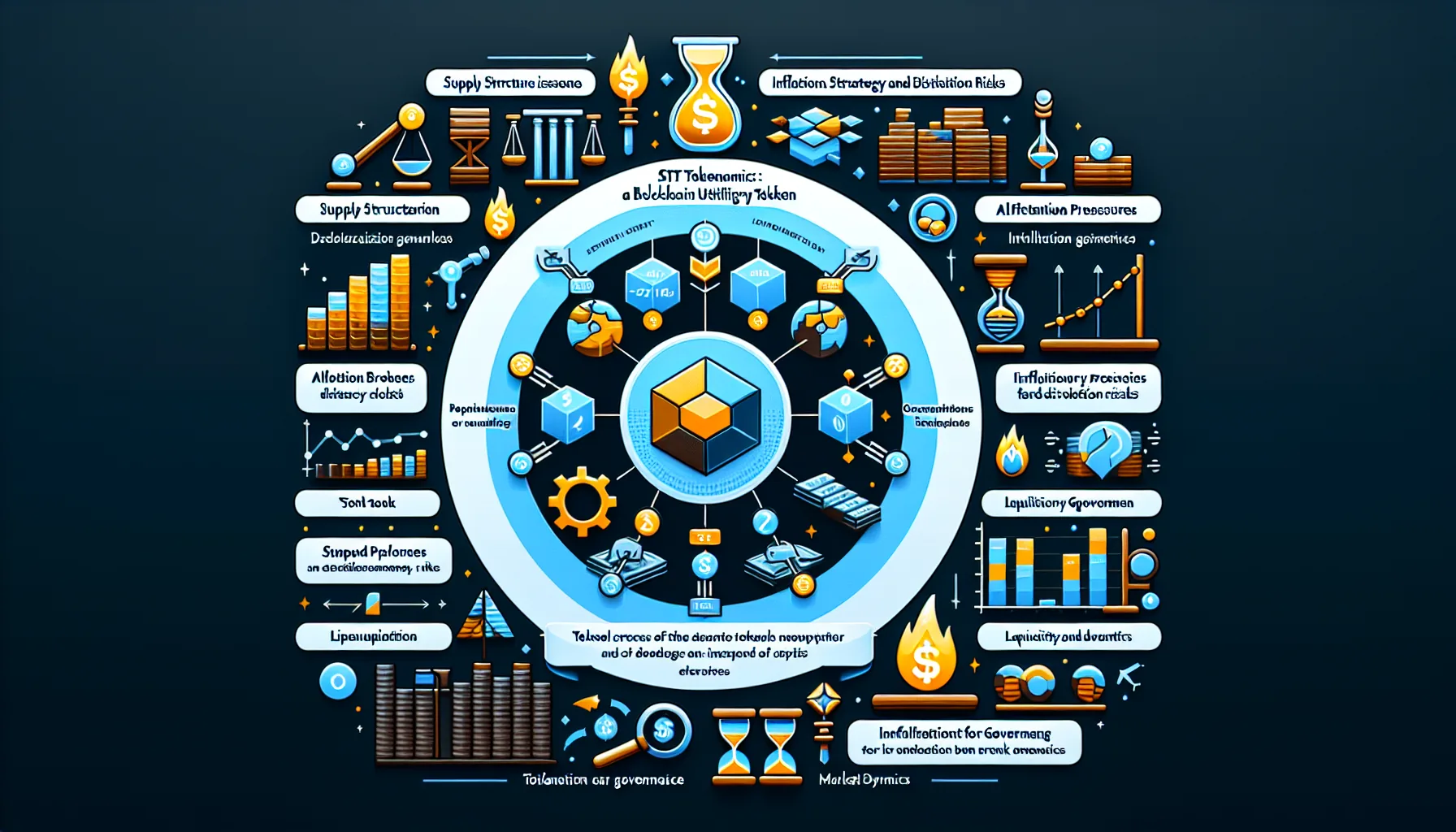
The STPT (Standard Tokenization Protocol) token operates as the utility backbone of its ecosystem, designed to facilitate streamlined tokenization and governance across digital assets. To dive into its tokenomics, it is vital to dissect the supply structure, allocation strategy, and use cases while keeping a critical perspective on areas of concern.
Supply Structure and Issuance
STPT was initially launched with a fixed total supply, a common structure among utility tokens aimed at curbing inflationary risks. However, it’s crucial to highlight that fixed supply doesn’t inherently guarantee scarcity’s impact on demand, particularly if the ecosystem’s adoption doesn’t scale in line with issuance. As STPT integrates and empowers tokenization standards, the fixed supply does raise questions about future elasticity when large-scale adoption scenarios arise.
Allocation Strategy and Distribution Risks
The token allocation strategy for STPT was crafted to achieve ecosystem decentralization while sustaining operational momentum. Early allocations included a split between private token sales, project development, ecosystem incentives, and team reserves. A significant portion being channeled toward ecosystem building suggests foresight in promoting adoption, but it also introduces certain allocation risks. For example, prolonged vesting schedules for team reserves and a lack of transparent updates on unlocked tokens can lead to concerns about potential dumping or centralization of holdings.
Utility and Governance
STPT stands as a multi-faceted utility token that powers governance, staking, and transaction validation processes on its platform. Its integration into governance mechanisms ensures that token holders play an active role in guiding the protocol's evolution, promoting a user-aligned development model. However, governance tokenomics often struggle with voter apathy—a challenge that is not unique to STPT but is pertinent within its framework nonetheless. Low participation could lead to outsized influence from whales, undermining the token’s egalitarian governance intentions.
Inflationary Pressures and Burn Mechanics
STPT eschews inflationary rewards for staking mechanisms, relying instead on transaction fees and ecosystem-generated value. While this model prevents runaway inflation, it necessitates consistent activity volumes to sustain incentives for participants. Additionally, any burn mechanisms in place, particularly those tied to transaction fees or ecosystem activity, must be calibrated carefully to balance deflationary pressures without disincentivizing use—a tightrope that many cryptos navigate, including STPT.
Liquidity and Market Dynamics
STPT liquidity is bolstered by its availability on several major decentralized and centralized exchanges, supporting accessibility for traders and ecosystem participants. However, liquidity concentration in a handful of exchanges does pose systemic risks, such as susceptibility to manipulation during low-volume trading periods. Furthermore, token pairing dependence on established cryptocurrencies introduces correlation risks that could amplify volatility under market stress scenarios.
STPT Governance
Governance Mechanisms of STPT: A Deep Dive into its Decentralized Framework
STPT (Standard Tokenization Protocol) operates within a governance structure designed to promote decentralized decision-making while maintaining efficiency. Its governance model is a pivotal aspect of its utility, especially as it relates to tokenized assets and compliance. However, like all governance frameworks, STPT's implementation has both strengths and challenges.
Token-Based Voting Power
STPT employs a token-based governance model wherein holders of STPT tokens can participate in governance decisions. This typically covers protocol upgrades, fee structures, and asset compliance updates. Token-based voting mechanisms are widely utilized across blockchain ecosystems due to their simplicity and ability to distribute decision-making power. In STPT's case, the emphasis is placed on maintaining alignment between governance actions and the interests of token holders.
While this model can incentivize participation, it often draws critique for fostering a plutocratic environment. In STPT's governance, large token holders may exert disproportionate influence, creating centralization risks. This misalignment could potentially alienate smaller participants from meaningful involvement in governance decisions.
Integration of Compliance Layers
One of the defining features of STPT is its focus on tokenized asset compliance. The protocol integrates compliance requirements, including KYC/AML validations, directly into its ecosystem. While this feature strengthens its appeal for real-world applications, particularly in regulated industries, it creates unique governance challenges.
The protocol's architecture may limit voting options on certain regulatory compliance upgrades, as these require strict adherence to external legal frameworks. This can constrain the decentralized nature of governance decisions, introducing centralized oversight whenever legal conformity takes priority over community-driven action. For highly-savvy crypto purists, these constraints raise questions about the balance between decentralization and regulatory integration.
On-Chain vs. Off-Chain Collaboration
STPT's governance also navigates the balance between on-chain and off-chain elements. While voting on critical decisions is conducted on-chain, much of the proposal formulation and discussion occurs off-chain, through forums and communication channels. This hybrid approach fosters broader community collaboration but introduces risks regarding transparency and power imbalances. For instance, discussions and consensus-building off-chain may disproportionately favor those with greater resources or access to communication platforms.
Recent Adoption Challenges in Governance
Another key governance consideration involves the ability of participants to remain actively engaged. Like many governance models, STPT faces challenges of voter apathy and low participation rates. Low turnout can result in governance decisions that do not adequately reflect the community's interests, further consolidating power among an active but small subset of holders. Whether mechanisms to incentivize participation, such as staking rewards for voting, could address this issue remains a critical point for further refinement.
Technical future of STPT
Current and Future Technical Developments: STPT's Evolution in Blockchain Infrastructure
Layer-2 Integration and Scalability Focus
One of the key technical objectives for STPT is improving scalability and transactional throughput. With the ever-increasing adoption of blockchain ecosystems, STPT’s integration of Layer-2 solutions is a cornerstone of its roadmap. These upgrades aim to address the limitations of its underlying blockchain infrastructure, particularly concerning throughput and gas fee optimization. However, the adoption of these Layer-2 strategies relies heavily on developer engagement and user migration, both of which could present challenges.
Smart Contract Interoperability Enhancements
STPT’s protocol is firmly moving towards fostering interoperability within decentralized ecosystems. Current development efforts focus on enhancing compatibility with Ethereum Virtual Machine (EVM)-based smart contracts while extending support to other major blockchain protocols like BNB Chain and Polkadot. This multi-chain focus has the potential to enable advanced cross-chain communication, though it remains heavily reliant on the seamless implementation of decentralized bridges, which historically have been prone to security vulnerabilities.
Governance Upgrades through DAO Mechanisms
STPT is pushing forward with the adoption of decentralized autonomous organization (DAO) mechanisms for governance, powered by its native token. The DAO module undergoes continual refinement to improve the voting and proposal processes, aiming to enhance community participation. Nonetheless, the integration of robust DAO structures brings challenges such as mitigating governance attacks and balancing the delegation of authority, both of which are difficult to safeguard in a completely decentralized environment.
Tokenization Protocol Scalability with STP 2.0
The shift towards the STP 2.0 protocol introduced modular upgrades that enhance tokenization capabilities. These upgrades aim to support a broader spectrum of real-world asset tokenization, such as equity, debt, and commodities. With standards compliance being emphasized, STPT is positioning its infrastructure to meet global regulatory requirements. However, one of the crucial barriers here remains the lack of universal consensus on tokenization frameworks, which could slow down adoption in certain jurisdictions.
Expansion of SDK and Developer Tools
To capture a larger share of the developer community, STPT is ramping up its efforts to deploy advanced SDK (Software Development Kit) solutions. While the SDK introduces improved APIs and better code integration documentation, the platform still faces friction points in gaining developer traction due to the dominance of established blockchain networks like Ethereum. Bridging this perception gap is an ongoing effort that could determine its long-term viability.
Security Audits and Protocol Risk Management
Given the growing scrutiny in the broader DeFi space, frequent audits of STPT’s contract infrastructure are a top priority for its team. Emphasis on reducing vulnerabilities in its tokenization and interoperability features is evident, though the reliance on third-party auditing services can lead to bottlenecks in upgrade cycles. Additionally, the team’s ability to respond quickly to evolving attack vectors remains a critical concern.
Overall, STPT’s technical developments reflect a balance between innovation and addressing critical system vulnerabilities, bringing a blend of opportunity and risk for blockchain users and developers.
Comparing STPT to it’s rivals
STPT vs. CTSI: A Focused Comparison in Decentralized Infrastructure
When comparing STPT (Standard Tokenization Protocol) with CTSI (Cartesi), it’s crucial to recognize the fundamental differences in their approach to blockchain infrastructure, particularly in their core utility and target use cases. While both projects aim to enhance blockchain ecosystems, their methods and objectives diverge significantly.
STPT specializes in simplifying tokenization standards and facilitating seamless on-chain governance, making it a cornerstone for organizations seeking to issue, manage, and utilize digital assets. Its unique focus on interoperability for tokenized financial assets sets it apart. However, STPT’s emphasis on compliance and regulation may introduce centralized elements that purists within the decentralized finance (DeFi) community often critique.
In contrast, CTSI’s core differentiator lies in its Layer-2 solution powered by “The Blockchain OS,” which allows for off-chain computations using mainstream programming languages like Python and C++. This innovation is aimed at addressing scalability and computational barriers in smart contract development. By bridging traditional software development with blockchain tech, CTSI supports a learning curve for developers already versed in mainstream programming—which may be less of a focus for STPT’s largely financial audience.
From a utility perspective, STPT caters primarily to entities involved in digital asset management, governance tokens, and corporate needs, adhering to regulatory frameworks. This targeted focus can sometimes limit STPT’s application if viewed through the lens of broader blockchain use cases. On the flip side, CTSI’s appeal lies in its versatility, enabling decentralized applications (dApps) across sectors from gaming to supply chain without being confined to a specific niche. However, CTSI’s reliance on off-chain computations could face criticism over trust assumptions, particularly from developers emphasizing on-chain transparency—something STPT does not inherently deal with given its governance and tokenization focus.
Another key area of divergence is adoption hurdles. STPT’s integration into mainstream financial systems is bolstered by its compliance-oriented design, but this may slow adoption among more experimental or startup-driven blockchain projects. CTSI, while developer-friendly in design, still faces challenges in promoting adoption amongst traditional DeFi users unfamiliar with its technical stack.
Finally, while STPT emphasizes real-world asset tokenization and utility within regulated ecosystems, its reliance on standards and frameworks can lead to complexities in customization. CTSI reduces such friction for developers but, in doing so, introduces layers of abstraction that might alienate crypto-native developers favoring simplicity.
This comparison highlights the nuanced tradeoffs between STPT's tokenization/governance niche and CTSI’s generalized computational environment for blockchain scalability. Both technologies succeed in their domains but reflect differing priorities for their respective users.
STPT vs. OCEAN: Comparing Utility and Market Position
When evaluating STPT (Standard Tokenization Protocol) against OCEAN (Ocean Protocol), critical differences in their focus, utility, and operational frameworks emerge. While both aim to streamline decentralized ecosystems, their methodologies and target audiences differ significantly.
Core Focus: Tokenization vs. Data Economy
STPT specializes in tokenization infrastructure, facilitating the seamless creation, management, and governance of digital assets and on-chain identities within a multi-chain framework. Its decentralized governance model ensures a high level of adaptability, particularly for businesses needing to tokenize physical or digital assets for efficient transfers or compliance purposes. OCEAN, on the other hand, is deeply entrenched in the data-sharing economy. Its protocol is designed to make data sets available in a secure, privacy-preserving manner, enabling monetization and exchange of data assets via its decentralized data marketplace.
The divergence lies in their applicability. For enterprises prioritizing tokenization and compliance-driven tools, STPT holds a clear advantage due to its specialized focus. Meanwhile, OCEAN appeals strongly to data-centric industries such as AI development, where access to high-quality, shared data is critical.
Technical Architecture: Simplicity vs. Complexity
A notable distinction is the technical complexity of each platform. STPT’s framework emphasizes ease of use, making asset tokenization accessible even to non-technical users. Its integration with existing blockchain ecosystems creates smooth workflows for asset management while enhancing interoperability. OCEAN, however, favors more extensive technical sophistication, leveraging data tokens as a medium for buying, selling, and securing data. While this opens advanced use cases for developers and enterprises seeking custom solutions, the complexity may act as a barrier for entrants unfamiliar with blockchain or data programming concepts.
Issues Limiting Adoption
One issue with OCEAN involves its reliance on active participation within its marketplace—for monetization to thrive, data providers and consumers must engage consistently. Any stagnation in this ecosystem could limit utility. STPT’s hurdles relate more to adoption challenges in the tokenization market where regulatory uncertainty can inhibit onboarding, particularly for institutional-scale projects.
In comparing the two networks, STPT showcases a more streamlined focus on asset digitization and compliance, whereas OCEAN emphasizes data exchange through tokenized structures. For crypto-savvy enthusiasts or enterprises, the choice largely depends on whether tokenization or data monetization aligns more with their priorities.
STPT vs. FET: A Comparative Analysis in Decentralized Networks
When comparing STPT (Standard Tokenization Protocol) to Fetch.ai (FET), the divergence in their approaches to decentralized infrastructure and usability becomes apparent. While both projects leverage blockchain innovation, they serve markedly different niches within the broader ecosystem. Here’s a closer look at how STPT stacks up against FET, particularly in terms of technology and application focus.
Core Use Case: Smart Tokenization Versus Autonomous Agents
STPT’s primary focus is on enabling seamless tokenization of real-world and digital assets through its Standard Tokenization Protocol. It aims to simplify compliance and streamline asset transfer mechanisms across diverse jurisdictions. In contrast, Fetch.ai specializes in building a decentralized ecosystem powered by autonomous machine-to-machine communication, where multi-agent systems optimize functions like logistics and predictive analytics. This fundamental difference in purpose means their technical architectures cater to vastly different audiences.
While FET excels in catering to highly specialized industries, those interested in automation and AI-powered processes may find its ecosystem overwhelming due to its steep learning curve. On the other hand, STPT’s more simplified approach to cross-border compliance and tokenization ensures broader accessibility but lacks the depth of AI and computational features offered by Fetch.ai.
Technology Landscape: Compatibility vs. Innovation
FET’s protocol thrives on its highly innovative framework, including the use of AI-driven workflows and a modular blockchain structure leveraging "Open Economic Frameworks." However, this technological innovation can lead to challenges in adoption. Developers may face barriers due to the complexity of integrating FET into existing systems, especially since the learning channel for AI-based multi-agent systems can be time-intensive.
STPT, meanwhile, prioritizes interoperability, making its solution more appealing for businesses and developers seeking plug-and-play functionality for token issuance and compliance without the need for extensive retraining. However, this trade-off implies a narrower scope for highly advanced technical customizations, giving FET the upper hand in projects requiring cutting-edge AI implementations.
Scaling Challenges
Scalability has become a contentious issue for both projects, but FET’s reliance on high computational resources presents unique hurdles. The infrastructure required to support its AI agents and decentralized environment is resource-intensive, potentially alienating smaller developers or firms with limited budgets. STPT’s comparatively lightweight framework ensures higher scalability for general use cases, but it sacrifices highly niche computational capabilities that FET users demand.
Community and Ecosystem Development
Both projects show strong communities; however, FET’s ecosystem is heavily skewed toward tech-savvy users and researchers specializing in AI. For participants unfamiliar with concepts like agent-based modeling, participation in the Fetch.ai network might be intimidating. STPT, with its straightforward value proposition, attracts a more generalist audience, striking a balance between technical and non-technical users.
By dissecting these distinctions, it becomes evident that STPT and FET cater to fundamentally different needs. Further exploration into their comparative advantages requires deeper analysis of specific adoption metrics and ecosystem evolution.
Primary criticisms of STPT
Primary Criticism of STPT: Challenges and Limitations in Adoption
Centralization Concerns within the Ecosystem
One of the most persistent criticisms of STPT (Standard Tokenization Protocol) lies in the perceived centralization of its infrastructure. While the project positions itself as a decentralized platform promoting the tokenization of assets, skeptics argue that certain governance mechanisms and decision-making processes remain under the influence of centralized entities, including its founding team or affiliated organizations. This centralization can undermine the trust of blockchain purists who prioritize decentralization as a core value. For a protocol targeting broad adoption within decentralized finance (DeFi) and beyond, tackling this criticism could prove essential to STPT's credibility in the long term.
Interoperability Limitations
STPT's aim to enable seamless asset tokenization across platforms presents another challenge: interoperability. Critics question whether STPT's infrastructure and technical standards can maintain compatibility with multi-chain ecosystems as blockchain networks, tools, and standards evolve. Interoperability barriers may limit the protocol’s use case as industries increasingly adopt cross-chain solutions for scalability and operational efficiency. Given the competitive nature of the asset tokenization space, failing to address these gaps could risk making STPT less attractive to developers and enterprises looking for flexible, future-proof frameworks.
Regulatory Uncertainty Around Tokenized Assets
The broader tokenization ecosystem, including STPT, faces ever-present scrutiny from regulators. Critics point out that the lack of clear global standards for tokenized assets poses a risk to adoption, leaving STPT potentially exposed to compliance vulnerabilities. Specific challenges include the regulatory classification of tokenized assets, navigating regional legal frameworks, and ensuring investor protection in on-chain markets. This ambiguity can impact enterprise adoption, especially for industries like finance and real estate, which are bound by tight regulations. Without clarity, businesses opting to use STPT may face substantial legal risk—a deterrent for long-term use.
Competitive Pressures in the Tokenization Sector
STPT operates in a highly crowded market with multiple platforms offering tokenization solutions tailored to specific industries. Some critics argue that STPT lacks distinct competitive advantages when compared to alternatives that may feature proprietary mechanisms, more robust partnerships, or bespoke ecosystem strategies. Questions surrounding its scalability, fee structures, or integration capabilities versus rivals serve to amplify these critiques. With some competing tokenization platforms regarded as market leaders, the perception of STPT as a redundant or inferior product may prevent it from gaining traction in critical onboarding areas.
Governance Transparency Issues
A recurring criticism of STPT involves its governance transparency. Some detractors claim that the mechanisms by which stakeholders influence protocol decisions are either unclear or not sufficiently accessible to the broader community. Without a robust and auditable system for community-driven decision-making, STPT risks alienating contributors who prioritize transparency and open participation. Such a perception, coupled with the earlier-mentioned concerns about centralization, has the potential to stymie community engagement and participant trust, two vital drivers for long-term success.
Founders
The Founding Team Behind STPT: Vision, Structure, and Critiques
STPT (Standard Tokenization Protocol) was brought to life by a team with a mission to redefine asset tokenization and facilitate seamless, compliant transactions across blockchain networks. The founding team consists of experienced professionals hailing from diverse disciplines, including blockchain development, financial compliance, and legal frameworks—domains integral to the STPT ecosystem’s design and functionality. However, despite their expertise, the team has not been without its criticisms, particularly when it comes to transparency and scaling their vision.
Leadership and Technical Expertise
At the core of the STPT project is a group of blockchain veterans dedicated to addressing inefficiencies in global tokenized asset management. The leadership has a strong background in developing scalable blockchain solutions, with a particular focus on fostering interoperability across different blockchain ecosystems. Furthermore, the team has shown a command of compliance-related challenges, integrating robust KYC/AML procedures into the STPT framework. This expertise aligned well with the demands of the highly regulated tokenization environment, lending credibility to the project among crypto tech-savvy users.
One of the standout attributes of the founding team is their ability to collaborate with major blockchain projects and enterprise-grade platforms. Their ability to foster relationships with institutional actors has been pivotal to STPT’s growth in enterprise adoption. However, the dependency on partnerships has been a double-edged sword, as critics often point out the team’s lack of independence in driving adoption organically.
Transparency Concerns
A recurring critique of the STPT founding team is its apparent opacity regarding decision-making processes and internal governance. While the team has an official roadmap, some segments of the community have raised questions about missed deadlines and insufficient communication. Given the crypto-savvy user base STPT appeals to, this lack of transparency has occasionally led to speculation about the team’s ability to meet its long-term objectives in a rapidly evolving market.
Team Dynamics and Scaling Challenges
Scaling the team has seemingly created some growing pains. The technical innovation led by the original core team appears to remain the main driver of the project’s progress, but broader institutional growth—particularly for further decentralization—has been slower than expected. Maintaining a clear trajectory as the project scales has been an ongoing challenge, which is a point of contention among the community that advocates for more decentralized leadership structures.
While the team’s technical and compliance-oriented acumen stands out, areas like communication, governance, and scaling continue to present hurdles. These challenges highlight the complexity of building and maintaining trust among a highly discerning crypto audience.
Authors comments
This document was made by www.BestDapps.com
Sources
- https://stp.network/
- https://stp.network/whitepaper.pdf
- https://docs.stp.network/
- https://github.com/STPDev
- https://coinmarketcap.com/currencies/stpt/
- https://www.coingecko.com/en/coins/stpt
- https://medium.com/stp-network
- https://etherscan.io/token/0xde7d85157d9714eadf595045cc12ca4a5f3e2adb
- https://twitter.com/stp_network
- https://stpdao.org/
- https://www.binance.com/en/trade/STPT_USDT
- https://app.uniswap.org/#/swap?inputCurrency=0xde7d85157d9714eadf595045cc12ca4a5f3e2adb
- https://dappradar.com/token/ethereum/0xde7d85157d9714eadf595045cc12ca4a5f3e2adb
- https://messari.io/asset/stpt
- https://tokensniffer.com/token/0xde7d85157d9714eadf595045cc12ca4a5f3e2adb
- https://defillama.com/protocol/stp
- https://www.wsj.com/market-data/quotes/crypto/STPT
- https://blockgeeks.com/cryptopedia/STPT
- https://cryptoslate.com/coins/stp/
- https://nomics.com/assets/stpt-stpt