History of SRM
The History of Serum (SRM): Origins and Milestones
Serum (SRM) emerged as a decentralized exchange (DEX) protocol designed to leverage the speed and efficiency of Solana's blockchain. Its inception reflects the broader goal of addressing inefficiencies in the decentralized finance (DeFi) ecosystem, particularly those linked to scalability and high transaction fees that plague Ethereum-based projects. Created by the Serum Foundation, a consortium of developers and crypto advocates, its launch was strategically aligned with the growing interest in cross-chain interoperability and high-performance DeFi solutions.
The core idea behind Serum's development lies in its on-chain central limit order book (CLOB), a unique feature that distinguishes SRM from AMM (automated market maker) models like Uniswap. This approach aimed to combine the efficiency of a traditional financial exchange with the transparency and decentralization inherent in blockchain technology. By utilizing Solana's high throughput and low latency architecture, Serum positioned itself as an infrastructure to support a wide range of applications, including DeFi projects, market makers, and liquidity providers.
Despite technical innovations, Serum's history has not been without challenges. The tight affiliation with the now-defunct trading platform FTX and its sister company Alameda Research raised concerns after these entities became embroiled in controversy. Alameda, known for its market-making operations, was an early and significant contributor to Serum’s liquidity and development ecosystem. However, such relationships have led to criticism over Serum's perceived reliance on centralized entities, which runs contrary to the principles of decentralization.
Early adoption of Serum was centered around projects that built directly on its architecture, but this led to another point of contention: the degree of fragmentation within the ecosystem. Some users and developers expressed concerns about the difficulty of integrating Serum with other blockchain platforms, as it is tightly integrated with Solana. This dependence has made it less attractive to Ethereum-native projects, where much of the DeFi innovation remains concentrated.
Additionally, criticism has emerged regarding governance distribution. Serum's governance token, SRM, distributed during its genesis, left questions about the actual decentralization of decision-making power within the network. Skeptics pointed to a high concentration of tokens among early stakeholders and institutions, raising concerns about whether community-driven governance could be meaningfully achieved.
Serum’s origins represent a calculated response to DeFi constraints, yet its progress has been shaped by both promise and controversy. These historical developments continue to influence perceptions of SRM’s role in the evolving crypto landscape.
How SRM Works
How SRM Works: Mechanisms Behind the Serum Protocol
The SRM token operates as the central utility and governance token of the Serum protocol, a high-performance decentralized exchange (DEX) built on the Solana blockchain. Serum is designed to address issues typical of DeFi ecosystems, such as scalability bottlenecks, high transaction fees, and latency. Here's a closer look at how SRM functions within the ecosystem.
Core Mechanisms of SRM
At its core, SRM is tightly integrated with the Serum DEX's architecture. Serum leverages a fully on-chain central limit order book (CLOB), a structural feature that differentiates it from many automated market maker (AMM) DEXs. Through the CLOB, Serum offers traders the ability to submit and modify limit and market orders directly, much like a centralized exchange, but in a trustless, decentralized environment. SRM's utility lies in incentivizing and maintaining this ecosystem by fulfilling the following roles:
-
Fee Discounts: SRM plays a critical role by reducing transaction fees on the Serum DEX for token holders. The fee discounts operate on a tiered structure, with higher discounts offered to users who hold larger amounts of SRM or compose "MegaSerum" (1,000,000 SRM tokens staked together). This incentivizes greater token accumulation and staking.
-
Staking and Node Participation: SRM enables participation in the staking mechanism tied to Serum's decentralized infrastructure. Specific nodes, known as Serum nodes, are responsible for critical operations such as transaction validation and order matching within the network. Staking SRM tokens is a prerequisite for running these nodes, aligning economic incentives to ensure node operators act responsibly.
-
Governance Rights: Token holders can use SRM to participate in governance decisions affecting the Serum protocol. Although this decentralized governance infrastructure provides a pathway for community input, it’s worth noting that the influence of governance is proportionally weighted by token holdings, concentrating voting power in the hands of large stakeholders.
Challenges and Considerations
While SRM provides utility across multiple layers of the Serum protocol, its design is not without issues. One key challenge is the reliance on Solana, which, despite offering high throughput and low costs, has faced occasional centralization concerns and network instability. If Solana encounters system-wide issues, the Serum protocol—and by extension, SRM—could see interruptions in functionality.
Additionally, the CLOB model, though innovative in the context of decentralized finance, requires significant liquidity to function effectively. Thin or fragmented liquidity on the exchange may limit its competitiveness relative to more established AMM-based DEXs, potentially impacting SRM’s value proposition. Furthermore, the governance structure, while decentralized in theory, risks reinforcing a power disparity if a small group controls a disproportionate amount of tokens.
In sum, SRM integrates deeply into Serum's infrastructure, with its functionality spanning governance, fee reductions, and staking operations. However, its long-term value and utility remain tied to the network’s ability to address scalability, decentralization, and liquidity challenges.
Use Cases
Exploring SRM Use Cases: Utility of the Serum Token in Decentralized Finance
Governance and Protocol Development
One of SRM's notable use cases lies in its role within the governance mechanism of the Serum decentralized exchange (DEX). As a governance token, SRM empowers holders to influence protocol-level decisions, including upgrades, parameter adjustments, and allocation of resources within the ecosystem. This decentralized governance model enables the community to directly shape the trajectory of the Serum platform. However, like with many governance tokens, actual participation rates among token holders can be low, potentially centralizing critical decisions among a small subset of users. This raises questions about the true decentralization of power within the ecosystem.
Transaction Fee Discounts on Serum
SRM plays a functional role in optimizing trading costs within the Serum DEX. Holders who stake or hold SRM can benefit from reduced transaction fees, which is particularly attractive for high-frequency traders who seek to minimize operational expenses. While these fee reductions are an advantage, they are generally only accessible to traders who hold large amounts of SRM, potentially limiting this benefit to whales and excluding smaller participants.
Staking Rewards and Yield Generation
Another use case for SRM is staking, either individually or as part of staking pools. Participating in staking allows users to generate yield, contributing to enhancing the security and scalability of the Serum network by incentivizing long-term commitment. However, staking returns are often diluted over time as more participants join—an issue common to many token staking models. Additionally, users must contend with potential lock-up periods, impacting liquidity and opportunity costs associated with other yield-generating strategies in crypto markets.
Cross-Chain Asset Interactions
Serum’s interoperable architecture facilitates cross-chain exchanges, and SRM serves as a utility token within these interactions. Through its integration with the Solana blockchain, SRM enables fast and low-cost swaps between assets on different chains. Despite this interoperability being a highlight, it is worth noting that reliance on Solana’s infrastructure also creates risk exposure—issues such as network congestion or outages on Solana could hinder SRM's usability in cross-chain scenarios.
Incentive Structures in Liquidity Pools
SRM is frequently used to incentivize participants to provide liquidity to Serum’s trading pools. Liquidity providers may earn rewards in SRM for contributing to the platform's depth and functionality. However, impermanent loss and fluctuating token rewards can diminish user incentives over time. These challenges are not unique to Serum but are notable factors for SRM holders considering entering liquidity pools.
SRM Tokenomics
Tokenomics of Serum (SRM): A Deep Dive Into Its Mechanics
Serum (SRM) is a utility and governance token at the core of Serum’s decentralized exchange (DEX) ecosystem. Its tokenomics are designed to incentivize participation, provide functionality, and secure the platform. However, key attributes of its token economics deserve careful scrutiny, particularly regarding its supply mechanics, staking incentives, and distribution strategy.
Total Supply and Distribution Model
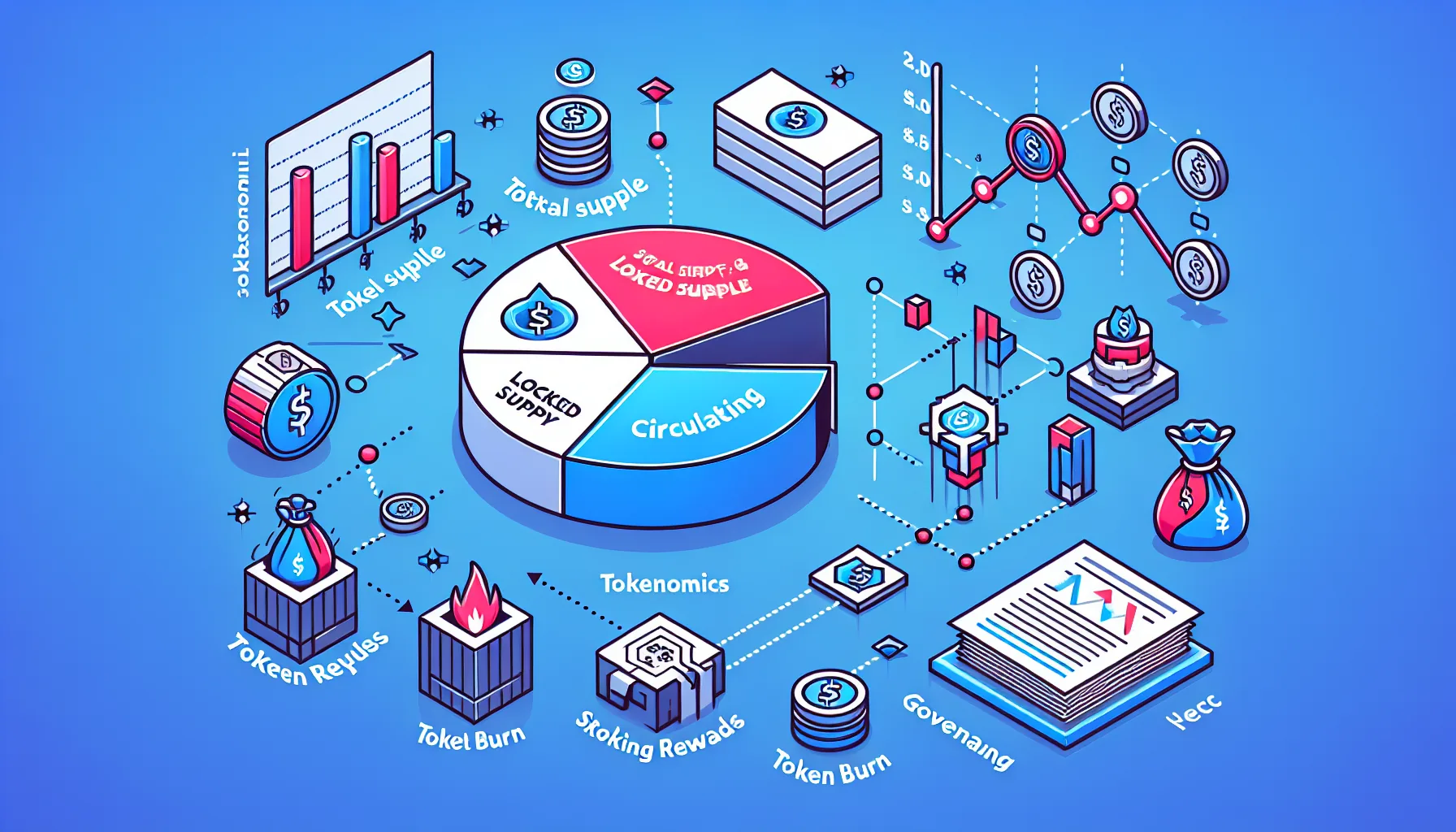
SRM has a fixed total supply of 10 billion tokens, a model designed to create scarcity over time. However, the circulating supply is significantly smaller because a vast majority of tokens are locked or vested. This has raised concerns about potential supply-side shocks when large amounts of tokens are unlocked, depending on market demand at the time. The token release schedule spans several years, ostensibly to smoothen this impact, but critics point out that sudden unlock events from major stakeholders like the Serum Foundation or early backers could destabilize market sentiment, especially given the concentration of early token allocations.
Staking and Fee Discounts
SRM’s staking model is integral to its utility. Beyond the typical staking rewards, SRM holders are granted fee discounts on transactions within the Serum ecosystem. These incentives are tiered, meaning users who hold and stake higher amounts of SRM receive greater benefits. Although attractive for institutional traders or heavy DEX users, the high thresholds for maximum discounts make these tiers inaccessible for smaller retail investors, leading to perceptions of exclusivity that some argue could hinder broader adoption.
Furthermore, SRM staking also contributes to governance by granting users the ability to vote on proposals. While this promotes decentralized decision-making, it has raised concerns over governance centralization. SRM’s distribution model favors early investors and insiders, meaning these entities hold disproportionate voting power—a sticking point for adherents of decentralization.
Burn Mechanism and Deflationary Pressure
SRM incorporates a burn mechanism in which a portion of trading fees is used to buy back and burn tokens. This deflationary measure is intended to counteract inflationary pressures from token emissions and foster long-term price stability. However, the scale of the burn program has been relatively modest compared to the total supply, leading to questions about its effectiveness in creating meaningful value for token holders. If trading volumes on Serum do not maintain robust growth, the deflationary impact could fall short of expectations.
Strategic Considerations
A critical observation surrounding SRM tokenomics is its reliance on the broader adoption of the Serum protocol. As a utility token, SRM’s value is tightly linked to the ecosystem’s activity and the platform’s ability to attract liquidity and users. Concerns have been raised about competition from similar protocols and the reliance on specific blockchain networks, which could amplify systemic risks if those underlying chains face downtime or congestion.
SRM Governance
SRM Governance: Decentralized Participation and Challenges
The governance structure of Serum (SRM) revolves around its mission of fostering a decentralized and community-driven ecosystem. Unlike fiat systems or centralized entities, SRM’s governance aims to empower token holders with decision-making abilities. However, understanding its governance model requires analyzing its mechanisms, participation, and potential challenges.
Token-Based Voting
SRM governance primarily operates on a token-weighted voting mechanism, where holders of the SRM token can propose and vote on system upgrades, parameter changes, and ecosystem initiatives. This approach ensures that those with a vested interest in the network’s health—the token holders—have a say in its future. However, token-weighted voting also raises concerns about centralization, as significant SRM allocations owned by whales or institutional players can disproportionately influence key decisions.
Governance Proposals and Implementation
Governance proposals in the Serum ecosystem must typically pass through formalized stages, including idea submission, discussion on governance forums, and on-chain voting. Once a proposal gains approval via consensus, it is implemented via smart contracts that autonomously execute the changes. While this system ensures transparency, it also highlights the importance of robust proposal vetting, as poorly designed changes can introduce vulnerabilities or inefficiencies into the protocol.
Decentralization Challenges
Despite its commitment to decentralization, one of the key challenges SRM governance faces is the active participation of its community. Low voter turnout is a common issue in many token-based governance systems, and Serum is no exception. Complex documentation, technical barriers, or apathy by smaller token holders can result in governance decisions being dominated by a minority of engaged stakeholders. Over time, this could erode trust in the system as decentralization objectives are undermined.
Delegated Governance
SRM’s governance model potentially allows for the delegation of voting power, where token holders assign their voting rights to more active participants or governance experts. This could address participation issues by ensuring that key decisions are informed by knowledgeable actors. However, delegation inherently shifts power dynamics and introduces risks of misaligned incentives, as delegates may prioritize their own interests over the broader ecosystem's needs.
Governance Transparency vs. Complexity
Another governance consideration is the balance between transparency and accessibility. While SRM governance emphasizes open debate and on-chain accountability, the technical complexity of both governance mechanisms and smart contracts could alienate less experienced participants. Simplifying the governance interface and offering clear educational resources might mitigate this barrier but could also reduce the system’s overall sophistication.
Technical future of SRM
Current and Future Technical Developments for SRM: Exploring the Roadmap
Serum’s Integration with Solana and Its On-Chain Order Book Model
SRM, native to the Serum protocol, is deeply integrated with the Solana blockchain. This integration leverages Solana’s high throughput and low-latency characteristics, aimed at providing a seamless decentralized exchange (DEX) experience. The on-chain central limit order book (CLOB) model allows Serum to differentiate itself from automated market makers (AMMs) by supporting complex trading functionalities like limit orders, in addition to standard AMM swaps. However, as demand for SRM's usage grows, the scalability and sustained performance of the CLOB on Solana could face stress, pointing to a potential need for further technical optimizations in indexing and order matching mechanisms.
Interoperability and Cross-Chain Solutions
Interoperability is a primary focus in SRM’s ecosystem. Serum's Wormhole integration serves as a bridge for cross-chain asset transfers, allowing interaction between ecosystems like Ethereum, Binance Smart Chain, Terra, and others. While Wormhole provides a multi-blockchain user base and liquidity inflow, there have been persistent concerns about the security of cross-chain bridges industry-wide. Historically, bridges have been a target for exploits, and Serum must ensure ongoing audits and robust safeguarding of its interoperability features to maintain user confidence.
Ongoing Upgrades to Serum Core
The development of Serum Core, the underlying software for operating the protocol, continues to evolve. Updates are regularly rolled out to improve efficiency, reduce resource consumption, and enhance functionality for developers building DeFi applications on top of Serum. However, as participation in decentralized finance steadily grows, preserving decentralization and avoiding central points of governance failures remain challenges that future updates will need to address.
Future Development: Enhancing Composability
Serum’s roadmap includes strengthening its composability within Solana’s DeFi ecosystem. By enabling easier integration with other protocols and improving SDKs, Serum seeks to position itself as a backbone for decentralized financial infrastructure. While this direction is promising, it is contingent on widespread adoption by dApp developers—a commitment that may require significant educational resources and developer incentives.
Potential Vulnerabilities and Areas of Improvement
A key area of concern lies in Serum’s reliance on Solana’s underlying infrastructure. While Solana's high-speed capabilities provide Serum with performance advantages, past technical issues and downtimes on Solana’s network have underscored potential risks of over-dependence on one ecosystem. Future iterations or forks of Serum may need to consider multi-chain deployment to mitigate this risk.
Comparing SRM to it’s rivals
SRM vs. FTT: A Detailed Comparison in the Crypto Ecosystem
When comparing Serum (SRM) to FTX Token (FTT), both serve critical, yet distinctly different roles within the crypto ecosystem, despite originating from overlapping communities and infrastructure focusing on decentralized finance (DeFi). These differences are underscored by their use cases, tokenomics, and platform functionalities, which often cater to separate audiences within the complex crypto market.
Utility and Ecosystem Roles
SRM is the utility and governance token of Serum, a decentralized exchange (DEX) built on Solana that emphasizes speed and low transaction costs. It underpins the on-chain order book model, enabling permissionless trading for users and projects. The token is designed for staking, contributing to network efficiency, and fee reductions for active traders within the Serum ecosystem.
FTT, on the other hand, functions as the native token of the FTX centralized exchange and serves as a backbone for its ecosystem. Its primary use cases include trading fee discounts, socialized insurance fund contributions, and various staking benefits on FTX. While FTT focuses heavily on incentivizing usage within the FTX platform, its centralized nature contrasts sharply with Serum’s decentralized ethos.
Both assets, however, depend on network effects and integrations to grow their user bases, and these underlying disparities in approach heavily influence their competitive strengths—SRM aligns with DeFi purists seeking decentralization, while FTT attracts users who prioritize streamlined, high-liquidity trading environments.
Tokenomics and Liquidity Drivers
FTT benefits from aggressive burn mechanisms and fee generation from its highly active exchange, giving it a consistent utility-driven demand. These dynamics enhance its deflationary environment but lean heavily on FTX’s centralized business model. Critics often note that this reliance creates risks tied to the exchange's performance and operational transparency.
SRM’s tokenomics prioritize staking rewards and encourage ecosystem growth through DAO governance and community-driven initiatives. However, SRM’s impact is directly tied to adoption and the sustainability of Serum’s on-chain liquidity solutions. Limited integration beyond the Solana ecosystem has sometimes been highlighted as a weakness, especially given the network concentration risks tied to Solana’s infrastructure.
Decentralization vs. Centralization
A significant contrast between SRM and FTT lies in their philosophical orientations. SRM promotes full decentralization with a focus on enabling applications to build on its infrastructure without intermediaries—a model idealistically aligned with crypto's foundational principles. In comparison, FTT harnesses the efficiencies of a centralized system, allowing quicker feature rollouts but at the cost of reduced trustlessness.
These differences underscore their competing appeal to differing user segments and highlight where challenges exist for overlapping adoption goals.
SRM vs. RAY: A Detailed Comparison in the DeFi Ecosystem
When contrasting SRM and RAY in the DeFi landscape, their coexistence within the Solana ecosystem immediately stands out, but their functional differences drive the comparison. While both projects leverage Solana’s high throughput and low-cost architecture, their core utilities and audience positioning create unique distinctions and alignments.
SRM, the utility and governance token of the Serum decentralized exchange (DEX), focuses on facilitating a permissionless on-chain central limit order book (CLOB). This allows users to interact with a trading infrastructure that resembles traditional finance but operates natively on blockchain. RAY, on the other hand, powers Raydium, an automated market maker (AMM) and liquidity pool protocol. Unlike Serum's order book model, Raydium automates liquidity provisioning and market making.
A significant differentiator lies in how the two projects contribute to Solana’s liquidity ecosystem. Raydium directly integrates with Serum by providing liquidity to its order book, meaning that RAY and SRM are symbiotic to some extent. However, RAY’s focus on AMMs positions it better for capturing users familiar with liquidity pools from Ethereum-based platforms like Uniswap or SushiSwap. SRM, while innovative in applying CLOB mechanics, requires a more sophisticated understanding of traditional trading models, which could limit its user base in favor of RAY's broader accessibility.
From a tokenomics and utility perspective, distinctions become clearer. SRM’s primary value proposition revolves around its utility for fee reductions and staking rewards on the Serum platform. SRM stakers gain enhanced access to governance rights, encouraging active participation in protocol upgrades. Conversely, RAY token holders have dual utility: governance over Raydium, and staking rewards directly tied to liquidity incentivization. RAY’s staking mechanics are often seen as more adaptive to yield farming trends, while SRM leans heavily on adoption within professional trading communities.
One critique of SRM in this comparison is its reliance on sustained trading volume and the complexity of its CLOB model. Without sufficient liquidity or user participation, Serum’s value proposition could falter. RAY, with its AMM framework, faces less of this dependency, as its model thrives even in smaller liquidity scenarios.
Overall, the SRM and RAY dynamic reflects competing philosophies within DeFi: CLOB-powered precision versus AMM simplicity. Each fills a niche that underscores their fundamental divergence.
SRM vs SOL: A Closer Look at the Differences in Ecosystem and Utility
When analyzing Serum (SRM) in comparison to Solana (SOL), one must account for their complementary yet fundamentally distinct roles within the blockchain ecosystem. Both projects are rooted in the high-performance Solana blockchain, but SRM’s utility is largely linked to decentralized finance (DeFi) applications, while SOL serves as the native cryptocurrency powering the entire Solana network.
Utility and Purpose
SRM is specifically designed as a utility token that plays a pivotal role in powering Serum, a decentralized order book protocol. It is integral to transaction fee discounts, staking, and governance within its ecosystem. However, this focused functionality limits its broader use cases outside the Serum protocol. In contrast, SOL acts as the backbone of the Solana blockchain, facilitating network security through staking and transaction validation in addition to paying gas fees. This makes SOL inherently more versatile and essential across a wider range of applications, including DeFi, NFTs, gaming, and beyond.
Adoption and Network Effects
The adoption metrics between SRM and SOL also highlight a significant contrast. SOL’s role as the lifeblood of the Solana blockchain has led to its integration into almost every project built on the network, providing it with immense network effects. SRM, while influential within its niche ecosystem of Serum and associated DeFi projects, lacks the widespread ubiquity SOL enjoys. This disparity has occasionally raised questions about SRM’s sustainability as an independent token within an ecosystem where SOL dominates in utility.
Centralization Concerns
One critical point for savvy investors to evaluate is the decentralization of both assets. SRM has faced criticism for being heavily concentrated in allocation, with a significant portion of its token supply locked in vesting schedules or controlled by early backers. While SOL has similar concerns about token distribution, its broader utility has mitigated such critiques to a degree. The concentration issue for SRM can skew governance decision-making, which poses risks for long-term decentralization and fair protocol development.
Liquidity and Trading
Another area where SRM and SOL differ is liquidity and trading dynamics. SOL benefits from being one of the highest-profile blockchain assets, leading to extensive listings across centralized and decentralized exchanges. SRM, in contrast, has a narrower profile, which can sometimes result in reduced liquidity and wider spreads during trading. This disparity can deter institutional players who prioritize ease of entry and exit when interacting with crypto assets.
By focusing narrowly on DeFi but lacking SOL’s expansive scope, SRM serves a much more specialized—and therefore limited—role within the same ecosystem. While this focus has advantages, it also creates vulnerabilities in a rapidly evolving market.
Primary criticisms of SRM
Primary Criticism of Serum (SRM): Concerns Facing the Crypto Asset
Centralization Issues in Serum’s Decentralized Architecture
While Serum markets itself as a decentralized exchange (DEX) protocol, critics have pointed out issues surrounding its actual level of decentralization. A significant portion of the project's governance tokens, SRM, is held by early investors, developers, and affiliated entities. This has raised concerns that the network’s governance may be disproportionately controlled by a small group of stakeholders. Critics argue that such a structure undermines the ethos of decentralization, potentially compromising the neutrality and autonomy of the platform. For a project built on Solana and claiming to leverage the benefits of decentralized finance (DeFi), this concentrated control presents a fundamental conflict.
Overreliance on Solana’s Ecosystem
Serum's dependence on the Solana blockchain has also drawn scrutiny. While Solana is known for its high-speed and low-cost transactions, the network’s occasional reliability issues, including node outages and centralization concerns, have sparked worries about Serum's resiliency. The close integration means that any disruption in Solana’s operations could directly impact Serum's functionality. Furthermore, this dependency restricts Serum from achieving cross-chain operability beyond Solana, which reduces its ability to compete with other DEX protocols that are positioned as blockchain-agnostic.
Liquidity and User Adoption Challenges
Despite its technical ambitions, Serum has faced challenges maintaining sufficient liquidity compared to some of its competitors in the decentralized exchange space. Lower liquidity can lead to higher slippage and less favorable trading conditions, discouraging users from adopting the platform. Additionally, some users have criticized the overall trading experience on Serum, citing a lack of intuitive interfaces and user-friendly design that could appeal to a broader audience. Even with a robust backend architecture, user engagement and adoption remain hurdles for the protocol.
Governance Transparency and Accountability
Another persistent criticism revolves around the transparency of Serum's governance process. While token holders have voting rights, there has been debate around how decisions are communicated and executed. Concerns over opaque decision-making processes and a lack of accountability mechanisms have left some in the community questioning whether the governance setup genuinely empowers stakeholders or merely gives the appearance of decentralization.
Regulatory Risks and Legal Uncertainty
Given its positioning as a decentralized exchange running on blockchain technology, Serum is not immune to regulatory scrutiny. The ambiguity surrounding global regulatory frameworks for DeFi protocols, and the potentially precarious status of SRM as a governance token, has raised concerns. Some critics highlight that if Serum were to face regulatory actions, its centralized token distribution could make it easier for regulators to target key stakeholders, thus intensifying the potential risks for the platform.
Founders
The Founding Team Behind Serum (SRM): Expertise and Controversies
Serum (SRM) was co-founded by a team deeply embedded in the DeFi and blockchain ecosystem, with leadership primarily coming from the Solana community and members associated with the FTX Exchange. At its core, the project is heavily linked to Sam Bankman-Fried, co-founder of FTX and Alameda Research, whose vision for a decentralized, high-speed exchange on Solana's blockchain led to the creation of Serum.
The Serum team operates under the umbrella of Project Serum, a collaborative effort primarily driven by traders, developers, and professionals with experience in blockchain infrastructure. Sam Bankman-Fried’s involvement lent significant early credibility to the project, due to his prior success in scaling FTX into a dominant centralized exchange. Similarly, Alameda Research played a major role in providing liquidity and technical contributions during Serum’s early days. This close entanglement between Serum, FTX, and Alameda, however, also raised questions about centralization risks—ironic in light of Serum’s goal to enable a decentralized exchange protocol.
The technical architecture of Serum was spearheaded by developers highly familiar with Solana’s ecosystem, with a focus on exploiting the blockchain's high throughput and low-latency capabilities. This choice has made Serum one of the standout DeFi applications within Solana. However, critics have pointed out that the tight connection between the development teams of Serum and Solana exposes an overreliance on a single blockchain, making any protocol vulnerabilities on Solana a threat to Serum’s operations.
Another contentious aspect surrounding the founding team is the opacity of the project’s governance structure. While Serum is nominally a decentralized protocol, its initial phases heavily relied on guidance and decision-making by its founding members and aligned institutions. This concentration of influence has led some in the crypto community to question the extent to which Serum can claim to be truly decentralized. There have also been accusations of conflicts of interest, especially given overlapping roles between Serum's core team and Alameda Research in governance and liquidity provisioning.
In sum, while Serum’s founding team brought considerable expertise to the table, its origins tie it closely to a network of centralized entities, a fact that continues to generate debate within the crypto community.
Authors comments
This document was made by www.BestDapps.com
Sources
- https://srm-token.org/
- https://solana.com/ecosystem/serum
- https://github.com/project-serum/serum
- https://docs.projectserum.com/
- https://medium.com/projectserum
- https://solscan.io/token/SRM
- https://coinmarketcap.com/currencies/serum/
- https://coingecko.com/en/coins/serum
- https://docs.serum-academy.com/
- https://explorer.solana.com/address/SRM
- https://raydium.io/liquidity/#/add/SRM/USDC
- https://blog.projectserum.com/
- https://cryptoslate.com/coins/serum/
- https://messari.io/asset/serum
- https://whitepaper.io/document/769/serum-whitepaper
- https://rekt.news/serum-deep-dive/
- https://defillama.com/protocol/serum
- https://cointelegraph.com/tags/serum
- https://docs.raydium.io/protocols/serum
- https://www.binance.com/en/trade/SRM_USDT


