History of SNX
The History of SNX: Key Milestones and Evolution of the Synthetix Network
The story of SNX begins in 2017 when it was initially introduced as Havven (HAV), a dual-token stablecoin platform designed to facilitate decentralized payment systems. Havven's architecture revolved around two tokens: a stablecoin called nUSD (nominal USD) and the network's collateral and utility token, HAV. However, the strictly payment-focused model failed to gain significant traction. Recognizing the limitations of this approach, the team led by Kain Warwick pivoted towards a more scalable and expansive vision in 2018. Havven was rebranded to Synthetix, and the HAV token was rebranded as SNX. This marked the beginning of Synthetix's attempt to create a decentralized protocol for synthetic asset issuance.
The pivot wasn’t without challenges. Early adoption struggled as the protocol initially supported a limited set of synthetic assets, known as Synths, which included sUSD (a rebranded stablecoin), sBTC, and sETH. Synthetix introduced an overcollateralized system, requiring users to stake SNX tokens to issue Synths. However, this raised concerns among critics, particularly regarding the inherent risks tied to overcollateralization during market downturns, as well as the inflationary tokenomics implemented to incentivize staking. Despite these criticisms, the staking incentives proved vital in fostering user participation and liquidity.
One of the defining moments in SNX's history was the transition from using centralized price feeds to Chainlink-powered decentralized oracles. Before adopting decentralized oracles, the protocol faced significant setbacks due to price manipulation vulnerabilities within its limited data infrastructure. This shift not only improved price reliability but also paved the way for more complex and diverse Synth trading pairs. However, the reliance on external oracle systems has also introduced debates around platform decentralization, as disruptions in oracle performance remain a risk.
Another high-profile evolution came through the implementation of Synthetix.Exchange (later renamed Kwenta), which created a native ecosystem for Synth trading. However, the system's ability to scale has often been questioned. Ethereum network congestion during periods of high demand revealed critical issues with transaction speeds and gas costs for SNX stakers. Efforts to alleviate these issues include the integration with Layer 2 scaling solutions such as Optimism. These integrations have shown promise in reducing gas fees, but full decentralization across L2 layers is still a work in progress.
SNX’s journey is marked by cycles of innovation and growing pains. From its beginnings as a stablecoin platform to becoming one of DeFi’s most intricate synthetic asset protocols, its history reflects an experimental approach. Yet, scalability concerns, dependency on external oracles, and inflationary rewards remain ongoing challenges for the system.
How SNX Works
How SNX Works: Powering the Synthetix Ecosystem
SNX, the native token of the Synthetix protocol, operates at the core of its synthetic asset platform by functioning as collateral for minting and maintaining Synths—ERC-20 tokens that track the value of various assets, such as fiat currencies, commodities, and cryptocurrencies. This process relies heavily on staking, incentivizing SNX holders to lock their tokens in a smart contract to support the system's liquidity and stability. Here’s an in-depth look at how SNX works:
Staking Mechanism and Collateralization
SNX holders pledge their tokens into a staking contract, which allows them to mint Synths, like sUSD (the platform’s stablecoin). The minted Synths are over-collateralized to absorb market fluctuations and ensure the system remains solvent. The collateralization ratio (C-Ratio) is enforced by the protocol and typically set at a high percentage to maintain stability. If the C-Ratio drops below the required threshold due to a decrease in SNX value or an increase in Synth supply, stakers must rebalance by burning Synths or adding more SNX collateral to their stake.
This over-collateralized model ensures that Synths remain fully backed, making it fundamental to the operation of the Synthetix network. However, one drawback is the potential inefficiency of capital usage, as a significant amount of SNX must remain locked without being directly tradable or liquid.
Fee Generation Through Exchange and Staking Rewards
When users trade synthetic assets on the Synthetix protocol, they incur transaction fees. These fees are distributed to SNX stakers as rewards, incentivizing ongoing participation in the system. This creates a feedback loop where the success of the trading platform directly benefits stakers, aligning incentives across participants.
Additionally, SNX stakers earn inflationary rewards via token emissions, though this design has been critiqued for its dependency on inflationary mechanisms. Critics argue that these rewards could artificially drive participation rather than being purely tied to protocol demand, raising questions about long-term sustainability.
Risk of Debt Pool Exposure
A unique aspect of SNX staking is its pooled debt model. When SNX holders stake their tokens and mint Synths, they share responsibility for the entire debt pool, which fluctuates based on the value of Synths, trading activity, and platform operations. This creates a shared risk structure, as a staker’s debt isn’t tied to their personally minted Synths but rather to the broader ecosystem’s performance.
While this model facilitates a decentralized and liquid trading environment, it exposes stakers to systemic risk. For instance, aggressive fluctuations in the value of Synths or sharp declines in SNX's market price could lead to stakers becoming undercollateralized, jeopardizing the system's integrity if not properly adjusted.
Use Cases
SNX Use Cases: Unlocking the Power of Synths in the Synthetix Protocol
The SNX token plays a critical role within the Synthetix protocol, a decentralized synthetic asset issuance platform built on Ethereum. By staking SNX, users can mint and collateralize synthetic assets, known as Synths, which are tokenized representations of real-world assets like commodities, fiat currencies, cryptocurrencies, and even indices. These Synths can be traded seamlessly on decentralized platforms, creating a permissionless ecosystem for asset exposure. However, the use cases of SNX extend beyond basic staking, and its functionality greatly influences the user experience and protocol dynamics.
Staking and Collateralization
The primary use case for SNX is staking. Users lock their SNX as collateral to mint Synths, typically sUSD (a synthetic representation of the US dollar). This ensures the stability of Synths by over-collateralizing them, with the protocol employing high collateralization ratios (often above 400% depending on governance settings). While this provides robust security for the system, it places a significant burden on SNX holders who must manage collateral efficiently or risk liquidation in the case of insufficient coverage.
Fee Generation for Stakers
SNX stakers are incentivized through two revenue streams: trading fees and inflationary rewards. Every trade involving Synths generates fees distributed proportionally to stakers. This creates a continuous revenue pipeline tied to the protocol’s adoption. However, reliance on trading activity introduces variability. Lower network usage could lead to reduced fees, impacting stakers’ returns. Additionally, inflationary rewards—while initially implemented to bootstrap growth—may pose potential long-term sell pressure on the token.
Governance Contributions
SNX also functions as the governance token of the Synthetix ecosystem. Token holders can vote on protocol proposals, such as updates to collateralization parameters, integration of new Synths, or other governance mechanisms. While participation strengthens decentralization, critics argue that governance processes may be dominated by whales, leading to potential centralization risks in decision-making.
Synthetic Derivatives and Market Hedging
By enabling the creation of synthetic derivatives, SNX facilitates hedging strategies. For instance, traders can gain price exposure to a growing list of assets without custody issues or cross-border regulations. However, the liquidity and slippage for less popular Synths can be a concern, particularly in volatile markets where insufficient liquidity may result in poor trading experiences.
SNX’s utility is deeply intertwined with Synthetix’s liquidity and ecosystem adoption. While its design opens the door to a vibrant synthetic asset economy, challenges around staking demands, governance centralization, and liquidity bottlenecks remain pivotal considerations.
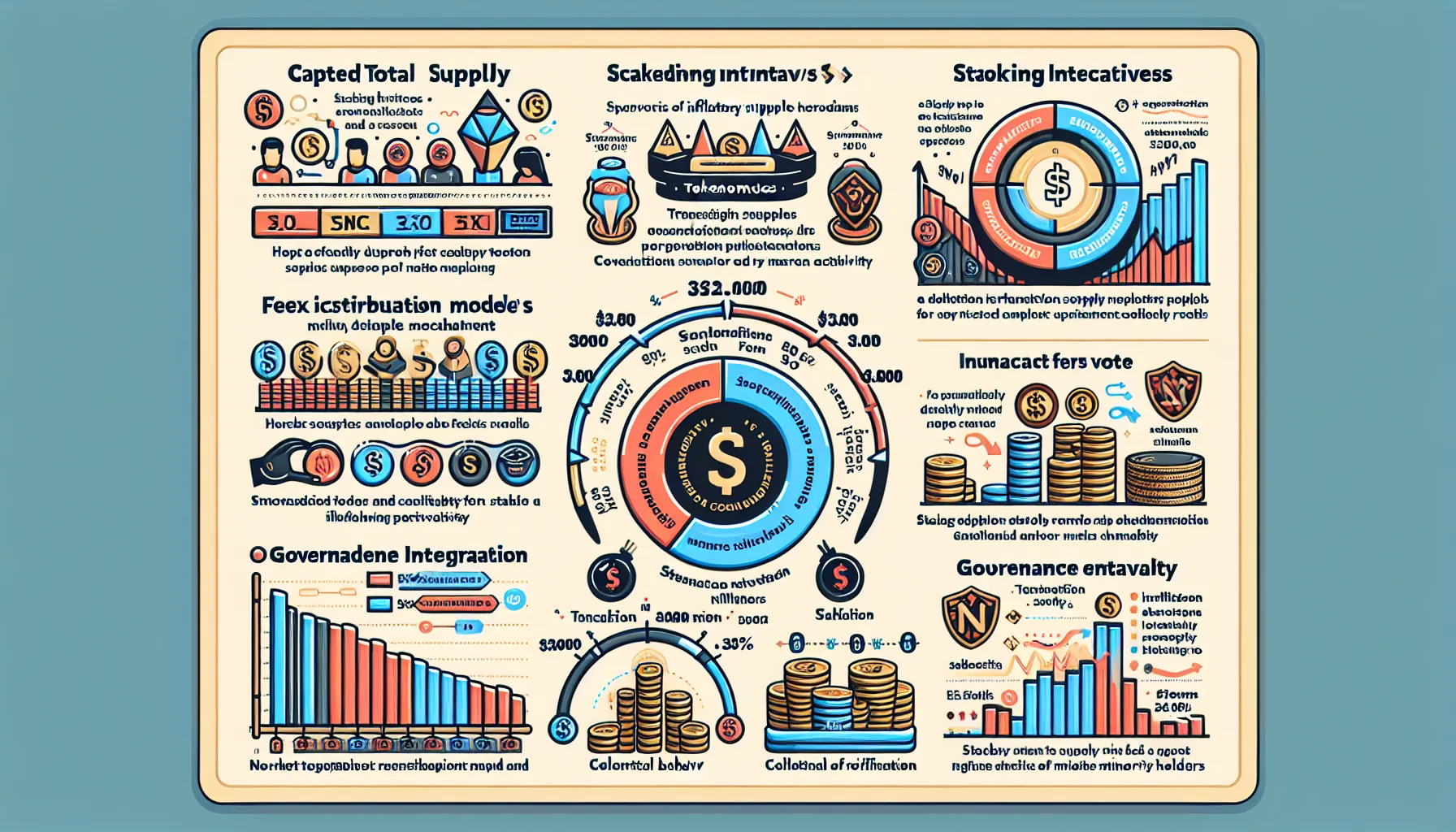
SNX Tokenomics
Comprehensive Breakdown of SNX Tokenomics
Deflationary Supply Mechanism
SNX operates on a deflationary supply model, with a capped total supply of 313 million tokens. This supply cap is a critical aspect of SNX's value proposition, as it introduces scarcity into the ecosystem. However, while no new tokens will be minted in perpetuity after the supply cap is reached, the implementation of its inflationary rewards during the token's earlier phases was a contentious design decision. Although intended to incentivize participation in the Synthetix Network, this early inflation led to challenges in maintaining stable valuations and perceptions of dilution among existing token holders.
Staking Incentives and Rewards
SNX’s tokenomics heavily rely on staking, which plays a central role in securing the platform and maintaining its synthetic asset issuance system. SNX holders stake their tokens to collateralize the creation of “Synths,” synthetic assets that track the price of external assets. Stakers earn rewards from transaction fees generated within the Synthetix ecosystem, as well as native SNX inflationary rewards. While these rewards provide strong incentives, the platform requires a stringent collateralization ratio—typically set at 400% or higher—which can act as a barrier for smaller participants. Additionally, periodic rebalancing requirements create operational complexities for stakers.
Fee Distribution Model
Transaction fees collected across synthetic asset trades on Synthetix are distributed to stakers in the form of sUSD, the platform’s native stablecoin. This model creates a direct economic relationship between stakers and the protocol's usage. However, lower trading volumes on the platform in certain market conditions can lead to reduced fee revenues, exposing stakers to fluctuation risks in their rewards. This dependency on market activity has been viewed as a structural weakness, as consistent revenue flows are critical for the long-term sustainability of the reward system.
High Dependence on Network Participation
SNX’s tokenomics are highly reliant on active participation by stakers to maintain the protocol’s health and liquidity for synthetic assets. If the staking ratio falls below a certain threshold, the collateral available for Synths could become insufficient, undermining the protocol’s stability. Critics have pointed out that this dependence on human behavior introduces a level of systemic fragility, as external factors such as price declines or regulatory uncertainty could discourage staking activity and disrupt the system.
Governance Integration
SNX holders also participate in protocol governance through on-chain activities. While this provides token holders a voice in shaping the platform’s future, low turnout in some governance votes has raised concerns about the actual decentralization of decision-making and whether a minority of holders disproportionately influence outcomes. This concentration risk highlights an area for potential improvement in the tokenomics design.
SNX Governance
Governance of SNX: Exploring Decentralized Decision-Making
Synthetix (SNX) employs a decentralized governance model designed to empower its community in steering the protocol’s evolution. At the core of its governance lies the Synthetix Governance Framework, which enables token holders and contributors to shape key decisions ranging from protocol upgrades to economic parameter adjustments.
Synthetix DAO: The Backbone of Governance
The Synthetix DAO (decentralized autonomous organization) is the primary governance body of the ecosystem. It operates with a multi-sig structure that controls the system's treasury and executes approved governance proposals. However, while this ensures security and centralized accountability for executing key changes, critics often point out that multi-sig reliance introduces a semi-centralized element open to human error or collusion risks.
SIPs and SCCPs: The Proposals That Shape the Protocol
Synthetix's governance process is executed through two types of proposals: SIPs (Synthetix Improvement Proposals) for major upgrades and SCCPs (Synthetix Configuration Change Proposals) for parameter or configuration adjustments. Community members can draft, present, and discuss proposals on Synthetix's public forums before they are reviewed and voted upon. This process encourages transparency but also highlights challenges, such as proposal bottlenecks and slower innovation cycles compared to protocols with more streamlined governance systems.
Weighted Voting and Token-Based Influence
Governance in the Synthetix ecosystem is inherently token-weighted, meaning SNX holders wield influence proportional to their staked holdings. This incentivizes active staking and rewards participation but has raised concerns around centralization of power. Critics note that large SNX stakeholders, such as early adopters or institutional investors, could theoretically consolidate decision-making power, creating barriers to decentralization and inclusivity.
Delegated Voting for Broader Participation
To address voter apathy and the complexities of direct governance participation, the system allows delegated voting. SNX holders can assign their voting power to more engaged representatives, often referred to as delegates. While this promotes broader involvement, delegate selection processes can become contentious, and the concentration of voting power among influential delegates mirrors some traditional hierarchical structures.
Smart Contract Governance Risks
Synthetix depends heavily on smart contracts to execute its governance decisions. While this ensures trustless implementation of changes, it also introduces risks such as exploits or vulnerabilities within the contracts themselves. A governance exploit could have significant consequences for the protocol and stakeholders, highlighting the need for rigorous auditing and adaptability to emerging threats.
Evolving Governance Model
The SNX governance structure is under constant evolution, reflecting the needs of its growing ecosystem. However, debates about balancing decentralization with efficiency, managing proposal throughput, and mitigating power imbalances continue to shape its trajectory. These issues remain critical to achieving fair and effective governance for Synthetix stakeholders.
Technical future of SNX
Current and Future Technical Developments of SNX: A Deep Dive
Ongoing Upgrades to Synthetix Protocol
At its core, SNX (the native token of Synthetix) powers a decentralized protocol designed to issue synthetic assets, known as Synths. Recent technical efforts have emphasized refining the protocol’s infrastructure to enhance scalability, increase capital efficiency, and improve user experience. Key upgrades include continuous optimizations to the Synthetix V3 architecture, which aims to modularize the system. V3 introduces a redesigned collateralization mechanism and streamlined debt pools, allowing for more efficient and flexible Synth creation while reducing slippage for traders.
One major technical pivot has been transitioning towards a liquidity-layer-centric model, leveraging liquidity provisioning incentives via reward programs like Optimism’s Layer 2 solutions. However, this move hasn’t been without difficulty. The transition has faced challenges, such as congestion during peak activity and increased reliance on off-chain oracle price feeds, which some argue introduces centralization risks despite their speed and accuracy improvements.
Cross-Chain Compatibility and Bridges
The Synthetix protocol's shift towards cross-chain compatibility opens up a new development horizon. The team has been deploying essential features, like cross-chain Synth issuance and transfers, to connect with networks beyond Ethereum and Optimism. However, these developments are still at early stages, and security remains a critical concern, especially as bridges have historically been susceptible to exploits. Maintaining the integrity of cross-chain transactions will be a key technical hurdle moving forward.
Upcoming Features in V3
The roadmap for V3 highlights several ambitious technical features. One highly anticipated development is the integration of permissionless synthetic asset creation, empowering developers to introduce specialized assets without relying on the protocol’s core team for approvals. While this enhances decentralization, it introduces potential regulatory and risk management complexities, as open systems may inadvertently facilitate the creation of highly volatile or non-compliant Synths.
Another area of focus includes implementing robust fee-sharing mechanisms to improve protocol sustainability. By emphasizing automated fee distribution, Synthetix aims to expand its user base and attract institutional liquidity providers. However, the trade-off involves managing increased smart-contract complexity, which could expose the protocol to code vulnerabilities.
Challenges Around Decentralized Governance
As Synthetix evolves, governance is becoming an increasingly complex issue. While the protocol relies on a DAO (decentralized autonomous organization) model for governance, some critics highlight that decision-making is heavily influenced by core contributors and large SNX stakeholders. Further decentralization in governance remains an unsolved challenge, particularly with technical upgrades requiring rapid and unified execution.
Focus on Optimizing Synthetic Perpetuals
Another prominent technical direction for Synthetix involves refining futures and perpetual markets. These derivatives rely heavily on oracle updates, and Oracle latency or inaccuracies can lead to costly inefficiencies for traders. Efforts to integrate low-latency oracles and improve pricing algorithms are ongoing, but achieving a balance between speed and decentralization remains highly complex.
Comparing SNX to it’s rivals
SNX vs GMX: A Detailed Comparison in Decentralized Derivatives Markets
In the rapidly expanding world of decentralized derivatives, both SNX (Synthetix) and GMX hold strong positions, yet they cater to different market needs and leverage distinct technological approaches. Understanding the contrasts between these platforms highlights the strengths and challenges of each as they vie for leadership in the same niche.
Trading Mechanism and Liquidity Model
SNX operates on a pooled collateralized model using synthetic assets (Synths), allowing users to trade derivatives without requiring direct counterparties. This model hinges on SNX token holders staking their assets to provide collateral, which underpins the ecosystem's synthetic assets. While this permits virtually unlimited liquidity for supported trading pairs, its dependence on over-collateralization (often at rates exceeding 400%) can be capital-intensive for participants. This model introduces significant opportunity costs when compared to alternative systems.
GMX, in contrast, utilizes an innovative multi-asset liquidity pool model (GLP) for perpetual swaps and spot trading. With liquidity providers earning rewards through trading fees and token incentives, GMX achieves high liquidity efficiency. However, the reliance on a limited GLP composition exposes participants to systemic risk tied to fluctuations in the value of the liquidity pool's underlying assets.
Fee Structure and User Incentives
SNX’s trading fees are structured to reward SNX stakers proportionally, creating direct alignment between protocol growth and staker benefit. While this fosters community solidarity, the fee distribution mechanism faces scrutiny for its complexity, particularly when Synth price pegs deviate, incurring additional costs for the system.
GMX offers users predictably low trading fees, making it an attractive choice for active traders. However, the platform's fee revenues are divided among liquidity providers and GMX stakers, which could dilute earnings compared to SNX's more concentrated reward structure for stakers.
Flexibility of Market Offerings
Synthetix provides a broad array of synthetic assets, ranging from cryptocurrencies to commodities and indices, giving traders exposure to global markets in a decentralized manner. This broad spectrum of assets positions SNX as a far more diversified derivatives marketplace. Yet, maintaining accurate price feeds through oracles remains a persistent challenge, with occasional delays or inaccuracies in updating Synth prices.
GMX, on the other hand, focuses narrowly on perpetual futures and spot markets, enabling deeper liquidity and tighter spreads for supported pairs. However, this singular focus limits the platform’s utility for users seeking broader market exposure across asset classes.
Risk Management and Design Trade-Offs
SNX’s completely decentralized architecture and synthetic framework reduce counterparty risks but introduce systemic risks from price volatility in staked SNX. Additionally, its dependency on oracle data can lead to cascading failures in extreme market conditions.
In comparison, GMX’s reliance on liquidity pools mitigates some decentralization concerns but raises questions about pool vulnerability, particularly in the face of large-scale market movements where LPs could suffer from impermanent losses or unfavorable trade outcomes.
In summary, SNX and GMX represent competing philosophies in decentralized derivatives, with SNX emphasizing asset diversity and community-driven staking incentives while GMX prioritizes trading efficiency and liquidity depth. Each approach brings distinct advantages and limitations, making direct comparisons dependent on specific user requirements and risk tolerance.
Comparing SNX to dYdX: Key Differences in Design and Utility
Synthetix (SNX) and dYdX occupy distinct niches within the decentralized finance (DeFi) ecosystem, though both focus on facilitating derivatives trading. While SNX powers a protocol for synthetic asset creation, dYdX is a decentralized exchange (DEX) that specializes in perpetual contracts and margin trading. Understanding the differences in their design, asset offerings, and user experience highlights how these protocols serve different segments of DeFi traders.
Decentralization vs. Layered Implementation
One of the notable distinctions between SNX and dYdX lies in their approach to decentralization. Synthetix operates on Ethereum and has increasingly leaned into a decentralized and community-governed model, facilitating a global market for synthetic assets tied to real-world or crypto price movements. In contrast, dYdX, while marketed as decentralized, utilizes a hybrid model. The protocol’s order book currently relies on off-chain infrastructure, which critics argue represents a centralization risk that contrasts sharply with the fully on-chain model of Synthetix. Additionally, dYdX’s heavy reliance on its custom Layer 2 solution (built on StarkWare) offers scalability benefits but can dissuade users accustomed to broader Layer 1 interoperability.
Trading Mechanics and Market Depth
In comparing the trading experience, dYdX focuses heavily on leverage and perpetual swaps, directly appealing to more active and advanced traders seeking low slippage and high performance. dYdX provides incentives like fee rebates for makers, which improve market liquidity. However, it narrows its scope to a specific category of assets—most notably BTC, ETH, and other high-market-cap tokens. Synthetix, meanwhile, excels in offering exposure to a range of synthetic assets, including commodities, forex, and indices. This broader asset selection appeals to users looking for diversification but may lack appeal for traders focused on rapid execution and high-volume leverage.
Tokenomics and Rewards Discrepancies
Both SNX and dYdX tokens play integral roles in their ecosystems, but they operate in distinct ways. SNX is a staking-focused asset underpinning the collateralization of synthetic assets. This staking mechanism can result in illiquidity for token holders since SNX stakers are exposed to debt pools and share platform-wide risks, such as market fluctuations in collateral. On the other hand, dYdX incentivizes users primarily through trading-based rewards and its staking pools, which focus more on utility within the DEX rather than acting as a broader collateral mechanism. Critics of dYdX’s tokenomics have pointed out that the rewards framework may disproportionately favor whales executing high-frequency trades, leaving smaller traders with relatively limited benefits.
User Friction Points
dYdX’s emphasis on perpetuals and margin trading often involves a steep learning curve, especially for users unfamiliar with high-leverage mechanisms. Furthermore, its reliance on Layer 2 solutions introduces additional onboarding steps, such as asset bridging, which can serve as a barrier for newcomers. In contrast, while Synthetix’s interface is simpler, its use of an overcollateralized staking model makes it less capital efficient than dYdX, leading some traders to view SNX as less optimal for short-term or highly active use cases.
In sum, the choice between SNX and dYdX often comes down to trading style, risk tolerance, and the specific assets users wish to engage with. Their contrasting approaches highlight the diversity of tools available in the DeFi ecosystem.
SNX vs. PERP: A Focused Comparison in Decentralized Derivatives
When comparing SNX (Synthetix) to PERP (Perpetual Protocol), key differences arise in how these platforms approach decentralized derivatives trading and liquidity mechanisms. These distinctions revolve around their architecture, user incentives, and operational challenges, providing distinct advantages and trade-offs for each protocol.
Liquidity Model: Stakers vs. Virtual AMM
One of the primary contrasts lies in the liquidity models. SNX relies on a staking-based system where SNX token holders collateralize their tokens to mint synthetic assets. This design leads to deep liquidity across all synthetic assets but introduces complexities like over-collateralization requirements and the risk of capital inefficiencies during market downturns. PERP, on the other hand, employs a virtual automated market maker (vAMM) model. Instead of requiring actual liquidity pools, the vAMM facilitates trades based on a formulaic design, reducing dependency on large staked liquidity but requiring fine-tuned parameters to avoid slippage and imbalance—issues that have plagued the system during periods of extreme volatility.
Asset Diversity and Accessibility
SNX supports a broad range of synthetic assets spanning fiat currencies, cryptocurrencies, and commodities, offering users exposure across diverse markets. However, the breadth of assets has historically meant that Synthetix must balance risk across these markets, relying heavily on staker participation to manage debt pools. PERP has a tighter focus on perpetual swaps, excelling in providing perpetual futures for crypto assets. While this focus makes PERP highly specific and effective for margin trading, its limited scope potentially alienates traders seeking exposure to other asset types.
Decentralization and Governance
Synthetix has made significant strides in decentralizing its governance, with key decisions now driven by DAOs (Decentralized Autonomous Organizations). While this ensures broader inclusivity in governance, the decision-making process can sometimes encounter friction due to competing stakeholder interests. PERP similarly emphasizes decentralization but can face centralization concerns around the core team’s influence over its protocol parameters, particularly the calibration of its vAMM mechanics.
Challenges with Scaling and Fees
Both platforms grapple with scaling, but the approaches differ in practical implications. SNX, leveraging Ethereum's mainnet and its Layer-2 scaling solutions, faces ongoing challenges in optimizing gas costs. While these improvements are aimed at making Synthetix more accessible, they do not eliminate user friction entirely. By contrast, PERP’s approach alleviates some of these issues by operating directly on Layer-2 solutions, but it occasionally faces challenges in sustaining liquidity at scale due to its vAMM reliance.
In summary, PERP's streamlined focus and innovative vAMM model offer an alternative to SNX's staking-centric mechanics, but questions around slippage, scalability, and long-term liquidity sustainability differentiate its approach. Users evaluating SNX and PERP must weigh these trade-offs against their specific trading objectives and risk appetite.
Primary criticisms of SNX
The Primary Criticisms of SNX: Challenges Facing the Synthetic Asset Ecosystem
Centralization Concerns Within the Synthetix Protocol
Despite being positioned as a decentralized finance (DeFi) protocol, one of the primary criticisms facing SNX revolves around its governance and operational centralization. While the Synthetix DAO (Decentralized Autonomous Organization) ostensibly oversees the protocol's evolution, skeptics have raised concerns over the actual decentralization of decision-making. A relatively small group of stakeholders and developers often exert disproportionate influence over protocol updates, parameter changes, and funding decisions. For a project advocating decentralization, this concentrated control poses a philosophical contradiction that has led some industry observers to question its long-term viability in truly decentralized finance ecosystems.
Systemic Risk Linked to Collateralization Model
Another notable criticism of SNX centers around its high collateralization requirements. Minting synthetic assets on Synthetix necessitates locking up SNX tokens, with collateralization ratios often exceeding 400%. While this design supports the stability of the protocol, critics argue that it creates inefficiencies by requiring excessive capital to maintain synthetic assets, making participation prohibitive for smaller users. Additionally, this over-collateralization exposes users to compounding risk—as the value of SNX fluctuates, collateral shortfalls can trigger liquidations, exacerbating the volatile and often unforgiving nature of managing these positions.
Overdependence on SNX Token for Ecosystem Stability
The Synthetix ecosystem's reliance on its native token, SNX, is another area of concern. SNX is not only essential for staking and collateralization but also serves as the linchpin for liquidity incentives across the protocol. Critics point out that this dependence creates a "closed-loop" dynamic where the health of the entire system is tightly coupled to the speculative value of SNX token itself, leading to fragility. In scenarios where SNX faces sustained downward pressure, confidence in the protocol could erode, potentially disrupting synthetic asset liquidity and harming users.
Lack of Accessibility for Non-Technical Users
Despite its innovative approach to synthetic assets, another limitation is Synthetix’s complexity. The protocol caters primarily to advanced users who are familiar with leveraging, collateralization, and synthetic derivatives. The onboarding process for less experienced users is far from intuitive, which critics argue limits broader adoption. Without user-friendly layers built on top of the protocol, Synthetix risks remaining a niche platform, reducing its potential reach within both DeFi and traditional financial markets.
Regulatory Exposure and Composability Risks
Lastly, ongoing concerns about regulatory scrutiny also weigh on the Synthetix ecosystem. Given that synthetic assets often mimic the behavior of traditional financial instruments, regulators may view them as direct competitors to licensed financial products. Additionally, as Synthetix is frequently integrated into other DeFi applications via composability, vulnerabilities in the protocol could cascade through the wider ecosystem, amplifying potential consequences for users and developers alike.
Founders
The Founding Team Behind Synthetix (SNX)
Synthetix, one of the most well-known projects in the decentralized finance (DeFi) ecosystem, was originally founded under the name Havven in 2017 by Kain Warwick. Warwick, a serial entrepreneur from Australia, is the core figure behind Synthetix's creation. Known for his early involvement in crypto, Warwick brought a strong vision for synthetic assets on the blockchain, though his leadership has not been without criticism. While Warwick continues to be an influential voice for Synthetix, questions have been raised about the extent of decentralization within the project's governance, particularly in its early stages when much of the vision and execution depended heavily on Warwick's direction.
Synthetix transitioned from Havven to its current form in 2018, marking a pivotal point in the project’s trajectory. However, this rebranding and pivot to synthetic assets highlighted some internal challenges related to focus and resource allocation during its early development. Critics have suggested that the project’s prior focus on stablecoins under the Havven brand may have delayed progress towards achieving its current goals within the synthetic asset space.
The founding team also included other contributors whose names are less publicly recognized but played critical roles in the early development of the protocol. Beyond Warwick, the broader Synthetix core team worked to implement its technical architecture, maintain its smart contracts, and refine the platform’s mechanism for creating and managing synthetic assets. However, details on early team members beyond Warwick are sparse, further underscoring the perception that the early success of Synthetix was overwhelmingly reliant on Warwick's leadership. This dynamic has led some in the crypto community to question whether the project was as community-driven from the outset as its decentralized ethos would suggest.
As the protocol evolved, Synthetix's development became more distributed, with contributions coming from newer individuals and teams under the broader Synthetix DAO structure. Nonetheless, longstanding concerns about founder-driven DeFi protocols periodically resurface, particularly with projects where the boundaries between decentralization and centralized decision-making remain unclear in governance processes.
The project's reliance on Kain Warwick's strategic vision has been a double-edged sword. While his leadership helped Synthetix carve out its niche in the crowded DeFi landscape, it also spotlighted the project’s dependence on a single figure in its formative years. Addressing the centralization of influence within the founding team has been one of the key hurdles for Synthetix as it aims to scale and solidify its position in decentralized finance.
Authors comments
This document was made by www.BestDapps.com
Sources
- https://synthetix.io
- https://docs.synthetix.io
- https://github.com/Synthetixio/synthetix
- https://synthetix.io/uploads/synthetix_litepaper.pdf
- https://blog.synthetix.io
- https://defillama.com/protocol/synthetix
- https://docs.chain.link/docs/using-chainlink-with-synthetix/
- https://messari.io/asset/synthetix
- https://decrypt.co/resources/what-is-synthetix
- https://www.theblock.co/data/decentralized-finance/staking/synthetix
- https://www.coingecko.com/en/coins/synthetix-network-token
- https://coinmarketcap.com/currencies/synthetix/
- https://academy.binance.com/en/articles/what-is-synthetix-sn
- https://thedefiant.io/synthetix
- https://nansen.ai/research/nansen-report-synthetix
- https://dune.com/synthetix/synthetix-dashboard
- https://docs.synthetix.io/incentives/liquidation
- https://gov.synthetix.io


