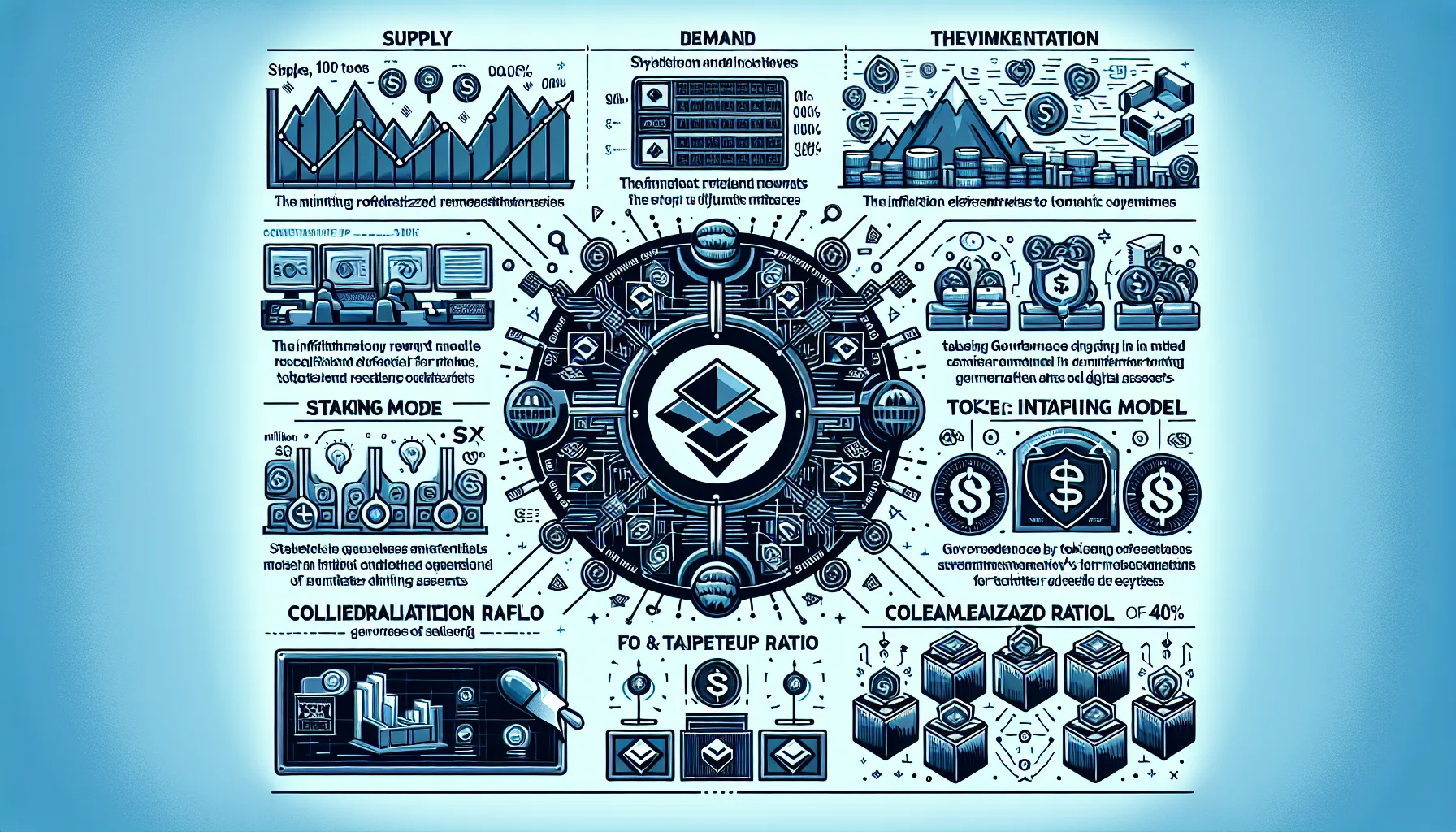
History of SNX
The History of SNX: Synthetix, From Havven to a Decentralized Derivatives Powerhouse
SNX, the native token of the Synthetix protocol, has undergone a significant transformation since its inception, reflecting both the evolution of decentralized finance (DeFi) and the growing demand for synthetic asset solutions. Originally launched as Havven in 2017, the project was initially conceived as a stablecoin protocol. Its primary objective was to enable decentralized payments through its dual-token system, consisting of a stablecoin (nominally referred to as nUSD) and a collateral token, Havven (HAV). However, Havven struggled to gain traction and faced challenges competing in the crowded stablecoin market.
In 2018, a pivotal rebrand to Synthetix marked the project's focus shift away from stablecoins to a broader mission: the creation of synthetic assets, or “Synths,” that track the value of real-world and digital assets such as fiat currencies, commodities, and cryptocurrencies. SNX replaced HAV as the network's native utility and staking token, and this move signaled the project's strategic pivot into decentralized derivatives trading. This decision aligned Synthetix with the rapidly expanding DeFi ecosystem and established its reputation as a trailblazer in the space.
The introduction and refinements of Synthetix's staking mechanism served as a key catalyst in its adoption. Stakers could lock SNX as collateral to mint Synths, benefiting from staking rewards in SNX and fee revenue from transactions on the platform. This incentive structure stimulated network growth, but it wasn’t without hurdles. The system's heavy reliance on the over-collateralization of SNX as a backbone for Synth liquidity and stability drew criticism for its inefficiency and potential risks during periods of extreme market volatility.
Throughout its development, Synthetix underwent a series of significant upgrades, including Cassini, Hadar, and Optimism integration, which pushed the project toward greater scalability, enhanced user experience, and lower transaction costs. The move to the Optimism Layer 2 network improved scalability but introduced complexities tied to Layer 2 transitions, such as bridging assets and maintaining liquidity.
SNX's history has also been marked by governance milestones, with the progressive decentralization of Synthetix's decision-making processes becoming an essential focus. The introduction of the Synthetix DAO and various councils has empowered community-driven governance while exposing challenges in balancing decentralization with efficient protocol management.
Synthetix's journey from a stablecoin issuer to a cornerstone of decentralized synthetic asset markets is a story of reinvention, addressing technical, economic, and governance challenges to adapt to the increasingly complex DeFi landscape.
How SNX Works
How SNX Works: The Mechanics of Synthetix
SNX is the native utility and staking token that underpins Synthetix, a decentralized synthetic asset protocol on Ethereum and Optimism. At its core, SNX functions as collateral for the creation of synthetic assets (Synths), which are tokens designed to track the value of real-world assets such as fiat currencies, commodities, and cryptocurrencies. Here’s how the system works:
SNX Staking and Collateralization
To mint Synths, users must lock their SNX tokens as collateral. This process is governed by a collateralization ratio (C-Ratio) determined by the Synthetix protocol. For example, if the required C-Ratio is 400%, a user must lock up $400 worth of SNX to mint $100 worth of Synths. The collateralization mechanism ensures that the protocol retains enough backing to absorb significant market volatility.
However, maintaining the appropriate C-Ratio requires constant monitoring by stakers. If the value of SNX fluctuates, stakers may find their collateralization levels falling below the required threshold. This introduces liquidation risks or forces stakers to add more SNX to their position or burn Synths to rebalance their ratio, creating a user experience challenge for those who do not actively monitor their holdings.
Debt Pool Dynamics
One distinctive aspect of SNX is its shared debt pool mechanism. When Synths are minted, stakers collectively share the system's debt, which is based on the value of all existing Synths. As the values of Synths fluctuate, so does the debt owed by each staker. This means a staker’s debt is not tied solely to the specific Synths they mint but rather to the entire pool.
While this model enables seamless asset swaps between Synths without requiring traditional liquidity pools, it also exposes stakers to systemic risk. For instance, if there is significant demand for one particular Synth, stakers may incur debt shifts unrelated to the assets they minted, introducing potential imbalances and making debt positions harder to predict.
Inflationary Reward System
SNX holders who stake their tokens are rewarded with a combination of newly minted SNX (via an inflationary supply schedule) and the fees generated from Synth trading activity. The inflationary model incentivizes participation but dilutes the value of unstaked SNX over time. Additionally, trading fee rewards are proportional to participation, meaning small stakers may see limited returns compared to larger participants, creating potential centralization risks.
The protocol’s reliance on inflation as a primary incentive may face sustainability concerns in the long run when inflation tapers off, potentially reducing staking participation and impacting overall collateralization levels.
Use Cases
SNX Use Cases: Unlocking the Power of Synthetic Assets on the Blockchain
SNX, the native token of the Synthetix protocol, plays a critical role in enabling a decentralized framework for synthetic asset creation and trading. Its unique set of use cases stems from its function as the foundational collateral mechanism in the protocol. Below, we dive deeper into how SNX is utilized within this ecosystem and highlight both its benefits and limitations.
Collateral for Minting Synths
The core use case of SNX is to act as collateral for minting Synths—tokenized assets representing various real-world assets like fiat currencies, commodities, or even other cryptocurrencies. Users stake SNX tokens to lock collateral in the protocol, which allows them to mint synthetic assets proportional to the collateral ratio dictated by the system. This mechanism ensures that the protocol maintains solvency and enables Synths to track the value of their reference assets. However, the reliance on staking has its challenges, including impermanent loss during price swings and the risk of over-collateralization requirements, which may deter some users.
Earning Staking Rewards
By staking SNX and minting Synths, users can earn rewards in two forms: inflationary SNX rewards and a portion of the trading fees generated on the Synthetix.Exchange. This incentivizes participation in the ecosystem by rewarding users for providing collateral. Yet, this model hinges significantly on network participation, and dilutive effects from inflation may reduce the attractiveness of staking over time if fee revenue doesn’t adequately offset it.
Facilitating Decentralized Synthetic Asset Exposure
Synthetix enables users to gain exposure to a wide variety of assets—including those typically inaccessible to cryptocurrency traders—without needing to hold the actual underlying asset. SNX underpins this system by maintaining stability and liquidity for these Synths. While this use case highlights innovation, the reliance on price oracles to track off-chain asset prices introduces risks like latency, manipulation, or inaccuracies, which can impact the effectiveness of synthetic asset exposure.
Governance Participation
Holders of SNX also play a role in protocol governance by voting on SIPs (Synthetix Improvement Proposals). This decentralized governance ensures that the community has a say in pivotal upgrades and changes. However, decision-making power being consolidated in the hands of larger SNX holders raises concerns about centralization and governance capture.
Limitations of SNX Use Cases
Despite its versatility, SNX is heavily reliant on the broader adoption of the Synthetix ecosystem. If trading volumes or Synth minting decline, the utility of SNX diminishes. Additionally, high gas fees on Ethereum can limit accessibility, although Layer 2 scaling solutions aim to address this issue.
SNX's role within Synthetix is undeniably robust, but its widespread adoption is not without hurdles.
SNX Tokenomics
SNX Tokenomics: Exploring Supply, Demand, and Incentive Mechanisms
The SNX token, the backbone of the Synthetix protocol, operates on meticulously designed tokenomics, balancing supply, demand, utility, and incentive alignment. SNX holders play dual roles within the ecosystem: as stakers securing the protocol and as participants benefiting from its growth. Below is an analysis of the critical components shaping SNX tokenomics and their potential implications.
Supply Dynamics and Staking Incentives
SNX's initial supply was capped at 100 million tokens during its inception; however, the protocol implemented an inflationary reward model to encourage staking and bootstrapping liquidity. This inflationary mechanism has since transitioned to a tapering model. While inflation funded early adopter rewards and incentivized ecosystem growth, its decline introduces a shift in the calculus for stakers, who must now rely increasingly on fee yields rather than new issuance.
The staking ratio required to mint synthetic assets (synths) is a critical element of SNX's tokenomics. Currently, it mandates a collateralization ratio (CR) of 400%, although adjustments are governed by the Synthetix community through its decentralized governance. This high CR can limit capital efficiency and has historically been a point of contention for users navigating between staking rewards and the opportunity cost of locked capital.
Demand Catalysts and Utility
SNX derives its primary demand from its utility within the Synthetix protocol. The token serves as collateral to back the creation of synths—tokenized representations of real-world and digital assets. As the synthetic asset market grows, demand for SNX is intrinsically tied to user activity across Synthetix's ecosystem. However, a challenge emerges in the form of dependency; if user demand for synths stagnates or new competitors erode market share, the demand for SNX could also falter.
Additionally, the role of SNX stakers is pivotal, as they facilitate synth liquidity by absorbing exchange debt. This debt obligation introduces significant risk/reward dynamics tied to token price stability and debt pool fluctuations, which can act as a disincentive for risk-averse participants.
Fee Distribution and Economic Sustainability
Stakers earn their share of trading fees generated by Synthetix exchange activity, creating a direct incentive to lock SNX. However, these fees are denominated in sUSD, a stablecoin, which may lead to mismatched risk profiles for stakers exposed to SNX price fluctuations. Fee volumes are directly correlated with trader engagement and synth utility, presenting an indirect but significant risk to the long-term sustainability of staking rewards.
Potential Risks and Inefficiencies
One notable concern surrounding SNX tokenomics is the system's vulnerability to debt pool imbalances. The shared debt model means stakers collectively assume exposure to fluctuations in the mix and pricing of synths, potentially amplifying systemic risk. Additionally, the protocol's reliance on high collateral ratios could limit capital efficiency, particularly when compared to emerging systems offering lower CRs through novel mechanisms like undercollateralization or external insurance.
Finally, governance of SNX tokenomics itself relies heavily on active participation from the community. Any apathy or centralization within the decision-making process could hinder the adaptability of the protocol's economic model.
SNX Governance
Governance of SNX: Decentralized Oversight and Challenges
The governance of SNX, the native token of the Synthetix protocol, operates through a decentralized model centered on community-driven decision-making. Powered by a shift to ensure autonomy and reduce centralized control, Synthetix leverages a DAO (Decentralized Autonomous Organization) structure via the Synthetix Governance Module (SGM). This framework allows SNX holders and other protocol participants to propose, discuss, and vote on changes critical to Synthetix's operations.
A core component of SNX governance is the Spartan Council, a group of elected representatives tasked with assessing and implementing protocol improvement proposals (PIPs). Comprising knowledgeable members within the Synthetix ecosystem, the Spartan Council is designed to balance technical expertise with community accountability. Elections for council seats are held on a recurring basis and require SNX holders to participate via staking, which further ties governance participation to long-term protocol commitment.
On-Chain vs. Off-Chain Challenges
While Synthetix governance relies heavily on its on-chain voting mechanisms, certain governance-related discussions and strategy formulations occur in off-chain venues such as Discord or forums. While this dual approach fosters broad participation, it has raised concerns regarding transparency and equitable access. Power dynamics may emerge, particularly when influential members dominate the narrative in these off-chain settings, potentially sidelining less vocal community members.
Governance Incentives and Participation Hurdles
The staking of SNX is a prerequisite for governance participation, as only stakers can cast votes or participate in elections. While this aligns incentives by ensuring that governance participants have a vested interest in the protocol's success, it can also serve as a barrier to entry. New or smaller investors may be discouraged by the complexities of staking, or the perception that larger stakeholders exert disproportionate control.
Additionally, voter turnout remains an ongoing challenge. Despite mechanisms to encourage engagement, such as staking rewards tied to participation, not all eligible SNX holders actively contribute to governance decisions. This has led to concerns about whether key protocol changes accurately reflect the broader community’s views, rather than the preferences of a more active minority.
Potential Centralization Risks
As with many DAO models, Synthetix governance is not immune to centralization risks. While the Spartan Council ostensibly democratizes decision-making, there is potential for overrepresentation of well-known figures or existing developers. This dynamic, though efficient for technical governance, may undermine the objective of decentralized control.
The governance of SNX is a dynamic experiment in decentralized decision-making, with notable strengths but also areas requiring continuous evolution to distribute power equitably and foster long-term community health.
Technical future of SNX
SNX Technical Developments and Roadmap
Transition to Optimistic Rollups
A critical technical development for Synthetix (SNX) is its ongoing migration to Optimistic Ethereum, a layer-2 scaling solution utilizing Optimistic Rollups. This migration aims to tackle Ethereum's scalability issues by significantly lowering transaction costs and increasing network throughput for synthetic asset minting, trading, and staking. While this shift enhances functionality for users and stakers, it introduces complexities for developers, such as maintaining compatibility between the layer-1 and layer-2 environments while ensuring data fidelity. Moreover, Optimistic Rollups require a "challenge period" for withdrawals, which may delay user transactions—something that could negatively impact user experience and adoption in the short term.
Integration of Atomic Swaps
Synthetix has integrated atomic swaps, creating a bridge between synthetic assets and other DeFi protocols. This feature enables near-instant asset exchanges across platforms without requiring centralized order books. While technically innovative, atomic swaps increase the protocol's complexity and expose it to a new set of attack vectors, especially regarding liquidity provisioning and cross-platform arbitrage exploits.
SIP-201 and Beyond
One of the key advancements has been SIP-201, which introduced decentralized perpetual futures to the Synthetix network. This functionality allows users to trade futures on the protocol with up to 10x leverage. While this attracts a new wave of traders and boosts protocol utility, leveraged products inherently carry higher risk, both for users and for the stability of the protocol's debt pool. Synthetix developers must continue iterating on mechanisms for risk management, such as tuning margin requirements and liquidation processes.
Cross-Chain Expansion
As DeFi ecosystems become increasingly multichain, Synthetix has also taken steps to enable cross-chain functionality. Efforts include deploying solutions to non-Ethereum networks and creating cross-chain bridges like the one for Optimism. While this extends user access and diversifies the network's footprint, it equally increases attack surfaces and complicates protocol governance. Auditing and secure interchain operability will be critical in mitigating these risks.
Future Upgrades and Challenges
The technical roadmap emphasizes modularity and composability. A significant focus is on decoupling Synth provisioning and staking mechanisms to simplify user interaction flows. However, such structural changes introduce governance challenges, as they require broad consensus among SNX holders. Additionally, planned updates like real-time oracles for price feeds are ambitious but face hurdles in scalability and the reliance on potentially centralized data sources.
Governance Automation
Another layer of focus in Synthetix's development pipeline is automating governance tasks using smart contracts. While this minimizes human error and increases efficiency, smart contract governance mechanisms remain a contested topic, particularly given the inflexibility of code once deployed. Tuning these systems for adaptability without sacrificing security will be a complex undertaking.
Comparing SNX to it’s rivals
SNX vs MKR: Comparing Decentralized Protocol Titans
When examining SNX (Synthetix) and MKR (Maker), two of the most prominent names in the decentralized finance (DeFi) ecosystem, the differences in their underlying mechanisms, governance structures, and utility are crucial. While both protocols serve as pillars in DeFi infrastructure, their divergent strategies reveal strengths and limitations that directly influence user adoption and integration.
Core Protocol Design: Synthetic Assets vs. Stablecoin Collateralization
SNX underpins Synthetix, a platform focused on the creation of synthetic assets. These assets allow exposure to real-world price movements through decentralized derivatives, enabling traders to speculate on everything from commodity prices to equities—all without intermediaries. MKR, on the other hand, is integral to MakerDAO's Multi-Collateral Dai (MCD) system, which allows users to mint the Dai stablecoin by locking up collateral in smart contracts. The focus of MKR is to provide stability (via Dai) rather than speculative trading opportunities.
This design distinction leads to differing use cases. SNX appeals to traders and liquidity seekers looking to engage with synthetic derivatives. In contrast, MKR caters to stablecoin enthusiasts seeking refuge from volatility. However, this divergence also creates challenges for SNX in its uphill effort to scale trading volume against larger, centralized exchanges and to maintain deep liquidity across synthetic markets.
Token Utility and Governance
Both SNX and MKR play key roles in their respective ecosystems, but their utility models are sharply contrasted. SNX is used primarily as collateral within the Synthetix protocol, allowing users to mint synthetic assets (Synths) and incentivizing stakers with native rewards. Meanwhile, MKR serves a dual purpose: as a governance token for MakerDAO protocol updates and as a backstop asset used to absorb protocol losses during extreme conditions.
This dual utility of MKR gives it a broader impact on the protocol's sustainability compared to SNX's single-dimensional staking-centric utility. However, SNX stakers face periodic dilution if liquidator penalties occur, which may discourage long-term participation—an issue less prevalent with MKR.
Risk Factors: Liquidation Dynamics and Systemic Dependencies
Risk management also highlights stark differences. The SNX protocol requires collateralization ratios significantly above 100% (typically ~500%) to account for volatility, liquidity constraints, and peg-management mechanisms for Synths. This creates a high barrier to entry for smaller participants. MakerDAO's MCD system demands lower collateralization thresholds, but it is also vulnerable to sharp market crashes, such as “Black Swan” events, which could lead to undercollateralized vaults and impact MKR holders directly.
Moreover, SNX’s reliance on oracles to price synthetic assets is inherently subject to oracle failure or manipulation risks, which could destabilize Synth markets. MKR also depends on oracles, but its primary stability mechanism (Dai) has proven more battle-tested in turbulent market conditions.
Ecosystem Impact and Adoption
As significant players in the DeFi landscape, both protocols have catalyzed innovation in their respective niches. MKR benefits from Dai’s deeply embedded role in DeFi, often serving as a base pair within liquidity pools and lending markets. By comparison, SNX's synthetic assets, while innovative, have faced slower adoption outside niche trading circles. Despite this, SNX remains an enabler for advanced composability through protocols like Kwenta and Lyra.
SNX vs. CRV: A Detailed Comparison of Synthetic Asset Protocols
In the ever-evolving DeFi ecosystem, Synthetix (SNX) and Curve Finance (CRV) occupy distinct yet overlapping niches, particularly when it comes to liquidity provision and user interaction with synthetic assets. While both projects aim to decentralize financial operations, they approach this from fundamentally different angles, leading to notable contrasts in utility, design, and adoption.
Core Use Case: Synthetic Assets vs. Stablecoin Liquidity
SNX’s primary use case is the creation and trading of synthetic assets, which replicate the value of real-world assets such as commodities, fiat currencies, and cryptocurrencies. In contrast, CRV focuses on stablecoin liquidity pools that enable efficient and low-slippage trading of stable assets, catering to DeFi users looking to transfer between tokens like USDC, DAI, and USDT.
The divergence in focus has significant implications. SNX users must mint synthetic assets by locking SNX tokens as collateral, a process that subjects them to debt exposure within Synthetix’s system. On the other hand, CRV users engage primarily with liquidity pools, where rewards for liquidity provisioning are based on transaction fees and incentives from both CRV emissions and external token rewards. This makes CRV more suitable for risk-averse users, while SNX appeals to users willing to navigate the complexities of collateralized debt.
Tokenomics: Inflation Models and Utility
SNX and CRV both utilize inflationary token models, but their implementations are vastly different in terms of utility and community incentives. SNX inflation drives the staking mechanism, rewarding stakers with new SNX while also incentivizing them to help balance the debt pool. Conversely, CRV’s inflationary model heavily emphasizes governance, encouraging long-term token locking through veCRV (vote-escrowed CRV) to maximize yields and voting influence.
An ongoing critique of CRV’s model is its "bribery market," where projects pay veCRV holders for favorable gauge votes. While this has catalyzed liquidity for CRV, it has also raised concerns about centralizing influence within a small subset of veCRV holders. In contrast, Synthetix has faced challenges with scalability and debt management, especially during periods of high volatility, highlighting distinct trade-offs between the two systems.
Security and Complexity
One notable distinction lies in system complexity. Synthetix’s debt pool mechanism demands continuous rebalancing and introduces risks tied to market movements, which can deter inexperienced users. Curve, though relatively simpler to interact with, has faced vulnerabilities in its pool mechanics, where improperly weighted pools have historically resulted in inefficiencies or exploitation.
Ultimately, the two protocols address different layers of the DeFi spectrum. SNX is a pioneering platform for synthetic exposure, while CRV has crystallized its role as a liquidity powerhouse for stable asset trades. This divergence shapes not only their technological foundations but also the demographics of their user bases.
SNX vs AAVE: A Deep Dive into DeFi Giants
In the decentralized finance (DeFi) landscape, both SNX (Synthetix) and AAVE represent significant strides toward reimagining financial systems, but their use cases, architecture, and challenges reveal distinct strategies. While SNX specializes in synthetic assets on the Ethereum blockchain, AAVE focuses on lending and borrowing protocols. Diving into their differences uncovers critical nuances for users and investors alike.
Core Functional Differences
SNX fundamentally revolves around creating synthetic assets—allowing users to gain exposure to assets like fiat currencies, commodities, and equities without actually holding the underlying asset. Its decentralized nature ensures there is no centralized authority managing these assets. On the other hand, AAVE has honed its identity as a peer-to-peer liquidity protocol enabling investors to supply and borrow crypto assets. AAVE’s standout feature lies in its algorithmic interest rates, which dynamically adjust based on supply and demand within its liquidity pools. While SNX focuses on synthetic asset creation, AAVE serves as the backbone of decentralized lending markets—these pathways rarely overlap.
Tokenomics Comparison
The utility and incentives of SNX and AAVE tokens demonstrate contrasting structures. SNX tokens are essential for collateralizing synthetic assets in the Synthetix ecosystem. When users mint synthetic tokens (Synths), they effectively lock SNX as collateral, ensuring the system remains adequately backed. Meanwhile, AAVE tokens serve governance and staking purposes, enabling holders to vote on protocol upgrades while also earning rewards by staking within AAVE’s Safety Module to safeguard against protocol default. SNX holders face inflationary pressures as new tokens are issued to incentivize protocol participation, whereas AAVE uses a simpler deflationary mechanism, relying heavily on community-driven proposals to cap token supply.
Liquidity and Accessibility
AAVE’s liquidity pools offer unparalleled flexibility across multiple asset types and chains. Cross-chain compatibility, including integration with L2 solutions, gives AAVE an edge in expanding its ecosystem. SNX, despite its pioneering take on DeFi, still struggles with liquidity fragmentation. Synthetic assets tied to SNX remain primarily siloed to the Synthetix protocol, limiting their interoperability. Meanwhile, AAVE has solidified itself as one of the most widely adopted DeFi platforms, achieving aggressive growth through accessibility, even at the cost of increasing competition in aggregation layers.
Risk and Challenges
Risk management within SNX hinges on maintaining a stable collateralization ratio, a daunting task during times of extreme volatility. Liquidation risks and the complexities of tracking the value of multiple Synths add an extra layer of user responsibility. AAVE, while innovative, isn’t without flaws—over-reliance on Oracle price feeds and systemic risks linked to liquidity pools could pose vulnerabilities in sharp market downturns.
At its core, comparing SNX to AAVE highlights the divergence between synthetic asset specialization and the all-encompassing approach of DeFi money markets. Understanding these contrasts offers a clearer picture of their respective strengths and flaws.
Primary criticisms of SNX
Primary Criticism of SNX: Challenges Facing the Synthetix Ecosystem
1. Centralization Risks in Governance
Although Synthetix markets itself as a decentralized protocol, critics often highlight concerns regarding its governance structure. The Synthetix DAO (Decentralized Autonomous Organization) provides significant control to a relatively small group of core contributors, raising questions about the actual level of decentralization the protocol currently offers. This creates a potential point of failure if these central figures make adverse governance decisions or if their actions become subject to external pressures.
Moreover, the concentration of governance power among large token holders is another controversial aspect. SNX token holders with substantial stakes wield outsized influence over proposals and system upgrades, sometimes to the detriment of smaller participants. This wealth-based voting model inherently lacks inclusivity and could alienate portions of its community.
2. Overreliance on Incentives for Sustainability
The Synthetix ecosystem relies heavily on inflationary SNX rewards to compensate liquidity providers and maintain activity within its network. Many critics view this model as unsustainable in the long term. Once incentive emissions naturally decline or cease altogether, the protocol could face challenges in retaining its current user base and liquidity levels.
This overdependence on token rewards raises concerns regarding the protocol’s underlying viability if external incentives are removed. Additionally, such reward mechanisms can lead to dilution of existing SNX holders, fostering unease about the token’s economic stability.
3. Collateralization Inefficiencies
The Synthetix platform operates using an over-collateralized model, requiring users to lock up a much larger value of SNX relative to the synthetic assets they mint. While this design ensures stability, critics argue that this high collateral-to-debt ratio represents an inefficient use of capital, particularly when compared to other decentralized finance (DeFi) platforms that implement alternative collateral mechanisms.
For SNX holders who stake their tokens, the locked asset requirement creates a significant opportunity cost. These funds are effectively immobilized, preventing them from being deployed elsewhere in potentially higher-yielding opportunities. Over-collateralization also imposes a psychological barrier for new users, which could lead to reduced adoption over time.
4. Dependence on Oracle Design
Synthetix’s reliance on price data from Chainlink oracles introduces additional risks to the protocol. While highly regarded for their reliability, oracles are not infallible, and their potential failure or compromise could have cascading effects on the synthetic assets minted within the system. Price manipulation or downtime in oracle feeds could directly undermine the protocol’s ability to maintain accurate pricing for its synthetic assets, potentially resulting in economic losses for users.
This reliance on third-party oracle systems also detracts from the protocol’s aim of being purely decentralized. Critics often point out that any centralized point of dependency—even for data—contradicts the ethos of an entirely self-contained DeFi ecosystem.
5. Liquidity Fragmentation as a Barrier to Growth
As Synthetix grows and integrates with multiple platforms, critics have raised concerns about liquidity fragmentation. While the protocol’s move toward Optimism for enhanced scalability shows promise, it also introduces challenges for liquidity continuity across Layer 1 (Ethereum mainnet) and Layer 2 ecosystems. Liquidity fragmentation between these networks could increase slippage, reduce trading efficiency, and negatively affect the user experience.
Founders
Founding Team Behind SNX: Visionaries and Challenges
Synthetix (SNX), a leading decentralized finance (DeFi) protocol enabling the creation of synthetic assets, was brought to life by a team of innovative developers and entrepreneurs with ambitious goals. At its core, the founding team has displayed both ingenuity and adaptability, carving a significant niche in the fast-evolving world of blockchain technology. However, like many projects in this space, Synthetix's team has not been immune to challenges, controversies, and scrutiny.
Kain Warwick - The Architect of Synthetix
At the forefront of Synthetix's creation is Kain Warwick, an Australian entrepreneur with a deep background in tech and crypto. Warwick initially launched the project in 2017 under the name Havven, which aimed to create a decentralized stablecoin system. Over time, the direction pivoted toward synthetic asset issuance, leading to the rebrand as Synthetix in late 2018.
Warwick’s vision revolves around providing users with exposure to various real-world assets through blockchain technology, eliminating intermediaries and inefficiencies. However, his leadership style has occasionally been polarizing within the broader DeFi community. Critics have pointed to moments of centralized decision-making in Synthetix's formative years, which they argue are at odds with the protocol’s decentralized ethos.
Pioneer Team Members and Their Contributions
While Warwick served as the public face and strategic leader, the initial team's technical execution laid the foundation for Synthetix’s sophisticated smart contract infrastructure. Jordan Momtazi, who played a key role as the COO, focused heavily on partnerships and business development during the protocol’s growth phase.
Another significant contributor was Justin Moses, the CTO at the time, whose influence on building the technical backbone of Synthetix cannot be overstated. Under his leadership, the development team implemented key innovations such as the staking mechanism that underpins SNX tokenomics. However, Moses's tenure saw occasional challenges, particularly around scaling and addressing smart contract vulnerabilities in a relatively new and pressure-tested DeFi environment.
Decentralization: A Lingering Concern
It’s worth noting that Synthetix's founding team has faced criticism regarding the initial concentration of power. Though Synthetix has since moved toward a DAO-driven governance model, early adopters remember a period when key decisions rested disproportionately on Warwick and a small circle of contributors. While efforts to decentralize decision-making have progressed, skeptics within the crypto community continue to question how much real autonomy the protocol's stakeholders currently have.
This balance between centralization for efficiency and decentralization for ideological purity has become a defining challenge for the project, with the founding team's role being central to that ongoing debate.
Authors comments
This document was made by www.BestDapps.com
Sources
- https://synthetix.io/
- https://docs.synthetix.io/
- https://docs.synthetix.io/whitepaper/
- https://research.synthetix.io/
- https://blog.synthetix.io/
- https://etherscan.io/token/0xC011A72400E58ecD99Ee497CF89E3775d4bd732F
- https://github.com/Synthetixio/synthetix
- https://twitter.com/synthetix_io
- https://medium.com/synthetix
- https://defipulse.com/synthetix
- https://coinmarketcap.com/currencies/synthetix-network-token/
- https://messari.io/asset/synthetix
- https://cryptobriefing.com/synthetix-snx-review-defi/
- https://staking.synthetix.io/
- https://dune.com/eliasimos/Synthetix
- https://www.tokenterminal.com/terminal/projects/synthetix
- https://defillama.com/protocol/synthetix
- https://www.coingecko.com/en/coins/synthetix-network-token
- https://academy.synthetix.io/
- https://gov.synthetix.io/


