History of SNX
The History of Synthetix (SNX): From Havven to DeFi Pioneer
Synthetix (SNX), a cornerstone of the decentralized finance (DeFi) ecosystem, began its journey in 2018, initially branded as Havven. Havven’s mission was to create a decentralized payment network utilizing dual-token mechanics, where the primary focus was on a stablecoin known as nUSD backed by the Havven (HAV) token. This payment-centric vision targeted stability in a rapidly evolving crypto space dominated by volatility.
However, in late 2018, the project underwent a significant transformation, rebranding from Havven to Synthetix. Alongside the name change came a fundamental shift in focus. Instead of maintaining a narrow goal of enabling stable payments, Synthetix pivoted to becoming a decentralized platform for synthetic assets (synths), mirroring the value of real-world assets like fiat currencies, cryptocurrencies, commodities, and even indices. This evolution marked the project’s entry into the burgeoning world of DeFi, where it established itself as a leader in asset tokenization.
The adoption of the SNX token as collateral for synthesizing these assets was key to this change. Holders of SNX could stake their tokens to mint synthetic assets through a process secured by over-collateralization. This system, while innovative, introduced complexities around scalability, user accessibility, and collateral requirements, which remain challenges for the platform to this day.
The timeline of Synthetix is peppered with a series of technological upgrades and governance changes. The introduction of the Synthetix Exchange allowed users to trade synthetic assets directly on-chain, capitalizing on Ethereum’s infrastructure to facilitate trustless transactions. This built the foundation for its prominence within DeFi, though it also tied Synthetix closely to Ethereum's scalability bottlenecks, particularly during periods of network congestion and high gas fees.
In its progression, Synthetix has adopted decentralized governance through the Synthetix DAO, a move sparked by the broader DeFi narrative around community empowerment and self-sustaining protocols. This transition has not been without hurdles; governance token economics and decision-making processes have occasionally faced criticism for perceived centralization risks among a small cohort of influential stakeholders.
Synthetix's ambitions also fueled efforts to expand compatibility with Layer 2 solutions, such as Optimism, aimed at addressing Ethereum’s scaling issues. While these efforts showcased technical proficiency and adaptability, the inherent complexities in transitioning users, developers, and liquidity providers to Layer 2 introduced friction for adoption.
The evolution of Synthetix reflects a bold vision within crypto, defined by both its innovative strides and constant challenges in scaling and governance.
How SNX Works
How SNX Works: The Mechanics Behind Synthetix
Synthetix Network Token (SNX) serves as the backbone of the Synthetix protocol, enabling a decentralized synthetic asset issuance platform. At its core, SNX is locked up by participants as collateral to mint synthetic assets, called Synths, which are ERC-20 tokens representing various real-world assets, including fiat currencies, commodities, and cryptocurrencies. Here's a breakdown of how SNX operates:
Collateralization and Staking
SNX holders stake their tokens on the Synthetix platform by locking them into smart contracts. This collateral is then used to back the creation of Synths, ensuring that their value is sufficiently secured on-chain. The system employs a high collateralization ratio, typically above 400%, to manage price volatility and protect the protocol in case of large market swings.
If the collateralization ratio falls below the target, stakers are incentivized to add additional SNX or burn Synths to restore balance. While this system helps ensure stability, it places significant pressure on stakers to actively manage their positions—something that may deter passive participants or those unfamiliar with optimal collateral management strategies.
Debt Pools and Shared Risk
Unlike traditional systems where each asset is directly collateralized, Synthetix uses a pooled debt model. When SNX is staked and Synths are minted, stakers collectively form a shared debt pool. This pool grows or shrinks in response to the price fluctuations of Synths.
The debt pool model introduces notable risk for stakers, as their individual debt obligations fluctuate based on the changing value of all Synths in circulation, not just the ones they mint. For instance, if a majority of the synths in circulation are tied to volatile assets, participants may find managing this shared risk especially challenging.
Rewards and Incentives
To incentivize SNX staking, stakers earn two primary rewards:
- Exchange Fees: Every transaction on Synthetix incurs a fee that is distributed proportionally amongst active stakers.
- SNX Inflationary Rewards: New SNX tokens are minted and distributed to stakers over time.
While these rewards can be lucrative, they also create potential challenges. Exchange fees are tied to trading volume, making rewards unpredictable. Additionally, inflationary rewards dilute token supply over time, demanding ongoing participation to mitigate its impact on staker holdings.
Oracle Dependency
Synth prices are maintained through decentralized oracles that provide real-time pricing data. However, heavy reliance on oracles introduces vulnerabilities, as inaccurate or delayed price feeds could lead to cascading errors in the system. While steps have been taken to mitigate this, such as the integration of advanced oracle solutions, this dependency remains a critical point of consideration for the protocol’s robustness.
Use Cases
SNX Use Cases: Powering Synthetix's Decentralized Derivatives
SNX, the native token of the Synthetix protocol, serves as the backbone for enabling decentralized derivatives trading on the Ethereum blockchain. Its utility extends beyond a simple governance or staking token, providing critical functionality for the protocol. Below is an exploration of its core use cases and the considerations tied to each.
Synthetic Asset Collateralization
One primary use case of SNX is its role as collateral for minting synthetic assets, or "Synths." Users lock SNX in staking contracts to create these on-chain representations of real-world assets, including currencies, commodities, and index funds. However, this collateralization process is underpinned by a high collateralization ratio—often requiring users to stake significantly more value in SNX than the Synths they create. This over-collateralization is essential for minimizing protocol risk, but it can also tie users to SNX price volatility. If the value of SNX drops sharply, users may face liquidation risks or require further investment to maintain their collateral ratios.
Staking Rewards and Protocol Incentives
Another core utility is staking SNX for earning rewards. Users who stake SNX receive two types of incentives: fees generated from Synth trades on the Synthetix platform and periodic SNX inflation rewards. While this mechanism incentivizes usage and aligns stakeholders with the protocol’s growth, there are risks associated with the inflationary nature of SNX. Critics argue that inflation dilutes token value over time, potentially disincentivizing long-term holders if the tokenomics aren't sustainably managed.
Governance Mechanism
Though SNX is not solely a governance token, it allows holders to participate in decisions that shape the protocol's future. This includes voting on changes to collateralization ratios or introducing new Synth types. Yet, as with many decentralized governance systems, the balance of power may lean towards large holders, raising concerns about inclusivity and vote centralization.
Utility in Layer 2 Scaling
SNX plays a role in Synthetix’s evolving support for Layer 2 solutions, which aim to reduce the gas costs associated with staking and trading. This development demonstrates a practical scaling use case for SNX, enabling broader adoption of the protocol. However, users must be cautious about potential risks like bridging vulnerabilities or discrepancies in Layer 1 and Layer 2 integration.
Risks and Challenges
While SNX’s use cases are diverse, they come with trade-offs. Reliance on a volatile asset for collateral, inflation incentives, and governance centralization are critical areas that demand scrutiny. Both users and prospective participants must weigh these considerations carefully when interacting with the Synthetix ecosystem.
SNX Tokenomics
SNX Tokenomics: A Deep Dive into the Synthetix Ecosystem
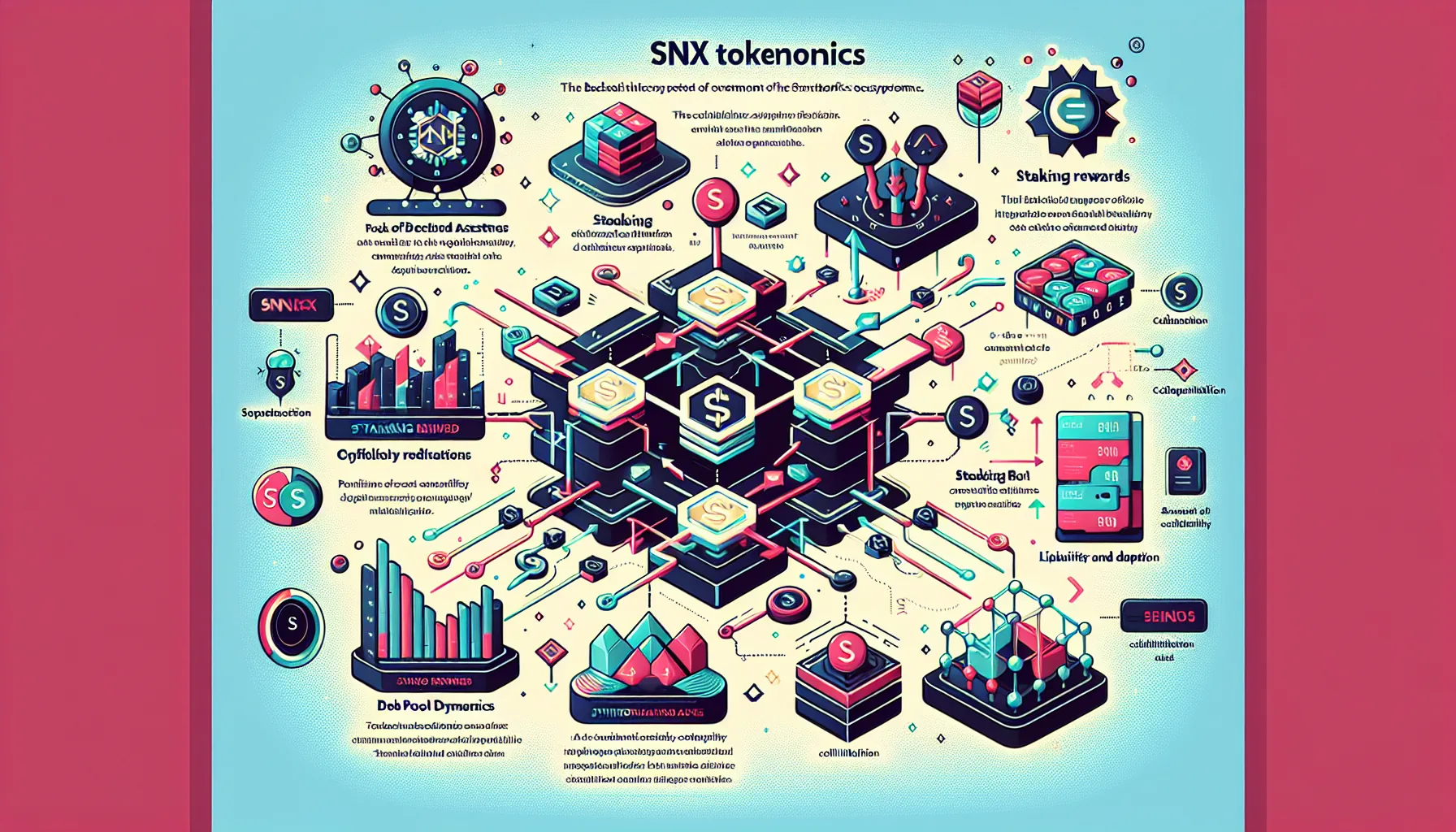
SNX serves as the backbone of the Synthetix protocol, a decentralized platform enabling the creation and trading of synthetic assets (Synths). Its tokenomics are purpose-built to balance incentives, distribute value, and maintain the stability of the protocol, but it’s a system that comes with trade-offs and potential complications.
Staking Rewards and Inflationary Emissions
The SNX token plays a dual role, functioning both as collateral for Synths and as a source of staking rewards for its holders. To promote participation in the network, stakers are incentivized via inflationary SNX rewards and a portion of the fees generated by trading activity on the protocol.
Initially, SNX introduced an aggressive inflation schedule to bootstrap network participation, which has gradually tapered and aims to eventually stabilize at a fixed annual inflation rate. While this model effectively drove growth during early stages, concerns arise over long-term sustainability. As inflation decreases, the reliance on trading fees to sustain competitive yields could expose the network to liquidity risks if trading volume fails to scale in parallel.
Debt Pool Dynamics and Collateralization
SNX stakers collectively underwrite the debt pool that backs Synths. To mint Synths, users must lock up SNX at a collateralization ratio (C-Ratio) determined by the protocol—historically set at a high percentage (often 400% or greater) to ensure system over-collateralization. This mechanism is critical for maintaining the peg of Synths to their underlying assets but presents significant challenges for stakers.
When the value of SNX fluctuates—especially during periods of downward price action—stakers often find themselves required to add more collateral or risk liquidation. Additionally, stakers inherit systemic debt based on the overall debt pool rather than their individual actions. This communal debt structure, while alignment-driven, creates complexities where diligent participants may incur losses due to market imbalances or actions of others.
Fee Redistribution Mechanics
A key driver of SNX token utility is the distribution of trading fees accrued within the Synthetix ecosystem. These fees, denominated in sUSD (a USD-pegged stablecoin Synth), are distributed proportionally to stakers. While this aligns incentives, variability in trading volume can lead to inconsistent yields. During periods of low protocol usage, fee income may be insufficient to attract or retain stakers, potentially affecting the system’s overall security.
Liquidity and Adoption Challenges
To broaden adoption, SNX has engaged in initiatives like integrating with layer-2 scaling solutions and introducing new synthetic assets. While these efforts target usability and reduce cost barriers, they also impose added complexity for stakers navigating an evolving multi-layer environment. Moreover, the dependency on synthetic asset liquidity remains a critical bottleneck, as sparse adoption could hinder the protocol's growth and fee generation.
SNX Governance
SNX Governance: Decentralized Oversight and Decision-Making
Synthetix (SNX) governance is a crucial component of maintaining and evolving its decentralized protocol, enabling stakeholders to influence key updates, parameter changes, and ecosystem direction. The governance structure is designed to align with the ethos of decentralization, empowering the community while presenting unique challenges inherent to decentralized decision-making processes.
Governance Structure and Framework
SNX holders play a central role in governance through participation in the Synthetix Improvement Proposal (SIP) process. SIPs allow community members to propose modifications to the protocol, ranging from technical upgrades to strategic policy shifts. The proposals undergo a peer-review process, fostering transparency and minimizing the risks of hasty decisions. Voting generally takes place through on-chain mechanisms, ensuring immutability and fairness in decision-making.
The Spartan Council is another vital entity in the governance ecosystem. This council operates as an elected body representing the SNX community, tasked with reviewing and approving SIPs. Its constitution adds a layer of accountability and expertise, though it raises questions about the balance between decentralization and efficiency due to the potential centralization of influence within council members.
Challenges in Decentralized Governance
Despite a well-established system, SNX governance faces several challenges. Coordinating between diverse stakeholders can result in slower decision-making, as extensive debate and consultation are often required. This deliberative process can be a double-edged sword: while it promotes inclusivity and transparency, it may also hinder the protocol's ability to respond swiftly to emerging market demands or exploit new opportunities.
Low voter participation is another persistent issue observed across many decentralized projects, including Synthetix. Even though SNX holders have the right to vote on proposals, actual participation rates can remain low, leading to decisions potentially being made by a small subset of the community. This raises concerns about whether governance outcomes truly reflect the broader consensus of stakeholders.
Incentives and Risks
Incentivizing governance participation is an ongoing topic of exploration. While staking SNX already rewards participants with yield, the time and effort required to engage in governance may deter some stakeholders. Furthermore, concentrated token holdings can amplify the risk of governance capture, where large stakeholders exert disproportionate influence over decisions, potentially tilting outcomes in their favor at the expense of smaller holders.
Lastly, the reliance on the Spartan Council introduces a quasi-hierarchical element, inviting scrutiny from proponents of fully decentralized governance. Critics argue that the council’s composition lacks sufficient mechanisms to prevent the entrenchment of power, even with regular elections.
Progress and Experimentation
As Synthetix evolves, its governance model continues to experiment with solutions to these challenges, reflecting the project’s commitment to decentralization while balancing operational efficiency. However, ongoing issues like voter apathy and centralization risks remain prevalent and must be addressed to ensure fair and resilient governance in the long term.
Technical future of SNX
SNX: Current and Future Technical Developments and Roadmap
Synthetix (SNX), a cornerstone protocol in the decentralized finance (DeFi) ecosystem, is undergoing significant technical evolution to enhance scalability, utility, and community contribution while addressing existing challenges in its architecture.
Transition to Optimism Layer 2 Scaling Solutions
One of the most notable technical developments has been the migration of the Synthetix protocol to Optimism, a Layer 2 scaling solution. This shift is designed to address Ethereum's scalability limitations and high gas fees, which have been a hindrance to smaller users interacting with the protocol. The migration enhances transaction speeds and reduces costs while maintaining the security benefits of Ethereum's Layer 1. However, the transition has not been seamless. The liquidity fragmentation caused during migration raised concerns about user experience, and achieving full adoption on Layer 2 remains a work in progress.
Synthetic Asset Expansion and Liquidity Optimization
The protocol’s ongoing effort to expand the range of synthetic assets (synths) has significant technical implications. Each new synth adds complexity to the protocol, requiring meticulous planning in terms of price oracles, collateralization ratios, and risk management. While the ambitious goal of supporting an increasingly diverse array of synthetic assets is a strength, it presents challenges in maintaining protocol robustness. Any vulnerabilities in oracle mechanisms, for instance, could expose the network to price manipulation risks.
Simultaneously, newer liquidity models, such as pooled debt mechanisms, promise efficient asset swaps but introduce questions regarding stability during periods of high volatility. The trade-offs in upgrading these systems continue to be areas of active research and development.
Developments in Perpetual Futures and Smart Contract Upgrades
Another focal point of technical development is Synthetix’s perpetual futures markets. The introduction of perpetual swaps relies on a combination of innovative mechanisms, such as funding payments, adaptive fees, and deep on-chain liquidity. Despite its promise, there are still inefficiencies to resolve, particularly in terms of slippage and liquidity provisioning for certain pairs. Smart contract upgrades linked to these features push the boundaries of existing Ethereum Virtual Machine (EVM) capabilities, making Synthetix a pioneer but adding layers of technical debt and potential vulnerability.
Decentralized Governance and the Deployment of Synthetix V3
Another key area of development is the move toward Synthetix V3, which introduces optimized contract architectures and modular synth creation capabilities. This transition aims to decentralize governance further and empower users to propose and launch new synths without reliance on centralized development teams. While this democratizes protocol innovation, the complexity of emission models and decentralized governance frameworks may slow decision-making or lead to suboptimal community outcomes.
Ongoing Challenges and Considerations
Despite its ambitious roadmap, SNX still contends with hurdles in maintaining decentralization without sacrificing efficiency, ensuring cross-layer interoperability, and managing platform composability with other DeFi projects. Some users report concerns about over-collateralization of assets, which remains a sticking point in reducing capital inefficiency. Long-term success depends on successfully balancing these technical trade-offs.
Comparing SNX to it’s rivals
SNX vs GMX: A Comparative Analysis in the Decentralized Derivatives Market
Synthetix (SNX) and GMX occupy distinct yet overlapping positions in the decentralized finance (DeFi) derivatives ecosystem. Both protocols facilitate decentralized trading, but they approach this goal through fundamentally different architectures and priorities. Here’s a detailed comparison.
Core Mechanism: Synthetic Assets vs Perpetual Swaps
SNX utilizes a synthetic asset model where users mint and trade Synths, tokenized representations of various assets like fiat currencies, commodities, and cryptocurrencies. This design enables permissionless trading of assets that may not be directly available on-chain. GMX, on the other hand, focuses on perpetual swaps, which are crypto-native instruments offering leveraged trading on digital assets without an expiry date. This distinction makes GMX narrower in focus but hyper-specialized for active traders seeking leverage.
One challenge with SNX's model is overcollateralization. To mint Synths, users must lock up SNX tokens at a significant collateralization ratio, often exceeding 400%. This mechanism ensures debt pool stability but creates capital inefficiency for users. GMX adopts a liquidity pool model backed by its GLP token, offering lower capital requirements and reducing barriers for participation. However, GMX's dependence on a limited range of tradable assets could restrict scalability compared to SNX's broader synthetic asset repertoire.
Pricing Models and Liquidity Dynamics
SNX relies on decentralized oracles for pricing its Synths. While this approach ensures decentralization, it has faced criticism for latency during periods of high market volatility. Delayed updates can result in arbitrage opportunities, potentially destabilizing the debt pool. GMX mitigates this concern through a mix of Chainlink price feeds and time-weighted average price (TWAP) mechanisms, offering tighter spreads and more real-time pricing for traders. However, GMX’s model can still struggle with slippage during large trades, given liquidity depth limitations in its GLP pool.
User Incentives and Ecosystem Participation
Both protocols incentivize participation, but the strategies differ. SNX stakers earn fees from all Synth trades, but they also collectively bear the risk of bad debt when markets move unfavorably. This shared debt design has faced scrutiny for its complexity and lack of predictability. In contrast, GMX distributes transaction fees proportionally to GLP holders and GMX stakers, providing clearer risk-reward dynamics for participants.
Governance and Decentralization Challenges
SNX governance operates through the Spartan Council, a representative model aiming to balance decentralization with efficiency. Critics, however, argue that this structure introduces centralization in decision-making. GMX follows a more streamlined governance approach, reducing decision bottlenecks but at the potential expense of broader community involvement.
Final Thoughts in This Section
While both SNX and GMX target the DeFi derivatives market, their differing core mechanics, liquidity structures, and governance designs highlight contrasting priorities for their user bases. Each excels in some areas while facing challenges in others. Understanding these nuances is essential for participants evaluating which protocol aligns better with their needs.
SNX vs. DYDX: A Deep Dive into Key Differences
When comparing Synthetic Network Token (SNX) to dYdX (DYDX), the competitive landscape reveals distinct contrasts in their approach to decentralized finance (DeFi) and derivatives trading. These differences arise not only in their technical architecture but also in their user experience and market positioning.
Decentralization vs. Hybrid Models
SNX operates as a fully decentralized protocol, allowing users to mint synthetic assets and trade on decentralized exchanges within its native ecosystem. In contrast, dYdX, while marketed as a decentralized derivatives platform, relies on a more hybrid setup. While its governance and protocol are increasingly decentralized, the system still utilizes StarkEx technology for scalability, which comes with some degree of off-chain dependence. Critics of dYdX’s model argue that this semi-centralized structure may introduce security risks or compromises in censorship resistance, a factor that purists in the DeFi space frequently highlight.
Trading Mechanisms: Spotlight on Derivatives
One of the areas where DYDX shines is its specialization in perpetual contracts, offering traders high leverage and deep liquidity. SNX, while providing functionality for trading synthetic derivatives, lacks the same focus on perpetual futures markets. Instead, SNX emphasizes synthetic asset creation, enabling exposure to a wide range of markets, from cryptocurrencies to commodities. This broader use case gives SNX an edge in asset diversification but may deter traders seeking advanced derivatives instruments with tight spreads and active order books like those on dYdX.
Fee Structures and Liquidity Incentives
Another key distinction lies in their incentive models. DYDX employs a robust liquidity mining program, distributing governance tokens as rewards to active users and market makers. While SNX also incentivizes participation through yield farming and staking for collateral providers, its returns are often perceived as heavily dependent on the inflationary issuance of SNX tokens. This could pose long-term sustainability concerns, especially as competition in the DeFi derivative space intensifies.
Usability Barriers and Onboarding
Although dYdX’s hybrid Layer 2 solution offers lower fees and faster trading compared to the purely on-chain model of SNX, it necessitates users to navigate wallets and Starkware integrations—an onboarding hurdle for some. Meanwhile, the SNX ecosystem’s reliance on staking mechanisms can create complexity for new entrants unfamiliar with the nuances of synthetic asset mechanics.
Overall, the SNX vs. DYDX comparison underscores the challenges and trade-offs inherent in building scalable derivatives platforms on decentralized infrastructure. The choice between the two often boils down to whether users prioritize decentralization and asset variety (SNX) or a streamlined trading experience focused on perpetuals (DYDX).
Comparing SNX and INJ: A Deep Dive into Synthetix vs. Injective Protocol
While Synthetix (SNX) and Injective Protocol (INJ) both operate within the DeFi landscape, their approaches to derivatives and decentralized trading represent fundamental differences that highlight the uniqueness of each platform. Understanding these distinctions is critical in assessing where Synthetix stands in contrast to INJ.
Core Protocol Design: Liquidity Pools vs. Order Books
Synthetix operates with a pooled liquidity model, where users trade synthetic assets against a global debt pool backed by staked SNX. This structure ensures deep and seemingly limitless liquidity but introduces systemic dependencies on the health of the debt pool and collateral ratios. By contrast, Injective Protocol employs a decentralized order book system, allowing users to trade derivatives directly without intermediaries while maintaining on-chain performance. This order book model more closely mirrors traditional exchange infrastructure, catering to traders who seek specific price points rather than accepting average execution prices from a pooled liquidity model. However, this approach can sometimes struggle with liquidity fragmentation across trading pairs compared to Synthetix’s aggregate liquidity.
Asset Offering and Flexibility
Injective Protocol facilitates trading in a wide range of derivatives, including perpetual futures and more exotic markets, while leveraging its custom-built Layer-1 blockchain. Synthetix, on the other hand, specializes in synthetic asset creation, enabling exposure to both crypto and non-crypto assets such as stocks, indices, and commodities. The synthetic nature of assets on Synthetix makes it possible to replicate exposure to otherwise inaccessible markets, whereas INJ’s focus leans towards a streamlined experience for trading crypto-centric derivatives. This divergence showcases Synthetix’s broader ambition but also complicates its value proposition for users solely interested in crypto trading.
Gas Fees and Network Efficiency
Both platforms operate with different cost considerations for users. Synthetix, being closely tied to the Ethereum ecosystem, has historically faced challenges with gas fees during periods of high network congestion. Although the protocol has transitioned to a Layer-2 scaling solution via Optimism, these fees can still impact user experience, particularly for smaller traders. Injective avoids these concerns by existing as a Tendermint-based Layer-1 blockchain with near-zero-fee transactions. This differentiation enhances Injective’s appeal to active traders who prioritize frequent, cost-efficient trades, though it comes at the cost of staking lesser-known infrastructure than Ethereum’s ecosystem.
Decentralization vs. Ecosystem Risk
Injective Protocol benefits from its interoperability with the Cosmos ecosystem, allowing frictionless asset transfers across chains using the IBC standard. However, this reliance on Cosmos introduces potential ecosystem interdependencies that could create risks outside of Injective’s direct control. Synthetix, while firmly rooted in Ethereum — a more battle-tested infrastructure — still contends with its own complexities, such as its intrinsic reliance on SNX collateralization. A drop in SNX value can cascade risk throughout the entire protocol, a vulnerability critics often cite.
These paradigmatic differences between Synthetix and Injective Protocol highlight two distinct approaches to decentralized derivatives trading, each with its benefits and tradeoffs.
Primary criticisms of SNX
Primary Criticism of SNX: Challenges Hindering Synthetix's Potential
Synthetix (SNX), while often praised for its innovative approach to decentralized synthetic asset creation, is not without its share of criticism. Despite its technological advances and strong community support, several challenges and limitations continue to draw scrutiny from the crypto-savvy audience.
Over-Collateralization Requirements
One of the most significant criticisms leveled against SNX is its reliance on over-collateralization. To mint synthetic assets (Synths) on Synthetix, users must stake SNX tokens at a 400% collateralization ratio, a figure that tends to fluctuate based on governance decisions. This high requirement creates capital inefficiency, as users must lock up considerably more value than what they can issue in Synths. It makes SNX less attractive compared to other platforms with more flexible collateralization structures, potentially limiting wider adoption among DeFi participants.
Governance Centralization Concerns
Despite being marketed as a decentralized protocol, Synthetix has faced criticism over the level of centralization in its governance. Key decisions, such as protocol upgrades and parameter changes, are heavily influenced by a relatively small group of stakeholders and the core team. This perceived centralization raises questions about censorship resistance and the broader decentralization ethos that attracts users to blockchain projects. Critics have pointed out that the reliance on centralized actors may make the protocol more vulnerable to regulatory scrutiny or governance risks.
Complexity as a Barrier to Entry
The Synthetix ecosystem is known for its technical complexity, which can be intimidating to new users, even those familiar with blockchain and DeFi. The process of staking SNX, maintaining the required collateral ratio, and understanding Synth trading mechanisms requires a steep learning curve. This can alienate potential adopters, especially when compared to simpler protocols that prioritize user-friendliness and intuitive interfaces. A lack of accessible educational resources for advanced users further compounds this barrier.
Exposure to Liquidation Risks
SNX stakers are incentivized to maintain their collateralization ratio, but volatility in the broader crypto market can rapidly push ratios below the required threshold. This exposes participants to potential liquidation risks, particularly during periods of sharp market downturns. Critics argue that such systemic design fragilities discourage risk-averse participants and favor only those willing to actively monitor and manage their positions, reducing the protocol's inclusivity.
Limited Diversification of Synth Markets
Although Synthetix supports a wide range of synthetic assets, including fiat currencies, commodities, and cryptocurrencies, its market offerings are still seen as limited compared to the broader range of derivatives available in traditional finance. The lack of sufficient liquidity across certain Synth pairs exacerbates this issue, making it challenging for users to execute trades without significant slippage. Critics suggest that a more extensive and liquid market structure is essential for Synthetix to compete with centralized and decentralized alternatives effectively.
Founders
Founding Team Behind SNX: The Architects of Synthetix
The team behind Synthetix (SNX) has been instrumental in shaping its identity as a decentralized liquidity protocol, yet their journey hasn't been without challenges or controversies. The project was originally launched in 2018 under the name Havven, with its founder Kain Warwick at the helm. Warwick, a serial entrepreneur, was already known within the technology and blockchain space, but the ambitious scope of Synthetix brought a new level of attention to his leadership approach and strategic decisions.
In its early days, the transition from Havven to Synthetix signified a major shift in focus, moving from a stablecoin payment system toward the development of synthetic assets (synths). While this pivot demonstrated adaptability, some critics have pointed to it as a risk-laden move, highlighting concerns about the lack of clear long-term vision during the project's infancy. Still, the pivot cemented Warwick's reputation as a calculated risk-taker willing to adapt to market demands.
Key milestones were bolstered by a strong team of developers and advisors, though not all have been in the limelight. The core development group, operating under the Synthetix Foundation and, later, under the Synthetix DAO, sought to embed decentralization in decision-making. However, this ideal was not achieved overnight. Early governance mechanisms faced scrutiny for their centralization, with Warwick himself drawing criticism for wielding considerable influence during the project's formative years. This tension between centralization and the ethos of decentralization remains an ongoing consideration for many in the SNX community.
Another important figure in Synthetix's development is Justin Moses, who served as CTO for several years. Moses brought technical rigor to the project, addressing some of the platform's more intricate engineering challenges — though concerns about scalability and gas fees have remained persistent obstacles for Synthetix. Moses’ departure in late 2021 further spotlighted potential dependency issues, as some questioned how well the team could sustain innovation amidst talent turnover.
The rise of the Synthetix DAO has shifted much of the project’s operational oversight away from centralized figures. While this has been celebrated as an important step toward full decentralization, others caution that the departure of some key founding members may leave strategic gaps. The balance of maintaining technical leadership while embracing true decentralization continues to define the project's evolution.
Authors comments
This document was made by www.BestDapps.com
Sources
- https://synthetix.io
- https://docs.synthetix.io
- https://raw.githubusercontent.com/Synthetixio/synthetix-docs/master/content/synthetix_whitepaper.pdf
- https://github.com/Synthetixio/synthetix
- https://blog.synthetix.io
- https://etherscan.io/token/0xC011A72400E58ecD99Ee497CF89E3775d4bd732F
- https://coinmarketcap.com/currencies/synthetix-network-token/
- https://defillama.com/protocol/synthetix
- https://www.coingecko.com/en/coins/synthetix-network-token
- https://research.binance.com/en/projects/synthetix
- https://cryptobriefing.com/guide-to-synthetix-snx/
- https://academy.binance.com/en/articles/what-is-synthetix-snx
- https://messari.io/asset/synthetix
- https://www.theblock.co/data/decentralized-finance/synthetix
- https://snapshot.org/#/synthetix
- https://dune.com/synthetix
- https://twitter.com/synthetix_io
- https://medium.com/synthetix-blog
- https://app.synthetix.io
- https://www.synthetixstats.com