History of SLP
The History of Smooth Love Potion (SLP)
Smooth Love Potion (SLP) emerged as a key component of the Play-to-Earn (P2E) ecosystem within Axie Infinity, a blockchain-based game developed by Sky Mavis. Originally known as "Small Love Potion," the token was designed as a utility asset for breeding in-game creatures called Axies. Unlike traditional in-game currencies, SLP operates on the Ethereum blockchain as an ERC-20 token, enabling a secondary market where players could buy, sell, or trade the asset outside the game environment.
Early Adoption and Utility Shifts
SLP gained traction as Axie Infinity's P2E model expanded. Players earned SLP through gameplay, creating an alternative income stream that particularly resonated in regions with lower average wages. However, this economic mechanic introduced scaling challenges. Initially, Axie’s ecosystem relied on continuous user growth to sustain demand for SLP, but this dependence made it vulnerable to economic downturns when the player base fluctuated.
Inflation and Economic Challenges
One of the biggest hurdles in SLP’s history has been its supply dynamics. Unlike many crypto assets with a fixed cap or controlled emission schedule, SLP’s issuance was directly tied to in-game activity. As more players earned SLP, its supply inflated, often outpacing demand.
To address this, Axie Infinity introduced various burn mechanisms, primarily through Axie breeding costs. However, when breeding demand declined, burn rates lagged behind new token generation, leading to excess circulating supply. This imbalance led to concerns about SLP's long-term sustainability, with frequent discussions around tokenomics adjustments to restore economic viability.
Adjustments and Protocol Changes
In response to these structural issues, Sky Mavis has implemented multiple modifications to SLP’s role and emissions. Changes included adjustments to in-game rewards, alterations to the breeding formula, and periodic updates to limit excessive token creation. These efforts aimed to restore equilibrium between supply and demand, though the effectiveness of such interventions has remained a topic of debate among analysts and players.
SLP's history reflects the complexities of balancing tokenomics in a P2E ecosystem. Its fluctuations and economic design challenges provide insights into the broader sustainability issues faced by blockchain gaming projects. The token's evolution continues to be shaped by game updates, player engagement, and macro trends within the GameFi sector.
How SLP Works
How Smooth Love Potion (SLP) Works
ERC-20 Token and Supply Mechanism
SLP is an ERC-20 token created on the Ethereum blockchain, making it compatible with most decentralized exchanges and wallets that support Ethereum-based assets. Unlike fixed-supply tokens, SLP is minted and burned dynamically through in-game activities, directly linking its supply to user participation.
Minting and Burning Dynamics
New SLP tokens enter circulation as rewards for players engaging in specific aspects of the Axie Infinity ecosystem, such as completing battles or quests. However, SLP is also burned when it is used for its primary function—breeding Axies. This creates a continuous issuance and destruction cycle that is meant to balance supply and demand, although fluctuations in player activity significantly impact the token’s overall availability.
Gas Fees and Transaction Costs
Since SLP operates on Ethereum, transactions involving the token are subject to Ethereum gas fees. During periods of network congestion, these fees can become prohibitively expensive, making it inefficient for small transactions. To mitigate this, many users rely on layer-2 scaling solutions or alternative blockchains where Axie Infinity is deployed.
Liquidity and Smart Contract Risks
SLP is traded on various decentralized and centralized exchanges, providing liquidity for users who want to buy or sell the token. However, smart contract vulnerabilities remain a risk, particularly when interacting with third-party platforms or liquidity pools. Exploits, bugs, or security breaches in contracts governing SLP-related transactions could result in unintended losses for users.
Inflationary Pressures and Market Behavior
One of the core challenges of SLP is managing its inflationary nature. If the issuance of new SLP tokens outpaces their consumption through breeding, excess supply can quickly drive down the token’s value. Conversely, if breeding demand increases without sufficient SLP availability, transaction costs for breeding can surge. Balancing these dynamics requires adjustments to game mechanics and token sink mechanisms, but such modifications can impact overall user engagement.
Centralization and Governance Limitations
Unlike governance tokens, SLP does not grant holders voting rights or control over ecosystem decisions. This means that any changes to its utility, issuance rate, or burn mechanisms depend entirely on developers or ecosystem governance controlled by other tokenholders. Dependence on central decision-making raises concerns about long-term economic stability and shifts in token utility that may not always align with user interests.
Use Cases
Use Cases of SLP (Smooth Love Potion)
1. In-Game Utility for Play-to-Earn Gaming
SLP is primarily known for its role in blockchain-based play-to-earn (P2E) ecosystems. It serves as a core utility token within certain gaming environments, where players earn SLP through in-game activities such as battles, quests, or breeding mechanics. The token is often used for in-game enhancements, asset upgrades, and interactions within the gaming economy.
2. Breeding Mechanics in NFT Gaming
One of the most critical use cases of SLP is its role in breeding game characters or assets, particularly in blockchain-based strategy games that operate on NFT mechanics. Players use SLP to mint new in-game assets, which can later be used, traded, or sold. This function creates ongoing demand for the token but also ties its value directly to in-game participation and player activity levels. However, this use case has been criticized for potential unsustainable token emissions, leading to inflationary pressures if demand does not outpace supply.
3. Trading and Liquidity in Crypto Markets
SLP operates as a tradeable cryptocurrency on multiple decentralized and centralized exchanges. Its liquidity and trading volume are largely driven by the activity within the gaming ecosystem it is associated with. Traders often speculate on its value based on player adoption, game updates, and broader market trends. However, dependency on one core ecosystem can lead to high volatility and uncertain long-term value sustainability.
4. Integration in DeFi and Staking Protocols
Some platforms allow staking or liquidity provisioning with SLP, integrating it into broader decentralized finance (DeFi) strategies. This enables users to earn additional rewards or yield by locking their SLP into liquidity pools. However, participation in these staking protocols depends on the long-term viability of both the game economy and the DeFi platform offering these incentives. If demand for the token declines, staking rewards may not be sufficient to offset holding risks.
5. Payment and Peer-to-Peer Transfers
SLP can be used for peer-to-peer transactions like any other fungible token. While not a primary use case, it allows for direct transfers between users within and outside of gaming ecosystems. However, adoption as a mainstream payment token is limited due to its fluctuating value and niche use case.
6. Governance and Ecosystem Expansion Considerations
Unlike governance tokens, SLP does not typically grant voting rights or governance influence over the broader ecosystem. Its role remains largely transactional, dependent on in-game economies rather than decentralized governance mechanisms. This lack of governance utility may limit its adaptability as gaming landscapes evolve.
SLP Tokenomics
SLP Tokenomics: Supply, Demand, and Economic Pressures
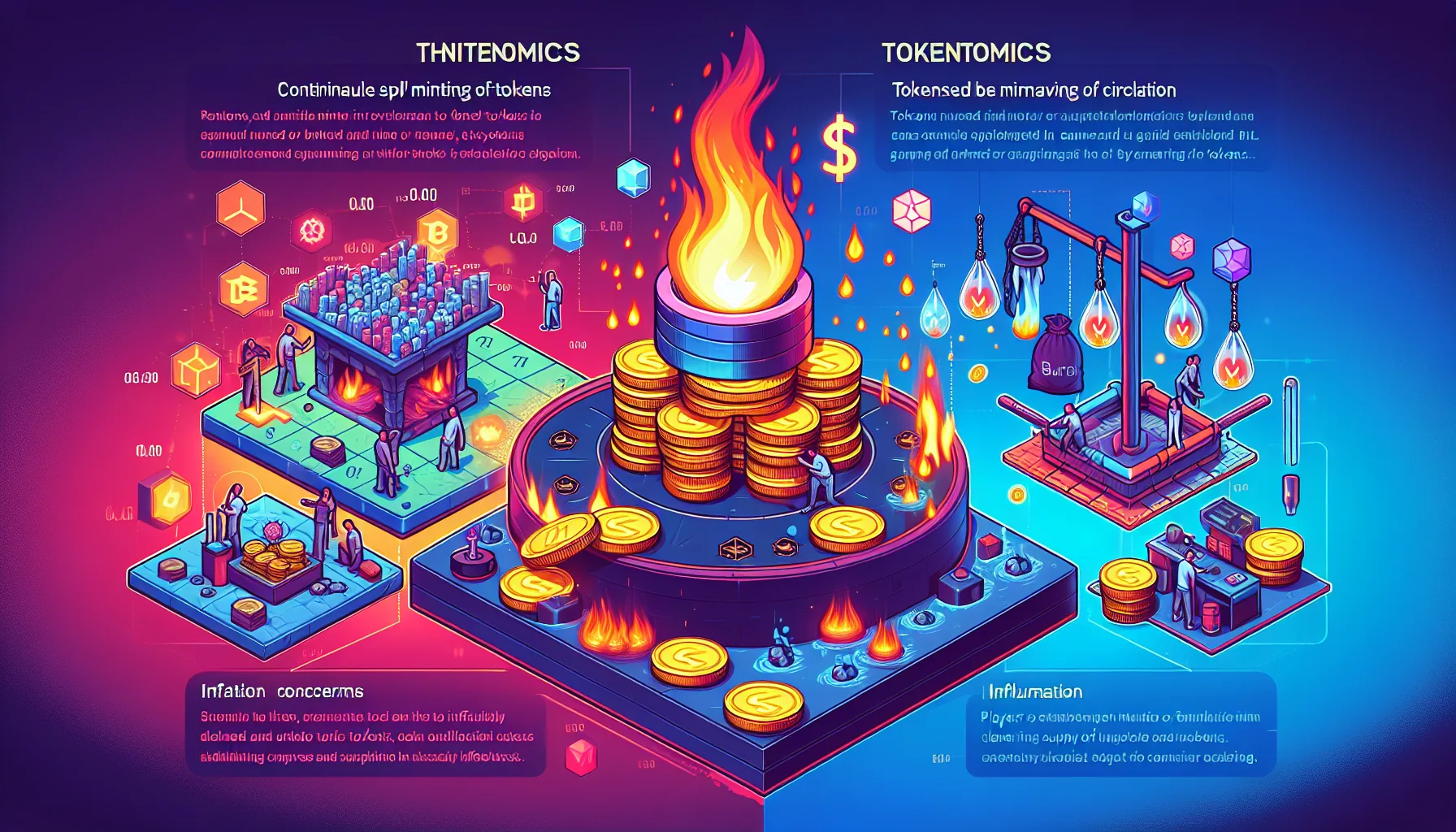
Smooth Love Potion (SLP) operates as the reward and utility token within the Axie Infinity ecosystem, with a tokenomics model deeply tied to player engagement, in-game incentives, and breeding mechanics. Unlike fixed-supply cryptocurrencies, SLP follows an uncapped emission model, where tokens are continuously minted through gameplay and burned during breeding. This dynamic supply mechanism makes SLP highly responsive to player activity, yet also exposes it to inflationary risks if demand fails to keep pace with issuance.
Unlimited Supply and Inflation Risks
A fundamental characteristic of SLP is its potentially unlimited supply. Every time players complete specific in-game tasks, such as winning battles in Axie Infinity, new SLP tokens enter circulation. Without a hard cap, the total supply can increase indefinitely, making the token susceptible to inflationary pressure. If the rate of minting consistently outstrips burning, SLP devaluation can occur due to excessive supply diluting its value.
Burn Mechanisms and Demand Drivers
Burning mechanisms act as the key counterbalance to inflation, with the primary sink for SLP being the Axie breeding system. The cost of breeding fluctuates, and higher demand for new Axies generally leads to increased SLP burning. However, if player activity declines or breeding becomes less attractive, burning slows down, and excess SLP accumulates in circulation. The balance between these two forces—minting and burning—determines the token's economic stability.
Dependency on Game Ecosystem
SLP does not have a standalone utility outside the Axie Infinity ecosystem. Its primary function is within the game, making its tokenomics entirely dependent on player participation and game mechanics. Any changes in game design, reward structures, or breeding costs directly impact SLP’s supply-demand dynamics. If incentives weaken or the game’s play-to-earn appeal diminishes, demand for SLP can drop significantly while supply remains high.
Speculative Influence and Earnings Pressures
SLP’s role as an earnable asset in a play-to-earn economy has led to speculative behavior. Large farming operations can significantly increase supply, rapidly impacting its price and token economy. Additionally, if players rely on SLP as a significant income source, mass cash-outs create persistent sell pressure. This situation can strain the tokenomics, especially if new player influx or organic demand fails to offset ongoing emissions.
Conclusion
SLP’s tokenomics are structured around its inflow through gameplay and outflow via Axie breeding. The uncapped supply model makes it highly dependent on continuous demand, with inflation concerns emerging when burning mechanisms fail to absorb excess tokens. The broader economic health of SLP remains intrinsically tied to Axie Infinity’s ecosystem sustainability and player engagement levels.
SLP Governance
Governance of Smooth Love Potion (SLP)
Lack of Direct Governance Mechanisms
Smooth Love Potion (SLP) does not have a built-in governance model enabling token holders to influence protocol decisions directly. Unlike governance tokens that grant voting rights, SLP primarily functions as a utility asset within the Axie Infinity ecosystem. This absence of governance utility means that SLP holders have no formal say in policy changes, tokenomics adjustments, or ecosystem developments.
Dependence on Axie Infinity’s Core Developers
Decisions regarding SLP’s issuance, mechanics, and economic adjustments are centrally controlled by the development team behind Axie Infinity. Changes in SLP minting rates, burning mechanisms, or integration within the ecosystem are implemented unilaterally, without community governance votes. This highlights a centralization issue where players and liquidity providers lack formal influence over critical decisions impacting SLP’s long-term utility.
Indirect Community Influence
While no official governance system exists for SLP, the broader Axie Infinity community can exert pressure through social channels, feedback forums, and economic activity. Large-scale community dissatisfaction with certain SLP-related changes has, in the past, led to adjustments by the developers. However, these responses are discretionary rather than part of a structured governance process, limiting predictability and transparency.
Impact of Governance on SLP’s Supply and Demand
The lack of a decentralized governance model means that SLP’s supply and demand dynamics are dictated by Axie Infinity’s economic framework. When game developers modify breeding costs, emissions, or burning mechanisms, SLP’s utility shifts accordingly. This central control can introduce uncertainty for holders, as changes may be implemented with little warning or community input.
No Voting Rights in Axie Infinity’s DAO
Axie Infinity does have a governance token, Axie Infinity Shards (AXS), which grants governance rights over certain aspects of the ecosystem. However, SLP holders do not share these governance privileges. This creates a governance gap where SLP participants must rely on AXS holders to advocate for policies that align with SLP’s stability and utility.
Possible Future Governance Considerations
Discussions within the Axie Infinity community have raised questions about whether SLP could incorporate governance features in the future. Potential mechanisms could include SLP staking for governance rights or integrating a voting system for economic adjustments. However, at present, no formal steps have been taken to decentralize governance over SLP’s mechanics.
Technical future of SLP
SLP Technical Developments and Roadmap
Layer 2 Scaling and Gas Fee Optimizations
SLP transactions on the Ronin blockchain have largely mitigated the gas fee issues seen on Ethereum, but additional optimizations are in progress. Future developments focus on refining transaction batching, reducing block propagation delays, and integrating more efficient cryptographic proofs. These changes aim to enhance transaction throughput and minimize network congestion, particularly during high demand periods.
Smart Contract Upgrades and Security Enhancements
The existing SLP smart contract infrastructure is periodically reviewed for vulnerabilities. Enhancements to contract logic are in progress to prevent potential exploits, such as unauthorized minting or reentrancy attacks. There is ongoing research into formal verification methods to ensure contract integrity and reduce reliance on manual auditing. Future updates may incorporate modularized contract structures, providing easier upgrade paths while maintaining backward compatibility.
Cross-Chain Interoperability Developments
Efforts to increase SLP’s interoperability with other blockchains are ongoing. Bridging mechanisms beyond Ronin and Ethereum, potentially leveraging Layer 0 or generalized message-passing protocols, are being evaluated. However, liquidity fragmentation remains a challenge, as increased interoperability must balance network security with decentralization concerns.
Dynamic Tokenomics Adjustments
SLP’s economic model has undergone multiple iterations, with constant refinements aimed at stabilizing inflation. Future adjustments may involve algorithmically adjusting issuance rates based on network participation levels. However, implementing these changes without negatively impacting user incentives remains a complex challenge, requiring careful testing and phased rollouts.
Centralization Risks in Validator and Governance Structures
While Ronin validators govern SLP transactions, concerns persist regarding validator centralization. Additional validators and on-chain governance improvements are being explored, but full decentralization remains a complex issue. Any technical shift towards greater decentralization must balance security and operational efficiency, making automatic governance upgrades a difficult challenge in the near term.
Future Protocol Integrations
Ongoing discussions explore how SLP could extend beyond its current ecosystem use cases. Potential integrations with DeFi protocols, automated market makers, or NFT staking mechanisms have been suggested. However, technical limitations around liquidity depth and smart contract flexibility remain barriers to rapid adoption outside of its core ecosystem.
Potential Roadblocks to Adoption
Several technical uncertainties remain, including network scalability bottlenecks, reliance on proprietary infrastructure, and market-driven economic imbalances. Any technological roadmap must address these persistent issues while maintaining flexibility to react to broader blockchain industry trends.
Comparing SLP to it’s rivals
SLP vs. AXS: A Comparative Breakdown
Utility and Ecosystem Integration
SLP (Smooth Love Potion) and AXS (Axie Infinity Shards) are both integral to the Axie Infinity ecosystem but serve distinct functions. SLP is a utility token used primarily for breeding Axies, offering a transactional role within the game economy. In contrast, AXS functions as the governance token, granting holders rights in decision-making processes and staking opportunities that provide additional incentives to long-term participants.
Tokenomics and Supply Dynamics
One of the main distinctions between SLP and AXS is their tokenomic structure. SLP is an inflationary token, continuously minted through gameplay with supply controlled via in-game sinks such as Axie breeding. Without effective burning mechanisms or strict issuance control, SLP has historically faced issues related to oversupply, leading to challenges in maintaining its value. AXS, on the other hand, has a fixed maximum supply, designed with scarcity in mind, reinforcing its role as a store of value and governance asset within the Axie Infinity ecosystem.
Earning Potential and Player Incentives
Players earn SLP by engaging in battles within the Axie Infinity game, making it easily accessible to those active in the ecosystem. However, due to its inflationary nature, its long-term earning potential is heavily influenced by demand-side mechanics, particularly new player adoption and breeding activity. AXS, in contrast, is rewarded through staking and governance participation, offering different incentives designed to align with the broader economic stability of Axie Infinity rather than short-term in-game earnings.
Market Liquidity and Exchange Presence
Both tokens enjoy substantial liquidity across major exchanges, but they serve different investor bases. SLP is primarily sought after by players looking to breed Axies or speculative traders capitalizing on short-term price swings. AXS, due to its governance and staking benefits, is more appealing to investors seeking longer-term exposure to the Axie Infinity project.
Volatility and Economic Stability
SLP’s value historically fluctuates based on in-game economy changes, player activity, and Axie breeding demand. Its dependency on a single ecosystem for utility creates risks if player growth slows. AXS, while also tied to the same game, has more diversified utility through governance and staking, reducing its reliance on immediate player-driven demand.
SLP vs. GALA: A Detailed Comparison
Utility and Use Case
SLP (Smooth Love Potion) and GALA serve distinct purposes within their respective ecosystems. SLP operates as the reward and utility token for Axie Infinity, playing a key role in the game's breeding process. Its core function ties it directly to the game’s economy, making demand fluctuate based on Axie breeding activity.
GALA, on the other hand, is the native token of the Gala Games ecosystem, which aims to decentralize gaming by allowing player ownership and governance. Unlike SLP, which is tied to a singular game, GALA supports a broader gaming network, offering utility across multiple titles within its ecosystem. This versatility can provide it with sustained demand beyond the performance of a single game.
Supply Dynamics and Token Economics
A major difference between SLP and GALA is the token supply mechanism. SLP's supply is theoretically unlimited, as it is minted through gameplay and burned when used for Axie breeding. When breeding activity is low, the imbalance between minting and burning can lead to inflationary pressure and suppressed prices.
GALA, however, follows a structured token emission model with a hard cap, incorporating mechanisms like node-based distribution and halving cycles. Unlike SLP, which lacks direct governance influence, GALA holders can participate in the decision-making process regarding the ecosystem’s development. This governance mechanism adds an extra layer of utility, impacting long-term sustainability.
Ecosystem and Adoption
SLP is primarily dependent on Axie Infinity’s player base and marketplace dynamics. If game activity declines, SLP demand suffers directly. This dependency has historically made SLP highly volatile, with its value hinging on play-to-earn participation.
GALA’s ecosystem focuses on a broader range of blockchain-based games, with multiple titles planned or already in development. The diversification of its ecosystem helps mitigate risks associated with any single game's performance. Moreover, Gala Games leverages NFTs for in-game assets, further expanding its token’s use cases beyond just a single form of in-game currency.
Liquidity and Exchange Support
Both tokens are widely supported across major exchanges, but SLP has seen periods of inconsistent liquidity due to reliance on Axie Infinity activity. In contrast, GALA maintains relatively stable liquidity due to its broader market appeal and integration into a multi-game ecosystem.
Play-to-Earn Model Strengths and Weaknesses
While both SLP and GALA are deeply involved in blockchain gaming, SLP’s economic model is more directly tied to a single game’s lifecycle. When Axie Infinity faces decline or player exodus, SLP demand drops sharply. GALA’s approach spreads value across multiple projects, helping it withstand fluctuations in any single title’s player interest.
SLP vs ILV: A Comparison of Utility and Ecosystem Integration
Fundamental Utility: Play-to-Earn vs. Ecosystem Staking
SLP (Smooth Love Potion) and ILV (Illuvium) serve different core functions within their respective ecosystems. SLP operates as a reward token in a play-to-earn economy, primarily earned through gameplay and used for breeding mechanics. Its utility is directly tied to player engagement, resulting in fluctuating demand based on game participation. ILV, on the other hand, has a broader utility within its ecosystem. While it plays a role in governance through staking, it also serves as a reward and liquidity incentive, creating multiple demand drivers outside of direct gameplay.
The reliance of SLP on in-game mechanics leads to economic challenges, particularly in balancing token emission against player redemption. Without supplemental mechanisms for sustained utility, SLP faces inflationary risks. ILV, in contrast, employs staking mechanisms that allow holders to earn yield, reducing immediate sell pressure and incentivizing long-term holding.
Token Supply and Inflationary Control
A critical difference between SLP and ILV is their approach to supply dynamics. SLP has an uncapped token supply, meaning new tokens are continuously minted through participation in the game. This has historically led to inflationary pressure, requiring periodic adjustments to maintain a sustainable in-game economy.
ILV takes a different approach, using a fixed supply model with deflationary mechanics. Rewards are distributed through staking, and part of the ecosystem revenue is allocated towards buybacks and burns, helping to mitigate long-term inflation. This supply limitation can create scarcity over time, contrasting with the dilutionary pressures seen in SLP’s model.
Ecosystem and Player Incentive Structures
The Illuvium ecosystem integrates multiple gaming experiences, creating interconnected incentive structures. ILV holders benefit from exposure to the broader Illuvium platform, including revenue-sharing mechanisms from in-game transactions and staking rewards. This diversified economy enables ILV to maintain relevance across multiple titles and use cases.
SLP, however, lacks direct integration into broader gaming platforms outside its original ecosystem. Its value and utility are largely dictated by player demand, making it susceptible to fluctuations in active user counts and in-game economy adjustments. Without external integrations or alternative yield mechanisms beyond its core game functions, sustaining demand outside of active gameplay presents a challenge.
Liquidity and Market Considerations
SLP's liquidity dynamics are largely driven by the play-to-earn economy. Players earning rewards often convert SLP into more stable assets, creating continuous sell pressure. ILV’s staking and vesting mechanics reduce the short-term market supply, mitigating sell-offs from reward distributions.
Additionally, ILV leverages cross-chain functionalities and DeFi integrations, increasing its accessibility and utility beyond traditional exchanges. SLP, primarily tied to game-generated liquidity, has fewer external integrations outside its core ecosystem, which can limit its adaptability in broader DeFi environments.
Primary criticisms of SLP
Primary Criticism of SLP (Smooth Love Potion)
1. High Inflation and Unlimited Supply
One of the most significant criticisms of SLP is its uncapped token supply. Unlike assets with fixed or deflationary issuance, SLP is continuously minted through in-game rewards. This creates persistent inflationary pressure, leading to supply outpacing demand. Without strong burn mechanisms or utility expansion, this inflation undermines long-term price stability and token sustainability.
2. Weak Token Utility Beyond Gaming
SLP’s primary use case is breeding within its associated play-to-earn ecosystem. However, this creates a narrow demand channel, heavily dependent on player activity and new user acquisition. When ecosystem engagement declines, so does SLP demand, exacerbating selling pressure. The lack of compelling secondary use cases outside of gaming contributes to challenges in maintaining sustained value.
3. Unsustainable Play-to-Earn Economics
SLP's economy is often criticized for its reliance on new players entering the system to maintain token demand. Without a steady influx of new participants, rewards become less sustainable. This dynamic has led to concerns that the economic model resembles a zero-sum system, where rewards for early adopters depend on continued participation rather than intrinsic utility.
4. Persistent Sell Pressure and Liquidity Concerns
Because SLP is distributed as in-game rewards, a large portion of emissions are immediately sold by players looking to convert earnings to fiat or other crypto assets. This constant sell pressure negatively impacts price performance, making it difficult for SLP to achieve long-term price appreciation. Additionally, liquidity challenges can arise when demand softens, leading to increased volatility.
5. Developer Control and Supply Adjustments
The tokenomics of SLP are not fully decentralized, as the development team retains the ability to adjust rewards, breeding costs, and burning mechanisms. While these adjustments aim to manage inflation and ecosystem health, they introduce centralization concerns among users who prefer a more predictable and immutable economic structure. Frequent changes in token mechanics also create uncertainty, making it difficult for market participants to anticipate future dynamics.
6. Dependence on a Single Ecosystem
SLP is deeply tied to its parent blockchain game, making its value highly dependent on that ecosystem’s success. Any decline in player interest, gameplay mechanics, or overall adoption directly impacts token demand. This conditional value proposition limits SLP’s viability as a standalone crypto asset and increases its risk exposure to changes in the gaming industry.
Founders
Founding Team Behind SLP: Origins and Key Figures
Smooth Love Potion (SLP) emerged as a core component of Axie Infinity's play-to-earn ecosystem, but its development and strategic direction have been closely tied to the leadership behind Sky Mavis, the Vietnamese-based blockchain gaming studio that created Axie Infinity.
Key Figures in SLP’s Development
The primary driving force behind SLP is Trung Nguyen, the co-founder and CEO of Sky Mavis. Nguyen, a former software developer, played a pivotal role in establishing Axie Infinity and integrating SLP as a utility-focused asset within its gaming economy. His background in blockchain technology and game development has shaped much of the strategic approach to SLP’s issuance and use.
Another notable figure is Aleksander Larsen, often referred to as "Psycheout" in the crypto gaming community. Larsen, as Sky Mavis' co-founder and COO, has been integral in overseeing the growth of Axie Infinity’s ecosystem, including partnerships and community engagement around SLP. His role extends beyond product development, focusing heavily on expanding Axie Infinity’s reach, which has a direct impact on the token's adoption and utility.
Technical development has been led by Jeffrey Zirlin (Jihoz), another co-founder of Sky Mavis, who has actively shaped the narrative around SLP’s utility within the game's broader economy. Zirlin’s role in community building and governance discussions has positioned him as a key spokesperson regarding SLP’s ongoing development, balancing player incentives with overall economic sustainability.
Controversies and Challenges in Leadership
Despite the team’s technical expertise, Sky Mavis' handling of SLP’s economic stability has faced scrutiny. A major challenge has been the inflationary nature of SLP, which has led to difficulties in balancing rewards, demand, and long-term sustainability. While the team has introduced mechanisms like token burns and breeding fee adjustments, concerns remain around their effectiveness in maintaining value.
Security concerns have also drawn criticism toward Sky Mavis’ leadership, particularly with the Ronin Network hack, which highlighted vulnerabilities in the ecosystem. While not directly tied to SLP's smart contract, the breach raised broader concerns about the team’s ability to secure infrastructure supporting the asset.
Additionally, while the founding team members maintain a strong presence and direct involvement in Axie Infinity’s development, decentralization remains a key issue. Unlike other blockchain projects that gradually shift decision-making to a decentralized governance structure, SLP's direction remains tightly controlled by Sky Mavis, limiting community influence over key economic adjustments.
Authors comments
This document was made by www.BestDapps.com
Sources
https://axieinfinity.com/
https://whitepaper.axieinfinity.com/
https://etherscan.io/token/0xcc8fa225d80b9c7d42f96e9570156c65d6caaa25
https://coinmarketcap.com/currencies/smooth-love-potion/
https://www.coingecko.com/en/coins/smooth-love-potion
https://dappradar.com/binance-smart-chain/games/axie-infinity
https://nomics.com/assets/slp-smooth-love-potion
https://defillama.com/protocol/axie-infinity
https://cointelegraph.com/tags/smooth-love-potion
https://messari.io/asset/smooth-love-potion
https://blog.axieinfinity.com/
https://academy.binance.com/en/articles/what-is-smooth-love-potion-slp
https://twitter.com/AxieInfinity
https://discord.com/invite/axie
https://mirror.xyz/0xAxieInfinity


