History of SKL2
The History of SKL2: Development, Launch, and Evolution
SKL2 emerged as a response to scalability challenges faced by smart contract platforms. Designed to enhance transaction throughput and reduce fees, SKL2 was introduced as a Layer 2 solution aimed at optimizing decentralized application (dApp) performance. The project’s origins can be traced to a broader movement focused on Layer 2 scaling technologies, aiming to alleviate congestion on the base layer while maintaining decentralization and security.
Early Development and Technical Foundations
The initial development phase of SKL2 was marked by a strong emphasis on interoperability and developer accessibility. Unlike some Layer 2 solutions that rely solely on rollups, SKL2 integrated modular scaling techniques, allowing for compatibility with various execution environments. This flexibility positioned it as a potentially viable scaling alternative for multiple blockchain ecosystems.
Funding and initial adoption played critical roles during the early stages. While the project received backing from early supporters, its adoption faced challenges due to competition from other well-established Layer 2 solutions. The technical architecture underwent multiple iterations to address issues related to transaction finality and cross-chain interactions, areas where some early users reported inefficiencies.
Launch and Network Growth
Upon launch, SKL2 experienced a gradual increase in total value locked (TVL) and integration with prominent dApps. A key driver behind this was the platform’s ability to offer lower transaction costs compared to congested Layer 1 environments. However, adoption was not without friction. Some early adopters raised concerns over liquidity fragmentation, as assets bridged to SKL2 sometimes lacked deep market support. Additionally, certain dApps initially reported sporadic network latency issues, though subsequent updates aimed to optimize node coordination and throughput.
Key Milestones and Challenges
Over time, SKL2 implemented upgrades to enhance network efficiency and developer tooling. These improvements contributed to a more stable ecosystem but did not entirely eliminate competition-related hurdles. The dominance of other Layer 2 solutions with higher adoption rates and larger developer communities put pressure on SKL2 to differentiate itself.
Security also remained a focal point, as SKL2 experienced minor smart contract vulnerabilities that required rapid patches. While no major exploits resulted in significant fund losses, the incidents underscored the ongoing risks associated with Layer 2 infrastructures.
Decentralization efforts have been an area of discussion, with governance mechanisms evolving to balance efficiency with community participation. Some critics argue that decision-making processes have remained relatively centralized, which could impact long-term trust and adoption.
How SKL2 Works
How SKL2 Works
SKL2 operates as a Layer 2 scaling solution designed to enhance transaction throughput and reduce costs while maintaining security through a hybrid mechanism. By utilizing rollups and off-chain computations, SKL2 alleviates congestion on the base layer while preserving Ethereum’s decentralization benefits.
Transaction Processing and Finality
SKL2 batches multiple transactions on its off-chain execution layer before submitting compressed proofs to the Ethereum mainnet. This approach enables significantly higher TPS than direct Layer 1 execution. The system can leverage zero-knowledge rollups (zk-rollups) or optimistic rollups, depending on network conditions and cost efficiency.
- zk-Rollups: Transactions are cryptographically validated off-chain, with succinct proofs submitted on-chain for finality. This minimizes gas fees while ensuring data integrity.
- Optimistic Rollups: Transactions are assumed valid unless challenged, relying on fraud proofs to resolve disputes while reducing verification overhead.
The protocol's design balances scalability with security, although rollup-based approaches introduce risks, such as delayed finality or dependency on validator integrity.
Smart Contract Execution and Compatibility
SKL2 supports smart contract execution that mirrors Ethereum’s EVM, enabling seamless contract portability. Developers can deploy and interact with smart contracts without major modifications. However, differences in execution environments may introduce subtle issues, particularly around state synchronization and cross-layer messaging.
- Bridging Assets: SKL2 facilitates asset movement through native bridges, although withdrawal times may be affected by rollup mechanisms. Optimistic rollup exits require challenge periods, delaying fund access.
- Security Considerations: While SKL2 inherits Ethereum’s base-layer security, vulnerabilities in rollup implementation or bridge contracts could introduce additional risks.
Network Participation and Incentives
SKL2 leverages a system of validators, sequencers, or operators to manage state commitment and data availability. These entities play a crucial role in ensuring transaction ordering, data propagation, and fraud detection.
- Decentralization Challenges: Many Layer 2 platforms, including SKL2, begin with centralized sequencer models, raising concerns over censorship resistance and network resilience.
- Gas Fee Optimization: Fees remain lower than Ethereum’s base layer, although network congestion can impact cost efficiency, particularly for high-frequency users.
While SKL2 enables faster and cheaper transactions through its rollup-based design, ongoing improvements in decentralization and security remain key areas of development.
Use Cases
Use Cases of SKL2
Scaling Ethereum Transactions
SKL2 is designed to enhance Ethereum's scalability by providing a Layer 2 network capable of handling fast and low-cost transactions. It executes transactions off-chain while maintaining Ethereum's security guarantees through cryptographic proofs. This reduces gas fees and alleviates congestion on the mainnet, making it attractive for DeFi applications, NFT platforms, and high-frequency trading.
Smart Contract Execution
Developers can deploy smart contracts on SKL2 to leverage its increased throughput and lower costs. The network supports EVM-compatible contracts, allowing existing Ethereum projects to migrate without significant changes. This makes it a viable option for dApps that require high-performance execution while keeping transaction fees manageable.
Cross-Chain Functionality
Interoperability is a major factor in SKL2’s use. It supports cross-chain bridging, enabling assets and data to move between Ethereum Layer 1 and SKL2 seamlessly. However, bridge security remains a concern, as cross-chain vulnerabilities have been exploited in various Layer 2 ecosystems. Users must evaluate the security mechanisms in place before transferring assets.
Staking and Network Security
SKL2 employs staking mechanisms where validators and delegators participate in securing the network. Participants lock up tokens to validate transactions and earn rewards in return. While staking allows for decentralization and economic incentives, network security depends on the distribution of staked assets. A small number of dominant validators could introduce centralization risks.
Micropayments and Low-Cost Transactions
Due to its reduced transaction fees, SKL2 is well-suited for micropayments and recurring transactions that would be cost-prohibitive on Ethereum Layer 1. This makes it a potential solution for monetizing digital content, gaming economies, and pay-per-use services. However, network adoption remains a key factor in determining whether it can capture significant market share in these sectors.
Decentralized Identity and Data Availability
Projects utilizing decentralized identity services and data availability layers can leverage SKL2 for scalable verifications and storage solutions. By minimizing Ethereum mainnet interactions, these applications can offer efficient authentication processes while preserving user privacy.
Challenges in Adoption
Although SKL2 provides clear benefits, its adoption faces obstacles. Competing Layer 2 solutions, security risks in bridge infrastructure, and evolving Ethereum upgrades (such as rollups and sharding advancements) could impact its long-term viability. Additionally, user migration from Layer 1 remains a gradual process, as many projects hesitate to leave Ethereum’s primary ecosystem due to liquidity concentration.
SKL2 Tokenomics
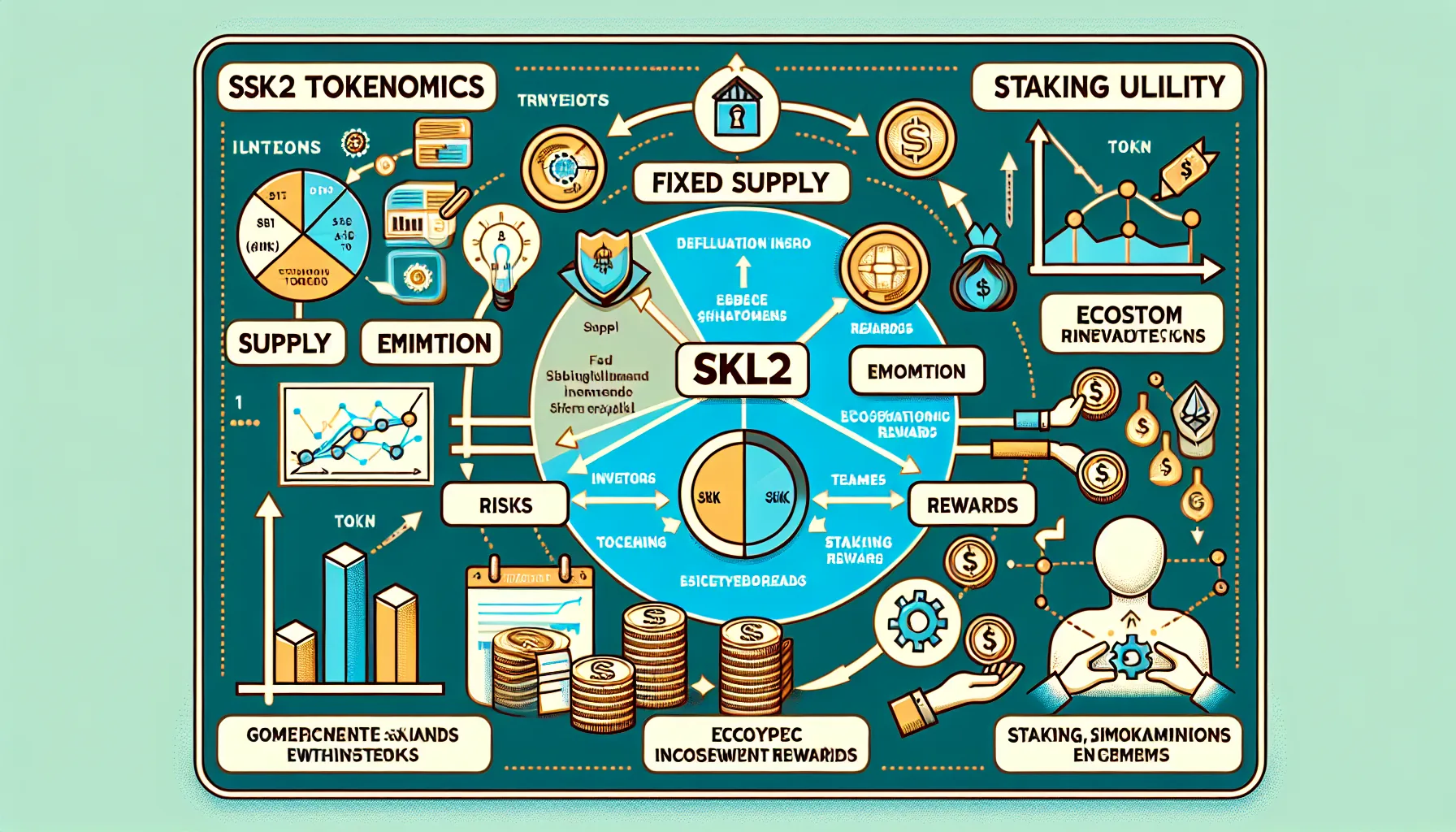
SKL2 Tokenomics: Supply, Emission, and Utility
Fixed Supply and Allocation
SKL2 operates on a fixed supply model, preventing future inflationary dilution. The total token supply was predetermined at genesis, with a structured allocation across early investors, team members, ecosystem incentives, and staking rewards. While this scarcity can drive demand, long-term concerns around centralized allocations persist, particularly regarding team-controlled reserves and vesting schedules.
Emission Schedule and Unlock Dynamics
A deflationary issuance model governs SKL2's token unlocks, with scheduled vesting for team and investor allocations. The release rate of new tokens directly impacts market liquidity, and depending on macro conditions, unlock events may exert downward price pressure. Transparency in token unlocks and their impact on circulating supply remains crucial for investor confidence.
Staking and Security Incentives
SKL2 utilizes staking mechanics to secure its network, distributing block rewards to validators and delegators. Rewards are structured to incentivize participation while balancing inflationary risks. Network security relies on sufficient validator decentralization; however, if collateral requirements concentrate staking power among a small group, centralization risks may arise. Additionally, staking unlock periods influence token velocity and contribute to potential liquidity lockup.
Utility in Network Governance and Transactions
SKL2 serves multiple functions within its ecosystem, including governance participation, transaction fee payments, and potential utility in decentralized applications. Governance structures dictate token holder influence over network upgrades and policy decisions, but voter turnout and centralization in governance power remain key areas for scrutiny. Fee mechanisms tie directly to network activity, influencing token demand based on adoption levels.
Economic Risks and Supply Concentration
A major concern in SKL2’s tokenomics is the distribution of large holdings among investors and foundation reserves. Disproportionate concentration could lead to governance manipulation or sell pressure during major unlock events. Additionally, if staking yields decline over time, user incentives to hold rather than sell SKL2 may weaken, impacting market liquidity.
Network Growth vs. Token Demand
SKL2's long-term sustainability depends on network growth outpacing emission schedules. If on-chain activity does not scale alongside token unlocks, inflationary sell pressure may outstrip organic demand, leading to price suppression. Meanwhile, integration with external ecosystems and cross-chain functionality could influence future demand shifts.
SKL2 Governance
SKL2 Governance: Decentralized Decision-Making and Challenges
Governance in SKL2 is structured to align with decentralization principles, ensuring that protocol upgrades, parameter adjustments, and ecosystem decisions are controlled by token holders rather than a centralized entity. The governance model is built on a combination of on-chain proposals and community-driven discussions, allowing stakeholders to influence the protocol’s evolution.
Token-Based Governance Model
SKL2 governance operates through a token-weighted voting system, where the influence of a participant is proportional to their SKL2 holdings. This structure incentivizes active engagement but also introduces concerns about centralization if a small group of large holders dominates decision-making. Governance processes typically include proposal submission, discussion, and on-chain voting, with successful initiatives leading to protocol adjustments or treasury allocations.
Proposal and Voting Mechanism
Governance proposals cover areas such as fee structures, staking mechanisms, network optimizations, and treasury allocations. Proposals must pass predefined thresholds in order to proceed to a formal vote. Community and developer discussions often occur off-chain before formal submission, ensuring feasibility and technical alignment.
Voting is usually conducted via governance smart contracts, enforcing transparency and immutability. However, voter participation remains a challenge, as many token holders do not engage in governance, leading to decisions being made by a relatively small subset of the community. The risk of governance attacks, such as vote buying or collusion, is also a concern.
Governance Token Utility and Delegation
Beyond voting, SKL2 governance tokens may offer additional utility, such as governance delegation. Delegation allows token holders to assign their voting power to representatives, increasing participation efficiency. However, delegation mechanisms can also centralize influence if a few delegates consistently control major governance outcomes.
Governance Risks and Limitations
SKL2 governance is subject to several limitations. Low voter turnout can lead to governance inefficiencies, while high participation costs—such as gas fees for on-chain voting—may deter smaller holders from engaging. Additionally, governance capture by whales or coordinated groups can lead to decisions that benefit specific parties rather than the broader ecosystem. Protocol upgrades and governance changes also face implementation risks, particularly if smart contract modifications introduce unforeseen vulnerabilities.
While governance aims to be decentralized, the balance between openness and efficient decision-making remains an ongoing challenge. The governance structure continues to evolve to address participation gaps, security risks, and the long-term sustainability of decentralized decision-making.
Technical future of SKL2
SKL2 Technical Roadmap and Upcoming Developments
Modular Scaling Enhancements
SKL2 is actively iterating on its modular architecture to enhance scalability and efficiency. The project is prioritizing upgrades to its execution layer, optimizing rollup performance, and further decoupling settlement from data availability. A key focus is implementing custom execution environments to support flexible application designs while maintaining compatibility with Ethereum-based tooling.
Upcoming updates also include improvements to rollup compression techniques to reduce L1 data posting costs. However, challenges remain in balancing compression efficiency with provability, particularly regarding fraud-proof and validity-proof mechanisms. Addressing these trade-offs is critical to maintaining trustless security guarantees.
Decentralization of Sequencing
The current sequencing model in SKL2 relies on a centralized coordinator, causing concerns around censorship resistance and potential MEV exploitation. A major roadmap item involves transitioning to a more decentralized sequencer design using either a rotating multi-party sequencer set or a proof-of-stake-based sequencer election mechanism.
This shift aims to improve robustness and remove single points of failure, but questions remain regarding optimal incentive models and state synchronization overhead. Seamless proposer handoff and dispute resolution mechanisms are still under discussion, which could delay full decentralization if not properly addressed.
Interoperability and Cross-Rollup Communication
Bridging inefficiencies between SKL2 and other rollups remain a major technical challenge. Plans include integrating native shared sequencer networks and state commitment aggregation solutions to minimize finality latency and improve cross-rollup composability.
Another focus is modular proof aggregation, which could significantly reduce bridge verification costs on L1. However, cross-rollup coordination mechanisms introduce added complexity, especially around shared state reconciliation and re-org handling. The project is experimenting with standardized proof formats to mitigate friction, but widespread adoption across rollups is a prerequisite for seamless interoperability.
Upgradeable Infrastructure and Governance Risks
SKL2 employs upgradeable contracts to allow for network enhancements without requiring a full migration. While this provides flexibility, it also introduces implicit trust assumptions in upgrade authorities. Governance control over these contract modifications remains a central issue, particularly regarding emergency upgrade mechanisms and rollback safeguards.
Proposals to implement on-chain governance structures are being explored, but challenges persist around attack vectors such as governance capture and low voter participation. Without proper incentive alignment, governance decentralization could be more theoretical than practical.
Conclusion Omitted as Part of Multi-Part Series
Comparing SKL2 to it’s rivals
SKL2 vs MATIC: Key Differences in Scaling Approach
When comparing SKL2 and MATIC, both are Layer 2 scaling solutions designed to enhance Ethereum’s capacity, but they take distinct approaches in achieving this goal.
Technology Stack and Architecture
MATIC operates as a sidechain with its own set of validators, utilizing a modified Proof-of-Stake (PoS) mechanism to process transactions efficiently. This independence allows MATIC to offload a significant amount of activity from Ethereum but introduces concerns around validator centralization and security trade-offs compared to rollups.
SKL2, on the other hand, utilizes a rollup-based architecture, ensuring a tighter integration with Ethereum’s security model. By leveraging rollups, SKL2 inherits Ethereum’s base-layer security while reducing on-chain computation costs. However, this model also means SKL2 depends on Ethereum’s finality rules, leading to longer withdrawal times compared to MATIC’s fast exits.
Security and Decentralization Trade-offs
MATIC’s validator set operates semi-independently from Ethereum, which positions it closer to a sidechain than a pure Layer 2. While this enables fast finality and low-cost transactions, it also creates attack vectors if validators collude or if the network’s bridge infrastructure is compromised.
SKL2 aligns more closely with Ethereum's security paradigm by ensuring all transaction data is posted back to Ethereum’s mainnet. This reduces the likelihood of validator collusion but introduces delays due to the reliance on Ethereum’s block confirmation process.
Ecosystem and Adoption
MATIC benefits from strong developer adoption and a broad range of integrations with DeFi, gaming, and enterprise applications. Many projects favor MATIC for its predictable fee structure and ease of deployment. However, its sidechain nature requires developers to weigh convenience against potential security risks.
SKL2, by leveraging rollup-based scaling, attracts projects prioritizing Ethereum-native security while still benefiting from high throughput. Its adoption largely depends on whether developers are willing to accept longer withdrawal times in exchange for enhanced security guarantees.
Fee Structure and Cost Efficiency
MATIC offers low transaction fees, enabled by its independent validator network. However, spikes in on-chain activity can cause temporary fee surges. Additionally, reliance on a dedicated validator set means operational costs could increase as network demand scales.
SKL2’s rollup mechanism compresses transaction data before posting it to Ethereum, optimizing costs while maintaining mainnet security. Yet, gas costs remain dependent on Ethereum’s base fees, making cost predictability more challenging compared to MATIC’s fixed-fee model.
SKL2 vs ARB: A Technical and Functional Comparison
Scalability and Performance Differences
SKL2 and ARB both function as Layer 2 scaling solutions, but they approach scalability differently. While ARB employs Optimistic Rollups, SKL2 takes a hybrid approach that integrates both zk-proof mechanisms and an adaptive execution environment. This difference can have a significant impact on transaction finality: SKL2's zk-based verification offers faster settlement in some cases, while ARB's optimistic approach relies on fraud proofs, introducing a challenge in dispute resolution speed.
Additionally, ARB's ecosystem has a broader adoption among Ethereum-native dApps, thanks in part to its strong developer incentives and compatibility with existing EVM applications. SKL2, on the other hand, places a strong emphasis on modularity, allowing for a more flexible architecture but potentially at the cost of ecosystem stickiness when compared to ARB’s established integrations.
Network Security and Consensus Mechanisms
Both SKL2 and ARB inherit security from Ethereum, but their methods differ. ARB's fraud-proof system assumes transactions are valid unless proven otherwise, leading to potential challenges with finality in contested transactions. SKL2's use of zero-knowledge proofs provides immediate cryptographic certainty in most cases but at the cost of higher computational overhead.
A key advantage of ARB's model is its ability to support general-purpose smart contracts with minimal changes, whereas SKL2’s zk-based execution requires more developer adaptation, especially for complex applications. This trade-off means that ARB benefits from lower friction for developers seeking to migrate from Ethereum, while SKL2 may require additional tooling adjustments in some cases.
Cost and Fee Structures
Transaction fees play a critical role in Layer 2 adoption. ARB’s Optimistic Rollups generally provide lower fees than Ethereum L1 but can still see congestion-based fee spikes during periods of high demand. SKL2, leveraging a combination of zk-proofs and other efficiency optimizations, aims to minimize execution costs, but the computational nature of its approach can sometimes make batch processing less predictable cost-wise compared to ARB’s more straightforward mechanism.
Another factor is withdrawal latency. ARB introduces a challenge with its typical seven-day withdrawal period due to the fraud-proving mechanism, while SKL2's zk-based approach allows for faster finality. This can impact user experience, particularly for those needing to move assets between layers rapidly. However, the cost of generating zk-proofs can occasionally negate this advantage, depending on network activity and overall computation requirements.
Ecosystem and Developer Support
ARB has the advantage of deeper liquidity and wider ecosystem adoption, especially with DeFi protocols that have been early adopters of its rollup technology. SKL2, on the other hand, focuses on developer flexibility, with a modular approach that allows projects to customize execution environments.
SKL2’s emphasis on modularity may provide long-term benefits for projects with specific execution needs, but ARB's dominance with existing applications means that SKL2 faces a significant challenge in onboarding projects that require extensive infrastructure or liquidity migration.
SKL2 vs. OP: Key Differences in Scaling Approach
Execution Model and Optimistic Rollup Design
SKL2 and OP both operate as Layer 2 solutions aiming to scale Ethereum, but their fundamental approaches to execution vary. OP relies on an Optimistic Rollup model, assuming transactions are valid by default and only running fraud proofs in case of disputes. This reduces the need for immediate validation but introduces latency for withdrawals due to challenge periods. SKL2, in contrast, emphasizes a different mechanism for data verification and state transition, resulting in variations in transaction finality and security assumptions.
Gas Efficiency and Cost Minimization
One of OP’s main advantages is its focus on minimizing gas fees for Layer 2 transactions by aggregating them before submitting to Ethereum mainnet. However, SKL2 employs a distinct cost-optimization approach, which can sometimes lead to differences in gas savings depending on network activity. The way both networks handle calldata compression and settlement batching affects their respective fee structures, with each solution having situations where it can be more or less cost-effective.
Decentralization and Governance Structures
SKL2 and OP also diverge when it comes to decentralization. OP has gradually implemented governance structures, introducing mechanisms like the Optimism Collective to manage protocol decisions. However, criticisms persist regarding the involvement of centralized entities in decision-making. SKL2 takes a different stance on governance, impacting its network decentralization approach and validator participation model. The balance between scalability and decentralization plays a crucial role in adoption for both ecosystems.
Developer Adoption and Ecosystem Growth
Both ecosystems have seen developer adoption, but OP has a strong integration with projects leveraging Optimism’s Superchain vision, which fosters interoperability across multiple rollups. SKL2, on the other hand, promotes its own scaling solutions, occasionally leading to fragmentation rather than direct synergy with other rollups. The ease of migration for developers between these two Layer 2 solutions comes down to tooling, contract compatibility, and incentives, which influence project choices in deploying on one over the other.
Security and Fraud Proof Mechanisms
Security remains a core consideration for both platforms. OP’s optimistic fraud-proof system assumes honesty but comes with risks if validators fail to challenge fraudulent transactions in time. SKL2, while offering a different method of ensuring correctness, faces its own security trade-offs. The reliance on external validators, sequencers, or alternative verification schemes leads to unique attack vectors that differentiate the security postures of these networks.
Primary criticisms of SKL2
Primary Criticism of SKL2
Centralization Concerns in SKL2’s Validator Network
One of the most notable criticisms of SKL2 revolves around concerns related to validator centralization. While the network is designed to be decentralized, critics argue that a small number of validators wield disproportionate influence over governance and transaction finality. This raises red flags regarding potential collusion, censorship, and network resilience. Additionally, the barriers to entry for new validators—such as staking requirements and operational complexity—have been highlighted as factors that could limit broader participation.
Scalability vs. Security Trade-offs
SKL2’s approach to Layer 2 scaling has also been scrutinized for its security trade-offs. Some in the crypto community argue that its reliance on certain trust assumptions weakens the overall security model when compared to other Layer 2 solutions. Unlike fully trustless rollup-based architectures, SKL2’s design requires users to place trust in its network infrastructure, which has sparked debate on whether its level of decentralization is sufficient for high-value transactions.
Skepticism Around Token Utility
A frequently debated issue with SKL2 is the actual utility of its native token. While the project outlines multiple use cases—such as staking and governance—some argue that these utilities do not justify long-term demand or sustainability. Critics point out the relatively low adoption of SKL2 tokens beyond staking functions, questioning whether its tokenomics are robust enough to drive real economic activity within the network. Furthermore, concerns around inflation mechanics and emissions schedules have fueled discussions about potential long-term dilution effects.
Smart Contract Risks and Technical Complexity
Developers and auditors have raised concerns over the complexity of the smart contract interactions within SKL2. Some argue that the layered approach introduces additional risk vectors, especially in terms of cross-chain interoperability and bridge security. Any vulnerabilities in these mechanisms could expose user funds to potential exploits, an issue that has plagued multiple Layer 2 solutions in the past.
Regulatory Uncertainty and Compliance Issues
Regulatory pressures remain a looming concern for SKL2, as authorities worldwide continue to scrutinize Layer 2 solutions and their compliance with existing financial laws. Questions surrounding Know Your Customer (KYC) and Anti-Money Laundering (AML) requirements, particularly for staking participants and network validators, have led to uncertainty regarding future regulatory challenges. Skeptics argue that without clearer legal frameworks, SKL2 could face potential hurdles that may impact its accessibility and adoption.
Founders
SKL2 Founding Team: Background, Experience, and Challenges
Core Founders and Their Background
The SKL2 project was founded by a team with deep expertise in blockchain scalability, cryptographic security, and Layer 2 solutions. Its core members include experienced developers and researchers who have previously worked on Layer 1 protocols, zero-knowledge proofs, and smart contract architectures. Some founders have prior affiliations with established blockchain organizations, while others have backgrounds in traditional high-performance computing.
The team places a strong emphasis on decentralized infrastructure, often advocating for modular blockchain frameworks and rollup-centric scaling approaches. Their technical expertise has influenced SKL2’s core design, particularly its integration with Ethereum’s existing ecosystem.
Development Expertise and Contributions
The founding team has been actively involved in key technical advancements within the Ethereum scaling space, contributing to discussions around rollups, data availability layers, and novel security models. Several team members have previously developed or contributed to open-source cryptographic libraries used by other Web3 projects. This expertise has helped SKL2 implement efficient transaction processing without compromising decentralization.
However, despite a strong technical background, the team has faced challenges in navigating the balance between innovation and adoption. While SKL2 introduces mechanisms to optimize state proofs and settlement times, the actual adoption of these features depends on developer support and integration with existing dApps. Some developers have criticized the project's documentation and onboarding process, citing a steep learning curve for those unfamiliar with its architecture.
Governance and Transparency Concerns
In addition to technical development, the founding team plays a role in SKL2’s governance structure. However, some concerns have been raised about the transparency of decision-making processes. While the team has advocated for progressive decentralization, certain key design choices—such as sequencer selection or upgrade mechanisms—remain under the control of core contributors. This has led to discussions within the community about the timeline for fully decentralized governance.
The team has also faced scrutiny regarding early token distribution and funding. Some critics argue that a significant portion of SKL2’s supply was allocated to early insiders, raising concerns about potential centralization risks. The founding team has defended these allocations as necessary for long-term ecosystem development, though debates continue about optimal token distribution models.
Ultimately, while SKL2’s founding team possesses strong technical credentials and blockchain experience, concerns around governance centralization and developer onboarding remain active discussion points in the community.
Authors comments
This document was made by www.BestDapps.com
Sources
- Official Website
- SKALE Whitepaper
- SKALE Technical Documentation
- SKALE GitHub Repository
- SKALE Medium Blog
- CoinGecko SKALE (SKL) Overview
- CoinMarketCap SKALE (SKL) Overview
- Etherscan SKALE Contract
- Dune Analytics SKALE Dashboard
- SKL2 Tokenomics Analysis
- Messari SKALE Research
- SKALE Foundation Updates
- DefiLlama SKALE Metrics
- SKALE Governance Forum
- Discord Community
- Twitter Official Updates
- SKALE Network Roadmap
- Binance Research SKALE Overview
- Reddit SKALE Discussion


