History of SKL
The History of SKL: Tracing the Development of the SKALE Network's Core Token
The origins of SKL, the native utility token of the SKALE Network, are intricately tied to the project's mission to create a scalable, user-friendly Ethereum Layer-2 solution. SKALE Network was co-founded by Jack O’Holleran and Stan Kladko, who brought extensive experience in cryptography, enterprise software, and blockchain infrastructure. The concept was driven by the growing need to address Ethereum's scaling limitations, particularly in terms of transaction speed, cost, and developer usability.
The formal development of SKALE began in 2017, with the team focusing on building an elastic sidechain network that allowed decentralized applications (dApps) to achieve high throughput and low latency without sacrificing Ethereum’s security guarantees. A notable milestone in this journey was the network's integration with Ethereum, ensuring compatibility and scalability through its "elastic validators" model.
SKL as a token emerged as both the lifeblood of the network’s economy and a mechanism to ensure its decentralized operation. Its design served multiple functions, such as staking for validators, delegating by token holders, and accessing shared resources for dApp deployment. In 2020, SKL made its debut via an inaugural offering on CoinList, which was considered a high-profile token sale at the time. Uniquely structured, SKALE’s token distribution emphasized decentralization, with allocations aimed at incentivizing long-term network participation rather than speculative trading.
Despite its technical innovations, SKALE faced early challenges, especially in garnering initial validator adoption due to competition in the Ethereum scaling landscape. Moreover, skepticism regarding the network's ability to fully decentralize and avoid compromises on security persisted. These challenges were compounded by the inherent difficulty in explaining its "elastic sidechain" architecture to even technically sophisticated audiences.
Another aspect of SKL’s history lies in its emissions policy and token economics, which sparked community debates regarding inflationary concerns. With ongoing staking rewards and release schedules, questions about the long-term sustainability of its model have been a recurring topic. Furthermore, competition from other Layer-2 solutions like rollups and newer innovations has kept SKALE under constant pressure to differentiate itself.
Nonetheless, SKL's significance remains rooted in its role as a key enabler for decentralized scalability. Its history mirrors the broader evolution of Ethereum scaling technologies, offering lessons in both innovation and the challenges of adoption within the crypto ecosystem.
How SKL Works
How SKL Works: Understanding the Mechanics Behind the Network
SKL (SKALE) powers the SKALE Network, a decentralized platform designed to address scalability and performance challenges in blockchain technology. At its core, SKL enables users to access and participate in an elastic blockchain ecosystem that supports high-speed performance, reduced costs, and customizable chains. Here's a closer look at the specific mechanics of how SKL functions and drives the network.
Token Utility and Elastic Sidechains
SKL serves a multifaceted role within the SKALE ecosystem. Its primary utility revolves around staking, as validators are required to stake SKL tokens to secure the network, validate transactions, and operate nodes. These nodes power the creation of elastic sidechains, which are customizable, application-specific blockchains linked to the Ethereum mainnet. Elastic sidechains offload computation and storage from Ethereum while maintaining interoperability. This allows developers to deploy decentralized applications (dApps) with improved performance.
One technical aspect of note is SKALE’s Proof-of-Stake (PoS) consensus mechanism, enhanced by a distributed, random node allocation process. This randomization ensures that no single party has control over any specific sidechain, maintaining decentralization. However, the reliance on Ethereum for security also means SKALE inherits the limitations of Ethereum’s base layer, such as its reliance on gas costs for certain interactions.
Delegation and Network Participation
Beyond staking, SKALE enables SKL holders to delegate their tokens to validators, earning network rewards without directly operating nodes. Delegation reduces the barrier to entry for participation in the network's ecosystem, though it introduces an inherent risk for delegators who must trust validators to act honestly. Poor validator behavior could result in slashing penalties, impacting staked SKL tokens.
Compatibility and Customization
The SKALE Network is designed to support Ethereum Virtual Machine (EVM) compatibility, allowing developers to easily migrate their existing Ethereum-based applications to elastic sidechains. These sidechains offer configuration options such as transaction speed, file storage, and computational capacity. While the flexibility is advantageous, it may lead to challenges for less-experienced developers in optimizing configurations and mitigating potential vulnerabilities in customized setups.
Liquid Ecosystem and Limitations
Unlike more rigid blockchain designs, SKALE enables SKL to circulate fluidly across staking, delegation, and payment systems within the network. However, this liquidity is not without trade-offs. SKL’s dependency on Ethereum as a security framework means that degradation or congestion in the Ethereum network could impact SKALE’s performance. Additionally, the token's inflationary model, driven by staking rewards, may present long-term value considerations if not balanced by adoption and network utilization.
Use Cases
Unpacking SKL’s Use Cases: Practical Applications and Challenges
The SKALE Network, powered by the SKL token, is fundamentally designed to enhance the scalability and efficiency of Ethereum-based decentralized applications (dApps). SKL’s primary use cases revolve around its role in securing and operating a versatile, multi-chain architecture. Below, you’ll find an in-depth exploration of its targeted applications and the potential shortcomings associated with its implementation.
Elastic Sidechains for dApps
One of SKALE’s most prominent use cases is the creation and management of elastic sidechains tailored for specific dApps. This enables developers to bypass the congestion and high gas fees of the Ethereum mainnet by deploying their applications on high-throughput, low-latency chains within the SKALE ecosystem. SKL tokens are used to pay for these sidechains, incentivizing validators and covering the costs of governance and resource allocation.
Elastic sidechains are particularly attractive for use cases such as gaming, DeFi protocols, and content streaming platforms, where real-time performance and seamless interaction are critical. However, the trade-off here is that sidechains depend on SKALE's own validator network to ensure security, introducing potential points of centralization, especially if validator participation is unevenly distributed.
Validator Staking and Network Security
SKL tokens play an essential role in securing the SKALE Network through staking. Validators are required to stake SKL in order to participate in consensus and validate transactions across the interconnected sidechains. This staking mechanism provides financial incentives to discourage malicious behavior, ensuring the network's integrity.
A key challenge here lies in the economic design. If staking returns become too diluted due to an oversaturation of validators or if the perceived value of SKL does not support profitable staking, the network may face decreased validator participation, which could compromise security and performance.
Improved User Experience for End Users
For end-users of dApps, SKALE's infrastructure eliminates the need to hold and spend Ethereum for gas fees. Developers can pre-pay for these fees using SKL, abstracting gas costs entirely from the user experience. This makes dApps deployed on the SKALE Network more accessible and user-friendly to non-crypto natives.
However, this user-centric feature can obscure important trade-offs. For instance, while a developer assumes the costs, they may pass these expenses along in other ways. Additionally, the dependency on SKALE’s validators for transaction finality could become a single point of failure if the validator network doesn’t maintain sufficient decentralization and uptime.
Enterprise Blockchain Use Cases
SKALE has the potential for adoption among enterprises seeking customizable blockchain solutions without sacrificing Ethereum compatibility. Use cases range from private supply chain logistics to secure digital identity systems. By leveraging SKL as a utility token, firms can tap into a modular, scalable blockchain infrastructure.
Even with this promise, enterprise integration faces hurdles including regulatory uncertainty about the use of crypto assets like SKL in traditional environments. Moreover, enterprise-grade adoption may require enhancements in both privacy features and legal clarity, which are ongoing concerns within the ecosystem.
SKL Tokenomics
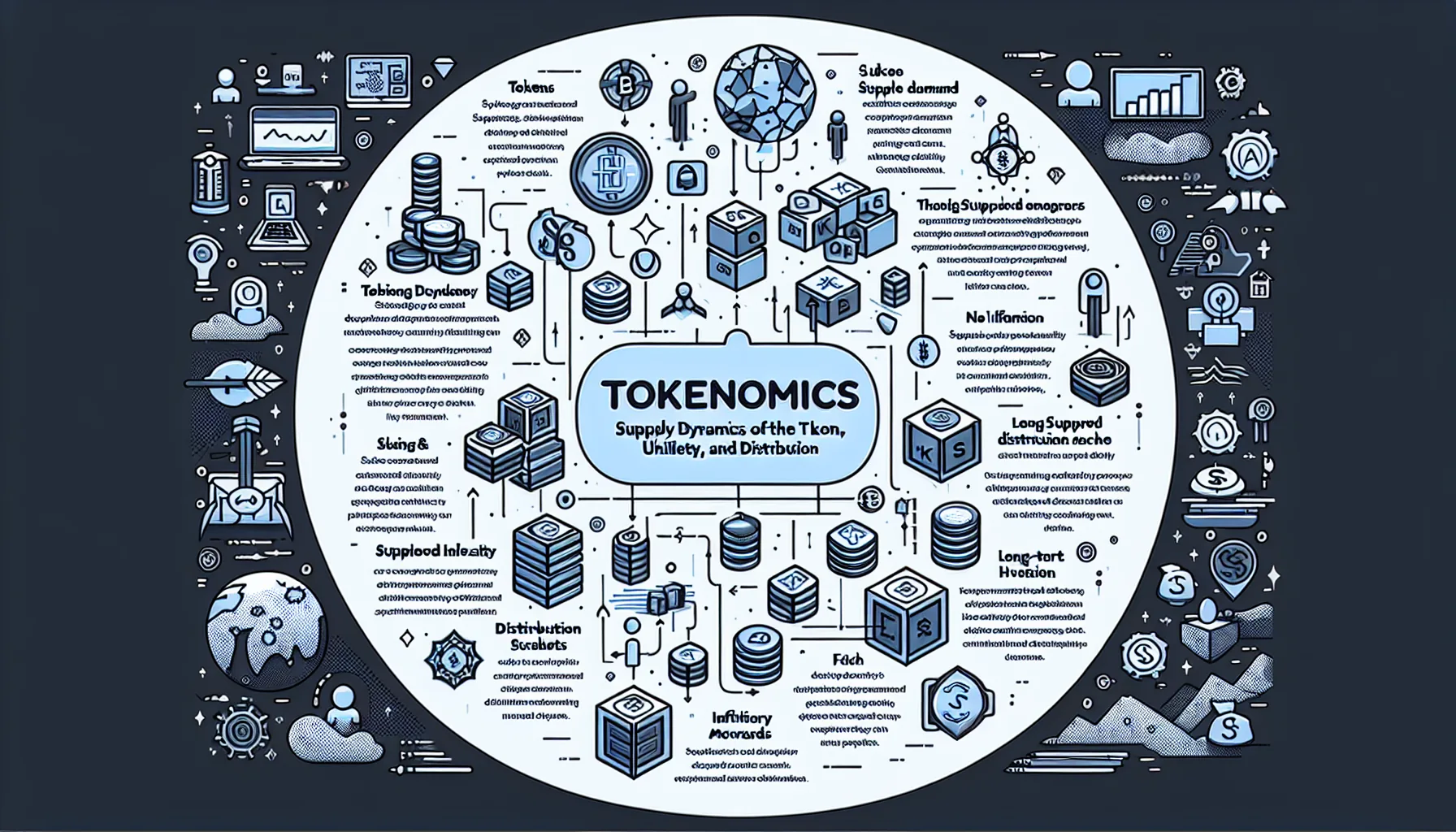
Tokenomics of the SKL Token: Supply Dynamics, Utility, and Distribution
The SKL token operates as the native utility token of the Skale Network, playing a crucial role in its economic model and network performance. Its tokenomics are designed to balance incentives for validators, delegators, and developers while addressing scalability and security concerns within the ecosystem.
Circulating Supply vs. Total Supply
The SKL token follows a capped supply model, with an established maximum supply that cannot be exceeded. However, the circulating supply is subject to periodic release schedules influenced by vesting contracts, staking rewards, and token unlocking events. This phased release structure can create short-term inflationary pressure on the market, particularly during large unlocks. Long-term investors and traders often scrutinize these unlock schedules, as abrupt increases in circulating supply may affect token price dynamics and liquidity.
Staking and Inflationary Rewards
Central to the SKL tokenomics is its staking mechanism. SKL holders can delegate tokens to validators, who operate nodes to secure the network and facilitate its scalability features. Validators and delegators receive compensation in the form of inflationary rewards, which are funded through newly minted tokens. While this incentivizes participation and improves network security, the inflation rate must be carefully managed; excessive inflation could dilute the value of existing tokens and disincentivize long-term holders.
Utility and Demand Drivers
The SKL token has multiple utility-driven use cases within the Skale ecosystem. Primarily, developers use SKL to pay subscription fees for deploying dApps and obtaining elastic sidechains. This subscription model introduces a predictable, fiat-equivalent pricing structure, which can unbind demand for SKL from speculative markets. However, it raises a potential friction point: the disconnect between fiat-denominated usage fees and the token’s inherent market volatility may impact its long-term demand if developers find the pricing model overly complex or impractical.
Token Distribution Challenges
The distribution of SKL tokens has been a contentious issue among its community. A significant portion was allocated to early investors, core team members, and foundation reserves, with relatively less distributed to the public during initial offerings. Critics argue that such allocation skews voting power and governance toward insiders, potentially undermining the project’s decentralized ethos. Furthermore, vesting schedules for early stakeholders could lead to sell-offs upon unlock, creating periods of heightened volatility and impacting secondary markets.
Conclusion of SKL Tokenomics Overview
The tokenomics of SKL is a balanced mix of utility-driven demand, staking-supported inflation, and a supply release model that requires careful monitoring to maintain ecosystem health. However, challenges surrounding distribution fairness and inflationary pressures emphasize the need for cautious governance.
SKL Governance
Governance in SKL Token: How the SKALE Network Operates and Evolves
The governance model of SKL, the native utility token of the SKALE Network, plays a critical role in shaping the protocol's adaptability, decentralization, and community engagement. While SKALE's primary aim is to provide elastic blockchain infrastructure for decentralized applications (dApps), its governance framework ensures the network’s rules and operations are guided by its participants. However, this design brings both opportunities and challenges to the table.
Decentralized Decision-Making Through Voting Power
Governance in the SKALE ecosystem is centered around the delegation and staking of SKL tokens. Token holders can stake their SKL with validators, who actively participate in running the network and contribute to governance decisions. By staking their tokens, users align their incentives with the network’s health, as they gain rewards while playing a role in shaping its future. However, this staking-based governance model raises concerns about concentration of power. Large token holders or entities can potentially gain disproportionate influence over proposals, which could skew governance outcomes in their favor.
Proposal Creation and Approval Mechanisms
Governance proposals within the SKALE Network typically encompass protocol upgrades, changes in economic parameters (such as staking rewards or network fees), and other core decisions affecting the ecosystem. While this framework ensures that changes are driven by the community and validators, the complexity of certain proposals can alienate smaller, less technically proficient participants. A lack of accessible documentation or understandable details on these proposals can exacerbate the divide between casual token holders and technically proficient stakeholders, potentially resulting in lower participation rates.
Role of Validators in Governance Dynamics
Validators act as critical intermediaries in SKALE’s governance structure, empowered to approve or reject proposals while ensuring consensus and network security. While their incentives are tied to the proper functioning of the protocol, this dual role raises questions over conflicts of interest. Validators who control significant staking pools may prioritize profit-maximizing decisions over those benefiting smaller participants or the long-term sustainability of the ecosystem.
Governance Transparency and Communication Gaps
Another important consideration is the transparency of the governance process. While SKALE has made strides in decentralizing decision-making, it faces challenges in communicating governance developments effectively to all stakeholders. The lack of clear, standardized reporting mechanisms can leave some participants feeling disconnected from the decision-making process, potentially undermining trust in the system.
Governance in the SKALE ecosystem provides a powerful tool for protocol evolution. However, the concentration of power, communication gaps, and accessibility barriers present ongoing challenges that the network must navigate.
Technical future of SKL
Current and Future Technical Developments for SKL Crypto Asset
Modular Blockchain Architecture Enhancements
SKL operates on the Skale Network, a modular blockchain platform designed to improve scalability for Ethereum-based applications. The primary technical distinction of SKL lies in its elastic sidechains, enabling dApp developers to deploy custom blockchains tailored to their needs. Recent efforts have been focused on optimizing interoperability between these chains and the Ethereum mainnet, aiming to reduce latencies during state synchronization. However, critics have pointed out challenges around adopting optimal messaging protocols, as cross-chain communication still occasionally faces congestion during high usage periods.
Future developments aim to implement further refinements to the chainlink integrations and other external services, which provide SKL projects with oracle data. This initiative, while promising, may introduce added complexity to the network, potentially raising concerns over security vulnerabilities.
Enhanced Staking and Validator Node System
The staking and validator framework for SKL continues to be a critical topic of technical focus. Validators on the Skale Network are responsible for securing its elastic chains by participating in a pooled validation mechanism. Plans for future upgrades suggest an overhaul of validator incentives through more dynamic reward structures. While these improvements are expected to attract a broader base of node operators, certain technical drawbacks persist, including the relatively high hardware requirements for validators, which could hinder decentralization if smaller operators are excluded.
There is also ongoing work to refine slashing mechanics, intended to deter malicious behavior without overly punishing honest actors. However, balancing these measures has proven complex, with some arguing that current slashing policies create risk-averse behavior among validators, occasionally leading to missed opportunities for network optimizations.
DAO and Governance Protocol Upgrades
SKL token holders currently participate in governance through a decentralized autonomous organization (DAO) model. The next phase of development involves introducing weighted voting systems that take on-chain activity into consideration, rather than relying solely on token holdings. While this is intended to foster a more equitable governance system, early trials suggest that the complexity of these systems may alienate smaller stakeholders, potentially discouraging broader community involvement.
Layer 2 Compatibility and EVM Scaling
To remain competitive among Layer 2 technologies, SKL is doubling down on its Ethereum Virtual Machine (EVM) compatibility. Recent technical updates have focused on improving gas optimization strategies for smart contract deployment. Future goals include eliminating redundant computational steps for even greater execution efficiency, though concerns arise as aggressive optimizations may unintentionally break compatibility with some legacy Ethereum projects.
Comparing SKL to it’s rivals
SKL vs MATIC: A Technical and Strategic Comparison in Layer-2 Solutions
When comparing SKALE (SKL) to Polygon (MATIC), both projects target scalability in blockchain networks, but they do so with distinct architectures and strategic approaches. For crypto-savvy users trying to evaluate the two, understanding these differences is crucial for gauging utility, flexibility, and limitations.
Architecture: Modular Elastic Sidechains vs. Generalized Layer-2
One of SKALE's standout technical features is its elastic sidechains. Unlike a generalized Layer-2 solution such as Polygon, SKALE provides modular, application-specific sidechains that developers can customize for their needs. These sidechains are EVM-compatible and offer a tailored execution environment with independent resources, enabling low latency and efficient scaling.
In contrast, MATIC operates primarily as a more generalized Layer-2 platform, offering features like Plasma chains and rollups to facilitate broader scalability rather than application-specific use cases. While this approach makes MATIC highly versatile for a range of decentralized applications (dApps), it lacks the customization granularity provided by SKALE. For developers prioritizing application-specific performance optimizations, SKALE's architecture is often more appealing.
Consensus Mechanisms and Security Trade-offs
A notable difference lies in the consensus mechanisms. SKALE employs a novel pooled-security model in which validators secure multiple elastic sidechains simultaneously, with resource allocation balanced dynamically across the network—offering flexibility but also introducing potential vulnerabilities related to cross-sidechain dependency.
MATIC, on the other hand, relies on a more traditional Proof-of-Stake architecture combined with checkpointing on the Ethereum mainnet. This method ensures a high level of security since the mainnet acts as the final arbiter for transaction finality. The downside for SKALE is that it uses its own pooled validator system instead of integrating directly with Ethereum’s mainnet for dispute resolution, raising questions regarding the decentralization security trade-offs for users seeking Ethereum's native guarantees.
Fee Structures and User Costs
Both projects aim to significantly reduce gas fees compared to the Ethereum base layer. However, SKL's model eliminates per-transaction gas fees altogether by charging developers upfront to lease bandwidth on elastic sidechains. While this is economically advantageous for enterprises managing high-throughput applications, it shifts costs away from users to developers and requires longer-term planning.
Polygon’s per-transaction fees, while minimal compared to Ethereum, provide more flexibility for developers with limited budgets or those expecting fluctuating user activity. SKALE's subscription model is less suited for smaller projects or those experimenting with uncertain user activity levels.
Ecosystem and Adoption Challenges
SKALE's focus on developer-centric customization and scaling comes with challenges in attracting network effects, as it may struggle to grow its ecosystem as quickly as MATIC's widely adaptable environment. MATIC benefits from robust partnerships and wide adoption across dApps, while SKALE still competes for developer mindshare within its niche.
SKALE (SKL) vs. The Graph (GRT): A Focused Comparison
When comparing SKALE (SKL) to The Graph (GRT), both projects are attempting to solve distinct yet interrelated problems within the blockchain ecosystem. However, the difference lies in their approach, target audience, and application scope. This section explores where these two technologies align and where they diverge, focusing on the technical and utility dimensions that matter most to crypto-savvy readers.
Core Functionality and Target Use Cases
SKALE positions itself as a high-performance Layer-2 blockchain network, designed to enhance scalability and reduce latency for Ethereum-based decentralized applications (dApps). It’s fundamentally about computational performance and easing network congestion. On the other hand, The Graph focuses on enabling decentralized querying and indexing for blockchain data. GRT acts as middleware, empowering developers to retrieve on-chain data efficiently for a range of dApps, particularly in decentralized finance (DeFi) and Web3 ecosystems.
While SKALE’s modular architecture helps increase throughput for dApps, The Graph primarily serves an infrastructural role, acting as a vital component for data accessibility. In essence, SKL’s design favors scaling and fast execution, whereas GRT focuses on data retrieval and transparency.
Decentralization: Key Trade-Offs
Both SKALE and The Graph emphasize varying degrees of decentralization, but the implementation differs. SKALE achieves decentralization through validator nodes rented by developers on its open network. The modularity of these SKALE Chains allows for customization in terms of storage, security configurations, and computational demands, albeit requiring developers to manage their distinct chains actively. While efficient, this granular control can lead to deployment complexity, especially for teams unfamiliar with bespoke node setups.
In contrast, The Graph’s core decentralization model is achieved through a network of Indexers, Curators, and Delegators who maintain and query the subgraphs. The Graph’s protocol achieves global data accessibility at scale, but faces challenges tied to dependency on Indexers, particularly when certain subgraph processing lacks optimal incentivization. Bottlenecks can occur if attention is unevenly distributed across the ecosystem.
Developer Experience and Usability
SKALE’s framework excels when high-throughput environments are critical, enabling dApps to handle bursts of activity without compromising user experience. Its ability to offload Ethereum’s mainnet combined with EVM compatibility gives developers an advantage in creating highly responsive applications. On the flip side, learning SKALE’s modular configuration may prove to have a steeper learning curve for teams outside the Ethereum ecosystem.
The Graph provides simplicity in querying by avoiding backend complexity through its subgraph abstraction layer. Yet, this simplicity can sometimes lead to trade-offs in flexibility, especially when developers need very specific customizations that fall out of The Graph’s pre-designed querying paradigm.
Security Considerations
While both projects are securely designed, SKALE’s validator model introduces the potential for inconsistency based on how developers configure chains. The Graph, while secure in its architecture, raises questions about incentivization-based centralization, where Indexers controlling large data segments could potentially skew performance.
This nuanced comparison outlines not just their unique technical innovations but also their respective limitations, allowing developers and stakeholders to evaluate which solution addresses their specific blockchain needs.
Comparing SKL to ALGO: A Technical Analysis of Layer-1 Solutions
When examining SKL (Skale) in relation to ALGO (Algorand), it's crucial to focus on the fundamental differences in architecture, scalability, consensus mechanisms, and utility. Both projects position themselves as key players in the blockchain space, and while they share some similarities as Layer-1 solutions, their approaches to decentralization, throughput, and developer ecosystems are markedly different.
Consensus Mechanisms and Decentralization
ALGO operates on its proprietary Pure Proof of Stake (PPoS), which emphasizes security, decentralization, and fast finality. PPoS allows every token holder to participate in the consensus process, ensuring robust decentralization. On the other hand, SKL employs a PoS-based model that relies on validator nodes to secure the network. While both platforms minimize energy consumption compared to Proof of Work (PoW) systems, detractors of SKL often point out that its validator-centric design could concentrate power in fewer hands, which, in theory, could make it less resilient to network-level attacks compared to ALGO’s extensive token-holder-driven participation.
Scalability and Throughput
Scalability is another point of differentiation. SKL’s modular sidechain architecture allows for the seamless deployment of decentralized applications (dApps) across multiple independent chains, effectively reducing congestion on the network. This design makes it highly elastic and adaptive to varying workloads. Meanwhile, ALGO achieves scalability by delivering sub-5-second block finality and processing thousands of transactions per second (TPS). However, critics of ALGO's system argue that its protocol upgrades, while impactful, require careful governance coordination—which can slow agility when compared to SKL's more dynamic developer configurations.
Developer Ecosystem and dApp Support
On the developer side, ALGO boasts better-established tools and partnerships tailored for institutional-grade dApps, making it attractive for large-scale enterprise solutions. With its focus on high security and guaranteed transaction finality, ALGO has earned a reputation as being robust, but this comes at the expense of being slightly less flexible for developers seeking rapid iteration. Conversely, SKL’s chain-as-a-service model offers a more application-specific approach, giving developers significantly more freedom to customize chains. However, some critics note that this flexibility could lead to fragmentation within the SKL ecosystem, which might hinder interoperability.
Tokenomics and Incentive Structures
ALGO’s tokenomics emphasize rewarding all participants, ensuring inclusivity, and incentivizing decentralization. SKL’s reward structure, while effective for validators, has faced scrutiny for potentially being less equitable to smaller players or non-technical participants. This perceived imbalance could narrow its appeal to a broad swath of users, an area where ALGO enjoys an advantage.
In summary, while both SKL and ALGO have carved out distinct niches within the blockchain space, the trade-offs between decentralization, scalability, and developer priorities become evident when directly compared. Differences in consensus mechanisms, architecture, and ecosystem goals set these two projects apart, catering to different user bases and application requirements.
Primary criticisms of SKL
Primary Criticism of SKL: Examining the Challenges and Concerns
One of the primary criticisms of SKALE Network (SKL) stems from its complex architecture and the steep learning curve it presents to developers. While SKALE markets itself as a modular and scalable solution for Ethereum, the technical intricacy of deploying and managing Elastic Sidechains has led to some concerns among developers and users alike. Those new to the ecosystem may find the onboarding process cumbersome, which can dissuade smaller projects or individuals from adopting the network. This barrier to entry raises questions about SKALE's accessibility and long-term growth within a highly competitive Layer-2 landscape.
Another point of contention is SKALE's governance structure and the centralization risks associated with its network validators. Although SKALE uses a Delegated Proof-of-Stake (DPoS) consensus mechanism, critics argue that this approach may inadvertently consolidate power among a relatively small group of validators. This creates a potential imbalance within the network's governance processes, which could undermine its claim of being truly decentralized. Moreover, the economic incentives for validators and delegators have been questioned for their sustainability over time, particularly as SKALE expands and introduces more subnets.
Tokenomics also play a significant role in the criticism of SKALE. SKL’s inflationary token model has been a topic of debate, as it introduces concerns about long-term value retention. High token issuance rates, coupled with limited use cases for SKL beyond staking and network security, have led some to question the demand dynamics supporting its ecosystem. Without sufficient utility or compelling reasons for developers and users to hold or use SKL, the token risks becoming over-distributed, which could dilute its market incentives and reduce its overall attractiveness.
Security is another area where SKALE has faced scrutiny. While Elastic Sidechains offer flexibility, their isolated nature can introduce vulnerabilities. Critics argue that smaller or poorly-secured sidechains may become attractive targets for malicious actors, potentially undermining trust in the broader network. Furthermore, the reliance on Ethereum for securing SKALE's main operations could be interpreted as a point of weakness, as any issues with Ethereum’s Layer-1 would directly impact SKALE’s performance and security assurances.
Finally, interoperability remains a topic of concern. Although SKALE is designed to complement Ethereum, critics highlight its lack of cross-chain functionality with other prominent blockchain ecosystems. This limitation may hinder its ability to compete in an increasingly interconnected crypto landscape where multi-chain compatibility is becoming a key driver for adoption.
Founders
SKL Founding Team: Decoding the Builders Behind Skale Network
The founding team behind SKL, the native token of the Skale Network, is composed of seasoned professionals deeply rooted in blockchain innovation, enterprise software, and entrepreneurship. Skale was co-founded by Jack O’Holleran and Stan Kladko, two individuals with complementary expertise that has driven the network's technical and business development. While their experience is impressive, aspects of their leadership and operational strategies raise important points for critical examination.
Jack O’Holleran: Business Focus Meets Blockchain Ambitions
Jack O’Holleran, the CEO of Skale Labs, comes from a corporate background in machine learning, AI, and enterprise technology. Prior to entering the blockchain ecosystem, O’Holleran held leadership roles at companies like Good Technology and BuzzWorks. His ability to bridge corporate operational approaches with decentralized technologies has been pivotal to Skale’s growth strategy. However, critics within the crypto space have occasionally raised concerns over whether his enterprise-oriented mindset might be at odds with the ethos of distributed, fully decentralized systems. Some observers argue that O’Holleran’s focus on business scalability could prioritize institutional adoption at the expense of grassroots, community-driven initiatives.
Stan Kladko: Technical Architect with a Wealth of Experience
On the technical front, Stan Kladko serves as the driving force behind the Skale protocol’s architecture. With a Ph.D. in Physics and over 16 years of experience in security and distributed systems, Kladko’s technical expertise is non-negotiable. He has played a pivotal role in conceptualizing Skale’s modular design, which aims to tackle Ethereum’s scalability issues. Yet, questions have occasionally been raised about the protocol’s complexity, which some developers argue may pose adoption challenges for less experienced blockchain developers. Moreover, while Kladko’s commitment to decentralized technologies is evident, the degree of community input in shaping Skale’s technical roadmap has been a point of contention in some corners of the space.
Observers Critique Balance Between Vision and Execution
While both founders bring undeniable strengths to the table, some in the crypto community remain cautious about the team’s ability to strike the right balance between technical innovation and community alignment. The overarching question remains whether the Skale Network can maintain its ethos of decentralization while achieving the scalability and performance benchmarks set forth by its leadership. These trade-offs between technology, adoption, and decentralization reflect ongoing debates regarding the team’s strategic decisions and transparency with its token holders.
By dissecting the backgrounds, roles, and strategies of its founding team, the story of SKL becomes a microcosm of broader challenges facing blockchain startups.
Authors comments
This document was made by www.BestDapps.com
Sources
- https://www.skale.network/
- https://skale.network/whitepaper
- https://github.com/skalenetwork/skale-manager
- https://medium.com/skale
- https://etherscan.io/token/0x00c83aecc790e8a4453e5dd3b0b4b3680501a7a7
- https://coinmarketcap.com/currencies/skale-network/
- https://www.coingecko.com/en/coins/skale
- https://skale.network/blog
- https://docs.skale.network/
- https://community.skale.network/
- https://twitter.com/SkaleNetwork
- https://decrypt.co/resources/skale
- https://www.reddit.com/r/SKALE/
- https://skale.space/
- https://messari.io/asset/skale-network
- https://www.linkedin.com/company/skale-labs/
- https://skale.network/files/SKALE_Token_Economics.pdf
- https://skale.network/ecosystem
- https://docs.skale.network/developers/schain-overview
- https://blockexplorer.skale.network/


