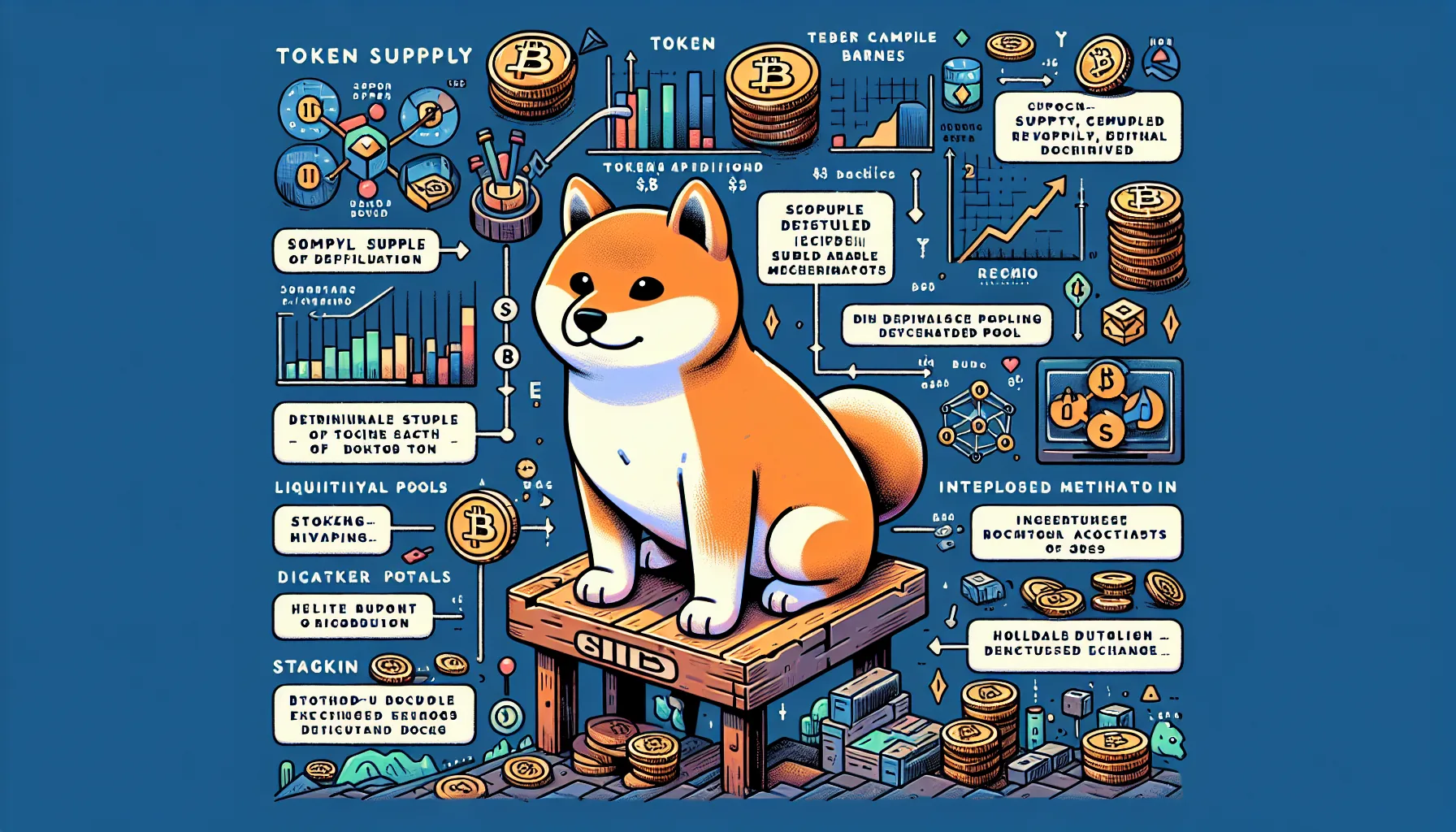
History of SHIB
The History of SHIB: From Meme to Movement
SHIB, known formally as Shiba Inu, emerged in August 2020 amidst the rising popularity of dog-themed cryptocurrencies. Created by an anonymous developer or group of developers using the pseudonym "Ryoshi," the project's inception was directly inspired by Dogecoin (DOGE), although its founding ethos was strikingly different. While Dogecoin originated as a satirical take on the cryptocurrency frenzy, SHIB marketed itself as an “experiment in decentralized spontaneous community building,” which set the tone for its unique trajectory.
One of the defining moments in SHIB’s history was the decision to issue a staggering 1 quadrillion tokens—a move that underscored its status as a hyper-inflationary asset. Half of this supply was locked into Uniswap to provide liquidity, with the accompanying private keys irrevocably burned, signaling an intent to establish decentralization. However, the remaining 50% of the supply was sent to Ethereum co-founder Vitalik Buterin, a controversial and unconventional move that cemented SHIB’s position as an attention-grabbing project.
This decision sparked widespread debate within the crypto community. On one hand, it positioned SHIB as deeply tied to the Ethereum ecosystem, but on the other hand, it also created uncertainty. Critics questioned the logic of entrusting such a massive allocation to a single individual, viewing it as a potential centralization risk. In May 2021, Buterin donated a substantial proportion of his holdings to various charitable causes, including over $1 billion worth of tokens to India’s COVID-19 relief fund. He later burned the remaining tokens in his wallet, effectively removing them from circulation. While this gesture aligned with SHIB's decentralized vision, it created immense volatility in the token’s market.
Community dynamics have played a pivotal role in SHIB's development. Branded as the "ShibArmy," its supporters claim millions of members worldwide, fostering one of the largest and most vocal crypto communities. This following pushed for the expansion of SHIB’s utility through initiatives like ShibaSwap, a decentralized exchange, and the introduction of related tokens such as LEASH and BONE. However, critics argue that such developments often face execution risks and remain overshadowed by SHIB's branding as a speculative meme token.
Despite its grassroots-driven ethos, questions of governance persist. Critics cite the ambiguous roles of its founding team and key developers as potential weak points from an organizational perspective. As SHIB’s experiment in community-driven decentralization evolves, its history underscores a fine balance between innovation and inherent risks.
How SHIB Works
How SHIB Works: Core Mechanisms and Technical Framework
SHIB, an ERC-20 token built on Ethereum, operates as a decentralized, community-driven cryptocurrency. At its core, SHIB relies on Ethereum's blockchain infrastructure to facilitate security, transparency, and interoperability with decentralized applications (dApps). However, being rooted in Ethereum also introduces certain technical considerations and challenges.
Token Supply and Distribution Mechanics
SHIB boasts a deliberately massive total supply, initially set at one quadrillion tokens. A significant portion of these tokens were allocated at launch to a burn mechanism involving Ethereum co-founder Vitalik Buterin. This move essentially removed a notable percentage of the supply from circulation, introducing scarcity as part of the tokenomics narrative. The remaining tokens are mainly distributed across centralized and decentralized exchanges, user wallets, and liquidity pools. However, the large supply means that SHIB struggles to reach a "scarce asset" status in a traditional sense, potentially hindering its appeal for long-term cryptocurrency investors accustomed to deflationary models.
Decentralized Exchange Integration
SHIB's ecosystem also integrates into ShibaSwap, a proprietary decentralized exchange (DEX) designed to support token swaps, staking, and liquidity pooling. SHIB holders can stake (or "bury") their tokens, earning rewards in the form of BONE (another token in the Shiba ecosystem). Additionally, liquidity providers who "dig" by adding SHIB to liquidity pools can earn returns while contributing to the ecosystem’s liquidity. This multi-token mechanism creates a functional but complex utility layer that depends heavily on sustained user activity to remain viable.
Gas Fees and Ethereum Dependence
As an Ethereum-based token, SHIB transactions are subject to the network's gas fees, which can fluctuate dramatically depending on network congestion. This dependency can make microtransactions infeasible, undermining SHIB's use case as a day-to-day cryptocurrency. The transition of Ethereum to proof-of-stake via Ethereum 2.0 might alleviate some cost concerns, but this remains contingent on Ethereum’s broader scalability goals.
Smart Contract Risks and Decentralization Concerns
As an ERC-20 token, SHIB is governed by smart contracts on Ethereum. While this enables programmability and composability within decentralized finance (DeFi), it also presents risks. A vulnerability or exploit in the smart contracts could lead to significant financial losses for holders and liquidity providers. Furthermore, while SHIB is often marketed as "decentralized," initial token allocations and centralized exchange dominance over liquidity expose it to centralization risks.
Community Reliance and Ecosystem Challenges
SHIB relies heavily on its community for growth and adoption. While this decentralized branding helps foster engagement, it also makes the project susceptible to shifts in user sentiment. Additionally, the lack of a formal development roadmap or on-chain governance can make the long-term sustainability of SHIB’s ecosystem uncertain, especially in a competitive and rapidly evolving DeFi landscape.
Use Cases
Exploring Shiba Inu's (SHIB) Use Cases within the Crypto Ecosystem
Shiba Inu (SHIB), initially introduced as a "meme token," has steadily evolved to present diverse use cases within the blockchain and cryptocurrency ecosystem. Beyond its meme origins, the project has built several utilities that cater to both decentralized users and developers. However, limitations and challenges surrounding these use cases persist.
SHIB as a Payment Method: Adoption and Limitations
One of SHIB's primary use cases is as a payment token. Its widespread adoption stems from its large-cap token status and its considerably low transaction fees on supported networks like Ethereum. Various merchants and payment gateways, including platforms supporting cryptocurrency transactions, accept SHIB, giving it utility in e-commerce and real-world purchases. However, this use case faces limitations due to scalability challenges on Ethereum’s layer-1, where network congestion and high gas fees can disincentivize micro-transactions using SHIB.
Governance Through Shiba Inu’s Ecosystem Tokens
SHIB is part of a broader ecosystem that includes tokens like BONE and LEASH, which provide governance functionality. Specifically, SHIB holders can interact with the platform’s governance and staking features indirectly by holding or transacting within the ecosystem. However, governance is fragmented across multiple ecosystem tokens, which may dilute SHIB’s individual utility in decision-making processes.
ShibaSwap and Decentralized Finance (DeFi)
The ShibaSwap platform enhances SHIB's utility within decentralized finance. Users can stake SHIB in liquidity pools or exchange tokens through the platform. Staking SHIB allows users to earn rewards, typically paid out in BONE or other ecosystem tokens. Despite its functionality, ShibaSwap’s adoption is somewhat constrained by competition from larger DeFi platforms offering more liquidity, lower fees, and advanced smart contract integrations.
Integration in the Metaverse and NFTs
The Shiba Inu ecosystem extends to non-fungible tokens (NFTs) and metaverse applications. SHIB is used to purchase and interact with ecosystem-specific NFTs as part of the broader community engagement strategy. These NFTs and the Shiba Inu metaverse initiative aim to position SHIB within the emerging Web3 marketplace. However, this ambition hinges on mainstream adoption of these technologies, which remains speculative and fragmented.
Tokenomics and Utility Constraint
A significant portion of SHIB's total supply has been publicly burned to improve scarcity, but questions linger about its actual utility for complex financial use cases. Its initial distribution as a meme token still affects perceptions about its applicability in scenarios requiring long-term trust and stability.
Developer and Ecosystem Challenges
SHIB’s potential for further integration in broader crypto ecosystems is hindered by its reliance on Ethereum’s infrastructure. High gas fees and scalability hurdles for SHIB transactions limit its real-world usability, especially for frequent, small-scale transactions. Additionally, critics question the centralized oversight within its ecosystem, particularly regarding decision-making and token allocation. This can deter developers from building layered solutions around SHIB.
SHIB Tokenomics
SHIB Tokenomics: Understanding the Mechanics Behind the Hype
Shiba Inu (SHIB) operates within a highly intricate tokenomic structure, which is a cornerstone of its identity as a decentralized community-driven crypto asset. With a total initial supply of one quadrillion tokens, SHIB's tokenomics revolve around its extreme abundance, deflationary mechanisms, and utility. However, its vast supply, distribution model, and burn strategies raise both opportunities and challenges for its ecosystem.
Massive Supply and Deflationary Initiatives
SHIB initially launched with one quadrillion tokens, a staggering figure even among meme tokens. A notable decision early in its lifecycle was the transfer of 50% of the total supply to Ethereum co-founder Vitalik Buterin’s wallet, a move intended to bolster trust and decentralization. Buterin later burned the majority of these tokens (410.24 trillion SHIB) and donated a portion to charity, effectively reducing SHIB’s circulating supply. While these deflationary actions temporarily alleviated concerns about oversaturation, they also concentrated token supply dynamics heavily on unpredictable, whale-level actions.
To maintain scarcity, the SHIB ecosystem relies on both intentional burns and community-driven initiatives. For example, transaction-based burns and voluntary contributions from holders aim to steadily reduce supply. Still, given the enormity of the remaining token pool, critics argue that these efforts lack the scale to meaningfully impact per-token scarcity. This raises questions about whether current burn mechanisms are sufficient or create merely symbolic deflation.
Holder Distribution and Concentration Risks
Holder distribution is another critical control point in SHIB’s tokenomics. While SHIB markets itself as a "community-centered" asset, data shows a noticeable concentration of its supply among top wallets. Such wallet concentration could expose the token to risks of centralized whale activity, including market manipulation or sudden liquidity drains.
This setup conflicts with the decentralized ethos promoted by Shiba Inu. Centralized ownership, even if unintentional, diminishes true decentralization and raises concerns about stability within its broader ecosystem.
Ecosystem Utility and Token Use Cases
Beyond speculative trading, SHIB has gained additional utility within the Shiba Inu ecosystem, which includes ShibaSwap (a decentralized exchange), staking, and liquidity pools. SHIB holders can stake their tokens to earn additional rewards in Bone and Leash, two related tokens in the ecosystem, enhancing SHIB’s functionality. While these mechanisms aim to encourage long-term holding, they may have limited appeal to those looking beyond SHIB’s auxiliary role to its core value proposition.
The tokenomics of SHIB present a complex mix of potential and pitfalls. Its abundance, while character-defining, remains a double-edged sword, especially as it strives for credibility alongside more fundamentally scarce assets. Token distributions and burns may contribute to tenuous market dynamics if not adequately managed, leaving room for skepticism even among savvy crypto investors.
SHIB Governance
SHIB Governance: Decentralization and Limitations
SHIB, the ERC-20 token based on the Ethereum blockchain, operates within a decentralized ecosystem. However, when it comes to governance, SHIB’s framework reveals both strengths and challenges that reflect its unique position in the crypto space.
Governance Mechanism: Influences and Stakeholders
SHIB lacks a formalized, on-chain governance protocol, setting it apart from many newer decentralized finance (DeFi) projects that rely on token-holder votes for decision-making. Instead, governance decisions primarily stem from the ecosystem’s core developers and the broader SHIB community. While this informal model aligns with SHIB’s grassroots origin, it raises questions about transparency and inclusivity in decision-making processes.
The Shiba Inu ecosystem features three primary tokens—SHIB, LEASH, and BONE—each with different roles. Notably, BONE serves as the governance token for ShibaSwap, the decentralized exchange (DEX) that is part of the ecosystem. Holders of BONE participate in proposal votes within the ShibaSwap ecosystem through its governance mechanism, referred to as the Doggy DAO. However, SHIB, as the flagship token, plays no direct role in this governance structure, which can create confusion or misaligned incentives for SHIB holders seeking platform influence. This distinction often leaves SHIB holders dependent on the wider community structure rather than a formal reciprocal voting framework.
Centralization Concerns
Despite its claims of decentralization, SHIB governance leaves room for concern about concentrated power. A significant portion of the ecosystem’s trajectory is influenced by the lead developers and project originators, who remain pseudonymous. This centralized influence over development decisions can conflict with the broader crypto movement's decentralization ethos. Community members may voice their preferences via social platforms, but there is no binding mechanism ensuring their input directly impacts projects or updates in SHIB’s ecosystem.
Additionally, the reliance on Ethereum as the underlying blockchain introduces external dependencies, particularly given Ethereum’s network-wide governance upgrades and scalability transitions. Any updates to Ethereum’s infrastructure could have a substantial downstream impact on SHIB, over which the SHIB community has no direct control.
Security and Risks
Like many crypto projects, SHIB also faces the risk of governance being influenced by whale accounts. A large concentration of SHIB tokens in relatively few wallets introduces the possibility of significant sway over informal governance dynamics, including marketing narratives or social media-driven decisions. These centralization risks, combined with the lack of robust on-chain governance for SHIB itself, are points of contention among critical observers of the project.
Final Thoughts for Consideration
While SHIB thrives on community-driven vitality, its governance approach remains a blend of informal participation and formalized mechanisms specific to certain ecosystem tokens. This duality offers flexibility but also underscores the need for careful scrutiny, especially for SHIB holders seeking more direct governance involvement.
Technical future of SHIB
SHIB Technical Developments and Roadmap Analysis
Shibarium Layer-2 Scaling Solution
Shiba Inu (SHIB) has been actively developing its dedicated layer-2 blockchain, Shibarium. Designed to address Ethereum's scalability constraints, Shibarium focuses on reducing gas fees and increasing transaction throughput within the Shiba Inu ecosystem. This layer-2 solution is expected to integrate directly with SHIB, LEASH, and BONE tokens, forming the infrastructure backbone for its ecosystem. Despite the anticipated advantages, challenges remain. The network's ability to stand out in an increasingly competitive layer-2 landscape—dominated by Polygon, Arbitrum, and Optimism—will depend on execution and community adoption. Additionally, Shibarium’s security model and resistance to both centralization and potential exploits are yet to be fully evaluated in a live environment.
Decentralized Applications and Smart Contracts
Shiba Inu's roadmap outlines the development of decentralized applications (dApps) and smart contracts that expand utility for SHIB. These efforts include ShibaSwap, a decentralized exchange that has added features like token swapping, staking, and yield farming into the ecosystem. However, the innovation has been incremental rather than groundbreaking, and ShibaSwap's activity often lags behind other prominent DeFi protocols. Upcoming developments indicate plans to incorporate NFT marketplaces and gaming applications, which aim to establish SHIB as a significant player in broader Web3 use cases. Still, competing for market share against established platforms like OpenSea and Axie Infinity presents a substantial hurdle.
Ecosystem Token Mechanics and Decentralization
The launch of BONE and LEASH tokens has provided additional utility within the Shiba Inu ecosystem. BONE is increasingly utilized for governance as part of Shiba Inu's decentralized decision-making framework, while LEASH acts as a high-value speculative asset with minimal circulating supply. These mechanisms bolster ecosystem engagement; however, criticisms persist regarding tokenomics architecture, particularly concerns over centralization risks due to whale holdings and the reliance on community sentiment for valuation.
Upcoming Technical Challenges
The technical roadmap includes integrating cross-chain interoperability solutions, which aim to bridge SHIB with other ecosystems. Success in this area hinges on securing partnerships and ensuring robust bridge security, areas where other crypto projects have historically suffered severe breaches. Additionally, increased focus on environmental sustainability could spark future development efforts, possibly incorporating greener consensus mechanisms or offsets.
While SHIB’s technical evolution carries potential, scaling and decentralization challenges highlight the need for cautious optimism. Blockchain exploits and insufficient adoption for planned applications could stall progress in a fast-moving ecosystem.
Comparing SHIB to it’s rivals
SHIB vs. DOGE: A Detailed Comparison of Utility and Community Dynamics
When analyzing Shiba Inu (SHIB) in comparison to Dogecoin (DOGE), it’s clear that both cryptocurrencies have carved significant niches in the meme-coin space, though their approaches differ considerably in terms of utility, community dynamics, and development ethos.
Utility: Token Ecosystem vs. Single-Asset Model
One of the most defining distinctions between SHIB and DOGE is their focus on utility within their ecosystems. DOGE operates primarily as a standalone blockchain without a robust ecosystem, maintaining its original purpose as a peer-to-peer payment network. While this simplicity has its advantages, such as low barriers to entry for adoption, it offers limited scope for developers or decentralized finance (DeFi) initiatives.
SHIB, in contrast, has deliberately pursued an ecosystem-building strategy. Beyond being a meme-token, it now exists within the larger Shiba Inu ecosystem, which includes tokens such as LEASH and BONE. Additionally, the launch of projects like ShibaSwap (a decentralized exchange) and the plans for Shibarium (a Layer 2 blockchain solution) highlight a commitment to evolving beyond its meme origins. However, critics argue that SHIB’s focus on expanding its ecosystem might distract from its primary purpose, spreading its resources too thin and diminishing its identity as a purely community-driven token.
Community Engagement: Grassroots Enthusiasm vs. Longevity
DOGE’s community remains one of its most celebrated aspects. Having existed since 2013, it enjoys an established presence, supported by long-standing enthusiasts and high-profile celebrity endorsements. Its origins as a “for fun” cryptocurrency have fostered a lighthearted, approachable community ethos, which, while enduring, can appear resistant to innovation—DOGE has been slow to adopt meaningful technological updates or evolve beyond its original design.
SHIB’s community, often referred to as the SHIBArmy, is similarly passionate but far younger. SHIB relies heavily on social engagement through platforms like Twitter and Reddit, amplifying its meme culture appeal alongside its ecosystem developments. This approach has cultivated a highly active and engaged base in a relatively short timeframe. However, this fast rise has also made SHIB more susceptible to hype cycles and overreliance on speculative interest, introducing questions about sustainability.
Tokenomics: Supply-Centric Differences
Perhaps one of the starkest differences between SHIB and DOGE lies in their tokenomics. DOGE’s inflationary model, with no hard cap on supply, risks long-term dilution of value, making its utility more viable for tipping and transactions but less attractive for scarcity-driven long-term holding.
SHIB, by contrast, employs a deflationary mechanism, having begun with a quadrillion tokens in circulation, some of which were later burned. While this scarcity model has fueled investor interest, the sheer magnitude of its initial supply still casts a shadow over its ability to maintain meaningful scarcity compared to other deflationary assets. Critics also highlight that such mechanisms may not counteract perceptions of SHIB’s origins as a speculative asset.
Development Focus: Trade-Offs in Direction
DOGE and SHIB represent two opposing philosophies of blockchain asset development—DOGE, as a legacy player with minimal adjustments since its inception, and SHIB, an ambitious upstart aggressively pushing to define itself beyond its meme origins. While this dichotomy presents opportunities for SHIB, it also exposes it to risks of overextension and mismanagement.
SHIB may project a more utility-oriented narrative, but DOGE’s entrenched community and simplicity maintain an enduring appeal that continues to position it as a primary rival.
SHIB vs. FLOKI: A Comparative Analysis of Ecosystem and Utility
When analyzing SHIB in comparison to FLOKI, two emerging memecoins, their rivalry extends beyond surface-level popularity to underlying differences in ecosystem focus, utility, and community-driven development. While both assets are inspired by the iconic Shiba Inu dog, FLOKI has carved a unique niche in the memecoin space, differentiating itself through aggressive branding and distinct value propositions, some of which highlight SHIB's potential areas of weakness.
FLOKI’s Metaverse Integration
One of FLOKI's most notable distinctions is its strong emphasis on the metaverse. FLOKI has invested heavily in positioning itself as a key player in this segment, with its flagship project "Valhalla," a blockchain-based play-to-earn (P2E) game. By leveraging gamification alongside crypto assets, FLOKI aims to create an interactive environment that encourages token utility directly within its ecosystem. This stands in contrast to SHIB’s predominant focus on decentralized finance (DeFi). While SHIB has dabbled in ecosystem expansions via ShibaSwap and the Shiba Inu Metaverse, critics argue that the integration feels more fragmented compared to FLOKI's concentrated push toward immersive, gaming-centric engagement.
Marketing and Community Strategies
Where SHIB relies heavily on organic community growth and meme virality, FLOKI has gained attention for its highly aggressive and sometimes controversial marketing campaigns. FLOKI has pursued strategic ad placements globally, including high-visibility efforts like public transportation branding. This approach offers FLOKI the ability to tap into new audiences rapidly, but it has also led to scrutiny, with debates about whether such campaigns lead to genuine adoption or speculative buying. In comparison, SHIB's traction has been more gradual, rooted in its foundational ties to Ethereum and a broader emphasis on infrastructure innovation, like the Shibarium Layer 2 scaling solution.
Risks and Challenges
FLOKI’s rapid growth strategy and heavy focus on gaming carry inherent risks for longevity. P2E gaming has high development costs, and user adoption can fluctuate based on market trends and platform execution. Additionally, FLOKI’s utility is heavily tied to its ability to gain traction in this singular area, whereas SHIB benefits from a more diversified strategy involving swaps, staking, and its governance token, Bone. Critics of FLOKI argue that its heavy reliance on hype and the metaverse narrative might limit its resilience during crypto market downturns.
Comparatively, SHIB maintains greater network maturity and liquidity, but the evolving competition with FLOKI underscores how ecosystem clarity and execution are critical for sustaining memecoin relevance.
SHIB vs BABYDOGE: Key Differences in Meme Coin Dynamics
When comparing SHIB to BABYDOGE, the contrast reveals significant differences in tokenomics, community focus, and underlying utility. Both projects originate from the “meme coin” ecosystem, but their divergent strategies warrant deeper examination to understand their individual roles in the broader crypto market.
Tokenomics and Supply Mechanisms
BABYDOGE, like SHIB, operates with a substantial token supply, but its hyper-deflationary model is more aggressive, incorporating an auto-burn mechanism and transaction-based reward systems. Every BABYDOGE transaction contributes to reducing total supply while redistributing a portion of tokens back to holders. While this approach creates scarcity over time and rewards long-term holders, critics argue that the mechanics can result in unsustainable inflation of holder portfolios without generating real-world demand.
In contrast, SHIB employs a circulating supply reduction method primarily driven by periodic burns facilitated by community-driven initiatives. While SHIB’s burn efforts have gained traction, they rely heavily on ad hoc contributions, which can lack consistency compared to BABYDOGE’s automatic features. However, this flexibility allows SHIB’s burning strategy to be tailored to evolving market needs, offering potential adaptability BABYDOGE doesn’t possess.
Branding and Community
BABYDOGE positions itself as emblematic of community-focused altruism, particularly through partnerships and campaigns aimed at animal charities. While this philanthropic angle enhances its marketability and distinguishes it from SHIB, skeptics question if these initiatives are marketing tools rather than foundational elements with intrinsic crypto value.
SHIB, on the other hand, has transitioned to positioning itself beyond the meme coin label. Its expansion into an ecosystem—including ShibaSwap (DeFi), Shibarium (layer-2 blockchain), and NFTs—has shifted its focus toward broader utility. BABYDOGE lacks the same breadth, which could hinder its long-term appeal to users seeking a platform with tangible applications beyond speculative trading.
Ecosystem Growth Challenges
Where SHIB demonstrates ambition through ecosystem building, BABYDOGE’s roadmap appears narrower. It remains primarily a token reliant on its initial meme status and burn/reward mechanics to sustain interest. This introduces a challenge for BABYDOGE: maintaining relevance in a volatile market where projects are judged increasingly on utility rather than hype alone.
Moreover, BABYDOGE’s reliance on its community for token movement and adoption mirrors the broader challenge of meme coins—namely, transitioning from novelty to true financial instrument. In this area, SHIB’s multifaceted ecosystem investments give it a stronger foothold, even as both tokens compete for overlapping user bases.
Primary criticisms of SHIB
Primary Criticism of SHIB: Key Challenges Facing the Token
Shiba Inu (SHIB) has captured the attention of the crypto community with its rapid rise and meme-based branding, but this popularity hasn’t shielded it from significant criticism. The project has come under scrutiny for issues related to tokenomics, centralization, security risks, and its long-term utility within the broader crypto ecosystem.
Questionable Tokenomics
One of the primary criticisms of SHIB revolves around its tokenomics. With an initial supply of 1 quadrillion tokens, critics argue that SHIB’s excessively high supply undermines its value and stretches the concept of scarcity to the breaking point. While its deflationary mechanics—such as token burns—are designed to alleviate concerns about oversupply, detractors often point out that the burn rates may not be sufficient to drive meaningful scarcity within a reasonable time frame. This has led to skepticism about its ability to maintain value over the long term, especially as other projects adopt more pragmatic supply frameworks.
Centralization Concerns
Although SHIB markets itself as a decentralized token built within the larger Ethereum ecosystem, many critics highlight concerns about centralization within its ecosystem. A significant portion of SHIB's supply was initially allocated to Vitalik Buterin (half of the total supply), which raised eyebrows despite his decision to burn a substantial portion and donate the rest. The incident underscored the alarming level of control that key stakeholders can potentially hold over the token supply. Moreover, the concentration of SHIB tokens among a few wallet addresses continues to be a point of contention, as it introduces fears of price manipulation and rug-pull scenarios in the minds of potential investors.
Security Risks
As part of the decentralized finance (DeFi) landscape, SHIB is exposed to the broader security challenges inherent in smart contract platforms. Smart contract vulnerabilities or exploits could severely affect SHIB holders, particularly as its ecosystem expands to include decentralized exchanges like ShibaSwap and other utility-focused platforms. Critics argue that the rapid development of its ecosystem, sometimes perceived as rushed, has led to doubts about whether adequate audits and security testing have been implemented across its offerings.
Limited Real-World Utility
Another frequently cited issue with SHIB is its reliance on hype rather than functional utility. Unlike crypto assets with clear, defined use cases—as mediums of exchange, stores of value, or infrastructure for decentralized applications—SHIB’s primary appeal has been its meme-driven marketing. While efforts to build utility through platforms like ShibaSwap or upcoming integrations show promise, the lack of a strong, established utility limits SHIB's appeal to serious investors focused on long-term adoption rather than speculative gains.
Founders
The Founding Team Behind Shiba Inu (SHIB)
Shiba Inu (SHIB) was introduced to the blockchain ecosystem by an anonymous individual or group known as "Ryoshi." In line with the pseudonymous culture embedded within the cryptocurrency space, little has been revealed about Ryoshi's identity, background, or motives. This deliberate opacity has fueled both intrigue and skepticism within the crypto community. While anonymity is not uncommon in the industry, as exemplified by Bitcoin’s creator Satoshi Nakamoto, it still raises questions about accountability and transparency—two critical considerations for any crypto project.
Ryoshi’s approach to building SHIB deviates from the norm of founder-centric projects. In public communications, Ryoshi has emphasized the decentralization ethos, claiming that SHIB was created to be entirely community-driven. Despite the noble intentions, the absence of a clearly identifiable leadership team has occasionally resulted in criticism surrounding the project’s governance structure. Core decisions and developments often rely heavily on a handful of developers and community influencers, challenging the decentralized ideal often promoted by the founding narrative.
The project’s ties to Ethereum co-founder Vitalik Buterin, though indirect, also added a controversial layer to its origins story. In its early stages, Ryoshi sent a significant portion of the SHIB token's total supply to Buterin’s wallet. This move, labeled a "burn" by Ryoshi, intended to demonstrate a commitment to decentralization by placing these tokens ostensibly out of circulation. However, Buterin’s later decision to burn a majority of these tokens and donate portions to charity raised questions about the project’s motives and whether this initial allocation was a strategic publicity stunt rather than a decentralized outcome.
Adding complexity is the significant role played by the development team and community moderators in shaping SHIB’s direction. After the initial hype wave, control has somewhat shifted to these unnamed contributors who manage the ecosystem and develop affiliated projects like ShibaSwap. While software development and operational updates are managed by competent individuals, the lack of transparency about decision-making processes has left portions of the community uneasy.
The anonymity of SHIB’s founding team embodies a double-edged sword: while it aligns with the decentralized ethos promoted by blockchain purists, it also leaves gaps in trust and accountability. These dynamics are intrinsic to SHIB’s identity and continue to provoke debate among its followers and critics.
Authors comments
This document was made by www.BestDapps.com
Sources
https://shibatoken.com/
https://shibatoken.com/woofpaper
https://etherscan.io/token/0x95aD61b0a150d79219dCF64E1E6Cc01f0B64C4cE
https://medium.com/@ShibaInuArt
https://blog.shibaswap.com/
https://github.com/shytoshikusama
https://coinmarketcap.com/currencies/shiba-inu/
https://www.coingecko.com/en/coins/shiba-inu
https://shibaswap.com/
https://docs.shibatoken.com/
https://www.binance.com/en/price/shiba-inu
https://crypto.com/price/shiba-inu
https://shibatoken.com/ryoshi
https://twitter.com/Shibtoken
https://academy.binance.com/en/articles/what-is-shiba-inu-shib
https://defillama.com/protocol/shibaswap
https://etherscan.io/address/0x95ad61b0a150d79219dcf64e1e6cc01f0b64c4ce#code
https://www.linkedin.com/company/shibatoken/
https://www.reddit.com/r/SHIBArmy/
https://nomics.com/assets/shib-shiba-inu


