History of RSR
The History of Reserve Rights (RSR)
The history of Reserve Rights (RSR) is closely tied to the broader development of the Reserve Protocol, which was designed to create a decentralized, asset-backed stablecoin system. The project was first conceptualized as a response to hyperinflation and the instability of national currencies in emerging markets.
Early Development and Token Sale
RSR was introduced as part of the dual-token Reserve Protocol, alongside the stablecoin Reserve (RSV). The project gained early attention due to participation from notable investors and a strong narrative around financial inclusion. It conducted an initial exchange offering (IEO) on one of the major cryptocurrency exchanges, attracting interest from retail and institutional participants.
The dual-token model gave RSR a key role: assisting in maintaining the stability of RSV and offering holders the ability to participate in arbitrage whenever the stablecoin deviated from its peg. However, during its initial years, the Reserve Protocol operated mostly in a centralized manner, with RSV backed primarily by stablecoins rather than a fully decentralized basket of assets.
Governance Challenges and Protocol Evolution
As the project evolved, governance challenges became evident. Decisions regarding asset backing, decentralization, and protocol upgrades were primarily handled by the core team, raising concerns about centralization. Despite early promises of transitioning to a governance model that would allow RSR holders more influence, progress was slower than expected.
Additionally, the implementation of RSR’s primary utility—stabilizing RSV through arbitrage—was delayed, leading to periods where the token’s role remained largely speculative. This led to some skepticism in the crypto community, especially as newer stablecoin protocols with different designs gained traction.
Regulatory Concerns and Shifting Strategies
Regulatory scrutiny of stablecoins intensified, posing challenges for the Reserve Protocol. Changes in compliance requirements forced adjustments in how RSV was managed and issued. The project had to navigate an evolving regulatory environment, which influenced decisions about asset backing and decentralization.
At times, the lack of clear communication regarding these shifts led to confusion among early supporters. While the team remained active in development, some questioned whether the long-term vision of full decentralization would ever be realized.
Key Milestones and Adoption
Despite these challenges, the Reserve ecosystem gradually expanded, launching in several emerging markets where stable digital currencies were in high demand. Partnerships and integrations with payment platforms helped drive adoption, although competition from other stablecoin solutions remained a pressing issue.
Throughout its history, RSR has undergone upgrades, governance discussions, and shifts in strategy, reflecting broader trends in the crypto space. Its trajectory showcases both the complexities of stablecoin ecosystems and the difficulties of achieving sustainable decentralization in a regulatory-sensitive environment.
How RSR Works
How Reserve Rights (RSR) Works
Dual-Token System
Reserve Rights (RSR) operates within a dual-token model alongside the stablecoin Reserve (RTokens). RTokens are designed to maintain stability, while RSR plays a critical role in governance and collateralization. RSR holders can stake their tokens on RTokens, earning fees while also acting as a backstop in cases where the RToken’s collateral becomes impaired. This design creates a decentralized and market-driven approach to stablecoin stability.
Staking and Collateralization
RSR staking allows holders to provide insurance against collateral asset devaluation. If an RToken becomes undercollateralized, staked RSR is liquidated to restore backing. The system prioritizes arbitrage mechanisms, leveraging both RSR’s price fluctuations and the flexibility of collateral assets to maintain the peg. This structure inherently exposes stakers to risk, but in exchange, successful staking earns a portion of transaction fees generated by RTokens.
Governance and Protocol Upgrades
RSR holders influence protocol decision-making, including updates to collateral portfolios, stability mechanisms, and economic parameters. Governance proposals allow adjustments to RToken configurations, aligning stability and adoption incentives with market conditions. However, decentralization varies depending on specific RToken implementations, as some may feature whitelisted governance rather than fully open participation.
Arbitrage and Stability Mechanisms
RTokens rely on arbitrage incentives to maintain their peg to the intended value. If an RToken trades above its target, arbitrageurs mint new tokens by depositing collateral and selling at the higher market price. Conversely, if an RToken trades below its peg, redemptions burn tokens, reducing supply and restoring balance. These processes depend on active market participation and liquidity efficiency, meaning illiquid collateral could lead to peg instability in extreme conditions.
Risks and Centralization Considerations
Although RSR is designed to decentralize collateralization and governance, centralization risks exist. The effectiveness of the stabilization mechanisms depends on collateral quality and the participation of arbitrageurs. If governance is overly influenced by large stakeholders, it could lead to decisions favoring specific interests rather than long-term protocol health. Additionally, regulatory uncertainty surrounding algorithmic and collateralized stablecoins presents potential future challenges.
Smart Contract Security
As with any DeFi protocol, Reserve Rights relies on smart contracts, which introduce risks related to exploits, bugs, and unforeseen economic vulnerabilities. If staking contracts or collateral mechanics are compromised, market confidence in RSR’s ability to back RTokens could be impacted, leading to cascading failures in peg stability or governance trust.
Use Cases
Use Cases of RSR: Governance, Staking, and Stability Mechanisms
RSR as a Governance Token
RSR plays a central role in governing the Reserve Protocol. Holders can participate in decision-making by voting on protocol upgrades, parameter adjustments, and changes to collateral assets backing the Reserve stablecoin (RTokens). However, governance participation is contingent on staking, making it less accessible for passive holders. Additionally, governance token models often face issues such as low participation rates, governance attacks, and power concentration among large token holders.
Staking and Insurance for RTokens
RSR is primarily used for staking in RTokens, serving as an insurance mechanism to absorb collateral failures. When an RToken’s underlying assets devalue or become inaccessible, staked RSR is liquidated to maintain stability. This function is critical in decentralized finance (DeFi) but comes with risks—stakers are exposed to potential losses if the protocol experiences unexpected insolvencies or exploits.
The staking model also incentivizes careful selection of RTokens, as stakers need to evaluate collateral quality and systemic risks. However, it remains uncertain whether the incentives align effectively with long-term stability, as many staking participants focus on yield rather than careful risk assessment.
Arbitrage and Stability Support
RSR can be used in arbitrage scenarios when an RToken deviates from its intended peg. If an RToken trades above its peg, arbitrageurs can mint new tokens with collateral and sell them for profit, bringing the price back down. Conversely, if an RToken falls below its peg, the underlying collateral mechanism should support stabilization, but this is not always immediate or guaranteed. The effectiveness of this mechanism depends on demand, liquidity, and external market conditions.
Regulatory and Liquidity Considerations
Due to its governance and staking functions, RSR occupies a complex position in regulatory discussions. Regulatory bodies may classify governance tokens as securities, affecting accessibility and exchange listings. Additionally, liquidity constraints on secondary markets can impact staking and arbitrage incentives, leading to inefficiencies in RToken price stability.
Limitations and Risks
While RSR has defined utility within the Reserve ecosystem, its effectiveness depends on user participation, liquidity depth, and protocol security. The staking model exposes users to potential losses, and governance centralization remains a risk. Additionally, external factors such as regulatory actions or broader DeFi failures can impact RSR’s functionality and adoption.
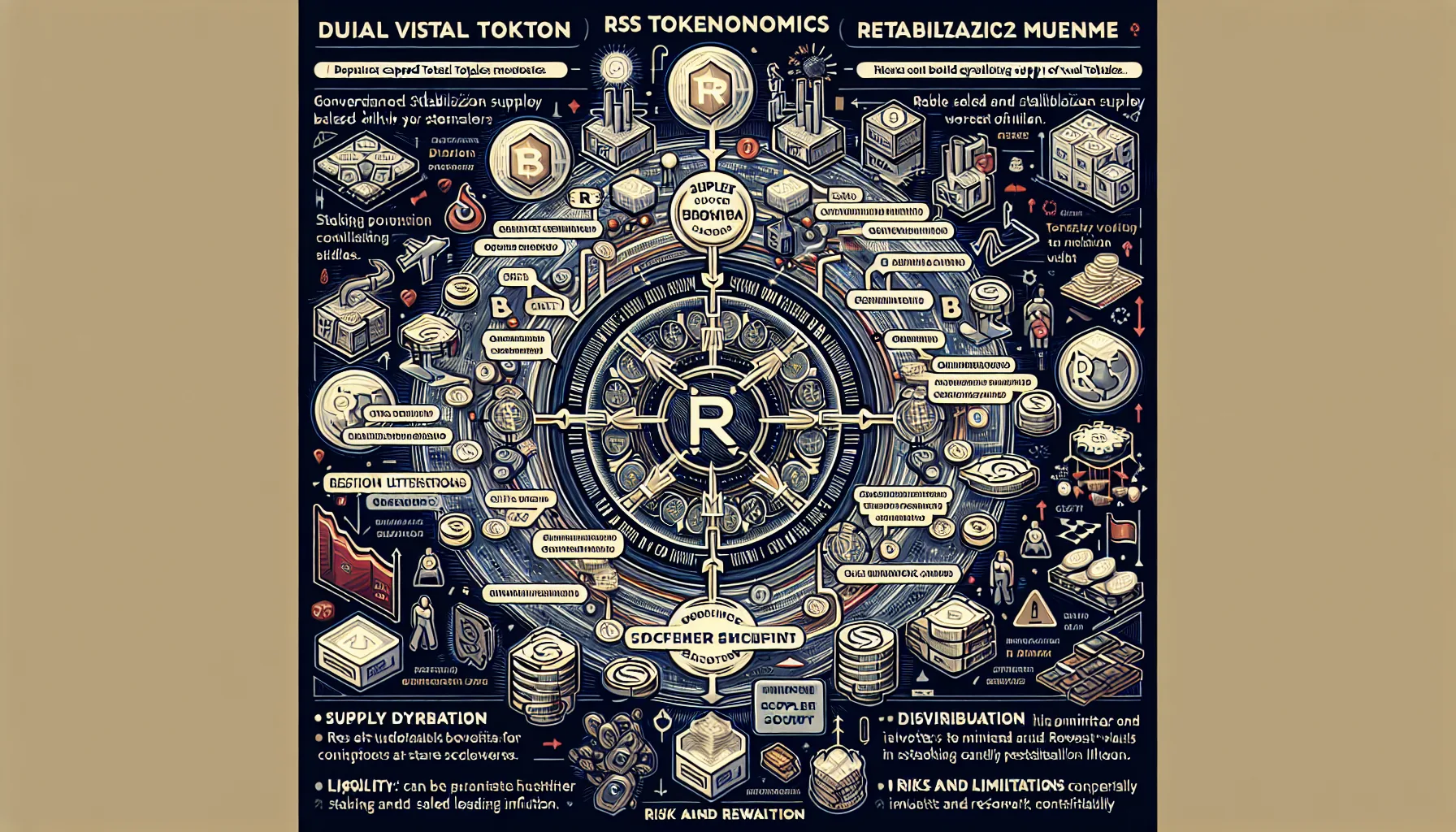
RSR Tokenomics
RSR Tokenomics: Supply, Utility, and Distribution Mechanics
Dual-Token Model and the Role of RSR
Reserve Rights (RSR) operates within a dual-token system alongside RSV, with RSR primarily serving as a governance and stabilization mechanism. Unlike RSV, which aims for price stability, RSR is designed for utility functions such as staking and governance within the Reserve Protocol. The effectiveness of RSR in maintaining RSV stability depends on arbitrage incentives and collateral backing mechanisms.
Supply Dynamics and Inflation Mechanisms
RSR has a capped total supply, but its circulating supply can fluctuate based on staking behavior and protocol-level emissions. One key function is its potential role in recapitalizing Reserve Protocol stablecoins if collateral backing falls below the required threshold. This means that RSR can be minted and sold in worst-case scenarios, theoretically leading to supply inflation pressures.
Staking introduces another dynamic: RSR holders can stake on specific Reserve Protocol vaults, providing economic incentives to those who take on risk. However, there is no direct yield mechanism enforced by the protocol—yields are instead determined by arbitrage opportunities and market demand. This creates a risk-reward imbalance where staking returns are unpredictable, and capital loss is possible if the underlying vault performs poorly.
Distribution and Token Concentration
Early distributions of RSR allocated significant supply to team members, investors, and strategic partners. While vesting schedules and subsequent releases have diluted initial concentrations, a non-trivial portion of RSR remains in large holder wallets. This can lead to governance centralization risks, as those with a considerable stake in the ecosystem can disproportionately influence decisions.
Additionally, liquidity considerations are critical. While RSR enjoys deep exchange listings, market liquidity and trading volumes can be volatile. This variability impacts price discovery and affects the efficiency of arbitrage-based mechanisms tied to its stabilization function.
Risks and Limitations in RSR Utility
While RSR is structurally necessary for protocol stability, its actual utility is heavily tied to Reserve Protocol's adoption. If staked RSR fails to accumulate meaningful rewards or if the Reserve ecosystem does not scale sufficiently, long-term demand could weaken. Another challenge lies in the smart contract risks associated with vault-based staking. The potential for exploits or governance attacks could undermine staking incentives and diminish confidence in RSR's function.
RSR’s role as a backstop asset also implies downside risks—if a Reserve stablecoin depegs due to collateral failure, forced RSR liquidations could drive sell pressure. This reflexivity can introduce volatility, reducing confidence in RSR’s effectiveness during stress conditions.
RSR Governance
RSR Governance: Decentralized Control and Decision-Making
RSR plays a crucial role in the governance of the Reserve Protocol, enabling decentralized decision-making for parameters, upgrades, and Reserve-backed stablecoin configurations. Governance in RSR is structured through token-based voting, where holders influence key aspects of the protocol. However, the system comes with both strengths and limitations.
Token-Weighted Voting and Governance Proposals
RSR holders participate in governance by staking their tokens to cast votes on proposals. This includes decisions on risk parameters, collateral asset selection, and protocol upgrades. The governance process follows a structured framework where proposals are submitted, reviewed, and then voted upon. The token-weighted mechanism ensures that stakeholders with higher commitments have greater influence, but this can also introduce centralization risks if governance power concentrates among large holders or entities.
Decentralization vs. Centralization Risks
While governance is designed to be decentralized, practical implementation raises concerns about governance capture. In many token-based governance models, whales, venture capital firms, or early investors can dominate decision-making if they control significant token supply. This dynamic creates potential conflicts of interest, especially if decisions align more with profit maximization rather than the broader Reserve user base’s stability and decentralization goals.
Governance Attacks and Security Considerations
RSR governance is theoretically susceptible to governance attacks, where malicious actors accumulate voting power to push unfavorable proposals. Without safeguards like quorum requirements or multi-layered checks, such attacks can pose risks to the protocol’s stability. Additionally, low voter participation—a common issue in decentralized governance—can lead to a concentration of decision-making power among engaged minority groups, leading to governance inefficiencies or biased outcomes.
Smart Contract Governance and Upgradeability
Changes to the Reserve Protocol, including its smart contracts, require governance approval. While this allows adaptability, it also introduces security and trust considerations. If governance mechanisms are not carefully designed, protocol upgrades could be exploited, either through compromised proposals or unintentional security vulnerabilities. Effective governance should balance adaptability with security constraints, ensuring that changes undergo rigorous review before implementation.
Staking Dynamics and Incentive Alignment
RSR staking mechanisms, primarily used for governance participation, create incentives for engaging in decision-making. However, disparities in staking distributions affect governance fairness. If staking becomes economically unbalanced—such as through centralized governance delegations—decision-making power might skew towards specific entities rather than a distributed participant pool. Governance reforms might be needed to mitigate this over time.
Technical future of RSR
Reserve Rights (RSR) Technical Developments and Roadmap
Protocol Upgrades and Smart Contract Enhancements
RSR continues to evolve through upgrades to the Reserve Protocol, with a focus on improving decentralization, scalability, and risk mitigation. The smart contract architecture has undergone iterations to enhance security, reduce gas costs, and optimize governance mechanics. One emphasis has been on refining the collateralization mechanisms within the Reserve Protocol to ensure stablecoin security, particularly addressing potential risks in the event of collateral asset failures or market disruptions.
A key technical aspect in development involves enhancing automated re-collateralization and liquidation mechanisms, ensuring the protocol can swiftly respond to imbalances. Security audits and formal verifications remain a recurring component of development to mitigate potential exploits. However, smart contract complexity increases attack surfaces, meaning ongoing monitoring and updates will be crucial.
RToken Expansion and Composability
A central component of RSR's utility is its role in stabilizing various RTokens issued within the Reserve ecosystem. The expansion of RToken creation has led to further development around modular smart contracts that support a variety of collateral types, ranging from stablecoins to real-world assets (RWAs).
Developers are working on increasing the interoperability of RTokens with other DeFi protocols, enabling deeper liquidity and more use cases within lending markets, decentralized exchanges, and automated yield strategies. Composability improvements are aimed at making RTokens easily integrable into existing DeFi applications, though challenges remain in balancing security with flexibility across different collateralized assets.
Governance and Staking Evolution
The implementation of decentralized governance through RSR staking mechanisms is being refined to give holders more influence over protocol parameters and asset basket adjustments. A focus remains on scaling these governance mechanics while ensuring decision-making remains efficient and resistant to manipulation.
One core challenge has been managing the tradeoff between decentralization and security. While increased staking participation theoretically distributes governance power, protocol dominance by large holders or DAOs could introduce risks if malicious actors seek to exploit governance loopholes. Mechanisms such as time-locked votes and delegated voting structures are still being evaluated to mitigate these risks.
Future Development Trajectory
Technical improvements are being prioritized in areas such as multi-chain expansion, improved cross-chain asset transfer mechanisms, and enhanced oracles for real-time collateral tracking. The complexity of supporting multiple blockchain ecosystems introduces synchronization risks, especially concerning data integrity and liquidity fragmentation. Developers are exploring Layer 2 solutions and sidechains as potential ways to mitigate these scalability bottlenecks.
Increased regulatory scrutiny on algorithmic stablecoins and collateralized assets also raises questions about long-term adherence to evolving legal frameworks. The development team is actively adjusting smart contract designs and asset management policies to maintain stability and compliance while preserving decentralization principles.
Comparing RSR to it’s rivals
RSR vs. LQTY: Stability Models and Liquidity Considerations
When comparing Reserve Rights (RSR) to Liquity (LQTY), the most notable difference is in their approaches to stablecoin collateralization and peg stability mechanisms. RSR plays a governance and stabilization role within the Reserve Protocol, which aims for a diversified basket of assets to back its RSV stablecoin. In contrast, Liquity’s LUSD is strictly overcollateralized by ETH, operating in a fully decentralized manner without centralized control or governance.
Collateralization and Stability Mechanisms
Liquity’s model relies entirely on Ethereum as collateral, maintaining hard overcollateralization via a minimum 110% collateral ratio. While this ensures a trustless and censorship-resistant system, ETH’s volatility can introduce liquidation risks during sharp market downturns.
RSR, on the other hand, is designed to stabilize RSV by enabling arbitrage opportunities when its peg drifts. Over time, the Reserve Protocol intends to back RSV with a mix of assets, reducing reliance on any single commodity like ETH. However, this model is not fully realized yet, and changes to asset backing structures could introduce complexities in governance and risk management.
Decentralization and Governance Differences
Liquity is built to be fully immutable—once deployed, its smart contracts cannot be modified. This ensures resistance to governance attacks but also means the system cannot adapt or improve over time without forking.
RSR, in contrast, plays a direct role in influencing the backing composition and risk parameters of the Reserve Protocol. While this governance flexibility can be beneficial for adapting to market conditions, it also introduces attack vectors, potential misaligned incentives, and regulatory scrutiny depending on how governance decisions influence stablecoin backing.
Liquidity and Accessibility
LUSD maintains a hard peg through its stability pooling and redemption mechanisms, making it highly resistant to deviations. The absence of governance intervention means peg maintenance relies solely on market dynamics, which has historically been effective but tested in extreme conditions.
RSR’s role in peg arbitration for RSV creates a different dynamic—if RSR experiences liquidity challenges or volatility, its ability to support RSV’s stability could be impacted. Additionally, the effectiveness of the arbitrage mechanism depends on sufficient market participation, which may fluctuate during periods of turbulence.
Both RSR and LQTY provide non-custodial stablecoin solutions but with fundamentally different approaches—one focused on adaptability and governance flexibility, the other prioritizing immutability and simplicity through hardcoded stability mechanisms.
RSR vs. MKR: A Comparison of Stability Mechanisms and Governance Models
Stability Mechanisms: Collateralized vs. Overcollateralized
RSR is designed to support the Reserve Protocol, which issues the RSV stablecoin—a token meant to maintain its value through a diversified basket of collateral. In contrast, MKR functions as the governance token of MakerDAO, which oversees DAI, a decentralized stablecoin backed by overcollateralized crypto assets.
MKR’s stability mechanism relies heavily on overcollateralization to absorb price fluctuations. Each DAI issuance requires users to lock up significantly more value in assets than the amount they generate, ensuring resilience against market volatility. This approach helps prevent undercollateralization but often leads to inefficient capital usage.
RSR’s model differs in its ambition to manage stability through actively arbitraged collateral baskets. Theoretically, this could lower capital inefficiencies compared to MakerDAO’s rigid collateralization requirements. However, this flexibility introduces potential complexities when managing diversity in collateral sources, as asset correlations could increase systemic risks.
Governance Structures: MKR’s Centralization Concerns vs. RSR’s Open Participation
MakerDAO governance is driven by MKR holders who participate in governance proposals, adjusting stability fees, collateral types, and system parameters. However, the governance model has faced criticism for centralization risks. A small group of influential MKR holders and MakerDAO’s core contributors can exert significant control over protocol decisions, raising concerns about decentralization.
RSR’s governance framework, while also token-based, places a stronger emphasis on decentralization by allowing RSR holders to influence backing asset allocations and stability adjustments. This could mitigate governance centralization seen with MKR, but it remains to be seen how well decentralized participation scales as adoption grows.
Risk Exposure: Collateral Volatility and Liquidation Models
MakerDAO relies on liquidation mechanics to maintain solvency. When collateral falls below required thresholds, the protocol auctions assets to cover outstanding debt. These forced liquidations can lead to cascading sell-pressure, especially in extreme market downturns.
RSR’s approach may help mitigate single-asset collateral risks by diversifying its backing, but doing so introduces other considerations, such as correlated asset risks and dependencies on arbitrage incentives. The effectiveness of RSR’s design depends on sustained market participation, and any disruption in arbitrage mechanisms could challenge stability.
While both assets serve as critical components in maintaining decentralized stablecoins, their differing approaches to stability, governance, and risk mitigation highlight unique advantages and challenges within the sector.
RSR vs. FRAX: A Comparative Analysis
When evaluating RSR against FRAX, the differences in stabilization mechanisms and governance structures stand out. Both projects aim to provide stability in the often-volatile crypto environment, but their approach to maintaining peg stability and collateral efficiency diverge significantly.
Stabilization Mechanism
FRAX operates using a fractional-algorithmic model, where a portion of its supply is backed by collateral (typically USDC or other stable assets) while the remainder relies on algorithmic stabilization. The system dynamically adjusts the collateralization ratio based on demand, using FRAX shares (FXS) as a balancing mechanism. This model introduces efficiency but also brings potential vulnerabilities, as reliance on non-fully collateralized assets can be exposed to extreme market conditions.
RSR, in contrast, supports the Reserve Protocol’s stablecoin (RTokens) by functioning as a decentralized insurance layer. It absorbs volatility through arbitrage opportunities, allowing users to burn RSR to recapitalize destabilized RTokens when necessary. This means that while FRAX aims for collateral efficiency through its fractional model, RSR supports asset-backed RTokens with a more explicit fail-safe mechanism in case of liquidity or depeg risks.
Governance and Decentralization
FRAX has a DAO-governed structure with governance decisions largely influenced by FXS holders. Since FXS acts as both a utility and governance token, control is concentrated in the most significant stakeholders, which can lead to governance capture or centralization risks if a small group controls voting power. Additionally, FRAX’s reliance on USDC as primary collateral can pose counterparty risks, especially if centralized stablecoins face regulatory action.
RSR, on the other hand, is designed to provide decentralized governance for RTokens, enabling risk-adjusted collateral baskets that adapt to different use cases. The separation between governance and stabilization functions may offer a more modular approach, reducing risks linked to a single point of failure. However, widespread adoption of RTokens remains a key challenge, as the ecosystem needs sufficient liquidity and market participation to function optimally.
Collateral Risks and Liquidity Considerations
FRAX’s model is inherently reliant on market trust in its algorithmic component. While this allows for higher capital efficiency, it introduces risks if confidence in the model declines. Algorithmic-backed portions of any stablecoin system are subject to reflexivity, where a downturn in sentiment can create a negative feedback loop.
RSR-backed RTokens, by contrast, emphasize fully collateralized reserves, which may reduce reflexivity risks but require effective collateral asset management. The extent to which different RTokens can attract deep liquidity will determine their viability compared to FRAX’s established market presence.
Primary criticisms of RSR
Primary Criticism of RSR
1. Unclear Long-Term Utility of RSR
One of the main criticisms of RSR is its ambiguous long-term utility within the Reserve Protocol ecosystem. While RSR serves as a governance and stabilization token, its necessity has been questioned, especially given the potential for algorithmic and overcollateralized stablecoins to operate effectively without an external volatility-prone asset. Critics argue that RSR’s role in arbitrage and governance does not guarantee sustainable value capture, raising concerns about the token's intrinsic demand over time.
2. Limited Adoption of RToken Ecosystem
RSR’s success is closely tied to the adoption of RTokens, Reserve Protocol’s stable asset framework. However, the industry has witnessed numerous stablecoin solutions with varying levels of success. The challenge for RToken adoption remains a central issue—without significant market penetration, RSR’s designed utility as a stabilizing and governance asset may become redundant. Some skeptics argue that the protocol has yet to demonstrate competitive superiority over existing decentralized stablecoin models, making the reliance on RSR questionable from a utility perspective.
3. Centralization Concerns in Governance
Although RSR holders play a role in governance, there are concerns about the practical decentralization of the decision-making process. As with many governance tokens, the risk of voting power concentrating among a few large stakeholders remains present. This could lead to governance decisions disproportionately benefiting early adopters or large holders rather than the broader community. Additionally, governance participation in many crypto projects has historically been low, raising the concern that RSR-based governance may not be as decentralized in practice as theoretically intended.
4. Reliance on Arbitrage and Market Dynamics
RSR’s utility as a stabilizing force relies on arbitrage mechanisms within the Reserve Protocol. However, the effectiveness of such systems is often dependent on market conditions and liquidity depth. During periods of extreme market stress, arbitrage incentives may weaken, potentially compromising the protocol's stability mechanisms. Critics argue that reliance on arbitrage-based stability mechanisms has failed in other financial and algorithmic stablecoin models, casting doubts on whether RSR’s design is sufficiently robust to withstand prolonged market disruptions.
5. Competitive Landscape in the Stablecoin and DeFi Sectors
The stablecoin and DeFi landscape is highly competitive, with well-established decentralized and centralized alternatives already capturing most of the market share. RSR must compete not only against traditional fiat-backed stablecoins but also against other algorithmic and decentralized stablecoin solutions. Some analysts question whether RSR’s unique value proposition is strong enough to justify sustained demand in an industry where liquidity and network effects overwhelmingly favor dominant players.
Founders
Reserve (RSR) Founding Team: Key Figures Behind the Project
Nevin Freeman – Vision and Long-Term Strategy
Nevin Freeman is a co-founder of Reserve and serves as the project’s CEO. With a background in startups and a focus on long-term strategy, Freeman has positioned Reserve as a protocol designed to provide financial stability in regions with high inflation and weak banking systems. His approach emphasizes decentralized governance, but the actual implementation of Reserve’s full vision has faced delays. Despite a strong philosophical stance on monetary freedom, critics argue that progress towards full decentralization has been slower than expected.
Matt Elder – Technical Development and Architecture
As Reserve’s co-founder and CTO, Matt Elder played a crucial role in the technical development of the protocol. Elder brought experience from his software engineering background, previously working on distributed systems and scalable architecture. However, his public presence is relatively minimal compared to other leaders in the crypto space. Some have raised concerns about transparency regarding the project's development decisions, particularly regarding delays in Reserve’s transition to a fully decentralized model.
Early Advisors and Investors
Reserve secured early backing from prominent investors, including Sam Altman (OpenAI), Peter Thiel (PayPal), and Coinbase Ventures. Their involvement helped boost the project’s credibility, but it also led to speculation about Reserve’s alignment with venture capital influence rather than prioritizing complete decentralization. The presence of Silicon Valley figures has created a divide within the community, with some questioning whether Reserve’s governance model can remain fully independent of large backers' interests.
Team Transparency and Development Challenges
One of the criticisms Reserve’s founding team has faced is the limited transparency regarding development milestones. While the project has detailed long-term goals, progress updates have sometimes been vague or delayed. This has led to frustration within the RSR holder community, with some questioning the slow rollout of critical features. The team has defended its approach by citing the complexity of building a scalable, compliant, and decentralized financial system, particularly one that aims to operate in markets with significant legal and financial hurdles.
Leadership Stability and Future Direction
Unlike many crypto projects that experience frequent leadership turnover, Reserve’s founding team has remained largely consistent. While this has provided stability, it has also meant that the same leadership is responsible for both the successes and lingering issues within the project. How well the team can execute on Reserve’s roadmap while balancing decentralization concerns will continue to shape RSR’s trajectory.
Authors comments
This document was made by www.BestDapps.com
Sources
- https://reserve.org/
- https://reserve.org/whitepaper.pdf
- https://etherscan.io/token/0x8762db106B2c2A0bccB3A80d1Ed41273552616E8
- https://docs.reserve.org/
- https://github.com/reserve-protocol
- https://defillama.com/protocol/reserve
- https://coinmarketcap.com/currencies/reserve-rights/
- https://www.coingecko.com/en/coins/reserve-rights-token
- https://medium.com/reserve-currency
- https://twitter.com/reserveprotocol
- https://forum.reserve.org/
- https://blog.reserve.org/the-reserve-rights-token-rsr
- https://messari.io/asset/reserve-rights
- https://research.binance.com/en/projects/reserve-rights
- https://academy.binance.com/en/articles/what-is-reserve-rights-rsr
- https://docs.reserve.org/governance/reserve-rights-rsr
- https://dappradar.com/rankings/protocol/reserve
- https://decrypt.co/resources/reserve-rights-rsr-explained
- https://cryptoslate.com/cryptos/reserve-rights/
- https://tokeninsight.com/en/token/reserve-rights