History of RSR
The History of RSR: Tracing the Journey of Reserve Rights
Reserve Rights (RSR), the utility and governance token within the Reserve Protocol ecosystem, has a complex history defined by ambitious goals, evolving use cases, and ongoing adaptation to the challenges of the crypto market.
RSR was introduced as part of the Reserve Protocol, which launched with the mission to create a decentralized, stable global currency system resistant to hyperinflation and centralized control. The protocol's foundation was built on a dual-token model, with RSR accompanying the main stablecoin, initially known as RSV. RSR was designed to play a critical role by facilitating peg stability through arbitrage mechanisms and enabling decentralized governance.
RSR began its journey with strong institutional backing and widespread interest in its unique approach to tackling volatility in emerging markets. However, like many crypto projects, its road wasn’t devoid of complications. The initial years saw slow adoption and challenges in achieving on-the-ground implementation in regions where hyperinflation had destabilized economies. Efforts to launch scalable adoption in some of these areas faced unexpected regulatory and logistical hurdles, delaying progress.
A notable development in the token’s history came when Reserve Protocol announced its plans to decentralize further. This shift aligned with industry trends, but it required the redesign of components within the ecosystem to ensure sustainable scalability. The token’s governance mechanism and interoperability across multiple blockchains became focal points during this phase, sparking debates within the community regarding centralization risks and the practicality of achieving full decentralization.
In terms of tokenomics, RSR’s introduction and distribution strategy during its early days raised some concerns. Critics within the crypto-savvy community pointed to the project’s initial token allocation, which reserved a substantial portion for the team, advisors, and investors. This structure led to skepticism about potential sell pressure and questions about long-term commitment to decentralization—a concern still echoed during discussions about the protocol's evolution.
RSR has also faced challenges stemming from the broader macroeconomic and regulatory landscape. As authorities worldwide imposed stricter rules, especially around stablecoins, the Reserve Protocol needed to adapt continuously to safeguard against compliance issues. These obstacles compounded the complexity of achieving its vision and led to delays in rolling out certain features.
Throughout its history, RSR has been celebrated for its innovative approach but also scrutinized for its gradual pace of promised deliverables and the hurdles associated with large-scale adoption. As the protocol continues to evolve, its journey serves as a case study in balancing ambitious goals with the realities of building sustainable crypto ecosystems.
How RSR Works
How RSR Works: Mechanisms Behind the Reserve Protocol
RSR (Reserve Rights) plays a central role in the Reserve Protocol, a dual-token system designed to facilitate a decentralized and stable financial platform. Its primary function is to support the stabilization and governance of the protocol's stablecoin, RSV (Reserve Stablecoin). Here's an in-depth look at how RSR operates within this mechanism.
Stabilization Model and Arbitrage
RSR is integral to maintaining RSV's peg to a stable value, typically tied to fiat currencies like the US dollar. When the price of RSV deviates from its target value, the protocol triggers arbitrage mechanisms. Any surplus or deficit in the collateral backing RSV is addressed by minting or burning RSR tokens.
For example, if RSV loses its peg and falls below the target, RSR holders may purchase undervalued RSV through arbitrage opportunities. Conversely, when RSV increases in price, the system uses excess collateral to buy and burn RSR tokens. This process incentivizes market participants to help realign RSV to its stable value while directly impacting RSR's supply and demand dynamics.
Collateralized Reserve and Insurance Role
RSV’s stability is backed by a basket of tokenized assets, aiming for diversification to reduce single-asset risk. When the system faces collateral deficits, RSR acts as a secondary layer of defense. In a liquidation scenario, RSR tokens can be sold to cover the deficit and protect RSV holders from losses.
However, this aspect introduces risk. RSR holders are directly exposed to volatility and dilution because token issuance can occur to stabilize the system. This dynamic creates a trade-off between RSR's speculative potential and its utility as an insurance asset.
Governance and Decision-Making
RSR also functions as the governance token for the Reserve Protocol, granting holders the right to propose and vote on key protocol changes. This decentralized decision-making process includes adjustments to collateral compositions, fee structures, and other critical parameters.
While this governance framework promotes decentralization, it can also lead to inefficiencies, especially in scenarios where low voter participation or conflicts of interest slow down urgent updates. Moreover, governance by RSR holders centralizes power in those with the largest token holdings, potentially leading to imbalanced decision-making.
Challenges in Implementation
While RSR's design supports a robust and decentralized approach to stability and governance, it is not without vulnerabilities. Collateral diversity is only as strong as the reliability of the included assets, which can expose the protocol to systemic risks if highly correlated assets dominate the basket. Additionally, reliance on market participant behavior in arbitrage introduces unpredictability, as external factors like market liquidity can impede corrective mechanisms.
Through these mechanisms, RSR plays a critical role in ensuring the resilience and adaptability of the Reserve Protocol, while also carrying certain risks inherent to its design.
Use Cases
Real-World Use Cases of RSR: Beyond Speculation
RSR (Reserve Rights) plays a vital role in the Reserve Protocol ecosystem, designed to maintain stability and facilitate decentralized, global financial solutions. Focusing on its utility, RSR serves as a governance token, a safeguard mechanism for stability, and an insurance layer. However, while the token has clear uses, limitations and challenges accompany its functions.
1. Backing and Stabilizing Reserve Stablecoins (RTokens)
RSR’s primary use case revolves around its role within the Reserve Protocol’s ecosystem. It safeguards the stability of Reserve stablecoins (RTokens) by absorbing potential shocks in the system. RTokens are collateralized by a diversified basket of assets, and RSR acts as a last-resort insurance mechanism if one or more of these assets devalues. If collateral shortfalls occur, RSR holders can be diluted as their tokens are liquidated to cover the deficit. This mechanism incentivizes a robust collateral system but puts RSR holders at financial risk, particularly during moments of unexpected volatility or systemic issues in the underlying assets.
2. Decentralized Governance Participation
RSR holders have governance capabilities, allowing them to vote on key protocol decisions. This includes adjusting collateral configurations, policy updates for RTokens, and determining potential integrations or upgrades. However, the effectiveness of decentralized governance depends heavily on active participation by token holders, and voter apathy can lead to decisions being disproportionately influenced by whale wallets or centralized entities. This creates a challenge for ensuring that decisions align with the broader community’s vision and interest.
3. Speculative and Hedging Tool
Although not its intended primary use case, RSR is also utilized by traders as a speculative and hedging instrument tied to the performance of RTokens and the Reserve ecosystem as a whole. This dual-purpose undermines its stability and predictability as a functional token in times of market speculation, particularly during broader crypto market downturns or hype cycles. Such usage can distract from its practical value, causing potential misalignments in its price relative to its utility.
4. Enabling Financial Inclusion
Through the Reserve ecosystem, RSR indirectly supports the broader goal of enabling financial inclusion in emerging markets. Reserve stablecoins can help address inflationary crises by providing users with access to stable assets. RSR’s role in stabilizing these assets contributes to this goal. However, challenges arise when bridging the gap between technical innovations and grassroots adoption, especially in regions with limited digital infrastructure or financial literacy.
RSR's functionalities center on stabilizing and governing the Reserve Protocol, but its reliance on market dynamics and active participation presents both opportunities and challenges to its long-term effectiveness in serving these use cases.
RSR Tokenomics
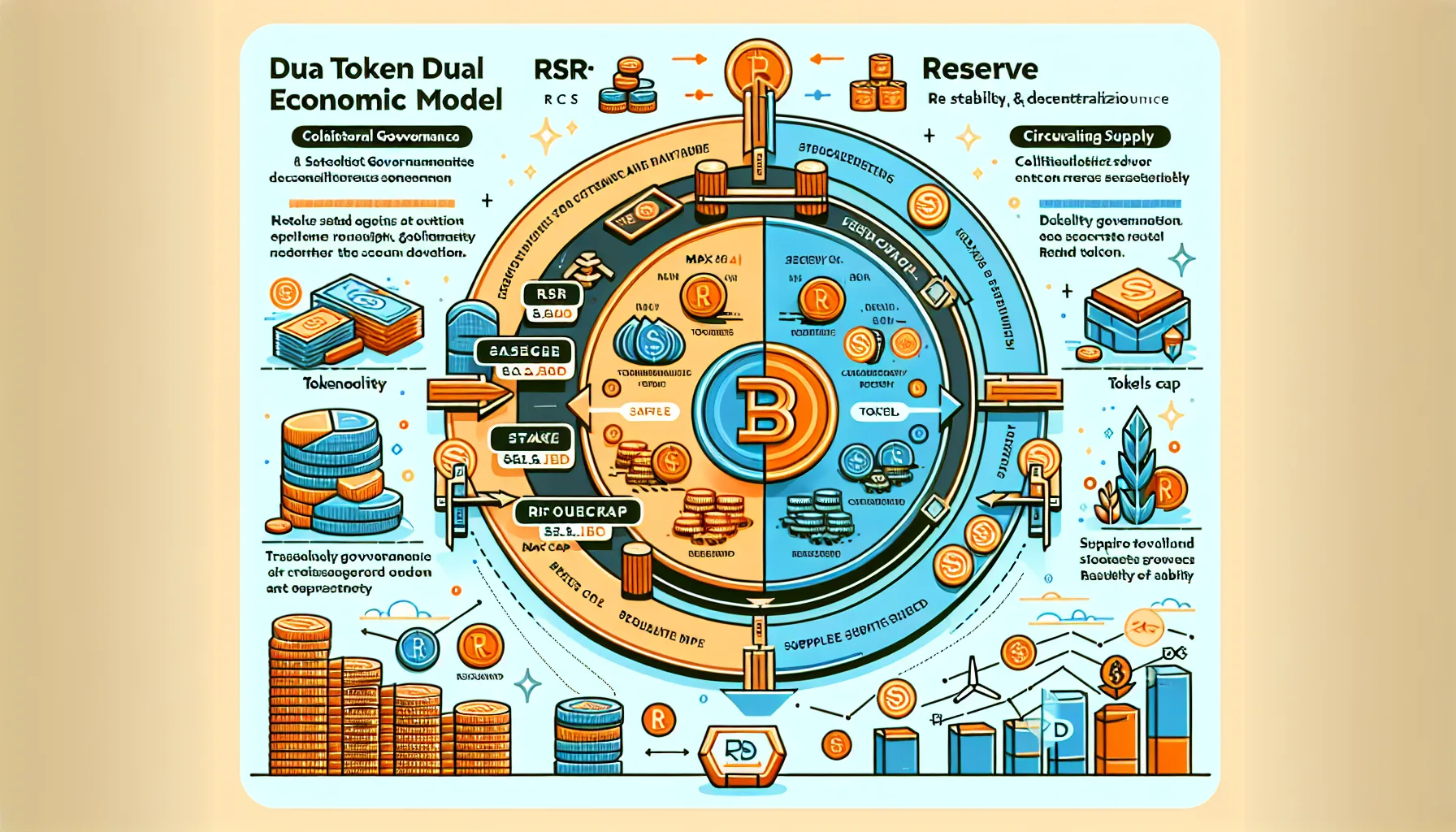
Tokenomics of RSR: A Deep Dive into Reserve Rights' Dual-Token Model
The tokenomics of Reserve Rights (RSR) stand out due to its integration into a dual-token economic model designed to achieve stability, decentralization, and utility within its ecosystem. At its core, RSR operates alongside Reserve (RSV), each serving distinct purposes yet operating in tandem to drive ecosystem functionality. This division of labor introduces both advantages and challenges, which are critical for crypto-savvy participants to evaluate when assessing RSR.
The Role of RSR in Collateral Governance and Staking
RSR’s primary purpose is to support the collateralized stability of RSV, a stablecoin backed by a basket of tokenized assets. RSR holders play an essential role within this framework by participating in collateral governance. Specifically, RSR is used to recapitalize any shortfall in the RSV reserves, effectively acting as a backstop during periods of collateral volatility or unforeseen asset collapse. This high-level responsibility layers intrinsic value into RSR, though it also exposes the token to risk dilution in extensive bearish scenarios.
Staking is another key mechanism in RSR’s tokenomics. Token holders can stake RSR against RSV, earning transaction fees as a reward while assuming responsibility for potential collateral deficits. While this incentivizes long-term participation, it introduces an inherent risk-reward balance that participants must scrutinize, especially given the dependence on the liquidity and health of the underlying assets.
Supply Dynamics: Fixed Max Cap vs. Circulating Supply
RSR is a deflationary asset capped at 100 billion tokens. However, its circulating supply depends on issuance schedules, initial allocation, and secondary market dynamics, which have sparked critical discussions within the crypto community. While a fixed max cap can contribute to scarcity over time, the actual supply-demand mechanics remain heavily tied to ecosystem adoption and the burn-mint-redemption processes associated with RSV activity.
One notable concern involves the inflationary pressure caused by the gradual unlocking of early allocations for founders, team members, and private investors. Such releases can prevent organic price discovery and may affect the token’s perceived scarcity in the near term. Crypto users attentive to vesting schedules and wallet activities often keep a close eye on whether insider allocations align with public adoption rates.
Risks in Collateral Asset Dependency
RSR’s tokenomics face direct exposure to the composition and performance of RSV’s collateral basket. A decline in the value or stability of underlying assets backing RSV poses systemic risks to both RSV and the viability of RSR’s staking functionality. Furthermore, questions surrounding the diversification and decentralization of the chosen collateral assets add layers of uncertainty for participants expecting long-term stability in the model. Addressing these complexities requires ongoing adjustments, leaving participants to question the resilience of the system under shifting market conditions.
RSR Governance
Governance Structure of RSR: A Comprehensive Breakdown
The Reserve Rights (RSR) token plays a dual role within the Reserve Protocol, with governance being a cornerstone of its utility. RSR holders have the ability to influence ecosystem decisions by participating in governance proposals, enabling a decentralized mechanism for managing the protocol's evolution. However, the governance framework is not without its complexities and challenges.
Voting Mechanism and Proposal System
RSR governance is centered around a token-based voting system, where governance proposals cover a wide range of topics, such as updates to the protocol, adjustments to collateral assets, or fees associated with the Reserve stablecoins (RTokens). Token holders can stake their RSR tokens to vote on these proposals, thus directly influencing the direction taken by the protocol. While this system empowers token holders, it also raises concerns about governance concentration, primarily because only wallets with substantial RSR holdings wield significant voting power, potentially sidelining smaller participants.
Decentralization vs. Efficiency Tradeoff
The decentralized governance model for RSR aims to provide a fair and transparent decision-making process, but striking a balance between decentralization and operational efficiency presents challenges. Allowing community-driven development without stalling progress due to fragmented stakeholder interests is a fine line to walk. Additionally, the requirement for significant technical knowledge to create or vote on informed proposals may discourage less technically savvy participants, leading to governance favoring more experienced or resourceful entities.
Governance Attack Risks
Like many decentralized systems, RSR governance is susceptible to governance attacks. A potential risk arises when an entity accumulates a disproportionately large amount of RSR, enabling them to pass malicious proposals or act against the interests of the broader community. While mechanisms like staking periods and penalties for malicious behavior exist, questions remain around the effectiveness of these safeguards in critical situations, especially in the event of a coordinated attack.
Communication and Coordination Challenges
Another issue facing RSR governance is effective coordination among token holders. High participation rates are crucial for ensuring that governance outcomes reflect the collective interest of the community. Yet, participation often tends toward apathy, with many token holders abstaining from voting. A lack of centralized communication channels or tools for knowledge dissemination exacerbates this problem, potentially leaving key decisions to a minority of active voters.
Future-Proofing Governance Structures
RSR’s ability to adapt relies heavily on its governance mechanisms remaining relevant as the protocol evolves. However, rigid structures or over-reliance on the community’s engagement could hinder necessary upgrades or responses to external regulatory and economic pressures. Innovating governance models could mitigate these risks but also introduces new uncertainties.
Technical future of RSR
Reserve Rights (RSR): Current and Future Technical Developments and Roadmap
Reserve Rights (RSR) is an integral part of the Reserve Protocol, designed to facilitate stability and interoperability. Technologically, RSR plays a crucial role in the stability mechanism underpinning the Reserve Token (RSV) through an over-collateralized reserve system. This section delves into ongoing and forthcoming developments impacting the protocol's utility and architecture.
Current Technical Developments
One of the most prominent technical advancements in progress is the migration of the Reserve Protocol from Ethereum to its own application-specific chain or exploring alternative Layer 2 solutions. The shift is intended to address scalability bottlenecks and mitigate frequently encountered issues like high gas fees and transaction congestion. By leveraging sidechains or potentially adopting newer interoperability standards such as IBC (Inter-Blockchain Communication), the protocol aims to enhance user accessibility and reduce costs.
The Reserve Protocol is also undergoing improvements in its smart contract designs. Emphasis is being placed on minimizing attack vectors and improving the auditing process. The move to modularize contracts ensures that areas of functionality, such as collateral re-balancing mechanics or the arbitrage incentives for RSR stakers, remain isolated, making upgrades and patches more efficient. These changes aim to mitigate risks around protocol exploits, which continue to be a pervasive issue across DeFi projects.
Another key area of technical focus has been optimizing the staking mechanics for RSR. The staking mechanism allows participants to insure the protocol against potential collateral default. Current updates aim to make staking contracts more efficient, particularly by integrating real-time risk assessment algorithms to dynamically adjust staking lock periods and collateralization metrics. However, critics argue that this complexity could deter less technically savvy stakers, limiting broader adoption.
Future Technical Roadmap
The upcoming roadmap highlights include integrating more collateral types for RSV, aiming to increase resilience and reduce reliance on a limited pool of assets. Incorporating non-crypto-native assets via tokenized real-world assets (RWAs) remains a debated technical challenge. While offering diversification, RWAs introduce new risks, such as legal ambiguities, data authenticity verification, and dependency on external custodians.
Another planned enhancement is the potential incorporation of zk-Rollups or Optimistic Rollups in governance to improve network efficiency and decentralization. Current on-chain governance processes are resource-intensive, and the integration of zero-knowledge proofs aims to streamline voting mechanisms while protecting voter privacy.
Despite its ambitions, the Reserve Protocol has faced critiques around centralization, primarily in the early stages of its collateral onboarding process. Decentralizing collateral decisions via DAO-based workflows remains on the roadmap but lacks detailed timelines, raising questions about execution feasibility.
These ongoing developments signal a concerted effort toward scalability, decentralization, and security for RSR, but challenges remain in achieving technical robustness without over-complicating user access and participation mechanisms.
Comparing RSR to it’s rivals
RSR vs. LQTY: A Comparative Analysis of Stablecoin-Focused Mechanisms
Reserve Rights (RSR) and Liquity (LQTY) represent two distinct approaches within the realm of decentralized stablecoin systems, yet they target overlapping audiences seeking robust monetary policies and decentralization. To fully understand how RSR stands out—or where it falls short—requires dissecting Liquity’s model for collateralized stablecoin issuance.
Collateralization and Stability Mechanisms
One of the stark contrasts between RSR and LQTY lies in their methodologies for collateralization and maintaining peg stability. LQTY supports its stablecoin, LUSD, exclusively with Ethereum (ETH) as collateral. This single-asset collateral model restricts diversification but enhances clarity and trust within the ecosystem. RSR, on the other hand, governs Reserve Protocol, which deploys a basket-based collateral strategy to support its stablecoins, such as RSV. This multi-asset model offers diversification and reduced systemic risk but introduces management complexity and risks associated with the collateral basket’s composition.
LQTY’s reliance on ETH collateral provides clear price exposure to Ethereum’s market dynamics, both a strength and a vulnerability. In contrast, RSR’s broader basket presents the constant challenge of selecting the "right" assets—failing to adjust effectively to market shifts could weaken RSV’s stability proposition.
Governance vs. Non-Governance
Another critical differentiation arises in governance mechanisms. RSR employs a governance token model, with holders empowered to vote on protocol parameters and treasury management, fostering a community-driven ethos. LQTY takes a contrarian path by eliminating governance altogether, relying instead on immutable smart contract logic. While this approach reduces attack surfaces from bad governance decisions and entrenched interests, it also limits flexibility in adapting the protocol to unforeseen challenges—a domain where RSR’s adjustable governance may hold an advantage.
However, governance in RSR isn’t without its own risks. The effectiveness of decentralized governance depends heavily on active participation from token holders, which can often stagnate or be influenced by large whales. Meanwhile, LQTY’s governance-free architecture offers simplicity but also a "set-it-and-forget-it" rigidity that could hinder evolution.
Incentive Structures
Liquidity mining plays a central role in LQTY’s adoption strategy. Users are incentivized through LQTY rewards for borrowing and providing stability pool deposits, building engagement around liquidation mechanics. RSR does not share this same focus on liquidity mining directly; it instead derives value from burning mechanisms tied to stabilizing RSV and its insurance-like function.
This distinct divergence raises key questions: does RSR’s reliance on adoption through stability and governance exceed the scalability of LQTY’s direct user incentivization model? Liquity’s rewards-driven system ensures active user participation but risks creating unsustainable token emissions, a concern mitigated in RSR's slower, burn-tied model.
Risk Implications
Finally, risk appetite is notably different. LQTY’s ETH-backed structure concentrates risk in a single asset but benefits from Ethereum’s deeply liquid market. Meanwhile, RSR’s diversification ethos spreads risk across multiple assets but increases operational and decision-making complexities.
Both protocols aim to ensure resilience, but each method carries unique fragilities that remain an active subject of debate in decentralized finance circles.
RSR vs. FRAX: Decentralized Stablecoin Models in Contrast
The comparison between Reserve Rights (RSR) and FRAX lies primarily in their approaches to decentralized stablecoin ecosystems and collateral management. Both projects aim to address stablecoin scalability and reliability, but their methodologies, use cases, and risk profiles reveal key differences.
Collateralization Mechanisms
FRAX operates as a fractional-algorithmic stablecoin, combining on-chain reserves with a mechanism to maintain partial collateralization. The concept is innovative: a portion of FRAX’s value is backed by collateralized assets (e.g., USDC), while the remainder relies on algorithmic stability mechanisms driven by its governance token, FXS. This model optimizes capital efficiency but introduces complexity and systemic risk if either the collateral fails (e.g., regulatory risk around centralized stablecoins) or the algorithmic mechanism destabilizes.
RSR’s ecosystem, on the other hand, centers around supporting Reserve’s RSV stablecoin, which is fully backed by a basket of diverse, tokenized real-world and crypto-based assets. Unlike FRAX, RSR enables a higher focus on asset diversity and decentralization in collateral selection. While theoretically more resilient than relying on centralized stablecoins like FRAX does, it also introduces potential risks around diversification-related complexities, particularly if any basket assets underperform or experience liquidity shortages.
Governance Token Utility
Both RSR and FXS serve as governance tokens, but their functionalities diverge in significant ways. FXS absorbs volatility within the FRAX ecosystem, serving to stabilize its pegged value while also capturing network fees and yielding governance privileges. However, this dual functionality creates a reflexive dependency: FXS’s stability becomes integral to the overall health of FRAX, leaving the system more vulnerable during market downturns.
RSR, by contrast, acts primarily as an insurance mechanism for RSV. Token holders stake RSR to earn fees while backstopping the ecosystem during periods of imbalance. The focus here is narrower—protection rather than price stabilization—which arguably introduces less compounded systemic risk but may limit its flexibility compared to FXS’s broader utility.
Market Adoption Considerations
FRAX has gained traction in large part due to its novel mechanism and tight integration with DeFi protocols, enabling a variety of use cases including liquidity provision and revenue-generating opportunities for FXS holders. However, its reliance on centralized collateral components, such as USDC, places its decentralization objectives into question, especially as regulatory scrutiny around stablecoins intensifies.
By contrast, RSV targets broader, global adoption with a specific focus on inflation-resilient markets. While this mission aligns with decentralization, it introduces challenges relating to operational scalability and wide collateralization management—dimensions less prominent in FRAX's more DeFi-centered strategy.
Risk and Complexity
For crypto-savvy users, the primary tradeoff between these projects lies in balancing innovation against risk. FRAX’s semi-algorithmic model is capital-efficient but heights its vulnerability, particularly under extreme market pressures or regulatory intervention. RSR’s approach, while more textbook in its insulation against systemic failure, may be viewed as conservative, potentially limiting its growth rate against competitors implementing high-yield DeFi integrations like FRAX.
RSR vs MKR: A Deep Dive into Decentralized Stability Mechanisms
The Reserve Rights (RSR) token and Maker’s MKR play distinct yet overlapping roles in the decentralized finance (DeFi) ecosystem, particularly when it comes to stablecoin management and governance models. While both projects focus on stability mechanisms and reserve-backed systems, their approaches differ fundamentally in areas like collateral architecture, governance mechanisms, and scalability.
Collateral Architecture: Multi-Collateral DAI vs Asset-Diversified Reserve Protocol
Maker (MKR) leverages a robust multi-collateral structure to underpin DAI, its flagship stablecoin. Users lock various accepted assets, such as ETH or other DeFi tokens, within Maker Vaults to mint DAI. This over-collateralized system is designed to ensure that DAI maintains its peg even during high volatility. However, this approach exposes MKR to significant liquidation risks tied to market downturns. Rapid price crashes in collateral assets can lead to Maker’s stability fees spiking or even systemic debt, creating volatility within the governance token itself.
In contrast, RSR instead uses Reserve Protocol's unique reserve-backed model, which is aimed at creating fully asset-backed stablecoins that diversify risk across multiple, often fiat-denominated reserves. This potentially shields Reserve from the cascade liquidation risks faced by MKR during adverse market conditions. However, the Reserve Protocol’s heavy reliance on centralized fiat assets for backing could present long-term regulatory and counterparty risk—factors decentralized collateral solutions like Maker might mitigate by design.
Governance Models: The Balancing Act of Decentralization
MKR holders bear the responsibility of governing MakerDAO, including risk management, collateral onboarding, and maintaining DAI’s peg. While this decentralized governance is a strength, it introduces certain inefficiencies. Voter apathy and centralization of voting power among large MKR stakeholders have raised concerns regarding Maker’s governance robustness, particularly in times of urgent decision-making.
RSR’s governance model, on the other hand, focuses on the stabilization of its reserve-backed tokens. However, as RSR is still transitioning to broader decentralization, critics argue that governing roles—centralized in the project's early stages—may not achieve the level of distributed decision-making seen in mature protocols like MakerDAO. This centralized oversight could pose risks during this interim period if governance power remains disproportionately consolidated.
Scalability and Adoption: Diverging Expansion Paths
When it comes to adoption, MKR’s decentralized footprint provides significant scalability potential, as the protocol is not tied directly to regulatory regimes for its reserves. However, Maker’s dependence on the Ethereum network continues to present scalability concerns due to gas fees and network congestion, which can influence user adoption negatively during peak activity.
RSR, with its Reserve Protocol, is targeting emerging markets and real-world payment systems where a demand-supply equilibrium for stablecoins backed by liquid assets could see rapid growth. Still, some critics suggest this path may risk overreliance on off-chain reserves and centralized partnerships, which could stifle the project's ability to compete directly in an increasingly decentralized market.
By comparing RSR’s reserve model to MKR’s collateralized architecture, it becomes clear that while both aim to foster decentralized stability, their opposing designs expose trade-offs between decentralization, scalability, and regulatory vulnerability.
Primary criticisms of RSR
Primary Criticism of RSR: Examining the Controversies and Weak Points
While Reserve Rights (RSR) has garnered attention for its dual-token model and its potential role in stabilizing volatile markets, several criticisms and challenges have been raised about its functionality, governance, and broader adoption. Below, we dive into the most pressing criticisms of RSR from the crypto community.
Centralization Concerns in Deployment
One of the most common critiques leveled against RSR is the potential centralization risk associated with the Reserve Protocol, especially in its early stages. While the project promises a decentralized, trustless stablecoin solution, significant elements of governance and decision-making are initially retained by the development team and partnered entities. Critics argue that this poses a centralized point of failure, a contradiction to the ethos of decentralization that underpins the wider cryptocurrency ecosystem. Moreover, the reliance on trusted custodians for holding the collateral backing Reserve stablecoins has heightened skepticism from users prioritizing censorship resistance and self-custody.
High Dependence on Adoption of RSV
The utility and demand for RSR are intrinsically tied to the adoption of RSV, the protocol's stablecoin. Critics highlight a structural dependency: since RSR’s primary function as a governance and arbitrage token relies on RSV usage, any stagnation or failure in RSV adoption could severely limit RSR’s relevance and utility. This has led to concerns about a potential chicken-and-egg problem, wherein the success of RSR is contingent on widespread RSV utilization, which may take years to materialize, if ever.
Questions About Collateral Reliance
RSV’s stablecoin model rests heavily on a pool of tokenized real-world assets and cryptocurrencies as collateral. Crypto-savvy skeptics have raised questions about the risk exposure of this collateral pool. Market instability, devaluation of collateral assets, or regulatory crackdowns on tokenized real-world assets could directly undermine the peg stability of RSV, in turn impacting the utility of RSR. Such reliance on external systems introduces risks that may be out of the Reserve Protocol's direct control, which is a concern for risk-averse participants.
Governance Centralization Risks
As RSR acts as the governance token within the ecosystem, questions remain about the true distribution of control. Should RSR governance become highly concentrated in the hands of a few significant holders, concerns of centralization and oligopoly emerge. This dynamic could limit inclusive decision-making and disenfranchise a broader base of token holders, echoing governance criticisms faced by other DeFi projects.
Suffocating Competition in Algorithmic Stablecoins
Another layer of criticism revolves around the competitive landscape of stablecoins. RSR must carve out its niche while competing against well-established algorithmic stablecoins and fiat-backed tokens. Its positioning as a stabilizing mechanism comes under scrutiny, as many argue that similar mechanisms in other projects have failed to adequately address long-term volatility and external shocks. The underlying question remains whether RSR can differentiate itself enough to justify its existence.
Lack of Clear Value Accrual for Holders
Finally, some detractors voice concerns over the ambiguous value accrual mechanism for RSR holders. While the token theoretically benefits from arbitrage activity during RSV expansions, critics claim that the process lacks clarity and measurable impact on RSR price. Without clear, tangible benefits for token holders, RSR risks being overshadowed by other governance-focused or utility-driven assets in the market.
In summary, while RSR aims to address critical challenges in the stablecoin and DeFi space, these criticisms underscore deep structural and execution-related concerns raised by the crypto community. Such scrutiny highlights the hurdles the Reserve Protocol must overcome to achieve its long-term objectives.
Founders
The Founding Team Behind RSR: Origins and Leadership Insights
Reserve Rights (RSR) is backed by a founding team that blends technological expertise with a strong focus on solving financial instability in emerging markets. Co-founded by Nevin Freeman and Matt Elder, the project's origins reflect a combination of ambitious vision and pragmatic design.
Nevin Freeman serves as the CEO and visionary leader of Reserve. His background spans entrepreneurship and futurism, with a sharp focus on navigating systemic challenges in global finance. Freeman has publicly emphasized his interest in creating a decentralized, stable currency that addresses hyperinflation and currency devaluation in vulnerable economies. However, while his thought leadership resonates with long-term crypto proponents, some critics argue that his focus on philosophy over specifics can occasionally cloud the project's technical roadmap, leaving certain aspects of execution open to interpretation.
On the technical front, Matt Elder, the ex-Google engineer, brings a strong foundation in scalable software development. Elder’s contribution to Reserve centers around designing the underlying protocol architecture, ensuring it can handle high-volume transactions while supporting decentralized governance. While Elder’s technical credentials are often lauded, the relatively slow rollout of certain protocol features has sparked concerns about whether the team is fully resourced to meet its ambitious goals.
The broader Reserve team includes developers, economists, and compliance specialists who work across distributed offices worldwide. While this global structure enables a diverse range of perspectives, some in the community have raised questions about coordination inefficiencies and whether a remotely distributed team hinders synchronized decision-making. Critics contend that communication bottlenecks during key product updates have caused delays in feature releases and protocol improvements.
Notably, the Reserve team has cultivated strong ties with legal and regulatory consultants to navigate the complex landscape surrounding asset-backed cryptocurrencies. The focus on compliance is critical for Reserve's dual-token model, which differentiates it from other projects; however, this cautious approach has created friction with community members seeking faster decentralization of control.
Additionally, Reserve has received backing and mentorship from prominent figures in the tech and crypto sectors, strengthening its credibility but also sparking speculation about undue influence from venture backers. This dynamic has occasionally led to questions about the project’s alignment with its decentralized ethos.
In essence, while the Reserve Rights founding team possesses diverse strengths, challenges such as scalability of operations, development delays, and balancing decentralization ambitions with compliance remain key considerations for the project’s evolution.
Authors comments
This document was made by www.BestDapps.com
Sources
- https://reserve.org/
- https://reserve.org/whitepaper.pdf
- https://etherscan.io/token/0x8762db106b2c2a0bccb3a80d1ed41273552616e8
- https://docs.reserve.org/
- https://medium.com/reserve-currency/
- https://coinmarketcap.com/currencies/reserve-rights/
- https://www.coingecko.com/en/coins/reserve-rights-token
- https://github.com/reserve-protocol
- https://blog.bitmex.com/usd-stablecoins-part-two-reserve-protocol/
- https://www.messari.io/asset/reserve-rights
- https://decrypt.co/resources/what-is-reserve-rights-rsr
- https://www.kucoin.com/blog/understanding-reserve-rights-rsr-and-its-utility
- https://www.crypto-compare.com/coins/rsr/overview/
- https://www.binance.com/en/price/reserve-rights
- https://support.kraken.com/hc/en-us/articles/360057925211-What-is-Reserve-Rights-RSR-
- https://www.stakingrewards.com/earn/reserve-rights/
- https://medium.com/reserve-currency/rsr-tokenomics-update-3ad8e3b4487b
- https://defipulse.com/rsr
- https://www.blockdata.tech/profiles/reserve-protocol


