History of ROOK
The History of ROOK: Rise, Challenges, and Evolution
ROOK, the native token of the KeeperDAO project, emerged as a cornerstone of on-chain trade execution and MEV (Maximal Extractable Value) optimization. Initially launched to create a cooperative environment where participants could coordinate better trade execution while redistributing captured MEV, ROOK's trajectory has been marked by both innovation and internal struggles.
Early Development and Vision
KeeperDAO was founded with the goal of reducing the inefficiencies caused by MEV extraction in DeFi. By incentivizing "Keepers" to cooperate rather than compete, the protocol aimed to minimize losses from front-running and sandwich attacks while redistributing value to users. ROOK was the backbone of this economic model, serving as both a governance token and a way to reward participants.
The initial iteration of the protocol focused on a liquidity pool system designed to reward users who allowed their transactions to be executed with minimal slippage. Over time, the platform evolved toward an off-chain order flow auction (OFA) model, enabling Keepers to efficiently capture and share MEV.
Governance Shifts and Internal Conflicts
As ROOK adoption grew, governance dynamics became increasingly contentious. Like many decentralized projects, conflicts emerged between token holders, core contributors, and large stakeholders. One point of friction was the tension between decentralization and operational efficiency. While the KeeperDAO vision was built on cooperative value extraction, disagreements over revenue distribution and decision-making authority led to governance challenges.
Another major issue arose around treasury management. The project accumulated a substantial treasury over time, but the allocation of these funds became a divisive issue among stakeholders. Some members argued for aggressive reinvestment into development and partnerships, while others pushed for more immediate value distribution to token holders.
Transition and Ecosystem Changes
Amid governance challenges, the protocol underwent a significant restructuring phase. The shift away from the original cooperative MEV model led to changes in the role of ROOK within the ecosystem. Some of the early contributors and developers parted ways, which further fueled uncertainty regarding the project’s future direction.
Despite these hurdles, the technical innovation behind KeeperDAO’s MEV solutions remained influential. Other DeFi protocols took inspiration from its approach, even as ROOK faced questions about its long-term sustainability and governance model. The evolving role of MEV in DeFi continued to shape discussions around KeeperDAO’s early contributions and the impact of its tokenomics framework.
How ROOK Works
How ROOK Works: Mechanisms and Functionality
ROOK operates within decentralized finance (DeFi) by optimizing on-chain transactions through its coordination network. At its core, ROOK captures MEV (Maximal Extractable Value) and redistributes it in a structured way, rather than allowing arbitrageurs and miners to extract all value from transactions.
MEV Extraction and Coordination
Unlike permissionless MEV extraction methods that prioritize validators and sophisticated trading bots, ROOK's protocol structures MEV capture through Keepers—specialized actors that execute priority transactions. When users initiate transactions through integrated dApps, these Keepers identify arbitrage and liquidation opportunities while routing transactions through the system in a way that retains value within the network.
Orders submitted to ROOK’s transaction relay avoid the typical public mempool exposure. Instead, they are processed via its coordination layer, which selects optimal execution strategies to prevent front-running while leveraging MEV opportunities. This system ensures competitive transaction settlements without leaking value to third-party searchers.
ROOK Token Utility and Governance
ROOK serves multiple functional roles within its ecosystem. Participants who contribute to the network, such as Keepers and other liquidity providers, are incentivized with ROOK rewards. The token also plays a governance role, allowing holders to propose and vote on protocol upgrades. However, governance participation is often concentrated among a few large holders, raising concerns about decentralization in decision-making.
ROOK’s model attempts to align incentives between users, dApps, and Keepers, but competition with external MEV extraction strategies remains an issue. Many trading firms and validators operate private relays or alternative protocols that challenge ROOK’s ability to consistently capture and redistribute value effectively.
Transaction Privacy and Execution Risks
By bypassing the public mempool, ROOK mitigates front-running risks, but this approach introduces trust considerations. While the system aims to ensure fair execution, users must rely on ROOK's infrastructure to handle transactions properly. Centralization concerns arise regarding transaction ordering and Keepers’ role in price execution.
Additionally, since ROOK’s viability depends on sustained dApp integration and relay adoption, any decline in usage threatens the effectiveness of its coordination mechanism. Traders and arbitrageurs may bypass ROOK if alternative MEV strategies become more profitable or efficient.
Overall, ROOK’s technical design focuses on MEV redistribution, but its effectiveness hinges on ecosystem participation, governance decentralization, and the competitiveness of alternative execution models.
Use Cases
Use Cases of ROOK in the Crypto Ecosystem
MEV Protection and Coordination
ROOK is central to protecting users and protocols from maximal extractable value (MEV) exploitation. It allows traders and DeFi protocols to execute transactions through a coordinated system that captures MEV and redistributes value back to participants instead of leaving it to external arbitrage bots. By leveraging ROOK, users can access a network that reduces slippage, front-running, and sandwich attacks while routing transactions optimally. However, adoption remains a challenge as not all protocols integrate these protections, leaving gaps in coverage.
Governance and Protocol Incentives
ROOK plays a role in governance, allowing token holders to influence protocol decisions, reward distributions, and system upgrades. The token is used for proposals and voting within its ecosystem, determining how MEV redistribution mechanisms function and evolve. One drawback is that governance participation can be low, and centralization concerns arise if a small number of holders exert disproportionate influence over the system.
Liquidity Mining and Yield Strategies
Holders of ROOK can participate in liquidity mining programs where rewards are issued for contributing liquidity to the ecosystem. The token has been used to incentivize users to supply liquidity across multiple DeFi platforms, ensuring deeper market participation. However, liquidity incentives can be unsustainable if token emissions are not carefully managed, potentially leading to inflationary pressure and sell-side pressure from yield farmers.
Integration with DeFi Marketplaces
ROOK powers integrations with decentralized exchanges (DEXs), lending platforms, and automated market makers (AMMs). By embedding MEV redistribution mechanics within these protocols, traders can benefit from more efficient order execution without being penalized by predatory activity. Adoption challenges arise when protocols prioritize traditional fee-based models over MEV-sharing models, slowing potential growth.
Competitive Positioning and Adoption Barriers
The effectiveness of ROOK’s use cases depends on the willingness of DeFi platforms to integrate its infrastructure. Competing MEV solutions, such as those built directly into Ethereum rollups and L2 solutions, present viable alternatives that could limit ROOK’s market share. Additionally, the complexity of coordinating MEV protection across fragmented liquidity pools and different blockchain environments presents scaling challenges.
While ROOK addresses critical inefficiencies in on-chain trading, its practical applications are still reliant on broader ecosystem acceptance.
ROOK Tokenomics
ROOK Tokenomics: Supply, Emissions, and Utility
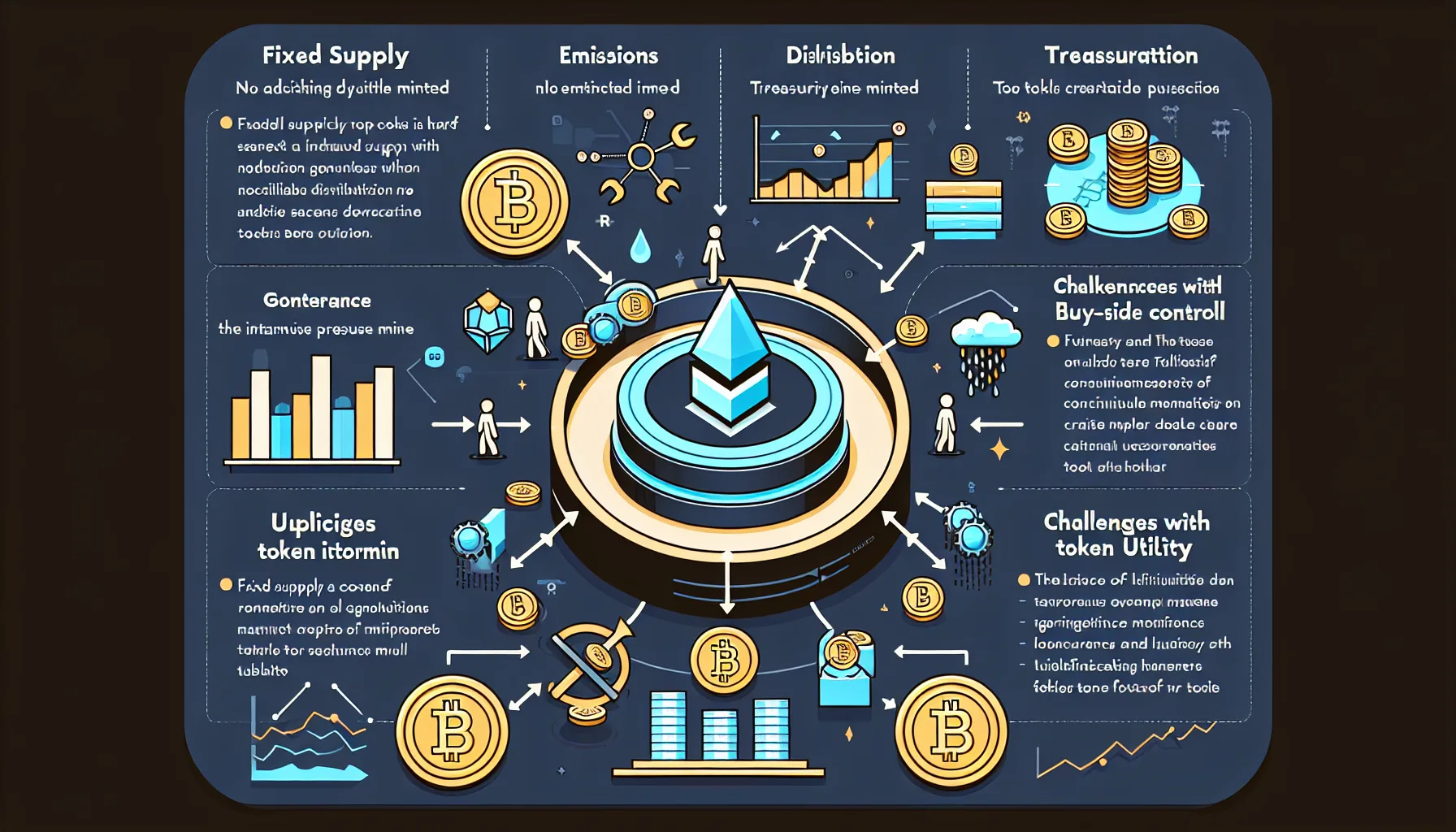
Fixed Supply Dynamics
ROOK operates on a fixed supply model, meaning no additional tokens will be minted beyond the initial allocation. This hard cap places a structural constraint on inflation but also eliminates any mechanisms for ongoing issuance, staking rewards, or direct incentivization through token emissions. Without an inflationary component, value accrual must rely entirely on transaction fees, utility demand, or other economic mechanisms rather than subsidized growth.
Emissions and Distribution
No continuous emissions exist for ROOK, as all tokens have already been distributed through various means, including early liquidity mining programs and direct allocations. This presents both advantages and challenges. On one hand, the absence of inflation prevents dilution of existing holders. On the other, it limits the project’s ability to fund new development or incentivize network participants without relying on treasury reserves. Any adjustments to distribution must come from pre-existing supply, making strategic treasury management crucial.
Governance and Treasury Control
ROOK is a governance token, allowing holders to participate in protocol decisions. However, the governance process dictates treasury usage, which has historically led to debates over capital efficiency and priorities within the ecosystem. Token holders indirectly control protocol revenue allocation, yet without direct staking incentives or buyback mechanisms, the token’s utility beyond governance remains primarily tied to speculative demand.
Utility and Buy-Side Pressure
The core utility of ROOK is in governance over protocol operations, treasury management, and strategic decision-making. However, beyond governance, there are limited direct mechanisms that create buy-side pressure. Unlike other ecosystem tokens that integrate staking or direct fee-sharing, ROOK’s model does not automatically redistribute protocol earnings to token holders unless governance explicitly enacts such measures. This creates a reliance on activist governance participation to align value capture with token incentives.
Liquidity and Market Considerations
The liquidity of ROOK can fluctuate significantly depending on governance dynamics and treasury-controlled market actions. With no ongoing emissions and limited exchange listings, liquidity depth relies on market participants rather than sustained incentives. This can lead to periods of reduced accessibility, increased volatility, and challenges in scaling participation should new demand emerge.
Challenges with Token Utility
One of the persistent challenges in ROOK’s tokenomics is the absence of intrinsic mechanisms that create sustained organic demand. Without protocol-enforced fee redistribution, staking, or inflation-driven incentives, utility is concentrated around governance influence rather than direct economic benefits. This requires active participation from large token holders to ensure that treasury funds are deployed effectively, rather than passively sustaining token-based incentives or yield mechanisms.
ROOK Governance
ROOK Governance: Mechanisms, Control, and Challenges
ROOK governance operates through a token-based model, where ROOK holders influence key protocol decisions. Governance primarily revolves around protocol upgrades, treasury management, and strategic direction. Token-weighted voting means that governance power is concentrated among those with the largest holdings, raising concerns about centralization and equitable decision-making.
Governance Architecture
ROOK governance is structured around proposals and on-chain voting. Holders can submit and vote on governance proposals, determining aspects like fee distribution, protocol upgrades, and treasury allocation. Voting power is directly tied to the number of ROOK tokens held, favoring large stakeholders. This system allows for quick decision-making but can also lead to governance capture by dominant token holders or external entities amassing significant control.
The governance process includes multiple phases:
- Proposal Submission: Any token holder with sufficient governance privileges can submit a proposal.
- Discussion and Review: Proposed changes are debated within the community, often on governance forums or discussion platforms.
- Voting Mechanism: Token holders vote using their ROOK tokens, with passing proposals implemented via smart contracts.
Challenges in ROOK Governance
Centralization Risks
While decentralized governance is a core principle, ROOK's governance model faces risks of centralization. Large token holders or concentrated voting power can effectively dictate outcomes, sidelining smaller participants. This issue is common in token-based governance models and can lead to decisions that primarily benefit a select few rather than the broader community.
Voter Apathy
A recurring issue in governance systems is voter apathy. Many token holders do not actively participate in on-chain voting, leading to decisions made by a minority of engaged individuals. Low voter turnout can amplify centralization concerns, as well-organized participants can exert disproportionate influence.
Treasury Control and Fund Distribution
ROOK governance controls the protocol treasury, which funds development, operations, and incentives. Treasury management decisions can become contentious, especially when allocating resources toward ecosystem growth versus direct rewards to token holders. Poorly managed treasury decisions can impact long-term sustainability and investor confidence.
Protocol Upgrades and Governance Forking Risks
ROOK governance determines how upgrades and protocol changes are implemented. Disagreements within governance can lead to contentious forks or conflicting proposals. If governance fragmentation occurs, it can create uncertainty and weaken confidence in the protocol’s direction.
Smart Contract Execution of Governance Decisions
ROOK governance relies on smart contracts to execute approved proposals. While this automation ensures transparency and immutability, it also introduces potential security risks. A flawed governance decision, or an exploited loophole in a proposal, can have irreversible consequences on the protocol. Governance attacks, where malicious proposals are passed through coordinated voting, remain an ever-present risk.
ROOK’s governance model grants significant power to token holders, but the challenges of centralization, voter participation, and treasury control create ongoing complexities. Understanding these mechanics is critical for assessing the protocol's future governance stability.
Technical future of ROOK
ROOK Technical Developments and Roadmap
MEV Extraction and Keeper Network Enhancements
ROOK’s protocol continues evolving its MEV capture mechanism, refining how value is extracted and redistributed within its keeper network. Development efforts focus on optimizing order flow auctions to ensure efficiency and fairness while maintaining trust-minimized execution. One of the major challenges remains balancing profitability for searchers while preserving competitive execution for users. To address this, ongoing improvements include refining routing mechanisms and fine-tuning parameters for incentive structures.
The keeper layer is also being restructured, with proposals aimed at decentralizing operation while maintaining execution reliability. Technical limitations around network congestion and fair MEV distribution persist, and solutions such as batching optimizations and new gas efficiency techniques are under consideration. Some of these require deep architectural changes, potentially slowing down implementation.
Governance and Smart Contract Upgrades
ROOK’s governance mechanisms are undergoing iterations, focused on enabling more transparent and scalable decision-making. Smart contract upgrades are being proposed to include enhanced treasury management functionalities, reducing reliance on centralized intervention. However, friction remains in achieving governance participation, with concerns about voter apathy and power concentration among large stakeholders.
Efforts are also being directed toward contract modularization, making different components upgradeable without requiring complete redeployment. This modular approach could improve development flexibility but introduces complexities around security and composability with external DeFi protocols.
Cross-Protocol MEV Integration
A significant area of development involves expanding MEV extraction capabilities beyond the current ecosystem. ROOK is working on integrations that allow interoperability with external liquidity protocols, aiming to capture and redistribute MEV earned from transactions across multiple chains and platforms. Successful implementation could make ROOK’s model more competitive against existing MEV solutions, but cross-chain technical challenges such as latency, reliability, and fragmentary liquidity remain unresolved.
Security concerns arise when integrating with external protocols, requiring ongoing audits and robust fail-safes. The risk of smart contract exploits remains a pressing issue, particularly as complex MEV strategies become more deeply embedded in execution flows.
Future Technical Considerations
Long-term technical roadmaps involve further decentralizing keeper operations, strengthening smart contract security, and refining incentive mechanisms. Improvements in transaction obfuscation and order bundling mechanisms are also being explored. However, sustaining these developments requires navigating governance gridlock and ensuring that the protocol remains attractive for network participants despite increasing competition from rival MEV extraction solutions.
Comparing ROOK to it’s rivals
ROOK vs. WETH: A Functional and Mechanistic Comparison
Underlying Utility and Value Proposition
ROOK and WETH serve fundamentally different roles in the decentralized ecosystem. While WETH (Wrapped Ether) is primarily a utility token enabling ETH compatibility with ERC-20 smart contracts, ROOK is designed for MEV (Miner Extractable Value) optimization within Keep3r Network’s architecture. The key distinction lies in ROOK’s positioning as a coordination layer for MEV redistribution, whereas WETH is a standardized representation of ETH for interoperability.
Liquidity and Trading Dynamics
WETH possesses unparalleled liquidity across Ethereum-based DeFi platforms, making it a crucial component in DEX liquidity pools, lending markets, and collateralized debt positions. ROOK, by contrast, suffers from lower liquidity due to its niche utility and reduced adoption outside of specialized MEV-related use cases. This discrepancy in liquidity translates to tighter spreads and lower slippage for WETH, while ROOK traders may experience higher price-impact on significant trades.
Adoption and Integration Across DeFi Ecosystem
WETH's near-universal adoption among DeFi protocols allows for seamless integration across exchanges, lending platforms, and automated market makers (AMMs). ROOK, on the other hand, faces integration challenges as its utility is tied specifically to keeper networks and MEV optimization strategies. The lack of widespread adoption limits its influence, whereas WETH remains a core pillar of the Ethereum ecosystem.
Governance and Token Economics
ROOK operates within a governance-driven framework where token holders can participate in protocol decisions. However, governance participation is relatively low, and coordination challenges have historically hampered efficiency. WETH, being a wrapped representation of ETH, lacks an independent governance structure, as it is simply a one-to-one mapping of ETH managed by smart contract mechanisms. This absence of governance complexities removes friction in usability but limits any protocol-level value accrual mechanisms that exist for ROOK.
Security Considerations and Smart Contract Risk
Both assets are subject to Ethereum’s broader network security, but they differ in smart contract reliance. WETH is widely battle-tested, integrated into core DeFi contracts, and relies on a well-audited wrapping mechanism. ROOK, dealing with MEV strategies, inherently involves complex smart contracts, some of which introduce additional risk vectors related to algorithmic execution and third-party coordination failures.
Fee Structures and Capital Efficiency
WETH users benefit from gas efficiency given its foundational role in Ethereum transactions. ROOK’s interactions, particularly in MEV-related activities, often involve additional protocol fees and complex transaction sequencing, potentially increasing costs for users engaging in its ecosystem.
ROOK vs. USDC: Comparing Utility and Competitive Positioning
Stability and Use Cases
USDC is a fully collateralized stablecoin, primarily used for payments, trading pairs, and DeFi applications that require price stability. In contrast, ROOK is a utility and governance token tied to its MEV-focused ecosystem. This fundamental difference places ROOK in an entirely separate risk category—USDC serves as a settlement layer, whereas ROOK is designed to capture value from on-chain execution strategies.
Integration in DeFi
USDC is deeply integrated across the DeFi landscape, serving as a primary collateral asset on major lending protocols and liquidity pools. ROOK, on the other hand, is more niche in its application, primarily focusing on MEV redistribution. The depth of USDC’s adoption allows for more liquidity and a reduced risk of slippage across major protocols, while ROOK holders rely on the effectiveness of its ecosystem in capturing and redistributing MEV-related profits.
Counterparty Risk and Smart Contract Dependence
USDC carries centralization risk due to its reliance on Circle’s custodial model. Accounts can be blacklisted, redemptions are subject to compliance, and reserves rely on traditional banking mechanisms. ROOK, while decentralized in its governance mechanics, has smart contract reliance within its protocol, exposing it to smart contract risks, governance vulnerabilities, and attack vectors specific to MEV implementation strategies.
Liquidity and Market Perception
USDC enjoys deep liquidity across both centralized and decentralized exchanges, ensuring minimal spreads and high capital efficiency. ROOK, in contrast, has more fragmented liquidity, making large transactions more susceptible to price impact. In terms of market perception, USDC is generally viewed as a low-volatility asset, while ROOK’s valuation is tied to the demand for its MEV solutions, making it inherently more volatile.
Governance and Control
USDC is controlled by Circle and maintained in collaboration with centralized entities, meaning its governance is largely outside the control of holders. ROOK, being associated with a DAO, theoretically allows token holders to influence protocol decisions, though governance participation and efficiency depend on how engaged and active the community remains. While decentralization is a key advantage, the challenges of DAO governance—voter apathy, coordination issues, and governance attack risks—are also present.
ROOK vs. GMX: A Comparative Analysis
When evaluating ROOK against GMX, the most immediate distinction lies in their core design philosophies and market positioning. GMX operates as a decentralized perpetual and spot exchange, relying on a liquidity pool model (GLP) for leveraged trading. ROOK, on the other hand, focuses on transaction optimization and MEV (maximal extractable value) redistribution.
Mechanisms of Value Capture
GMX accrues value through trading fees and liquidations within its perpetual swap ecosystem. The protocol's GLP token acts as a counterparty to traders, meaning liquidity providers absorb both profit and loss variance. This creates a direct feedback loop where GMX stakers benefit in periods of high trading volume, but also assume considerable risk from successful trader strategies.
ROOK, by contrast, monetizes order flow by capturing otherwise lost MEV and redistributing it to network participants. This model creates an alternative route for securing value from complex transaction environments, relying not on trading activity, but on refining on-chain execution. This differentiation means ROOK is less dependent on market speculation or trader profitability cycles compared to GMX.
Risk Considerations and Liquidity Structures
One of GMX’s primary challenges is the risk exposure associated with GLP liquidity providers. Since GLP effectively takes the opposite side of traders' positions, periods of sustained trader profitability can result in heavy drawdowns for liquidity providers. While GMX incorporates mechanisms like dynamic pricing via Chainlink oracles to mitigate adverse conditions, it remains vulnerable to efficient trader strategies and sudden volatility spikes.
ROOK removes this counterparty dynamic by acting as an optimization layer rather than a trading venue. However, its reliance on MEV strategies exposes it to regulatory uncertainty and potential centralization risks in its auction mechanisms. If searcher participation or competitive bidding weakens, MEV revenue capture diminishes, impacting the sustainability of its redistribution model.
Governance and Decentralization Factors
GMX employs a governance system where token holders influence key parameters like fee distribution and liquidity incentives. The GLP model creates a vested interest alignment, but it also means governance decisions directly impact the risk profile of liquidity providers. Centralization critiques occasionally emerge regarding oracle dependencies and liquidity fragmentation across deployment chains.
ROOK’s governance is tied to its coordination of MEV capture, which introduces concerns about how auction participants interact and whether certain entities gain outsized influence. In a scenario where order flow consolidation increases, centralization risks could undermine the protocol’s core premise of fair redistribution.
Both protocols serve distinct roles in the DeFi ecosystem, with GMX targeting perpetual trading and liquidity provisioning, while ROOK optimizes transaction execution efficiency. However, their respective mechanisms carry unique risks tied to trader dynamics, governance concentration, and long-term economic sustainability.
Primary criticisms of ROOK
Primary Criticism of ROOK
Centralization Concerns in a MEV-Focused Ecosystem
One of the most persistent criticisms of ROOK revolves around the level of centralization within its infrastructure. While ROOK was originally positioned as a decentralized solution for maximizing on-chain order flow efficiency, many argue that the protocol's reliance on a select group of Keeper participants leads to a concentration of power. This perceived centralization raises concerns about censorship resistance, fair competition, and how auction-based MEV redistribution is ultimately controlled. Critics argue that without broader participation, the protocol risks operating as a gatekept relay rather than an open and trustless marketplace.
Governance and Transparency Issues
ROOK's governance model has also been a focal point of criticism. Although it employs a token-based governance structure, skeptics highlight the lack of clear decision-making processes and transparency in key protocol upgrades and treasury management. Instances of opaque development roadmaps and unilateral decisions by core contributors fuel concerns that ROOK’s governance may be ineffective or disproportionately influenced by a small group of stakeholders. Additionally, criticism has been directed at the way protocol incentives are distributed, with some arguing that the benefits primarily accrue to insiders rather than being equitably shared with token holders or contributors.
Value Accrual and Sustainability Questions
Despite its focus on capturing and redistributing MEV, ROOK has faced persistent doubts regarding its long-term value accrual mechanisms. Some argue that the protocol's design does not effectively channel value back to token holders in a sustainable way. The economic model relies heavily on network adoption and transaction flow, but critics question whether its fee structures, revenue sharing mechanisms, and competition with dominant MEV solutions provide sufficient incentive for long-term participation. Without stronger alignment between value capture and token utility, concerns remain over whether ROOK's token has a sustainable role in the protocol’s broader ecosystem.
Competition and Market Relevance
The rapidly evolving MEV landscape presents a significant challenge for ROOK, as competition from both permissionless solutions and more capital-efficient alternatives continues to grow. Critics argue that ROOK’s model is structurally disadvantaged compared to other MEV extraction and redistribution mechanisms that have achieved greater adoption. With the rise of competing solutions that offer similar benefits without the same governance complexities, ROOK’s ability to maintain relevance and adoption remains under intense scrutiny.
Founders
ROOK Founding Team: Origins, Key Figures, and Challenges
The Early Developers Behind ROOK
ROOK, originally launched under the name KeeperDAO, was developed by a team of pseudonymous and public contributors with deep expertise in MEV (Maximal Extractable Value) and on-chain trading mechanisms. While some early contributors were anonymous, key figures emerged who played significant roles in shaping the project's architecture and strategy.
Joey Zacherl, heavily involved in early development, brought extensive blockchain experience, contributing to both protocol design and execution. Hazard, another core contributor, was instrumental in the smart contract development that powered ROOK's unique approach to MEV redistribution. These individuals, alongside a team of engineers and researchers, built the foundation that allowed ROOK to differentiate itself from traditional DeFi projects.
Leadership Shifts and Internal Conflict
Despite a strong initial vision, ROOK faced internal struggles regarding governance, decision-making, and the direction of the protocol. One of the most notable issues was a lack of transparency in leadership transitions. Some early contributors departed amid concerns over centralization, communication breakdowns, and disagreements on the project's evolution.
As ROOK transitioned from its original DAO structure to a more formalized entity, tensions arose regarding power distribution. Community participants and token holders often voiced frustration over decision-making processes, particularly concerning treasury management and protocol upgrades.
The Impact of Governance on Development
ROOK saw multiple governance proposals that directly impacted leadership and strategic direction. At several points, treasury management decisions led to disputes among token holders, developers, and contributors, reflecting broader concerns about accountability and long-term sustainability.
The structure of ROOK's leadership created challenges in balancing decentralization with efficient execution. While early contributors championed an open development culture, later stages saw increased friction between different factions within the community. Discussions on compensation, team expansion, and incentives became recurring pain points, affecting overall morale and progress.
Departures and ROOK's Path Forward
Several key developers and contributors eventually left the project, citing philosophical differences and governance frustrations. Some community members expressed concerns over whether new leadership could maintain the original vision, particularly as the protocol attempted to refine its competitive edge in MEV optimization.
The ongoing debate over ROOK’s leadership structure highlighted broader issues within the crypto space: how to balance decentralization with effective management and how governance decisions can make or break a protocol’s trajectory.
Authors comments
This document was made by www.BestDapps.com
Sources
- https://keeperdao.com/
- https://docs.keeperdao.com/
- https://github.com/keeperdao
- https://etherscan.io/token/0xfa5047c9c78b8877af97bdcb85db743fd7313d4a
- https://defillama.com/protocol/keeperdao
- https://medium.com/keeperdao
- https://twitter.com/Keeper_DAO
- https://gov.keeperdao.com/
- https://dune.com/keeperdao
- https://discord.gg/keeperdao
- https://snapshot.org/#/keeperdao.eth
- https://analytics.keeperdao.com/
- https://rekt.news/keeperdao-rekt/
- https://coinmarketcap.com/currencies/rook/
- https://coingecko.com/en/coins/keeperdao
- https://nansen.ai/
- https://messari.io/
- https://tokenterminal.com/
- https://archives.org/web/


