History of RNDR2
The History of RNDR2: Origins, Evolution, and Challenges
The story of RNDR2 traces its origins to an ambitious attempt to address scalability and efficiency issues in the realm of distributed GPU rendering networks. RNDR2 was conceptualized as a next-generation iteration of the Render Network, an ecosystem designed to connect creators with surplus GPU power providers using blockchain technology. While its predecessor, RNDR, gained traction among 3D artists and studios for decentralized rendering, RNDR2 emerged to tackle some of the underlying inefficiencies that hindered RNDR’s broader adoption.
RNDR2’s rollout was not without controversy. Early development phases sparked intense debates within the community. The introduction of a revamped tokenomics model, shifting away from the original RNDR’s design, created friction among long-term token holders. Critics argued that the decision diluted the value of early participants’ contributions, despite promises of a more balanced, utility-focused model aimed at prioritizing actual usage over speculative trading. Still, the development team positioned these changes as essential for incentivizing sustained network participation.
One of the significant milestones in RNDR2’s history was its integration of cross-chain compatibility. The shift addressed criticisms regarding the original protocol’s reliance on a single blockchain, which had occasionally resulted in congestion issues during periods of heightened demand. By expanding support for multiple chains, RNDR2 aimed to increase processing throughput and reduce transaction costs for network participants. Yet, interoperability efforts also introduced new complexities. Validators and node operators struggled with increased system requirements, raising barriers to entry for smaller contributors—a point of friction that persists today.
Another significant development was RNDR2’s revised governance protocol. The introduction of decentralized decision-making mechanisms, such as token-weighted voting, was seen initially as a progressive step. However, concerns emerged over governance centralization, as larger stakeholders were accused of disproportionately swaying key protocol upgrades. This gradually eroded trust among some contributors, highlighting persistent challenges of balancing decentralization with decision-making efficiency.
Security vulnerabilities have also shaped RNDR2’s history. Early iterations of the upgraded protocol experienced exploits, with malicious actors targeting smart contracts to siphon GPU rewards. These incidents underscored the risks inherent in complex decentralized systems and prompted increased investment in audits and bug bounty programs to mitigate future attacks. While subsequent updates fortified the network, these early setbacks left a lasting imprint on RNDR2’s reputation within the crypto community.
RNDR2’s evolution has been marked by technological ambition, community disputes, and lessons learned from early missteps. Its path reflects both the potential and inherent challenges of building infrastructure at the intersection of blockchain and rendering technologies.
How RNDR2 Works
How RNDR2 Works: Decentralized GPU Rendering and Token Mechanics
RNDR2 is a specialized crypto asset designed to power a decentralized ecosystem for rendering graphic workloads using distributed GPU resources. At its core, the RNDR2 network connects users who require high-performance rendering tasks (such as 3D rendering, AR/VR, and CGI production) with operators who provide GPU power. This synergy is facilitated through a smart contract framework, ensuring a trustless and efficient exchange of resources.
GPU Resource Allocation and Utilization
The RNDR2 ecosystem functions by allowing asset holders to stake RNDR2 tokens as payment for rendering jobs. Users submit rendering tasks to the network, breaking them into digestible processing units that are distributed to GPU node operators. These operators process tasks and return results via an encrypted pipeline to the requesting user. The completion of the task is verified through cryptographic hashing, confirming the integrity and accuracy of the output before the payment is released.
One of the unique aspects is the variable reward structure for node operators, which is dynamically adjusted based on network demand and the complexity of tasks. While this incentivization model is meant to balance supply and demand efficiently, the reliance on fluctuating token value introduces potential volatility into operator earnings, which could dissuade long-term node participation during low-demand periods.
Token Mechanics and Payment Flow
Payments on the RNDR2 platform occur exclusively in RNDR2 tokens, ensuring that every transaction is recorded on-chain. The project leverages a hybrid approach: rendering-related data is processed off-chain to avoid blockchain scalability limits, while billing and job verification are handled on-chain for transparency and security. This dual-layer configuration optimizes both performance and cost, though it introduces some concerns about potential single points of failure when off-chain elements are centralized.
RNDR2 employs an inflationary token release system to encourage ecosystem participation, though this has sparked debate about its long-term tokenomics. Critics question whether inflation might dilute value over time if demand for rendering services fails to grow proportionally. Additionally, while staking is a required mechanism for job allocation, it creates barriers for those without significant asset holdings, limiting access to smaller participants.
Potential Bottlenecks
Scalability is a looming concern for RNDR2. The network's dependency on GPU hardware availability highlights a bottleneck during periods of high demand. Additionally, GPU contributors must maintain modern hardware capable of handling intensive workloads, which could lead to increasing centralization among industrial-scale operators. Further, security risks such as potential exploitation of off-chain elements or manipulation of staking incentives remain unresolved challenges for the ecosystem.
Use Cases
Exploring the Use Cases of RNDR2: Decentralized Rendering and Beyond
RNDR2 has been positioned as a specialized crypto asset aiming to address the computational demands of rendering within a decentralized ecosystem. Its use cases extend across high-value industries where rendering is critical, including visual effects, gaming, AR/VR applications, and architectural visualization. Below, we dive into how RNDR2 is being utilized and the unique challenges tied to its adoption.
Decentralized GPU Rendering at Scale
One primary use case for RNDR2 lies in enabling distributed GPU rendering. Artists, creators, and developers can access GPU power from a decentralized network of node operators instead of relying on traditional cloud rendering services that may be cost-prohibitive. Through this network, RNDR2 aims to optimize rendering workflows by prioritizing computational efficiency and potentially reducing production bottlenecks. However, a decentralized model introduces complexities in ensuring consistent quality of service. Variability in node performance and uptime can impact deliverables, presenting a challenge for users who require tight deadlines and uniform output quality.
Immersive Media Production: AR, VR, and the Metaverse
RNDR2's role becomes particularly significant in AR and VR content creation, industries heavily dependent on rendering GPUs to create immersive user experiences. Its decentralized architecture could play a key role in powering large-scale virtual environments, such as metaverse ecosystems, where real-time rendering remains a technical hurdle. Nonetheless, integration with existing industry pipelines remains a sticking point. Many proprietary tools used in AR/VR production have not been fully adapted to leverage crypto-powered decentralized rendering solutions, which could slow RNDR2’s penetration in this space.
Democratizing Access to Rendering Resources
An often-highlighted use case for RNDR2 is its potential to democratize GPU rendering by connecting those with underutilized hardware to those in need of compute resources. This model theoretically reduces barriers to entry for smaller creators or studios unable to afford centralized cloud solutions. However, this democratization hinges on resolving issues like intellectual property security. Processing sensitive render data on anonymous nodes carries risks, which may deter adoption by larger, more security-conscious users.
Enhancing Architectural Visualization
In architecture and design, lifelike 3D rendering is essential for iterating and presenting complex projects. RNDR2 could streamline this process by allowing architects to decentralize their rendering tasks. The scalability of workloads through distributed GPUs could also support faster iterations of design models. However, challenges around latency and cross-border data sharing regulations might still limit widespread adoption in this sector.
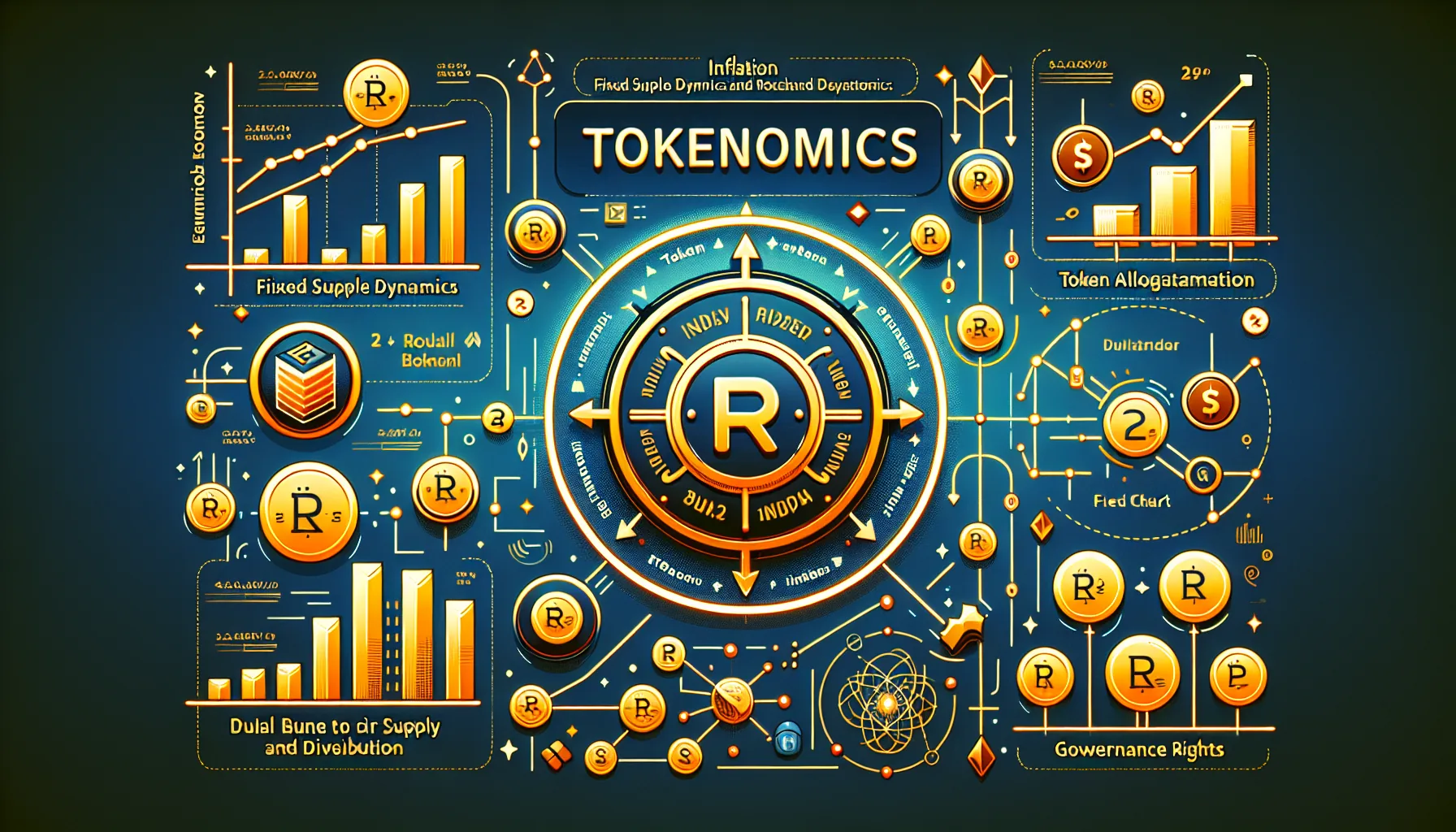
RNDR2 Tokenomics
RNDR2 Tokenomics: A Deep Dive into its Supply and Distribution Mechanics
RNDR2's tokenomics framework is a critical cornerstone that defines its functionality and appeal within the decentralized rendering ecosystem. Designed to incentivize network participants and fuel resource exchange, the tokenomics model operates with a mix of unique features and a few potential challenges worth examining.
Fixed Supply and Inflation Dynamics
RNDR2 employs a fixed supply cap mechanism, ensuring that the total number of tokens in circulation will never surpass a predetermined limit. This deflationary structure is a double-edged sword. While it mitigates risks tied to runaway inflation, it introduces potential concerns about token hoarding, especially if rewards for active network participation diminish over time. Furthermore, the scarcity model may lead to increased transaction inefficiencies if token prices appreciate significantly, creating barriers for smaller users who wish to engage with the platform.
Token Allocation and Early Distribution
The initial allocation of RNDR2 tokens was split across several key categories: ecosystem development, early contributors, token sales, and an incentive pool for ongoing network rewards. However, questions have emerged regarding the disproportionate allocation to early stakeholders. A significant percentage of the supply was reportedly reserved for private investors and founding team members, which some critics argue consolidates decision-making power and creates a risk of centralization within a project that otherwise aims to promote decentralization.
On the other hand, RNDR2's incentive pool is designed to pay out tokens to validators, node operators, and liquidity providers over time. While aligned with the ecosystem’s growth goals, the declining reward schedules require careful management to maintain the participation of these stakeholders long-term.
Fee Structures and Burn Mechanism
Transaction fees play a pivotal role in RNDR2's tokenomics model. The platform adopts a dual-burn mechanism, where a portion of the fees collected from render jobs is permanently removed from circulation. This burn function acts as a deflationary pressure, theoretically increasing token scarcity to benefit long-term holders. However, the unpredictability of render job volume introduces volatility in how impactful this mechanism will be.
Additionally, RNDR2’s fee structure could raise accessibility concerns in times of network congestion. Users may face higher costs to process jobs on the network, pricing out smaller contributors who lack sufficient token reserves.
Governance and its Token Implications
RNDR2 empowers token holders with governance rights, granting them the ability to determine protocol changes via voting systems. While this bolsters decentralization on paper, challenges arise when large holders dominate proposals, creating the risk of plutocracy. The presence of governance staking further exacerbates this dynamic, as well-capitalized entities can fix influence over long periods with minimal oversight.
In summation, RNDR2’s tokenomics model balances innovation with inherent risks that require ongoing adjustments to maintain network equilibrium.
RNDR2 Governance
Governance Structure of the RNDR2 Crypto Asset: Decentralization and Decision-Making Challenges
The governance framework underpinning RNDR2 is central to its functionality as a crypto asset, especially given its role in enabling decentralized rendering services. RNDR2’s design aims to empower its community through a decentralized decision-making process. However, the nuances of this governance structure introduce both opportunities and potential pitfalls.
Token-Based Voting Mechanism
RNDR2 employs a token-weighted voting mechanism, where governance proposals are decided by the collective input of token holders. This model incentivizes participation by giving decision-making power proportionate to the number of tokens held. While this ensures stakeholders with higher investment have more influence, it has also raised concerns about centralized power dynamics. Critics point out that whales—entities holding significant amounts of RNDR2—may potentially dominate voting outcomes, thereby marginalizing smaller participants.
Proposal Process and Ecosystem Impact
The governance process typically revolves around community-submitted proposals. These proposals range from protocol upgrades to resource allocation within the rendering network. For instance, proposals could dictate the prioritization of funding for specific rendering tools or integration ideas. Nonetheless, the high barrier to entry for creating meaningful proposals—both in terms of technical knowledge and token ownership thresholds—may deter participation from smaller, yet innovative contributors.
Additionally, governance-related voting outcomes can have wide-reaching implications for the RNDR2 ecosystem. Poorly thought-out changes to the tokenomics or network parameters could impact node operators' incentives or rendering quality assurance mechanisms. The interconnected nature of these decisions raises the stakes and demands a high degree of competence from voters.
Transparency and Accountability Concerns
While transparency is a hallmark of many decentralized governance systems, RNDR2’s reliance on pseudonymous participants can obscure accountability. Once a controversial proposal is passed, tracking the motives or identifying potential bad actors behind the decision remains complex. This lack of clear accountability could erode trust between participants over time.
Governance Token Inflation and Voter Apathy
RNDR2’s ecosystem incentivizes token holding for governance purposes, but long-term sustainability may be questioned if inflationary rewards dilute governance power across passive holders. Moreover, voter apathy—a common issue in token-based governance—may result in low turnout for critical proposals, leaving decisions in the hands of a small, active minority whose interests may not align with the broader community’s goals.
Smart Contract Risks in Governance Execution
Smart contracts automate the execution of accepted governance proposals. However, any bugs or vulnerabilities in these contracts could jeopardize both funds and the integrity of governance. Such risks emphasize the need for ongoing audits and robust scrutiny before implementation, yet the decentralized nature of RNDR2 governance might delay rapid responses if issues arise.
Technical future of RNDR2
RNDR2: Current and Future Technical Developments and Roadmap
Advanced Layer-2 Integration for Rendering Efficiency
RNDR2 intends to enhance its core rendering infrastructure by adopting Layer-2 scaling solutions. These integrations aim to minimize network congestion and reduce transaction costs, addressing a common challenge faced by GPU-based decentralized protocols. The planned integration of zero-knowledge rollups (ZK-rollups) is a notable development, enabling the batching of multiple transactions off-chain while maintaining on-chain security. However, achieving seamless Layer-2 adoption remains technically complex, with potential hurdles like maintaining interoperability across existing rendering nodes and handling increased data synchronization demands.
On-Demand Decentralized GPU Allocation
RNDR2's pipeline includes the development of an advanced decentralized GPU allocation system. This feature will allow for real-time resource allocation tailored to user demands. By implementing programmable smart contracts for automated GPU distribution, the protocol promises greater transparency and flexibility for creators and developers. Nonetheless, the technical dependency on Ethereum or other competing blockchain ecosystems might introduce operational risks, especially if scalability issues persist on the primary chain that RNDR2 depends upon.
Cross-Chain Functionality and Multi-Network Expansion
To future-proof its ecosystem, RNDR2 is focusing efforts on cross-chain capabilities. A key feature under development is its capacity to operate seamlessly across competing blockchain infrastructures such as Solana or Avalanche. This would mitigate dependency on any single blockchain and expand its usability for a fragmented crypto market. However, cross-chain integrations often present security challenges. The complexity of bridging assets and workloads across heterogeneous networks could introduce smart contract vulnerabilities or require an additional layer of auditing, adding to development timelines.
Enhanced Decentralization with Node Staking Incentives
RNDR2's upcoming roadmap includes a refined node-staking mechanism for contributors to its rendering network. Instead of relying solely on GPU power availability, the platform plans to implement reputation-based staking mechanics. This system could boost the quality of rendering jobs by rewarding high-performing nodes. However, building trust metrics in a decentralized ecosystem remains challenging, especially if insufficient participation leads to centralization in the node selection process.
Development of a Customized Rendering SDK
A specialized RNDR2 SDK is under development to simplify integration with third-party rendering platforms and applications. The SDK is designed to streamline access to decentralized rendering power, particularly for non-blockchain-native developers. There’s a strong focus on flexibility, enabling compatibility with tools like Blender or Unreal Engine. While this builds bridges to mainstream rendering, developer adoption rates for blockchain SDKs historically remain low, suggesting potential adoption barriers.
Potential Improvements to DAO Governance
As RNDR2 scales, governance decentralization remains top-of-mind. The roadmap includes robust upgrades to its DAO infrastructure, such as multi-tiered voting systems that allow contributors of varying scales to influence protocol decisions. Ensuring equitable governance may require significant refinements to prevent large-scale token holders from dominating decision-making—an issue common across many DAO-managed ecosystems.
Comparing RNDR2 to it’s rivals
Comparing RNDR2 to STMX: Key Differences in Use Case, Utility, and Market Appeal
When evaluating RNDR2 against its rival STMX, the most noticeable distinction lies in their core utility and target industries. RNDR2 aims to dominate the decentralized rendering and GPU computation market, catering specifically to creatives, developers, and businesses in need of high-performance processing power. By contrast, STMX focuses on incentivized crypto shopping via cashback rewards and retailer partnerships, positioning itself as a facilitator for everyday consumer crypto adoption. This fundamental difference means the two assets operate in entirely separate ecosystems, which affects their respective adoption paths.
From a technical perspective, RNDR2 leverages advanced decentralized rendering architecture, integrating directly with high-demand industries like film, animation, and gaming. The asset taps into the monetization of GPU resources to provide low-latency, scalable rendering services. STMX, on the other hand, is built around a rewards-based utility model where users earn tokens by making purchases through affiliated merchants. While effective for its niche, this model lacks the intricate technical complexity and B2B appeal that RNDR2 brings to the table.
However, RNDR2’s focus on high computational tasks introduces its own set of challenges. Its operation depends heavily on network stability, node quality, and ongoing demand in computationally intensive industries. Network saturation or inconsistent participation from GPU providers could strain RNDR2’s service reliability. Although STMX doesn’t face these specific hurdles, its utility is tethered to consumer spending habits and the willingness of external partners to accept crypto cashback models—both of which are inherently cyclical and can fluctuate based on broader market conditions.
Another point of contention is token accessibility and integration. STMX’s cashback mechanics are simple for end-users to understand and use, which gives it a straightforward onboarding process for crypto newcomers. RNDR2’s platform, while innovative, demands a higher level of technical engagement and familiarity with rendering workflows, making it less accessible to a non-technical audience. This can restrict RNDR2’s ability to attract retail investors or casual users who lack experience in GPU-heavy ecosystems.
Finally, in terms of decentralization trade-offs, RNDR2’s dependence on incentivized hardware contributions makes it more vulnerable to centralization risks in GPU supply chains. Meanwhile, STMX’s cashback model, while limited in scope, is less directly influenced by hardware or infrastructure bottlenecks. This creates a stark contrast in operational risk profiles between the two assets.
Comparing RNDR2 to The Graph (GRT): A Deep Dive into Utility and Network Architecture
When analyzing RNDR2 in comparison to The Graph (GRT), it becomes clear that both projects focus heavily on supporting decentralized infrastructure, yet their approaches and technical frameworks diverge significantly. RNDR2 offers rendering power for decentralized GPU-based computations, while GRT operates as an indexing protocol that enables querying of blockchain data. This fundamental difference impacts their technical designs, scaling mechanisms, and use cases.
Network Design: Specialized Versus Generalized
RNDR2's architecture is specifically tailored for distributed rendering tasks, creating a niche but highly targeted environment for computational demand, particularly for 3D rendering, motion graphics, and similar GPU-intensive processes. By contrast, GRT employs a more generalized approach, supporting various blockchain ecosystems by enabling the indexing and querying of structured data. GRT's versatility allows it to cater to a broader set of use cases, including DeFi and other dApp infrastructures. However, this generalization may result in less optimization for very specific use cases like rendering, where RNDR2 shines.
Tokenomics and Incentive Models
A key differentiator lies in how the two networks incentivize participants. RNDR2 compensates GPU providers for rendering tasks completed, directly linking the token's utility to rendering demand. GRT, on the other hand, rewards indexers, curators, and delegators within its ecosystem for contributing to and maintaining accurate indexing services. While both rely on staking mechanisms to secure their networks, the vertical specificity of RNDR2’s tokenomics enables a more direct correlation between token usage and network activity, whereas GRT’s dynamics are more complex and tied to broader blockchain growth.
Performance Challenges
Both assets grapple with scalability concerns, albeit in different ways. RNDR2 faces potential bottlenecks tied to the availability of GPU resources, which could be impacted by rising demand and market scarcity of high-performance hardware. GRT, on the other hand, deals with issues surrounding the complexity of syncing, maintaining subgraphs, and potential delays in querying large datasets during periods of high network usage. Users who prioritize performance may find these weaknesses worth consideration depending on their application's demands.
Ecosystem and Adoption
Despite its specialized focus, RNDR2 relies heavily on the rendering and creative sectors for adoption, which exposes it to dependency risks on these specific industries. GRT's growth is more evenly distributed across numerous blockchain verticals, reducing reliance on any single sector. This broader ecosystem integration may appeal to some users looking for diversified utility, though it simultaneously spreads resources and development efforts more thinly than RNDR2's tightly focused target market.
In conclusion, while both RNDR2 and GRT aim to optimize decentralized workflows, their differences in network architecture, tokenomics, and scaling issues highlight their unique priorities and trade-offs.
RNDR2 vs. ILV: A Technical and Use-Case Comparison
When examining RNDR2 in the context of its rivalry with Illuvium (ILV), key distinctions emerge in terms of utility, ecosystem integration, and tokenomics. Both projects operate in distinct niches of the Web3 and blockchain landscape, yet their underlying frameworks reveal significant contrasts that may impact adoption and user engagement.
Sectoral Divergence: Rendering vs. GameFi
RNDR2 primarily focuses on decentralized GPU rendering, enabling creators to utilize distributed computing power for tasks like 3D rendering and complex simulations. ILV, on the other hand, is firmly entrenched in the GameFi sector with a role as the governance and utility token for Illuvium’s blockchain-based gaming metaverse. The sectoral separation means RNDR2 caters to professionals in creative industries, whereas ILV targets gamers and decentralized game developers.
This sectoral distinction impacts scalability opportunities. RNDR2’s reliance on technical compatibility for rendering workloads may create friction for onboarding, as participants must validate hardware and optimize for specific use cases. Conversely, ILV’s asset integration into gaming ecosystems offers a more accessible entry point for casual participants, albeit within a niche segment—blockchain-based gaming.
Ecosystem Maturity and Adoption Barriers
One notable challenge for RNDR2 in competing against ILV lies in the broader ecosystem surrounding each asset. ILV benefits from Illuvium’s developing metaverse, which incorporates NFTs, immersive environments, and play-to-earn mechanics. This gamified approach creates a closed-loop economy where ILV serves as the native token for rewards, governance, and staking mechanisms.
By contrast, while RNDR2’s use case aligns with the creator economy and digital production pipelines, it faces hurdles in adoption stemming from a more technical implementation. Contributors to RNDR2’s ecosystem—renderers and content producers—must often possess specialized knowledge or access specific hardware setups to fully leverage its model. This technical barrier contrasts with ILV’s smoother onboarding for gamers familiar with traditional or casual gaming dynamics.
Tokenomics and Utility Design
Another comparative point resides in token utility and governance implementations. ILV’s staking mechanisms are highly gamified, rewarding users for active participation and incentivizing liquidity lockups within the Illuvium ecosystem. Staking in RNDR2 remains functional but less dynamic, with rewards often tied to rendering workloads rather than broader utility diversification.
Additionally, ILV’s governance model has seen extensive community engagement due to its direct ties to game development and ecosystem evolution. While RNDR2 employs decentralized governance principles, its focus on technical innovations may limit its appeal to a wider governance-focused audience compared to ILV, whose gaming-centric governance decisions are more tangible and engaging.
Interoperability Gaps
While both RNDR2 and ILV interact with the broader blockchain ecosystem, RNDR2 emphasizes rendering-specific tasks that require integration with decentralized computing networks. ILV, in contrast, prioritizes gaming interoperability within the expanding Web3 metaverse, where assets such as NFTs and gameplay mechanics are shared across platforms. This distinction could leave RNDR2 at a disadvantage in multi-platform adoption.
Primary criticisms of RNDR2
Primary Criticism of RNDR2: Key Challenges Facing the Asset
Centralization Concerns Loom Large
A recurring criticism of RNDR2 lies in its underlying infrastructure and governance model, prompting concerns about potential centralization risks. Despite being marketed as a decentralized solution for rendering workloads, questions have been raised regarding the concentration of critical infrastructure components. If significant portions of the network rely on a few large node operators, there is a potential bottleneck that undermines both network resilience and decentralization principles. Critics argue that this imbalance may lead to decision-making power being concentrated in the hands of a few entities, which could negatively impact the broader community's ability to influence governance decisions or adapt the protocol over time.
Limited Real-World Adoption
Another pressing issue for RNDR2 is its perceived struggle to break into widespread real-world usage. While blockchain-based rendering systems hold interesting promise for distributed computing, skeptics argue that adoption by mainstream CGI and rendering industries has been incremental at best. This is further compounded by arguments that centralized rendering solutions remain faster, easier to implement, and currently more cost-effective than onboarding a decentralized crypto-based infrastructure. Without clear incentives, scaling adoption beyond crypto-native users could prove slow and remain a continuous challenge.
Token Utility and Overemphasis on Speculation
The utility of the RNDR2 token has come under scrutiny. Critics often point out that while the token is necessary for access to rendering services and participation in the ecosystem, a significant portion of the token's activity appears to be speculative trading rather than meaningful engagement with the network's core features. The lack of diverse and robust utility metrics beyond the basic payment model has led some to argue that RNDR2 risks being categorized more as an investment vehicle than as a functional component in a decentralized rendering protocol.
Competition and Technological Redundancy
Finally, RNDR2 faces challenges from competing platforms—both decentralized and traditional. Some raise concerns that similar blockchain-based solutions offer comparable services, sometimes with enhanced scalability mechanisms or lower fees. Moreover, advancements in cloud rendering from centralized providers could potentially render RNDR2’s value proposition redundant for certain use cases. These competitors often enjoy the benefits of existing professional ecosystems, which RNDR2 must work harder to penetrate.
Conclusion
This criticism highlights key hurdles RNDR2 will need to address to achieve broader acceptance and maintain its relevance within the highly competitive crypto and rendering spaces.
Founders
The Founding Team Behind RNDR2: Visionaries, Challenges, and Controversies
The founding team of RNDR2, the crypto asset at the center of growing attention in decentralized rendering and GPU computing, comes with both acclaim and scrutiny. At its core, the project was launched by a blend of technical innovators and creative visionaries aiming to decentralize the GPU rendering landscape. While their expertise is undeniable, the structure and decisions of the team have sparked notable discussion within the crypto community.
Expertise Driving the Vision
The driving force behind RNDR2's development includes industry veterans with backgrounds in GPU technology, blockchain engineering, and creative content production. The team's combined experience in rendering technologies gave them a distinct edge in identifying inefficiencies in centralized computing networks, particularly in industries like gaming, film, virtual reality, and AI. Their emphasis on technical scalability while integrating blockchain functionality was a forward-thinking approach that resonated deeply with early adopters.
Transparency and Centralization Concerns
Despite the team's technical achievements, issues about transparency have raised eyebrows. Critics within the crypto ecosystem have pointed out that details about the decision-making process, especially concerning core protocol changes and tokenomics, are often unclear. Accusations of centralized authority within the founding group contradict the narrative of decentralization RNDR2 markets itself around. These concerns remain a sticking point for many participants looking for stronger on-chain governance mechanisms.
Team Expansion and Distribution
As RNDR2 scaled, the makeup of the team evolved, yet not all additions have been met with enthusiasm. Observers have flagged the heavy representation of individuals with legacy tech backgrounds rather than blockchain-native expertise, leading some to question whether the team fully grasps the decentralized ethos the crypto world demands. Additionally, reports of uneven team expansion between technical resources and marketing teams have left the community apprehensive about whether sufficient focus is being placed on core development.
Controversial Decision-Making
The founding team has faced backlash for certain key decisions, particularly those relating to token distribution and ecosystem partnerships. Some early participants in RNDR2’s token sales have raised concerns about perceived preferential treatment towards institutional investors compared to retail participants. Further, several in the community question the rationale behind specific high-profile collaborations, which appear more focused on branding optics rather than delivering tangible utility to token holders.
In sum, while the RNDR2 founding team undoubtedly boasts the credentials and vision necessary to spearhead innovation, their path has not been immune to criticism. Every decision they make is dissected by a community keenly aware of the interplay between decentralization, governance, and execution. This scrutiny is a reflection of the high stakes associated with RNDR2’s ambitions in reshaping the rendering economy.
Authors comments
This document was made by www.BestDapps.com
Sources
- https://www.rendertoken.com/whitepaper
- https://www.rendertoken.com
- https://etherscan.io/token/0x6de037ef9ad2725eb40118bb1702ebb27e4aeb24
- https://medium.com/render-token
- https://github.com/rendertoken
- https://docs.rendertoken.com
- https://twitter.com/rendertoken
- https://coinmarketcap.com/currencies/render-token
- https://www.coingecko.com/en/coins/render-token
- https://community.render.network
- https://forum.rendertoken.com
- https://render.network/blog
- https://messari.io/asset/render-token
- https://cointelegraph.com/tags/rendr
- https://cryptobriefing.com/tag/rendertoken
- https://www.theblock.co/data/crypto-assets/rendr
- https://discord.gg/render
- https://render.network/
- https://docs.otoy.com/RenderNetwork
- https://research.binance.com/en/projects/render-token