History of RLCX
The History of RLCX: Key Developments and Milestones
RLCX emerged from a landscape of decentralized computing solutions, aiming to address inefficiencies in distributed cloud infrastructure. Developed to facilitate secure and scalable computational resource sharing, its history is marked by strategic development phases, key technological integrations, and notable ecosystem challenges.
Origins and Initial Development
RLCX was conceptualized as a response to the limitations of centralized cloud computing, particularly bottlenecks in resource allocation and high operational costs. Early development efforts focused on leveraging blockchain to create a decentralized network where users could contribute and rent computational power. The project’s architectural foundation was built to ensure trustless execution, verifiability of computations, and marketplace efficiency.
Mainnet Launch and Adoption Challenges
Following an extended test phase, RLCX transitioned to its mainnet, introducing its native token as the medium for resource exchange within its ecosystem. While initial adoption was promising, early phases saw scalability concerns, particularly in transaction settlement times and network throughput. Compared to competing decentralized computing networks, RLCX had to address bottleneck issues that hindered its capacity to scale efficiently in high-demand scenarios.
Usability was another hurdle. Although the protocol offered a robust infrastructure for decentralized computing, onboarding complexities limited non-technical user participation. This led to a reliance on a niche developer community rather than broader enterprise adoption in the early stages.
Key Ecosystem Developments
Over time, RLCX integrated optimizations aimed at improving resource allocation efficiency and scalability. Enhancements to smart contract functionality and layer-2 compatibility were pivotal in mitigating gas fee concerns, especially during periods of network congestion. Cross-chain interoperability efforts also expanded its accessibility, allowing users to interface with other blockchain ecosystems.
Despite these upgrades, liquidity fluctuations posed a recurring challenge. The reliance on the underlying token for transactions meant that periods of low market activity impacted incentive structures within the network. Additionally, securing long-term enterprise partnerships remained an obstacle, as many organizations continued to favor established cloud providers over decentralized alternatives.
Security and Governance Evolution
Security has been a critical focus in RLCX’s trajectory. While no major exploits have compromised the protocol’s integrity, smart contract vulnerabilities required periodic audits and refinements. Governance mechanisms evolved alongside this, shifting from a semi-centralized development model to more community-driven decision-making processes.
As network participation grew, decentralized governance introduced both opportunities and friction. While it increased transparency, divergence in stakeholder priorities occasionally led to delays in implementing protocol improvements.
How RLCX Works
How RLCX Works: Mechanisms and Functionality
RLCX operates as a decentralized compute resource marketplace, enabling users to buy and sell compute power using its token. The system is built on a network where providers contribute underutilized computational resources, and consumers access these resources for various workloads, such as machine learning, simulation, or blockchain validation processes.
Resource Allocation and Pricing Model
The protocol employs a dynamic pricing mechanism where supply and demand determine the cost of compute resources. Unlike traditional cloud providers with fixed pricing, RLCX users negotiate rates directly with providers. This market-driven model can lead to cost efficiencies but also introduces uncertainty, as resource availability and pricing fluctuate. Additionally, price discovery can be inefficient due to asymmetry in provider capabilities and lack of standardized benchmarking.
Decentralized Compute Layer
RLCX does not maintain physical infrastructure but instead relies on a network of independent providers offering CPU and GPU power. Jobs are distributed across the network via smart contracts, allowing users to execute workloads without relying on centralized cloud services. However, since providers vary in hardware and reliability, performance inconsistencies and potential job failures remain challenges. The protocol attempts to mitigate these risks through provider reputation scoring, but enforcement remains difficult in fully decentralized environments.
Transaction Settlement and Security
Payments within RLCX are settled using its native token. Escrow smart contracts hold funds until computational tasks are validated, reducing counterparty risk. However, potential issues arise if validation mechanisms are inadequate, as disputes between providers and consumers can emerge. The system uses cryptographic proofs to verify executions, but adoption of such proofs can be computationally expensive and impact overall efficiency.
Interoperability and Integration
RLCX is designed to integrate with existing decentralized applications and allows developers to tap into its compute layer through APIs and SDKs. However, compatibility with different blockchain ecosystems remains an issue, particularly for projects running on non-EVM chains. While bridges and cross-chain solutions exist, they introduce additional complexity and security concerns.
Scalability and Network Constraints
As demand increases, RLCX faces congestion risks, especially since on-chain settlement can be constrained by network throughput. Layer-2 scaling solutions are being explored, but current implementation remains a limiting factor in transaction speed and cost efficiency. Decentralized compute allocation also introduces latency compared to traditional cloud providers, which could impact time-sensitive workloads.
Use Cases
RLCX Use Cases: Applications and Limitations
Decentralized Compute Resource Allocation
RLCX facilitates the distribution of decentralized compute resources by enabling users to access and contribute computing power in a peer-to-peer environment. This is particularly relevant for industries requiring significant computational workloads, such as machine learning model training, data analysis, and complex simulations. The elimination of traditional intermediaries allows for potentially lower costs and increased efficiency. However, the network’s reliance on node participation creates a challenge in maintaining consistent availability and performance, especially during periods of high demand.
On-Chain Execution of Computational Tasks
By leveraging smart contracts, RLCX enables users to submit computational tasks that are executed in a decentralized manner. This ensures verifiability and transparency, which is valuable for applications where trust and auditability are critical. However, the efficiency of executing complex tasks on-chain remains a limiting factor, as certain high-performance computing operations may still require centralized solutions to meet time-sensitive demands.
Secure Data Processing and Privacy-Preserving Computation
RLCX's framework supports confidential computing by allowing encrypted data to be processed without exposing its contents to third parties. This is particularly relevant for industries handling sensitive information, such as healthcare, finance, and research. However, privacy-preserving computation remains technologically complex, and the efficiency trade-offs between security and performance need to be considered when deploying large-scale applications.
Tokenized Incentives for Compute Providers
RLCX introduces a tokenized incentive structure, encouraging individuals and enterprises to lease out unused computational resources. This creates an open marketplace for compute power, where participants are rewarded based on supply-demand dynamics. A major challenge, however, is maintaining a balance between competitive pricing and node profitability, as fluctuations in token value and demand could lead to inconsistent network participation.
Decentralized AI and Model Training
The ability to distribute AI workloads across decentralized networks allows developers to train models without being constrained by centralized cloud providers. This decentralization reduces dependency on major tech companies and enhances resistance to censorship. However, latency and hardware compatibility across decentralized nodes present obstacles to seamless AI training, particularly when dealing with massive datasets.
Interoperability with Other Blockchain Ecosystems
RLCX aims to integrate with various blockchain ecosystems to enhance its utility in cross-chain computations. This interoperability enables multi-chain smart contract execution and broader adoption across decentralized applications. However, cross-chain compatibility introduces security risks, particularly in bridge mechanisms that connect disparate blockchain networks. Exploits in interoperability layers have historically been a major attack vector in the crypto space.
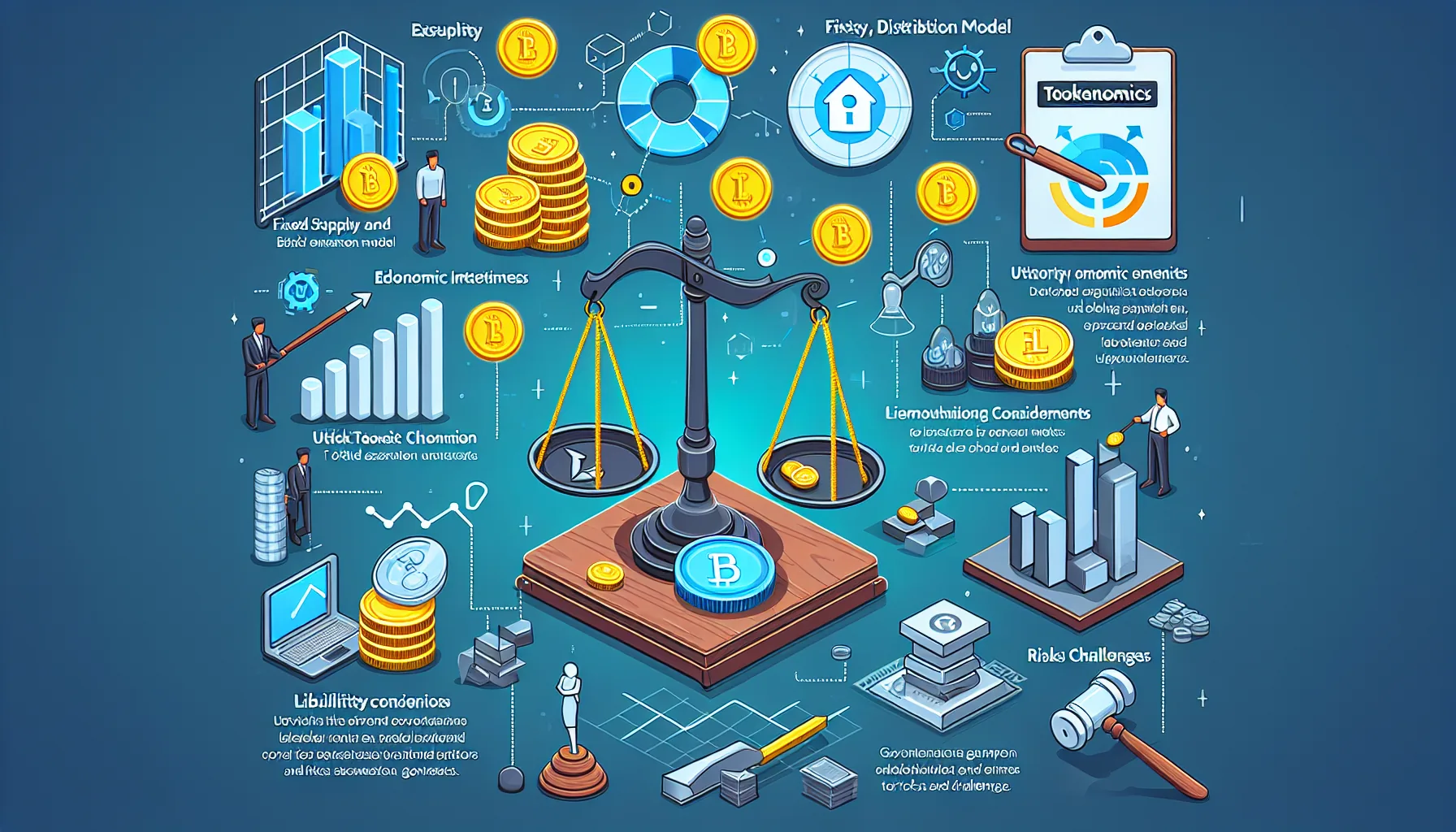
RLCX Tokenomics
RLCX Tokenomics: Supply, Distribution, and Utility
Fixed Supply and Emission Model
RLCX operates on a fixed supply model, eliminating inflationary mechanics that could dilute token value over time. The total supply was pre-defined at the token's inception, with no ongoing emissions or mining-based rewards. This approach places deflationary pressure on the asset, assuming no substantial unlocking events or additional minting mechanisms. However, the absence of a dynamic supply adjustment can also pose liquidity challenges, particularly if demand outpaces circulating availability.
Token Distribution and Unlocking Events
The initial allocation of RLCX was split among various stakeholders, including the development team, early investors, the treasury, and community incentives. A vesting schedule was implemented to prevent large-scale liquidations from early holders, but the structure of these unlocks can create short-term supply shocks. Large vested token releases, especially from early backers or team allocations, may lead to volatility if liquidity in secondary markets is insufficient to absorb selling pressure.
Utility and Economic Incentives
RLCX serves multiple functions within its ecosystem, including governance participation, transaction fee payments, and staking mechanisms. The governance model allows token holders to propose and vote on protocol changes, but actual governance participation rates and voter centralization remain key concerns. A low rate of engagement from smaller holders could consolidate decision-making power among large stakeholders.
Staking mechanisms, if present, enable token holders to lock their assets in exchange for network rewards. The staking yield is typically derived from transaction fees or incentive programs, but sustained reward mechanisms must be balanced to avoid unsustainable payouts that could lead to inflationary dynamics.
Liquidity Considerations and Market Impact
Market liquidity for RLCX depends on exchange listings, trading volume, and the distribution of tokens across wallets. A highly concentrated supply among a few holders could create liquidity constraints, while inadequate exchange support may restrict accessibility for new participants. Additionally, if a significant portion of the supply is locked in staking or governance contracts, actual circulating liquidity could be lower than total available supply figures suggest.
Potential Risks and Challenges
While a fixed supply model can benefit long-term scarcity, liquidity dynamics, governance centralization, and token unlocking schedules present ongoing risks. The level of decentralization in token control, the sustainability of staking rewards, and the ability to maintain a balanced market structure all contribute to the long-term economic stability of RLCX.
RLCX Governance
RLCX Governance: Mechanisms, Voting Power, and Challenges
On-Chain and Off-Chain Governance Mechanisms
RLCX governance is structured through a combination of on-chain and off-chain mechanisms that determine protocol upgrades, treasury allocations, and ecosystem initiatives. Governance proposals are typically initiated by token holders, core developers, or ecosystem stakeholders, with voting conducted through a decentralized governance framework. The governance process incorporates smart contracts for proposal execution, reducing centralization risks while maintaining protocol security. However, limitations in the upgrade process can lead to delayed implementations if voter participation is low.
Voting Power and Influence of Token Holders
RLCX governance is primarily token-weighted, meaning that voting power is proportional to the amount of RLCX tokens held or staked. This system incentivizes long-term participation but also raises concerns regarding governance centralization. Large token holders, often referred to as "whales," can exert disproportionate influence over proposals, potentially skewing decisions toward their interests rather than those of the broader community. Furthermore, voter apathy is a recurring issue, as a significant portion of token holders may not participate in governance, leading to governance decisions being shaped by a relatively small number of active participants.
Proposal Submission and Execution Process
Proposals within the RLCX ecosystem typically follow a structured multi-phase process: initial discussion, formal proposal submission, community debate, and finally, an on-chain governance vote. If a proposal meets the required voting threshold, smart contracts autonomously execute the changes. In cases where governance requires protocol-level modifications, delays may occur due to necessary audits or implementation constraints. Some proposals require quorum thresholds to prevent governance manipulation, although these thresholds can also lead to proposal stagnation if insufficient voting participation occurs.
Governance Risks and Attack Vectors
The governance model of RLCX is susceptible to several risks, including economic attacks and voter collusion. A well-funded entity could accumulate a significant share of voting power, introducing the risk of governance capture. Additionally, flash loan exploits could be used to temporarily amass voting power, enabling governance manipulation. To mitigate such risks, RLCX governance might implement time-lock mechanisms, extended voting durations, or minimum staking requirements to ensure the legitimacy of governance participation.
Trade-Offs Between Decentralization and Efficiency
While on-chain governance enhances decentralization, it may lead to slow decision-making processes. In contrast, more centralized off-chain governance forums can act as a coordination layer but may introduce bureaucratic inefficiencies. Striking the right balance between decentralization and governance efficiency remains a continuous challenge for RLCX.
Technical future of RLCX
RLCX Technical Developments and Roadmap
Layered Scaling Enhancements
RLCX is implementing a multi-layered scaling approach to address network congestion and execution speed. A hybrid rollup mechanism, incorporating both zk-rollups for privacy-centric applications and optimistic rollups for general computation, is in development. This dual approach aims to balance transaction throughput with finality efficiency. However, concerns remain regarding the complexity of integrating these rollups with existing smart contracts without introducing security vulnerabilities.
Cross-Chain Interoperability Expansion
A major focus is enhancing RLCX’s cross-chain compatibility. Work is ongoing to extend bridges beyond EVM-compatible networks, incorporating WASM-based blockchains and Cosmos SDK chains. The introduction of generalized message-passing protocols should improve interoperability, but maintaining security in a decentralized bridging architecture remains a challenge. Past exploits in cross-chain bridges raise valid concerns about attack vectors, particularly in liquidity aggregation models.
Validator Optimization and Decentralization Trade-offs
Validator staking mechanics are being refined to improve network efficiency. Adaptive slashing conditions are planned to penalize validators engaging in malicious or negligent behavior without discouraging participation. However, there is debate about whether the move toward favoring higher-staked nodes for efficiency undermines decentralization principles. Early tests indicate that while computation throughput improves, it may lead to a more centralized network topology.
Smart Contract Upgradability and Security Enhancements
The next iteration of RLCX’s smart contract framework introduces upgradable contracts with built-in security audit enforcement. Any deployed upgrades will require multi-party approval via governance mechanisms to prevent unauthorized modifications. While this provides flexibility, some critics argue that upgradeability introduces potential governance attack vectors if voting power is disproportionately held by large stakeholders.
AI-Driven Resource Allocation
A machine learning-driven computation marketplace is being tested to dynamically allocate processing power based on network demand. This AI-based optimization intends to minimize idle resources and improve pricing models for users requiring computational services. However, ensuring transparency in AI-driven distribution logic remains an open question, with risks of centralized control and opaque prioritization mechanisms being recurring concerns in early discussions.
Long-Term Governance Transition
Proposals continue to evolve on shifting governance toward a fully decentralized autonomous organization (DAO). The roadmap suggests staged decentralization, gradually reducing core team influence, but there is skepticism about whether governance token distribution will allow for true community-driven decision-making. Token-weighted voting systems often favor early adopters and whales, making equitable participation an ongoing challenge.
Comparing RLCX to it’s rivals
RLCX vs BTC: A Technical and Functional Comparison
Consensus Mechanism and Network Security
RLCX operates using a customized proof-of-stake (PoS) consensus, which contrasts sharply with BTC’s proof-of-work (PoW) model. The PoS approach allows RLCX to achieve faster finality while reducing the energy-intensive mining processes inherent to BTC. However, BTC’s PoW model is considered more battle-tested, offering a higher degree of immutability and resistance to certain forms of consensus-level attacks.
While BTC relies on the vast computational power securing the network, RLCX’s security largely depends on validator participation and staking dynamics. A lower number of validators or high centralization in staking pools could expose RLCX to potential governance risks.
Transaction Speed and Throughput
BTC’s network is notorious for slow transaction speeds, averaging around 7 transactions per second (TPS) with block times of approximately 10 minutes. RLCX, on the other hand, provides significantly higher TPS due to its PoS framework, reducing confirmation times and allowing for near-instant finality in ideal network conditions.
However, the higher speed of RLCX does not necessarily mean greater decentralization. BTC’s slow settlement times are often compensated by its high level of trust and robustness, whereas RLCX’s model could face vulnerabilities if validator incentives are not properly structured.
Fee Structures and Network Costs
One of BTC’s major criticisms is its reliance on high and unpredictable transaction fees, which are influenced by network congestion. RLCX offers a more predictable and dynamic fee model designed to reduce volatility in transaction costs. Lower fees make RLCX more practical for microtransactions, whereas BTC’s primary usage remains as a long-term store of value rather than a frequent settlement layer.
That said, BTC’s high transaction costs contribute to network security by incentivizing miners. In contrast, RLCX’s lower fees could create sustainability challenges unless properly balanced with validator rewards.
Smart Contract Capabilities
BTC’s scripting language is highly restrictive, limiting its use for complex transactions. In contrast, RLCX supports advanced smart contracts, enabling a broader range of decentralized applications directly on its network. However, this added functionality comes with its own risks, including potential smart contract vulnerabilities and increased attack surfaces compared to BTC’s minimalist approach.
BTC’s security-first model means that it avoids many of the smart contract-related exploits that plague more flexible networks. RLCX must ensure rigorous security practices to mitigate potential risks associated with its extended programmability.
RLCX vs ETH: How They Compare
Smart Contract Capabilities
Ethereum (ETH) is the dominant force in smart contract execution, with a massive ecosystem of dApps, DeFi protocols, and layer-2 scaling solutions. RLCX, while integrating smart contract functionality, does not match ETH’s level of adoption or developer tooling. Ethereum’s robustness comes from its battle-tested EVM, while RLCX’s approach is still gaining traction.
Network Congestion and Gas Fees
ETH has long struggled with high gas fees, especially during periods of peak demand. Network congestion on Ethereum can make transactions prohibitively expensive, particularly for smaller users. RLCX aims to address these issues by offering an alternative transaction model. However, its own scalability mechanisms are not yet tested under the same levels of strain that Ethereum frequently experiences. While RLCX transactions aim to be faster and cheaper, Ethereum's upcoming scaling solutions and rollups continue to evolve to mitigate its network congestion.
Decentralization and Security
Ethereum, with its vast number of validators and network participants, stands as one of the most decentralized blockchain ecosystems. RLCX, while striving for decentralization, does not yet have the same level of network security or validator distribution. The large-scale adoption of ETH has led to continuous audits and security improvements, while RLCX is still working to build out its security track record.
Developer Adoption and Tooling
Developers building on Ethereum benefit from extensive documentation, a wide range of SDKs, and a strong open-source community. Solidity, Ethereum’s primary smart contract language, has become a standard in blockchain development. RLCX's developer ecosystem is still growing, and while it offers some unique features, it does not yet compete with Ethereum in terms of available tools and developer support.
Liquidity and Exchange Support
ETH is widely recognized as one of the most liquid assets in crypto, with deep order books on nearly every major exchange. RLCX, being a more specialized asset, does not yet have the same level of liquidity or exchange penetration. This means that larger trades on RLCX markets can face more slippage compared to those on ETH.
Ecosystem and Partnerships
Ethereum’s ecosystem spans every sector of blockchain, from DeFi to NFTs and beyond. Partnerships with major players in both the crypto and traditional finance space continue to strengthen its position. RLCX is focused on a more niche segment, and while it has carved out a specific use case, its integrations and partnerships remain more limited in scope compared to Ethereum’s vast reach.
RLCX vs. Solana (SOL): A Technical and Functional Comparison
When comparing RLCX with Solana (SOL), the most immediate contrast lies in their architectural approaches to scalability and decentralization. Solana is designed around a high-throughput, low-latency blockchain that employs Proof of History (PoH) alongside Proof of Stake (PoS) to process a vast number of transactions efficiently. This architecture enables Solana to achieve transaction speeds that significantly outperform traditional Layer 1 blockchains.
RLCX, on the other hand, operates with a distinct focus, prioritizing computational resource allocation over raw transaction throughput. While Solana aims for near-instant settlement speeds, RLCX optimizes for decentralized computing tasks, making them fundamentally different in their core utilities.
Smart Contract Ecosystem and VM Compatibility
Solana uses its own native smart contract model via Rust and C programming languages, deviating from the widely adopted Ethereum Virtual Machine (EVM) standard. This has advantages in optimization but presents a steeper learning curve for developers accustomed to Solidity-based environments. RLCX, depending on its implementation, may or may not align closely with EVM compatibility, which directly impacts developer adoption and cross-chain interoperability.
Solana’s unique runtime model allows for parallel execution of smart contracts, which contributes to its efficiency but also introduces complications in ensuring state consistency across transactions. RLCX, being more resource-centric, does not directly compete in the same high-frequency DeFi space where Solana thrives but instead works within off-chain computing solutions, presenting a different type of scalability challenge.
Network Stability and Decentralization Trade-Offs
One of Solana's key criticisms has been network stability. Due to its high-performance nature, the blockchain has experienced periodic outages and congestion, at times rendering key applications temporarily unusable. This raises concerns about centralization, as Solana's validator requirements and high hardware demands mean that fewer operators are able to participate in securing the network.
RLCX, while not burdened with the same transactional load as Solana, faces different challenges in decentralization. The allocation and utilization of computing resources require trust mechanisms that prevent centralization among resource providers. If not properly managed, this could lead to bottlenecks similar to Solana’s reliance on select validators with high-performance hardware.
Ultimately, RLCX and Solana represent two distinct blockchain models—one focused on high-speed financial transactions and the other on decentralized computing. These technical divergences define their respective advantages and trade-offs.
Primary criticisms of RLCX
Primary Criticism of RLCX
Smart Contract Complexity and Security Risks
One of the most discussed concerns about RLCX is the complexity of its smart contracts. The platform relies heavily on multi-layered contract interactions, which increases the risk of unforeseen vulnerabilities. While audits have been conducted, history in the crypto space has shown that even rigorously examined code can contain exploits. The potential attack surface of RLCX grows with each additional integration, making it a frequent topic in security discussions.
Liquidity Constraints and Market Fragmentation
Liquidity challenges have been a persistent issue with RLCX. While the project has attempted to tackle this with various mechanisms, the fragmentation of liquidity across different pools and exchanges has led to inefficiencies. Traders often report slippage concerns, particularly during larger transactions, which can deter institutional participation. Additionally, reliance on wrapped versions of assets introduces further friction when bridging liquidity between ecosystems.
Network Congestion and Transaction Throughput
RLCX operates on a network that has, at times, struggled with congestion, particularly during periods of high activity. The protocol’s reliance on multiple contract interactions can lead to high gas fees and slow processing times. This problem becomes more pronounced during network-wide demand spikes, where transactions can be delayed or fail altogether. Although layer-2 scaling solutions have been suggested, full implementation remains a key pain point for users.
Governance Concerns and Centralization Risks
While RLCX positions itself as decentralized, critics point out that governance is still concentrated in the hands of a relatively small group of participants. Token-weighted voting mechanisms tend to favor large holders, making it difficult for smaller stakeholders to have meaningful influence. Additionally, governance participation rates have been inconsistent, leading to questions about how truly decentralized decision-making is within the ecosystem.
Interoperability Challenges and Dependence on External Networks
RLCX's utility is tied to interoperability with other blockchain ecosystems. However, this reliance on cross-chain bridges introduces additional attack vectors and technical risks. The broader industry has seen numerous bridge-related exploits, and RLCX's dependency on these infrastructures remains a valid concern. Any failure in a partnered network or bridge provider could have significant implications on asset security and overall ecosystem stability.
Regulatory Uncertainty and Compliance Risks
Like many crypto projects, RLCX faces regulatory scrutiny, particularly due to its financial applications. Uncertainty surrounding compliance requirements in key jurisdictions raises questions about long-term viability. Centralized entities interacting with RLCX must navigate changing legal landscapes, which could result in restrictions or limitations on how the system operates. Regulatory shifts remain an unpredictable but critical factor in assessing potential risks associated with RLCX.
Founders
Founding Team Behind RLCX: Key Figures and Background
The founding team of RLCX is composed of individuals with deep technical expertise and backgrounds spanning blockchain infrastructure, decentralized computing, and cryptographic security. The core team emerged from a blend of academic research and industry experience, bringing together professionals with prior involvement in distributed systems and privacy-focused applications.
Technical Leadership and Experience
The principal architect of RLCX has a track record in decentralized computation, with previous contributions in cloud-based distributed networks. Their expertise in secure data processing is reflected in RLCX’s underlying protocol, which emphasizes privacy-preserving smart contract execution. Some members of the team have been actively involved in open-source projects related to zero-knowledge proofs, which have influenced aspects of RLCX’s scalability approach.
However, despite the team’s strong technical credentials, there has been criticism regarding their limited presence in community engagement. While the project’s whitepapers and research-driven development suggest a long-term vision, the lack of frequent public-facing communication has raised concerns among some investors and ecosystem participants.
Development and Governance Challenges
The RLCX founding team originally structured governance with a core technical council, but decision-making has been relatively centralized in the early phases. Efforts toward gradual decentralization have been outlined, yet critics argue that control over protocol updates and treasury allocation remains closely held by the original developers. Some governance proposals have faced delays, with participants citing a lack of transparency in voting mechanisms.
There have also been concerns regarding the hiring pace and retention of developers. While the team has expanded, there have been reported difficulties in onboarding contributors due to the complexity of the protocol's architecture. The reliance on niche cryptographic methods has made external audits more challenging, prolonging certain roadmap milestones.
Early Fundraising and Institutional Backing
The project’s initial funding structure included contributions from a mix of private investors and ecosystem grants, with a portion allocated toward long-term research and security. However, some analysts have pointed out that certain vesting schedules favor early backers over the broader community, which has led to debates over fair token distribution.
While institutional participation has provided credibility, it has also fueled discussions over potential centralization risks. Some in the community have expressed skepticism about whether governance mechanisms will sufficiently prevent disproportionate influence from early stakeholders.
Authors comments
This document was made by www.BestDapps.com
Sources
- Official Website
- Whitepaper
- GitHub Repository
- Tokenomics Overview
- Roadmap
- Medium Blog
- Discord Community
- Twitter Official
- Blockchain Explorer
- CoinGecko Page
- CoinMarketCap Listing
- Developer Docs
- Partnerships & Ecosystem
- DAO Governance Forum
- Security Audit Reports
- Smart Contract Address
- DEX Trading Pairs
- Regulatory Compliance Statement
- Staking & Rewards


