History of REEF
The History of REEF: Development, Challenges, and Evolution
Origins and Initial Development
REEF, a blockchain project designed to facilitate DeFi, NFT, and gaming applications, was introduced to the crypto space with ambitions of improving scalability and usability for decentralized applications. It was initially launched as an ERC-20 token on the Ethereum blockchain, but to enhance performance, the team later developed the REEF Chain, a Substrate-based blockchain optimized for fast transactions and low fees.
The project gained attention due to its interoperability features and its ability to support both EVM-compatible smart contracts and Substrate-based applications. This approach aimed to provide developers with flexibility while leveraging the security and efficiency of the Polkadot ecosystem.
Key Milestones and Developments
As REEF matured, the platform introduced various upgrades aimed at enhancing network efficiency and expanding smart contract functionality. One of the pivotal moments was the transition from primarily Ethereum-based operations to building on its own blockchain infrastructure. This shift was crucial as it differentiated REEF from other DeFi-focused projects relying solely on Ethereum's network.
Strategic partnerships were formed to expand its usability within the DeFi ecosystem, aiming to attract developers and liquidity providers. The team also introduced governance mechanisms to allow token holders to participate in decision-making processes regarding network upgrades and protocol adjustments.
REEF underwent tokenomics adjustments throughout its history, sparking discussions about supply dynamics and inflation control mechanisms. Notably, changes in token issuance and staking incentives aimed to align the ecosystem’s incentives with long-term sustainability. However, such adjustments sometimes led to divided opinions among the community.
Challenges and Controversies
Despite its ambitions, REEF faced multiple hurdles, including concerns over transparency regarding token distribution and partnerships. At certain points, criticisms emerged over communication inconsistencies from the development team, with some community members questioning the level of decentralization and governance promised.
There were also concerns regarding liquidity management decisions, particularly in early phases, where investment agreements led to disputes between REEF’s team and external parties. These issues caused friction within the community and, at times, impacted market sentiment surrounding the token.
Scalability and adoption remained challenges as well, with competition from other more established blockchain networks posing obstacles to widespread developer integration. While REEF Chain introduced unique technical advantages, its adoption rate fluctuated due to evolving industry demands and shifting developer preferences.
Continued Evolution and Adaptation
REEF’s history has been marked by both technical advancements and challenges in execution. The platform has continuously iterated on its technology stack to address network performance and expand use cases. As the project evolved, it navigated the complexities of DeFi competition, regulatory pressures, and community expectations, shaping its trajectory within the crypto ecosystem.
How REEF Works
How REEF Works: Architecture, Staking, and EVM Compatibility
REEF operates as a Layer-1 blockchain designed for DeFi, NFTs, and gaming applications, utilizing a Nominated Proof-of-Stake (NPoS) consensus mechanism. Built with Substrate, REEF emphasizes scalability and interoperability while maintaining EVM compatibility, allowing developers to deploy existing Ethereum-based smart contracts without modification.
Nominated Proof-of-Stake (NPoS) Consensus
REEF’s NPoS model is similar to systems used in Polkadot and Kusama, where validators produce blocks while nominators stake tokens to back them. This mechanism is intended to optimize security while reducing centralization risks found in traditional Proof-of-Stake (PoS) models. However, access to staking rewards is dependent on validator selection, meaning smaller token holders may struggle to earn reliable returns if they back less competitive validators.
On-Chain Governance and Upgrades
The network uses decentralized governance where token holders can propose and vote on protocol upgrades. This ensures system evolution without the need for hard forks. REEF’s Substrate foundation allows for forkless runtime upgrades, but governance participation remains a challenge, as in most blockchain systems, due to low voter engagement and centralization risks posed by large holders.
EVM and WASM Smart Contract Compatibility
REEF’s dual-virtual machine support enables both Ethereum-based smart contract execution via its EVM integration and WebAssembly (WASM) smart contracts, opening doors for cross-chain interoperability, alternative programming language usage, and potentially lower gas costs compared to Ethereum. However, EVM compatibility also means REEF inherits some of Ethereum’s security vulnerabilities, such as reentrancy attacks and contract exploits.
Liquidity Bridges and Cross-Chain Functionality
REEF enables cross-chain liquidity support by facilitating bridge connections to Ethereum, Binance Smart Chain (BSC), and other ecosystems. While this expands accessibility, decentralized bridges introduce risks related to contract failures or exploits that have historically plagued similar interoperability solutions.
Smart Contract Fees and Network Costs
Transaction fees on REEF are priced dynamically, with an emphasis on being more cost-effective than Ethereum. However, despite cheaper execution, congestion or inefficient contract design can still lead to unexpectedly high transaction costs, particularly for complex DeFi applications. Gas fee predictability remains a challenge depending on network demand.
Use Cases
REEF Crypto Use Cases: DeFi, Staking, and Cross-Chain Applications
1. Decentralized Finance (DeFi) and Yield Aggregation
REEF is designed to facilitate seamless access to DeFi services by aggregating liquidity from multiple sources, including centralized exchanges (CEXs) and decentralized exchanges (DEXs). Through smart contracts and AI-driven optimization, users can allocate funds across different protocols for staking, yield farming, or liquidity mining without manually interacting with each platform. However, reliance on AI-driven strategies introduces potential risks, including impermanent loss, security vulnerabilities, and possible algorithmic inefficiencies.
2. Staking and Governance Through REEF Tokens
The REEF token plays a central role in the platform’s governance and staking mechanism. Token holders can participate in on-chain governance by voting on protocol upgrades and changes. Additionally, staking REEF tokens provides network security and rewards stakers with incentives. While this structure encourages decentralization, governance participation rates can often be low, leading to potential centralization among a smaller subset of active stakeholders.
3. Cross-Chain Functionality and Interoperability
REEF leverages Substrate technology to enable cross-chain compatibility with multiple blockchain ecosystems. This allows for seamless asset transfers and integration with Ethereum, Binance Smart Chain, and other networks. By removing liquidity silos, REEF enhances composability across different DeFi applications. However, interoperability between chains introduces added complexity and security challenges, with risks such as bridge vulnerabilities or cross-chain transaction failures.
4. Smart Liquidity Routing and Market Access
REEF uses an intelligent liquidity aggregator to facilitate efficient trading by scanning multiple liquidity sources to find optimal order execution. This ensures low slippage and reduced trading fees. However, reliance on third-party liquidity can pose risks, including centralization concerns if a few dominant liquidity providers dictate trading conditions. Additionally, the efficiency of liquidity routing depends on the platform’s ability to sustain deep pools over time.
5. NFT and Metaverse Expansion Potential
Although primarily focused on DeFi applications, REEF also provides infrastructure for NFT minting and metaverse integrations. This is achieved through compatibility with smart contracts that support tokenized digital assets. However, competition in the NFT and metaverse space is fierce, and mass adoption remains a challenge, particularly given concerns about network scalability and transaction costs.
6. Enterprise and Institutional Use Cases
REEF’s infrastructure supports enterprises looking to deploy custom blockchain solutions, such as tokenized assets and financial products. Institutions can leverage its multi-chain compatibility for asset management and trading. However, enterprise adoption in the crypto space often faces regulatory and compliance hurdles, which could limit large-scale institutional involvement.
REEF Tokenomics
REEF Tokenomics: Supply, Distribution, and Utility
Token Supply and Inflation Model
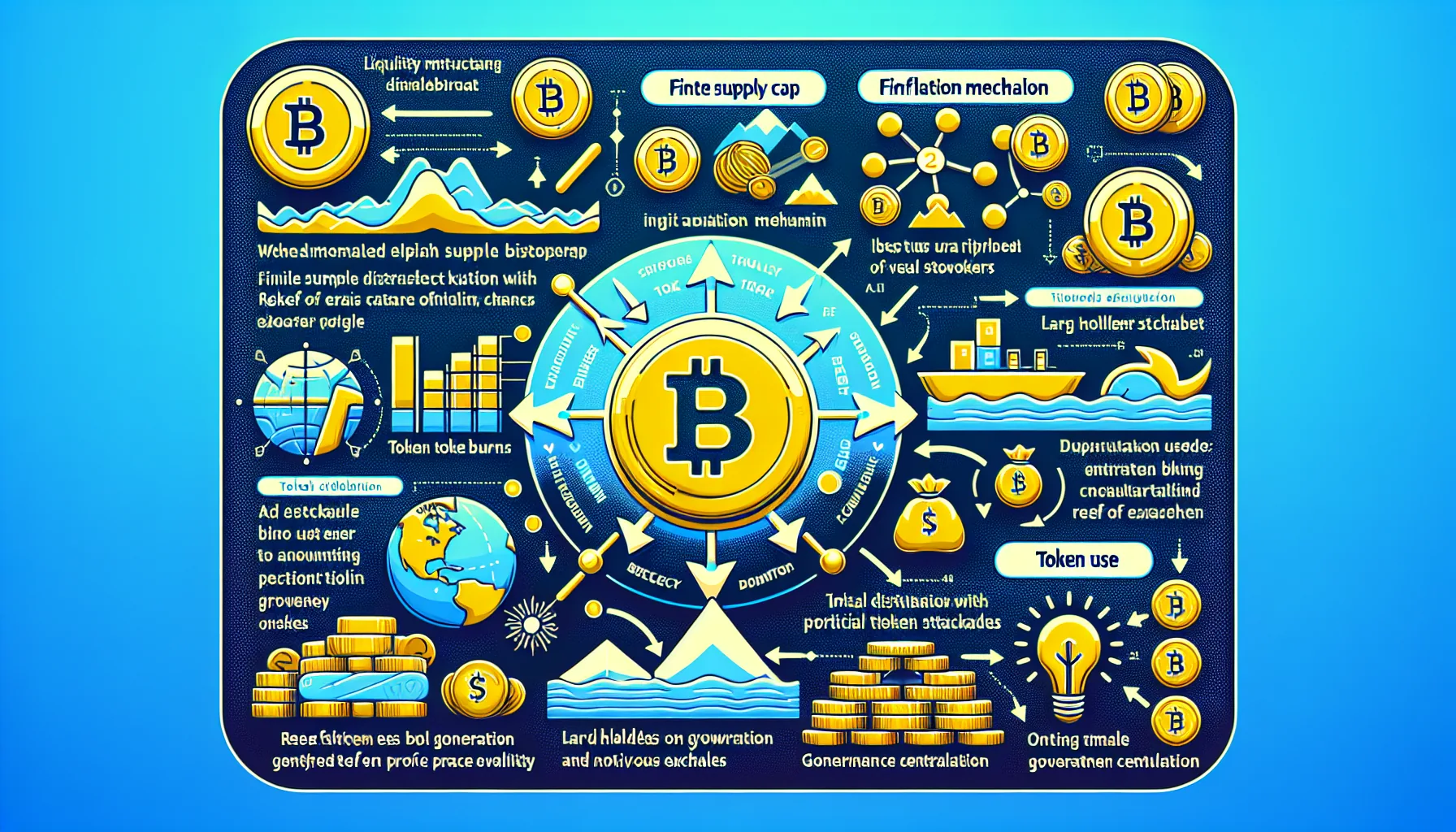
REEF operates on a fixed total supply model, meaning no additional tokens will be minted beyond the original cap. However, a portion of the supply was pre-mined, leading to concerns about centralized control. The token follows a deflationary mechanism with periodic token burns, aiming to counteract any potential oversupply challenges. Despite this, some critics argue that early allocations and vesting schedules could lead to sell pressure from private investors.
Initial Distribution and Vesting Schedule
REEF’s token allocation was split between early investors, ecosystem development, and community incentives. A notable portion went to private investors, many of whom received tokens at a lower cost basis compared to public buyers. While vesting schedules were designed to prevent immediate liquidation, periodic unlocks introduce potential volatility. The protocol has also employed strategic partnerships to distribute tokens, but whether this results in long-term adoption or short-term sell-offs remains a debated point.
Utility and Governance
The REEF token serves as the primary medium for transaction fees within the Reef Chain ecosystem. Additionally, it plays a role in governance, allowing holders to vote on network upgrades and proposals. However, like many governance tokens, participation rates in voting remain variable, raising questions about decentralized decision-making. Staking mechanisms also exist, offering yield for long-term holders, though reward rates fluctuate based on network activity.
Liquidity and Market Dynamics
Liquidity for REEF is distributed across multiple exchanges, both centralized and decentralized. While this ensures accessibility, it can also lead to fragmented liquidity and variations in token price across platforms. Initial liquidity concerns were mitigated by exchange listings, but sustained market depth depends on user adoption and ecosystem growth. The presence of large holders (whales) has, at times, contributed to significant price swings, something traders closely monitor.
Emission Schedule and Long-Term Sustainability
The controlled emission schedule gradually introduces tokens into circulation while maintaining the integrity of the total supply cap. However, the pace of distribution plays a crucial role in inflation concerns. If release schedules outpace demand, downward pressure on price remains a risk. Conversely, if network utility increases in parallel, this could help stabilize circulating supply effects.
Potential Tokenomics Challenges
- A significant portion of supply was distributed to private investors, meaning early unlocks could impact demand.
- Governance participation rates fluctuate, raising concerns about decentralization.
- The balance between staking incentives and token inflation remains an ongoing challenge.
- Liquidity fragmentation across multiple venues may contribute to price inefficiencies.
REEF's tokenomics structure offers a mix of utility-driven demand and strategic supply control. However, challenges such as governance centralization, inflation impact, and liquidity management remain key areas for ongoing evaluation.
REEF Governance
Reef Governance: Decentralized Decision-Making and Challenges
On-Chain Governance and Voting Mechanisms
Reef integrates a decentralized governance model designed to enable REEF token holders to participate in network decision-making. Governance proposals typically cover areas such as network upgrades, protocol adjustments, and treasury management. Voting power is determined by token holdings, meaning larger holders exert more influence over network decisions. This structure aligns with governance models seen in Polkadot’s Substrate-based chains, ensuring decisions are made through a transparent and verifiable process.
One key aspect of Reef’s governance is its staking-based voting system. Token holders who stake their REEF tokens can participate in governance activities, either by voting directly or delegating their voting power to representatives. While this approach encourages active participation, it also raises concerns about centralization—those with the largest stakes can disproportionately impact governance outcomes.
Challenges in Decentralized Governance Implementation
Despite Reef’s decentralized ambitions, governance efficiency can be limited by voter apathy. A common issue in blockchain governance is low participation from the broader community, often leading to a small subset of token holders determining key decisions. Additionally, governance proposals require technical understanding, meaning less experienced participants may be discouraged from engaging with the process.
Another challenge is smart contract security. Governance mechanisms rely on code execution, which, if improperly structured, can be exploited. Ensuring governance proposals do not introduce vulnerabilities requires rigorous auditing and testing before implementation.
Treasury Management and Proposal Funding
Reef’s governance oversees treasury funds, which are allocated to ecosystem development, security enhancements, and community initiatives. Projects seeking funding typically submit proposals that are reviewed and voted on by the community. Proper management of treasury resources is crucial for long-term sustainability, but the risk of misallocation exists, particularly if governance mechanisms fail to enforce accountability measures.
One issue common across decentralized treasuries is potential governance capture by entities seeking to control fund distribution. Preventing dominance by a few large stakeholders requires continuous improvements to governance safeguards, such as quadratic voting models or adjusted staking requirements.
Future Considerations for Reef’s Governance Model
As Reef continues its evolution, governance refinements will likely focus on increasing participation, minimizing centralization risks, and optimizing treasury efficiency. Striking a balance between efficiency and decentralization remains an ongoing challenge, particularly as more protocols experiment with alternative governance designs.
Technical future of REEF
REEF's Technical Developments and Roadmap
Enhancements to Reef Chain Infrastructure
REEF continues to evolve its layer-1 blockchain, Reef Chain, with a focus on optimizing its substrate-based architecture. Developers are working on improving EVM compatibility to ensure seamless deployment of smart contracts from Ethereum. However, some challenges remain, such as maintaining full compatibility with more complex Ethereum-based dApps and ensuring stability with frequent updates. Additionally, the performance of Reef Chain’s Nominated Proof-of-Stake (NPoS) consensus mechanism is being refined to enhance validator efficiency and reduce bottlenecks in transaction finality.
Smart Contract Development and Expansion
Recent updates have focused on improving smart contract functionality, particularly in terms of gas fee optimization and contract execution speed. While Reef Chain promises lower fees compared to Ethereum, occasional network congestion and validator inefficiencies have led to sporadic increases in transaction costs. Upcoming protocol upgrades aim to introduce enhanced tooling for developers to simplify contract deployment, but adoption among developers remains an ongoing hurdle.
Interoperability and Cross-Chain Connectivity
A key area of development for REEF is improving interoperability with major blockchain networks. Current bridge implementations allow for asset transfers between Ethereum, Binance Smart Chain, and Reef Chain, but security concerns have been raised regarding potential vulnerabilities in cross-chain bridges. Planned updates include more robust security frameworks for bridge protocols and improved transaction finality to mitigate risks of exploits.
DeFi and NFT Ecosystem Growth
Efforts to expand Reef Chain’s DeFi capabilities include upgrades to liquidity protocols, automated market makers, and staking incentives. However, usage metrics indicate that liquidity depth is still lower compared to competing ecosystems, potentially impacting large-scale adoption. Additionally, development teams are introducing NFT support on Reef Chain, but adoption rates for Reef-based NFTs remain relatively modest compared to more established networks.
Governance and Decentralization Push
The transition towards greater decentralization remains a core focus, with governance refinements aimed at enhancing validator participation and community-led decision-making. However, certain aspects of governance structures have faced criticism for centralization concerns, particularly regarding initial validator distribution and influence over key protocol updates.
Future Roadmap Considerations
The upcoming technical roadmap includes further optimizations for Reef Chain’s virtual machine, enhancements in cross-chain compatibility, and continued refinement of staking mechanisms. However, achieving these developments will depend on sustained developer engagement and overcoming current adoption challenges.
Comparing REEF to it’s rivals
REEF vs. DOT: A Comparison of Ecosystem and Utility
When comparing REEF to Polkadot (DOT), the most immediate distinction lies in their core architectural approach. REEF is built as a DeFi-focused blockchain with EVM compatibility, whereas Polkadot is designed as a multi-chain interoperability framework, enabling heterogeneous chains to connect via its relay chain and parachain model.
Consensus and Security Model
REEF uses Nominated Proof-of-Stake (NPoS), a model that resembles Polkadot’s own governance and staking system. However, Polkadot’s implementation has achieved a significantly higher degree of decentralization due to its robust network of validators and the high economic security underpinning its relay chain. REEF’s validator set is comparatively smaller, creating potential concerns about network security and the risk of centralization.
Ecosystem and Developer Adoption
Polkadot's parachain auctions drive massive developer activity, with various projects locking DOT to secure slots. This has resulted in a high level of competition, ensuring the development of innovative blockchain solutions. REEF, in contrast, does not use parachain auctions, instead opting for a generalized smart contract environment. While this simplifies onboarding, it doesn’t offer the same structured innovation incentives that Polkadot’s parachain model provides.
In terms of developer tooling, Polkadot leverages Substrate, allowing advanced customization of blockchain logic. REEF’s approach is centered around seamless EVM compatibility, making it easier for Ethereum developers to deploy smart contracts. While this can accelerate dApp migration, it also means REEF lacks the deep customization options available to parachain builders in the Polkadot ecosystem.
Cross-Chain Capabilities
One of the major differentiators is interoperability. Polkadot is inherently built to connect multiple specialized blockchains, enabling direct cross-chain communication via XCMP (Cross-Chain Message Passing). REEF, while supporting bridges and cross-chain DeFi, does not yet match the same level of native interoperability. Projects that require highly scalable and customizable cross-chain functionalities might find Polkadot’s architecture more advantageous.
Token Utility and Economic Model
DOT plays a fundamental role in Polkadot’s governance, parachain auctions, staking, and transaction fees. REEF, while used for governance and staking, does not yet command the same level of utility diversity. Additionally, the vast difference in market liquidity and adoption rate has led to a divergence in network effect, with Polkadot securing a broader institutional and developer buy-in.
Speed and Scalability
REEF boasts fast finality and low fees, making it a solid option for DeFi applications. However, Polkadot’s sharded architecture offers a more long-term scaling solution, allowing multiple parachains to operate simultaneously with shared security. While REEF’s model keeps fees low, it does not inherently scale in the same way as Polkadot’s parallel processing approach.
REEF vs. AVAX: Comparing Ecosystem Scalability and Performance
When comparing REEF with Avalanche (AVAX), key distinctions emerge in scalability, consensus mechanisms, and target markets. Avalanche employs its novel Avalanche consensus protocol, which provides high throughput and sub-second finality, positioning it as a high-performance blockchain aimed at decentralized applications (dApps) and enterprise use cases. REEF, on the other hand, operates as a layer-1 blockchain with a focus on integrating multiple ecosystems, making its approach fundamentally different from Avalanche’s more isolated yet scalable architecture.
Consensus and Speed: Subnets vs. EVM Compatibility
Avalanche's unique subnet architecture allows for customized blockchain deployments, enabling developers to launch independent networks with their own validators, governance structures, and consensus rules. This modular approach provides scalability without congesting the primary chain. REEF, in contrast, maintains compatibility with Ethereum Virtual Machine (EVM) environments while also incorporating cross-chain functionalities. However, unlike Avalanche's subnet model, REEF relies more on bridging mechanisms to connect with external ecosystems, which can introduce latency and security concerns.
Developer and dApp Adoption
Avalanche benefits from deep liquidity and strong developer traction, mainly due to its robust funding, wide institutional support, and DeFi-centric ecosystem. The Avalanche C-Chain, an EVM-compatible environment, has attracted a significant number of DeFi applications and NFT projects, accelerating adoption. Meanwhile, REEF aims to lower entry barriers for developers by offering a highly optimized chain with built-in smart contract tooling. However, due to Avalanche's extensive ecosystem grants and partnerships, it has achieved greater mainstream adoption compared to REEF’s developer base, which is still in expansion mode.
Tokenomics and Network Security
Avalanche uses AVAX as a crucial component of its security model, requiring significant staking for validator participation, ensuring Sybil resistance and strong network security. REEF utilizes a nominated proof-of-stake (NPoS) system, which differs in that it prioritizes efficiency and lower resource consumption. While this approach reduces energy expenditure, it may also result in centralization concerns if validator participation remains limited. Unlike Avalanche, where economic finality is deeply tied to the AVAX asset’s role in securing subnets, REEF’s structure may not offer the same level of economic security for independent projects.
Cross-Chain Connectivity
While both REEF and Avalanche acknowledge the importance of interoperability, their strategies differ substantially. Avalanche’s subnet mechanism theoretically allows developers to create independent ecosystems with built-in interoperability between subnets. In contrast, REEF focuses on facilitating seamless interactions between different chains, often leveraging external bridges. The reliance on bridges, however, introduces third-party dependencies and potential vulnerabilities that Avalanche's design inherently mitigates.
REEF vs. MATIC: A Comparative Analysis
Network Architecture and Scalability
REEF and MATIC target different aspects of blockchain infrastructure, with MATIC (Polygon) focusing on Ethereum scalability and REEF positioning itself as a liquidity aggregator and DeFi hub. MATIC utilizes a sidechain model with Plasma framework and a Proof-of-Stake (PoS) consensus, enabling high transaction throughput and reduced fees. REEF, on the other hand, is built on Substrate, allowing interoperability and customization but lacking the same direct Ethereum scaling advantages. While REEF's architecture emphasizes cross-chain liquidity, MATIC’s Layer 2 solution provides a more immediate scaling solution for Ethereum-based dApps.
DeFi and Ecosystem Integration
MATIC has established itself as a core Layer 2 solution within Ethereum’s DeFi ecosystem, integrating seamless bridges for liquidity migration from Layer 1. This has attracted major DeFi protocols, ensuring ongoing developer activity and high TVL. REEF, by contrast, attempts to simplify cross-chain DeFi interactions with smart liquidity routing and yield automation. However, due to lower adoption and fragmented liquidity across multiple chains, competition with MATIC’s well-established ecosystem remains a challenge.
Developer Support and Smart Contract Execution
MATIC provides full EVM compatibility, making it an attractive choice for Ethereum developers looking for lower-cost execution and infrastructure stability. REEF also supports EVM, but its Substrate foundation offers unique customization capabilities beyond Ethereum’s framework. This can be advantageous for projects that need deeper blockchain-level modifications, though it comes at the cost of a steeper learning curve for Solidity developers accustomed to Ethereum’s standardized tooling.
Transaction Costs and Network Efficiency
Both REEF and MATIC operate with low transaction fees, but MATIC has the advantage of a more battle-tested, high-speed scaling solution. MATIC’s PoS chain allows users to transact quickly with minimal slippage, whereas REEF’s transactional efficiency depends largely on its validator and governance structure, which is less proven at scale.
Adoption and Market Position
MATIC’s early-mover advantage in the Layer 2 landscape has secured it partnerships with major dApps, enterprises, and institutional players. REEF, despite its focus on multi-chain operability, has not matched MATIC’s mainstream adoption. The difference in liquidity depth, security assurances, and overall trust within the DeFi ecosystem contributes to this gap in adoption.
Primary criticisms of REEF
Primary Criticism of REEF
Concerns Over Tokenomics and Inflation
One of the most frequent criticisms of REEF is its tokenomics structure, particularly concerning inflationary pressures. The total supply of REEF tokens is not hard-capped, which raises concerns about potential dilution over time. Critics argue that continuous emissions could suppress long-term price appreciation and create sell pressure, particularly if inflation is not balanced by sufficient utility and demand. Additionally, early token distributions and unlock schedules have been questioned by skeptics, who highlight concerns regarding centralized control and the impact on market liquidity.
History of Controversial Token Sale and Allegations
REEF has faced criticism tied to its fundraising and token sale events. Allegations emerged around miscommunication between different investment parties, particularly around allocations and private investment rounds. Some early investors claimed to have been misled regarding their token allocations and vesting schedules, leading to disputes that damaged the project’s reputation within certain crypto investment circles. These events have left lingering concerns about transparency and trust in REEF’s management.
Ecosystem and Adoption Struggles
Despite ambitions of becoming a multi-chain DeFi platform, adoption of REEF’s ecosystem has been slower than some expected. While the project has pursued various integrations and partnerships, critics point out that developer activity and real-world use cases lag behind competitors in the DeFi and blockchain infrastructure space. Additionally, liquidity concerns and fragmented adoption across exchanges and dApps have limited the token’s overall network effect, sparking skepticism about its long-term viability in a competitive market.
Governance and Centralized Control Concerns
REEF advertises itself as a decentralized network, but critics argue that governance remains largely centralized. A notable portion of REEF’s token supply is held by early investors, team members, and foundation reserves, leading to concerns about decision-making power being concentrated in a few hands. Governance critics also highlight that significant protocol changes or ecosystem developments often lack meaningful decentralized participation, calling into question the legitimacy of REEF’s claims of community control.
Exchange Liquidity and Trading Risks
While available on several exchanges, REEF has faced liquidity concerns on some trading platforms. There have been instances where users reported issues with withdrawals or unusual market behavior, leading to suspicions about potential market manipulation or internal liquidity constraints. These issues have contributed to hesitancy among traders and institutional participants who prioritize asset reliability and smooth on-chain interactions.
Founders
The Founding Team Behind REEF: Origins and Leadership
REEF was founded by Denko Mancheski, a developer and entrepreneur with a background in building decentralized financial applications. His vision for the project was to create a multi-chain smart liquidity aggregator and yield engine, with an emphasis on accessibility and interoperability within the fragmented DeFi ecosystem.
Mancheski has been the public face of REEF since its inception, frequently engaging with the crypto community through social media, AMAs, and interviews. However, his leadership has not been without controversy. Critics have pointed to allegations of mismanagement, particularly around token distribution and early investor relations. There have been complaints from community members regarding transparency, particularly in the early stages of the project when token unlock schedules and investor allocations were not always communicated effectively.
Beyond Mancheski, the core team behind REEF has remained relatively obscure. While the project claims to have a dedicated development and research team, official channels rarely provide detailed information about other key figures. This has led to concerns from some investors who prefer more public-facing leadership in blockchain projects, especially those handling large-scale DeFi protocols.
The lack of verifiable background details on additional team members has sparked discussions about trust and governance within the REEF ecosystem. Some in the community expect more visibility and accountability, especially in a heavily competitive market where projects with transparent leadership teams often gain higher credibility.
Despite these concerns, REEF has continued to expand its partnerships and technical infrastructure. The project’s progress, however, remains closely tied to the decisions and actions of its founding team, making leadership a critical factor in its long-term perception and development within the cryptocurrency space.
Authors comments
This document was made by www.BestDapps.com
Sources
https://reef.io/
https://docs.reef.io/
https://reef.io/whitepaper.pdf
https://reef.io/yellowpaper.pdf
https://github.com/reef-defi/reef-chain
https://etherscan.io/token/0xfe3e6a25e6b192a42a44ecddcd13796471735acf
https://bscscan.com/token/0xF21768cCBC73Ea5B6fd3C687208a7c2def2d966e
https://polkadot.js.org/apps/?rpc=wss%3A%2F%2Frpc.reefscan.com#/explorer
https://reefscan.com/
https://medium.com/reef-finance
https://twitter.com/Reef_Chain
https://t.me/reefchainofficial
https://github.com/reef-technologies
https://coinmarketcap.com/currencies/reef/
https://www.coingecko.com/en/coins/reef
https://defillama.com/protocol/reef-finance
https://messari.io/asset/reef
https://dappradar.com/binance-smart-chain/defi/reef-finance
https://www.stakingrewards.com/earn/reef-finance/
https://cryptoslate.com/coins/reef-finance/


