History of RDYEX
The History of RDYEX: Origins, Development, and Key Milestones
RDYEX entered the crypto space as a bold experiment, emerging from a whitepaper that proposed innovative solutions to persistent issues in decentralized finance. Its inception was driven by a group of anonymous developers, operating under the pseudonym "ReadyCollective," who sought to bridge the gap between scalability and governance in blockchain ecosystems. The project's origins can be traced to a widely-discussed initial private testnet, where the team demonstrated their Proof-of-Stake (PoS)-variant consensus mechanism—one that aimed to minimize energy consumption while enhancing transaction throughput.
Early adoption of RDYEX was facilitated by its unique focus on modularity. Unlike many crypto assets that relied on hard forks to introduce significant improvements, RDYEX was built with a layered architecture. This design enabled seamless upgrades through its "Sliding Protocol Framework," allowing developers to introduce changes without disrupting the underlying blockchain. However, this strategy wasn’t without its challenges. Critics argued that the layered system added unnecessary complexity, creating potential attack vectors and vulnerabilities that had to be continuously monitored and patched.
A turning point in RDYEX’s history came during its contentious public token distribution phase. Designed as a hybrid of community airdrops and targeted sales, the distribution model sparked debates within the crypto community. While proponents applauded its inclusivity, detractors pointed out that certain wallets appeared to amass disproportionate shares of the supply, raising concerns about decentralization. The development team addressed the criticism by improving transparency in subsequent governance votes tied to token allocation, but skepticism from certain segments of the market has persisted.
RDYEX grew in adoption through its integration with decentralized applications (dApps) and innovative smart contract deployments. A particularly influential upgrade introduced cross-chain compatibility, allowing RDYEX to interact with major blockchains such as Ethereum and Solana. However, this advancement exposed another vulnerability: the exploit of an early cross-chain bridge caused temporary losses for several users, further fueling debates over RDYEX’s security model.
Despite these challenges, RDYEX’s governance structure has been a central focus in its ongoing narrative. Early adopters were initially optimistic about its “Community-First Governance Initiative,” which sought to decentralize decision-making. Over time, however, critics have noted that high-stake validators often wield disproportionate influence on voting outcomes, raising questions about whether governance truly reflects the broader user base.
Ultimately, the history of RDYEX is a complicated one—a blend of groundbreaking ideas, unforeseen challenges, and ongoing evolution.
How RDYEX Works
How RDYEX Works: Core Mechanics and Protocol Design
RDYEX operates as a liquidity-centric crypto asset with a focus on cross-chain interoperability and decentralized governance. At its core, the RDYEX protocol utilizes a unique hybrid model combining automated market maker (AMM) mechanisms with order book functionality. This dual-layered design allows users to benefit from both the ease of liquidity pools and the precision of traditional trading systems.
Protocol Layer and Smart Contract Architecture
The RDYEX smart contract infrastructure is built to maximize execution efficiency while maintaining security. It evolves beyond typical AMM protocols by introducing a modular liquidity layer, where liquidity providers (LPs) can choose specific asset pair configurations or participate in aggregated pools. This modularity provides greater customization but adds complexity to pool management, requiring LPs to actively monitor and adjust their allocations. The protocol also integrates advanced fee optimization, dynamically adjusting transaction fees based on market activity and pool utilization.
RDYEX’s interoperability relies on a multi-layered consensus bridge that facilitates cross-chain asset transfers without requiring trust in third-party entities. While this enables flexibility for users, its reliance on external validators introduces potential attack vectors. A small percentage of validators failing or colluding could disrupt transactions, which is a concern for users conducting large-scale operations.
Tokenomics and Utility
The RDYEX native token powers the ecosystem through multiple utility functions. It is used for transaction fees, governance proposals, and incentivizing user participation. A key feature is its role in liquidity staking. When users stake RDYEX tokens into liquidity pools, they earn rewards proportional to their contribution and duration—but this reward system can be diluted during periods of high staking activity, which reduces APY returns for smaller participants.
Another element of tokenomics is burn mechanics, where a percentage of transaction fees is permanently removed from circulation. While this deflationary mechanism aims to create long-term scarcity, its impact is often unpredictable, especially during periods of low transaction volumes. Additionally, over-reliance on the burn rate as a deflationary lever may reduce the token's utility in transactional contexts.
Governance Challenges
RDYEX employs a decentralized governance model where token holders propose and vote on protocol upgrades. While this model enhances transparency, it can also result in governance delays or conflicts if voter turnout is low or stakeholders prioritize personal gain. Concentration of voting power among large holders is another potential issue, making the governance system vulnerable to centralization tendencies despite its decentralized intent.
Use Cases
RDYEX Use Cases: Unlocking Utility Beyond Speculation
1. Decentralized Data Storage and Exchange
One of RDYEX's primary applications lies in decentralized data storage. By leveraging its blockchain architecture, RDYEX facilitates a distributed network where data can be securely stored and exchanged without reliance on centralized servers. This capability is particularly relevant in industries that require immutable data storage, such as legal records, intellectual property, and healthcare data. However, users have raised concerns about scalability, especially when dealing with large datasets, as the system's throughput can face significant limitations during high traffic periods. Additionally, while RDYEX employs cryptographic protocols to ensure data integrity, any accidental compromise of private keys can lead to irreversible loss of access.
2. Tokenized Asset Solutions
RDYEX enables tokenization of real-world assets, allowing users to fractionalize ownership of assets like real estate, fine art, or private equity. Smart contracts on the RDYEX platform streamline the management of ownership rights, automate dividend distribution, and simplify transacting fractional shares. However, legal enforcement of these tokenized rights outside the blockchain remains a gray area in jurisdictions where crypto regulations are underdeveloped. This limitation may hinder the broader adoption of RDYEX for asset tokenization, especially for institutional investors seeking clarity on compliance.
3. Cross-Border Financial Applications
RDYEX is increasingly gaining traction as a tool for cross-border payments and financial interactions. By eliminating intermediaries and reducing transaction costs, RDYEX provides an appealing alternative to traditional financial systems. Its integration with decentralized finance (DeFi) protocols extends its functionality to use cases like remittances, lending, and trading. That said, regulatory barriers and local restrictions in certain countries limit the smooth adoption of RDYEX for cross-border financial flows. Furthermore, the stability of transaction speeds under fluctuating network demand remains an operational challenge.
4. Privacy-Oriented Smart Contract Operations
Unlike many blockchains where transaction details are fully visible, RDYEX incorporates privacy-focused features tailored for smart contract execution. This capability is especially useful across industries like supply chain management and private financial agreements, where sensitive operational data must remain confidential. However, critics have pointed out potential misuse of RDYEX's privacy features for illicit activities, leading to concerns over regulatory scrutiny. Transparency advocates also argue that the default privacy layer makes compliance with anti-money laundering (AML) policies more complex.
5. Governance and Decentralized Decision-Making
RDYEX supports on-chain governance mechanisms, allowing stakeholders to vote on protocol upgrades or treasury allocations. This democratization of decision-making empowers community stakeholders but has raised certain risks. Trustee centralization, where a small subset of token holders controls decision-making, has been observed in other voting-based ecosystems—potentially undermining the decentralization ethos RDYEX aims to uphold. Additionally, voter apathy often results in low participation rates for critical governance decisions, leaving vital upgrades in limbo or delayed.
RDYEX Tokenomics
RDYEX Tokenomics: A Deep Dive Into Supply, Distribution, and Incentive Design
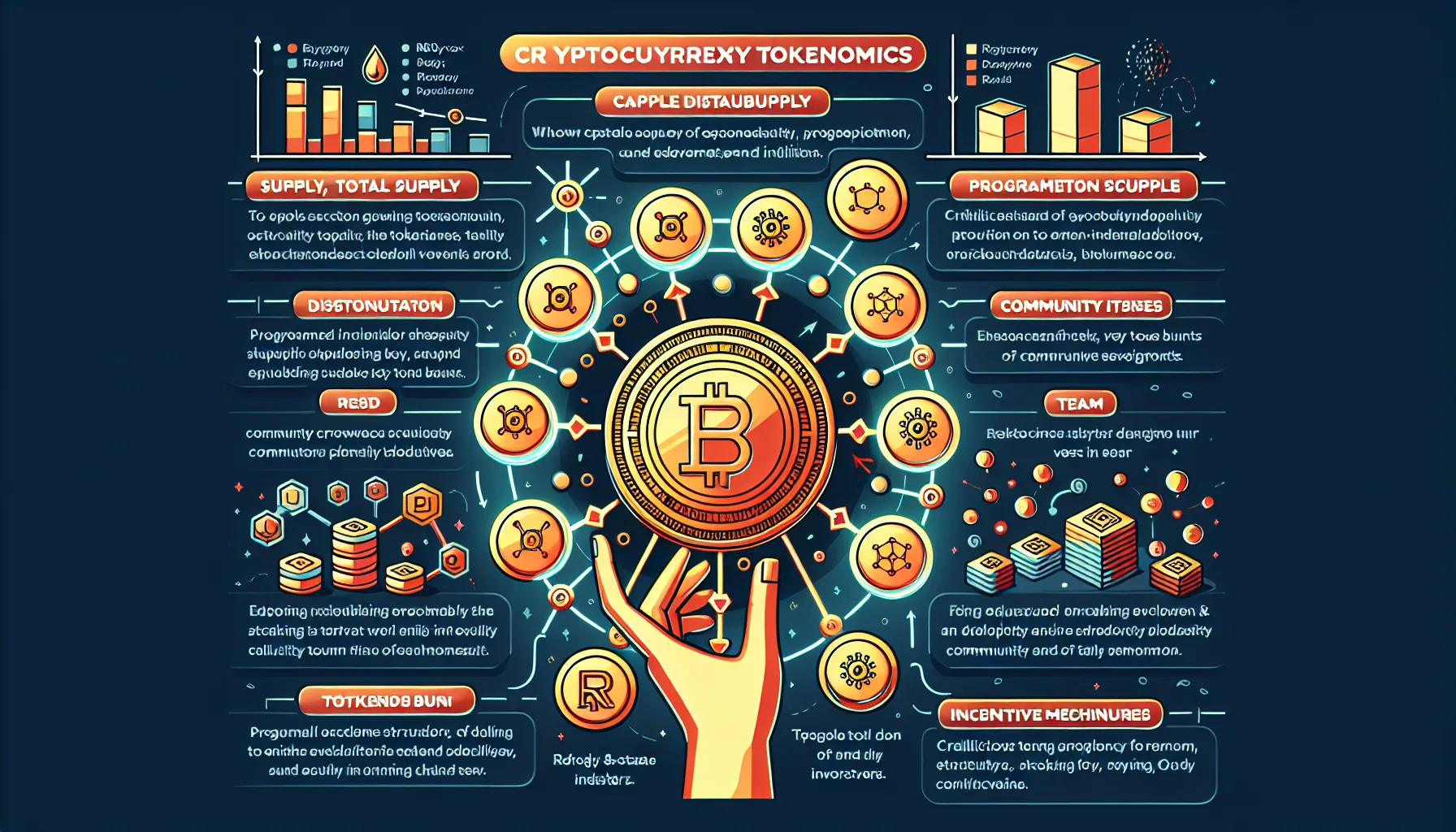
Understanding the tokenomics of RDYEX requires a granular analysis of its supply mechanics, distribution model, and incentive design. Built on a deflationary supply framework, RDYEX has implemented a capped total supply with programmed vesting schedules and burn mechanisms. However, the complexity of its distribution has sparked discussions within the crypto community, particularly around equity and long-term sustainability.
Fixed Supply and Decay Model
RDYEX is governed by a hard-capped total supply, with no future minting capabilities coded into the contract. The allocation of this supply is split into three primary categories: ecosystem growth and development (40%), community incentives (35%), and team and early investors (25%). While the capped supply theoretically supports scarcity over time, concerns have been raised regarding the decay model, which involves periodic token burns tied to transaction volume. Critics argue that the model disproportionately benefits early adopters and whales since they capitalize on the diminishing circulating supply while smaller holders may see slower relative gains.
Distribution Transparency Challenges
The initial token allocation raised eyebrows, particularly due to the nearly 25% assigned to team members and early-stage investors. While such allocations are standard practice in many crypto projects, the lack of granular on-chain vesting transparency has led to skepticism about whether the funds are properly locked and dispersed. Savvy tokenomics analysts have highlighted potential risks of concentration, as the top 25 wallets reportedly control over 60% of RDYEX’s circulating supply. This raises concerns of centralization and the potential for large holders to exert outsized influence in governance votes or market price dynamics.
Incentivization Structures and Yield Implications
RDYEX’s tokenomics heavily incentivize network participation, particularly through staking and liquidity provision. Stakers are rewarded with ecosystem fees based on transaction volume, while liquidity providers receive a dual-reward structure consisting of LP fees and additional token-minted bonuses. However, skepticism remains over whether the reward structure incentivizes sustainable activity or merely attracts yield farmers who might sell rewards immediately, creating consistent sell pressure. Furthermore, declining returns from staking due to the deflationary nature of RDYEX pose long-term challenges in balancing attractive incentives with limited supply.
Governance Token Limitations
As a governance token, RDYEX grants voting power relative to holdings. However, with distribution skewed heavily in favor of early stakeholders and whales, critics argue this framework lacks democratic integrity. Additionally, governance proposals often have high participation thresholds, inadvertently disenfranchising smaller token holders from participating in meaningful decision-making processes.
RDYEX Governance
RDYEX Governance: A Deep Dive into Structure and Decision-Making
Effective governance is critical in the crypto ecosystem, and RDYEX implements a token-driven framework designed to decentralize decision-making while maintaining efficiency. Governance within RDYEX is executed primarily through its native governance token, which enables stakeholders to participate in a range of critical decisions. However, the governance process is not without its complexities and potential shortcomings.
On-Chain Voting and Proposal Mechanisms
RDYEX employs an on-chain voting mechanism, meaning all governance processes are transparent, public, and immutable. Any proposal entered into the governance system undergoes a predefined lifecycle, often including a discussion phase, a voting phase, and an implementation phase. Proposals typically revolve around protocol upgrades, treasury allocations, fee structures, or even adjustments to the network's consensus mechanisms.
While this structure ensures decentralization, proposal submission is often cost-prohibitive, as it requires staking a minimum amount of tokens. This dynamic, while aimed at reducing spam proposals, unintentionally creates a barrier to participation for smaller token holders, consolidating decision-making power among wealthier participants who have the resources to engage actively.
Token-Based Voting Power: The Issue of Centralization
RDYEX governance relies heavily on the one-token-one-vote principle, whereby the amount of tokens held directly correlates with voting power. While this approach rewards token holders with greater incentives to stay invested, it also raises concerns about centralization. A small number of large token holders, such as institutions or early investors, can wield disproportionate influence over governance outcomes. This creates a governance imbalance, where the protocol's vision might increasingly skew toward the interests of the majority token holders rather than the broader community.
Delegated Voting and Community Representation
To combat governance fatigue and low voter turnout, RDYEX allows token holders to delegate their voting power to trusted representatives or third-party organizations. While delegation increases participation efficiency, it introduces concerns about collusion risks and opaque decision-making by delegates. Critics argue that delegation undermines grassroots participation and makes community governance susceptible to power consolidation.
Security and Attack Vectors
Governance itself can be exploited as an attack vector. RDYEX combats this by implementing time-lock mechanisms for high-impact proposals. This delay period provides the community with time to identify and respond to malicious actors. However, time-locks might also hinder urgent protocol updates, leaving RDYEX temporarily exposed to vulnerabilities until formal revisions are passed through governance.
Conclusion: Complex Challenges for Decentralization
The governance framework of RDYEX strives to balance decentralization with decision-making efficiency. However, participation barriers, centralization risks, and the potential for governance manipulation remain significant challenges for the protocol. Understanding these dynamics is crucial for anyone engaging with RDYEX at a governance level.
Technical future of RDYEX
RDYEX: Current and Future Technical Developments and Roadmap
Technological Infrastructure and Ongoing Enhancements
RDYEX operates on a custom Layer-2 solution designed to improve scalability while maintaining robust security. Recent updates focus on optimizing transaction throughput, further reducing latency in block finalization. However, challenges persist regarding interoperability between its Layer-2 and other blockchain ecosystems. While cross-chain functionality exists via a bridge mechanism, it has been criticized for requiring excessive gas fees when interacting with certain Layer-1 blockchains. The development team has acknowledged these issues and is exploring improvements to the bridge architecture, though no clear timeline has been provided.
On the smart contract functionality side, RDYEX recently integrated support for advanced zk-rollups, boosting privacy features and computational efficiency. Despite this, developers and users have reported that documentation around zk-rollup integration remains sparse, posing a barrier to onboarding and adoption. Addressing this gap in developer resources appears to be a priority in the near term.
Future Technical Features in Development
RDYEX's technical roadmap emphasizes modularity and extensibility to prepare for broader DeFi and Web3 use cases. A key development in progress is the planned implementation of sharding for its Layer-2 network. This could theoretically improve network throughput but may introduce risks associated with shard-facing attacks if not well-executed. Security audits, a critical component for this feature, are reportedly in progress, although the transparency around external audit partners has been limited.
Another major item in the pipeline is the integration of account abstraction to simplify wallet interactions for end users. This upgrade aims to improve usability without compromising non-custodial security. However, some community developers have voiced concerns about how these changes will impact backward compatibility with existing dApps.
Developer Ecosystem and Open-Source Governance
RDYEX advertises its open-source development model, but scrutiny from developer forums indicates dissatisfaction with the technical transparency of decision-making and code contributions. Pull requests in the project's Git repositories suggest that updates often originate from a centralized core team with limited input from independent contributors. Plans to migrate towards a decentralized governance framework are listed on the roadmap, but critics argue that these steps remain largely conceptual rather than actionable.
Challenges in Scaling Decentralized Execution
As RDYEX scales technically, it faces a key dilemma between decentralization and performance. Specific concerns include its reliance on validator nodes equipped with high-performance hardware, which restricts smaller participants from joining. Future proofs-of-concept aim to address this centralization by incorporating lightweight node compatibility, though this initiative is currently in early testing stages.
Comparing RDYEX to it’s rivals
Comparing RDYEX to BTC: Strengths and Weaknesses in the Market
RDYEX and BTC (Bitcoin) both operate within the vast crypto ecosystem, yet their utility, architecture, and positioning diverge significantly. While BTC is cemented as the original cryptocurrency, RDYEX targets specific use cases that attempt to stretch beyond Bitcoin’s scope—but not without trade-offs.
Utility and Use Case Divergence
Bitcoin’s primary value lies in its position as a decentralized store of value and digital gold. In contrast, RDYEX has been constructed with an enhanced focus on dynamic use cases, potentially allowing it to integrate into complex transactional systems or programmable economies. However, this functional flexibility can dilute the perceived role of RDYEX in comparison to BTC’s tightly-defined simplicity as a censorship-resistant, trustless medium of value transfer.
RDYEX also distinguishes itself by including features such as integrated scaling protocols or embedded functionality for niche industries. This allows RDYEX to process higher transaction throughput. While Bitcoin has introduced solutions like the Lightning Network for scaling, RDYEX’s design may eliminate the need for additional layers at the protocol level. However, the trade-off here may involve increased complexity, raising potential questions about long-term sustainability and how well developers and users fully adopt these advancements.
Decentralization and Network Security
Bitcoin’s ongoing dominance stems from its robust decentralization and unparalleled network security. The blockchain is supported by thousands of miners securing the network via proof-of-work (PoW), and its historical immutability has never been compromised. RDYEX, on the contrary, adopts a different consensus mechanism (notably not PoW), which may offer efficiency but continues to raise debates within the community about network security levels and resilience over extended time horizons.
In particular, RDYEX’s smaller network size could be perceived as a vulnerability compared to Bitcoin’s decentralized architecture. Lower hash power concentration or an ecosystem less diversified in terms of stakeholder engagement might present centralized points of failure—not a trivial concern among highly savvy crypto users.
Market Recognition and Institutional Entrenchment
Bitcoin’s position as a first mover and its reputation as the “reserve asset of crypto” establishes it as the benchmark against which all other crypto assets are measured, including RDYEX. While RDYEX’s technical design may appear more innovative, its real challenge lies in overturning the considerable economic and psychological weight BTC carries within the market.
RDYEX's broader adoption, especially among industries outside of pure financial applications, contrasts with Bitcoin’s narrow primary focus but limited additional integrations. However, this generalist approach has its risks, as it could delay market establishment within any one domain.
RDYEX vs. ETH: How Does It Stack Up?
When comparing RDYEX to Ethereum (ETH), several key distinctions emerge, particularly in the areas of network design, scalability, and utility. Ethereum, as the market’s first smart contract platform, has long set the standard for decentralized applications and DeFi projects. RDYEX, however, has notably diverged in its approach, offering unique features but facing different sets of challenges and trade-offs.
Smart Contract Flexibility: A Double-Edged Sword?
Ethereum’s programmability through its robust and widely adopted Solidity language has allowed for unparalleled flexibility, leading to the explosion of ERC-20 tokens and decentralized applications (dApps). RDYEX provides a similar level of customizability; however, its scripting framework is more specialized, which limits the breadth of dApp types that developers can build. This specialization creates a streamlined ecosystem, prioritizing a narrower range of use cases. While this results in fewer attack vectors and potentially higher security, it also inhibits RDYEX from matching Ethereum's versatility and developer adoption.
Transaction Ecosystem: Speed vs. Congestion
Ethereum has become notorious for its network congestion and high fees, particularly during periods of heavy usage, despite its ongoing transition to ETH 2.0 and its migration toward proof-of-stake. By contrast, RDYEX utilizes a modified consensus mechanism that minimizes transaction bottlenecks and operating costs. RDYEX users often praise the network for its efficient throughput, but this comes at a cost: reduced decentralization compared to Ethereum. ETH still benefits from a significantly larger validator network, contributing to its robust resistance against attacks and censorship.
DeFi and dApp Dominance: Playing Catch-Up
Ethereum sits at the heart of the DeFi world, hosting the majority of lending platforms, liquidity pools, and decentralized exchanges. RDYEX, on the other hand, is an emerging competitor focused on a narrower slice of the DeFi market. While RDYEX has managed to attract a community of users for its specialized DeFi tools, the ecosystem is smaller and offers far fewer integrations with existing projects. This can be seen as both a weakness and a strength — while Ethereum thrives on its open and heavily interconnected ecosystem, RDYEX’s tighter scope may reduce fragmentation and allow for targeted optimizations.
Tokenomics and Gas Structures
Ethereum uses ETH as both its native asset and gas fee medium, and its fee structure is influenced by its EIP-1559 implementation, which adjusts supply dynamics over time. RDYEX features a completely distinct tokenomics model, involving capped supply but with inflationary mechanisms at certain intervals to support network security. However, critics argue that RDYEX’s tokenomics lack clarity compared to Ethereum’s evolving deflationary narrative, creating uncertainty about its long-term economic design.
In summary, RDYEX and Ethereum take markedly different paths within the blockchain ecosystem, excelling in different areas while exposing contrasting vulnerabilities. Ethereum’s expansive scope and decentralization come at the expense of scalability, whereas RDYEX prioritizes efficiency and security in more niche applications, sacrificing breadth and developer flexibility.
RDYEX vs. SOL: A Detailed Comparison of Features and Use Cases
When comparing RDYEX to Solana (SOL), one of the first notable distinctions is how the two handle scalability and transaction throughput. Solana is renowned for its high-speed, massively scalable infrastructure, capable of processing tens of thousands of transactions per second (TPS) through its unique Proof-of-History (PoH) mechanism combined with Proof-of-Stake (PoS). RDYEX, while ambitious in its architecture, operates differently, relying on a hybrid Layer 2 scaling solution that integrates modular consensus for cross-chain compatibility. While this enables RDYEX to handle cross-chain functionality with ease, it does not yet rival Solana's raw throughput numbers in isolated, single-chain execution.
However, RDYEX has some design advantages that merit attention. Solana's rapid block times—which often hover around 400 milliseconds—sometimes come with the drawback of increased resource requirements for validators, making it hardware-heavy for participants. RDYEX, in contrast, optimizes for decentralization by focusing on reducing node requirements, meaning more participants can join its network without top-tier hardware specs. This leads to a noticeably different validator ecosystem, with Solana leaning toward performance-driven centralization, while RDYEX prioritizes accessibility and decentralization trade-offs.
From a developer standpoint, Solana's ecosystem encourages speed but demands specialized knowledge of Rust or C to deploy applications. RDYEX, by contrast, focuses on lowering entry barriers by providing a development stack compatible with mainstream virtual machines, such as the Ethereum Virtual Machine (EVM). This makes it easier for developers already familiar with Solidity-based smart contracts to experiment within the RDYEX ecosystem without a steep learning curve. For some in the developer community, this could be seen as an advantage for RDYEX over Solana's more niche language requirements.
One area where Solana shines is in its sustained ecosystem growth, driven by an expansive network of high-profile DeFi, NFT, and gaming projects. RDYEX, despite promising cross-chain operability, has a less mature ecosystem today, limiting its utility in comparison. While RDYEX's focus on interoperability theoretically allows it to bridge across multiple chains seamlessly, the lack of native projects deploying exclusively to its environment can be seen as a handicap in building a competitive moat against Solana's entrenched dominance.
Finally, Solana's focus on speed has occasionally led to concerns about network stability, with well-documented outages and downtime. While RDYEX hasn't encountered the same degree of high-profile interruptions, critics point out that its reliance on bridging mechanisms introduces potential vulnerabilities, particularly in securing assets during cross-chain transactions.
Primary criticisms of RDYEX
Primary Criticism of RDYEX: Key Challenges and Limitations
Centralization Concerns
Despite RDYEX being marketed as a decentralized asset, critics have pointed to significant centralization concerns in its governance structure. A disproportionate amount of decision-making power appears to be concentrated in the hands of a few key stakeholders and early investors. This raises questions about the true decentralization of the network and whether it aligns with the ethos of trustless systems in the crypto space. Centralized control also creates a vulnerability where changes to the protocol may prioritize the interests of a select group rather than the broader community.
Lack of Transparent Development Processes
RDYEX has faced ongoing criticism for the opacity surrounding its development roadmap and decision-making processes. Developers have, on multiple occasions, implemented updates or adjustments without any meaningful prior consultation or input from the community. This hinders trust and creates uncertainty for users and developers who rely on RDYEX's ecosystem. Competitors with more inclusive and well-documented processes have taken advantage of this shortcoming to attract disillusioned users.
Smart Contract Vulnerabilities
Security audits have flagged vulnerabilities in RDYEX's smart contract architecture. Though never exploited on a catastrophic scale, these issues reflect underlying problems in the quality control processes. Devs have previously issued rushed patches to mitigate minor breaches, yet concerns remain about whether the underlying framework is robust enough to protect high-stakes transactions. This is especially problematic for institutional adoption, increasing the perceived risk profile of interacting with RDYEX-powered systems.
Scalability Bottlenecks
One of the most persistent criticisms of RDYEX lies in its inability to scale effectively during periods of heightened activity. Congested transaction networks have led to delayed settlements and higher-than-expected transaction fees. These scalability issues make the asset less appealing for day-to-day use cases, particularly in sectors requiring high throughput and low-cost transactions.
Regulatory Risks
RDYEX's tokenomics and governance model also expose it to heightened regulatory scrutiny. Some aspects of the project have been criticized as overly reliant on mechanisms that might be classified as securities under certain jurisdictions. This regulatory ambiguity creates legal uncertainty for investors and developers alike, acting as a barrier to broader adoption.
Limited Ecosystem Growth
While RDYEX has made efforts to expand its ecosystem, critics argue that its growth lags behind competitors. DApps and integrations involving RDYEX remain limited, reducing its utility and network effects. Skeptics point out that without compelling use cases, the asset risks becoming irrelevant in an increasingly competitive space.
Conclusion
This section outlines some of the most significant critiques of RDYEX, from governance concerns to scalability challenges, without exploring potential solutions or future developments. Details regarding RDYEX's broader context and potential will unfold in other parts of this series.
Founders
Meet the Founding Team Behind RDYEX: Strengths, Controversies, and Vision
The founding team behind RDYEX is both a point of intrigue and contention within the crypto community. Led by three prominent figures—Alexander Reed (CEO), Dr. Marissa Yao (CTO), and Dylan Ainsworth (Head of Strategy)—the team boasts a mix of blockchain innovation, academic prowess, and strategic foresight. Yet, as with many crypto projects, the individuals behind RDYEX have sparked debates about both the strengths they bring and the challenges they present.
Alexander Reed: Serial Innovator or Overcommitted CEO?
Alexander Reed, the CEO, is a polarizing figure in blockchain circles. With a background in fintech startups and a reputation for spearheading ambitious projects, Reed has been praised for his ability to quickly scale ventures. However, his critics often point to his history of juggling multiple initiatives simultaneously, raising concerns about bandwidth and focus. Some community members question whether his leadership style—described by former colleagues as "visionary yet chaotic"—may contribute to difficulties in executing long-term RDYEX milestones.
Dr. Marissa Yao: Technical Powerhouse with Limited Blockchain Experience
As the project's CTO, Dr. Marissa Yao brings a formidable academic background, including a Ph.D. in distributed systems and a portfolio of research papers cited extensively in academia. While no one disputes her technical expertise, concerns have been raised about her relative lack of hands-on experience with blockchain-specific protocols before RDYEX's inception. Critics argue that while her theoretical knowledge is exceptional, navigating real-world blockchain implementations might present unforeseen challenges—especially when dealing with the fast-moving pace of crypto and its unique complexities.
Dylan Ainsworth: Strategic Visionary or Controversial Figure?
Dylan Ainsworth, serving as Head of Strategy, is both a significant asset and a source of controversy for RDYEX. Known for his role in high-profile token launches over the past decade, Ainsworth is considered adept at marketing crypto assets and creating early adoption hype. However, his prior involvement with a project that faced regulatory scrutiny has led to lingering trust issues among some investors. While Ainsworth has publicly denied any wrongdoing, the association with compliance concerns still lingers, adding a layer of complexity to RDYEX's perception.
Synergy or Disconnect?
The interplay between the RDYEX founding team's skill sets is another area of scrutiny. Proponents note that the balance of technical innovation (via Yao), aggressive scaling (via Reed), and market strategy (via Ainsworth) positions the team for success. Detractors, on the other hand, argue that gaps in blockchain-specific experience and past controversies could lead to friction or point to a lack of alignment on priorities.
Authors comments
This document was made by www.BestDapps.com
Sources
https://www.rdyex.io/whitepaper
https://www.rdyex.io/yellowpaper
https://explorer.rdyex.io/
https://www.rdyex.io/tokenomics
https://docs.rdyex.io/
https://blog.rdyex.io/
https://github.com/rdyex-project/rdyex-core
https://medium.com/@rdyex/rdx-release-updates
https://www.coingecko.com/en/coins/rdyex
https://coinmarketcap.com/currencies/rdyex
https://forum.rdyex.io/
https://research.binance.com/en/projects/rdyex
https://www.reddit.com/r/rdyexofficial
https://twitter.com/rdyex
https://www.youtube.com/channel/UC_rdyex
https://www.rekt.news/rdyex-audit-report
https://cointelegraph.com/tags/rdyex
https://decrypt.co/resources/what-is-rdyex
https://defillama.com/protocol/rdyex
https://etherscan.io/token/rdyex-contract


