History of RDNT
RDNT Crypto Asset: A Deep Dive into its History
RDNT, the native token of the Radiant Capital ecosystem, has its origins intertwined with the rise of decentralized finance (DeFi). Its creation was driven by the need for a cross-chain lending protocol aiming to resolve inefficiencies in siloed liquidity markets. Initially, RDNT emerged as part of Radiant Capital’s mission to enable seamless asset transfers and borrowing across multiple blockchain networks, initially focusing on Ethereum and Binance Smart Chain.
The launch of RDNT was designed to capitalize on the growing interest in DeFi protocols aiming to enhance liquidity utilization. However, its early history wasn’t without challenges. One significant issue faced by RDNT and the Radiant platform was competition in a saturated DeFi space, where established lending protocols like Aave and Compound dominated market share. This posed an uphill battle for RDNT, forcing the development team to adopt strategic mechanisms to differentiate the platform and attract users.
An important milestone in RDNT’s evolution was its governance structure. The token was intended to decentralize decision-making within the ecosystem. However, criticism arose regarding the concentration of voting power among early investors and whales, which led to community discussions questioning the fairness and effectiveness of the governance model. This dynamic highlighted tensions within the ecosystem and the broader crypto sphere regarding true decentralization and the prevention of governance capture.
RDNT’s tokenomics in its early stages also drew scrutiny. While incentivized liquidity mining attracted users to the platform, concerns were raised about the sustainability of high token emissions, just as other protocols in the space had struggled with balancing user incentives and value dilution. The issue of inflationary pressures on RDNT remains a touchpoint for investors and developers monitoring its long-term viability.
Security in its history has also been a critical focal point. RDNT was deployed during a period when DeFi platforms were increasingly targeted by hackers. While the protocol was audited, vulnerabilities in cross-chain bridges—a major component of Radiant—raised alarms. The reliance on such bridging mechanisms remains a double-edged sword, as it enables interoperability but also introduces risks.
RDNT’s history is ultimately a reflection of the challenges faced by DeFi platforms in innovating while maintaining security, decentralization, and adoption in a competitive ecosystem. This backdrop is essential for understanding its position and trajectory within the evolving cryptocurrency landscape.
How RDNT Works
How RDNT Works: Understanding the Core Mechanisms of Radiant Capital
RDNT is the native token powering Radiant Capital, a decentralized cross-chain lending and borrowing protocol. Designed to address the limitations of siloed liquidity across blockchain ecosystems, the protocol enables users to deposit and borrow assets across multiple chains, fostering interoperability and capital efficiency.
Cross-Chain Liquidity Functionality
At the core of RDNT's functionality is Radiant’s ability to facilitate cross-chain asset movement through LayerZero, an omnichain interoperability protocol. When a user deposits assets, Radiant utilizes LayerZero’s infrastructure to tokenize those deposits into wrapped representations, which can be bridged across chains. Borrowed assets can similarly be withdrawn on a chain of choice, offering a streamlined experience.
This multi-chain architecture is noteworthy since most traditional DeFi protocols often confine liquidity to a single chain, creating inefficiencies and restricting access. However, the reliance on complex bridging mechanisms, while innovative, introduces potential security vulnerabilities that demand close auditing and diligence from users.
Utility of RDNT in Protocol Economics
RDNT serves as a utility and incentive token, playing a pivotal role in the protocol’s reward structure. Users who provide liquidity, referred to as "lenders," earn RDNT as a reward for their participation. Additionally, RDNT can be staked to earn protocol fees and additional rewards, driving alignment between token holders and the platform’s sustainability. However, this reward-centric model can lead to concerns regarding sell pressure, as users may offload earned RDNT for other assets, potentially impacting token valuation and utility over time.
Moreover, the token includes governance functionality, enabling RDNT holders to vote on critical changes to the protocol. While governance participation is an important component of decentralization, low voter turnout, often an issue in many DeFi ecosystems, can centralize decision-making power among a small group of holders.
Risk Management and Loan Mechanics
Radiant utilizes over-collateralized loan mechanisms, meaning borrowers must deposit assets of greater value than what they intend to borrow. This strategy limits default risk but creates inefficiency for users seeking maximum capital utility. Liquidation occurs when the collateral-to-loan ratio falls below threshold levels, a feature that is common across DeFi but can expose users to sharp market movements.
Additionally, the protocol’s reliance on oracle feeds for price data introduces potential exploits. If an oracle is compromised, it could lead to cascading liquidations or improper collateral valuation—risk factors that are inherent to DeFi protocols but amplified in complex cross-chain environments like Radiant.
Use Cases
RDNT Crypto Asset: Exploring Its Use Cases
RDNT, operating on the Radiant protocol, is a DeFi-focused token intent on transforming cross-chain lending and borrowing. It aims to provide practical utility within decentralized finance (DeFi) platforms while addressing inefficiencies in liquidity fragmentation across blockchain ecosystems. Below is an in-depth analysis of RDNT’s specific use cases and the potential drawbacks associated with its functionality.
Cross-Chain Liquidity and Lending
One of the most prominent use cases for RDNT revolves around its ability to facilitate trustless cross-chain transactions, specifically in the realm of lending and borrowing. By leveraging an omnichain approach, RDNT allows liquidity providers (LPs) to deposit assets into pools that are accessible across multiple chains. Borrowers, on the flip side, interact with collateralized lending markets while remaining agnostic of the underlying blockchain. This interoperability is geared toward maximizing capital efficiency for DeFi users.
However, the multi-network landscape also introduces technical risks, such as delays or vulnerabilities in the interoperability protocols. Exploits in cross-chain bridges, frequently a target in DeFi, could potentially undermine RDNT’s utility or compromise its associated liquidity pools.
Dynamic Reward Incentives
RDNT tokens are integral to maintaining engagement within the Radiant ecosystem. Liquidity providers can earn RDNT rewards by staking their assets, creating an incentive to lock liquidity in the protocol. The rewards system is tiered, offering elevated returns for users who commit to longer vesting periods or actively participate in protocol governance. Such mechanisms aim to incentivize both short-term and long-term holders to stabilize liquidity, which is a critical need for any DeFi protocol.
Still, critics may view this system as overly reliant on tokenomics rather than on concrete use cases outside of its reward mechanism. Sustaining high APYs (annual percentage yields) over time remains challenging without continuous growth in user adoption or the emergence of new revenue-generating features.
Governance and Protocol Evolution
RDNT empowers its holders with governance rights, enabling them to propose and vote on protocol upgrades, fee structures, and liquidity strategies. While this decentralized governance structure aligns with the ethos of DeFi, questions around voter participation and governance centralization remain prevalent. A significant portion of tokens often ends up in the hands of early adopters or whales, potentially skewing decision-making in a manner that does not reflect the broader user base.
Collateralized Debt on Cross-Chains
A unique aspect of RDNT is its use as collateral across different chains. Borrowers can deposit supported assets, receive a bridged tokenized equivalent, and use it across supported ecosystems. While this extends liquidity access, it exposes users to potential liquidation risks within a volatile environment, particularly during high-stress network conditions. Borrowers relying on RDNT to access foreign blockchain assets via collateral may encounter unexpected slippage or delays in liquidation events due to network congestion or price discovery inefficiencies.
RDNT Tokenomics
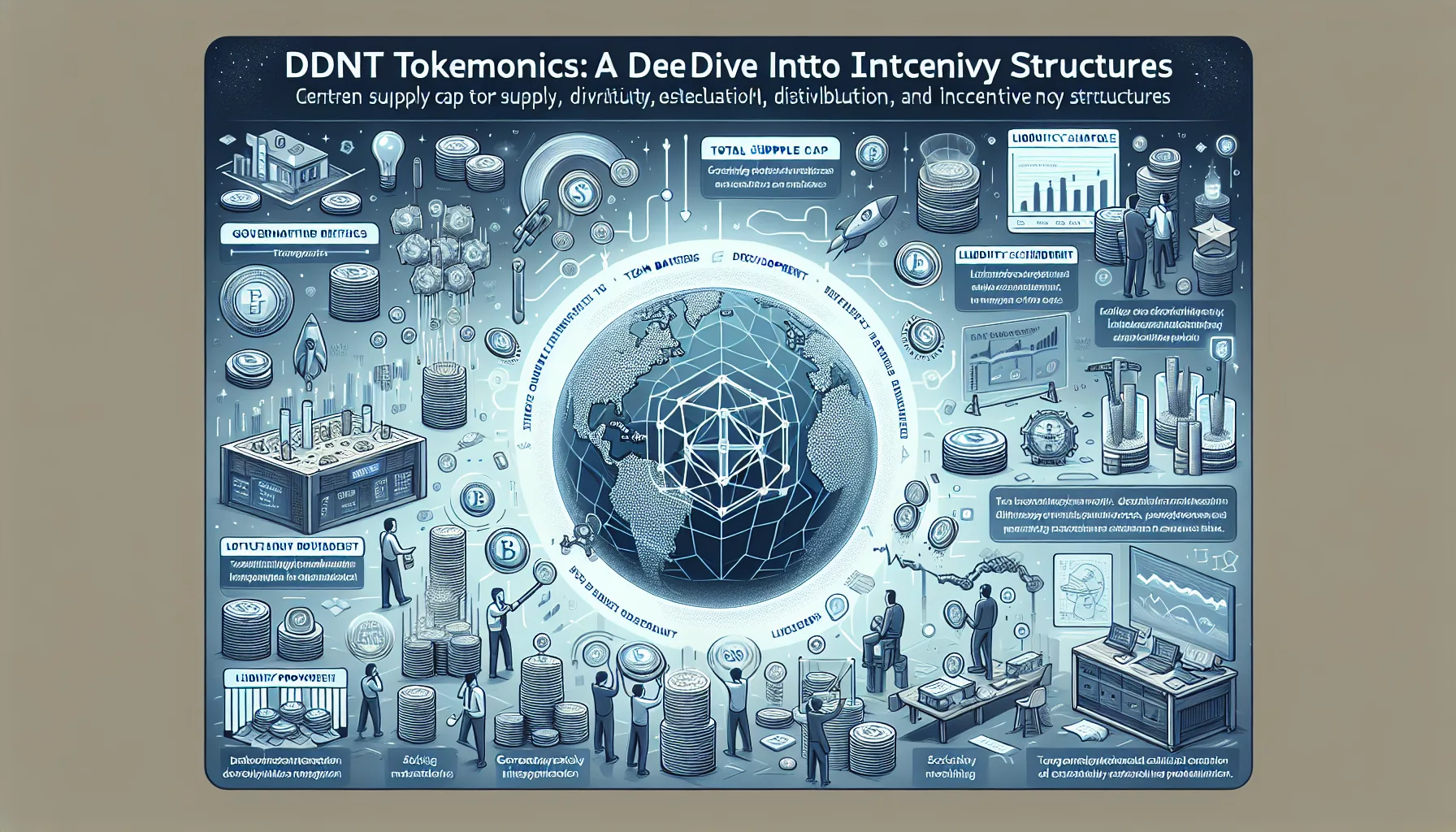
RDNT Tokenomics: A Deep Dive into Supply, Distribution, and Incentive Structures
The tokenomics of RDNT, the utility and governance token of the Radiant protocol, have been meticulously designed to balance network utility, decentralization, and incentivization. However, like many other crypto assets, certain aspects warrant scrutiny, particularly concerning sustainability and long-term token value.
Token Supply and Allocation
RDNT has a capped total supply, which provides a level of predictability for its tokenomics model. A significant portion of the total supply was pre-allocated to strategic categories, including early backers, team ecosystem development, and liquidity mining rewards. While this is a standard practice for DeFi projects, concerns around initial centralization are justifiable, given that a concentrated distribution could potentially create sell pressure if holders choose to liquidate en masse over time.
Emission Schedule and Inflationary Pressures
The emission schedule of RDNT follows a structured release timeline, with staking and liquidity providers being primary beneficiaries. This model is geared toward incentivizing liquidity provision and securing protocol participation. However, as with any inflationary system, questions arise regarding when and if these emissions may outpace token utility, particularly in established markets with high competition.
Deflationary mechanisms, such as token burns through transaction fees or network events, exist to counterbalance inflation. While these measures provide utility for long-term holders, their impact depends heavily on transaction volumes reaching meaningful thresholds.
Governance and Incentives
RDNT token holders are granted governance rights within the Radiant ecosystem, allowing them to propose and vote on upgrades or protocol changes. Participation incentives, distributed from the treasury, could introduce risk, as over-rewarding contributors without proportionate value creation can dilute the token's utility.
Additionally, the governance model primarily favors larger RDNT holders, which could lead to centralized decision-making. While this may expedite protocol changes, it runs counter to the ethos of decentralization that many DeFi users seek.
Unlocks and Vesting Schedules
The vesting schedules for early RDNT allocations introduce temporary supply-demand imbalances. Token unlock events have previously been associated with price corrections on similar projects as investors realize profits during these periods. A predictable unlock timeline may alleviate some concerns, but market impact remains an unavoidable consideration.
Liquidity Pools and Yield Farming Rewards
RDNT’s liquidity incentive programs attract users searching for yield, but sustained high emissions to keep yields competitive may ultimately lead to diminishing returns for long-term holders. Balancing token rewards with actual protocol utility and metrics will be crucial in maintaining value alignment between stakeholders.
RDNT Governance
RDNT Governance: Decentralization and Voting Mechanics
RDNT, the utility and governance token of the Radiant Capital ecosystem, serves as the backbone for decision-making within the protocol. Governance for this crypto asset is structured around a decentralized framework, empowering token holders to partake in critical protocol-level decisions. However, while this structure ensures community involvement, there are several considerations, including token distribution dynamics and potential centralization risks, that merit deeper analysis.
Decentralized Governance Framework
The core mechanism driving governance in the RDNT ecosystem is designed to promote inclusivity and participation. Token holders can propose protocol updates, vote on key initiatives, and influence the allocation of treasury funds. This system theoretically aligns incentives between the Radiant development team and its community by prioritizing the long-term sustainability of the protocol.
Smart contracts play a critical role in automating the governance process, ensuring that proposals and their subsequent voting outcomes are immutable and executed transparently. However, smart contracts' efficacy is only as good as the governance parameters coded into them, making the initial and ongoing development of these mechanisms vital to maintaining fairness.
Token Distribution and Power Imbalances
One of the fundamental challenges with many governance models, including RDNT's, is the potential for power centralization among a small pool of large token holders. While RDNT's governance design encourages decentralized participation, whale investors or institutional parties may exert disproportionate influence over decision-making processes.
Token staking, a common mechanism used to earn rewards and gain voting power, also creates a dual incentive system. While staking aligns holders with the protocol’s health, it could unintentionally elevate financial motivations over long-term protocol security. For example, governance decisions prioritizing short-term rewards for stakers may potentially detract from broader, more sustainable ecosystem improvements.
Proposal System and Barriers to Entry
The Radiant platform requires a minimum threshold of RDNT tokens to submit governance proposals. This threshold is intended to prevent spam or low-effort submissions, but it may inadvertently create barriers for smaller token holders to contribute meaningfully to governance. Moreover, complex governance systems generally require technical and operational understanding, which could dissuade less-experienced but well-intentioned community members from participating.
Risks of Governance Capture
Though RDNT governance seeks to decentralize power, the broader crypto industry is rife with examples of governance capture, where a small group manipulates the system to serve their interests. To mitigate this risk, RDNT’s success ultimately depends on fostering a well-educated and active voter base alongside mechanisms ensuring equitable distribution of governance influence.
Technical future of RDNT
RDNT: Technical Developments and Roadmap Analysis
Cross-Chain Liquidity Solutions
RDNT (Radiant Capital) has been positioning itself as a next-generation liquidity layer by focusing on cross-chain interoperability. A key technical development lies in its utilization of LayerZero's omnichain technology to enable seamless asset transfers across multiple blockchain ecosystems. By leveraging LayerZero, RDNT aims to solve fragmentation issues present in traditional DeFi protocols. However, a potential bottleneck exists in the reliance on LayerZero's infrastructure, which could become a single point of failure or face limitations in scaling for high transaction volumes. Future iterations should consider redundancy solutions to mitigate this risk.
Decentralized Collateral Mechanisms
Radiant Capital has centered its design around fully decentralized collateralized lending and borrowing. Unlike traditional lending platforms, RDNT allows users to supply collateral on one chain while borrowing against it on another. This approach is made possible through cross-chain messaging and liquidity pooling. The current technical hurdles include latency and increased transaction costs when executing cross-chain operations. Optimizing message relays and on-chain execution will be a continuous area of focus for RDNT’s development team.
Expansion of Supported Blockchain Networks
One of RDNT’s roadmap priorities is to expand support to additional blockchain ecosystems. At present, the platform primarily supports Ethereum Layer 2 solutions such as Arbitrum. While this has enabled RDNT to benefit from lower gas fees and faster execution times, its limited compatibility with popular ecosystems like Solana, Avalanche, or Cosmos hinders broader adoption. A longer-term challenge lies in maintaining performance efficiency and scalability when integrating these additional chains. Each blockchain introduces unique architectures, requiring tailored cross-chain compatibility solutions.
Improvements to Tokenomics-Driven Utility
RDNT’s tokenomics heavily rely on incentivized yield farming schemes to drive protocol participation. On the roadmap are plans to recalibrate emissions and rewards mechanisms to reduce sell pressure and improve token utility within the ecosystem. However, over-reliance on continuous emissions could lead to unsustainable token inflation. Technical developments may include integrated token sinks or mechanisms like ve-holding models to align incentives with long-term user retention. Striking the right balance between rewards and sustainability will likely require iterative experimentation.
Automation Through Smart Contracts
A significant portion of RDNT’s roadmap includes enhancing automation in liquidation processes, collateral management, and interest rate adjustments via smart contracts. While these features increase efficiency, they expose the protocol to a higher risk of smart contract exploits. Ensuring robust smart contract audits and introducing insurance-backed recoveries will be vital to maintain user confidence as these features are deployed incrementally.
Focus on Governance Decentralization
Although RDNT has introduced initial governance mechanisms, future plans include transitioning towards fully decentralized governance. The roadmap aims for users to gain broader control over protocol decisions using staked RDNT tokens. However, low voter participation or centralized token holdings may hinder true decentralization. Balancing incentives to encourage active community involvement remains a technical and operational challenge moving forward.
Comparing RDNT to it’s rivals
RDNT vs. AAVE: A Deep Dive Into Lending Protocol Dynamics
Radiant Capital (RDNT) and AAVE are both prominent contenders in the decentralized lending and borrowing terrain. While both projects enable users to leverage their crypto assets via collateralized loans, they operate with distinct mechanisms, priorities, and trade-offs that shape their market positions.
Cross-Chain Liquidity vs. Network-Centric Models
One of the fundamental differences between RDNT and AAVE lies in their approach to liquidity. RDNT is focused on cross-chain interoperability, powered by its deployment on Layer Zero, which allows users to seamlessly deposit collateral on one chain and borrow on another. This model is designed to optimize capital efficiency across a multi-chain ecosystem. By contrast, AAVE predominantly operates on a more network-specific basis, with separate liquidity pools for different blockchain ecosystems. While AAVE's multi-network approach ensures tailored optimizations for individual blockchains, it can also lead to capital fragmentation as users are forced to manage funds in isolated silos.
Collateral Management and Asset Support
RDNT places a heavy emphasis on enabling users to supply and borrow popular blue-chip assets like ETH, BTC, USDT, and stablecoins across chains. However, its narrower focus with asset integration currently doesn’t match AAVE’s extensive support for diverse tokens. AAVE has positioned itself as a flexible hub for a wide variety of assets, including long-tail tokens, making it attractive for users looking to leverage lesser-known crypto assets. While RDNT's asset selection may reduce risk exposure to illiquid or volatile collateral, it potentially deters users who seek a broader range of leverage options.
Tokenomics and Incentive Structures
The RDNT token plays a central role in incentivizing liquidity providers through emissions and staking rewards. Its fee-sharing mechanism directly aligns user activity with token utility. Yet, this approach comes with inflationary pressures that may dilate token value over time unless mitigated through robust burn mechanisms or utility expansions. AAVE, on the other hand, relies less on token emissions for incentives, instead emphasizing governance utility and protocol stability. Critics could argue RDNT's dual focus on rewards and utility creates more immediate appeal but risks unsustainable inflows if broader adoption falters.
Security and Decentralization Trade-Offs
RDNT's adoption of Layer Zero introduces additional dependencies in its cross-chain operations, exposing users to potential risks tied to Layer Zero’s functioning and security protocols. This is a point of divergence from AAVE, which operates with a higher degree of modularity and avoids single points of failure tied to specific cross-chain infrastructures. While RDNT’s model is innovative, it requires heightened scrutiny for vulnerabilities, especially in trust-minimized environments favored by DeFi purists.
RDNT vs COMP: A Detailed Comparison in the DeFi Lending Landscape
When analyzing RDNT (Radiant Capital) through the lens of its primary competitors, Compound (COMP) stands as an essential reference point in the decentralized finance (DeFi) lending ecosystem. Both platforms operate as permissionless, decentralized protocols that allow users to lend and borrow digital assets, but their approaches, underlying architectures, and target markets present significant differences that warrant attention.
Governance and Decentralization Model
One area where RDNT and COMP diverge is in their governance frameworks. Compound employs a purely ERC-20 token-based governance structure, where COMP tokens act as the linchpin for proposing and voting on protocol updates. Critics often point out that this model, while effective in decentralizing decision-making, has led to governance concentration issues, with a small number of significant COMP holders exerting disproportionate control over protocol changes. For RDNT, which also incorporates elements of decentralized governance, the reliance on cross-chain interoperability creates additional complexity in stakeholder participation, but it has arguably mitigated some centralization tendencies seen in Compound.
Asset Collateralization and Market Scope
While Compound traditionally supports a narrower array of assets compared to the emerging breadth of RDNT’s cross-chain ambitions, this streamlined approach can be both a strength and a weakness. On one hand, Compound has ensured deeper liquidity and more predictable markets for a select group of assets, which appeals to institutional participants. However, this conservative asset list may alienate users seeking to unlock liquidity from niche or newer digital assets. RDNT’s ongoing push to support multi-chain collateral broadens user accessibility, but it brings challenges such as fragmented liquidity pools and heightened smart contract risk.
Capital Efficiency: A Tale of Diverging Goals
Capital efficiency is an often-debated point between the two protocols. Compound remains deeply reliant on over-collateralization, a cornerstone of its risk management philosophy. While this minimizes platform insolvency risk, it inherently reduces borrowing power and flexibility for its users. RDNT, by contrast, aims to improve capital efficiency by facilitating cross-chain lending and borrowing, promoting asset portability across ecosystems. This design, while innovative, risks exposing RDNT to additional technical vulnerabilities, such as bridge exploits, which remain a significant attack vector in DeFi broadly.
Developer Ecosystem and Tooling
Compound’s mature developer ecosystem is an undeniable advantage, with an established precedent for audits, documentation, and battle-tested smart contracts. However, its reluctance to iterate on newer DeFi innovations has been criticized by segments of the crypto community. RDNT, as a newer entrant, has the flexibility to adopt more cutting-edge practices, but this often results in a less refined user and developer experience during its early growth phases.
In summary, when measured against COMP, RDNT occupies a more experimental and ambitious position. However, the trade-offs in security, liquidity concentration, and stable adoption remain areas of scrutiny and potential evolution.
RDNT vs CRV: A Technical and Functional Comparison
Radient (RDNT) and Curve Finance (CRV) occupy distinct niches within the decentralized finance (DeFi) ecosystem, but there is considerable overlap in their focus on fostering liquidity. CRV, being the native token of Curve Finance, powers an automated market maker (AMM) specializing in stablecoin swaps and liquidity pools, creating a stark contrast to RDNT’s broader approach as an omnichain lending protocol. Let’s dissect how RDNT measures up against CRV, highlighting strengths, limitations, and gaps in functionality.
Liquidity Model Differences
At its core, CRV’s design revolves around stablecoin efficiency, leveraging low slippage and high capital efficiency to attract liquidity providers. Its pegged-asset strategy enables Curve to serve as the backbone for stablecoin liquidity across numerous DeFi projects. In contrast, RDNT’s liquidity strategy takes a more generalized lending and borrowing approach across multiple blockchain networks. This divergence limits RDNT’s ability to compete directly with CRV in terms of stablecoin-specific facets, as RDNT’s liquidity infrastructure doesn’t currently optimize for specific assets with low volatility.
A noteworthy point of divergence is in incentives. CRV employs a robust “vote-escrowed” tokenomics model (veCRV), rewarding long-term token commitments with governance power, boosted rewards, and fee-sharing mechanisms. RDNT, while incentivizing liquidity providers in its ecosystem, hasn’t achieved a model as rigorously aligned with locking mechanisms, potentially causing gaps in long-term liquidity retention versus CRV.
Governance and Decentralization
Curve’s execution of governance has set high standards, giving veCRV holders meaningful control over its fee distribution, emissions, and protocol upgrades. RDNT’s governance framework, while functional, currently lacks such granular control mechanisms, which has led to questions about its ability to adapt and evolve as efficiently as Curve in the rapidly changing market demands of DeFi. CRV, due to its advanced governance model, may appear more attractive to yield farmers engaged in “curve wars,” especially projects controlling veCRV allocations to steer incentives. In contrast, RDNT’s governance focus is arguably more transient and remains an area that could benefit from further decentralization and alignment with stakeholders.
Barriers to Entry: Complexity vs Accessibility
Lastly, Curve has faced critiques for its steep learning curve, with its interface and broader ecosystem intimidating to DeFi newcomers. This could have been an area RDNT might capitalize on, but its cross-chain ambitions introduce their own set of complexities, including concerns about cross-chain bridge vulnerabilities and operational risks. Therefore, neither project perfectly resolves the entry barrier for general users, leaving both open to competition from more user-friendly rivals.
Security Layers and Risks
CRV’s focus on stablecoins inherently reduces its exposure to systemic risks tied to volatile collaterals, while RDNT’s broader portfolio of cross-chain digital assets increases its exposure to liquidation risks in volatile market conditions. Furthermore, CRV’s longer tenure and history contribute to its reputation as a reliable liquidity layer, lending it an edge in trust and security perceptions that RDNT has yet to fully establish.
Primary criticisms of RDNT
Primary Criticism of RDNT – Key Challenges Facing the Protocol
Centralized Governance Concerns
One of the prominent criticisms leveled against RDNT lies in its current governance structure. While decentralized finance (DeFi) projects emphasize distributed decision-making, RDNT has been scrutinized for what some argue is an over-concentration of power among core developers and early stakeholders. Token allocation models and voting mechanisms may unintentionally favor these parties, raising concerns about whether the majority of governance power resides in the hands of a relatively small group. Ensuring that new entrants to the ecosystem can meaningfully influence governance decisions remains a significant challenge.
Risk of Liquidity Fragmentation
As a cross-chain DeFi project aiming to provide seamless asset transfers across different chains, RDNT depends heavily on maintaining liquidity pools across multiple blockchains to sustain its core functionality. Critics point out that this multi-chain design introduces the risk of liquidity fragmentation. When liquidity is inconsistent or diluted across chains, users may encounter slippage, inefficiency, or higher transaction costs. This issue could directly impact RDNT’s ability to scale or deliver a unified user experience.
Dependency on External Protocols
RDNT’s architecture integrates with multiple external protocols to enable its cross-chain operations. While these integrations are a strength in terms of functionality, reliance on third-party systems exposes RDNT to external risks beyond its control. For example, any exploits, downgrades, or disruptions in these integrated protocols could cascade into vulnerabilities for RDNT. Such dependency may amplify smart contract risks and create potential points of failure within the ecosystem.
Security Vulnerabilities in Cross-Chain Bridges
Cross-chain bridges are a notable component of RDNT’s infrastructure, but they are also a frequent target for exploits across the broader DeFi landscape. Critics argue that RDNT’s reliance on these bridges increases its susceptibility to security breaches. The risk is compounded by the complexity of maintaining interoperability while preventing exploits like double-spending or malicious withdrawals. Even if RDNT maintains its own robust security standards, vulnerabilities in partner ecosystems or exploited bridge mechanisms may still endanger users' funds.
Sustainability of Tokenomics
Concerns have also been raised regarding RDNT’s tokenomics, specifically the sustainability of its reward and incentive structures. While high-yield farming schemes can attract liquidity in the short term, they may also foster speculative behavior rather than long-term adoption. Such dynamics could place downward pressure on the native token's utility beyond serving as a reward system. Balancing incentives to encourage genuine ecosystem participation without eroding token value remains an ongoing challenge for the protocol.
Regulatory Uncertainty
Finally, like many DeFi projects, RDNT operates in a fluid regulatory environment where compliance risks persist. Critics warn that RDNT’s complex cross-chain operations and potential exposure to multiple jurisdictions may subject it to regulatory scrutiny. Questions surrounding KYC (Know Your Customer) compliance, potential classification as a security, or operational restrictions on a chain level could impact its functionality or limit user accessibility.
Founders
RDNT Founding Team: Visionaries Behind the Protocol
The founding team of RDNT represents a relatively modern approach to building decentralized financial ecosystems, prioritizing protocol-centric innovation over individual recognition. Unlike some projects in the crypto space where founders actively court attention, the RDNT founders have maintained a notably low public profile, reflecting a preference for substance over hype. This strategic anonymity has led to discussions within the crypto community about transparency and trust, especially in an industry that often scrutinizes developer identities for credibility.
From what is publicly known, the RDNT team is composed of developers with prior experience in DeFi architecture, smart contract development, and blockchain interoperability. Their work appears highly specialized and focused on addressing inefficiencies in liquidity fragmentation, a key pain point in the broader DeFi space. The protocol's technical foundation and cross-chain functionality highlight the depth of expertise involved in RDNT’s creation, though this has also raised questions about potential dependencies on specific Layer 2 solutions. If those underlying layers face setbacks, it could indirectly affect RDNT's operational stability.
One interesting aspect of the RDNT founding team is their clear bias toward efficiency-focused scalability. The team has substantially invested effort into making RDNT a bridge-compatible asset that promotes seamless lending and borrowing across multiple blockchains. While this ambition reflects innovation, critics have suggested that such aggressive cross-chain integrations could expose RDNT to higher systemic risks, including bridge exploits—a recurring vulnerability in the crypto ecosystem.
Another concern brought up by the community revolves around the team's governance model and how decentralized decision-making is implemented. Critics have noted a lack of clarity about the distribution of influence between the founding team and token holders, particularly in the protocol’s early stages. In the competitive DeFi marketplace, this imbalance occasionally sparks concern about centralization risks, even when the project emphasizes decentralization as a core value.
Finally, contributors outside the founding team have reported limited access to RDNT’s development roadmap. While this aligns with the team's reduced emphasis on marketing optics, it may hinder broader developer contributions—an issue the team will likely need to address as RDNT scales further. It's clear the RDNT founders have built something technically impressive, but their approach to community engagement and security vectors has drawn mixed reactions among crypto aficionados.
Authors comments
This document was made by www.BestDapps.com
Sources
https://rdnt.capital/
https://docs.rdnt.capital/
https://etherscan.io/token/0x3082cc23568ea640225c2467653db90e9250aaa0
https://bscscan.com/token/0x3082cc23568ea640225c2467653db90e9250aaa0
https://github.com/Radiant-Capital
https://medium.com/radiant-capital
https://defillama.com/protocol/radiant-capital
https://decrypt.co/121589/radiant-capital-cross-chain-defi-protocol-explained
https://app.rdnt.capital/
https://twitter.com/RadiantCapital
https://coinmarketcap.com/currencies/radiant-capital/
https://www.coingecko.com/en/coins/radiant-capital
https://tokenterminal.com/terminal/projects/radiant-capital
https://www.youtube.com/@RadiantCapital
https://twitter.com/deebs_defi/status/1640502730095020033
https://thebittimes.com/token-RDNT-BSC-0x3082cc23568ea640225c2467653db90e9250aaa0.html
https://www.gemini.com/cryptopedia/radiant-capital-rdnt


